
中特估

Search documents
客车8月月报:7月淡季不淡,产批同比提升-20250819
Soochow Securities· 2025-08-19 12:30
Investment Rating - The report recommends a "Buy" rating for the bus sector, specifically favoring Yutong and King Long [3][4]. Core Insights - The driving factors behind the current bus cycle indicate that the bus industry represents China's automotive manufacturing sector's potential to become a global leader in technology output. The overseas market is expected to contribute significantly, potentially creating a market equivalent to China's within 3-5 years [2]. - The report highlights that the domestic price war has ended, which will not hinder growth but rather resonate positively with demand recovery driven by tourism and public transport updates [2]. - The report anticipates that the bus industry's profitability can reach new highs, supported by the absence of price wars, a concentrated market structure, and favorable cost trends in lithium carbonate [6]. Industry Overview - In July 2025, the overall production of the bus industry in China was 44,000 units, with year-on-year growth of 24% and a month-on-month decline of 12%. The wholesale volume was 42,000 units, reflecting a year-on-year increase of 16% and a month-on-month decrease of 21% [9][10]. - The terminal sales for buses in July 2025 reached 45,000 units, showing a year-on-year increase of 12% and a month-on-month increase of 2% [16]. Company Performance - Yutong is characterized as a "model student" with high growth and high dividend attributes, with projected net profits of 4.63 billion, 5.52 billion, and 6.68 billion yuan for 2025-2027, representing year-on-year growth of 12%, 19%, and 21% respectively [4]. - King Long is noted for its rapid progress, with expected net profits of 440 million, 640 million, and 830 million yuan for 2025-2027, showing substantial year-on-year growth of 182%, 45%, and 28% respectively [4]. Market Dynamics - The report indicates that the domestic market for buses is stabilizing, with Yutong and King Long maintaining leading positions. In July, Yutong's domestic bus sales were 561 units with a market share of 41%, while King Long sold 374 units with a market share of 27% [44]. - The export performance of the bus sector is also highlighted, with July exports reaching 5,052 units, a year-on-year increase of 84% but a month-on-month decrease of 10% [45].


青岛港跌0.46%,成交额1.43亿元,近3日主力净流入-6164.34万
Xin Lang Cai Jing· 2025-08-19 08:15
Core Viewpoint - Qingdao Port is experiencing a slight decline in stock price, with a market capitalization of 56.473 billion and a trading volume of 143 million on August 19 [1] Group 1: Company Overview - Qingdao Port primarily engages in the loading and unloading of various goods including containers, metal ores, coal, and crude oil, along with logistics and port value-added services [2] - The company is strategically located in the Shandong Peninsula, close to South Korea, benefiting from the China-South Korea Free Trade Agreement [2] - Qingdao Port has shown stable growth in revenue and profit over recent years, being a key node in the "Belt and Road" initiative and the seventh largest port globally [2] Group 2: Financial Performance - The company reported a revenue of 4.807 billion with a year-on-year growth of 8.51% and a net profit of 1.402 billion, reflecting a 6.51% increase [6] - Over the past three years, the dividend yields were 4.80%, 4.74%, and 3.45% respectively, with a total of 12.818 billion distributed since its A-share listing [2][7] Group 3: Market Activity - The stock has seen a net outflow of 13.2137 million from major investors, indicating a trend of reduced holdings over the past three days [3][4] - The average trading cost of the stock is 8.11, with the current price near a support level of 8.67, suggesting potential volatility if this support is breached [5] Group 4: Institutional Holdings - As of March 31, 2025, the top ten shareholders include E Fund Stable Income Bond A and Hong Kong Central Clearing Limited, with the latter reducing its holdings significantly [8]
华锦股份股价微涨0.38% 股东总户数披露为45526户
Sou Hu Cai Jing· 2025-08-18 12:53
Group 1 - The latest stock price of Huajin Co., Ltd. is 5.33 yuan, with an increase of 0.02 yuan compared to the previous trading day [1] - The stock reached a maximum of 5.42 yuan and a minimum of 5.27 yuan during the trading session, with a total transaction amount of 145 million yuan [1] - Huajin Co., Ltd. operates in the oil industry and has a total market capitalization of 8.525 billion yuan [1] Group 2 - As of July 31, 2025, the total number of shareholders for Huajin Co., Ltd. is 45,526 [1] - On August 18, the net inflow of main funds was 10.6952 million yuan, with a cumulative net inflow of 11.1718 million yuan over the past five days [1]

基础化工行业报告(2025.08.11-2025.08.15):关注PEEK和液冷等科技方向
China Post Securities· 2025-08-18 06:39
Industry Investment Rating - The industry investment rating is "Outperform" and is maintained [2] Core Views - The report highlights strong performance in the PEEK and liquid cooling sectors, with key companies such as Wanhua Chemical, Yangnong Chemical, and Hongsheng Real Estate being recommended for investment. Additionally, the report emphasizes the focus on pesticide anti-involution lines, particularly in Limin Co., Ltd. [5][6] - The basic chemical sector has shown a weekly increase of 2.46%, outperforming the CSI 300 index, which increased by 2.37% [6][19] Summary by Relevant Sections Industry Overview - The closing index for the basic chemical sector is at 3908.04, with a weekly high of 3908.04 and a low of 2687.54 [2] - Year-to-date performance shows the basic chemical index has decreased by 13.10%, while the CSI 300 index has increased by 24.10%, indicating a lag of 10.99 percentage points [19] Key Companies and Investment Ratings - Wanhua Chemical: Buy, closing price 63.0, market cap 197.19 billion, EPS 137.4, PE 14.4 [12] - Yangnong Chemical: Buy, closing price 64.9, market cap 26.33 billion, EPS 13.8, PE 19.0 [12] - Hualu Hengsheng: Buy, closing price 24.5, market cap 51.93 billion, EPS 40.5, PE 12.8 [12] - Juhua Co., Ltd.: Not rated, closing price 28.5, market cap 76.83 billion, EPS 42.6, PE 18.0 [12] Weekly Stock Performance - Top gainers include: - Kaimete Gas: +34.73% - Weike Technology: +31.54% - Xinhang New Materials: +31.43% [7][19] - Top losers include: - Zhizheng Co., Ltd.: -13.04% - Donghua Energy: -11.49% - Renzhi Co., Ltd.: -10.00% [8][22] Commodity Price Movements - Significant price increases were noted in: - Liquid chlorine: +29.05% - Industrial-grade lithium carbonate: +19.42% - Battery-grade lithium carbonate: +17.48% [9][25] - Price declines were observed in: - Methyl chloride: -10.64% - Butanone: -8.91% - Organic silicon DMC: -8.00% [10][27]


中国化学上周获融资净买入1622.43万元,居两市第490位
Jin Rong Jie· 2025-08-18 00:31
Group 1 - The core viewpoint of the article highlights the recent financing activities of China Chemical, which saw a net financing inflow of 16.22 million yuan last week, ranking 490th in the market [1] - China Chemical's financing buy amount reached 284 million yuan, while the repayment amount was 268 million yuan [1] - The company is involved in various sectors including engineering construction, hydrogen energy, and new materials, among others [1] Group 2 - Over the past five days, the main capital inflow for China Chemical was 20.60 million yuan, with a price increase of 1.01% during this period [1] - In the last ten days, the main capital outflow was 11.69 million yuan, resulting in a price decrease of 0.29% [1] - China Chemical Engineering Co., Ltd. was established in 2008 in Beijing, with a registered capital of 493.3 million yuan [1] Group 3 - The company has made investments in 31 enterprises and participated in 300 bidding projects [1] - It holds 4 trademark registrations and 85 patents, along with 24 administrative licenses [1]

中铁工业上周获融资净买入1654.86万元,居两市第482位
Jin Rong Jie· 2025-08-18 00:31
Core Viewpoint - China Railway Industry has seen a net financing inflow of 16.5486 million yuan last week, ranking 482nd in the market, indicating a moderate interest from investors despite recent outflows [1] Financing and Investment Summary - The total financing amount for China Railway Industry last week was 424 million yuan, while the repayment amount was 408 million yuan [1] - Over the past 5 days, the main capital outflow was 289 million yuan, with a decline of 11.14% in this period [1] - In the last 10 days, the main capital outflow reached 423 million yuan, with a decline of 7.97% [1] Company Profile - China Railway High-tech Industry Co., Ltd. was established in 1999 and is located in Beijing, primarily engaged in the manufacturing of railway, shipbuilding, aerospace, and other transportation equipment [1] - The registered capital of the company is 22,215.51588 million yuan, with a paid-in capital of 3,000 million yuan [1] - The legal representative of the company is Zhang Wei [1] Business Activities - The company has made investments in 28 enterprises and participated in 5,000 bidding projects [1] - In terms of intellectual property, the company holds 21 trademark registrations and 713 patents, along with 77 administrative licenses [1]

中金公司跌0.03%,成交额14.03亿元,近5日主力净流入429.44万
Xin Lang Cai Jing· 2025-08-14 09:33
Core Viewpoint - The company, China International Capital Corporation (CICC), is expected to see significant profit growth in the upcoming quarter, driven by its core business in investment banking and securities trading [2][7]. Financial Performance - CICC's estimated net profit for the period from January 1, 2025, to March 31, 2025, is projected to be between 1.858 billion yuan and 2.106 billion yuan, representing a growth of 50% to 70% compared to the previous year's net profit of 1.239 billion yuan [2]. - As of March 31, 2025, CICC reported a net profit of 2.042 billion yuan, marking a year-on-year increase of 64.85% [8]. Company Overview - CICC, established on July 31, 1995, operates in various sectors including investment banking, equity sales and trading, fixed income, wealth management, and asset management [7]. - The company's revenue composition includes wealth management (32.73%), equity business (20.81%), fixed income (17.37%), investment banking (12.11%), and other services [7]. Shareholder Information - As of March 31, 2025, CICC had 139,600 shareholders, a decrease of 9.70% from the previous period, with an average of 21,000 shares held per shareholder, an increase of 10.77% [8]. - The company has distributed a total of 4.489 billion yuan in dividends since its A-share listing, with 2.172 billion yuan distributed over the last three years [9]. Market Position - CICC is classified as a state-owned enterprise, with its ultimate controller being the Central Huijin Investment Ltd., and it is categorized as a "中字头" stock [3][2]. - The company is part of the non-bank financial sector, specifically within the securities industry [7].

光通信模块走强,17位基金经理发生任职变动
Sou Hu Cai Jing· 2025-08-13 07:57
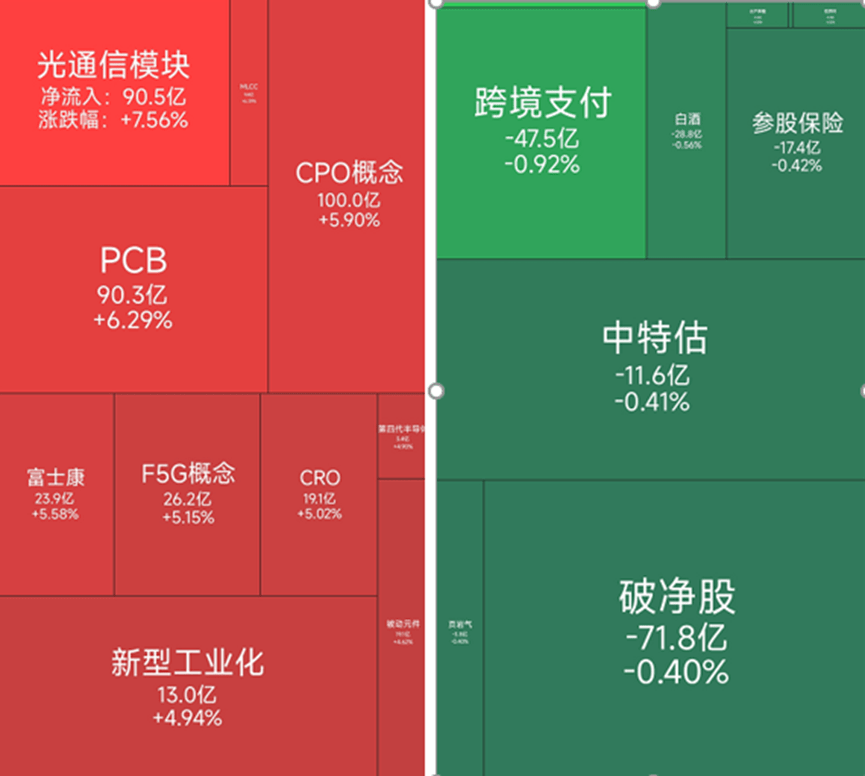
8月13日A股三大指数集体收涨,截至收盘,沪指涨0.48%,报3683.46点,深成指涨1.76%,报11551.36点,创业板指涨 3.62%,报2496.5点。从板块行情上来看,今日表现较好的有光通信模块、PCB和CPO概念,而跨境支付、中特估和破净股 等板块下跌。 近一个月(7月14日-8月13日),华夏基金参与公司调研的数量最多,共调研51家上市公司,然后调研较为活跃的还有博时 基金、南方基金和鹏华基金,分别调研50家、49家、48家上市公司;从调研行业上来看,基金公司对通信设备行业的上市 公司调研次数最多,共有305次,其次是化学制品行业,基金公司调研了197次。 基金经理是一只基金产品最核心的成员,能决定一只基金的投资方向、投资策略以及投资风格,基金经理出色的择时选股 能力和调研预测能力是基金业绩的有力保证,所以基金经理是投资者在选择基金产品时的重要依据;基金经理的变动很大 程度上会影响到基金产品未来的表现,是一个需要特别关注的信息。 根据巨灵统计的数据显示,近30天(7.14-8.13)共有487只基金产品的基金经理发生离职变动。其中今天(8.13)有13只基 金产品发布基金经理离职公告,从变动 ...


中国联通涨0.93%,成交额23.51亿元,近3日主力净流入7659.97万
Xin Lang Cai Jing· 2025-08-13 07:14
Core Viewpoint - China Unicom is focusing on enhancing its cloud services and digital infrastructure, with significant revenue growth in its cloud and IDC segments, indicating a strong position in the digital economy [2][9]. Group 1: Financial Performance - In 2024, China Unicom achieved a revenue of RMB 200.2 billion, a year-on-year increase of 1.45%, and a net profit of RMB 6.349 billion, up 5.12% [9]. - The company reported a cloud revenue of RMB 26.87 billion, a substantial increase of 142% year-on-year, while IDC revenue reached RMB 18.61 billion, growing by 12.9% [2]. - The main business revenue composition includes broadband and mobile data services (38.49%), data and other internet applications (27.48%), and value-added services (7.78%) [9]. Group 2: Strategic Initiatives - China Unicom is part of a collaboration with other major telecom operators to launch 5G roaming services, enhancing network efficiency and customer experience without additional costs [3]. - The company has launched the "Smart Home" initiative, which integrates various communication services for families, marking a shift from traditional service bundling [4]. Group 3: Market Position and Shareholder Information - As of June 30, 2025, China Unicom had 556,900 shareholders, with an average of 55,248 shares per shareholder, indicating a slight increase in share distribution [9]. - The company has distributed a total of RMB 35.536 billion in dividends since its A-share listing, with RMB 12.427 billion in the last three years [10]. - Major shareholders include Hong Kong Central Clearing Limited and various ETFs, reflecting a diversified ownership structure [10].

资本市场不断释出开放信号 下半年外资料延续回流态势
Xin Hua Wang· 2025-08-12 05:54
"外资对中国市场的热情将进一步升温。"景顺投资高级基金经理刘徽分析,一方面,美国面临经济衰退 和银行业危机等问题,美元可能在加息见顶后走入下跌通道。面对美国经济潜在的衰退风险,国际投资 者需要在全球寻找能够分散风险的资产。相较美国而言,当前中国资产的估值更有吸引力。另一方面, 中国未来还有降息空间,可以继续刺激经济。 推进资本市场对外开放的政策信号近期持续释放。多家外资机构认为,在多重利好因素推动下,外资有 望在下半年延续回流趋势,A股下半年表现有望优于上半年。 A股吸引力凸显 数据显示,上半年北向资金净流入1833.24亿元,远高于去年全年的900.20亿元。6月,北向资金净买入 140.26亿元,恢复净流入态势。 在联博基金资深市场策略师黄森玮看来,今年以来,A股宽基指数的收益率大多维持平盘或小涨格局, 明显落后于全球主要市场,叠加汇率因素,A股对外资变得更具吸引力。 兴业证券表示,后续外资仍将继续流入,成为推动市场修复的重要支撑。 多家外资机构认为,下半年,人工智能和"中特估"两大投资主线有望延续;食品饮料、新能源等估值调 整到位的板块,有望在资金推动下迎来反弹。 资本市场开放持续推进 外资对中国市场看 ...

