数字孪生

Search documents
聚焦巨型机组“智”“绿”新趋势 未来巨型水轮发电机组论坛举办
Zhong Guo Xin Wen Wang· 2025-12-05 17:50
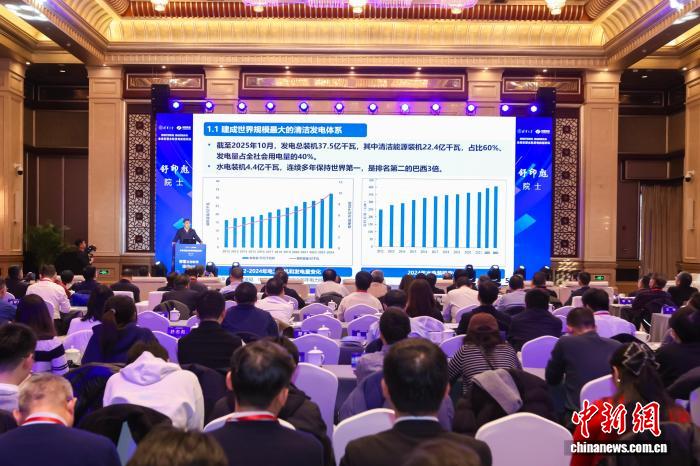
Core Insights - The forum titled "Intelligent Driving of Giant Turbine Generator Sets for a Green Dual-Carbon Future" opened in Beijing, focusing on advanced technologies and development trends of giant turbine generator sets, aiming to provide research directions for their intelligent, green, and low-carbon future [1][2] Group 1: Industry Position and Achievements - China holds the world's largest installed capacity and annual power generation in hydropower, with the key factor being the emergence of million-kilowatt turbine generator sets [1] - China Water Resources and Hydropower Fourth Engineering Bureau has participated in over 200 leading hydropower projects, witnessing China's transition from a hydropower major to a hydropower powerhouse, with a total installed capacity exceeding 50 million kilowatts [1] Group 2: Key Technologies and Innovations - Academician Shu Yinbiao emphasized the need for breakthroughs in technologies such as cascade scheduling, cross-basin compensation, wind-solar integration, pumped storage, and digital smart hydropower to advance China's hydropower development [2] - Academician Zhang Zongliang discussed the history and achievements of China's hydropower development, analyzing the functional positioning of hydropower in the new historical context and proposing suggestions for future development [2] - Professor Wang Zhengwei highlighted the demand for predictive technology development for future giant turbine generator sets, calling for collaboration across the industry to unlock the modern potential of traditional hydropower [2] Group 3: Future Directions and Forum Highlights - The forum, lasting three days, includes various sessions such as opening ceremonies, keynote speeches, panel discussions, and technical exchanges, marking it as the highest-level and most influential event focused on giant turbine generator sets in China [1][4] - The future installation and commissioning technology for giant turbine generator sets will focus on "intelligent, digital, standardized, lean, systematic, and safe" approaches, integrating cutting-edge technologies like intelligent robots and digital twins [4]

迈向“不惑之年” 浙江南浔木业何以成发展“心头好”?
Zhong Guo Xin Wen Wang· 2025-12-05 13:29
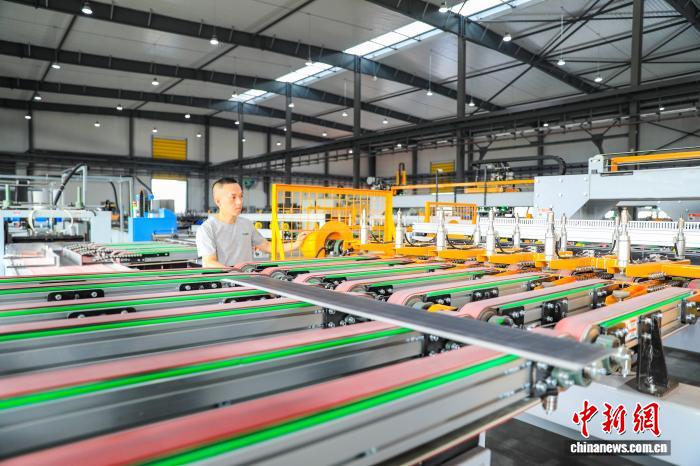
Core Viewpoint - The city of Nanxun in Huzhou, Zhejiang Province, has been officially designated as the "Capital of High-End Custom Home Furnishings in China," marking a strategic transformation from traditional wood processing to high-end custom home furnishings [1]. Group 1: Industry Transformation - Nanxun's wood industry has evolved through several stages, from a focus on plywood in the 1980s to the establishment of a reputation as "China's Capital of Wood Flooring" in the early 2000s, with over 2,000 related enterprises [1]. - The industry faced challenges such as structural issues, shrinking profits, and increased environmental pressures, leading to a "bottleneck period" starting in 2010 [1]. - In 2017, a decisive industrial restructuring campaign was launched, resulting in the closure or relocation of over 3,400 out of nearly 4,000 wood-related enterprises, which laid the groundwork for future growth [1]. Group 2: Innovation and Digital Transformation - Companies like Zhejiang Mucheng Mulle Intelligent Technology have implemented digital transformations, achieving real-time data presentation and creating a "digital twin" of the factory, which enhances production monitoring and quality analysis [2]. - Innovations in the industry include a 30% year-on-year sales increase for Shangchen Flooring through a "water-based" green process, and reduced order delivery times by half for Liuheyuan Wood Industry due to technological upgrades [4]. Group 3: Government Support and Policy Initiatives - The local government has actively supported enterprises by handling administrative procedures, transforming the process from "businesses running" to "government running" [4]. - Nanxun has introduced various policies, established a home furnishing association, built environmental facilities, and hosted global high-end design conferences to systematically enhance the industry [4]. - By 2024, Nanxun has cultivated 2 national-level green factories, 27 national high-tech enterprises, and 12 provincial-level specialized and innovative enterprises, along with 13 provincial innovation platforms [5]. Group 4: Future Outlook - The wood industry in Nanxun is positioned to leverage its complete industrial chain and increasing investment in technological upgrades to maintain its core position in high-quality development [5]. - The integration of artificial intelligence and virtual simulation is expected to provide new opportunities and empower traditional wood industries, transforming them into vibrant sunrise industries [5].
“克隆地球”遭遇现实考验 毛利下滑的五一视界再度递表
BambooWorks· 2025-12-05 08:46
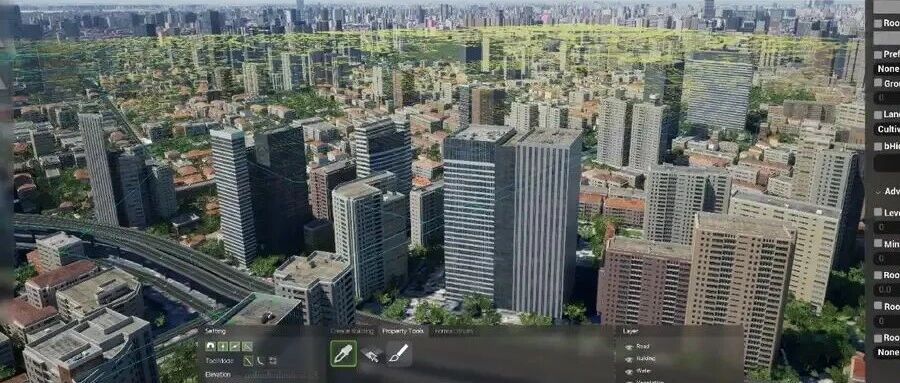
Core Viewpoint - The dream of "cloning the Earth" is facing reality as the company, Beijing Wuyi Shijie Digital Twin Technology Co., Ltd., encounters expanding losses, declining gross margins, and cash flow pressures, making its Hong Kong listing a critical milestone to achieve [2][3]. Financial Performance - In the first half of the year, the company's revenue grew by 62% year-on-year to 53.82 million, but losses also widened by 44.5% from 65.06 million to 94.05 million [5][6]. - The gross margin decreased by 10 percentage points year-on-year to 41.1% [5][6]. Business Model Transition - The company is shifting its focus from software platform sales to large-scale urban digital governance projects, which are highly customized and require long-term on-site delivery and project management [8]. - This transition has led to a decline in gross margins, with the gross margin for the 51Aes platform dropping from 69.2% to 43.4% [8]. Cost Structure Changes - Research and development expenses are projected to decrease from 103 million in 2023 to 58.31 million in 2024, while general and administrative expenses surged by 76% year-on-year to 46.08 million [9]. - Operating cash flow showed a net outflow of approximately 41.7 million in the first half of the year, with cash and cash equivalents dropping significantly to 166 million compared to 270 million in the previous year [9]. Competitive Landscape - The company faces increasing competition from peers like SuperMap Software and Digital China, which are also advancing digital twin city projects [10]. - The ambitious narrative of "cloning the Earth" must contend with practical challenges, and the company needs to find a balance between engineering expansion and product standardization to realize its vision [10].
摩尔线程上市募80亿首日涨425% 3年3季累计亏损59亿
Zhong Guo Jing Ji Wang· 2025-12-05 07:27
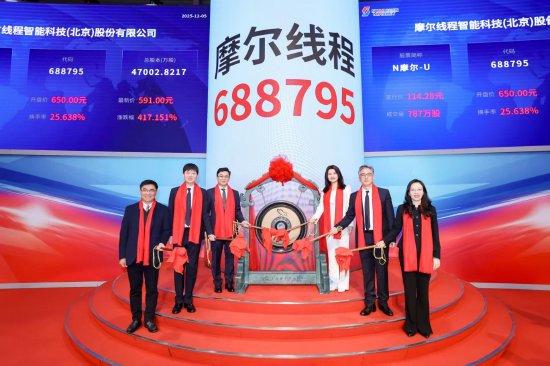
中国经济网北京12月5日讯 今日,摩尔线程智能科技(北京)股份有限公司(股票简称:摩尔线程,股票代码:688795.SH)在上交所科创 板上市。该股开盘报650.00元,截至收盘报600.50元,涨幅425.46%,成交额153.07亿元,振幅115.51%,换手率85.49%,总市值2822.52亿元。 摩尔线程主要从事GPU及相关产品的研发、设计和销售。自2020年成立以来,公司以自主研发的全功能GPU为核心,致力于为AI、数字孪 生、科学计算等高性能计算领域提供计算加速平台。 本次发行前或截至上市公告书签署日,公司无单一持股30%以上的股东,不存在控股股东,公司实际控制人为张建中。 本次发行前,张建中直接持有公司11.06%的股份,同时张建中与持股平台南京神傲、杭州华傲签署一致行动人协议(一致行动期限至任何 一方不再持有发行人股权之日),并担任杭州华傲、杭州众傲及杭州京傲三家员工持股平台的执行事务合伙人(持股比例较低,但根据合伙协 议的约定,拥有对三家员工持股平台持续稳定的控制权),合计控制公司36.36%的股份,为公司实际控制人。 2.请发行人代表结合报告期内主要客户情况、收入确认时点和方式、经销商采 ...
N摩尔-U上午收盘涨416.79%
Zheng Quan Shi Bao Wang· 2025-12-05 06:20
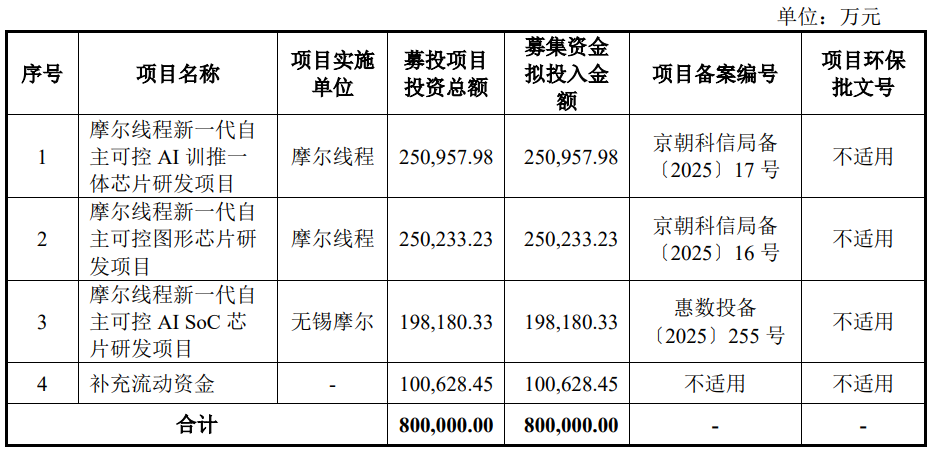
Core Viewpoint - N-Mole-U (688795) debuted today with a significant opening increase of 468.78%, later stabilizing at a rise of 416.79% by midday, indicating strong market interest and trading activity [1] Company Overview - The company specializes in the research, design, and sales of GPUs and related products, focusing on providing computing acceleration platforms for high-performance computing fields such as AI, digital twins, and scientific computing [1] - Since its establishment in 2020, the company has developed a full-function GPU as its core product and has successfully launched four generations of GPU architectures, expanding its product matrix to cover applications in AI intelligent computing, cloud computing, and personal intelligent computing [1] IPO Details - The total number of shares issued in this IPO was 70 million, with an online issuance of 16.8 million shares at a price of 114.28 yuan per share [1] - The final online issuance success rate was 0.03635054%, and the total funds raised from the IPO amounted to 8 billion yuan [1] - The raised funds will primarily be allocated to the development of next-generation self-controlled AI training and inference chips, next-generation self-controlled graphics chips, next-generation self-controlled AISoC chips, and to supplement working capital [1] Market Performance - By midday, the stock price reached 590.59 yuan, with a trading volume of 20.6739 million shares and a turnover rate of 70.36% [1]
高开468.78%!摩尔线程科创板上市,中一签浮盈近27万
Xin Lang Cai Jing· 2025-12-05 03:45
据了解,摩尔线程首发价格为114.28元/股,按照当日开盘价650元/股计算,投资者中一签浮盈约26.79 万元。 值得一提的是,以上市首日开盘价计算,经同花顺iFinD统计,摩尔线程投资者中一签收益超越此前"最 赚钱"年内新股影石创新,位列年内新股第一。 据了解,摩尔线程首发价格为114.28元/股,按照当日开盘价650元/股计算,投资者中一签浮盈约26.79 万元。 值得一提的是,以上市首日开盘价计算,经同花顺iFinD统计,摩尔线程投资者中一签收益超越此前"最 赚钱"年内新股影石创新,位列年内新股第一。 资料显示,摩尔线程主要从事GPU及相关产品的研发、设计和销售。自2020年成立以来,公司以自主研 发的全功能GPU为核心,致力于为AI、数字孪生、科学计算等高性能计算领域提供计算加速平台。 业绩表现方面,2022—2024年以及2025年上半年,摩尔线程实现营业收入分别约4608.83万元、1.24亿 元、4.38亿元、7.02亿元;对应实现归属净利润分别约-18.94亿元、-17.03亿元、-16.18亿元、-2.71亿 元。 文/资本秘闻 资料显示,摩尔线程主要从事GPU及相关产品的研发、设计和销售 ...
【IPO追踪】科创板“超级肉签”!国产GPU第一股上市引爆市场
Sou Hu Cai Jing· 2025-12-05 03:16
Core Insights - The company, Moore Threads, known as the "first domestic GPU stock," was listed on the STAR Market on December 5, attracting significant market attention [2] - The initial offering price was 114.28 CNY per share, with the opening price soaring to 650 CNY, representing an increase of over 460%, leading to a market capitalization exceeding 300 billion CNY [2] - As of the report, the stock price maintained a strong increase of 403%, with a market cap around 270.3 billion CNY, and trading volume surpassing 11 billion CNY within the first hour [2] Company Overview - Founded in June 2020, Moore Threads specializes in the research and sales of full-function GPU chips, targeting data centers, desktop GPUs, and related software systems [2] - The company has launched four generations of GPU architectures, with products supporting AI computing, high-performance computing, and graphics rendering [2] - Notable products include the MTT S4000 intelligent computing acceleration card and the Kuangua intelligent computing cluster, capable of supporting training for large models with hundreds of billions of parameters [2] Market Potential - The demand for GPUs is rising due to the rapid development of cutting-edge technologies such as artificial intelligence, digital twins, and embodied intelligence [2] - According to Frost & Sullivan, the global GPU market is projected to reach 3.62 trillion CNY by 2029, with the Chinese market expected to grow significantly to 1.36 trillion CNY, indicating vast market potential [2] Financial Performance - In the first three quarters of the year, the company achieved revenue of 785 million CNY, surpassing the total revenue of the past three years, with a year-on-year growth rate of approximately 182% [3] - Although the company is still in the investment phase and has not yet achieved profitability, the loss margin is narrowing [3] - The company plans to achieve overall profitability by 2027 at the earliest [3] IPO and Fundraising - The IPO raised a total of 8 billion CNY, with funds primarily allocated to the development of next-generation autonomous AI training and inference chips, next-generation autonomous graphics chips, and next-generation autonomous AISoC chips, as well as to supplement working capital [3]

国产GPU第一股诞生!摩尔线程正式登陆科创板
Xin Lang Cai Jing· 2025-12-05 02:49
Core Viewpoint - Moer Technology has officially listed on the Shanghai Stock Exchange's Sci-Tech Innovation Board, becoming the first fully functional GPU company in China to enter the capital market [1] Group 1: Company Overview - Moer Technology is recognized as a leading domestic enterprise in the fully functional GPU sector, emphasizing independent innovation and forward-looking vision in its development [1] - The company's growth aligns with national strategies aimed at promoting high-level technological self-reliance and building a secure and reliable computing power system [1] Group 2: Technological Capabilities - Moer Technology has established a robust differentiated advantage and full-stack technical capabilities through its "full-function + MUSA" collaborative technology system [1] - The company is equipped to address future computing scenarios such as embodied intelligence, digital twins, physical AI, and AI for Science, showcasing its critical architectural capabilities [1] Group 3: Product Matrix - Moer Technology has developed a comprehensive product matrix that covers artificial intelligence, scientific computing, and graphics rendering, supporting a full range of computing acceleration products [1] - The company's offerings are designed to comprehensively support "cloud-edge-end" scenarios, indicating a versatile approach to computing solutions [1]
股票代码688795!摩尔线程正式挂牌科创板!
Zhong Jin Zai Xian· 2025-12-05 02:44
Core Insights - Moore Threads officially listed on the Shanghai Stock Exchange's Sci-Tech Innovation Board on December 5, 2025, becoming the first fully functional GPU company in China to enter the capital market, marking a significant milestone in its five-year entrepreneurial journey [1] - The listing is a recognition of the company's commitment to independent innovation and rapid product iteration in the GPU computing power sector, symbolizing a new starting point for the independent development of high-end GPUs in China [1][4] Company Development - Since its establishment in 2020, Moore Threads has focused on independent innovation and has made significant advancements in the design and research of fully functional GPU chips, aligning with national strategies for technological self-reliance and building a secure computing power system [4][5] - The company has successfully mass-produced five chips and iterated four generations of GPU architectures and intelligent SoC products, creating a comprehensive product matrix that supports AI, scientific computing, and graphics rendering across various scenarios [5][8] Technological Advancements - Moore Threads has developed the MUSA unified system architecture, achieving breakthroughs that allow a single chip to support AI computing acceleration, graphics rendering, physical simulation, scientific computing, and ultra-high-definition video encoding [5] - The company has established a strong differentiation advantage and full-stack technical capability, positioning itself uniquely in the industry and enabling it to address future computing scenarios such as embodied intelligence and AI for Science [5][6] Market Performance - From 2022 to 2024, the company's revenue grew at a compound annual growth rate of 208.44%, with 2025's first half revenue reaching 702 million yuan, surpassing the total of the previous three years [8] - The AI computing business contributed 94.73% of the revenue, reflecting the company's focus and leading advantage in its core sector [8] Strategic Positioning - The national strategy emphasizes high-end chips as a key area for development, establishing GPUs as essential components in driving industrial upgrades and shaping future competitiveness [10] - The funds raised from the IPO will be directed towards the research and development of next-generation AI training and inference chips, graphics chips, and AI SoC chips, aiming to strengthen the company's technological leadership in AI computing and graphics [10]
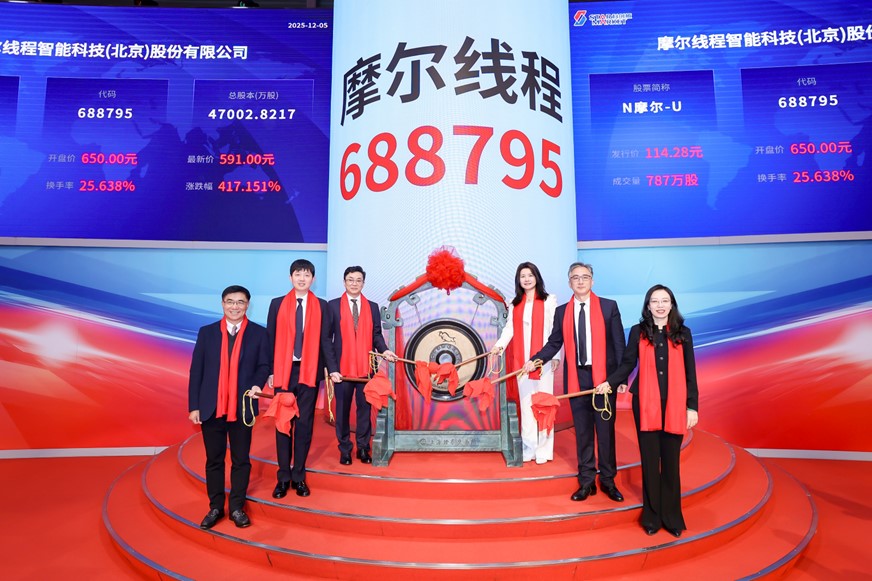
摩尔线程成功登陆科创板,首发募集资金80亿元
Xin Lang Cai Jing· 2025-12-05 02:27
Core Viewpoint - The listing of Moer Technology on the Shanghai Stock Exchange marks a significant milestone in the company's development, reflecting recognition of its commitment to core technology innovation and product iteration speed [3][6]. Group 1: Listing Details - Moer Technology has issued 70 million shares at a price of 114.28 yuan per share, raising a total of 8 billion yuan [1][4]. - The raised funds will primarily be allocated to the development of next-generation AI training and inference chips, graphics chips, and AI SoC chips, as well as to supplement working capital [1][4]. Group 2: Technological Advancements - The company has achieved a technological breakthrough with its self-developed MUSA unified system architecture, enabling a single chip to support AI computing acceleration, graphics rendering, physical simulation, scientific computing, and ultra-high-definition video encoding and decoding [3][6]. - Moer Technology has established a differentiated advantage and full-stack technical capability, positioning itself uniquely in the industry and enhancing its competitiveness [3][6]. Group 3: Product Development and Intellectual Property - Over five years, Moer Technology has successfully mass-produced five chips and iterated four generations of GPU architectures and intelligent SoC products, creating a comprehensive product matrix that covers AI, scientific computing, and graphics rendering [4][7]. - The company has strengthened its intellectual property system, having obtained 514 authorized patents by June 2025, ranking among the top in the domestic GPU industry [4][7].