世界模型

Search documents
锦秋基金被投企业流形空间3个月融资亿元,证明世界模型也需要预训练 |Jinqiu Spotlight
锦秋集· 2025-11-12 12:44
Core Insights - The article discusses the emergence and potential of world models in AI, particularly focusing on the company Manifold AI and its CEO Wu Wei's vision for developing a robust world model that can understand and predict the physical world [7][10][22]. Investment and Company Overview - Jinqiu Fund has invested in Manifold AI, which has quickly raised over 100 million in seed and angel rounds within three months of its establishment [4][6]. - Jinqiu Fund emphasizes a long-term investment philosophy, seeking breakthrough technologies and innovative business models in general artificial intelligence startups [5]. Technology and Market Trends - The concept of world models is gaining traction, with significant discussions in Silicon Valley about their capabilities, including generative, multimodal, and interactive features [8][9]. - Wu Wei argues that world models can provide superior predictive capabilities compared to Vision-Language-Action (VLA) models, which are limited by their reliance on past experiences [18][22]. Technical Development and Challenges - The development of world models is still in its early stages, with various approaches being explored, including explicit physical modeling and latent space interaction [25][30]. - Manifold AI aims to create a "bodily world model" that can transfer and unify across different scales, contrasting with the top-down strategies of many international teams [33]. Strategic Focus and Market Positioning - Manifold AI prioritizes the robotics and drone sectors over autonomous driving due to the fragmented nature of these markets, which allows for more opportunities for innovation [43][44]. - The company is focused on enabling hardware to possess autonomous reasoning capabilities, moving away from human-controlled operations [46]. Future Goals and Product Development - The company plans to release its first generation of base models based on the World Model Architecture (WMA) by late 2025 to early 2026, aiming to drive advancements in Physical AI Agents [51]. - Wu Wei emphasizes the importance of pre-training models to understand physical world dynamics, which can reduce deployment costs significantly [37][40].

95后AI才女,官宣加入小米,雷军千万年薪挖人
3 6 Ke· 2025-11-12 12:14
Core Viewpoint - The recruitment of AI talent 罗福莉 by Xiaomi signifies a strategic move to enhance its AI capabilities, particularly in the context of its "human-vehicle-home ecosystem" strategy, which is crucial for the development of smart connected vehicles [13][14]. Group 1: Recruitment Details - Xiaomi founder Lei Jun personally offered a salary of tens of millions to recruit 罗福莉, a notable AI talent known for her contributions to DeepSeek-V2 and multiple academic publications [1][3]. - 罗福莉 confirmed her joining Xiaomi on November 12, after months of speculation regarding her employment status [3][5]. - Prior to her official announcement, 罗福莉 had already been involved with Xiaomi, as indicated by her comments on Xiaomi's open-source voice model and her name appearing in a joint research paper [5][7]. Group 2: Background of 罗福莉 - 罗福莉, born in a rural family in Sichuan, initially struggled academically but later excelled, securing a position at Peking University for her master's degree [9][10]. - She has a strong professional background, having worked at Alibaba's DAMO Academy and later at DeepSeek, where she contributed to significant AI projects [10][12]. Group 3: Industry Context - The recruitment of top AI talent is part of a broader trend where major companies, including Xiaomi, are competing fiercely for skilled professionals in the AI sector [15][20]. - The current supply-demand ratio for AI talent is estimated at 1:10, indicating a severe talent shortage in the industry [20]. - Other companies, such as Huawei and Meta, are also aggressively hiring AI experts, further intensifying the competition in the field [15][17].


Meta首席AI科学家Yann LeCun被曝将离职,投身“世界模型”创业
Guo Ji Jin Rong Bao· 2025-11-12 12:12
Core Insights - Meta is undergoing significant changes in its AI strategy, with key personnel departures including Yann LeCun, the Chief AI Scientist, who plans to start a new AI startup focused on "world models" [1][3] - Mark Zuckerberg is shifting the company's focus from foundational research to practical applications, as evidenced by the hiring of Alexandr Wang to lead the new Meta Superintelligence Labs with a substantial investment of $14.3 billion [1][2] - Internal policies at Meta have restricted academic freedom within the FAIR lab, leading to dissatisfaction among members and contributing to LeCun's potential departure [2][3] Group 1 - Yann LeCun's departure is part of a broader trend of leadership changes in Meta's AI division, which is facing challenges from competitors like OpenAI and Google [1][3] - The company has initiated layoffs affecting around 600 employees, particularly in the FAIR lab, while the newly formed TBD Lab remains unaffected [3] - LeCun's vision for AI emphasizes "world models" that understand the physical world through video and spatial data, contrasting with Meta's current focus on large language models (LLMs) [3][4] Group 2 - Meta's strategic pivot includes a new policy requiring additional scrutiny of research outputs from the FAIR lab, which has been perceived as a limitation on academic freedom [2] - Competitors like Google DeepMind and NVIDIA are also investing in "world models," indicating a growing interest in this area within the AI industry [4] - Stanford's Fei-Fei Li has raised approximately $230 million for her startup World Labs, which aims to enhance AI's "spatial intelligence," further highlighting the competitive landscape [4]


李飞飞揭大模型“死穴”:不会空间智能,再能聊也是纸上谈兵
3 6 Ke· 2025-11-12 11:47
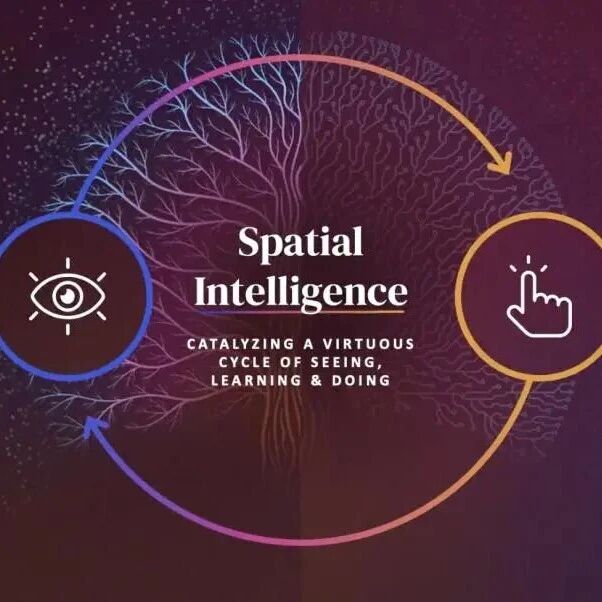
当科技界仍深陷于大模型"参数内卷"时,斯坦福大学教授、World Labs联合创始人李飞飞教授指向了一个更本质的瓶颈:当前AI被困在由文本和 二维图像构成的"扁平世界"里,它与我们生活其中的、立体的、受物理规律支配的现实严重脱节。 11月11日,在她刷屏的一篇长文中,李飞飞鲜明指出,空间智能,正是打破这层认知隔膜的关键。它不仅代表了人工智能演进的下一个前沿,更 是AI真正融入物理世界、从"对话工具"蜕变为"行动伙伴"的转折点。 本文梳理了李飞飞在这篇长文中对于空间智能的技术路径与应用前景系统阐述,并结合多位产业实践者的洞察,共同展望这一变革性力量将如何 重塑人机关系与产业生态。 从语言到世界,空间智能是AI的破晓之光 当前人工智能,特别是生成式AI已在创意、效率与沟通方面深刻改变了世界。 然而,李飞飞指出,当前AI在诸多关键领域应用的宏伟愿景还远未实现。自主机器人的发展尚未走出实验室与特定场景,其"融入日常生活"的愿 景仍停留于概念推演; 在科学研究中,AI虽展现出潜力,但距离真正实现疾病诊疗、新材料研发与基础物理探索的效率革命,仍有相当距离; 而在创意赋能方面,无论是辅助学生理解复杂抽象概念、支持建筑师进行 ...

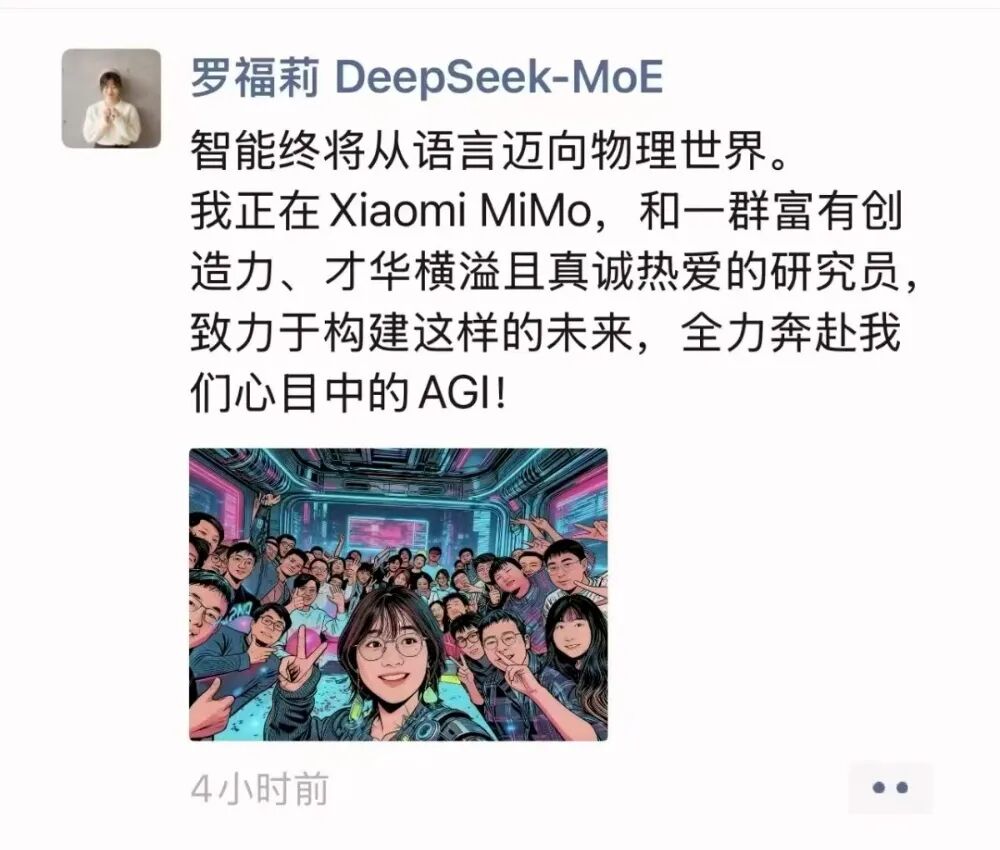
雷军挖来前DeepSeek大将,大模型团队40人合影曝光,疑进军具身智能
3 6 Ke· 2025-11-12 08:31
Core Insights - The announcement of Luo Fuli joining Xiaomi MiMo team signifies Xiaomi's ambition towards AGI (Artificial General Intelligence) and highlights her focus on "world models" and "embodied intelligence" [1][10]. Group 1: Luo Fuli's Background and Transition - Luo Fuli, a prominent figure in AI research, has transitioned from DeepSeek to Xiaomi, confirming rumors of her high-profile recruitment with a reported annual salary in the millions [6][4]. - She has a strong academic background with a Bachelor's degree in Computer Science from Beijing Normal University and a Master's in Computational Linguistics from Peking University, contributing to significant projects like VECO and DeepSeek-V2 [4][6]. Group 2: Xiaomi MiMo and AGI Vision - Xiaomi MiMo, the company's first open-source inference model, was launched in April and has shown promising results in mathematical reasoning and coding competitions, outperforming models from OpenAI [7]. - The MiMo ecosystem is expanding with the introduction of multi-modal models, indicating progress towards a "world model" that integrates various forms of information [7]. - Xiaomi has been actively investing in the field of embodied intelligence, with recent investments in startups like DeepMind, totaling nearly 30 companies since 2014 [8]. Group 3: Future Implications - Luo Fuli's involvement is expected to accelerate Xiaomi's advancements in AGI, particularly in the areas of world models and embodied intelligence, raising industry expectations for future developments [10].

Meta首席AI科学家LeCun被曝将离职创业,与扎克伯格“超智能”路线理念分歧
硬AI· 2025-11-12 05:00
Core Viewpoint - Meta is undergoing a significant strategic shift in its AI approach, moving from long-term foundational research to rapid product iteration, highlighted by the departure of key AI figure Yann LeCun and the underperformance of its Llama 4 model [2][3][6]. Group 1: Strategic Divergence - Yann LeCun, a Turing Award winner and head of Meta's Fundamental AI Research Lab, advocates for a new generation AI system called "world model," which aims to understand the physical world through video and spatial data, aspiring to achieve human-level intelligence [5]. - LeCun believes that the current focus on large language models (LLMs) is useful but insufficient for human-like reasoning and planning, contrasting sharply with Zuckerberg's emphasis on rapid productization and the development of "superintelligent" teams [5][6]. Group 2: Leadership Changes and Cost Pressures - LeCun's planned departure from Meta, where he has been a pivotal figure since 2013, reflects a broader trend of executive turnover within the company, including the exit of AI research VP Joelle Pineau and layoffs of approximately 600 employees in the AI research department [11]. - In response to competitive pressures and the need to demonstrate returns on substantial investments in AI, Zuckerberg has hired Alexandr Wang for $14.3 billion to lead a new "superintelligent" team and acquired 49% of Wang's data annotation startup, Scale AI [7][11]. - The restructuring has resulted in LeCun reporting to Wang instead of the previous chief product officer, indicating a shift in focus towards immediate product development rather than foundational research [8].

华为投资物理 AI:首家国产世界模型公司“极佳视界”新一轮融资
Sou Hu Cai Jing· 2025-11-12 04:35
Core Insights - The company Jiga Vision announced the completion of a new round of financing amounting to hundreds of millions in the A1 round, led by a well-known industry player and Huakong Fund [1] - The well-known industry player is identified as Huawei Hubble [1] - Jiga Vision is a physical AI company founded in 2023, focusing on "world model-driven general intelligence in the physical world" [3] Company Overview - Jiga Vision specializes in products such as the GigaWorld world model platform, GigaBrain embodied foundational model, and Maker general embodied ontology, representing a full stack of physical AI software and hardware products [3] - The company claims to be the first in China to focus on "world models," which are core technological frameworks in AI for simulating environmental dynamics and predicting future states [3] Industry Context - Huawei's Smart Automotive Solutions BU CEO, Jin Yuzhi, emphasized that Huawei will not pursue the VLA (Vision-Language-Action) path, but rather focus on WA (World Action) for achieving true autonomous driving [3] - The WA approach eliminates the language processing step, directly using visual and other information inputs to control vehicles, which is seen as a more effective route towards genuine autonomous driving [3]

华为刚投的物理AI:首家国产世界模型公司
量子位· 2025-11-12 04:08
鱼羊 发自 凹非寺 量子位 | 公众号 QbitAI 华为在 世界模型 上又有新动作:投了一家物理AI公司。 极佳视界 ,最新完成一轮亿元级A1轮融资,由华为哈勃、华控基金联合投资。这也是该公司两个月内连续完成的第三轮融资。 这家公司成立于2023年,说得上是国内第一家"纯血"物理AI公司——创业就是为世界模型而来。 2年时间,极佳视界的产品已经覆盖从自动驾驶世界模型、具身基础模型到世界模型平台的全栈软硬件, 应用落地领域,正是华为正在持续押 注的方向:自动驾驶和具身智能 。 "世界模型是未来重要高质量数据来源" 极佳视界核心团队成员来自清华大学、中科院、中科大等知名院校。 最早"出圈",是在2024年奇绩创坛的路演上:联合清华大学自动化系,发布了国内首个支持原生16秒超长时长的视频生成模型"视界一粟 YiSu"。 当时,极佳视界就强调了视频生成模型对物理世界的理解,并展示了其在自动驾驶和具身智能领域的应用潜力。 极佳视界的创始人兼CEO 黄冠 ,是清华大学自动化系AI方向博士。创立极佳视界之前,拥有微软、三星、地平线等公司的算法经历,以及 AI、自动驾驶等方向的连续创业经验。 在2024年的公开演讲中,黄冠 ...

李飞飞万字长文爆了!定义AI下一个十年
创业邦· 2025-11-12 03:08
Core Insights - The article emphasizes that "spatial intelligence" is the next frontier for AI, enabling machines to transform perception into action and imagination into creation [2][7] - The concept of a "world model" is identified as essential for unlocking spatial intelligence, requiring AI to generate consistent worlds that adhere to physical laws and can process multimodal inputs [3][5] Group 1: Definition and Importance of Spatial Intelligence - Spatial intelligence is described as a foundational capability for human cognition, influencing how individuals interact with the physical world [15][19] - The evolution of spatial intelligence is linked to significant historical advancements, showcasing its role in shaping civilization [21][22] Group 2: Current Limitations of AI - Despite advancements in AI, current models lack the spatial reasoning capabilities that humans possess, particularly in tasks involving distance estimation and physical interactions [22][25] - The limitations of existing AI models hinder their ability to effectively engage with the physical world, impacting their application in various fields [25][26] Group 3: Building a World Model - Constructing a world model requires three core capabilities: generative, multimodal, and interactive, allowing AI to create and manipulate virtual or real environments [27][29][30] - The development of a world model is seen as a significant challenge for the next decade, necessitating innovative approaches and methodologies [31][32] Group 4: Applications of Spatial Intelligence - The potential applications of spatial intelligence span various domains, including creative industries, robotics, and scientific research, promising to enhance human capabilities [38][48] - Specific use cases include revolutionizing storytelling, improving robotic interactions, and transforming educational experiences through immersive learning [40][44][49] Group 5: Future Vision - The article envisions a future where AI, equipped with spatial intelligence, can serve as a partner in addressing complex challenges, enhancing human creativity, and improving quality of life [51] - The collaborative effort of the entire AI ecosystem is deemed essential for realizing this vision, highlighting the need for collective innovation and development [39][50]

李飞飞聊AI下一个十年:构建真正的空间智能
自动驾驶之心· 2025-11-12 00:04
Core Insights - The article emphasizes the importance of spatial intelligence as the next frontier in AI, which will fundamentally change how humans interact with both the real and virtual worlds [5][8][16] - It outlines the need for a new type of generative model, termed "world models," that can understand, reason, generate, and interact within complex environments [17][18][22] Summary by Sections Definition and Importance of Spatial Intelligence - Spatial intelligence is described as a foundational aspect of human cognition, enabling interaction with the physical world and driving creativity and imagination [10][13] - The article highlights historical examples where spatial intelligence has led to significant advancements in civilization, such as Eratosthenes' calculation of the Earth's circumference and Watson and Crick's discovery of DNA's structure [11][12] Current State of AI and Limitations - Despite advancements in AI, particularly in generative models, there remains a significant gap in AI's spatial capabilities compared to human intelligence [14][15] - Current AI models struggle with tasks involving physical interactions and spatial reasoning, limiting their effectiveness in real-world applications [15][21] Vision for Future AI Development - The article proposes that achieving spatial intelligence in AI requires developing world models with three core capabilities: generative, multimodal, and interactive [18][19][20] - It stresses the need for innovative training methods, large-scale data, and new model architectures to overcome existing limitations [23][24][25] Applications of Spatial Intelligence - The potential applications of spatial intelligence span various fields, including creativity, robotics, science, healthcare, and education [29][38] - In creativity, tools like World Labs' Marble platform empower creators to build immersive narratives and experiences [32] - In robotics, spatial intelligence is essential for robots to effectively interact with their environments and assist humans [34][36] - In science and healthcare, spatial intelligence can enhance research capabilities and improve patient care through advanced modeling and simulation [39][40] Conclusion - The article concludes with a vision of a future where machines equipped with spatial intelligence can significantly enhance human capabilities and address complex challenges [41]