
高水平对外开放

Search documents
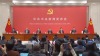
接续推进中国式现代化——中共中央举行新闻发布会解读党的二十届四中全会精神
Ren Min Ri Bao· 2025-10-24 22:06
Core Points - The Fourth Plenary Session of the 20th Central Committee of the Communist Party of China was held from October 20 to 23, focusing on the completion of the "14th Five-Year Plan" and the preparation for the "15th Five-Year Plan" [1][2] - The session approved the "Suggestions for Formulating the 15th Five-Year Plan for National Economic and Social Development," which is seen as a significant guiding document for the next five years [2][3] Group 1: Key Outcomes of the Meeting - The "Suggestions" document consists of 15 parts and 61 articles, divided into three main sections: general principles, strategic tasks, and tasks for strengthening centralized leadership [2][3] - The document emphasizes the importance of high-quality development, technological self-reliance, and social progress as key goals for the "15th Five-Year Plan" [3][4] Group 2: Economic and Social Development Goals - The main goals for the "15th Five-Year Plan" include significant achievements in high-quality development, substantial improvements in technological self-reliance, and enhanced social civilization [3][4] - The plan aims to strengthen the national security framework and improve the quality of life for citizens, laying a solid foundation for achieving socialist modernization by 2035 [3][4] Group 3: Industrial and Market Development - The plan outlines the construction of a modern industrial system, focusing on optimizing traditional industries and fostering emerging sectors, with an estimated market space of around 10 trillion yuan to be added over the next five years [6] - It emphasizes the importance of a strong domestic market as a strategic foundation for modernization, with key tasks including expanding domestic demand and improving market efficiency [6] Group 4: Technological Advancements - The "Suggestions" highlight the need for technological modernization, with projected R&D investment exceeding 3.6 trillion yuan by 2024, marking a 48% increase from 2020 [8] - The plan aims to enhance the national innovation system and promote deep integration of technological and industrial innovation [8] Group 5: Open Cooperation and Global Engagement - The meeting signaled a strong commitment to open cooperation and mutual benefit, with plans to expand high-level openness and enhance trade and investment [9][10] - The "Suggestions" include initiatives for expanding autonomous openness and promoting trade innovation, aiming to strengthen China's position in global markets [9][10] Group 6: Health and Population Development - The plan aims to provide a solid health and population foundation for modernization, with a focus on improving healthcare services and promoting a supportive environment for family growth [11][12] - It includes measures to enhance elderly care and optimize employment policies for older adults, contributing to a more inclusive society [11][12]
与世界各国共享机遇共同发展——国际社会热议中共二十届四中全会擘画“十五五”发展蓝图
Xin Hua She· 2025-10-24 16:02
Core Points - The Fourth Plenary Session of the 20th Central Committee of the Communist Party of China outlined the "15th Five-Year Plan," emphasizing China's commitment to shared opportunities and common development with the world [1][2][3] Group 1: Strategic Vision and Goals - The "15th Five-Year Plan" is positioned as a critical period for achieving socialist modernization by 2035, building on the achievements of the "14th Five-Year Plan" [2][4] - The plan reflects China's long-term planning capabilities and the advantages of its socialist system, providing predictability and confidence for global development [2][3] - The session highlighted China's awareness of potential risks and challenges, showcasing its economic vitality and resilience amid global instability [2][3] Group 2: Economic and Social Development - The "15th Five-Year Plan" aims for high-quality development, emphasizing technological self-reliance, innovation, and a modern industrial system [5][6] - The plan includes goals for improving living standards, education, healthcare, and social security, indicating a focus on enhancing the quality of life for citizens [9][10] - The emphasis on rural revitalization and balanced development reflects China's commitment to inclusive growth [6][9] Group 3: Global Impact and Cooperation - The plan is seen as a significant contribution to global economic stability, with China positioned as a key player in promoting sustainable development [8][9] - China's commitment to high-level opening-up and the Belt and Road Initiative is expected to create new opportunities for global partners [8][9] - The focus on green development and carbon peak goals indicates China's role as a leader in global ecological governance [9][10]
中央这场发布会释放重大信号:未来十多年中等收入群体将超8亿
2 1 Shi Ji Jing Ji Bao Dao· 2025-10-24 13:00
Core Points - The article discusses the key objectives and strategies outlined in the "15th Five-Year Plan" for China's economic and social development, emphasizing the importance of achieving high-quality growth and modernization by 2035 [1][2][3] Economic Growth and Development Goals - The main goals for the "15th Five-Year Plan" include achieving significant results in high-quality development, maintaining reasonable economic growth, and improving residents' consumption rates [3] - By 2035, China aims to reach a per capita GDP of approximately $23,000, requiring an average nominal GDP growth of 5% annually over the next decade [4][5] Domestic Demand and Consumption - The plan emphasizes expanding domestic demand as a strategic foundation, with a focus on enhancing consumer spending and investment in both goods and services [7][8] - The retail sales of consumer goods are projected to exceed 50 trillion yuan in 2025, positioning China as the second-largest consumer market globally [7] Modern Industrial System - The "15th Five-Year Plan" prioritizes building a modern industrial system, with a focus on optimizing traditional industries and fostering new and future industries [9] - It is estimated that the plan will create a market space of around 10 trillion yuan over the next five years, contributing to economic growth and improving living standards [9] Technological Innovation - The plan aims to accelerate high-level technological self-reliance, enhancing the overall effectiveness of the national innovation system and promoting breakthroughs in key technologies [10][11] - The artificial intelligence sector is expected to grow significantly, with over 4,500 companies projected by the end of 2024, contributing to new economic growth drivers [11] High-Level Opening Up - The plan includes a dedicated section on expanding high-level opening up, signaling China's commitment to open cooperation and mutual benefit [12][13] - It aims to leverage China's large market to attract foreign investment and enhance international collaboration, particularly in high-tech industries [13][14]
二十届四中全会会议点评:聚焦高质量发展与科技自立自强,进一步夯实市场中长期预期
Dongguan Securities· 2025-10-24 09:51
Core Insights - The report emphasizes the importance of high-quality development and technological self-reliance as key themes for the upcoming "Fifteen Five" period, building on the achievements of the "Fourteen Five" period [3][4][5] - The "Fifteen Five" period is characterized by a focus on modernizing the industrial system, enhancing technological independence, and fostering new productive forces [6][7] - The report outlines twelve specific goals for the "Fifteen Five" period, prioritizing the construction of a modern industrial system and the promotion of high-level technological self-reliance [7][8] Summary by Sections Achievements of the "Fourteen Five" Period - The "Fourteen Five" period is recognized for significant achievements in economic recovery and high-quality development, laying a solid foundation for future growth [3][4] - The report highlights the advantages of the socialist system in China and the effective leadership of the central government in navigating complex challenges [4] Goals for the "Fifteen Five" Period - The main goals include accelerating the construction of a modern industrial system, enhancing technological self-reliance, and expanding high-level openness [6][7] - The report emphasizes the need for a qualitative improvement in economic performance and a reasonable growth rate, aiming for decisive progress in modernization by 2035 [6] Economic Policy Direction - The report indicates a shift from merely pursuing economic growth to focusing on quality, efficiency, and innovation as the main drivers of development [12] - It stresses the importance of balancing multiple objectives, including growth stabilization, structural adjustment, and risk prevention [12][11] Market Implications - The report suggests that the focus on institutional innovation and high-quality development will provide clearer long-term policy expectations for the market [13] - It anticipates that sectors such as high-end manufacturing, green energy, and the digital economy will benefit from supportive policies and financial resources [14]
权威解读“十五五” 这场发布会释放重要信息
Yang Shi Xin Wen· 2025-10-24 07:56
Core Points - The key outcome of the 20th Central Committee's Fourth Plenary Session is the approval of the "Suggestions on Formulating the 15th Five-Year Plan for National Economic and Social Development" [1][3] - The "15th Five-Year Plan" outlines significant strategies and tasks for China's economic and social development during this period [4][5] Group 1: Overview of the Suggestions - The Suggestions consist of three main sections: general principles, specific strategies, and tasks for the 15th Five-Year Plan [3][4] - The first section highlights major achievements during the 14th Five-Year Plan and the significance of the upcoming plan [4] - The second section details strategic tasks and major initiatives across various sectors for the 15th Five-Year Plan [4] Group 2: Economic Development Guidelines - The Suggestions propose five guiding principles and two driving forces for economic development, emphasizing high-quality growth and comprehensive governance [4][5] - The plan aims to ensure significant progress towards socialist modernization while addressing both opportunities and challenges in the current international landscape [5][6] Group 3: Agricultural Modernization - The Suggestions prioritize agricultural modernization as a critical area for achieving overall modernization, focusing on rural revitalization and urban-rural integration [7][8] - Emphasis is placed on enhancing agricultural productivity and quality, ensuring food security, and increasing farmers' income [8][9] Group 4: Modern Industrial System - The Suggestions stress the importance of building a modern industrial system, with a focus on upgrading traditional industries and fostering new emerging sectors [11][12] - Key tasks include enhancing the competitiveness of core industries and developing strategic emerging industries such as renewable energy and advanced manufacturing [12][13] Group 5: Domestic Market Expansion - The Suggestions highlight the need to strengthen the domestic market as a strategic foundation for modernization, with a focus on expanding consumption and investment [17][18] - Specific measures include promoting consumer spending, optimizing government investment, and removing market barriers to enhance economic circulation [19][20] Group 6: Regional Development Coordination - The Suggestions outline strategies for promoting coordinated regional development, emphasizing the need for optimized spatial layouts and new urbanization [21][24] - Initiatives include enhancing infrastructure connectivity and fostering collaborative mechanisms among different regions [22][23] Group 7: Technological Self-Reliance - The Suggestions call for accelerating technological self-reliance and innovation, focusing on key areas such as semiconductor technology and high-end manufacturing [26][27] - Emphasis is placed on integrating scientific research with industrial innovation to drive economic growth [31][32] Group 8: Health and Population Development - The Suggestions propose a health-first development strategy, aiming to improve public health systems and promote population quality [49][50] - Policies will focus on enhancing healthcare services, supporting family planning, and improving elderly care systems [51] Group 9: Party Leadership and Governance - The Suggestions emphasize the importance of strengthening the centralized leadership of the Party and improving governance mechanisms [52][53] - Measures include enhancing the implementation of major decisions and promoting a clean political environment [54]

四中全会,六大信号
Zhong Guo Xin Wen Wang· 2025-10-24 00:06
Core Insights - The 20th Central Committee's Fourth Plenary Session outlines a five-year development blueprint, highlighting the complex and changing environment for China's development, characterized by both strategic opportunities and risks [1][2]. Group 1: Economic Environment and Strategic Outlook - The session emphasizes the need to maintain strategic determination and confidence in overcoming challenges, reflecting a bottom-line thinking approach [2][3]. - It acknowledges the dual pressures of intensified global competition and domestic structural issues, while asserting the resilience and potential of China's economy [1][2]. Group 2: Fundamental Requirements for Development - Five fundamental requirements for future development are established: prioritizing economic construction, focusing on high-quality development, driving reform and innovation, addressing people's needs, and ensuring strict party governance [4]. - High-quality development is positioned as the primary goal, indicating a shift from speed to quality and sustainability in economic growth [5]. Group 3: Innovation and Productivity - The session outlines 12 specific tasks, with a strong emphasis on accelerating technological self-reliance and enhancing new quality productivity through innovation [6][7]. - The integration of education, technology, and talent is highlighted as crucial for fostering innovation and driving industrial transformation [7]. Group 4: Openness and Reform - Expanding high-level openness is prioritized, signaling a commitment to linking openness with reform to foster development and cooperation [8][9]. - Initiatives such as expanding visa-free access are cited as practical steps reflecting this open stance [9]. Group 5: Economic Stability and Policy Implementation - The session stresses the importance of achieving annual economic and social development goals, focusing on stabilizing employment, businesses, and market expectations [10]. - This approach combines short-term stability measures with long-term planning, aiming to build a solid foundation for the implementation of the five-year plan [10].
首席联合解读四中全会
2025-10-23 15:20
Summary of Key Points from the Conference Call Industry or Company Involved - The conference call primarily discusses the **Chinese economy** and its **fifteenth five-year plan (十五规划)**, focusing on various sectors including technology, agriculture, and capital markets. Core Points and Arguments 1. **Focus on Domestic Demand**: The fifteenth five-year plan emphasizes expanding domestic demand through improving living standards and promoting consumption, alongside effective investment and resource allocation [1][6][11]. 2. **Technological Innovation**: China aims to enhance its technological innovation capabilities, with R&D expenditure reaching 26.2% of global spending, second only to the US. The plan prioritizes the application of technological achievements to build a modern industrial system [1][8][20]. 3. **High-Level Opening Up**: The plan stresses the importance of a high-level, autonomous opening up to foster reform and development, particularly in the context of increasing geopolitical competition [1][9][12]. 4. **Impact on Capital Markets**: Although the plan does not explicitly mention financial markets, historical trends indicate that five-year plans significantly influence capital market development. Key investment areas include high-end manufacturing, digital technology, and new consumption [1][12][14]. 5. **Challenges and Achievements of the Fourteenth Five-Year Plan**: The previous plan saw notable achievements in economic and technological strength but faced challenges such as the pandemic and real estate market adjustments, which will be addressed in the new plan [2][3]. Other Important but Possibly Overlooked Content 1. **Cultural and Agricultural Development**: The plan highlights the importance of cultural innovation and modernization in agriculture, focusing on seed industry, smart agriculture, and intelligent machinery as core development areas [4][41]. 2. **Consumer Spending**: The plan aims to stimulate consumer spending by improving income levels and addressing issues like social security and education equity [10][15]. 3. **Balance of Supply and Demand**: The strategy includes aligning new demand with new supply to foster a healthy interaction between consumption and investment [16]. 4. **Opportunities in Emerging Sectors**: The call suggests focusing on emerging sectors such as the "first launch economy," new cultural tourism projects, and the aging population economy, which present significant growth opportunities despite overall economic slowdowns [18]. 5. **Green Transition**: The plan emphasizes a comprehensive green transition, impacting industries like wind and solar energy, with ambitious targets for renewable energy capacity by 2035 [34][35]. This summary encapsulates the key insights from the conference call, providing a comprehensive overview of the strategic directions outlined in the fifteenth five-year plan and its implications for various sectors in the Chinese economy.
四大关键词看扩大高水平对外开放丨四中全会解读
2 1 Shi Ji Jing Ji Bao Dao· 2025-10-23 14:53
Core Viewpoint - The Fourth Plenary Session of the 20th Central Committee of the Communist Party of China emphasizes the importance of high-level opening up to promote economic development and modernization in China [1][3]. Group 1: Key Concepts of Opening Up - The four key concepts for future opening up are "high-level," "win-win," "innovation," and "persistence" [2][4]. - "High-level" refers to the broad, deep, and multi-faceted nature of opening up, despite facing complex external challenges [2]. - "Win-win" highlights the importance of cooperation and shared opportunities, contrasting with unilateralism and protectionism [2]. - "Innovation" focuses on adapting to new international rules and leveraging advancements in technology to enhance trade [2]. - "Persistence" emphasizes the significance of bilateral investment and the Belt and Road Initiative in fostering a new development pattern [2]. Group 2: Significance of High-Level Opening Up - High-level opening up is crucial for stimulating new growth drivers, enhancing risk resilience, promoting high-quality economic development, and increasing international influence [3][4]. - It aids in attracting advanced technology and management practices, thereby improving overall industrial competitiveness [3]. - The expansion of visa-free policies has led to a rise in inbound tourism, with China now allowing visa-free or visa-on-arrival access to over 90 countries [3]. Group 3: Trade and Investment Opportunities - In the first three quarters of the year, China's trade with Belt and Road countries reached 17.37 trillion yuan, a 6.2% increase, accounting for 51.7% of total trade [4]. - Trade with ASEAN, Latin America, Africa, and Central Asia saw growth rates of 9.6%, 3.9%, 19.5%, and 16.7%, respectively [4]. - The focus on expanding diverse export markets and broadening sources of goods is a key aspect of the opening strategy [4]. Group 4: Strategies for Expanding High-Level Opening Up - Key strategies include steadily expanding institutional openness, maintaining a multilateral trade system, and encouraging innovation in trade practices [5][6]. - Institutional openness involves reducing tariffs and aligning domestic regulations with international standards to create a fair competitive environment [5]. - The promotion of service trade and digital trade, along with enhanced intellectual property protection, is essential for fostering innovation [5][6]. Group 5: Belt and Road Initiative as a Key Tool - The Belt and Road Initiative will continue to be a vital platform for practical cooperation in infrastructure, capacity, technology, and green development [7]. - The initiative aims to enhance inclusivity and sustainability in development projects, leveraging free trade zones for policy innovation [7].
四大关键词看扩大高水平对外开放
2 1 Shi Ji Jing Ji Bao Dao· 2025-10-23 14:47
Core Viewpoint - The expansion of high-level opening-up is essential for economic development and a necessary choice for modernization in the new era [1][3] Group 1: Key Concepts from the Fourth Plenary Session - The session emphasizes four key concepts for the next five years: "high-level," "win-win," "innovation," and "persistence" [2][3] - "High-level" refers to the requirements for the breadth, depth, scope, and methods of opening-up despite complex external conditions [2] - "Win-win" highlights the importance of cooperation and shared opportunities, contrasting with unilateralism and protectionism [2] - "Innovation" focuses on adapting to new international rules and leveraging technological advancements for trade transformation [2] - "Persistence" underscores the significance of bilateral investment and the Belt and Road Initiative in fostering a new development pattern [2] Group 2: Significance of High-Level Opening-Up - High-level opening-up is crucial for stimulating new growth momentum by introducing advanced technologies and management practices [3] - It enhances risk resistance through diversified international market layouts, reducing external shocks [3] - It promotes high-quality economic development and regional coordination [3] - It increases international influence, showcasing China's responsible global role and contributing to global development [3] Group 3: Strategies for Expanding High-Level Opening-Up - Steadily expand institutional opening-up by reducing tariffs and aligning domestic regulations with international standards [6][7] - Maintain a multilateral trade system and expand international cooperation through platforms like the Belt and Road Initiative [6][7] - Actively promote self-initiated opening-up and encourage innovation in new trade models such as e-commerce and digital trade [6][7] Group 4: Future Directions and Initiatives - The focus will be on deepening reforms in areas like intellectual property protection and digital economy governance to enhance the business environment [7] - The dual circulation strategy will be promoted to integrate domestic and international markets [7] - High-quality Belt and Road cooperation will be prioritized, enhancing infrastructure connectivity and sustainable development [8]
四中全会公报传递的信号:高质量发展,科技当自强
ZHESHANG SECURITIES· 2025-10-23 12:33
Group 1: Economic Development Goals - The primary goal for the 14th Five-Year Plan is to achieve significant results in high-quality development, emphasizing the continuation of current policies and economic structure transformation[1][2] - The implicit economic growth target for the 15th Five-Year Plan is likely set around 4.5%, based on experiences from the 13th and 14th Five-Year Plans[1][2] Group 2: Technological Independence - Accelerating high-level technological self-reliance is a key focus, with policies centered around new productive forces amid global changes and U.S.-China competition[3] - Support for nine future industries and addressing "bottleneck" areas are essential for achieving technological independence[3] Group 3: Manufacturing Sector - Maintaining a reasonable proportion of the manufacturing sector is crucial, with a focus on advanced manufacturing as the backbone of a modern industrial system[4][13] - The emphasis is on integrating high-tech advancements into traditional manufacturing to enhance competitiveness[4][13] Group 4: Investment Strategies - The report highlights the need for a combination of investments in physical infrastructure and human capital to stimulate domestic demand[5][7] - Investment in human capital is seen as a key driver for demand, especially in the context of shifting economic structures and reduced cyclical effects from real estate[7] Group 5: Market Economy and Openness - Building a high-level market economy involves promoting the organic combination of institutional advantages and market mechanisms[8] - Expanding high-level openness focuses on mutual benefits and integrating domestic rules with global trade standards[8]