AI大模型

Search documents
消费电子ETF(561600)涨超1.3%,荣耀全球发货量首次突破7100万台
Xin Lang Cai Jing· 2026-01-14 05:40
Group 1 - The core viewpoint of the news highlights the strong performance of the consumer electronics sector, with the CSI Consumer Electronics Theme Index rising by 1.21% and notable gains in individual stocks such as Chipone Technology (up 5.89%) and Hengxuan Technology (up 5.72%) [1] - The IDC report indicates that Apple ranked first in China's smartphone market for Q4 2025, followed by Vivo, OPPO, Huawei, and a tie between Honor and Xiaomi in fifth place. Honor achieved a significant milestone with global shipments surpassing 71 million units, marking a year-on-year growth of approximately 55% in overseas shipments, the highest among the top ten global brands [1] - Open Source Securities notes that new AI terminals are rapidly evolving from general interaction to deep scene penetration, with Chinese brands leading innovation in AI glasses, including the launch of the world's first eSIM smart AR glasses by Thunderbird and the lightweight AI glasses "Rokid Style" [2] Group 2 - The CSI Consumer Electronics Theme Index consists of 50 listed companies involved in component production and brand design, reflecting the overall performance of the consumer electronics sector. As of December 31, 2025, the top ten weighted stocks in the index accounted for 54.35% of the total index weight [2] - The Consumer Electronics ETF closely tracks the CSI Consumer Electronics Theme Index, providing investors with exposure to the performance of the sector [3]
英伟达开源模型助力智能驾驶产业发展,智能驾驶ETF(516520)2026年以来累计吸金5.42亿元!
Xin Lang Cai Jing· 2026-01-14 05:31
Group 1 - The smart driving sector has been active since 2026, driven by favorable policies, technology advancements, and cost reductions, despite a recent pullback on January 13, 2026 [1][6] - The smart driving ETF (516520) has seen a net inflow of 542 million yuan over the past seven trading days, reaching a total fund size of 1.24 billion yuan and 898 million shares [1][6] - The L3-level autonomous driving regulations are gradually being implemented, hardware costs are decreasing, and the commercialization of Robotaxi is progressing, contributing to the growth of the sector [1][6] Group 2 - NVIDIA's release of the open-source AI model Alpamayo at CES 2026 aims to enhance decision-making capabilities in complex scenarios for autonomous driving systems, potentially lowering R&D costs for L4-level technologies [1][2][7] - The Alpamayo model reflects NVIDIA's "soft and hard integration" strategy, which enhances the value of solutions and promotes hardware iteration [2][7] - The smart driving ETF closely tracks the CSI Smart Car Theme Index, which includes companies involved in terminal perception and platform applications, with significant representation from automotive parts (24.0%), semiconductors (19.6%), and passenger vehicles (14.4%) [3][8] Group 3 - The fund manager of the smart driving ETF, Huatai-PB Fund, is one of the first ETF managers in China, having launched the largest ETF in the A-share market, the Huatai-PB CSI 300 ETF, which has a current size of 434.2 billion yuan [3][8] - The Huatai-PB CSI 300 ETF will implement a cash dividend of 1.23 yuan per 10 fund shares, with a total dividend amount expected to approach 11 billion yuan, potentially setting a record for single dividends in domestic ETFs [4][9]

卫宁健康:AI大模型及相关医疗AI产品已取得部分客户合同,但仍处早期阶段
Sou Hu Cai Jing· 2026-01-14 04:07
Core Viewpoint - The company acknowledges that its AI products, including WiNGPT-related offerings, have secured some customer contracts, but revenue generation is still in the early stages and the total contract amount remains low compared to the overall contract value [1]. Group 1 - The company has a significant amount of medical data assets and advanced AI technology [1]. - The AI large model and related medical AI products have obtained some customer contracts [1]. - The cumulative contract amount for these AI products is still relatively small and constitutes a low proportion of the company's total contract amount [1].

AI大模型利好频出,恒生科技ETF易方达(513010)、港股通互联网ETF易方达(513040)获资金持续关注
Mei Ri Jing Ji Xin Wen· 2026-01-14 03:52
Group 1 - The core viewpoint of the news highlights a strong performance of AI-related stocks in the Hong Kong market, with significant increases in major indices and individual stocks [1] - The Hang Seng Technology Index rose by 1.1%, while the China Securities Hong Kong Stock Connect Internet Index increased by 1.8%, indicating a robust interest in the AI sector [1] - Notable stock performances include Alibaba Health rising over 12%, Kuaishou-W increasing over 6%, and Alibaba-W gaining over 4% [1] Group 2 - Recent inflows into AI-focused ETFs have been substantial, with the E Fund Hang Seng Technology ETF (513010) seeing a net inflow of 1.6 billion yuan and the E Fund Hong Kong Stock Connect Internet ETF (513040) experiencing a net inflow of 1.2 billion yuan over the past 10 trading days [1] - The AI sector is experiencing a wave of positive developments, including the upcoming release of DeepSeek V4 and advancements in Alibaba's Qwen 3.5, which are expected to enhance programming capabilities [1] - The emergence of open-source AI models like DeepSeek and Qwen is gaining global recognition, contributing to a high-quality development phase in AI model capabilities and reduced usage costs [1]
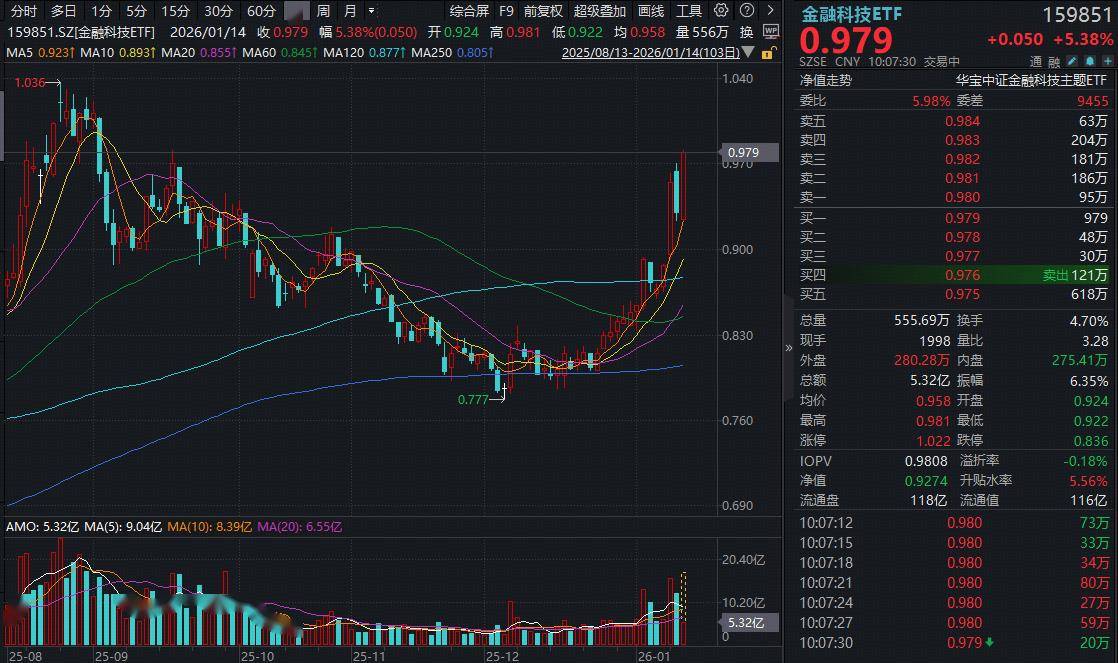
ETF盘中资讯|互联网券商+金融IT双双发力!拉卡拉20CM涨停,金融科技ETF(159851)暴力涨超5%再创阶段新高!
Sou Hu Cai Jing· 2026-01-14 02:39
Group 1 - The core viewpoint of the news highlights a significant surge in the financial technology sector, with internet brokerages and financial IT companies experiencing substantial gains, particularly with stocks like Lakala and Taxfriend reaching their limits [1] - The financial technology ETF (159851) saw a remarkable increase of over 5%, with trading volume exceeding 500 million yuan, marking a new high for the period [1] - A-shares trading volume exceeded 3.6 trillion yuan at the beginning of the year, setting a historical record, indicating a potential performance release for internet brokerages in 2025 and the first half of 2026 [1] Group 2 - The financial IT sector is undergoing a transformation driven by policy, technology, and business needs, with a focus on domestic alternatives and compliance [2] - By 2025, approximately 75%, 85%, and 90% of financial institutions are expected to have completed cloud deployment for core business systems, office systems, and peripheral business systems, respectively [2] - AI is rapidly penetrating core business areas, facilitating a shift from rule-based to intelligent decision-making, with brokerages enhancing their trading systems for microsecond latency control [2] Group 3 - Emerging business scenarios such as wealth management and inclusive finance are driving IT investments from rigid expenditures to structural growth [2] - The financial technology ETF (159851) has shown strong liquidity, with an average daily trading volume of 800 million yuan over the past six months, leading among similar ETFs [2]


互联网券商+金融IT双双发力!拉卡拉20CM涨停,金融科技ETF(159851)暴力涨超5%再创阶段新高!
Xin Lang Cai Jing· 2026-01-14 02:21
Core Viewpoint - The financial technology sector is experiencing significant growth, driven by the performance of internet brokerages and financial IT companies, with notable stock price increases and record trading volumes in the A-share market [1][3][4]. Group 1: Market Performance - Internet brokerages have seen a surge in trading volume, with A-share turnover exceeding 3.6 trillion yuan at the start of the year, marking a historical high [3][8]. - The financial technology ETF (159851) has experienced a substantial increase, with a more than 5% rise and trading volume exceeding 500 million yuan, reaching a new peak [1][4]. Group 2: Future Projections - By 2025, A-share trading volume is projected to surpass 400 trillion yuan, indicating sustained market activity and potential performance releases for internet brokerages in 2025 and the first half of 2026 [3][8]. - The financial technology sector is expected to benefit from a combination of policy, technology, and business dynamics, reshaping growth logic [3][8]. Group 3: Investment Opportunities - Investors are encouraged to focus on the financial technology ETF (159851) and its associated funds, which cover a wide range of themes including internet brokerages, financial IT, cross-border payments, AI applications, and Huawei's HarmonyOS [4][9]. - The financial technology ETF has demonstrated strong liquidity, with an average daily trading volume of 800 million yuan over the past six months, outperforming other ETFs tracking the same index [4][9]. Group 4: Technological Advancements - Financial institutions are increasingly adopting cloud computing, with projections indicating that by 2025, approximately 75%, 85%, and 90% of institutions will have completed cloud deployment for core business systems, office systems, and peripheral business systems, respectively [5][9]. - AI is rapidly penetrating core business operations, facilitating a shift from rule-based to intelligent decision-making processes, with brokerages enhancing their trading systems for microsecond latency control [5][9]. Group 5: Business Evolution - Emerging business scenarios such as wealth management and inclusive finance are driving IT investments from "rigid expenditures" to "structural growth," indicating a shift in value creation dynamics within the financial technology sector [5][9].
股指:春躁抢跑
Xin Lang Cai Jing· 2026-01-14 01:20
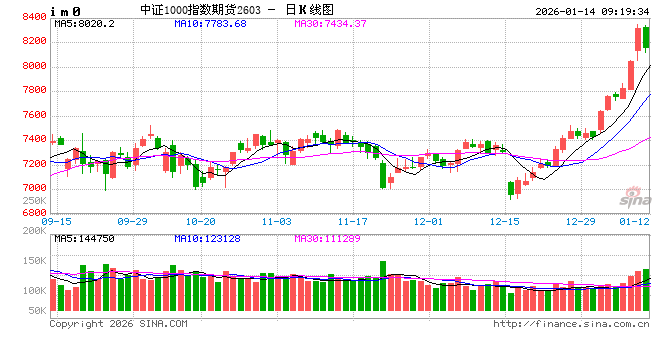
来源:中粮期货研究中心 摘要 2026年的慢牛行情定价将从拔估值转向对盈利面趋势确认的转换,行情将在震荡中逐步上攻。成长风格 与小盘风格通常在春季行情中明显占优,但当前中小盘涨势远超大盘,需要关注1月中旬之后到春节前 市场逐步降温的可能。 元旦归来,市场表现更加强势。上证指数17连阳,打破了尘封33年的连阳历史纪录,时隔10年再次站上 4100点大关。市场交投持续火爆,成交额接连四日破3万亿元,本周一的3.6万亿、周二的3.7万亿天量成 交也创下成交额历史记录。 复盘本轮行情,中小盘、成长风格涨幅巨大,属于典型的春躁行情。只不过当前的行情启动相较过往的 时间有所提前,提前因素也与今年是十五五规划开局之年有所关系。归因来看,政策托底、资金涌入、 情绪凝聚三大核心因素共同合理铸造新历史。基本面上,宏观经济数据也出现积极信号,比如CPI、PPI 热点栏目 自选股 数据中心 行情中心 资金流向 模拟交易 客户端 的爬坡缓解了市场对通缩的担忧。另一方面,全球产业趋势与国内产业热点形成共振,AI大模型成 熟、商业航天发射场计划启动、马斯克引领的产业变革等,中小盘、成长行业轮动行情进一步激活了市 场交易热情。 实际上从去年 ...
MiniMax累亏90亿市值超千亿 闫俊杰创业四年收获258亿财富
Chang Jiang Shang Bao· 2026-01-13 23:37
Core Viewpoint - MiniMax, a Chinese large model company, successfully listed on the Hong Kong Stock Exchange, achieving a market capitalization of HKD 1.129 trillion (approximately RMB 100.9 billion) within four years of its establishment [2][5]. Group 1: IPO and Market Performance - On its first trading day, MiniMax's stock price surged by 109%, closing at HKD 345 per share, and further increased by 15.36% on January 12, reaching HKD 389 per share [4][5]. - Despite a subsequent adjustment of 8.29% on January 13, the stock price remained HKD 365, reflecting a rise of HKD 200 from the issue price [2][5]. - MiniMax's market capitalization surpassed that of its competitor, Zhizhu, by HKD 32.9 billion, with MiniMax valued at HKD 1.129 trillion compared to Zhizhu's HKD 800 billion [5]. Group 2: Financial Performance - MiniMax has not yet achieved profitability, reporting a net loss of RMB 35.89 billion for the first three quarters of 2025, with cumulative losses expected to exceed RMB 90 billion over three years [11][12]. - The company's revenue for the first three quarters of 2025 was RMB 3.75 billion, with significant research and development expenditures of RMB 12.63 billion, approximately 3.4 times its revenue [10][12]. - Revenue growth has been rapid, with figures of RMB 0.24 billion in 2023, RMB 2.14 billion in 2024, and projected growth to exceed Zhizhu's revenue in 2025 [10]. Group 3: Ownership and Investment - The founder, Yan Junjie, holds approximately 25.58% of MiniMax's shares, translating to a wealth of about RMB 258 billion [7]. - Major investors include Alibaba Group, which invested USD 600 million in the B round of financing, holding a 12.52% stake valued at RMB 12.63 billion [8]. - Other early investors include Tencent Capital and various venture capital firms, contributing to the company's substantial funding [8]. Group 4: Legal Issues - MiniMax is currently facing lawsuits from several major U.S. film production companies, including Disney and Warner Bros, alleging copyright infringement related to its visual generation platform, Hailuo AI [12][14]. - The company asserts that these claims lack factual basis [14].


普元信息技术股份有限公司股票交易异常波动公告
Shang Hai Zheng Quan Bao· 2026-01-13 18:26
股票交易异常波动公告 本公司董事会及全体董事保证本公告内容不存在任何虚假记载、误导性陈述或者重大遗漏,并对其内容 的真实性、准确性和完整性依法承担法律责任。 重要内容提示: ● 普元信息技术股份有限公司(以下简称"公司")股票交易连续3个交易日内(2026年1月9日、2026年1 月12日、2026年1月13日)收盘价格涨幅偏离值累计超过30%,根据《上海证券交易所交易规则》《上 海证券交易所科创板股票异常交易实时监控细则》的有关规定,属于股票交易异常波动情形。 登录新浪财经APP 搜索【信披】查看更多考评等级 证券代码:688118 证券简称:普元信息 公告编号:2026-001 普元信息技术股份有限公司 ● 经公司自查并向控股股东、实际控制人核实,截至本公告披露日,不存在应披露而未披露的重大信 息。 ● 公司AI软件基础平台产品目前处于初步商业化阶段,尚未形成稳定、可持续的收入来源,短期内对公 司整体经营业绩影响有限,未来经营情况也存在一定的不确定性,技术迭代及商业化进展可能不及预 期。DeepSeek、通义千问等均为开源大语言模型,任何用户均可免费基于该模型开展训练工作,进而 进行个性化开发或模型优化, ...

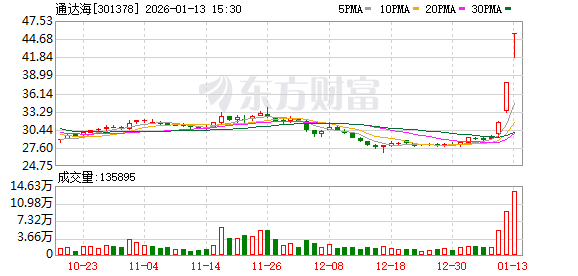
通达海:股票交易异常波动公告
Zheng Quan Ri Bao· 2026-01-13 15:13
证券日报网讯 1月13日,通达海发布公告称,公司股票交易于2026年1月9日、1月12日、1月13日连续三 个交易日内日收盘价格涨幅偏离值累计达到+30%,属于异常波动。公司核查后表示,前期信息无需更 正,生产经营正常,AI大模型应用仍处起步阶段,对收入影响较小,不存在应披露未披露重大事项。 (文章来源:证券日报) ...