
绿水青山就是金山银山

Search documents
科技小院把实验室搬到林场,将生态教育与生态产业融合
Jing Ji Ri Bao· 2025-08-06 05:44
Core Viewpoint - The establishment of the "Heibei Technology Courtyard" aims to bridge the gap between ecological education and industry in forest areas, facilitating direct application of research to practical needs [1][2][3] Group 1: Innovation and Research - The "Heibei Technology Courtyard" serves as a "micro-laboratory," allowing for practical, verifiable research that is more accessible than large-scale research facilities [1] - It enables continuous work by research teams and periodic consultations from various experts, transforming forest areas into ongoing innovation hubs [1][2] Group 2: Industry Development and Transformation - The technology courtyard acts as an incubator, providing diverse solutions for industry transformation in forest areas facing market uncertainties and technological feasibility challenges [2] - As projects incubated in the courtyard grow, the local economy can transition from "catching up" to "leading" in the industry [2] Group 3: Collaborative Ecosystem - The courtyard fosters a new type of collaborative community among forestry bureaus, educational institutions, and other stakeholders, extending beyond mere technical cooperation to include talent development and value shaping [2] - This shared and win-win cooperation model is more valuable than simple technical partnerships, promoting a collective value consensus among workers, researchers, and students [2] Group 4: Sustainable Development - The technology courtyard model respects research principles while being closely aligned with the practical needs of forest areas, focusing on both immediate demands and long-term development [3] - It represents an innovation in traditional forestry practices and embodies the concept that "lucid waters and lush mountains are invaluable assets," facilitating the simultaneous advancement of high-quality development and ecological protection in forest regions [3]
农业银行福建省分行:“点绿成金”走出生态富民路
Ren Min Wang· 2025-08-06 05:19
Group 1 - Fujian's unique geographical features have led to rich forestry resources, with a forest coverage rate that has ranked first in the country for over 40 years [1] - The province is actively implementing the "big food concept" to scientifically utilize forest resources and develop a "forest food bank," focusing on diverse food supply capabilities [1] - Agricultural Bank of China (ABC) in Fujian is enhancing financial innovation to address financing challenges in the forest food industry, facilitating the transformation from ecological resources to economic benefits [1] Group 2 - State-owned forest farms serve as crucial ecological barriers and wood strategic reserves, facing challenges in funding for re-production and industrial upgrades due to long growth cycles and high maintenance costs [2] - ABC's Nanping branch introduced the "Lin Guo Loan" financing scheme, allowing a state-owned forest farm to use over 2,700 acres of growing fir as collateral, successfully securing 8 million yuan in credit [2] - This innovative approach transforms static ecological resources into dynamic development capital, enabling the forest farm to upgrade its industry and create job opportunities for local farmers [2] Group 3 - Longtian County, once severely affected by soil erosion, has improved its ecological environment and is now developing oil tea industries to enhance local income [3] - ABC provided a 280,000 yuan production loan to a local farmer, enabling the establishment of an oil tea base that serves as a model for ecological poverty alleviation, benefiting over 40 households [3] Group 4 - ABC's Longtian branch has launched innovative products like "Huinong e-loan" and "Rural Revitalization Talent Loan" to address financing challenges in the forest food industry, supporting over 10,000 farmers by June 2025 [4] Group 5 - Fujian has abundant bamboo resources, with bamboo forest area reaching 18.73 million acres, accounting for 17.5% of the national total [5] - The bamboo industry has historically been fragmented and low-value, but ABC's Sanming Yong'an branch is providing comprehensive financial services to enhance the entire bamboo industry chain [5] - The "Bamboo Farmer Loan" product is designed to meet seasonal funding needs for bamboo farmers, enabling them to generate significant annual income [5] Group 6 - ABC has supported leading enterprises in the industry, such as Taicuo (Fujian) Technology Co., Ltd., which has developed various bamboo products, achieving an annual output value of nearly 40 million yuan [7] - The bank has provided 160 million yuan in credit to support the entire bamboo industry chain, promoting the value addition of forest products and increasing farmers' income [7] - As of June this year, the total balance of forest-related loans in Fujian reached 166.23 billion yuan, a year-on-year increase of 15.3%, benefiting 444,000 forestry operators [7]


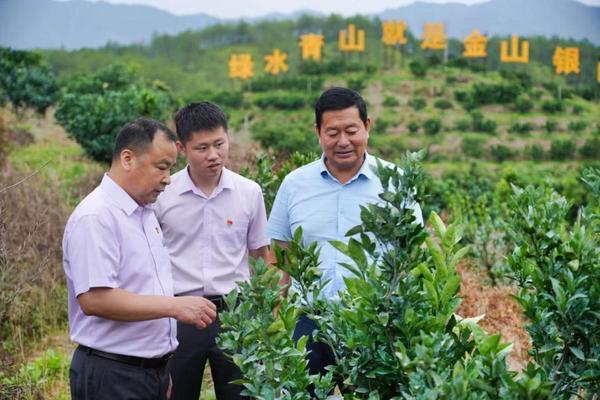
淳安聚力从“因水而名”向“因水而强”跨越
Hang Zhou Ri Bao· 2025-08-06 03:27
Group 1 - The core viewpoint of the articles emphasizes the strategic development of water-related industries in Chun'an, aiming to transform ecological resources into industrial advantages and achieve high-quality development [1][2][3] - Chun'an has signed contracts for four land-based fish farming projects with a total investment of 1.2 billion yuan, marking a shift from water conservation fisheries to water diversion fisheries [1] - The water beverage industry in Chun'an has seen an 85.9% increase in investment and a 16.6% growth in output value, indicating rapid progress in ecological industrialization [1] Group 2 - The county aims for agricultural, forestry, animal husbandry, and fishery output value to exceed 5 billion yuan this year, focusing on the development of a full industrial chain in "tea, fruit, bamboo, medicine, livestock, and fish" [2] - Chun'an is targeting to become a "Chinese high-end water industry base," with multiple water beverage projects accelerating, aiming for a year-on-year growth of over 15% in industrial output value [2] - Tourism in Chun'an has seen a 15.4% increase in visitor numbers in the first half of the year, with a goal of exceeding 13.8 million visitors for the entire year [2] Group 3 - Chun'an is addressing key issues such as building a distinctive ecological modernization industrial system, promoting tourism consumption upgrades, and achieving common prosperity through urban-rural integration [3] - The local government is implementing a "1+3+N" support mechanism to facilitate high-quality development, presenting unprecedented opportunities for Chun'an [2][3]
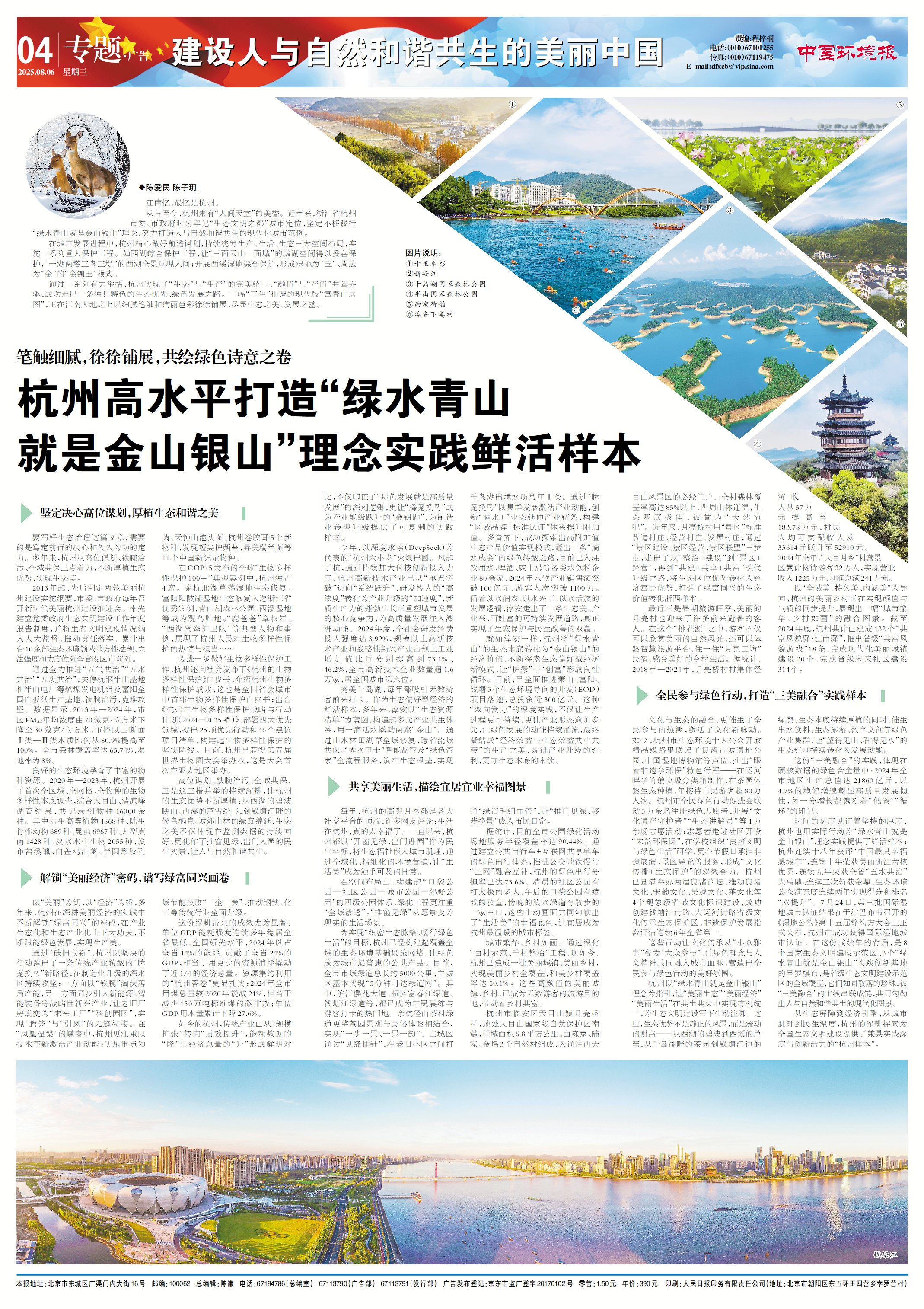
杭州高水平打造“绿水青山就是金山银山”理念实践鲜活样本
Zhong Guo Huan Jing Bao· 2025-08-06 01:35
Core Viewpoint - Hangzhou is committed to ecological civilization and sustainable development, successfully integrating ecological beauty with economic growth, showcasing a unique model of green development and harmonious coexistence between humans and nature [5][6][10]. Group 1: Ecological Initiatives - Since 2013, Hangzhou has implemented multiple ecological protection measures, including the "Beautiful Hangzhou" construction guidelines and strict pollution control, resulting in a significant reduction in PM2.5 levels from 70 µg/m³ to 30 µg/m³ by 2024 [8][10]. - The city has achieved a forest coverage rate of 65.74% and a wetland rate of 8%, enhancing its ecological advantages [8][9]. - A comprehensive biodiversity survey recorded over 16,000 species, highlighting Hangzhou's commitment to biodiversity protection, with four projects recognized in the global "Biodiversity Conservation 100+" initiative [9][10]. Group 2: Economic Transformation - Hangzhou has shifted from traditional industrial expansion to quality improvement, achieving a 21% reduction in coal consumption since 2020, equivalent to a decrease of 1.5 million tons of standard coal emissions [14][15]. - The city’s high-tech industries have seen a significant increase, with R&D expenditure reaching 3.92% of GDP, and high-tech enterprises exceeding 16,000, ranking sixth among Chinese cities [16][17]. - The "green economy" model has been successfully implemented, with the water beverage industry sales projected to exceed 16 billion yuan in 2024, demonstrating the economic benefits of ecological preservation [16][17]. Group 3: Community and Cultural Engagement - Hangzhou promotes community involvement in ecological initiatives, with over 30,000 registered volunteers participating in various environmental activities, fostering a culture of sustainability [24][25]. - The city has developed a network of ecological infrastructure, including approximately 5,000 kilometers of greenways, enhancing public access to green spaces and promoting a green lifestyle [18][19]. - The integration of cultural heritage and ecological awareness has led to increased public participation in environmental protection, transforming cultural preservation into a community-wide effort [24][25]. Group 4: Overall Achievements - Hangzhou's GDP reached 21.86 billion yuan in 2024, with a growth rate of 4.7%, reflecting the city's commitment to high-quality, low-carbon development [25][26]. - The city has received multiple accolades for its ecological efforts, including the title of "Most Livable City in China" for 18 consecutive years and successful certification as an international wetland city [26].
故乡山水丨山水留住好生活
Yang Guang Wang· 2025-08-06 00:52
央广网北京8月6日消息(记者张国亮 浙江台记者白植清 安吉台记者汤迪)据中央广播电视总台中 国之声《新闻和报纸摘要》报道,今年是"绿水青山就是金山银山"理念提出20周年。20年来,在"两 山"理念的指引下,我国生态文明建设发生历史性、转折性、全局性变化。在"两山"理念发源地浙江安 吉,20年,人们矿山旁告别、清水畔安家;20年,以生态为墨、以山水为卷,人人都是执笔者,村民们 在好山好水间过上了好生活。 青山起伏,绿水如带;山水如画,画里有潘春林的家。这里是浙江省湖州市安吉县天荒坪镇余村。 日头一点点升高,一辆辆满载着游客的大巴车驶入"画"中。 家乡成了4A级景区,潘春林在余村经营的民宿是余村第一家农家乐。 潘春林:一直到8月上旬,每天中午基本上都有100多个人用餐,我们周末的房间预订量已经达到了 95%以上,全国各地的游客都有。 潘春林的人生和余村的发展变化紧紧相连。上世纪八九十年代,余村靠山吃山,以开采山石为支柱 产业,"潘总"那会儿是矿山的拖拉机手"小潘"。 潘春林:我是从1989年开始进矿山,在矿山上面搞矿工,当拖拉机手。 潘春林坦言,二十多年前,余村矿山的粉尘和水泥灰,让他的生活"灰头土脸"。 潘春林 ...
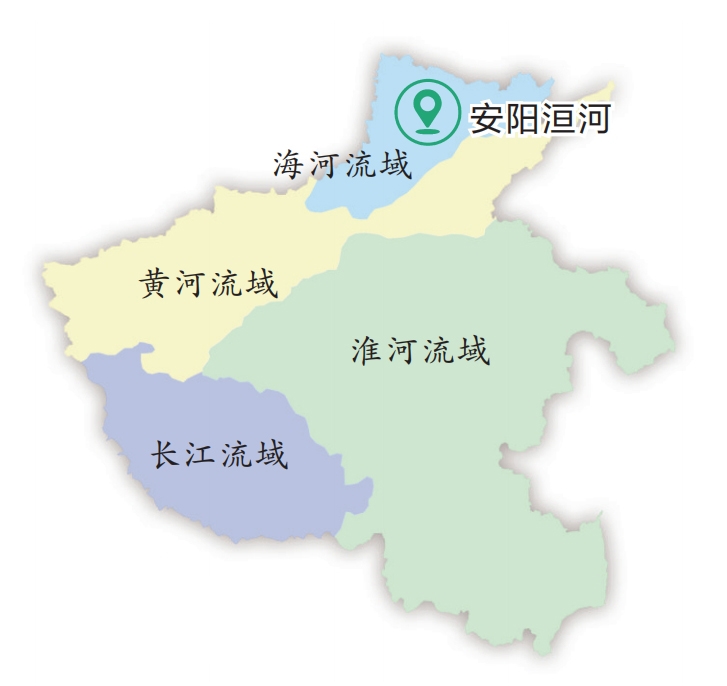
四水映绿 豫见两山丨清波洹水的古今交响
He Nan Ri Bao· 2025-08-05 23:48
Core Viewpoint - The article highlights the ecological transformation of the Huan River in Anyang, Henan Province, showcasing the successful implementation of environmental governance and the integration of ecological restoration with economic development, reflecting the principle of "Lucid waters and lush mountains are invaluable assets" [3][10]. Group 1: Ecological Restoration Achievements - The water quality of the Huan River has improved significantly, with the national control section at Zhangwu Reservoir rising from a poor V category to a II category, maintaining this standard for three consecutive years [4]. - The water quality at Fengsu Bridge has improved from a V category in 2012 to a III category in 2021, and further to a II category since 2022 [5]. - The natural shoreline has reached an 85% rate of greenery, with the populations of unique fish species and protected birds increasing annually [5][10]. Group 2: Investment and Governance Efforts - A total of 57.12 billion yuan has been invested in over 90 governance projects, including the closure of more than 1,600 "scattered and polluting" enterprises and the treatment of nearly 2,000 pollution outlets [9][13]. - The implementation of a "5G + drone" river patrol system allows for real-time monitoring of water quality parameters such as pH and dissolved oxygen [9]. Group 3: Economic and Cultural Impact - The revitalization of the Huan River has led to a significant increase in tourism revenue, exceeding 1 billion yuan in the first half of 2025, with over 200 homestays and farmhouses developed along the river [12]. - The cultural heritage of the Huan River, linked to the ancient Yin ruins, has attracted nearly 50 million tourists in the first half of the year, enhancing the local economy [11][12]. Group 4: Future Prospects - The Huan River is set to be recognized as a national-level beautiful river and lake case in 2024, symbolizing a successful model of ecological governance [10][13]. - The ongoing efforts in ecological restoration and cultural integration are expected to continue driving sustainable development in Anyang [13].
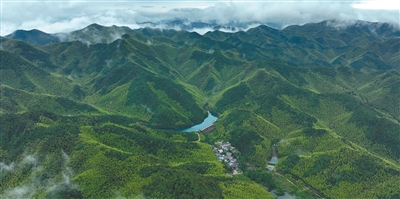
“未来乡村”在生长(家乡的山水能生金)
Ren Min Ri Bao· 2025-08-05 22:21
Core Viewpoint - The article emphasizes the successful integration of ecological protection and economic development in Qingshan Village, showcasing how environmental restoration can lead to sustainable income generation for local residents [5][12]. Ecological Restoration - Qingshan Village underwent significant ecological restoration starting in 2015, with the establishment of the "Shan Shui Fund" to manage land use and cut pollution sources, resulting in improved water quality in Longwu Reservoir [7][8]. - The village stopped using chemical fertilizers, leading to a notable enhancement in the water quality of Longwu Reservoir, which is now clear enough to reflect human images [6][8]. Rural Development - The improved ecological environment attracted over 110 new residents from various creative fields, leading to the establishment of nearly 60 institutions and an annual visitor count of around 100,000 [9][10]. - The "Natural Good Neighbor" initiative encourages villagers to operate eco-friendly businesses, with over 60 households participating, generating annual contributions of 50,000 to 100,000 yuan for ecological protection projects [10][11]. Shared Prosperity - The establishment of the Huanghu Town Strong Village Company in 2023 aims to enhance rural development through international perspectives and modern governance, extending Qingshan Village's economic activities across the region [12][13]. - The "Shan Shui Fund" model has attracted nearly 300 million yuan in social capital for rural development, promoting a sustainable development mechanism that benefits both the environment and local communities [11][14].
习近平总书记今年以来治国理政纪实丨让人民过上幸福生活是头等大事
Yang Guang Wang· 2025-08-05 03:29
Core Viewpoint - The central government, led by Xi Jinping, emphasizes the importance of improving people's livelihoods as a top priority, focusing on high-quality development and enhancing the sense of gain, happiness, and security among the populace [1][10]. Group 1: Urban Development and Community Welfare - Urban renewal projects, such as the renovation of old residential areas, are directly linked to improving the quality of life for residents and urban development [1]. - Xi Jinping visited the Chang'an community in Shenyang, highlighting the positive changes brought about by recent renovations, including improved heating systems [2][3][4]. - The government aims to integrate urban renewal with community building, focusing on convenience and welfare for residents, especially the elderly and children [8]. Group 2: Rural Development and Economic Growth - Strengthening rural grassroots party organizations is crucial for economic development and effective governance in rural areas [9]. - The government recognizes rural tourism as a significant industry and encourages preserving local characteristics to enhance tourism [9]. - Employment is prioritized as a fundamental aspect of people's livelihoods, with policies aimed at stabilizing jobs and improving labor conditions [9][10]. Group 3: Environmental Protection and Public Welfare - A good ecological environment is viewed as a fundamental public good that contributes to the well-being of the populace [10]. - The government is committed to enhancing green spaces and promoting environmental initiatives to improve the quality of life for citizens [10]. - The 20th anniversary of the "Green Water and Green Mountains are Golden Mountains and Silver Mountains" concept reflects the ongoing commitment to environmental sustainability [10]. Group 4: Disaster Response and Safety - The government has been proactive in addressing natural disasters, emphasizing the need for political responsibility and effective disaster response measures [11]. - Recent severe weather events have prompted the government to reinforce flood prevention and disaster relief efforts to safeguard citizens' lives and property [11]. Group 5: Long-term Development Goals - The upcoming "15th Five-Year Plan" will focus on ensuring that development benefits all citizens, with a strong emphasis on improving living standards and achieving common prosperity [11]. - The government aims to transform the "livelihood account" into a "happiness list," ensuring that modernization benefits are equitably distributed among the population [11].
竹林欢歌里藏着乡村振兴的“财富密码”
Hang Zhou Ri Bao· 2025-08-05 02:58
Group 1 - The core viewpoint emphasizes the transformation of Dazhu Town into a model of green development through the utilization of bamboo resources, enhancing the first, second, and third industries to achieve rural revitalization [1][3] - Dazhu Town has implemented a pilot project for the renovation of 800 acres of low-yield bamboo forest in 2022 and completed a quality improvement project for 755 acres in 2023, establishing a solid resource foundation for the entire industry chain [1] - The establishment of the Dazhu branch of Hangzhou Qiandao Lake Sentuo Bamboo Wood Co., Ltd. in April 2023, which processes 100 tons of bamboo daily, marks a significant step towards increasing the added value of the bamboo industry [2] Group 2 - The town is actively engaging with two deep processing enterprises to create a comprehensive processing system from raw materials to end products, which is expected to create over 200 jobs and enhance economic development [2] - The expansion of the second industry supports the growth of the third industry, showcasing the integration of ecology, culture, and tourism [2] - In 2023, Dazhu Town's tourist reception increased by 35% year-on-year, with tourism revenue surpassing 8 million yuan, reflecting the successful integration of bamboo culture into tourism [2][3] Group 3 - The bamboo industry in Dazhu Town has formed a virtuous cycle of stable first industry, growing second industry, and prosperous third industry, driven by multi-party collaboration [3] - The town aims to continue promoting the concept of "lucid waters and lush mountains are invaluable assets," positioning the bamboo industry as a key driver for farmers' income and rural revitalization [3]
杭州市“绿水青山就是金山银山”理念主题宣讲展示活动成功举办
Hang Zhou Ri Bao· 2025-08-05 02:58
"绿水青山就是金山银山"——这一历经廿载岁月洗礼、闪耀着真理光芒的生态文明理念,正被一股 蓬勃的青春力量深情讲述与生动诠释。8月1日,杭州市"绿水青山就是金山银山"理念主题宣讲展示活动 正式启幕。十余位来自各地的青年宣讲员,站上宣讲台,以演讲、开放麦、相声等丰富多元的形式,用 青春之声解读"绿水青山就是金山银山"理念,用青年视角展现杭州绿色蝶变的思想盛宴。 "让每一片水,都托起满载希望的'金扁担'!让每一座山,都成为取之不尽的'聚宝盆'!让每一个 村,都传颂着新时代的'春天故事'!"……此刻,理论的传承与实践的探索,正通过青年宣讲员充满激 情的表达,激荡出推动绿色发展的澎湃动能。他们以饱满的热情和接地气的语言,用"十八般武艺",将 深邃的理念转化为一个个可知可感、可学可鉴的杭州故事,让理念"活"起来、"潮"起来、"燃"起来。 创意宣讲点燃了现场的热情,思想的火花在轻松愉悦的氛围中碰撞,绿色发展的共识在欢声笑语中 凝聚。"这些青年宣讲员用我们年轻人喜欢的方式,把'高大上'的理论变得'接地气'、'有意思',让人听 得进、记得住、有共鸣。"现场观众纷纷表示。 本次主题宣讲展示活动,不仅是对"绿水青山就是金山银山"理 ...