科技金融

Search documents
协同创新科技金融
Jing Ji Ri Bao· 2025-12-28 22:03
Core Viewpoint - The recent Central Economic Work Conference emphasizes the need for innovative technology financial services, focusing on aligning financial services with the needs of technology enterprises and achieving a balance between returns and risks [2] Group 1: Human Capital Value - One of the challenges in providing financial services to technology enterprises is accurately assessing their growth potential, including evaluating debt repayment capacity and credit risk [3] - Financial institutions are exploring ways to leverage human capital value, assessing enterprise growth based on talent growth potential [4] - Zhejiang Commercial Bank has developed a technology financial service system based on a "Talent Bank," providing comprehensive financial services to over 35,000 technology enterprises with a financing balance exceeding 470 billion yuan by the end of November 2025 [4] Group 2: Intellectual Property Innovation - Another challenge is transforming intellectual property (IP) into assets, as IP is a key indicator of a technology enterprise's strength [6] - The National Financial Supervision Administration plans to conduct comprehensive pilot projects for IP financial ecosystems to address issues like pledge registration and evaluation [6] - Shanghai has initiated innovative IP applications, including IP service trusts and IP asset-backed securities (ABS), to enhance the commercialization of IP [7] Group 3: Comprehensive Service Ecosystem - A significant challenge is coordinating multiple stakeholders to create a comprehensive service ecosystem for technology enterprises [10] - The Shanghai Financial Regulatory Bureau has guided local banks to implement online, paperless processing for patent pledges, improving service efficiency [10] - To address the challenges of IP value assessment, the banking sector in Shanghai has established a financial promotion group to enhance internal evaluation mechanisms and improve the accuracy of IP value assessments [11]

扎实做好金融“五篇大文章” 助力陕西经济社会高质量发展
Jing Ji Ri Bao· 2025-12-28 22:02
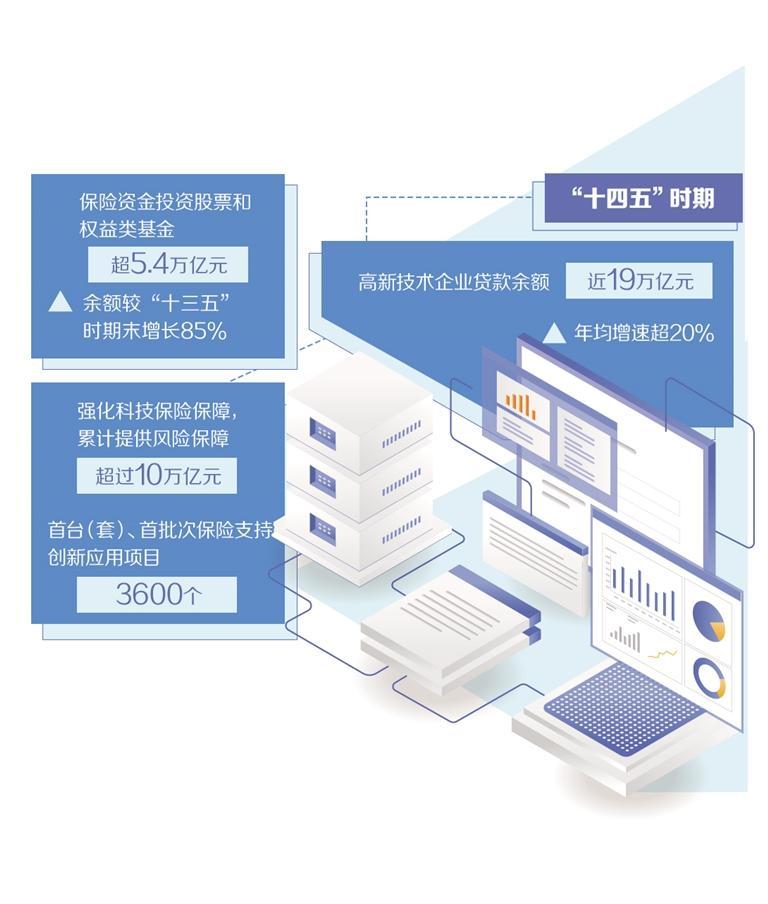
Core Viewpoint - Agricultural Bank of China Shaanxi Branch actively supports various financial initiatives to enhance economic development in Shaanxi Province, focusing on technology finance, green finance, inclusive finance, pension finance, and digital finance [4][5][7][8][11]. Group 1: Technology Finance - Agricultural Bank of China Shaanxi Branch has issued nearly 200 million yuan in loans to a specialized "little giant" enterprise, supporting its technological upgrade projects [5]. - The bank has introduced innovative financial products like "Kejie Loan" and "Torch Innovation Points Loan" to address the unique challenges faced by technology enterprises [5]. - As of November 2025, the number of technology enterprise loan accounts and loan balances increased by 671 accounts and 4.2 billion yuan year-on-year, leading the industry in growth [6]. Group 2: Green Finance - The bank emphasizes green finance to support sustainable economic development, aligning with carbon peak and carbon neutrality goals [7]. - It provided over 10 billion yuan in financing for a leading coal chemical project, setting a historical approval record for the bank [7]. - The bank's green loan balance and growth rate are among the highest in Shaanxi Province, supporting various projects in renewable energy and resource recycling [7]. Group 3: Inclusive Finance - Agricultural Bank of China Shaanxi Branch has implemented nine policy measures to enhance the accessibility and satisfaction of inclusive financial services [8]. - The bank quickly responded to a small aluminum technology company's financial needs by providing a seamless loan renewal process within five days [8]. - The inclusive loan balance increased by 15.6 billion yuan since the beginning of the year, ranking high among peers [8]. Group 4: Pension Finance - The bank is developing a high-quality pension finance service system to address the challenges of an aging population [9]. - It provided 5 million yuan in loans to a well-known health service company to expand its pension service scale [9]. - The bank has established a "Golden Years" service area to cater to elderly clients, enhancing their overall experience [10]. Group 5: Digital Finance - The bank is advancing its digital transformation to create a high-level digital financial service system [11]. - It has launched a smart campus payment system that serves over 1,000 schools, benefiting more than 440,000 students and parents [12]. - The bank introduced a multi-functional credit card that integrates financial services with transportation and daily life, promoting convenience for the public [12].
金融机构与企业深度对话——用心用力陪伴实体经济成长(深度观察)
Ren Min Ri Bao· 2025-12-28 22:02
Core Viewpoint - The Central Economic Work Conference emphasizes guiding financial institutions to enhance support for expanding domestic demand, technological innovation, and small and micro enterprises, highlighting the importance of precise financial resource allocation to key sectors and weak links in the economy [1]. Group 1: Focus Areas - Financial institutions are adopting a "precision drip irrigation" approach rather than a "flood irrigation" method to support major sectors and weak links, ensuring targeted financial assistance [2][4]. - The Industrial and Commercial Bank of China (ICBC) has developed a specialized financing plan for green factory equipment updates, providing 137 million yuan in loans to support enterprises like Luozhou Group in their green transformation efforts [2][3]. - The emphasis on financial support for the real economy has increased, with financial institutions like ICBC providing tailored project loans that facilitate equipment upgrades and technological advancements for companies [3][4]. Group 2: Innovative Services - Financial institutions are addressing the core pain points of financing for technology enterprises by offering customized products and precise services, such as the "Technology Transformation Loan" from China Construction Bank, which provides funding without requiring traditional collateral [6][7]. - The focus on "full-cycle companionship" in service innovation includes not only credit support but also comprehensive services that assist enterprises in daily operations and market expansion [7][8]. - The need for flexible support from banks, such as repayment plan adjustments and renewals, is crucial for technology enterprises facing cash flow pressures [8]. Group 3: Technology Empowerment - The advancement of financial technology is reshaping the service philosophy, models, and boundaries of banks, enabling them to provide 24/7 online services and integrate various financial services into a comprehensive ecosystem [12]. - Digital financial products, like the "Micro Business Loan" from WeBank, allow enterprises to access funds quickly and efficiently, reflecting the growing reliance on digital solutions in the financing landscape [10][11]. - The integration of AI and digital technologies in banking operations enhances efficiency and customer service, marking a significant shift towards AI-native banking [12]. Group 4: Collaborative Efforts - Multi-party collaboration is essential for effectively implementing technology finance services, moving beyond traditional collateral-based lending to accommodate the unique characteristics of technology enterprises [15]. - Beijing Bank has established a collaborative mechanism to link various resources, including partnerships with equity investment institutions and research institutes, to provide comprehensive support for technology enterprises [15]. - The approach of integrating financing with intelligence and resources creates a supportive ecosystem for technology enterprises, facilitating their growth and development [15].



筑牢实体强支撑 培育增长新动能
Xin Lang Cai Jing· 2025-12-28 21:31
Core Insights - The financial sector in Tianjin has become a crucial pillar of the local economy, with a 20% increase in both financial value added and loan scale compared to 2020, contributing 14.2% to the regional GDP [1] Group 1: Financial Support for Technology Enterprises - Tianjin's technology loan balance exceeded 900 billion yuan as of October, marking a 10.6% year-on-year increase, significantly outpacing overall loan growth [3] - The city is developing a "15th Five-Year" financial plan focused on innovative financial services to support high-quality development, including a comprehensive financial service network and risk-sharing mechanisms [3] - Initiatives will include enhancing financial services for startups, improving investment exit channels, and expanding bond issuance to assist growing enterprises [3] Group 2: Financing Leasing Industry Development - The financing leasing sector in Tianjin aims to achieve an asset scale of 2.8 trillion yuan by the end of 2030, with plans for 3,000 aircraft and 1,600 ships leased, and over 650 billion yuan in green leasing assets [5] - The city will promote innovative leasing models, strengthen judicial guarantees, and enhance regulatory frameworks to support the growth of the leasing industry [5] Group 3: Real Estate Investment Trusts (REITs) - Tianjin plans to advance the high-quality development of REITs, focusing on sectors like transportation and new infrastructure, with the goal of introducing stable long-term capital into underdeveloped areas [6] Group 4: Supporting National Strategies - By the end of Q3 2025, Tianjin's banking sector is expected to support over 1.2 trillion yuan in financing for the Beijing-Tianjin-Hebei coordinated development, with insurance providing nearly 5 trillion yuan in risk coverage [7] - The financial sector will continue to enhance its services for key projects, focusing on high-quality manufacturing and the integration of urban and industrial development [7] - Initiatives will also include promoting green finance standards and developing financial products tailored for the digital economy, enhancing the adaptability and sustainability of financial services [7]
科技金融服务如何创新?
Zheng Quan Shi Bao· 2025-12-28 18:05
Core Viewpoint - The article emphasizes the importance of innovation-driven financial services to support technological innovation and the growth of science and technology enterprises in China, highlighting recent achievements and ongoing challenges in the sector [1][2]. Group 1: Financial Support for Technological Innovation - The Central Economic Work Conference has called for strengthening innovation-driven growth and expanding new economic drivers, specifically mentioning "innovative financial services for technology" [1]. - China's financial support system for technological innovation has shown initial success, with loans to technology-based SMEs growing at over 20% year-on-year and accounting for nearly 30% of new loans [1]. - The scale of science and technology bonds has surpassed 1.7 trillion yuan, and the market capitalization of the A-share technology sector exceeds 25% [1]. Group 2: Challenges in Financial Services - Many science and technology enterprises still face difficulties in accessing financial services, particularly in different stages of their lifecycle, where the current financial system does not adequately match their needs [1][2]. - Start-up tech companies often lack operational data and credit history, making it challenging for financial institutions to assess their creditworthiness and repayment capacity [1][2]. Group 3: Innovation in Financial Services - There is a need for continuous innovation in financial services to enhance resource allocation efficiency and stimulate the vitality of tech enterprises [2]. - Financial institutions should optimize loan services for tech companies, focusing on evaluating innovation capabilities and potential for technology transfer rather than just company size [2]. - The promotion of an "innovation credit system" and the development of specialized financial products tailored to the needs of tech enterprises are essential [2]. Group 4: Capital Market Development - The capital market should enhance its inclusivity and adaptability to better support the growth of tech enterprises through improved listing and merger regulations [3]. - The implementation of the "merger six guidelines" has led to a wave of mergers in the A-share market, particularly in the hard tech sector, although some mergers have been terminated, raising investor concerns [3]. - There is a need for strong regulatory oversight to ensure transparency in the reasons behind failed mergers and to encourage companies to pursue innovation [3]. Group 5: Regulatory Framework and Market Stability - The rapid evolution of financial innovation necessitates the establishment of a corresponding regulatory framework to monitor and manage risks effectively [4]. - Strengthening risk monitoring and response mechanisms will enhance the stability and vibrancy of the capital market [4]. - Continuous institutional innovation is expected to drive product and model innovation, reducing financing costs for tech companies and facilitating the market entry of more "hard tech" products [4].
聚焦“智融惠畅”,推动西部金融中心建设
Xin Lang Cai Jing· 2025-12-28 17:21
Group 1 - The sixth Jiangbeizui New Financial Conference was held in Chongqing, focusing on the theme "New Finance, New Opportunities: Intelligent Integration for Building a Western Financial Center" with over 500 industry experts and representatives attending [1] - The construction of the Western Financial Center in the Chengdu-Chongqing area is a key deployment in the "Chengdu-Chongqing Economic Circle Construction Plan" [1] - Chongqing has implemented the "Intelligent Integration" project to enhance financial support, leveraging the advantages of financial institutions and talent in Jiangbeizui to strengthen the core area of the Western Financial Center [1] Group 2 - The "Intelligent Integration" project aims to activate the integration of four chains through financial services, promote innovation, and enhance inclusive finance coverage [1] - A cluster of private equity funds was officially launched in Jiangbeizui, with over 12 private equity funds introduced this year, totaling more than 10 billion yuan in committed capital to support industrial upgrades [1] - A signing ceremony for technology-finance cooperation was held, with local tech companies partnering with financial institutions to build a new ecosystem for technology finance [2] Group 3 - The establishment of the Luhai New Corridor Jiangbeizui Financial Service Base aims to create a hub for financial service supply and demand, as well as an important platform for reform and innovation [2] - The conference featured speeches from prominent figures in economics and finance, discussing topics such as "AI + Finance" and the construction of the Western Financial Center [2] - An exhibition showcasing the achievements in building the Western Financial Center was set up during the conference [2]
宁波银行荣膺2025证券市场年会“金骏马服务实体卓越机构奖”
Zheng Quan Ri Bao Zhi Sheng· 2025-12-28 11:36
Group 1 - The "2025 Securities Market Annual Conference" was successfully held in Beijing, focusing on the theme of "Reform and Innovation in Capital Markets" [1] - Industry leaders emphasized the need for dual-driven reform and innovation to enhance the capital market's ability to serve the real economy and protect investors [1] - Key areas of focus include technological finance and green finance to achieve a "new start" in the capital market [1] Group 2 - The "2025 Golden Courser Award Ceremony" recognized institutions and individuals for their contributions to the healthy development of the capital market, with 11 significant awards presented [2] - Ningbo Bank won the "Golden Courser Award for Outstanding Service to the Real Economy" due to its excellent operational performance and risk management [2] Group 3 - Ningbo Bank views the award as recognition of its past year's work and an encouragement for future development, aiming to create a competitive commercial bank in China [4] - The bank's strategy focuses on supporting the real economy and small and medium-sized enterprises (SMEs), enhancing its service offerings and operational efficiency [4] Group 4 - Ningbo Bank has implemented a "four-special" model for microfinance services, providing simple, convenient, and efficient financial services to small enterprises [5] - As of June 2025, the bank's inclusive microloans balance reached 214.34 billion yuan, serving 234,400 micro-enterprises [5] Group 5 - On December 17, Ningbo Bank announced its first mid-year dividend distribution plan, distributing a cash dividend of 3 yuan per 10 shares, totaling 1.981 billion yuan [6] - The bank continues to focus on supporting key sectors such as private SMEs, manufacturing, and consumer finance, aiming to enhance financial service quality and support the real economy [6]


高质量建设西部金融中心,重庆如何发力?
Xin Hua Wang· 2025-12-27 06:51
Core Viewpoint - The construction of the Western Financial Center in Chongqing is a key initiative under the Chengdu-Chongqing Economic Circle Development Plan, focusing on integrating various financial services to support high-quality development in the region [3]. Group 1: Financial Center Development - Chongqing is advancing its Western Financial Center through the "Smart Integration and Benefit" initiative, emphasizing technology finance, green finance, inclusive finance, pension finance, and digital finance [3]. - The establishment of the New Land-Sea Corridor Financial Service Alliance has expanded to 78 financial institutions, enhancing cross-border financial services across ASEAN and Central and Eastern Europe [4]. Group 2: Innovative Financial Services - Innovative financial services are enabling companies to thrive along the Belt and Road Initiative, with examples like the financing support for a car import-export company through railway bill financing [6]. - Chongqing has pioneered several financial innovations, including the first digital bill of lading financing and the first green corporate bond under the Belt and Road Initiative, showcasing its leadership in financial reform [6]. Group 3: Green Finance Initiatives - The city has introduced the first financial standards for inland shipping transformation and has signed green finance cooperation agreements, resulting in over 500 billion yuan in green financing [8]. - As of mid-2023, Chongqing's green loans and transformation loans exceeded 1 trillion yuan, with an annual growth rate of 32% over the past five years [8]. Group 4: Support for Small and Medium Enterprises - The "Credit Ease Loan" platform has enabled small and micro enterprises to secure loans without physical collateral, demonstrating a shift towards more accessible financing [9]. - Chongqing is enhancing its financial ecosystem to support the entire lifecycle of enterprises, particularly in technology sectors, with innovative loan products and risk compensation mechanisms [9]. Group 5: Capital Market Development - The successful listing of Seres on the Hong Kong Stock Exchange marks a significant achievement for Chongqing's capital market, highlighting the city's role in supporting high-quality enterprises [10]. - The region has attracted 464 financial institutions and 98 listed companies, strengthening its financial system's capacity to serve the real economy [10]. Group 6: Community Financial Services - The "Chongqing Quick Insurance" program exemplifies how financial services are being tailored to meet the needs of residents, particularly the elderly, by providing accessible healthcare coverage [11]. - The establishment of financial service networks in communities aims to enhance trust and accessibility, ensuring that financial services reach the grassroots level [12].

央行发布重磅报告,背后信号很大
Xin Lang Cai Jing· 2025-12-27 06:13
Core Insights - The People's Bank of China (PBOC) released the "China Financial Stability Report (2025)", indicating that the financial system is generally stable, with financial risks under control and key operational indicators within reasonable ranges [1][16]. Group 1: Financial System Stability - The report emphasizes the need for increased counter-cyclical and cross-cyclical adjustments to continuously prevent and mitigate risks in key areas, aligning with the directives from the Central Economic Work Conference [2][17]. - It highlights the importance of maintaining liquidity and promoting stable economic growth and reasonable price recovery as key considerations for monetary policy [2][17]. Group 2: Support for Technology and Innovation - The PBOC aims to enhance financial support for technology-driven enterprises, recognizing their diverse financing needs at different lifecycle stages [4][20]. - There will be a focus on increasing credit support for small and medium-sized technology enterprises and improving the structure of credit assets to align with national technology goals [4][20]. Group 3: Financing Platform Risk Mitigation - The report notes significant progress in mitigating debt risks for financing platforms, with about 40% of platforms exiting the financing platform category through market-oriented transformations [6][22]. - By the end of 2024, the scale of operating financial debt for financing platforms is expected to decrease by approximately 25% compared to early 2023, with a notable reduction in financing costs [6][22]. Group 4: Interest Rate Marketization - The PBOC is committed to deepening interest rate marketization reforms, aiming to enhance the self-discipline mechanism for interest rate pricing to better serve the real economy [7][23]. - The report indicates that while the goal of loosening administrative controls on interest rates has been largely achieved, further efforts are needed to ensure effective pricing and adjustment mechanisms [7][23]. Group 5: Market Value Management for Listed Companies - The China Securities Regulatory Commission (CSRC) has established a market value management system to guide listed companies in enhancing their quality and investment value [10][25]. - Future initiatives will include regular visits to listed companies to address challenges, improve regulatory oversight, and promote quality enhancements while preventing market manipulation [10][25][26]. Group 6: Long-term Capital Investment - The report stresses the importance of increasing the scale and proportion of long-term capital investments in A-shares, which is crucial for the stable development of the capital market [13][28]. - Various regulatory bodies will collaborate to create a favorable policy environment for long-term investments, aiming to achieve a virtuous cycle between capital market stability and high-quality economic development [13][28]. Group 7: Macro-prudential and Financial Stability Functions - The PBOC is exploring ways to expand its macro-prudential and financial stability functions to maintain stable financial market operations [15][30]. - The report outlines the need for continuous optimization of existing tools and the innovation of financial instruments to enhance the stability of financial markets [15][30].
央行发布重磅报告,背后信号很大
21世纪经济报道· 2025-12-27 05:28
Core Viewpoint - The People's Bank of China (PBOC) released the "China Financial Stability Report (2025)", indicating that the financial system is generally stable, with overall risks under control and financial institutions operating within reasonable parameters [1]. Group 1: Financial System Stability - The report emphasizes the need for increased counter-cyclical and cross-cyclical adjustments to continuously prevent and mitigate risks in key areas, aligning with the directives from the Central Economic Work Conference and the Central Financial Work Conference [3]. - It highlights the importance of maintaining ample liquidity and promoting stable growth in social financing costs, while ensuring the stability of the RMB exchange rate [3]. Group 2: Long-term Capital Market Development - The report outlines a collaborative effort among various regulatory bodies to enhance the institutional environment for long-term investments, aiming to significantly increase the scale and proportion of long-term capital invested in A-shares [2][16]. - It stresses the importance of a healthy cycle between the preservation and appreciation of long-term capital, stable capital market operations, and high-quality development of the real economy [2][16]. Group 3: Support for Technology and Innovation - The PBOC plans to deepen financial supply-side structural reforms to support technology finance, focusing on early, small, long-term, and hard technology investments [6]. - It aims to enhance credit support for technology SMEs and promote high-quality development in the venture capital sector [6][7]. Group 4: Financing Platform Risk Mitigation - The report indicates that significant progress has been made in mitigating financing platform debt risks, with a notable reduction in the scale of operating financial debt by approximately 25% compared to the beginning of 2023 [8]. - It emphasizes the need for continued support for debt restructuring and maintaining financing for key areas and projects [9]. Group 5: Interest Rate Marketization - The PBOC is committed to advancing interest rate marketization reforms, focusing on improving the pricing capabilities of financial institutions and ensuring a balance between supporting the real economy and sustainable operations [10][11]. Group 6: Market Value Management for Listed Companies - The China Securities Regulatory Commission (CSRC) has introduced a market value management system to guide listed companies in enhancing their quality and investment value [12]. - The report outlines four key areas for future work, including regular visits to listed companies, promoting quality improvements, enforcing management responsibilities, and increasing regulatory oversight to prevent market risks [12][14]. Group 7: Liquidity Risk Monitoring - The PBOC has conducted liquidity stress tests on open-ended bank wealth management products, finding that overall liquidity risks are manageable [15]. - It plans to enhance daily monitoring of liquidity risks and address potential risks arising from external shocks [15]. Group 8: Macro-Prudential and Financial Stability Functions - The PBOC aims to expand its macro-prudential and financial stability functions, continuously optimizing existing tools and exploring new financial instruments to maintain market stability [17][18].