
全球发展倡议

Search documents
弘扬“上海精神” 贡献“上合力量”
Jing Ji Ri Bao· 2025-08-30 23:20
Core Viewpoint - The "Shanghai Spirit" is essential for the development and growth of the Shanghai Cooperation Organization (SCO), emphasizing mutual trust, mutual benefit, equality, consultation, respect for diverse civilizations, and the pursuit of common development [1][2][3]. Group 1: Essence of the "Shanghai Spirit" - Mutual trust involves transcending ideological and social system differences, avoiding Cold War mentality, and fostering dialogue on security policies among member states [2][3]. - Mutual benefit reflects the need to respect each other's security and economic interests while achieving one's own goals without harming others [2][3]. - Equality signifies that all countries, regardless of size or strength, have equal rights in the international community and should respect each other without interfering in domestic affairs [2][3]. Group 2: Historical Context and Development - The "Shanghai Spirit" originated from cooperation among China, Russia, and Central Asian countries under the "Shanghai Five" mechanism, evolving from addressing historical security issues to broader regional cooperation [3][4]. - The SCO was established in 2001, with the "Shanghai Spirit" highlighted as a valuable asset accumulated through years of cooperation among member states [3][4]. - Over 24 years, the SCO's influence and appeal have grown, gaining recognition for its advocacy of dialogue over confrontation and partnership over alliances [4][5]. Group 3: Future Directions and Challenges - Moving forward, the SCO aims for high-quality development by promoting the "Shanghai Spirit" and fostering cooperation among member states to achieve common security and development [5]. - The organization must navigate significant differences among member states in economic strength, social systems, and cultural traditions while addressing complex global challenges [4][5]. - The SCO's framework is positioned to enhance regional stability and economic exchanges, contributing to global governance and the construction of a community with a shared future for humanity [5].
焦点访谈|历史照耀今天 正义必胜和平必胜人民必胜
Yang Shi Wang· 2025-08-30 14:15
Core Points - The article highlights the international support for China's anti-Japanese war, emphasizing the contributions of overseas Chinese and foreign allies, particularly the Soviet Union and the American Volunteer Group, known as the Flying Tigers [1][5][7] - It underscores the sacrifices made by foreign volunteers, including over 200 Soviet pilots and more than 2,000 members of the Flying Tigers, who played crucial roles in the conflict [3][7][9] - The narrative illustrates the shared values of justice and solidarity among nations fighting against fascism, showcasing the historical significance of these alliances in the broader context of World War II [13][20] Group 1: International Support - The Soviet Union sent over 2,000 personnel as part of the aviation volunteer team to assist China during the war [1][5] - The Flying Tigers, an American volunteer group, shot down over 2,600 enemy aircraft and were instrumental in establishing the "Hump" airlift route for transporting supplies to China [7][9] - The article mentions the emotional connection and mutual respect between Chinese citizens and foreign volunteers, as exemplified by the funeral of Soviet pilot Kuryshenko [3][5] Group 2: Historical Context - The article references the formation of the international anti-fascist united front, which included China, the U.S., the U.K., and the Soviet Union, formalized with the signing of the United Nations Declaration in 1942 [17][20] - It discusses the significance of the anti-Japanese war within the larger framework of the global struggle against fascism, highlighting China's role in advocating for a united front against aggressors [15][17] - The narrative concludes with reflections on the lessons learned from World War II, emphasizing the importance of international cooperation and the rejection of unilateralism and hegemony in contemporary global affairs [19][23]

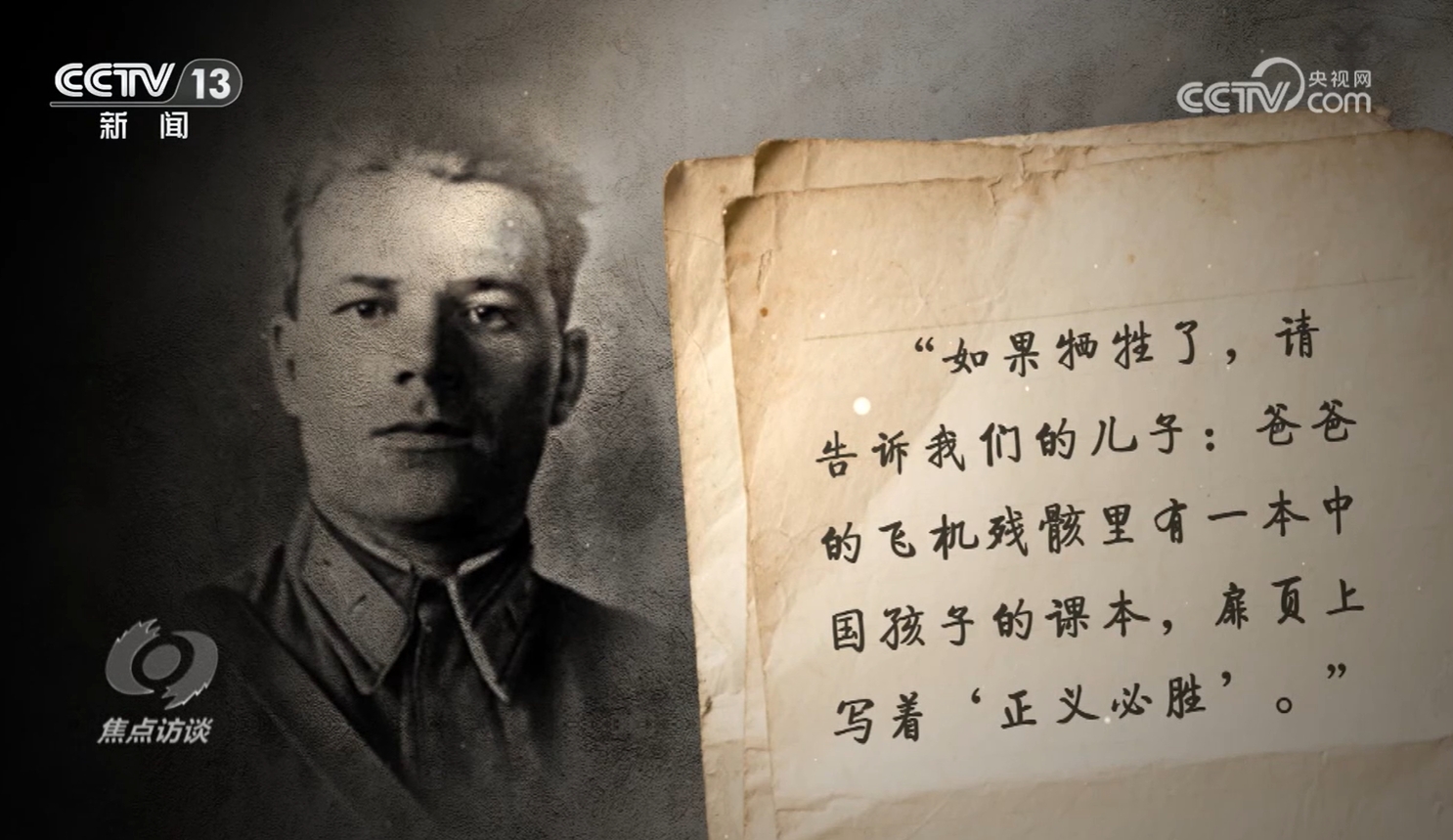
坚持命运与共 维护世界和平——中国人民抗日战争胜利80周年的时代启示之五
Xin Hua She· 2025-08-30 11:24
Core Viewpoint - The article emphasizes the importance of remembering history to better shape the future, particularly in the context of the 80th anniversary of the victory in the Chinese People's Anti-Japanese War and the World Anti-Fascist War, highlighting China's significant contributions to global peace and development [2][9][24] Historical Context - The Anti-Japanese War (1931-1945) marked a critical period where China was the first to resist Japanese aggression, contributing significantly to the global anti-fascist efforts [2][6] - The war resulted in over 35 million Chinese casualties, showcasing the immense sacrifices made by the Chinese people [6][8] International Cooperation - The article highlights the support from international allies during the war, including medical assistance from Canadian and Indian doctors, and military support from the Soviet Red Army [8][21] - The formation of the United Nations and the signing of the UN Charter in 1945 marked a significant step towards establishing international cooperation and peace [22][24] Modern Implications - The article discusses China's current initiatives, such as the Belt and Road Initiative and the Global Development Initiative, aimed at fostering international collaboration and addressing global development challenges [17][23] - It stresses the need for mutual respect and cooperation among nations to maintain peace and promote development in the face of contemporary global challenges [19][24]
上合组织天津峰会丨蔡奇会见埃及总理马德布利
Xin Hua She· 2025-08-30 07:11
Core Points - The meeting between Cai Qi and Egyptian Prime Minister Madbouli emphasizes the importance of deepening China-Egypt relations and advancing cooperation across various fields [1] - The two countries are set to celebrate the 70th anniversary of diplomatic relations next year, highlighting a long-standing partnership [1] - Both sides expressed commitment to mutual support and the implementation of key agreements reached by their leaders [1] Summary by Categories Diplomatic Relations - Cai Qi highlighted the significant consensus reached during the meetings between President Xi Jinping and President Sisi, which laid out a blueprint for the development of China-Egypt relations [1] - The commitment to mutual support and cooperation aims to build a China-Egypt community of shared destiny in the new era [1] Cooperation Initiatives - Egypt's Prime Minister Madbouli expressed adherence to the One China principle and support for China's global initiatives, including the Global Development Initiative, Global Security Initiative, and Global Civilization Initiative [1] - There is a willingness from Egypt to learn from China's development experience and enhance practical cooperation [1]
乌兹别克斯坦总统:为全球和平与繁荣而合作
Bei Jing Ri Bao Ke Hu Duan· 2025-08-30 00:53
Core Points - The article emphasizes the importance of cooperation for global peace and prosperity, particularly through the Shanghai Cooperation Organization (SCO) [3][5][6] - Uzbekistan's strategic partnership with China is highlighted as a key factor in regional stability and sustainable development [3][4][6] Group 1: Shanghai Cooperation Organization (SCO) - The SCO is increasingly recognized as a significant international cooperation model, promoting equality, mutual benefit, and non-interference in internal affairs [5][6] - The organization has successfully united countries with diverse political systems, cultures, and economic levels, demonstrating the potential for multilateral cooperation [5][6] - The SCO's member states cover approximately two-thirds of the Eurasian landmass and account for nearly half of the world's population, with a combined GDP representing about one-quarter of the global economy [5][6] Group 2: Uzbekistan-China Relations - Trade between Uzbekistan and China has doubled since 2017, reaching $14 billion, with plans to increase it to $20 billion in the coming years [4] - Uzbekistan has attracted $24.6 billion in Chinese investments during the same period, showcasing the growing economic ties between the two nations [4] - The relationship is characterized by regular political dialogue and cooperation across various sectors, including trade, security, and cultural exchanges [3][4][6] Group 3: Regional Cooperation and Security - Uzbekistan advocates for enhanced cooperation within the SCO framework, focusing on security, law enforcement coordination, and combating drug trafficking [11] - The country emphasizes the need to eliminate trade barriers and simplify customs processes to fully leverage the SCO's trade and investment potential [11] - Cultural and educational exchanges are prioritized to foster mutual trust and respect among member states [11]
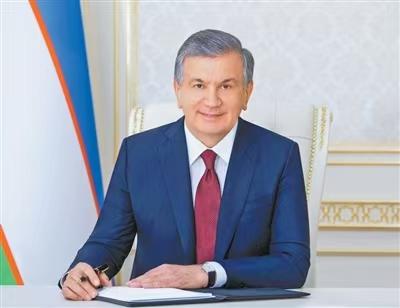
为全球和平与繁荣而合作
Ren Min Ri Bao· 2025-08-29 22:01
Group 1 - The core viewpoint emphasizes the growing significance of the Shanghai Cooperation Organization (SCO) in regional development and the well-being of its member states [2] - Uzbekistan and China have established a sustainable and comprehensive strategic partnership, enhancing political dialogue and economic cooperation [2][3] - Trade between Uzbekistan and China has doubled since 2017, reaching $14 billion, with plans to increase it to $20 billion in the coming years [3] Group 2 - The SCO promotes a model of international cooperation based on equality, mutual benefit, and non-interference in internal affairs, attracting diverse countries [4] - The organization has successfully united countries with different political systems and economic levels, demonstrating the potential for multilateral cooperation [4][5] - The SCO covers a vast area, with member states accounting for about two-thirds of the Eurasian landmass and nearly half of the global population, contributing to approximately 25% of the world's GDP [4] Group 3 - Uzbekistan has actively participated in the SCO since its inception, contributing to the organization's steady development and having served as the rotating chair four times [6] - The 2022 Samarkand Summit was a milestone, resulting in over 40 important decisions and agreements [6] - China has played a crucial role in the SCO's institutional development and treaty law, with its initiatives significantly contributing to the organization's modern cooperation framework [6][7] Group 4 - The SCO provides a viable alternative to a world order based on dialogue rather than force, promoting mutual respect and common development [5] - Uzbekistan's main trade partners within the SCO are China, Russia, and Kazakhstan, with a focus on enhancing transportation and logistics cooperation [9] - The organization prioritizes security, advocating for expanded cooperation in law enforcement, youth extremism prevention, and combating drug trafficking [9] Group 5 - Uzbekistan aims to fully leverage the trade and investment potential of the SCO by removing trade barriers and simplifying customs processes [9] - Cultural and educational cooperation is emphasized, with initiatives aimed at fostering mutual trust and respect among member states [9] - The upcoming SCO summit in Tianjin is anticipated to yield meaningful outcomes for all member countries [10]
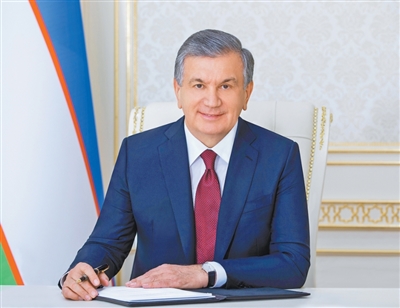
坚持和平发展 推动构建人类命运共同体
Ren Min Ri Bao· 2025-08-29 22:01
Core Viewpoint - The concept of building a community with a shared future for mankind, proposed by President Xi Jinping, addresses critical global questions and aims to guide world peace and development while fostering a strong consensus for human progress [1][2]. Group 1: Global Initiatives - Since 2021, President Xi has introduced three global initiatives: the Global Development Initiative, the Global Security Initiative, and the Global Civilization Initiative, which provide a solid foundation for constructing a community with a shared future [2]. - Over 100 countries and international organizations support the Global Development Initiative, with 80 countries joining the "Friends of the Global Development Initiative" group [2]. - The Global Security Initiative has received backing from over 130 countries and is included in more than 140 bilateral and multilateral documents [2]. - The Global Civilization Initiative is increasingly recognized globally, being referenced in various UN resolutions and designated June 10 as "International Day for Civilizational Dialogue" [2]. Group 2: Diplomatic Engagement - Xi Jinping's "head-of-state diplomacy" has been pivotal in China's foreign relations, with 55 outbound visits and interactions with over 230 foreign heads of state since the 18th National Congress of the Communist Party [2]. - China aims to foster a stable and balanced relationship with major powers, emphasizing mutual respect and cooperation, particularly in its relations with Russia and the European Union [3]. Group 3: Regional Cooperation - China is committed to building a community of shared destiny with neighboring countries, promoting principles of mutual benefit and cooperation [3]. - The country emphasizes its role as a member of the Global South, advocating for strategic trust and practical cooperation with developing nations [3]. Group 4: Support for the United Nations - China advocates for the strengthening of the United Nations' role in international affairs, aligning with the principles of the UN Charter and supporting multilateralism [4]. - The country has made significant contributions to addressing global challenges, including political resolutions of hotspot issues and climate change [4][6]. Group 5: Climate Action - As a key player in the Paris Agreement, China is advancing its "dual carbon" goals and engaging in international climate cooperation under the guidance of Xi Jinping's ecological civilization thought [5][6].
共同奔赴美好未来——中国携手上合伙伴汇聚和平发展力量
Xin Hua She· 2025-08-29 13:58
Group 1 - The Shanghai Cooperation Organization (SCO) will hold its largest summit in Tianjin from August 31 to September 1, 2025, with President Xi Jinping presiding over the meetings [1] - The SCO has evolved from 6 founding members to 10 member countries, 2 observer countries, and 14 dialogue partners, making it the largest regional international organization in terms of area and population [2][3] - China has implemented over 100 activities since taking over the rotating presidency of the SCO, covering various fields such as politics, security, and economic cooperation [2] Group 2 - The SCO is focusing on enhancing regional connectivity and economic cooperation, with trade between China and SCO member countries expected to reach a record $890 billion in 2024, reflecting a 10.7% year-on-year increase [6] - Renewable energy capacity among SCO countries is projected to reach 2.31 billion kilowatts by the end of 2024, accounting for approximately 50% of global capacity [7] - The SCO is actively promoting cultural exchanges and cooperation in various sectors, including law enforcement training and agricultural technology [3][4] Group 3 - The upcoming summit aims to strengthen cooperation and consensus among SCO members, pushing for a new phase of high-quality development [1][5] - The SCO has been recognized for its role in addressing global challenges and promoting a fair and just global governance system [9][10] - The organization is seen as a platform for enhancing South-South cooperation and giving a voice to developing countries [10][11]
坚持和平 共谋发展
人民网-国际频道 原创稿· 2025-08-29 07:23
此次活动正值中国人民抗日战争暨世界反法西斯战争胜利80周年纪念日前夕,对南苏丹这样一个饱 经战乱、渴望发展的国家来说,更加具有重要意义。 8月25日上午10时,南苏丹首都朱巴的北京朱巴酒店高朋满座,自南苏丹2011年独立以来规模最大 的中南学术研讨会在这里隆重举行。 13名来自中国知名高校、研究机构以及央媒的专家学者不远万里来到朱巴,与20多名南苏丹当地最 知名学者一起,出席中国驻南大使馆和朱巴大学共同举办的中国—南苏丹高级别和平与发展研讨会,并 带来他们的回答。 人民网朱巴8月28日电(记者黄培昭)中国为什么能实现和平与发展?南苏丹社会各界一直希望找 到答案。 很多学者表示,"中国用了80年时间从断壁残垣、民不聊生发展至高楼林立、兴盛繁荣,给予了南 苏丹极大信心。" 南苏丹政府和执政党苏丹人民解放运动高度重视思想交流,内阁事务部长罗姆洛、贸易与工业部长 阿通及苏人解第二副主席玛丽百忙之中出席研讨会,分别提前半个小时至一个小时到场,发表主旨讲话 并全程参加活动。 "中国的经验是将改革、发展、稳定作为相互促进、相互支撑的三角结构,南苏丹应优先处理好这 三者的关系,坚定不移地走符合自身国情的现代化道路",中国人民 ...
马朝旭:构建人类命运共同体重大理念连续8年写入联大决议
Xin Jing Bao· 2025-08-29 04:20
Core Viewpoint - The concept of building a community with a shared future for mankind has been recognized as a significant international public good, influencing global peace and development [1][7]. Group 1: Historical Context and Development - The victory of the Chinese people in the Anti-Japanese War marked a historical turning point for the Chinese nation, contributing significantly to the global anti-fascist war and the pursuit of world peace [2]. - Since the founding of New China, the country has adhered to an independent and peaceful foreign policy, advocating for the principles of peaceful coexistence and contributing to global peace and development [2]. Group 2: Conceptual Framework - The concept emphasizes that humanity is a community where the fate of each nation is interconnected, advocating for collective efforts to build a harmonious world [3]. - In 2023, a comprehensive framework for building a community with a shared future was outlined, focusing on goals such as lasting peace, universal security, and common prosperity [4]. Group 3: Global Consensus and Implementation - The idea has evolved from a Chinese initiative to an international consensus, transforming from a vision into practical applications and establishing a scientific system for global governance [5][6]. - The concept transcends selfishness and protectionism, promoting cooperation among nations and reflecting a unique perspective on human development [6].