一人公司

Search documents
2026年,「一人公司」爆发
36氪· 2026-01-05 09:19
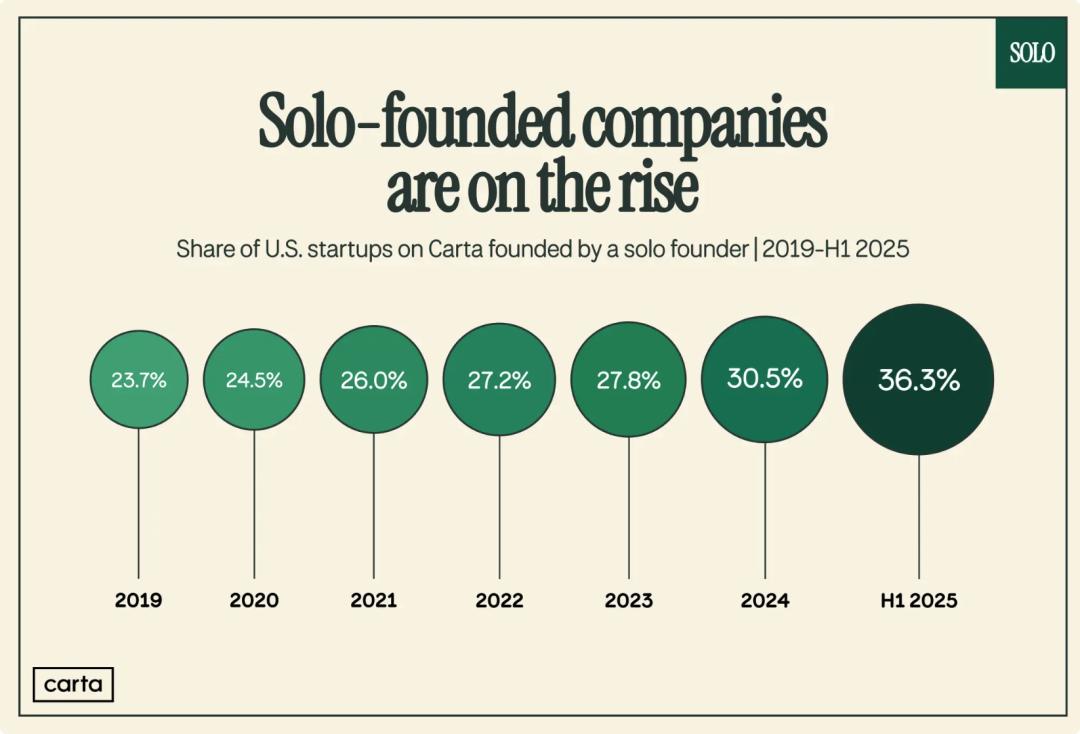
Core Viewpoint - The rise of "one-person companies" is transforming the entrepreneurial landscape, driven by advancements in AI and changing startup dynamics [6][12][76]. Group 1: Trends and Statistics - Over one-third of new companies are founded by solo founders, increasing from 23.7% in 2019 to 36.3% in the first half of 2025, marking a 53% growth over six years [9]. - The startup costs for 90% of one-person company founders are below $500, facilitated by the availability of cloud computing, SaaS tools, and AI resources [33][34]. - Reports indicate that 96% of people have used AIGC products, with nearly 70% using them daily, highlighting the rapid adoption of AI tools [29]. Group 2: Definition and Characteristics of One-Person Companies - A "one-person company" is defined as a business led by a single founder who utilizes AI and external resources to enhance their capabilities, rather than being limited to a single individual performing all tasks [18][24]. - This model allows founders to validate business ideas before assembling a team, leveraging AI tools to manage various aspects of the business efficiently [20][21]. Group 3: Reasons for the Surge in One-Person Companies - The capabilities of AI have expanded, allowing individuals to perform tasks that previously required team collaboration, thus enabling solo entrepreneurs to operate effectively [30][31]. - Successful examples of solo founders, such as Guillermo Rauch and Pieter Levels, have demonstrated the viability of this model, encouraging others to reconsider the necessity of co-founders [38][40]. Group 4: Challenges and Considerations - While one-person companies offer independence, they also present challenges such as loneliness and the burden of decision-making [51][67]. - The traditional view that co-founders are essential for risk-sharing and skill complementarity is being challenged, as conflicts among co-founders can lead to significant issues [46][47]. Group 5: Future of Organizational Structures - The emergence of one-person companies raises questions about the relevance of traditional organizational structures, as AI reduces the need for large teams and hierarchical management [59][64]. - Future organizations may evolve into dynamic networks of small teams and AI agents, capable of executing complex workflows without traditional management layers [65][66].


2026年,「一人公司」爆发,不被雇佣就不会「被裁」
创业邦· 2026-01-04 10:35
Core Viewpoint - The rise of "one-person companies" is transforming the entrepreneurial landscape, enabled by advancements in AI and a shift in startup dynamics, allowing individuals to create significant business value independently [6][12][37]. Group 1: Trends and Statistics - In 2025, over one-third of new companies were founded by solo founders, increasing from 23.7% in 2019 to 36.3% in the first half of 2025, marking a 53% growth [6][9]. - Reports indicate that 90% of one-person company founders started with less than $500, highlighting the decreasing startup costs due to the availability of cloud computing and SaaS tools [19][20]. Group 2: Advantages of One-Person Companies - AI has expanded the capabilities of individuals, allowing them to perform tasks that previously required teams, with AI tools becoming essential in daily operations [17][28]. - The traditional need for co-founders is being challenged as successful solo founders demonstrate the viability of starting alone and building teams later based on business needs [20][26]. Group 3: Challenges and Considerations - While one-person companies offer independence, they also present challenges such as loneliness and the burden of decision-making, which can be mitigated through community support and networking [26][36]. - The traditional startup model emphasizing co-founders may lead to conflicts and inefficiencies, as many startups fail due to internal disagreements among founders [24][36]. Group 4: Future of Organizational Structures - The emergence of one-person companies raises questions about the relevance of traditional organizational structures, as AI enables individuals to accomplish tasks that once required collaborative efforts [28][29]. - Future organizations may evolve into dynamic networks of small teams managing multiple AI agents, shifting away from hierarchical models [29][35].

现在「一人公司」爆发
投资界· 2026-01-04 08:15
Core Viewpoint - The emergence of "one-person companies" is reshaping the entrepreneurial landscape, driven by advancements in AI technology, allowing individuals to create and manage businesses independently without the need for traditional team structures [6][19]. Group 1: Trends and Statistics - In 2025, over one-third of new companies are founded by solo founders, increasing from 23.7% in 2019 to 36.3% in the first half of 2025, marking a 53% growth over six years [3][6]. - Reports indicate that 90% of one-person company founders have startup costs below $500, facilitated by the availability of cloud computing and SaaS tools [11][12]. Group 2: Definition and Characteristics - A "one-person company" is defined as a business led by a single founder who utilizes AI and external resources to enhance their capabilities, rather than being limited to a single individual performing all tasks [6][8]. - The model allows founders to validate business ideas before assembling a team, leveraging AI tools to streamline operations and decision-making [9][11]. Group 3: Reasons for Popularity - The rise of one-person companies is attributed to the increased capabilities provided by AI, which has made it possible for individuals to accomplish tasks that previously required teams [9][19]. - The startup costs have significantly decreased, enabling individuals to launch businesses with minimal financial investment and infrastructure [11][12]. Group 4: Challenges and Considerations - While one-person companies offer independence, they also present challenges such as loneliness and the burden of decision-making without a partner [17][23]. - Founders are encouraged to build networks for emotional support and decision-making, as well as to consider their own capabilities and willingness to adapt to AI tools [24][25]. Group 5: Future of Organizational Structures - The traditional organizational model may become less relevant as AI enables individuals to perform tasks that once required multiple people, leading to a potential shift towards dynamic networks of small teams and AI agents [19][20]. - The future may see organizations structured around results rather than hierarchical models, with small teams managing numerous AI agents to execute complex workflows [20][21].

2026年,“一人公司”爆发,不被雇佣就不会“被裁”
虎嗅APP· 2026-01-03 13:35
Core Viewpoint - The article discusses the rise of "one-person companies" in the AI era, suggesting that individuals can now create businesses valued at over $1 billion without traditional team structures, fundamentally changing the entrepreneurial landscape [5][10]. Group 1: Definition and Characteristics of One-Person Companies - A "one-person company" is defined as a business led by a single founder who utilizes AI and external resources to enhance their capabilities, rather than relying solely on a team [16]. - This model allows founders to validate business ideas before assembling a team, thus avoiding the need for immediate co-founders [17]. - The emergence of AI tools has made it feasible for individuals to operate effectively as a company, integrating various resources and tasks [19]. Group 2: Reasons for the Surge in One-Person Companies - The proliferation of AI has expanded the range of tasks that a single individual can accomplish [22]. - Reports indicate that 96% of people have used AIGC products, with 70% using them daily, highlighting the widespread adoption of AI tools [24]. - The startup costs for one-person companies have significantly decreased, with 90% of founders requiring less than $500 to start their businesses [28]. - Supportive policies for one-person companies are emerging, such as Shanghai's initiatives providing zero-rent spaces for entrepreneurs [31]. Group 3: Challenges and Considerations - While one-person companies offer independence, they also present challenges such as loneliness and the burden of decision-making [43]. - Founders are encouraged to seek community support and mentorship to mitigate feelings of isolation [44]. - The article emphasizes that the key to success in a one-person company is not doing everything alone, but rather making strategic decisions about what to pursue [68]. Group 4: Future of Organizational Structures - The rise of one-person companies raises questions about the relevance of traditional organizational structures in the AI age [48]. - AI is changing the necessity for large teams, as individuals can now accomplish tasks that previously required collaboration [51]. - Future organizations may shift from hierarchical models to dynamic networks of small teams and AI agents working together [60]. Group 5: Conclusion and Recommendations - The concept of "one-person companies" is becoming a viable path for many entrepreneurs, particularly in knowledge-intensive and creative fields [74]. - Individuals are encouraged to start small projects using AI to test their business ideas without waiting for ideal partners [75].

2026年,“一人公司”爆发,不被雇佣就不会“被裁”
3 6 Ke· 2026-01-03 06:10
Core Insights - The rise of "one-person unicorn companies" is becoming a reality in the AI era, with predictions that individuals can establish companies valued at $1 billion [1][4] - Recent data shows that over one-third of new companies are founded by solo founders, increasing from 23.7% in 2019 to 36.3% in the first half of 2025, marking a 53% growth [1] Group 1: Definition and Characteristics of One-Person Companies - One-person companies are defined as businesses led by a single founder who utilizes AI and external resources to enhance their capabilities, rather than being limited to a single individual doing all tasks [5][6] - The traditional view of entrepreneurship, which emphasizes team formation and co-founders, is being challenged by the emergence of one-person companies [4][5] Group 2: Factors Contributing to the Rise of One-Person Companies - The capabilities of AI have expanded what a single individual can accomplish, making it feasible for one-person companies to thrive [9][10] - The cost of starting a business has significantly decreased, with 90% of one-person company founders reporting startup costs below $500, thanks to the availability of cloud computing and SaaS tools [13] - Successful examples of solo founders, such as Guillermo Rauch and Pieter Levels, are demonstrating the viability of this model, prompting investors to reconsider the necessity of co-founders [14] Group 3: Challenges and Considerations - While one-person companies offer independence, they also come with challenges such as loneliness and the burden of decision-making [20][30] - The traditional advantages of co-founders, such as risk-sharing and complementary skills, can be undermined by conflicts and misalignments, which are common in co-founder relationships [16][18] - The rise of one-person companies raises questions about the relevance of traditional organizational structures in the AI age, as AI can perform tasks that previously required teams [22][23] Group 4: Future Implications - The operational model of organizations is expected to evolve from hierarchical structures to dynamic networks of small teams and AI agents, allowing for greater efficiency and flexibility [26] - One-person companies are particularly suited for knowledge-intensive and creative fields, where individuals can leverage AI to create value independently [34]
杭州问计AI新生态 争创“全国第一城”
Mei Ri Shang Bao· 2025-12-30 23:29
Group 1 - The core focus of Hangzhou's "15th Five-Year Plan" is to establish itself as the leading city for artificial intelligence innovation in China, with AI being a key driver for urban development [1] - A recent meeting in Xihu District gathered enterprises, experts, scholars, and government officials to outline a clear development logic for AI, aiming to create a replicable "Hangzhou model" for AI development [1] Group 2 - The "Magic Community" in Xihu District has been established as a significant initiative to build an open-source ecosystem, with the goal of creating a globally influential open-source brand [2] - The newly opened developer center spans over 10,000 square meters and includes various facilities such as an AI experience area, seminar rooms, and public service platforms to support the entire innovation chain from idea to product [2] Group 3 - The rise of "one-person companies" is facilitated by AI technology, allowing individuals to efficiently manage projects that previously required full teams, thus lowering costs and increasing operational freedom [4][5] - The "Magic Community" has attracted nearly fifty small teams, with about half consisting of 1 to 3 members, fostering a collaborative environment for innovation [4] Group 4 - Xihu District is planning targeted policies to support "super individuals" in entrepreneurship, including special subsidies and computing power vouchers to stabilize their initial steps [6] - Feedback from industry professionals highlights the need for high-quality data annotation and the challenges of digital operations, indicating a demand for skilled talent and supportive policies [7] Group 5 - The overall strategy for Hangzhou is shifting from isolated technological breakthroughs to a systematic ecological competition, aiming to enhance the global influence of its open-source ecosystem and produce internationally leading AI products and standards [7][8]

一人公司是传统公司的终点,也是无人公司的起点?
虎嗅APP· 2025-12-29 13:33
Core Viewpoint - The article discusses the evolution of business models from traditional companies to one-person companies and ultimately to zero-person companies, highlighting the advantages and challenges of each model, particularly focusing on the case of Pieter Levels, who successfully operates multiple million-dollar services without a team or external funding [2][8][62]. Group 1: One-Person Company (OPC) - One-person companies are not mere small workshops; they represent a powerful enhancement of traditional companies under digital leverage, capable of achieving significant results [8]. - Pieter Levels exemplifies the one-person company model, generating approximately $2.7 million annually through services like Nomad List and Remote OK, without a team or external funding [5][7]. - The operational speed of one-person companies is significantly faster than traditional firms, as they eliminate coordination friction and leverage skills and tools, particularly AI [18][17]. Group 2: Key Advantages of Pieter Levels' Model - Levels combines personal branding with product development and marketing, using his social media presence to promote his products without traditional advertising costs [26]. - He employs a strict utilitarian approach to technology, using simple and cost-effective tools to minimize development and maintenance costs, which enhances survival and profit margins [30][31]. - Levels targets niche markets that larger companies overlook, allowing him to build a successful business in areas that are too small for giants like Google and Facebook [33]. Group 3: Challenges Faced by One-Person Companies - Despite the advantages, one-person companies face limitations, such as the physical constraints of time and energy, as well as societal infrastructure that is not designed for individual operators [40][41]. - The pressure of administrative tasks can overwhelm individual entrepreneurs, leading them to consider hiring help, which can dilute their advantages [46][47]. - Levels maintains a principle of automating tasks to avoid hiring, evolving from a mere operator to a system architect who utilizes automation to manage operations [48][50]. Group 4: Transition to Zero-Person Companies - The concept of zero-person companies emerges as a natural evolution, where the operational core shifts from human operators to automated systems, allowing for greater efficiency and scalability [51][52]. - Future companies may rely on AI systems as the primary operational engine, with human founders acting as visionaries and overseers rather than day-to-day operators [55][59]. - The article emphasizes the importance of leveraging automation and AI to reduce operational complexity and enhance growth potential, marking a significant shift in how businesses are structured and evaluated [61][62].

为什么说一人公司是传统公司的终点,也是无人公司的起点?细看一个年270万美金的故事
3 6 Ke· 2025-12-29 00:31
Core Insights - The article discusses the emergence of "one-person companies" and their potential to outperform traditional large corporations by leveraging technology and personal branding [1][6][58] - Pieter Levels is highlighted as a key figure exemplifying this model, successfully generating significant revenue without a traditional team structure [4][18] Group 1: One-Person Companies - One-person companies (OPC) are seen as enhanced versions of traditional companies, utilizing digital leverage to achieve significant results [7][58] - Pieter Levels operates multiple successful services like Nomad List and Remote OK, generating around $2.7 million annually without a team [4][5] - The operational model of one-person companies eliminates coordination friction, allowing for rapid decision-making and execution [13][14] Group 2: Advantages of One-Person Companies - One-person companies can achieve high levels of creativity and flexibility, amplified by AI tools, although they may lack the overall power of larger firms [15][58] - Pieter Levels combines product development and marketing, using his personal brand as a powerful marketing tool, which allows him to avoid traditional advertising costs [20][21] - His approach emphasizes practical technology use, opting for simpler, cost-effective solutions that reduce operational expenses [22][25] Group 3: Market Strategy - Levels targets niche markets that larger companies overlook, such as the digital nomad community, which allows him to thrive in less competitive environments [30][31] - The focus on long-tail markets enables one-person companies to accumulate sufficient revenue while maintaining low operational costs [33][35] Group 4: Challenges and Limitations - Despite the advantages, one-person companies face limitations, including the physical and mental strain on the individual, as well as societal infrastructure not being designed for solo operators [39][40] - The pressure of managing various business aspects alone can lead to burnout, highlighting the need for efficient systems to handle operational tasks [42][44] Group 5: Future of Business Models - The evolution from one-person companies to "zero-person companies" is discussed, where automation and AI take over operational roles, allowing founders to focus on strategic oversight [51][56] - The article suggests that future business success will increasingly depend on automation capabilities rather than employee count, marking a shift in how companies are evaluated [60][62]
栖霞迎来首批OPC社区
Xin Hua Ri Bao· 2025-12-28 21:51
Group 1 - The "Qizhi OPC Community: AI Empowering Super Individuals Launch Season" event was held, marking the unveiling of the first OPC communities in Qixia, namely "Qizhi. Yuanli" and "Qizhi. Ruili," with 10 entrepreneurs receiving keys to enter the community [1] - The OPC concept refers to entrepreneurs who work independently using AI tools, characterized as "one-person companies" that leverage artificial intelligence for efficient and professional operations with high growth potential [1] - The "Qizhi. Yuanli" OPC community offers comprehensive support for entrepreneurs, including essential office hardware, shared meeting rooms, rest areas, and 24-hour access to facilities, catering to the irregular work rhythms of "super individuals" [1] Group 2 - Qixia has awarded the title of "Qizhi OPC Cloud Community Ecological Partners" to eight core institutions, including the Turing Artificial Intelligence Research Institute, to build a technology and service network [2] - The "Qizhi OPC University Alliance" has been launched with five universities to enhance industry-education integration and facilitate talent delivery [2] - The "Gemini Incubation Plan" was introduced to provide systematic skills and entrepreneurial training, pairing university professors with young OPC entrepreneurs to explore diverse business models [2]
都说“一人公司”好,那为什么没有遍地都是?
虎嗅APP· 2025-12-24 10:17
Core Viewpoint - The article discusses the emergence of "One-Person Companies" (OPC) in the AI era, highlighting how individuals can leverage technology to create successful businesses with minimal resources, contrasting this with traditional business models [4][6][12]. Group 1: Emergence of One-Person Companies - A new business model is emerging where a few employees can connect seamlessly to global markets, generating millions in revenue as "super individuals" [5][6]. - Sam Altman predicted that the AI era would give rise to a new type of startup: the one-person unicorn company [6][7]. - Nathan Baschez noted that startups are becoming "smaller, faster, cheaper, and weirder" [9]. Group 2: Characteristics of One-Person Companies - The key differentiator for OPCs is leverage, with AI acting as a powerful tool that allows individuals to achieve productivity levels previously only possible with larger teams [14][16]. - Examples include Pieter Levels, who operates a one-person company generating $2.5 million annually without employees, and Vivian Kaye, who achieved over $6 million in sales with her brand [16][18]. - The operational model of OPCs often involves a "front-end individual, back-end network" approach, utilizing AI and outsourcing to manage tasks efficiently [19][20]. Group 3: Challenges Faced by One-Person Companies - Many OPCs face a revenue ceiling, with most generating between $100,000 and $500,000 annually, which can lead to operational challenges if they attempt to scale beyond this range [30][31]. - The lack of redundancy in OPCs makes them vulnerable; any personal issue can jeopardize the entire business [33][34]. - There is a risk of becoming overly dependent on platforms, where changes in algorithms can drastically affect business viability [36][37]. Group 4: The Chinese Context - Lingang Experiment - The Lingang area in China is developing a more resilient and systematic growth model for OPCs, addressing key pain points such as cost anxiety and resource isolation [38][39]. - The Lingang ecosystem, termed "OPC5," aims to provide support in cost, connectivity, opportunity, convenience, and community for individual entrepreneurs [40][41]. - The area offers significant cost advantages, such as rent-free first-year support, and fosters a collaborative community among entrepreneurs [43][44]. Group 5: Future Economic Structure - The article suggests a shift towards a "dumbbell" economic structure, with a few large platforms at one end and numerous super individuals at the other, while traditional mid-sized companies may struggle to survive [56][57]. - Investment strategies are evolving, focusing more on investing in individuals rather than companies, with a potential rise in revenue-sharing models [59][60]. - The Lingang OPC model presents an attractive option for young entrepreneurs, allowing them to achieve financial independence and creative freedom without the pressures of traditional corporate structures [62].