
中国—东盟自贸区3.0版

Search documents
把握中国—东盟自贸区3.0机遇 推动数字化与绿色经济合作
人民网-国际频道 原创稿· 2025-09-19 02:30
Core Viewpoint - The 22nd China-ASEAN Expo emphasizes the opportunities presented by the upgraded China-ASEAN Free Trade Area 3.0, focusing on digital economy and low-carbon development to enhance regional competitiveness and address global challenges [2] Group 1: Trade and Economic Cooperation - The China-ASEAN Free Trade Area 3.0 will facilitate trade liberalization and provide opportunities for sustained trade and investment expansion in the region, particularly in the digital and low-carbon economy sectors [2] - The expo serves as a significant platform for expanding markets between China and ASEAN, allowing companies to showcase high-tech innovations and achievements in digital economy and green development [2] Group 2: Technological Advancements - The Thai government is undergoing a digital transformation and accelerating green development, with a focus on customizing AI technologies to meet the needs of Thai enterprises, which could significantly enhance production efficiency [2] - The expo allows businesses to observe the latest technological advancements, facilitating precise matching of supply and demand between technology providers and industry needs [2] Group 3: Future Cooperation - The future economic cooperation between Thailand and China can be summarized by three key terms: "openness, balance, and mutual benefit" [2] - The event promotes collaboration and communication in supply chain management between China and ASEAN countries [2]
第22届东博会在南宁举行—— 促进中国东盟往来 深化区域发展合作
Ren Min Ri Bao· 2025-09-18 21:51
Group 1: Event Overview - The 22nd China-ASEAN Expo and China-ASEAN Business and Investment Summit was held in Nanning, Guangxi from September 17 to 21, attracting over 3,200 enterprises from 60 countries and regions [1] - The theme of this year's expo was "Digital Intelligence Empowers Development, Innovation Leads the Future," focusing on showcasing the latest developments in emerging industry cooperation, trade investment, and cultural exchanges between China and ASEAN countries [1] Group 2: Artificial Intelligence Focus - A new 10,000 square meter Artificial Intelligence Pavilion was established, highlighting the significant role of AI at the expo, with over 50% of exhibits in the China exhibition area related to AI [2] - The first China-ASEAN AI Ministerial Forum was held, and a list of future unicorn AI companies targeting ASEAN was released, indicating strong interest in AI collaboration [2] - Indonesian AI startup AiSensum expressed that the AI-themed exhibition area provided a crucial platform for ASEAN companies to connect with the Chinese market [2] Group 3: Economic Integration and Trade Opportunities - ASEAN and China remain each other's largest trading partners, with steady growth in direct investments, as highlighted by Cambodian officials [4] - The expo featured a "Belt and Road" international exhibition area, showcasing unique products from various countries, indicating the event's expanding influence beyond just China and ASEAN [4] - The successful hosting of the expo is seen as a significant contribution to deepening the comprehensive strategic partnership between ASEAN and China, enhancing cooperation in trade, investment, and tourism [4] Group 4: Cultural Exchange and People-to-People Connections - The expo serves as an important platform for promoting cultural exchanges and mutual understanding between China and ASEAN countries [5] - The China-ASEAN Youth Leaders Growth Program was initiated to foster international exchange and cooperation among young leaders from both regions [5] - From January to August this year, over 25.2 million trips were made between Chinese residents and ASEAN countries, reflecting a 11.2% year-on-year increase in people-to-people exchanges [6]
实探东博会首创AI专馆:智能提词眼镜亮相,粤企出海觅新机
Nan Fang Du Shi Bao· 2025-09-18 14:07
Core Insights - The 22nd China-ASEAN Expo and Business and Investment Summit opened in Nanning, Guangxi, with AI as the main theme and highlight of the event [1][4] - The event featured an AI pavilion showcasing leading domestic AI companies such as Yushu, Huawei, and iFlytek, emphasizing the role of AI in enhancing international business opportunities [2][4] Group 1: AI Innovations - The event introduced a smart glasses product with real-time teleprompter functionality, representing Guangxi's commitment to embracing the AI era [2] - The AI pavilion attracted significant attention, with companies like Zhifang Technology showcasing their general-purpose intelligent robot "Aibao," which demonstrated various service and entertainment functions [3] Group 2: Cross-Border Opportunities - Companies like Mingxin Smart Technology presented AI-driven solutions for cross-border e-commerce, significantly reducing costs by approximately 90% compared to traditional methods [3] - The expo serves as a platform for Guangdong enterprises to explore opportunities in the ASEAN market, leveraging Guangxi's AI hub [2][3] Group 3: ASEAN Collaboration - This year marks significant milestones in China-ASEAN relations, including the signing of the 3.0 version of the China-ASEAN Free Trade Area agreement [4][5] - ASEAN countries are increasingly focusing on digital and AI collaboration, with Cambodia expressing support for international cooperation in AI capability building [5] Group 4: New Products and Participation - Approximately 30% of ASEAN exhibitors are debuting new products at the expo, indicating a fresh wave of innovation and collaboration [6] - Over 70 foreign purchasing groups have confirmed their participation, aiming to explore new business opportunities in AI and related sectors [6]
(经济观察)3.0时代中国东盟开放合作迈向新高度
Zhong Guo Xin Wen Wang· 2025-09-18 09:39
Core Viewpoint - The 22nd China-ASEAN Expo and China-ASEAN Business and Investment Summit highlights the deepening cooperation between China and ASEAN, particularly following the completion of the China-ASEAN Free Trade Area 3.0 negotiations, which is expected to enhance economic integration and collaboration in various sectors [1][2]. Group 1: Trade and Investment - China has maintained its position as ASEAN's largest trading partner for 16 consecutive years, while ASEAN has been China's largest trading partner for the past 5 years, with cumulative bilateral investment exceeding $450 billion as of July this year [1]. - The completion of the China-ASEAN Free Trade Area 3.0 negotiations is anticipated to further reduce tariffs and non-tariff barriers, promoting regional economic integration [2]. Group 2: Economic Cooperation and Strategic Importance - The upgraded free trade agreement will cover nine key areas, including digital and green economies, aligning with both parties' economic transformation needs and demonstrating strategic foresight [2]. - The emphasis on technology and innovation in the new framework is expected to deepen supply chain integration and enhance regional prosperity [2]. Group 3: Future Initiatives and Agreements - China has committed to accelerating regional cooperation and aims to formally sign the upgraded China-ASEAN Free Trade Area 3.0 protocol by the end of the year, focusing on nine mutually agreed key areas for beneficial cooperation [3]. - The transition to the 3.0 era of the China-ASEAN Free Trade Area is projected to improve the trade and investment environment within the region, elevating economic cooperation to new heights [3].
第22届中国—东盟博览会在南宁开幕
Xin Hua Wang· 2025-09-17 15:20
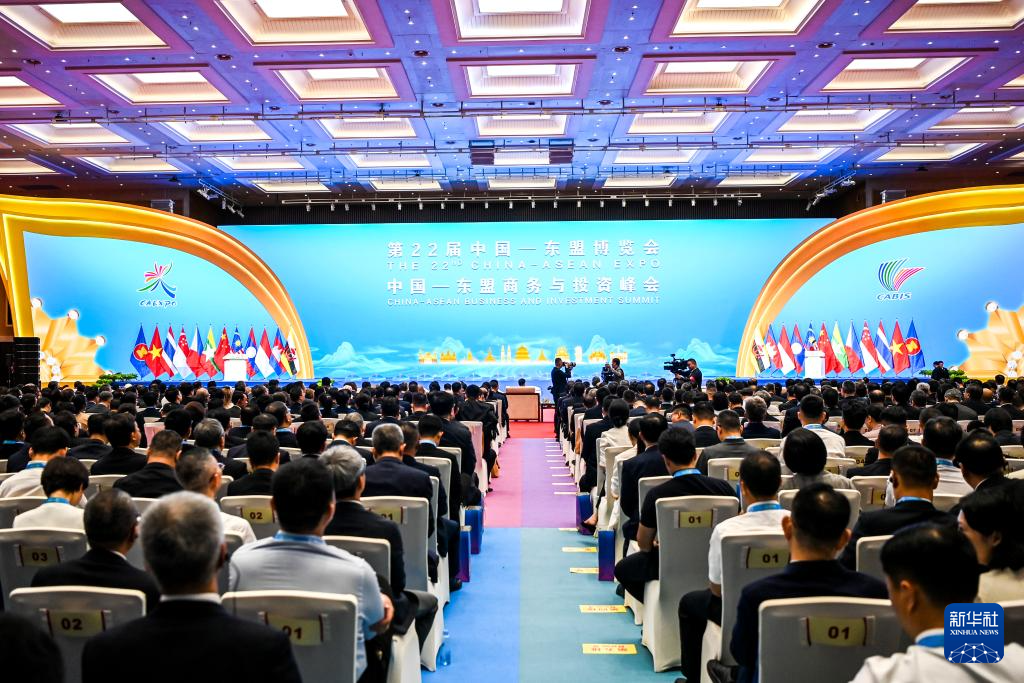
这是9月17日在广西南宁国际会展中心拍摄的第22届中国—东盟博览会暨中国—东盟商务与投资峰会开幕式现场。 新华社记者 曹祎铭 摄 【1】 【2】 【3】 【4】 9月17日,第22届中国—东盟博览会暨中国—东盟商务与投资峰会在广西南宁开幕,主题为"数智赋能发展,创新引领未来——以中国—东盟 自贸区3.0版新机遇助建命运共同体"。 ...

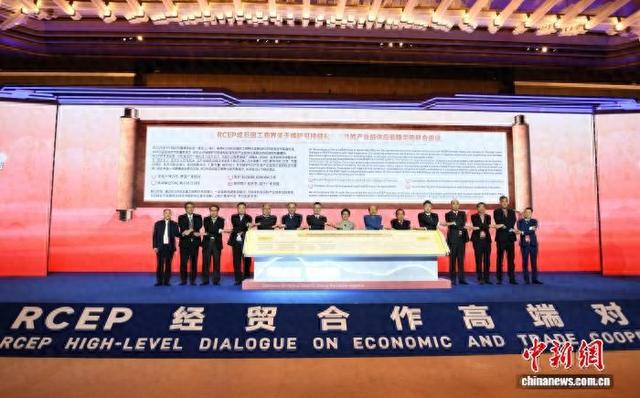
RCEP和自贸区3.0版协同增效 为全球经济发展注入新动力
Zhong Guo Xin Wen Wang· 2025-09-17 11:30
Core Insights - The 22nd China-ASEAN Expo has opened, focusing on the synergy between RCEP and the upgraded China-ASEAN Free Trade Area 3.0, aiming to maintain an open and rule-based regional market to inject new momentum into global economic development [1][3] Group 1: RCEP and Economic Cooperation - RCEP has become a major platform for advancing economic integration in the Asia-Pacific region since its implementation, with the China-ASEAN Free Trade Area being a significant achievement over the past 20 years [3] - Guangxi has attracted a total investment of $2.23 billion from other RCEP member countries over the past three years, emphasizing its role in promoting regional industrial collaboration [1] - The implementation of RCEP has opened channels for small and medium-sized enterprises to access regional and global value chains, leading to increased international sales and diversified supplier channels [3] Group 2: Challenges and Initiatives - Despite the benefits, RCEP faces challenges such as insufficient actual usage by enterprises, prompting calls for collective efforts to help businesses translate their understanding of RCEP into tangible benefits [3][4] - A joint initiative was launched by the business community of RCEP member countries to address global trade protectionism and unilateralism, highlighting the need for sustainable and inclusive supply chain stability [4] - The collaboration between RCEP and the upgraded Free Trade Area is expected to enhance cooperation in various fields, including artificial intelligence, finance, and trade, thereby boosting digital trade competitiveness [4]

第22届中国—东盟博览会开幕 人工智能是最大亮点
Zhong Guo Xin Wen Wang· 2025-09-17 05:09
Group 1 - The 22nd China-ASEAN Expo (CAEXPO) opened on September 17 in Nanning, Guangxi, with the theme "Digital Intelligence Empowering Development, Innovation Leading the Future" [1][2] - The expo covers an exhibition area of approximately 160,000 square meters, featuring over 3,200 enterprises from 60 countries, showcasing the latest achievements in China-ASEAN cooperation [1] - The event includes a new AI pavilion, a new productivity pavilion, and areas focused on blue economy and foreign trade products, with a significant increase in high-tech exhibits from China [1][2] Group 2 - AI is both the theme and the highlight of this year's expo, with over 50% of exhibits in the China section being AI or AI-enabled products [2] - The expo will host the first China-ASEAN Artificial Intelligence Ministerial Forum to promote a regular high-level dialogue mechanism [2] - A blue paper titled "China-ASEAN Economic and Trade Cooperation Outlook Report" will be released, along with 15 product launch events showcasing nearly 70 market-potential products [2]
前8月中国对东盟进出口增长9.7%
Ren Min Ri Bao· 2025-09-16 20:50
Core Insights - In the first eight months of this year, China's import and export trade with ASEAN reached 4.93 trillion yuan, marking a year-on-year growth of 9.7%, the highest for the same period historically, accounting for 16.7% of China's total import and export value [1][1][1] Trade Performance - Over 90% of the trade with ASEAN consists of manufacturing products, with exports of machine tools and automotive parts increasing by 56.1% and 22% respectively [1][1] - Imports from ASEAN saw significant growth, with computer components and printed circuit boards increasing by 47.4% and 22.2% respectively [1][1] Long-term Trends - The trade volume between China and ASEAN has grown from over 870 billion yuan at the first China-ASEAN Expo in 2004 to nearly 7 trillion yuan in 2024, representing a sevenfold increase and maintaining growth for nine consecutive years [1][1][1] Future Outlook - The China-ASEAN Free Trade Area is advancing towards version 3.0, which will further expand cooperation areas and promote deep integration of regional supply chains and economic development [1][1]
中国—东盟自贸区3.0版为区域繁荣注入新动力
Xin Hua She· 2025-09-16 10:07
Core Points - The China-ASEAN Free Trade Area (CAFTA) 3.0 negotiations began in November 2022 and are set to conclude in October 2024, with the completion of negotiations announced on May 20, 2023 [1][2] - CAFTA has evolved from its initial version in 2010 to a 2.0 version in 2015, and now to a 3.0 version, reflecting a commitment to regional economic integration and cooperation [2][3] - The trade volume between China and ASEAN has shown significant growth, with an average annual increase of 11.54% from 2010 to 2023, outpacing China's overall import and export growth [3] Summary by Sections Upgrade Rationale - The upgrade from CAFTA 2.0 to 3.0 is aimed at enhancing regional economic integration and addressing the challenges posed by unilateralism and protectionism in the global economy [2] - The 3.0 version is designed to be a high-level free trade agreement that meets the strategic needs of both parties while promoting inclusivity and mutual benefits [2][3] Key Features - CAFTA 3.0 encompasses nine areas including digital economy, green economy, supply chain connectivity, and consumer protection, addressing core issues of global industrial transformation and sustainable development [4][6] - Notable highlights include the addition of digital and green economy cooperation, a shift from tariff reduction to standard regulation, and new rules for supply chains [4][5] Benefits - The design of CAFTA 3.0 aims to benefit both macroeconomic strategies and micro-level enterprises, simplifying market access for high-tech products and enhancing the business environment [7] - The agreement includes provisions for small and medium-sized enterprises, promoting credit data sharing and streamlined customs procedures [7] - The upgrade is expected to facilitate cross-border trade and create more job opportunities, particularly in digital technology and green economy sectors [7][8] Digital Economy Impact - The implementation of CAFTA 3.0 is anticipated to help bridge the "digital divide" among ASEAN countries, enhancing digital cooperation and providing local populations with access to modern services [8] - The upcoming 22nd China-ASEAN Expo will further promote trade and investment opportunities, showcasing the benefits of the upgraded free trade area [8]
连续8年第一!东盟果蔬飘香中国
Xin Hua Wang· 2025-09-16 08:33
Core Insights - China and ASEAN have been each other's largest trading partners for five consecutive years, with ASEAN being China's largest agricultural trading partner for eight years [1] - The trade volume between China and ASEAN has increased sevenfold from 2004 to 2024, reaching nearly 7 trillion yuan, with a historical high of 4.93 trillion yuan in the first eight months of this year, marking a 9.7% year-on-year growth [1] - Agricultural cooperation has deepened, with agricultural product trade between China and ASEAN reaching 290.6 billion yuan in the first eight months of this year, also growing by 9.7% [1] - Manufacturing cooperation has strengthened, with over 90% of the trade volume in manufacturing products, including significant growth in exports of machine tools and auto parts [1] Trade Statistics - The trade volume between China and ASEAN has grown from over 870 billion yuan in 2004 to nearly 7 trillion yuan in 2024, a sevenfold increase over 21 years [1] - In the first eight months of this year, the trade volume reached 4.93 trillion yuan, accounting for 16.7% of China's total import and export value [1] - Agricultural products accounted for 20.1% of China's total agricultural import and export value, with ASEAN being the largest source of imports for various agricultural products [1] Future Outlook - The completion of the China-ASEAN Free Trade Area 3.0 negotiations is expected to further expand cooperation areas and deepen regional supply chain integration [2]