以工代赈

Search documents
兴宁市叶塘镇在全省首创以工代赈项目资产折股量化分红
Nan Fang Ri Bao Wang Luo Ban· 2025-10-21 08:17
Core Insights - The signing of the asset equity distribution agreement marks the practical implementation of Guangdong's only approved industrial labor-for-assets project for 2025, providing a replicable model for labor-for-assets work in the province [1][2] Group 1: Project Overview - The project, which received 7.5 million yuan in central funding, focuses on rural infrastructure improvements, including road construction, underground pipelines, and irrigation facilities, aiming to address local enterprises' infrastructure shortcomings [1][2] - The project is expected to create a synergistic effect by "building one facility and activating one industry" [1] Group 2: Financial Mechanism - Under the agreement, the fixed assets created will serve as the village collective's equity capital, with annual returns structured as "20,000 yuan + 1.5% of annual profit" from one company and "20,000 yuan + 1% of annual profit" from another, over a five-year period [2] - This financial model is described as a "long-term savings account" for the village collective, supporting public welfare and aiding disadvantaged groups [2] Group 3: Community Impact - The project is expected to directly create employment for over 230 rural laborers and distribute 3.4 million yuan in labor remuneration to impoverished and low-income groups [2] - The initiative aims to establish a win-win situation for the community, village collective, and enterprises, integrating local manufacturing and livestock development with social stability and infrastructure construction [2]
主要产品销量超预期,工程机械行业持续复苏 | 投研报告
Zhong Guo Neng Yuan Wang· 2025-10-21 02:04
Core Viewpoint - The mechanical equipment industry experienced a decline of 5.2% last week, influenced by market risk appetite, with specific sub-sectors like rail transit equipment and construction machinery showing smaller declines. The company suggests a balanced investment approach focusing on technology growth and cyclical sectors, maintaining a "recommended" rating for the industry [1][2]. Industry Summary - The mechanical equipment industry ranked 25th among 31 primary industries last week, with sub-sectors showing varying declines: rail transit equipment (-1.97%), construction machinery (-3.18%), general equipment (-4.89%), specialized equipment (-5.26%), and automation equipment (-8.77%) [2]. - Excavator sales in September reached 19,858 units, a year-on-year increase of 25.4%, with domestic sales at 9,249 units (+21.5%) and exports at 10,609 units (+29%). The industry is recovering, supported by new replacement cycles and large project initiations [3]. - Forklift sales in September totaled 130,380 units, up 23% year-on-year, with domestic sales at 81,119 units (+29.3%) and exports at 49,261 units (+13.9%). The industry is experiencing significant growth, driven by low base effects and advancements in automation technology [4]. - Industrial robot production in September reached 76,287 units, a 28.3% increase year-on-year, attributed to government policies promoting equipment upgrades and reduced costs for enterprises. This indicates potential investment opportunities as the industry may be reversing its previous downturn [5].
关注半导体设备、工程机械等板块投资机会 | 投研报告
Zhong Guo Neng Yuan Wang· 2025-10-15 01:45
Core Viewpoint - The mechanical equipment industry experienced a slight increase of 0.2% in the week of October 9-10, 2025, ranking 18th among 31 primary industries, with specific sub-industries showing varied performance [1][2]. Industry Performance - The sub-industry performance was as follows: rail transit equipment (+3.07%), specialized equipment (+0.54%), general equipment (+0.51%), engineering machinery (-0.16%), and automation equipment (-1.74%) [1][2]. Market Trends - Recent trade tensions are intensifying, prompting a focus on self-sufficient industrial chains and domestic demand. The industry maintains a "recommended" rating, with attention on semiconductor equipment, scientific instruments, and humanoid robots for self-sufficiency, while engineering machinery, rail transit equipment, and general equipment are highlighted for domestic demand [2]. Sales Data - Excavator sales in August 2025 reached 16,523 units, a year-on-year increase of 12.8%, with domestic sales at 7,685 units (+14.8%) and exports at 8,838 units (+11.1%). This growth is attributed to a new round of replacement cycles and large project initiations [3]. Forklift Market - Forklift sales in August 2025 totaled 118,087 units, marking a 19.42% year-on-year increase, with domestic sales at 70,174 units (+19.3%) and exports at 47,913 units (+19.6%). The growth is driven by low base effects from the previous year and advancements in automation technology [4][5]. Industrial Robots - The production of industrial robots in August 2025 reached 63,747 units, a 14.4% increase year-on-year. This growth is linked to the "old-for-new" policy and favorable financing conditions for equipment upgrades, indicating potential investment opportunities in the sector [5].
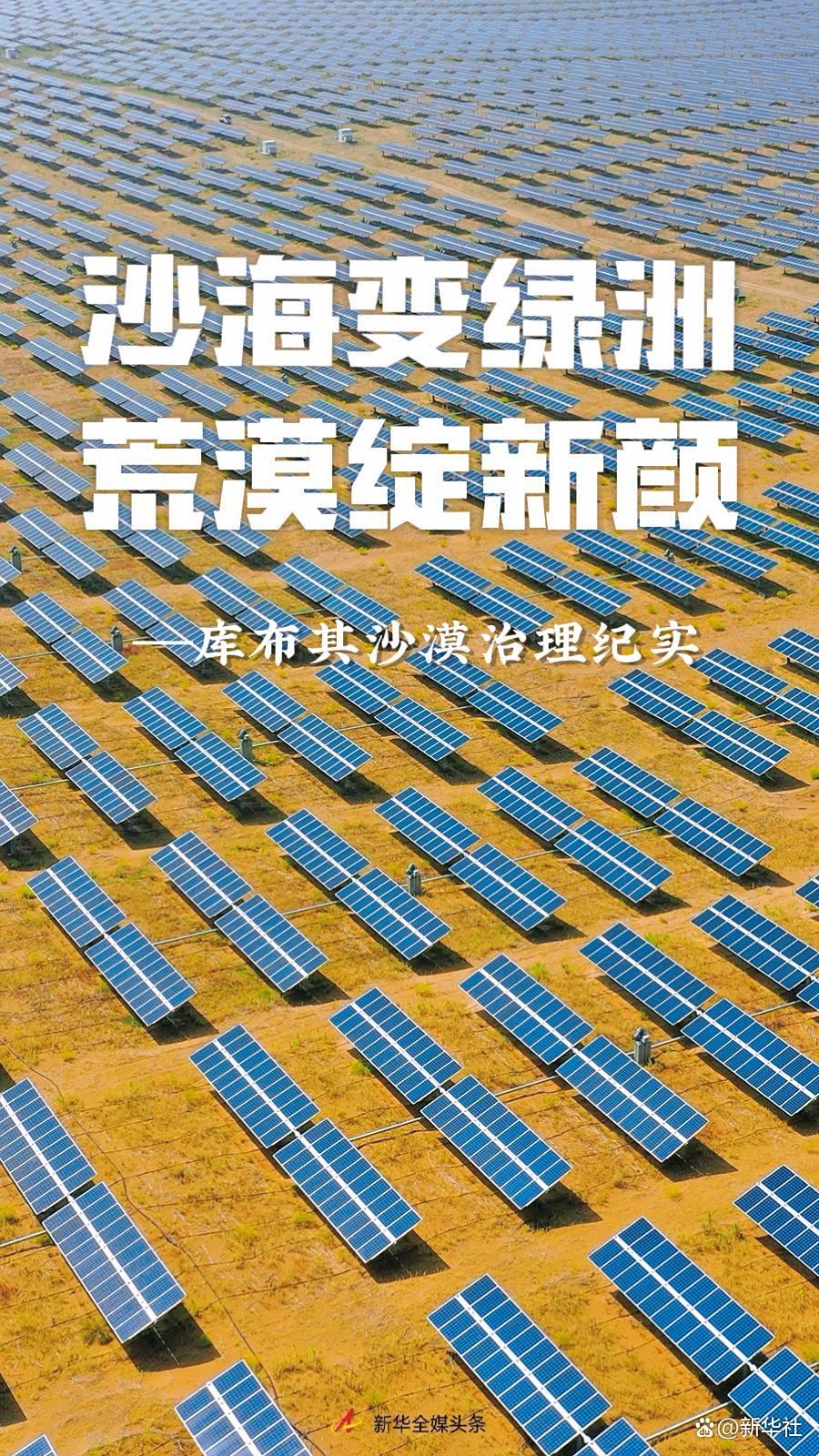
沙海变绿洲 荒漠绽新颜——库布其沙漠治理纪实
Xin Hua She· 2025-10-02 09:27
Core Viewpoint - The article highlights the significant achievements in desertification control in the Kubuqi Desert, showcasing China's successful practices in ecological restoration and sustainable development, contributing to both national and global environmental efforts [3][19][22]. Group 1: Desertification Control Achievements - The Kubuqi Desert has seen over 6,000 square kilometers transformed into green areas, with a notable reduction in sediment entering the Yellow River, marking a historic shift from "sand advancing and people retreating" to "green advancing and sand retreating" [3][12]. - The desert covers approximately 14,100 square kilometers, with a 420-kilometer protective forest and grass belt established to prevent desert encroachment towards the Yellow River [5][12]. - The ecological restoration efforts have led to a 40% governance rate of the Kubuqi Desert, with a significant reduction in soil erosion and sediment transport to the Yellow River, decreasing by approximately 300 million tons over the past decade [12][22]. Group 2: Innovative Approaches and Technologies - The integration of solar energy projects, referred to as the "photovoltaic wall," is being utilized alongside traditional desertification control methods, enhancing both ecological and economic benefits [5][13]. - Advanced machinery and technology, such as drones and robotic tree planters, have improved the efficiency of desertification control efforts by over five times, moving away from labor-intensive methods [25]. - The local governance model emphasizes a combination of road construction and ecological management, effectively segmenting the desert into manageable units for restoration [9][12]. Group 3: Economic and Social Impact - The ecological restoration initiatives have not only improved the environment but also stimulated local economies, providing employment opportunities for approximately 380,000 farmers and herders [13][19]. - The tourism sector has benefited from the ecological improvements, with over 2.2 million visitors to desert tourism sites in 2024, generating significant revenue [16][19]. - The local community's involvement in restoration projects has fostered a sense of ownership and economic empowerment, transforming the relationship between people and the desert [13][25]. Group 4: International Collaboration and Knowledge Sharing - The Kubuqi International Desert Forum has become a platform for sharing China's desertification control experiences with other countries facing similar challenges, promoting international cooperation [22][23]. - The forum has facilitated various bilateral and multilateral initiatives, including projects aimed at combating desertification in developing countries [22][23]. - China's commitment to fulfilling its obligations under international agreements on desertification prevention is evident, with ongoing support for technology and project implementation in other nations [23].

贾康:政府有效投资的界定及其重点领域 在哪里
Sou Hu Cai Jing· 2025-09-20 02:50
Core Viewpoint - The article emphasizes the significance of effective government investment during the current phase of unconventional counter-cyclical macroeconomic regulation, highlighting its "key" role in expanding domestic demand [1][8]. Summary by Relevant Sections Understanding Effective Investment - Effective investment by the government differs from competitive market investments made by enterprises, focusing on public goods and infrastructure related to market failures [9]. - The combination of proactive fiscal policies and moderately loose monetary policies is crucial for effective investment, aiming to boost employment and market demand [9][11]. - Short-term investments should be aligned with long-term structural optimization to enhance development momentum [11][12]. - Infrastructure projects should be planned with an "appropriate advance" to ensure their effectiveness, avoiding both excessive and insufficient foresight [12][14]. - The concept of "positive externality" in investment reflects broader societal benefits beyond direct financial returns, as seen in projects like the Qinghai-Tibet Railway [15]. - Government investment can stimulate private sector investment by improving the overall economic environment and market confidence [16]. - Effective investment requires feasibility studies and high-quality operational plans to ensure project success [17]. Key Areas of Government Investment - Current government investment focuses on major national strategies and enhancing security capabilities in key sectors [17]. - The construction of sponge cities and comprehensive drainage systems is highlighted as a priority, with lessons learned from past failures in urban infrastructure [18][21]. - The integration of urban transportation systems, including subways and parking facilities, is essential for modern urban living and should be prioritized in planning [21][22]. - There is significant potential for investment in areas such as old residential building renovations and rural revitalization, which can drive economic growth [22][23]. - The availability of production factors like steel, cement, and labor is not a constraint; rather, the challenge lies in creating effective mechanisms for investment [23].
山东临朐:创新以工代赈模式,激活乡村振兴内生动力发展
Zhong Guo Fa Zhan Wang· 2025-09-17 06:23
Core Viewpoint - Shandong Province's Linqu County has effectively implemented the "work for relief" policy, leveraging village-level cooperatives and councils to enhance rural infrastructure and promote rural revitalization, resulting in significant achievements [1][3]. Group 1: Organizational Structure - Linqu County has established a "village cooperative + council" operational mechanism to enhance grassroots governance and project execution, with village party secretaries serving as cooperative leaders to strengthen organizational cohesion [1][2]. - The county has prioritized local labor participation in projects, ensuring that community members are involved in construction and management, thereby fostering local economic growth [2]. Group 2: Policy Implementation - The county has developed detailed measures to align with national policy requirements, focusing on practical execution standards that favor local labor over mechanization [2]. - A pilot project in Jiangyu Town exemplifies the county's approach, with local cooperatives managing labor organization and project execution, supported by a dedicated leadership group from the town government [2]. Group 3: Benefit Sharing - Village cooperatives have become comprehensive platforms for industry development, public services, and social governance, addressing employment challenges and enhancing collective income [3]. - Since 2023, Linqu County has secured seven central budget projects under the "work for relief" initiative, with a total investment of 48.47 million yuan, leading to the creation of 1,462 local jobs and the distribution of 16.3 million yuan in labor remuneration [3].
我省以工代赈累计带动群众务工57万人
Da Zhong Ri Bao· 2025-09-12 01:00
Core Insights - The Shandong provincial government is actively promoting the "work-for-relief" program to address rural employment issues and improve infrastructure [1] Group 1: Employment and Income - The program has successfully engaged 570,000 workers, resulting in a total labor remuneration of 9.47 billion yuan [1] - On average, each worker has seen an income increase of 17,000 yuan [1] Group 2: Infrastructure Development - A total of 10 billion yuan has been allocated for the program, funding 259 projects [1] - Key infrastructure improvements include the construction and renovation of 1,243 kilometers of roads, 319 kilometers of drainage ditches, and 838 kilometers of underground water supply and drainage pipelines, along with the construction of 100 bridges and culverts [1] Group 3: Rural Labor Market Dynamics - With approximately 35 million rural residents in Shandong, there is a significant demand for local employment due to rapid urbanization and agricultural modernization [1] - The program addresses the gap in rural infrastructure investment, which is often overlooked by industry and local funding [1]
新宜高速开建,川南再添交通大动脉
Si Chuan Ri Bao· 2025-09-08 00:27
Core Viewpoint - The construction of the Xinyi Expressway, a significant infrastructure project in Yibin, is expected to enhance regional connectivity and stimulate economic development in the Sichuan province, with a total investment of approximately 14.3 billion yuan and a construction period of four years [1]. Group 1: Project Overview - The Xinyi Expressway spans 65 kilometers for the main line and 24.3 kilometers for connecting lines, with a total investment of about 14.3 billion yuan and a construction period of four years [1]. - The project will significantly reduce travel time from Yibin city to Xinshi Town in Pingshan County from over two hours to under one hour [1]. - The expressway will connect multiple major highways, facilitating multi-directional connectivity with Yunnan, Chongqing, and Chengdu [1]. Group 2: Technical Challenges - The expressway features a bridge-tunnel ratio of 66.25%, indicating that approximately two-thirds of the route will involve crossing mountains and rivers, which increases construction complexity and costs [2][3]. - The project includes 48 bridges and 8 tunnels, with significant engineering challenges such as the 7.3-kilometer Zhengjiashan Tunnel, which requires extensive safety measures against high-pressure water and gas leaks [2][3]. - The geological conditions present additional challenges, including the need for slope stabilization and foundation reinforcement due to the presence of karst topography and soft soil [3]. Group 3: Economic Impact - The Xinyi Expressway will serve as a crucial link between the southern Sichuan economic zone and the Panxi economic zone, providing a direct transportation route for mineral and clean energy resources [4]. - The expressway will reduce logistics costs and travel distances for transporting resources from the Panxi region to Yibin, enhancing regional economic collaboration [4]. - The project is expected to create approximately 8,000 jobs during peak construction, contributing an estimated 8 million yuan in income to local residents [5]. Group 4: Regional Development - The expressway will facilitate the integration of local agricultural products into broader markets, enhancing the economic prospects for local farmers [5]. - It will also support the development of the photovoltaic industry in the region by improving the transportation of equipment and components [5]. - The project aims to promote tourism by connecting local attractions within a one-hour travel radius, contributing to rural revitalization and industrial upgrades [5].
家门口修路 脱贫户增收
Ren Min Ri Bao· 2025-08-27 02:54
Core Points - The article highlights the positive impact of infrastructure projects on local employment and income generation in Wuxia Village, Guizhou Province, particularly through the construction of an industrial road for the white tea industry [1][2][3] Group 1: Employment and Income Generation - The construction of the industrial road has created job opportunities for local residents, with an average daily wage of 100 yuan for agricultural work and 150 yuan for construction work [1] - The project has employed around 30 to 40 workers daily, with over 80% being poverty alleviation households, significantly increasing local employment [1][2] - In 2023, the county received 53.86 million yuan in special funds for labor-based projects, which are expected to create over 1,800 jobs and generate 20 million yuan in labor remuneration, with an average income increase of over 10,000 yuan per person [2] Group 2: Project Details and Impact - The labor-based project has a total investment of over 6.6 million yuan and includes the construction of a 10.41-kilometer industrial road, which previously was a muddy path that hindered access [1] - The project not only focuses on road construction but also includes other infrastructure improvements and environmental enhancements, contributing to overall community development [2][3] - The local government emphasizes that small projects can significantly improve the livelihoods of the community, showcasing the effectiveness of labor-based assistance in poverty alleviation [3]
家门口修路 脱贫户增收(农民工稳岗就业在行动)
Ren Min Ri Bao· 2025-08-25 22:27
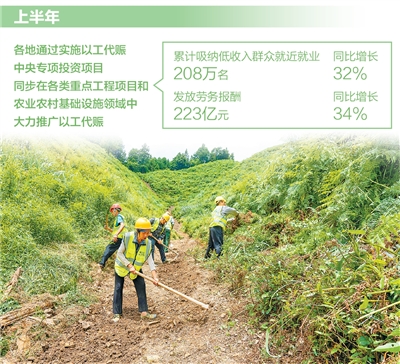
Core Viewpoint - The implementation of labor-for-work projects has significantly increased local employment opportunities and income for low-income communities, with a focus on infrastructure development and community engagement [1][5]. Group 1: Employment and Income Generation - A total of 208,000 low-income individuals have been employed through labor-for-work projects, representing a 32% year-on-year increase [1]. - The labor remuneration distributed has reached 22.3 billion yuan, marking a 34% increase compared to the previous year [1]. - In Guizhou Province, the labor-for-work project has created job opportunities for over 900 individuals, with labor remuneration exceeding 8 million yuan [5]. Group 2: Project Implementation and Impact - The labor-for-work project in Wuxia Village includes the construction of a 10.41-kilometer industrial road, with a total investment of over 6.6 million yuan [3]. - The project aims to enhance local agricultural infrastructure, specifically for the white tea industry, facilitating better access and employment [3][4]. - Completion of these projects is expected to absorb over 1,800 workers and distribute 20 million yuan in labor remuneration, with an average income increase of over 10,000 yuan per person [5]. Group 3: Community Engagement and Skills Development - Local villagers are actively participating in the construction work, with daily wages ranging from 170 to 300 yuan depending on skill level [4]. - Training programs are being provided to help workers transition from manual labor to skilled positions, enhancing their employability [4]. - The community's involvement in these projects not only provides immediate financial benefits but also fosters a sense of ownership and pride in local development [5].