
企业私有化

Search documents
东风集团股份1小时暴涨超90%,东风集团股份拟私有化退市
Di Yi Cai Jing· 2025-08-22 16:41
Core Viewpoint - Dongfeng Group's stock surged over 90% following the announcement of its privatization and delisting plans, alongside the introduction of its subsidiary, Lantu Motors, to the Hong Kong stock market [1] Group 1: Privatization and Delisting - Dongfeng Group announced plans for privatization and delisting, with a total acquisition price set at HKD 10.85 per share, comprising HKD 6.68 in cash and HKD 4.17 in equity from Lantu Motors [1] - The decision to privatize is attributed to the low valuation of Dongfeng Group's stock, which has hindered its financing capabilities [1] Group 2: Strategic Transition - Dongfeng Group is transitioning towards the new energy sector and has initiated internal reforms, which are currently limited by regulations governing public companies [1] - The dual purpose of the privatization is to facilitate Lantu's entry into the capital market and to enable further internal integration and restructuring within Dongfeng Group [1]

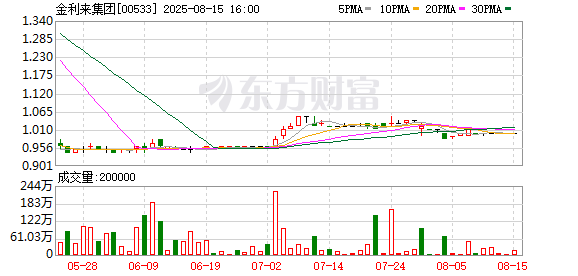
私有化失败后业绩“告急”,金利来上半年盈转亏、营业额降两成
Xin Jing Bao· 2025-08-17 02:37
Core Viewpoint - The longstanding menswear company, Goldlion Group, has reported a significant financial downturn, transitioning from profit to loss following the failure of its privatization plan earlier this year [2][6]. Financial Performance - For the first half of 2025, Goldlion Group achieved a revenue of HKD 487 million, a year-on-year decline of 19%, with a loss attributable to shareholders of HKD 3.96 million compared to a profit of HKD 58.23 million in the same period last year [2][6]. - The overall apparel revenue in the domestic market was HKD 318 million, reflecting a year-on-year decrease of approximately 24% [3]. - The wholesale business, a core sales model, saw a drastic revenue drop of 50%, reducing its share of domestic apparel sales to about 20% [3]. - The group recorded a fair value loss of HKD 22.95 million on investment properties, worsening from the previous year's loss [5]. Business Segments - Goldlion's apparel business includes formal wear and high-end casual menswear, with a total of 754 clothing stores as of June 30, 2025, of which 146 are directly operated by the group [4]. - The group has diversified interests, including real estate investments valued at approximately HKD 2.658 billion [5]. - The e-commerce segment experienced a year-on-year sales decline of about 14% [3]. Market Context - The Chinese menswear market is valued at approximately RMB 600 billion, characterized by intense competition and shifting consumer preferences towards high-cost performance products [7]. - The company has adopted a relatively conservative approach to market challenges, focusing on product quality optimization and retail network integration [7]. Strategic Challenges - The failed privatization plan means Goldlion must continue to navigate the pressures of the public market, facing intensified competition and declining sales [6]. - The company has seen a continuous decline in revenue and profits over the past few years, with a significant reduction in the number of retail points [6].

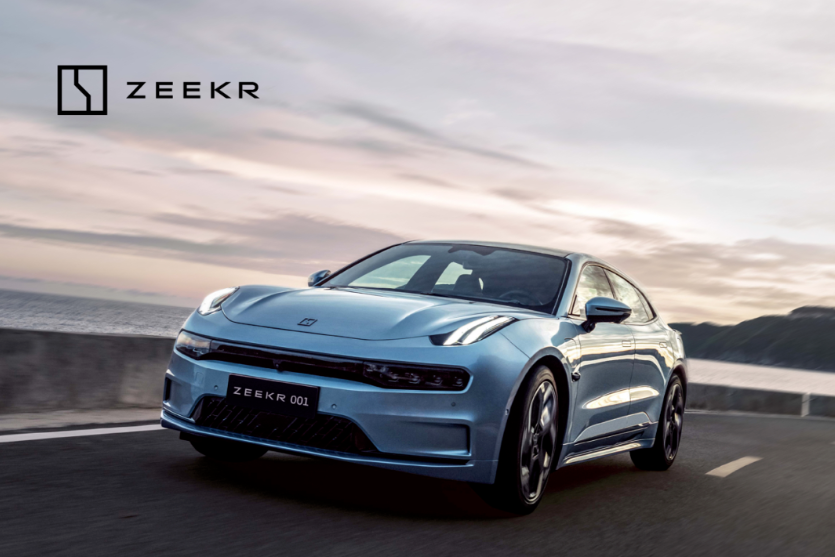
极氪汽车私有化方案出炉:要约价为2.687美元/股,将于9月15日召开审批会议
Ju Chao Zi Xun· 2025-08-15 10:06
Group 1 - Geely Auto announced a privatization plan for its indirect subsidiary, Zeekr Intelligent Technology Holdings Limited, expected to be completed by 2025, aimed at resource integration and enhancing competitiveness in the electric vehicle market [2] - The merger agreement offers a purchase price of $2.687 per Zeekr share or $26.87 per American Depositary Share, with eligible shareholders having the option to receive cash or exchange for newly issued shares of Geely Auto at a price of HKD 17.15 per share [2] - Following the privatization, Zeekr will become a wholly-owned subsidiary of Geely Auto and plans to delist from the New York Stock Exchange [2] Group 2 - The privatization transaction requires approval from Geely Auto's independent shareholders, with an independent board committee established to provide recommendations [3] - The independent board committee has engaged an independent financial advisor to assess the fairness and reasonableness of the transaction terms [3] - A special shareholder meeting is scheduled for September 5, 2025, in Hong Kong to consider and approve the proposed transaction [3]
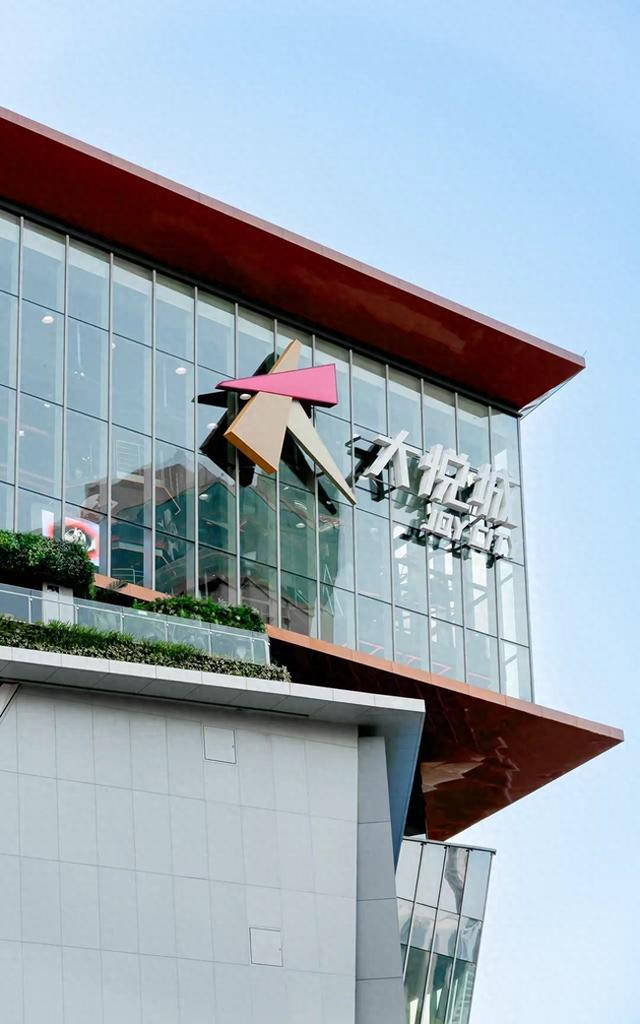
耗资29亿港元私有化 大悦城地产拟港股退市
Zhong Guo Jing Ying Bao· 2025-08-08 19:35
Core Viewpoint - Dalian Wanda Commercial Properties is planning to privatize and delist from the Hong Kong stock market after 12 years of listing, citing governance complexity and low liquidity as key reasons for the decision [3][4][7]. Group 1: Privatization Details - Dalian Wanda plans to repurchase shares from all shareholders except for its parent company and a subsidiary, at a price of HKD 0.62 per share, totaling approximately HKD 29.32 billion [4][6]. - The repurchase price represents a premium of about 67.57% over the last trading day's closing price of HKD 0.37 and a premium of approximately 129.66% over the average price of HKD 0.27 over the last 30 trading days [6][8]. - After the transaction, Dalian Wanda's ownership in Dalian Wanda Commercial Properties will increase from 64.18% to 96.13% [4][5]. Group 2: Business Impact - The company aims to streamline its governance structure and improve decision-making efficiency post-privatization, as the current structure has been deemed complex and inefficient [8][9]. - Dalian Wanda Commercial Properties has been facing a significant discount in its stock price compared to its net asset value, which is approximately HKD 2.081 per share, indicating a discount of about 70.2% on the repurchase price [7][8]. - The company reported a revenue of approximately RMB 198.31 billion and a net profit of RMB 7.79 billion for the year 2024, with total assets of RMB 1,067.71 billion and net assets of RMB 162.42 billion [10]. Group 3: Market Context - The company has been experiencing low stock performance, with its market capitalization significantly lower than its net asset value, leading to challenges in raising capital from the market [8][11]. - The real estate market is currently in a challenging phase, impacting Dalian Wanda's financial performance, which has seen a decline in revenue and net profit in recent years [11].

1350亿央企地产巨头,筹谋退市
21世纪经济报道· 2025-08-02 17:49
Core Viewpoint - Dalian Wanda Commercial Properties is planning to privatize by repurchasing shares and delisting from the Hong Kong Stock Exchange, aiming to consolidate its operations under the parent company, Dalian Wanda Holdings, to enhance operational efficiency and strategic flexibility [1][11]. Group 1: Share Buyback and Privatization - The company announced a share buyback involving 4.73 billion shares at a maximum cost of approximately HKD 29.32 billion, which will be fully canceled post-transaction [1][6]. - The buyback price of HKD 0.62 per share represents a 67.57% premium over the last trading price of HKD 0.37 before the announcement [6]. - The buyback will result in Dalian Wanda Holdings increasing its ownership from 64.18% to 96.13%, significantly enhancing its equity stake [15]. Group 2: Financial Performance and Market Conditions - Dalian Wanda Commercial Properties has faced liquidity pressures, with negative cash flow for two consecutive years, amounting to -4.4 billion RMB by the end of 2024 [9]. - The company's stock price has been trading below its net asset value, with a net asset value of 16.2 billion RMB and a per-share net asset value of HKD 2.63 [9]. - The company reported a revenue increase of nearly 50% in 2024, reaching 19.83 billion RMB, with a significant contribution from property sales [19][18]. Group 3: Strategic Considerations - The privatization is seen as a strategic move to eliminate internal governance barriers caused by operating under different public platforms, which has hindered decision-making efficiency [13]. - The integration of Dalian Wanda Commercial Properties into the parent company is expected to streamline operations and enhance collaboration across business units [18][11]. - The company aims to leverage its commercial assets, which generated sales of 40.13 billion RMB in the previous year, to improve overall financial performance post-privatization [18][20].

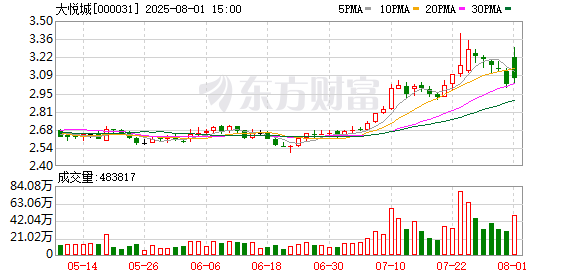
终结12年港股历程,大悦城地产拟私有化退市,复牌股价暴涨超40%
Hua Xia Shi Bao· 2025-08-01 14:09
Core Viewpoint - Dalian Wanda Group plans to repurchase shares of its subsidiary Dalian Wanda Commercial Properties for approximately HKD 29.32 billion and intends to delist from the Hong Kong Stock Exchange, ending a 12-year listing history [2][4]. Group 1: Share Repurchase and Delisting - Dalian Wanda Commercial Properties will repurchase shares from all shareholders except for Dalian Wanda Group and its indirect wholly-owned subsidiary [3]. - The repurchase price is set at HKD 0.62 per share, totaling around HKD 29.32 billion for the cancellation of 4.73 billion shares [3]. - Following the transaction, Dalian Wanda Group's ownership in Dalian Wanda Commercial Properties will increase to 96.13% [4]. Group 2: Financial Performance - Dalian Wanda Commercial Properties reported a revenue of RMB 19.83 billion for 2024, a year-on-year increase of 49.4%, with a net profit of RMB 779 million [5]. - In contrast, Dalian Wanda Group's revenue for 2024 was approximately RMB 35.79 billion, a decrease of 2.7% from 2023, with a net loss of RMB 2.977 billion, an increase of 103.14% compared to the previous year [5]. - The total loss for Dalian Wanda Group over the past three years exceeds RMB 7 billion [5]. Group 3: Strategic Implications - The delisting is seen as a strategic move to simplify the corporate structure and enhance operational efficiency, allowing for more agile responses to market changes [6][4]. - Both companies believe that the transaction will optimize resource allocation and improve overall operational efficiency, enhancing competitive strength [6]. - The removal of the listing is expected to resolve existing competition issues between the two entities, streamlining decision-making processes [7][6].
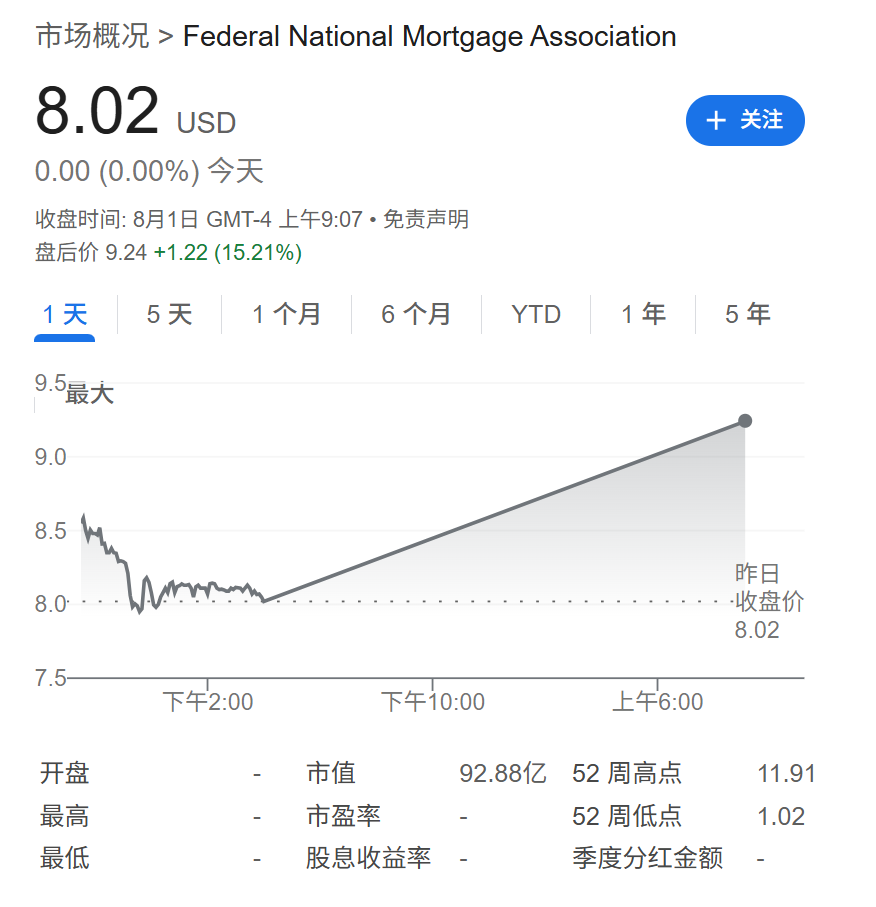
“两房”涨超15%!报道:特朗普推进房利美和房地美私有化
Hua Er Jie Jian Wen· 2025-08-01 14:02
Core Viewpoint - The U.S. government is considering privatizing Fannie Mae and Freddie Mac, which could lead to one of the largest IPOs in history, addressing a significant post-crisis issue [1][5]. Group 1: Government's Actions - President Trump is actively seeking advice from top Wall Street bank executives on how to monetize Fannie Mae and Freddie Mac and return them to the public market [1][5]. - Meetings have taken place with executives from major banks, including Jamie Dimon of JPMorgan Chase, and plans are in place to meet with Goldman Sachs and Bank of America [1][5]. Group 2: Market Implications - The potential privatization could result in substantial economic benefits for the government, banks, and existing shareholders, with analysts suggesting it may lead to significant underwriting fees for selected banks [6]. - Following the news, shares of Fannie Mae rose by 15% and Freddie Mac increased by 5.7% in the OTC market [1]. Group 3: Challenges Ahead - The privatization process is complex, with key issues such as the percentage of shares the government will sell in the initial public offering and the rights of existing shareholders still unresolved [6]. - The Congressional Budget Office (CBO) has indicated that selling government-held shares could yield a mixed financial outcome, estimating potential gains of $206 billion if the companies were placed under bankruptcy management [6].
大悦城地产计划以29亿港元代价退市
Jing Ji Guan Cha Wang· 2025-08-01 09:55
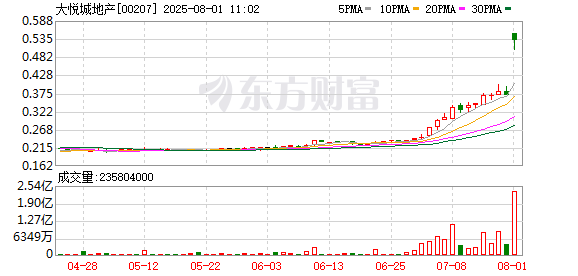
Core Viewpoint - Dalian City Real Estate plans to repurchase shares at HKD 0.62 per share and suggests delisting from the stock exchange, while its parent company, Dalian Holdings, proposes privatization excluding certain shareholders [1][2]. Group 1: Company Actions - Dalian City Real Estate announced a share repurchase plan requiring approximately HKD 29.33 billion to buy back and cancel 4.73 billion shares [1]. - The company was suspended from trading on July 18 due to insider information and saw its stock price rise over 40% to HKD 0.55 upon resumption of trading [1]. - Dalian Holdings holds a 64.18% stake in Dalian City Real Estate, with its subsidiary holding an additional 2.58%, totaling 66.76% [1]. Group 2: Financial Performance - Since 2020, Dalian City Real Estate has experienced a continuous decline in net profit attributable to shareholders, with a projected net loss of HKD 294 million for 2024 [2]. - Despite the losses, the investment property segment has provided stable cash flow, with cash and cash equivalents covering short-term debt more than twice [2]. Group 3: Market Context - The privatization move is a strategic response to market pressures, aiming to optimize governance, integrate ownership, and enhance decision-making efficiency [2]. - Other real estate companies have also opted for privatization or delisting due to poor performance, low stock prices, and the burden of fixed costs like auditing [3].
又一家!斥资29.32亿港元,大悦城地产拟私有化退市
Nan Fang Du Shi Bao· 2025-08-01 03:01
Core Viewpoint - The company is executing a strategic move to repurchase shares and delist from the Hong Kong Stock Exchange, aiming to enhance its operational efficiency and market competitiveness amid challenging market conditions [1][4]. Group 1: Share Repurchase and Delisting - The company plans to repurchase shares from all shareholders except for Dayuecheng and Dema, offering HKD 0.62 per share, totaling approximately HKD 29.32 billion [1]. - Following the agreement, the shareholding structure will change significantly, with Dayuecheng Holdings increasing its stake from 64.18% to 96.13% [1]. Group 2: Business Operations and Financial Performance - Dayuecheng Real Estate has established a presence in key urban clusters across China, managing 32 commercial projects and high-quality investment properties in major cities [2]. - The company has faced financial challenges, reporting a net loss of approximately CNY 29.77 billion in 2024, a decrease of 103.14% compared to 2023, with total assets declining by 9.84% [2]. - In the first half of 2025, the company is projected to achieve a net profit of CNY 8 million to CNY 12 million, indicating a turnaround from previous losses [3]. Group 3: Strategic Rationale - The company views the share repurchase and delisting as a strategic response to market changes, aimed at enhancing its equity in Dayuecheng Real Estate and improving overall operational efficiency [3].
大悦城地产拟私有化退市,聚焦长期战略与业务整合
Mei Ri Jing Ji Xin Wen· 2025-07-31 14:39
Core Viewpoint - Dalian Wanda Group is advancing its privatization process, offering shareholders HKD 0.62 per share, leading to a delisting from the Hong Kong stock market [1] Group 1: Privatization Details - The privatization plan will result in Dalian Wanda Holdings and DeMao holding approximately 96.13% and 3.87% of Dalian Wanda Group's shares, respectively [1] - Following the completion of the transaction, Dalian Wanda Group will apply for the withdrawal of its listing status on the Hong Kong Stock Exchange [1] Group 2: Strategic Implications - This privatization is viewed as a critical optimization of Dalian Wanda Holdings' strategic layout during a period of deep adjustment in the real estate industry [1] - The main objective is to integrate real estate business resources, enhance asset allocation capabilities, and fully leverage the synergy potential among diverse business operations [1] Group 3: Financial Performance - Dalian Wanda Group is projected to achieve an annual revenue of CNY 19.831 billion in 2024, reflecting a year-on-year growth of 49.4%, which is particularly impressive in the current context [1] - The advancement of the privatization process is seen as a key step for Dalian Wanda Holdings to restructure its real estate business strategy and focus on long-term value [1] Group 4: Operational Enhancements - The privatization will allow Dalian Wanda Holdings to optimize its governance structure, reduce operational costs, and improve decision-making efficiency [1] - Additionally, it will facilitate the integration of asset resources, enhance market competitiveness, and accelerate the realization of its positioning as an "excellent urban operator and provider of quality life services" [1]