共享出行

Search documents
永安行: 永安行科技股份有限公司公开发行可转换公司债券定期跟踪评级报告
Zheng Quan Zhi Xing· 2025-06-10 11:49
Core Viewpoint - The company, Yong'an Xing Technology Co., Ltd., is facing significant challenges in its core public bicycle and shared mobility business, with declining revenues and increasing losses due to market competition and government financial constraints [1][2][4]. Business Overview - The company primarily operates in the shared mobility sector, focusing on public bicycles, shared electric bicycles, and hydrogen energy products, leveraging IoT and cloud data technologies [5][12]. - The public bicycle business has seen a reduction in both the number of cities served and membership, with a decrease of approximately 20 cities and 8 million members compared to the previous year [7][9]. - The company has launched hydrogen energy bicycles and related products, with significant growth in revenue from this segment, particularly after acquiring Zhejiang Kaibo [13][14]. Financial Performance - The company reported a continuous decline in revenue and gross margin across its core business segments, with total revenue dropping from 6.78 billion yuan in 2022 to 4.58 billion yuan in 2024 [6][10]. - The gross margin for the public bicycle business has turned negative, reflecting the impact of increased operational costs and reduced demand [6][9]. - The hydrogen energy product segment has shown substantial growth, with sales revenue reaching 9.1 million yuan in 2023, a significant increase from the previous year [13][14]. Market Environment - The shared mobility industry is experiencing intense competition, particularly from dockless bike-sharing services, which have pressured traditional public bicycle systems [4][6]. - Government financial constraints are impacting the renewal of contracts for public bicycle services, leading to a decline in operational projects [4][7]. - The hydrogen energy market is still in its early stages, with challenges in market penetration and sales channel development [4][6]. Operational Challenges - The company faces uncertainties in accounts receivable collection, with a significant amount of receivables still outstanding, leading to increased provisions for bad debts [2][4]. - The transition to hydrogen energy products has not yet fully compensated for the losses in the traditional public bicycle business, and the company is exploring new markets and product lines to stabilize revenue [12][13]. - The operational model for public bicycle services relies heavily on government contracts, which are becoming increasingly difficult to secure due to budget constraints [18].

融资、组无人车队、筹备IPO 享道出行高调抢位新赛道
Jing Ji Guan Cha Wang· 2025-05-21 14:57
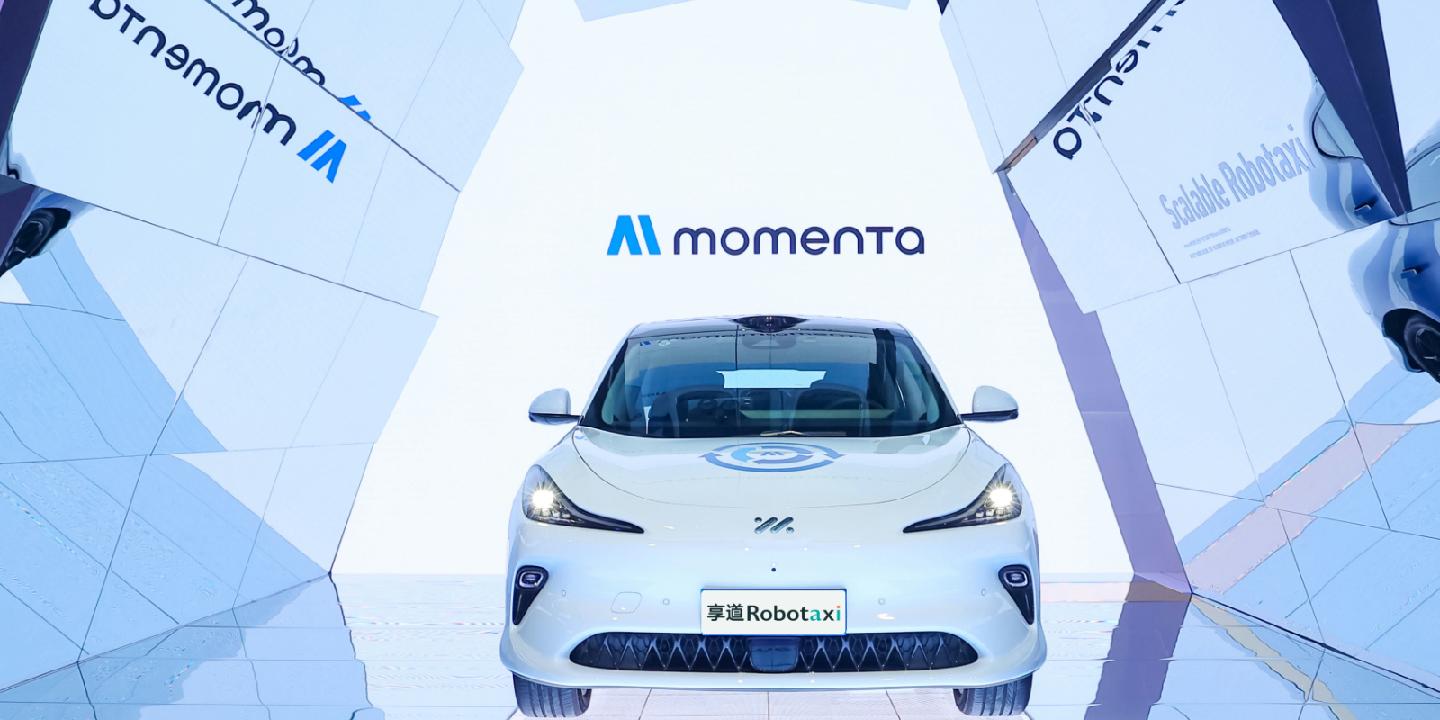
Core Viewpoint - The shared mobility sector is witnessing significant strategic moves, particularly by the company Xiangdao Mobility, which has completed a C-round financing of over 1.3 billion yuan and is accelerating its IPO process while launching a Robotaxi fleet in Shanghai [2][3][4]. Financing and Strategic Partnerships - Xiangdao Mobility's C-round financing of 1.3 billion yuan is the largest in the shared mobility sector in the past three years, involving various industry funds and local government resources [4][5]. - The company has formed a strategic partnership with Momenta to launch a scalable Robotaxi operation, with plans to deploy a fleet of 200 vehicles by 2026 [5][6]. Business Model and Market Position - Xiangdao Mobility has clarified its three main business lines: personal mobility, enterprise mobility, and future mobility, with ride-hailing being its primary business [2][4]. - The company aims to position itself as a "one-stop smart mobility comprehensive body," emphasizing its integration of automotive resources, technology, and ecosystem [10]. Robotaxi Operations - The Robotaxi fleet will utilize the production model of the SAIC Zhiji LS6, which is expected to enhance operational stability and reduce costs [6][7]. - The company has already completed over 330,000 orders and driven more than 2.5 million kilometers, indicating a strong foundation for large-scale Robotaxi operations [9]. IPO Aspirations - Xiangdao Mobility is under pressure to expedite its IPO process, especially as competitors like Caocao Mobility and others are also pursuing public listings [9][10]. - The company aims to achieve profitability in its ride-hailing business by mid-2024, which is crucial for its IPO plans [9].

Lyft(LYFT) - 2025 Q1 - Earnings Call Transcript
2025-05-08 22:00
Financial Data and Key Metrics Changes - Q1 2025 was Lyft's strongest Q1 ever, with records in gross bookings, adjusted EBITDA, and free cash flow [6][7] - Lyft achieved nearly $1 billion in cash generation over the last twelve months, indicating a strong growth with discipline [7] - The company increased its share repurchase program to $750 million while still investing in growth initiatives [7] Business Line Data and Key Metrics Changes - Lyft reported year-on-year growth across regions, modes, and use cases, resulting in record active riders, rides, and driver hours [6] - The company highlighted strong growth in its commute segment, which is now the largest use case, accounting for about one-third of rides [75] Market Data and Key Metrics Changes - Lyft's Canadian market grew rides by 55% in Q1 2025, with plans to expand into Quebec [110] - The company noted that gross bookings per ride in Canada are lower than the average in the U.S., impacting overall gross bookings [110] Company Strategy and Development Direction - Lyft is focusing on expanding its presence in Europe through the acquisition of FreeNow and targeting new demographics with LiftSilver [7] - The company aims to enhance its operational excellence and customer obsession to drive growth in underrepresented markets [110] Management's Comments on Operating Environment and Future Outlook - Management expressed confidence in being well-positioned for 2025 and beyond, emphasizing the importance of customer obsession and operational excellence [7] - The management acknowledged the challenges in the pricing environment, noting that average prices in Q1 were lower than in the previous quarter but up modestly year-over-year [12][13] Other Important Information - Lyft's pricing strategy remains competitive and reliable, with ongoing innovations to improve the rider experience [12][13] - The company is actively working on insurance programs to enhance safety and reliability for drivers and riders [14][15] Q&A Session Summary Question: Pricing environment and insurance impact - Management noted that average prices in Q1 were lower than in Q4 but showed modest year-over-year increases, with a focus on maintaining competitive pricing [12][13] - On insurance, the company is innovating to enhance safety and has a strong risk management team in place [14][15] Question: Affordability initiatives and international ambitions - Management highlighted the importance of affordability and the success of features like "wait and save," which has increased ridership [71][72] - The company is focusing on growth in Canada and Europe, with plans for further international expansion contingent on the success of the FreeNow acquisition [26][27] Question: AV partnerships and market dynamics - Management expressed excitement about partnerships in the AV space, emphasizing the potential for new supply and market expansion [31][32] - They noted that the dynamics of AV pricing and service levels vary by market, making it difficult to predict long-term impacts [45][46] Question: FreeNow acquisition and taxi initiatives - The acquisition of FreeNow is expected to double Lyft's addressable market and enhance growth opportunities [70] - Management indicated that the taxi initiative in the U.S. is important for diversifying supply but did not speculate on its immediate impact on growth [90][91] Question: Consumer behavior and spending - Management observed that as pricing increases subside, consumers may be more willing to spend on rides, particularly with the introduction of features that enhance predictability [73][74] - They noted that the commute segment continues to show strong growth, contributing to overall ride increases [118]

高盛:2035年中国Robotaxi市场规模可达470亿美元,2026年一线城市盈利可期
智通财经网· 2025-05-07 08:38
Core Insights - Goldman Sachs recently released an in-depth report focusing on the commercialization process of the Robotaxi market in China, predicting that by 2030, 500,000 Robotaxis will operate in over 10 cities, marking a shift from technical feasibility discussions to commercialization strategies [1] - The report estimates that the Robotaxi market in China will grow from $54 million in 2025 to $47 billion by 2035, representing a 757-fold increase over ten years [2] - The report highlights that the Robotaxi fleet is expected to reach 1.9 million vehicles by 2035, accounting for 25% of shared mobility vehicles [2] Market Growth and Financial Projections - The Robotaxi market in China is projected to reach a total market size of $47 billion by 2035, with significant growth driven by declining hardware and algorithm costs, as well as improved operational efficiency [2] - By 2035, annual revenue per Robotaxi is expected to be $31,000 in first-tier cities, $22,000 in second-tier cities, and $20,000 in other cities, while annual costs are projected to decrease from $20,100 in 2025 to $18,900 in 2035 [3] Cost Optimization and Technological Advancements - Current hardware costs for a single Robotaxi are approximately $40,000, expected to decrease to $32,000 by 2035, a reduction of 20% [3] - The report emphasizes the importance of accumulating extensive testing data to enhance algorithm safety and reduce accident rates, which are currently lower than traditional taxis [2][3] Policy Support and Industry Challenges - The Chinese government has implemented policies at both national and local levels to support the development of autonomous driving, including market access and operational guidelines [4] - Despite the promising outlook, the Robotaxi industry faces challenges such as intensified competition, which could impact pricing and order volumes, and safety incidents that could harm corporate and industry reputations [4] Competitive Landscape - Leading companies in the Robotaxi sector are establishing strong competitive advantages through technological barriers and ecosystem collaboration, with significant differentiation in technical metrics [5] - Companies like Baidu and Pony.ai are expected to capture substantial market shares by 2035, with Baidu projected to hold 27% and Pony.ai 18% of the market [6][7] Beneficiary Companies in the Industry - Baidu's Robotaxi business is estimated to be valued at $12 billion by 2035, showcasing its strong market position and potential [7] - Key component suppliers such as Hesai Technology and Weir share significant market shares in LiDAR and image sensors, respectively, contributing to the reliability and performance of autonomous vehicles [7][8] Conclusion - The Robotaxi sector is poised to reshape urban mobility, with Goldman Sachs emphasizing a three-phase transition involving cost optimization, regional penetration, and ecosystem integration over the next decade [9]

特斯拉专题系列三十三:销量下滑压制盈利,静待新品放量带来全新驱动力【国信汽车】
车中旭霞· 2025-05-05 12:57
Core Viewpoint - Tesla's Q1 2025 financial performance shows a decline in revenue and profitability, but the company is focusing on new product launches and technological advancements to drive future growth [1][5][8]. Financial Performance - Q1 2025 revenue was $19.34 billion, down 9.2% quarter-over-quarter and 24.8% year-over-year, with $595 million from carbon credit sales [6][8]. - Gross margin for Q1 2025 was 16.3%, a decrease of 1.1 percentage points from the previous quarter, with operating profit at $399 million, down 65.9% quarter-over-quarter [8][10]. - Tesla delivered 337,000 vehicles in Q1 2025, a decrease of 13.0% year-over-year and 32.1% quarter-over-quarter [10][13]. Product Development and Innovation - Tesla plans to launch a new affordable model in H1 2025, leveraging existing platforms for production [2]. - The company aims to have thousands of Optimus robots operational in its factories by the end of 2025, with a long-term goal of reaching a million units by 2030 [2][30]. - The Cybercab (robot taxi) is set to begin mass production in 2026, with a focus on a "no packaging" manufacturing strategy [2][34]. Market and Competitive Landscape - Tesla's automotive business remains the primary revenue source, contributing $13.97 billion in Q1 2025, down 21.5% year-over-year [13][20]. - The company is experiencing pressure on vehicle margins due to declining average selling prices (ASP) and increased production costs [20][27]. - Tesla's global production capacity exceeded 2 million vehicles as of Q3 2024, with ongoing expansions in various factories [24][26]. Strategic Focus Areas - The company is enhancing its energy and storage business, reporting $2.73 billion in revenue for Q1 2025, a 67% increase year-over-year [27]. - Tesla is investing heavily in AI and autonomous driving technologies, with FSD (Full Self-Driving) mileage surpassing 3.5 billion miles [43]. - The company is also focusing on cost reduction strategies, including optimizing assembly processes to potentially save 50% in assembly costs [30].