创新药发展

Search documents
创新药发展进入快车道
Jing Ji Ri Bao· 2025-08-10 21:54
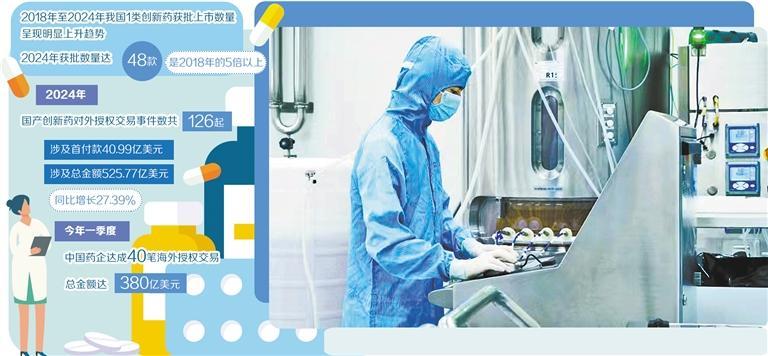
Core Insights - The Chinese pharmaceutical industry has seen a significant increase in overseas licensing deals, with 40 transactions in Q1 2025 alone, amounting to over $38 billion, which is more than half of the total for the entire year of 2024 [4][5] - The number of innovative drugs approved by the National Medical Products Administration (NMPA) has risen sharply, with 48 new approvals expected in 2024, representing more than a fivefold increase since 2018 [2][3] - Recent government policies have provided substantial support for the development of innovative drugs, including measures to streamline clinical trial approvals and enhance market access [6][7] Industry Growth - The number of innovative drugs developed by Chinese companies has reached 40 out of 43 approved drugs in the first half of 2025, indicating a shift from generic to original drug development [3][4] - The global biopharmaceutical market is projected to exceed $1.71 trillion by 2025, with China's market expected to grow at a compound annual growth rate (CAGR) of 14.5%, surpassing 3.5 trillion yuan [5] - The trend of overseas licensing agreements has become a crucial driver for the growth of the innovative drug sector, reflecting China's increasing research and development capabilities on the international stage [4][5] Policy Support - The NMPA has introduced a "30-day fast-track approval channel" for clinical trials to support innovative drug development, aiming to reduce the time required for new drug applications [6][7] - The National Healthcare Security Administration (NHSA) has established a dynamic adjustment mechanism for the medical insurance catalog, facilitating faster inclusion of innovative drugs into the insurance system [6][8] - Various supportive policies have been implemented to encourage innovation across the entire drug development process, from research to commercialization [6][7] Challenges Ahead - Despite the progress, the industry still faces challenges in drug development, including technical difficulties, complex clinical trial processes, and issues related to reimbursement [7][8] - There is a need for a multi-dimensional evaluation system focused on patient benefits to better assess the clinical value of innovative drugs [7][8] - The disconnect between academia and industry remains a significant barrier, particularly in translational medicine, necessitating collaboration between research institutions and pharmaceutical companies [8]

从“跟跑”到“并跑” 中国创新药十年竞速
Zheng Quan Shi Bao· 2025-08-10 17:33
Core Insights - China's economy has shown strong resilience and vitality amid complex international environments and domestic transformation pressures, with significant achievements in high-quality development over the past five years [1] - The "Decode Vitality China" series by Securities Times aims to explore the internal driving forces of China's economic development through in-depth reporting on key regions, industries, and leading enterprises [1] Industry Developments - The pharmaceutical industry in China is experiencing a surge in business development (BD) activities, with over $60 billion in BD transactions in the first half of the year, surpassing the total for 2024 [3] - The partnership between Heng Rui Medicine and GlaxoSmithKline could yield a potential total of $12 billion if all projects are executed successfully [3] - From 2015 to 2024, China has entered the top tier of global new drug research and development, surpassing the United States in the number of original new drugs [4] Company Innovations - Guangsheng Tang has invested approximately 999 million yuan in R&D since its listing in 2015, leading to the approval of its innovative drug Tai Zhong Ding in 2023 [5] - Hai Te Biotechnology's new drug Sha Ai Te has entered the medical insurance directory, marking a significant achievement for the company [6] Policy and Market Dynamics - New policies aimed at supporting high-quality development of innovative drugs have been released, addressing key industry pain points such as pricing standards and reimbursement mechanisms [7] - The innovative drug sector has seen a positive market response, with the Innovative Drug 50 ETF rising over 40% in the past year [7] - There are suggestions for policy adjustments regarding the inclusion of combination therapies in medical insurance, which could alleviate patient burdens [8]

“组合、周期、成长” 东方红江琦的医药投资核心关键词
Zhong Guo Jing Ji Wang· 2025-08-08 07:06
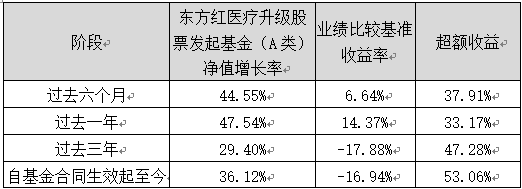
Core Viewpoint - The pharmaceutical sector is experiencing a significant rebound after three years of stagnation, driven by overseas licensing deals, advancements in R&D capabilities, and supportive policies, presenting multiple opportunities for investors [1] Group 1: Industry Outlook - The long-term excess returns in the pharmaceutical industry are fundamentally driven by technological growth and value creation, with innovative drugs expected to be the fastest-growing sub-sector [1][6] - The industry is transitioning from a phase of investment (2015-2024) to a harvest phase (2025-2029), with innovative drugs moving from the initial stage to a more advanced stage of development [6][7] - The next phase for innovative drugs is anticipated to be a "1-10" growth stage, with more products entering the market and global competitiveness being validated through partnerships with major overseas pharmaceutical companies [6][8] Group 2: Fund Performance - Since its inception, the Oriental Red Medical Upgrade Fund has achieved a return of 36.12% against a benchmark decline of 16.94%, resulting in an excess return of 53.06% [2][3] - Over the past year, the fund has increased by 47.54%, significantly outperforming the benchmark's 14.37% return, leading to an excess return of 33.17% [2][3] - The fund ranks third among 40 similar funds in terms of net value growth over the past three years [2][3] Group 3: Investment Strategy - The core investment strategy focuses on "combination, cycle, and growth," emphasizing a diversified portfolio to navigate industry complexities while adjusting allocations based on sub-sector cycles [3][4] - The approach includes dynamic allocation between low-risk and high-growth investments, prioritizing companies with growth potential while avoiding purely undervalued but stagnant firms [4][8] - Continuous learning and forward-looking research are essential for identifying investment opportunities in the rapidly evolving innovative drug sector [9][8]
多重利好支撑 创新药仍是星辰大海?
Xin Lang Ji Jin· 2025-08-05 07:46
Core Viewpoint - The Hong Kong Innovation Drug Index has shown a remarkable increase of 101.33% this year, indicating a strong performance in the sector, with a focus on pharmaceutical research and development [1][10]. Group 1: Market Performance - The Hong Kong Innovation Drug Index will undergo adjustments effective from August 12, enhancing its focus on pharmaceutical R&D [1]. - The pharmaceutical sector, particularly innovative drugs, is identified as a clear trend with significant growth potential [1]. - The overall net profit of listed companies in the pharmaceutical and biotechnology sector reached 50.674 billion yuan in Q1 2025 [1]. Group 2: Cost Management - The pharmaceutical industry has successfully reduced sales and financial expense ratios, with sales expense ratio decreasing from 14.33% in 2021 to 12.18% in Q1 2025, and financial expense ratio dropping from 0.69% to 0.38% [5][1]. - The management expense ratio has remained stable, increasing slightly from 5.10% to 5.11% during the same period [5][1]. - The increase in R&D expense ratio from 4.26% to 4.37% reflects ongoing investment in innovation [5]. Group 3: Regulatory Environment - In the first half of this year, 43 innovative drugs were approved, marking a 59% increase compared to the previous year, nearing the total of 48 approvals for the entire year of 2024 [3]. - The acceleration in drug approval processes is attributed to reforms initiated in 2018, which have significantly shortened the approval timeline [3]. Group 4: International Expansion - Chinese pharmaceutical companies completed 94 overseas licensing transactions in 2024, totaling $51.9 billion, a 36% increase from the previous year [6]. - In the first half of 2025, the total amount for overseas licensing transactions exceeded the previous year's total, reaching $60.8 billion, indicating a strong growth trajectory [6]. Group 5: Investment Opportunities - The Hong Kong Innovation Drug ETF has outperformed, with a year-to-date increase of 101.33%, making it the top performer among eight indices tracking Hong Kong innovative drugs [10]. - The upcoming share split of the Hong Kong Innovation Drug ETF is expected to lower the investment threshold, allowing for more flexible participation [10]. - The domestic innovation drug ETF has also shown a year-to-date return of 31.06%, indicating continued upward potential in the sector [11].

医保局连开5场座谈会支持创新药 业内人士:从研发到上市都有“甘霖”
Mei Ri Jing Ji Xin Wen· 2025-08-05 04:10
Core Insights - The National Healthcare Security Administration (NHSA) is intensifying support for innovative drugs and medical devices, signaling a shift towards fostering genuine and differentiated innovation in the industry [1][2][3] - Recent meetings have highlighted the significant policy advantages, research capabilities, manufacturing strengths, and market potential of China's innovative drug sector, leading to increased confidence in its future development [1][2] Group 1: Policy Support and Measures - NHSA has organized five meetings focused on supporting innovative drugs, covering topics such as comprehensive value assessment, new technology development, and investment in the pharmaceutical sector [2][3] - The newly released "Several Measures to Support the High-Quality Development of Innovative Drugs" indicates a strong commitment from the NHSA to enhance the innovation landscape in the pharmaceutical industry [2][3] Group 2: Direction of Support - NHSA has outlined five key directions for supporting innovative drug development: leveraging policy guidance, promoting genuine innovation, encouraging differentiated innovation, comprehensive evaluation of value, and enhancing communication between policy departments and the industry [3] - New pricing policies are being introduced to facilitate the entry of high-level technological innovations into clinical applications and to encourage drug research and development [3] Group 3: Industry Sentiment and Market Response - Industry insiders express that the recent policy support is akin to a much-needed "rain" for companies that have faced a prolonged "winter" in the innovative drug sector [4][5] - The innovative drug market in China has historically been undervalued, with prices significantly lower than international benchmarks, resulting in a mere 3% market share in the global pharmaceutical market [5] - Recent favorable policies have led to a clearer and more stable policy outlook for the innovative drug industry, with notable market performance reflected in the Hang Seng Hong Kong Stock Connect Innovative Drug Index, which has risen over 94% year-to-date [5]
多重利好支撑创新药 关注银华旗下港股创新药ETF和创新药ETF
Zhong Zheng Wang· 2025-08-05 03:18
Core Viewpoint - The Hong Kong Innovation Drug Index has shown a remarkable increase of 101.93% year-to-date, indicating a strong performance in the innovative pharmaceutical sector, which is expected to continue growing due to favorable factors [1]. Group 1: Industry Trends - The innovative drug sector is identified as a clear trend with significant future growth potential within the pharmaceutical industry [1]. - The number of approved innovative drugs has significantly increased, with 43 approvals in the first half of the year, representing a 59% year-on-year growth, nearing the total of 48 expected for the entire year of 2024 [2]. - The approval process for innovative drugs has been expedited, reducing the application review time from 200 working days to 60 in 11 pilot provinces, enhancing market access for new drugs [2]. Group 2: Financial Performance - Pharmaceutical companies have successfully reduced sales and financial costs, contributing to improved profit margins, while R&D expenses have increased, reflecting ongoing investment in innovation [1]. - The total transaction amount for overseas licensing by Chinese pharmaceutical companies reached $51.9 billion in 2024, a 36% increase from the previous year, with the first half of 2025 already surpassing last year's total at $60.8 billion [2]. Group 3: Investment Opportunities - The pharmaceutical and biotechnology industry is expected to stabilize and grow in 2025, supported by favorable policies for innovative drug development and medical equipment updates [3]. - Investment vehicles such as the Hong Kong Innovation Drug ETF and its associated funds are positioned to capture growth in the innovative drug market while diversifying individual stock risks [3]. - The Hong Kong Innovation Drug ETF will undergo a share split on August 8, reducing the investment threshold and allowing for more flexible participation from investors [3].
重磅信号,国家医保局连开五场座谈会
2 1 Shi Ji Jing Ji Bao Dao· 2025-08-04 05:04
Core Insights - The series of meetings organized by the National Healthcare Security Administration (NHSA) reflects a strong commitment from the decision-making level to support the development of innovative drugs and medical devices, providing clearer and more stable policy expectations for the industry [2][4]. Group 1: Policy Support for Innovative Drugs - The NHSA has held five meetings focusing on various aspects of supporting innovative drugs, including comprehensive value assessment, new technology development, real-world research, and investment strategies [2][4]. - The NHSA emphasizes a multi-departmental approach to optimize collaboration and support for the innovative drug ecosystem [1][2]. Group 2: Key Directions for Support - The NHSA outlined five key directions for supporting innovative drugs: providing policy guidance for R&D, supporting true innovation based on clinical outcomes, encouraging differentiated innovation, comprehensive evaluation of clinical and economic value, and enhancing communication between policy departments and the industry [5][6]. - The NHSA also highlighted the importance of collaboration between basic medical insurance and commercial insurance to create a multi-tiered support system for innovation [5]. Group 3: Data Utilization in Drug Development - The NHSA plans to leverage healthcare data to support innovative drug development by reducing investment costs, enhancing investment prospects, and mitigating risks [6][7]. - Experts at the meetings expressed the need for improved data utilization to transition drug development from experience-based to data-driven approaches, which could significantly reduce time and resource costs [7]. Group 4: Encouraging Long-term Investment - The NHSA reported that since its establishment in 2018, the cumulative expenditure of the healthcare fund has reached 18.04 trillion yuan, with an annual growth rate of 11%, supporting both demand and supply in the healthcare sector [8]. - There is a call for encouraging long-term patient capital to invest in early-stage R&D and key technologies rather than short-term speculative investments [8][9]. Group 5: Innovations in Pricing and Market Access - The NHSA introduced new pricing policies to facilitate the entry of innovative drugs into the market, including a mechanism for the first price of newly listed drugs and optimizing service access [9][10]. - Medical institutions and pharmaceutical companies shared insights on the clinical application of new technologies and the development of innovative drugs during the meetings [10].

医疗耗材行业周报:国家医保局召开医保支持创新药械系列座谈会第三场-20250728
Xiangcai Securities· 2025-07-28 08:41
Investment Rating - The industry investment rating is maintained at "Overweight" [2][26] Core Views - The medical consumables sector saw a weekly increase of 5.04%, outperforming the CSI 300 index by 0.21 percentage points [4][12] - The current PE (ttm) for the medical consumables sector is 35.7X, with a PB (lf) of 2.59X, indicating a slight increase in valuation metrics [5][19][20] - The National Healthcare Security Administration held a meeting to support the development of innovative drugs and medical devices, emphasizing the importance of integrating healthcare data with innovation [6][23] Summary by Sections Industry Performance - The medical consumables sector reported a weekly increase of 5.04%, with the overall medical sector trending upwards [4][12] - The sector's PE has risen by 1.82 percentage points compared to the previous week, with a one-year range of 28.42X to 41.66X [5][19] Industry Dynamics and Key Announcements - The National Healthcare Security Administration's meeting aimed to enhance the quality of innovative drug development and address diverse healthcare needs [6][23] - The meeting highlighted the potential of healthcare data in supporting innovation and improving the efficiency of the pharmaceutical industry [6][23] Investment Recommendations - The report suggests closely monitoring the performance forecasts of companies in the medical consumables sector, particularly those recovering from the impact of centralized procurement [7][24] - Two main investment themes are identified: recovery opportunities post-centralized procurement and increased penetration of innovative products [7][26]
2024医药生物(A股)上市公司市值战略研究报告
Sou Hu Cai Jing· 2025-07-23 00:38
Core Insights - The pharmaceutical and biotechnology industry in China is at a crossroads of cyclical adjustment and innovative transformation in 2024, with a slow recovery process despite a rebound trend [1][14] - The industry is experiencing significant changes in market value management logic and practices due to tightening policies, accelerated innovation, and reshaped market dynamics [1][14] Industry Overview - The industry is facing multiple challenges including tightened policy environment, innovation impacts, changing demand structures, and price restructuring [14][17] - In 2024, the focus of pharmaceutical policies is on six core areas: supporting innovative drug development, deepening medical reform, expanding the opening of wholly-owned hospitals, improving multi-level medical insurance systems, enhancing centralized procurement, and refining drug pricing mechanisms [17][18] Innovation and Market Dynamics - Innovation is the core growth engine, with a record 48 innovative drugs and 65 innovative medical devices approved in 2024, positioning China as the second globally in new drug research [2][18] - The market is shifting towards high-end and differentiated demands domestically, while international strategies are transitioning from "bringing in" to "going out," covering various categories including chemical drugs and monoclonal antibodies [2][19] Market Capitalization and Valuation - As of May 31, 2025, there are 495 pharmaceutical and biotechnology companies listed in A-shares, with a total market capitalization of 6.6 trillion yuan, accounting for 6.62% of the total A-share market [20][22] - The distribution of market capitalization shows that 187 companies fall within the 2-5 billion yuan range, making up 37.78% of the industry, while there are 9 companies with market caps exceeding 100 billion yuan [22][24] Value Management Strategies - The value creation ability of listed companies is under pressure, scoring 45.65 out of 100, which is below the A-share average, indicating a need for improvement in profitability and operational efficiency [3][15] - Value shaping is lagging, with a score of 36.88, highlighting the need for companies to enhance their communication of investment value to the capital market [3][15] Changes in Value Management Practices - M&A activities have slowed down, with total M&A amounting to 4.364 billion yuan in 2024, while share buybacks have increased significantly, indicating a shift towards returning value to shareholders [4][15] - The proactive nature of value management has increased, with a notable rise in stock buybacks and share incentive plans, reflecting a focus on long-term value [4][15] Expectations and Market Feedback - The industry has seen an increase in institutional attention, but this has not yet translated into substantial investment decisions, indicating a need for improved expectation management [4][15][16] - The overall performance in terms of investment returns and growth certainty is declining, but remains better than the A-share average [16]
利好来了!重磅调整,正式启动!
券商中国· 2025-07-11 11:27
Core Viewpoint - The innovation drug sector is experiencing positive developments with the official launch of the 2025 National Basic Medical Insurance, Maternity Insurance, and Work Injury Insurance Drug Directory and the Commercial Health Insurance Innovation Drug Directory adjustment [1][4]. Group 1: Policy Changes - The National Healthcare Security Administration (NHSA) has initiated the adjustment of the drug directories, allowing eligible applicants to submit online applications from July 11 to July 20 [4]. - The newly added commercial health insurance innovation drug directory focuses on high innovation, significant clinical value, and substantial patient benefits, which cannot be included in the basic directory due to exceeding the "basic protection" scope [4][5]. - The NHSA has released a series of documents outlining the adjustment work plan, including guidelines for the new commercial health insurance innovation drug directory [2][4]. Group 2: Market Reactions - The innovation drug sector has shown strong performance in the secondary market, with the Wind Innovation Drug Index rising over 2% on July 11, and several companies like Yifang Bio and Changshan Pharmaceutical seeing significant stock price increases [3][4]. - Multiple brokerages express optimism about the innovation drug sector and its related industrial chain, indicating a positive outlook for future investments [3][6]. Group 3: Institutional Support - The NHSA and the National Health Commission have issued measures to support high-quality development of innovation drugs, encouraging the use of healthcare data for drug research and promoting investment in innovation drugs by commercial health insurance [6][7]. - The measures also propose the establishment of a commercial health insurance innovation drug directory, which will include drugs that exceed basic insurance coverage but have high innovation and clinical value [6][7]. Group 4: Industry Growth Potential - Analysts highlight that the innovation drug sector has maintained rapid growth in product revenue and external licensing over the past three years, with significant business development (BD) transactions occurring this year [7][8]. - The increasing international competitiveness of Chinese innovation drug assets is noted, with clinical data gaining prominence at academic conferences and BD transactions on the rise [8][9].