制度型开放

Search documents
以更开放的姿态为全球发展带来广阔机遇
Ren Min Ri Bao· 2026-02-10 22:22
Group 1 - The core viewpoint emphasizes that China's openness is a strategic choice based on development needs, aimed at promoting economic globalization and benefiting people worldwide [1] - The 14th Five-Year Plan is expected to provide valuable certainty and strong momentum for the global economy, as stated by leaders from the World Bank, IMF, and UNCTAD [1] - By 2025, China's import scale is projected to reach 18.48 trillion yuan, maintaining its position as the world's second-largest import market with a global share of around 10% [1] Group 2 - China's commitment to reducing the negative list for foreign investment has led to a "zero" status in the manufacturing sector, creating favorable conditions for foreign enterprises [2] - In 2025, over 70,000 new foreign-invested enterprises are expected to be established in China, representing a year-on-year growth of 19.1%, with high-tech industries accounting for 32.3% of foreign investment [2] - China aims to balance "bringing in" and "going out" strategies to enhance the business environment and promote orderly cross-border industrial chain layouts [2] Group 3 - China is actively promoting institutional openness and aligning with international high-standard trade rules, expanding its free trade agreements to 24 with 31 countries and regions [3] - By 2025, trade with free trade partners is expected to exceed 20 trillion yuan, accounting for 45% of China's total goods trade [3] - The establishment of 22 pilot free trade zones has led to the promotion of 485 institutional innovation achievements [3] Group 4 - The Belt and Road Initiative has become the largest international economic cooperation platform globally, with over 150 countries and 30 international organizations signing cooperation documents [4] - Significant projects like the Mombasa-Nairobi Railway and the China-Laos Railway have been completed, with over 120,000 China-Europe freight trains operating [4] - China aims to deepen cooperation in both traditional and emerging fields, addressing global challenges such as climate change and economic recovery through high-level openness [4]
“十五五”加强西部地区与周边国家区域经贸合作
Xin Lang Cai Jing· 2026-02-10 21:07
(来源:经济参考报) "十五五"规划建议提出"推动贸易创新发展"。当前,西部地区与周边国家的经贸合作呈现深层次互补与 结构渐次优化的特征。从贸易结构看,以"资源、农产品与工业制成品"互惠贸易为特征的互补型分工格 局稳固,为拓展中间品贸易、绿色贸易奠定了现实产业基础。从经贸发展格局看,西部地区在高质量建 设"一带一路"中的枢纽作用显著增强。2025年西部地区进出口总额约4.3万亿元,其中超60%面向共 建"一带一路"国家。这标志着向西开放已成为我国市场多元化的关键支点,而中欧班列、西部陆海新通 道及跨境电商等平台,正推动我国西部内陆地区转变为向西开放前沿。 建议"十五五"时期加快构建中国与周边国家的政策协同与功能支撑体系。由国家层面设立跨部门联合推 进机制,整合各个部门的力量形成政策合力。同时,创新投融资支持模式,可探索设立由国家开发银行 与进出口银行等政策性银行联署协同的"产业合作基金"。以市场化运作支持跨境园区、物流枢纽、农业 科技平台等关键领域内外协同和产业链、供应链辐射效应显著的旗舰式标杆项目。以西部地区自贸试验 区为前沿,积极推动与周边国家在投资保护、产业准入、数字贸易、环境标准等领域的制度型开放会商 ...
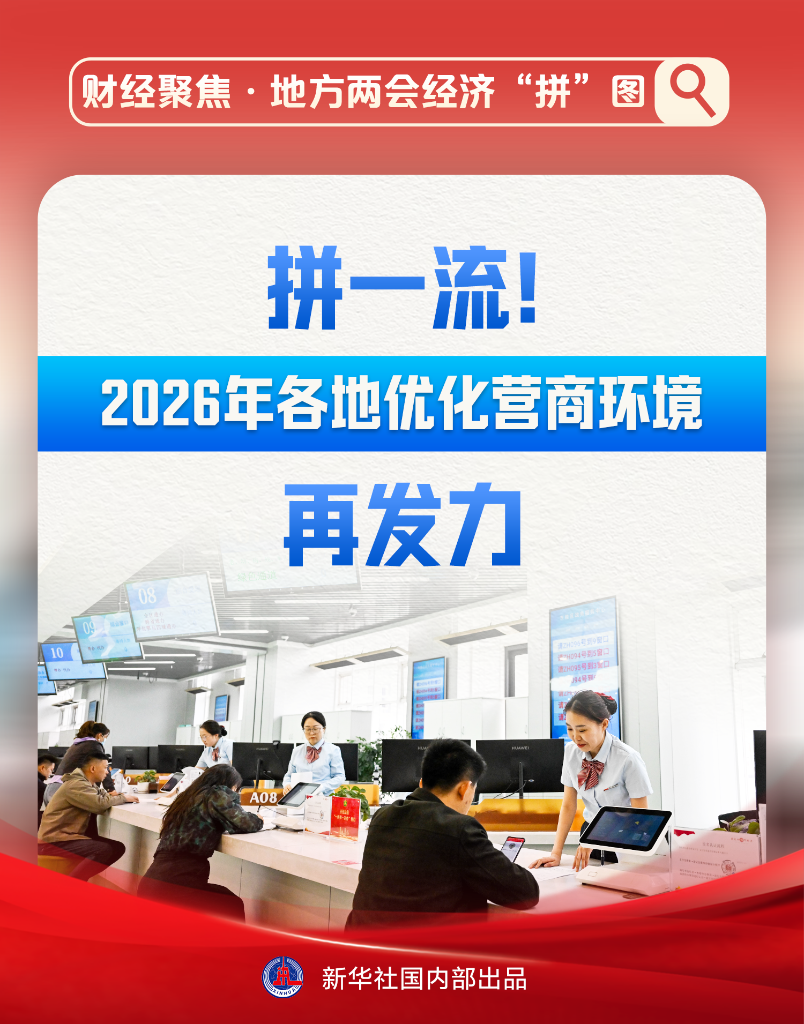
财经聚焦·地方两会经济“拼”图丨拼一流!2026年各地优化营商环境再发力
Xin Hua Wang· 2026-02-10 10:28
Group 1 - The core viewpoint emphasizes the continuous improvement of the business environment across various regions, focusing on creating a market-oriented, law-based, and international first-class business environment [2][8] - Local governments are implementing measures to enhance effective market and proactive government collaboration, with initiatives such as comprehensive cross-departmental regulation and digital government construction [3][10] - The introduction of new regulations and mechanisms aims to ensure fair competition and transparency in administrative enforcement, as seen in Guangdong and Chongqing's proposals [5][10] Group 2 - Legal frameworks are being strengthened to support the business environment, with new laws and regulations set to take effect in 2026, aimed at boosting confidence among private enterprises [7][11] - High-level openness is a key focus, with regions working to create an inclusive and international business environment, as highlighted by Shanghai and Guangdong's action plans [8][10] - Continuous feedback mechanisms and proactive service measures are being established to ensure that businesses feel supported and can effectively communicate their needs [11]

在制度型开放中发挥海南自贸港引领作用
Hai Nan Ri Bao· 2026-02-10 03:36
Core Viewpoint - Hainan Free Trade Port (FTP) plays a leading role in China's institutional opening-up, serving as a benchmark for national and international trade rules and policies [3][4][5]. Group 1: Role of Hainan FTP - Hainan FTP is a crucial "chess piece" in China's broader opening strategy, representing the only Chinese-style free trade port that aligns with the world's most advanced trade rules [4]. - The central government has high expectations for Hainan FTP, which is seen as a pilot for high-level opening-up policies that can be replicated nationally [4][6]. - Hainan's development is expected to set a model for future-oriented growth, showcasing new standards and rules for global trade [6][8]. Group 2: Institutional Opening Measures - Hainan FTP aims to implement high-standard international rules, such as customs facilitation and zero tariffs, which currently cover 74% of goods, with plans for expansion [7]. - The port's policies allow for tax exemptions on products with over 30% added value, enhancing Hainan's industrial advantages [7]. Group 3: Domestic Demand and Consumption - Hainan's strategy of "external flow, external priority, and external promotion" aims to convert foreign consumption into domestic demand, leveraging its unique geographical and institutional advantages [9]. - The province seeks to attract high-quality consumption, including duty-free shopping and premium medical and educational services, to reduce the outflow of domestic spending [9][10]. - Hainan is positioned to become an international tourism consumption center, optimizing the national consumption environment and contributing to high-quality economic growth [9].
中国金融改革开放2025年度报告
Sou Hu Cai Jing· 2026-02-10 02:45
Core Insights - The report highlights that 2025 marks a critical year for China's financial reform and opening-up, transitioning from market access to institutional openness, focusing on rules and regulations, and aiming for high-quality development in the financial sector [9][10]. Market Development - The capital market's two-way opening continues to deepen, with significant improvements in the Shanghai-Hong Kong Stock Connect and Bond Connect, leading to increased trading activity and market stability [10][18]. - The internationalization of the Renminbi (RMB) is accelerating, with a global cross-border payment system and rapid development of the digital RMB, creating a dual-driven new pattern [10][33]. - The bond market has seen substantial growth, with the "Bond Connect" mechanism enhancing cross-border investment and risk management capabilities, making Chinese bonds a core option for global asset allocation [23][27]. Industry Development - Foreign financial institutions are accelerating their entry into the Chinese market, focusing on wealth management, green finance, and technology insurance, while domestic institutions are expanding internationally, particularly in Belt and Road Initiative countries [10][52]. - The insurance sector is witnessing increased foreign participation, with foreign insurance companies' total assets reaching 3.32 trillion RMB, a 12.1% increase from the previous year [57]. Institutional Introduction - The introduction of foreign institutions is shifting from mere expansion to focusing on high-net-worth wealth management and cross-border finance, indicating a more strategic approach [72]. - As of mid-2025, there are 42 foreign banks operating in China, with a strong emphasis on capital strength and international experience, contributing significantly to the local banking landscape [47][50]. Business Development - The Qualified Foreign Institutional Investor (QFII) and Qualified Domestic Institutional Investor (QDII) systems are continuously optimized, expanding investment channels and quotas, which enhances cross-border financial integration [11][52]. - The establishment of cross-border financial services in strategic regions like the Yangtze River Delta and the Guangdong-Hong Kong-Macao Greater Bay Area is progressing, creating a multi-layered regional opening pattern [11][12]. Regulatory Reform - Financial regulatory reforms are being implemented, including the optimization of the qualified foreign investor system and the introduction of new policies to enhance the financial regulatory framework [11][12]. - The integration of finance and technology is deepening, forming a comprehensive financial support system for technological innovation throughout its lifecycle [11][12]. Future Outlook - Looking ahead to 2026, the focus will be on deepening institutional openness, aligning rules and standards with international practices, and promoting a more competitive and resilient modern financial system [12].

我国已成为近80个国家主要出口目的地
Mei Ri Jing Ji Xin Wen· 2026-02-09 15:10
近日,商务部召开例行新闻发布会。聚焦扩大进口、吸引外商投资等多个热点话题,商务部新闻发言人 何亚东进行了回应。 何亚东表示,中国一直高度重视扩大进口工作。商务部积极落实党中央、国务院决策部署,推动进口规 模持续增长、来源更加多元。 《每日经济新闻》记者从发布会现场了解到,2025年,中国进口规模达18.5万亿元,连续17年成为全球 第二大进口市场。中国自130多个国家和地区的进口实现增长,已成为近80个国家的主要出口目的地。 将有序扩大市场准入 三是创新活动。继续办好进博会,打响"出口中国"品牌,以更大力度、更实举措扩大进口。 持续扩大制度型开放 2026年初已经有多个国家领导访华,这些访问促成了多少对华投资,成为社会关注的焦点。 对此,何亚东表示,2026年以来,韩国总统李在明、加拿大总理卡尼、芬兰总理奥尔波、英国首相斯塔 默等国家领导人率团访问中国,进一步加深了理解互信,开辟了双边经贸合作的广阔空间,增强了跨国 公司投资中国、深耕中国的信心。 2025年,韩国对华制造业投资增长14.1%,加拿大对华高技术产业投资同比增长11.7%,芬兰对华制造 业投资同比增长21.7%,英国对华投资同比增长15.9%。近 ...
学习贯彻党的二十届四中全会精神 | 对接国际经贸标准 谱写制度型开放新篇章
Xin Lang Cai Jing· 2026-02-09 07:58
Group 1 - The core viewpoint emphasizes that only an open China can achieve modernization, with a focus on deepening institutional openness and enhancing foreign trade and investment to drive high-quality economic development [1] - The 20th Central Committee's proposal highlights the necessity of open cooperation and mutual benefit as essential requirements for Chinese-style modernization, with systematic deployment for expanding institutional openness and maintaining a multilateral trade system [1] - The Central Economic Work Conference identifies "adhering to opening up and promoting multi-field cooperation for mutual benefit" as a core task for 2026, prioritizing the steady advancement of institutional openness [1] Group 2 - China has made significant progress in institutional openness, ranking 38th among 129 economies in the 2024 Open Index, indicating notable achievements but also challenges compared to developed countries [3] - The service trade volume in China surpassed 7.5 trillion yuan (approximately 1.06 trillion USD) in 2024, marking a 14.4% year-on-year increase, showcasing the multiplier effect of institutional openness [2] - The establishment of 22 free trade pilot zones since 2013 has created a comprehensive open pattern across eastern, central, and western regions, with the Hainan Free Trade Port marking a new phase of institutional innovation [3] Group 3 - The strategic layout of major open cooperation platforms is essential for institutional openness, with free trade zones serving as key carriers for innovation in intellectual property protection and cross-border dispute resolution [4] - Technological innovation and open cooperation are identified as the core engines of institutional openness, with China establishing over 127 joint R&D projects and a technology transaction volume exceeding 80 billion yuan [5] - The service trade open cooperation platform is crucial, with initiatives in Shanghai and Beijing aimed at enhancing the accessibility of professional services and facilitating cross-border data flow [6] Group 4 - The development of digital trade is highlighted as a key driver of global service trade growth, with an emphasis on enhancing knowledge property rights protection and expanding international cooperation [9] - Recommendations include improving digital intellectual property protection rules and establishing a national unified intellectual property value assessment system to facilitate the conversion of innovation into competitive advantages [10] - The establishment of a cross-border intellectual property digital service platform is proposed to enhance trade facilitation and security, leveraging blockchain technology for efficient rights confirmation and protection [10]
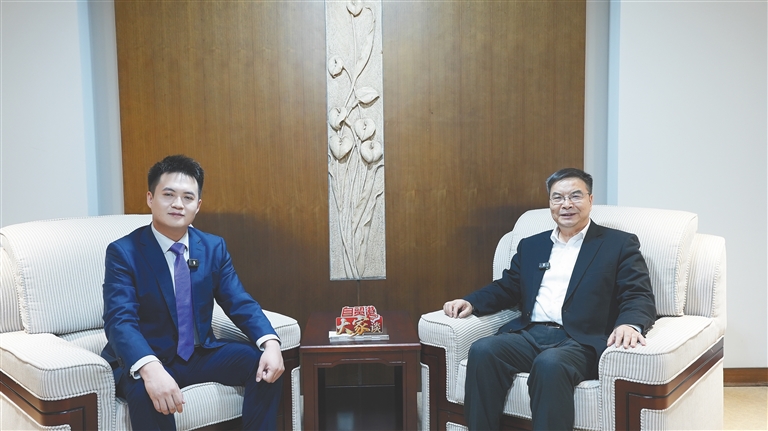
《自贸港“大家”谈》第十六期今日播出
Hai Nan Ri Bao· 2026-02-09 02:41
Core Viewpoint - Hainan Free Trade Port is positioned as a leader in China's new phase of opening up, serving as a model for institutional openness and a testing ground for high-level opening policies [1] Group 1: Institutional Openness - Hainan plays a pioneering role in institutional openness, acting as a benchmark for the entire country's opening up efforts [1] - The province is expected to serve as a policy testing ground, facilitating the implementation of high-level opening strategies across China [1] Group 2: Economic Growth and Consumption - Hainan is recognized as an international tourism consumption center, which is crucial for optimizing the national consumption environment [1] - The development of Hainan is seen as a significant driver for China's high-quality economic growth, with substantial potential in enhancing consumption [1] Group 3: Media and Outreach - The program "Self-Trade Port 'Big Talk'" is produced in collaboration with various media outlets and will be broadcasted on multiple platforms, enhancing public awareness of Hainan's role [1]
银行业对外开放新格局: 支持中国企业全球布局的金融力量
Jin Rong Shi Bao· 2026-02-09 01:28
中央金融工作会议系统阐述了中国特色金融发展之路,强调"着力推进金融高水平开放",并明确要 求"稳步扩大金融领域制度型开放",提升跨境投融资便利化,增强上海国际金融中心的竞争力和影响 力,以更好服务实体经济。在2025年6月陆家嘴论坛上,中国人民银行、国家金融监督管理总局、中国 证券监督管理委员会等中央金融管理部门负责人集中发声,释放进一步扩大金融开放的重要信号。中国 银行业的对外开放正经历一场从扩大市场准入的"通道式开放",迈向以规则、规制、管理、标准与国际 高标准全面对接的"制度型开放"新阶段。这一根本性转变,不仅是构建中国特色现代金融体系、筑牢金 融强国根基的内在要求,更是银行业赋能中国企业深度参与全球产业链重构、维护与发展全球化新格局 的战略支撑。 深化制度型开放: 构筑高水平金融开放新体系 制度型开放是金融高水平开放的核心要义,其目标在于推动国内金融监管框架、市场规则与国际最 佳实践相衔接,打造稳定、透明、可预期的营商环境。中国金融开放的重心,已从构建物理性的"接入 通道",转向铺设系统性的"运行轨道"。银行业制度型开放的成果,直接体现为中国银行业服务能级的 跃升与国际竞争力的增强。 (一)制度创新直 ...

2025年我国经济交出一份高质量的成绩单
Sou Hu Cai Jing· 2026-02-08 09:09
Core Insights - In 2025, China's economy demonstrated high-quality performance amid pressures for stable growth and structural adjustment, with a focus on new development momentum and improved quality [1] Group 1: New Development Momentum - China's R&D expenditure intensity reached 2.8% in 2025, surpassing the OECD average for the first time, and the innovation index ranked in the global top 10 [3] - Significant advancements in new productive forces were noted, with major innovations in artificial intelligence, quantum communication, and chip development [3] - The energy transition showed remarkable progress, with new energy storage capacity exceeding 100 million kilowatts, maintaining the world's leading position, and the production of new energy vehicles surpassing 16 million units [3] - Trade with Belt and Road countries accounted for 51.9% of total imports and exports, indicating reduced reliance on single markets [3] Group 2: Improved Development Quality - Domestic demand became the main driving force for economic growth, contributing nearly 70% to growth, with final consumption accounting for over 50% [4] - A series of measures were implemented to improve livelihoods, focusing on employment, housing, and childcare, enhancing the social safety net [4] - Food production reached 1.43 trillion jin, ensuring food security, while energy supply remained stable with significant coal, oil, and natural gas production [5]