
城乡居民增收计划

Search documents
国务院常务会议要求 加快培育服务消费新增长点
Zhong Guo Zheng Quan Bao· 2026-01-16 21:40
Group 1 - The State Council, led by Premier Li Qiang, is focusing on measures to boost consumption, including the implementation of a special action plan to enhance consumer spending and the cultivation of new growth points in service consumption [1][2] - The meeting emphasized the importance of cleaning up overdue enterprise payments and ensuring the payment of migrant workers' wages, highlighting the need for increased efforts and responsibility at the local level [2] - The government plans to modify and abolish certain administrative regulations to improve legislative quality and ensure the effective implementation of new and existing laws [2] Group 2 - The meeting outlined the necessity of integrating various policies to enhance consumer spending, aiming to strengthen the internal motivation for consumer spending and leverage consumption as a fundamental driver of economic growth [1] - There is a focus on supporting new business models and increasing the supply of quality services, while addressing issues related to credit, standards, and safety management to promote service consumption [1] - The government is committed to establishing a long-term mechanism for promoting consumption, including the development of a "14th Five-Year" plan for expanding consumption and a plan for increasing urban and rural residents' income [1]
加快培育服务消费新增长点
Zhong Guo Zheng Quan Bao· 2026-01-16 20:47
Group 1 - The State Council, led by Premier Li Qiang, is focusing on measures to boost consumption, including the implementation of a special action plan to enhance service consumption and address overdue payments to enterprises and wage guarantees for migrant workers [1][2] - The meeting highlighted the positive outcomes from the ongoing special action to stimulate consumption, emphasizing the need to integrate various policies to enhance residents' consumption motivation and leverage consumption as a fundamental driver of economic growth [1] - There is a call to accelerate the cultivation of new growth points in service consumption, supporting the emergence of new business models and increasing the supply of quality services while addressing issues related to credit, standards, and safety management [1] Group 2 - The meeting underscored the importance of clearing overdue payments to enterprises and ensuring wage payments to migrant workers, stressing the need for heightened attention and increased efforts in these areas [2] - Specific actions include tightening oversight in key regions, expediting the issuance of special bonds to support debt clearance, and establishing a long-term mechanism to prevent the accumulation of overdue payments [2] - The meeting also decided to amend certain provisions of nine administrative regulations and abolish two regulations, aiming to enhance the quality and effectiveness of government legislation [2]
实现2026年经济目标,深层次改革不可或缺
Di Yi Cai Jing· 2026-01-13 07:18
Group 1 - The core viewpoint emphasizes the importance of policy support and reform innovation in achieving economic stability and growth in 2025, with a GDP growth of 5.2% in the first three quarters and an expected annual growth rate of around 5% [1][2] - The economic structure is continuously optimizing, with emerging industries like artificial intelligence and biomedicine thriving, and significant sales driven by the "two new" policies, including over 2.5 trillion yuan in sales from consumer goods replacement [1][3] - Industrial enterprises have seen a profit increase of 1.9% from January to October 2025, indicating improved corporate performance despite ongoing challenges [1][3] Group 2 - Current economic challenges include insufficient effective demand, with investment showing negative growth and overall consumption remaining weak [2][3] - Price levels are low, with the Consumer Price Index (CPI) fluctuating around zero for two consecutive years and the Producer Price Index (PPI) experiencing negative growth for three years [3][4] - Employment and resident income growth face significant pressure, as highlighted in the "15th Five-Year Plan," indicating a need for focused policy measures [3][4] Group 3 - The central economic work conference has called for more proactive macroeconomic policies to address the ongoing economic downward pressure, including maintaining necessary fiscal deficits and increasing central budget investments [5][6] - A moderately loose monetary policy is to be implemented, focusing on stabilizing economic growth and ensuring reasonable price recovery, with tools like reserve requirement ratio cuts and interest rate reductions [6][7] - The conference outlined "eight persistences" for economic work, emphasizing the need for deep reforms alongside policy support to enhance domestic demand and improve income distribution [7][8]
“钟才平”连发重磅文章,有何深意
21世纪经济报道· 2026-01-13 04:10
Core Viewpoint - The series of articles by "Zhong Caiping" published in the People's Daily serves as a significant indicator of the government's economic strategy for 2026, emphasizing the importance of adapting economic policies to local conditions and addressing current challenges in economic governance [1][4]. Summary by Relevant Sections Economic Work Principles - The articles cover essential principles and key areas of economic work, including adapting economic strategies to local conditions, promoting consumption and investment, and enhancing macroeconomic governance [3][4]. Policy Interpretation - The article titled "Enhancing Policy Integration Effects to Improve Macroeconomic Governance Efficiency" highlights the new emphasis on stabilizing economic growth and ensuring reasonable price recovery as key considerations for monetary policy [6]. It discusses the need for a forward-looking and scientific approach to monetary policy in 2026, aiming for a balance between liquidity and economic growth [6]. Consumption and Investment - The article "Coordinating Consumption and Investment to Build a Strong Domestic Market" argues that investment and consumption should not be seen as mutually exclusive but rather as mutually reinforcing elements of economic growth [8]. It emphasizes the importance of maintaining fiscal stimulus and expanding government investment to achieve a growth target of around 5% in 2026 [8][9]. Real Estate Development - The article "Using Livelihood Improvement to Open New Development Space" discusses the potential for high-quality development in the real estate sector, noting that there remains significant unmet housing demand among urban residents [11][12]. It suggests that real estate will continue to play a crucial role in driving domestic demand and economic growth [12]. Employment and Income - The articles stress the need to promote a virtuous cycle of employment, income, consumption, and investment, with a focus on implementing plans to increase urban and rural residents' incomes [12]. This includes reforms in income distribution and fiscal policies to support low-income groups [12].


快评丨农民养老金提档:破“天花板”易,筑“地板”难
Nan Fang Nong Cun Bao· 2026-01-13 03:30
Core Viewpoint - The recent increase in the maximum contribution levels for urban and rural residents' basic pension insurance in several provinces, including Yunnan, aims to address the demand for higher pension security among higher-income residents, but it highlights a significant gap between policy design and the actual payment capabilities of most participants [2][5][12]. Group 1: Policy Changes - Provinces such as Yunnan, Anhui, Guizhou, and Liaoning have announced plans to raise the maximum contribution levels for pension insurance by 2026 [2]. - Yunnan has set its annual contribution cap at 10,000 yuan, becoming the first province to exceed this threshold [3]. - If contributions are made at this new cap for 15 years, retirees could expect monthly pensions exceeding 1,200 yuan [4]. Group 2: Challenges and Gaps - Approximately 80% of rural residents currently opt for the lowest contribution tier of 200 yuan per year, indicating a disconnect between the new policy and the financial realities of most participants [13][14]. - The new contribution cap requires monthly payments of about 833 yuan, which is a significant burden given that the average disposable income for rural residents in Yunnan is projected to be around 1,454 yuan per month in 2024 [15][16]. - The core issue lies not in the height of the contribution ceiling but in the inadequate payment capacity of the majority of participants [16][22]. Group 3: Recommendations for Improvement - To enhance the pension system's effectiveness, it is essential to raise the basic pension standards steadily, ensuring that all elderly residents receive reliable support [25][26]. - Strengthening the subsidy policies for mid-tier contributions could encourage more participants to move away from the lowest tier, rather than only incentivizing a small number to reach the maximum [30][31]. - Exploring additional funding sources, such as support from village collective economic organizations, could create a collaborative funding model involving personal contributions, collective support, and government subsidies [32]. Group 4: Long-term Solutions - The fundamental improvement of farmers' pension security is rooted in the continuous growth of rural residents' incomes and stable expectations for the future [34]. - Recent policy initiatives aimed at formulating a "rural and urban residents' income increase plan" address this foundational issue [35]. - The increase in pension contribution limits signals a positive evolution in the system, but its true value will only be realized when more individuals have the economic stability to contribute effectively [36][38].

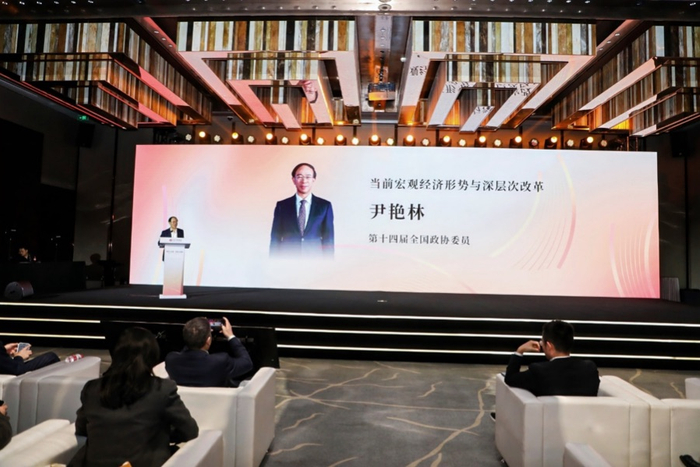
尹艳林:制定实施城乡居民增收计划,需配套推进收入分配改革
2 1 Shi Ji Jing Ji Bao Dao· 2026-01-12 09:27
Economic Overview - The GDP growth for the first three quarters of 2025 is 5.2%, an increase of 0.4 percentage points compared to the same period last year, with an expected annual growth rate of around 5% and a total economic output projected to reach 140 trillion yuan [3][5][6] - The industrial structure is continuously optimizing, with emerging industries such as artificial intelligence, biomedicine, and robotics flourishing and ranking among the world's leaders [6][8] Challenges in the Economy - There are significant issues such as insufficient effective demand, low price levels, difficulties faced by some enterprises, pressure on employment and resident income growth, and low growth rates in fiscal revenue and expenditure [7][8] - Investment has shown negative growth for several months, and overall consumption remains weak [7] - The Consumer Price Index (CPI) has fluctuated around 0 for two consecutive years, while the Producer Price Index (PPI) has experienced negative growth for three years [7] Policy Recommendations - The government is urged to implement more proactive macroeconomic policies, including maintaining necessary fiscal deficits and total debt levels, and increasing central budget investments to support infrastructure projects [9][10] - A focus on income distribution reform is necessary, including increasing basic pensions for urban and rural residents, optimizing personal income tax policies, and improving the salaries of public sector employees to boost overall income [10][11] Financial Sector Reforms - Enhancing the vitality of the capital market requires reforms, including the establishment of a financial system that aligns with technological innovation [4][11] - Commercial banks are encouraged to better serve innovation by exploring pilot programs for investment and loan linkage, which involves deep adjustments to the financial system [4][11]
罗志恒:建议设立机制让企业部门向居民部门让利
Xin Lang Cai Jing· 2026-01-10 04:25
专题:2026中国首席经济学家论坛年会 他提议,以健全工资增长长效机制为重点,加快实施城乡居民增收计划。比如中央财政出资设立城乡居 民增收的专项引导基金,类似于财政贴息,对企业部门涨薪给予补贴。 "在目前环境下,让企业全面涨薪有压力,对于那些企业涨薪,政府给予适当补贴,发挥财政资金的杠 杆作用,等到经济进入新循环后逐步退出补贴。"他说。 新浪声明:所有会议实录均为现场速记整理,未经演讲者审阅,新浪网登载此文出于传递更多信息之目 的,并不意味着赞同其观点或证实其描述。 责任编辑:王翔 专题:2026中国首席经济学家论坛年会 2026年中国首席经济学家论坛年会于1月10-11日在上海举行,主题为"棋至中局:承前启后 建设强国"。 粤开证券首席经济学家罗志恒出席并演讲。 2026年中国首席经济学家论坛年会于1月10-11日在上海举行,主题为"棋至中局:承前启后 建设强国"。 粤开证券首席经济学家罗志恒出席并演讲。 罗志恒建议,能否有机制让企业部门向居民部门让利,他认为有两个抓手。第一个抓手是以国有企业为 抓手,国有企业大幅提高上缴财政比例,专项用于社会保障体系建设,即推动国资财政和社保的联动改 革。第二个抓手是以上 ...
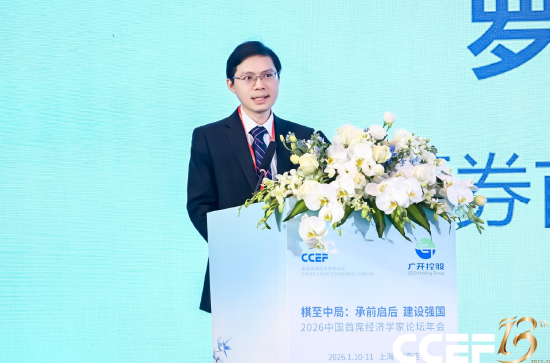
罗志恒:建议设立城乡居民增收专项引导基金,补贴企业涨薪
Xin Lang Cai Jing· 2026-01-10 04:14
罗志恒建议,能否有机制让企业部门向居民部门让利,他认为有两个抓手。第一个抓手是以国有企业为 抓手,国有企业大幅提高上缴财政比例,专项用于社会保障体系建设,即推动国资财政和社保的联动改 革。第二个抓手是以上市公司为重点,鼓励上市公司增加分红、实施股权激励,增加面的产能收入。 他提议,以健全工资增长长效机制为重点,加快实施城乡居民增收计划。比如中央财政出资设立城乡居 民增收的专项引导基金,类似于财政贴息,对企业部门涨薪给予补贴。 "在目前环境下,让企业全面涨薪有压力,对于那些企业涨薪,政府给予适当补贴,发挥财政资金的杠 杆作用,等到经济进入新循环后逐步退出补贴。"他说。 新浪声明:所有会议实录均为现场速记整理,未经演讲者审阅,新浪网登载此文出于传递更多信息之目 的,并不意味着赞同其观点或证实其描述。 专题:2026中国首席经济学家论坛年会 2026年中国首席经济学家论坛年会于1月10-11日在上海举行,主题为"棋至中局:承前启后 建设强国"。 粤开证券首席经济学家罗志恒出席并演讲。 2026年中国首席经济学家论坛年会于1月10-11日在上海举行,主题为"棋至中局:承前启后 建设强国"。 粤开证券首席经济学家罗志恒 ...
多地上调最低工资标准
第一财经· 2026-01-08 11:06
Core Viewpoint - The article discusses the recent adjustments to minimum wage standards in various provinces in China, highlighting the impact on laborers' income and social security benefits, as well as the broader implications for income distribution and economic growth [3][4][6]. Summary by Sections Minimum Wage Adjustments - Shaanxi Province has announced new minimum wage standards effective from January 1, 2026, with monthly minimum wages set at 2376 yuan for Class 1, 2250 yuan for Class 2, and 2140 yuan for Class 3 regions. The hourly minimum wage for part-time workers is 23 yuan, 21.7 yuan, and 20.7 yuan respectively [3]. - Jiangsu Province will also implement new minimum wage standards starting January 1, 2026, increasing the monthly minimum wages from 2490 yuan, 2260 yuan, and 2010 yuan to 2660 yuan, 2430 yuan, and 2180 yuan. The hourly minimum wage for part-time workers will rise from 24 yuan, 22 yuan, and 20 yuan to 25 yuan, 23 yuan, and 21 yuan [3]. - Zhejiang Province's new minimum wage standards will also take effect on January 1, 2026, with monthly minimum wages set at 2660 yuan, 2430 yuan, and 2180 yuan, and hourly minimum wages for part-time work adjusted to 25 yuan, 23 yuan, and 21 yuan [3]. Impact on Laborers and Social Security - The adjustment of minimum wage standards is expected to positively influence the distribution structure and significantly affect laborers' interests. Other benefits linked to minimum wage, such as overtime pay and social security contributions, will also see corresponding increases, leading to an overall enhancement in social security levels [4][5]. Broader Economic Implications - The Central Economic Work Conference held in December 2025 emphasized the need for a plan to increase urban and rural residents' income. The National Development and Reform Commission highlighted the importance of raising residents' income share in national income distribution and improving labor remuneration in the initial distribution [6]. - Experts suggest that promoting income growth for residents requires both short-term measures to boost employment and long-term reforms in income distribution and social security systems. The capital market is also seen as playing a crucial role in enhancing residents' income and expanding domestic demand [6].

涨薪潮席卷大厂!专家:战略重心向人才资本倾斜
Ge Long Hui A P P· 2026-01-08 09:05
Group 1 - Major companies are increasing salaries, with JD.com reporting that 92% of its employees received full or exceeded year-end bonuses, with total year-end bonus investment increasing over 70% year-on-year [1] - ByteDance announced a 35% increase in bonus investment for 2025 and a 1.5 times increase in salary adjustment investment [1] - Other industry giants like BYD and CATL are also raising employee salaries, indicating a trend of companies shifting focus towards talent capital amid intense technological competition [1] Group 2 - The macroeconomic context includes the 2025 State Council government work report promoting more funding for human investment and the recent Central Economic Work Conference emphasizing the implementation of urban and rural resident income increase plans [2] - Strong financial performance provides confidence for these companies, with JD.com reporting Q3 2025 revenue of 299.1 billion yuan, a year-on-year increase of 14.9% [2] - BYD's revenue for the first three quarters of 2025 reached 566.27 billion yuan, up 12.75% year-on-year, while CATL achieved total revenue of 104.2 billion yuan in Q3 2025, a 12.9% increase, and a net profit of 18.55 billion yuan, up 41.2% year-on-year [2]


