
政策正常化

Search documents
日本央行为最早四季度加息铺平道路 美元兑日元迈向147关口
Zhong Guo Jin Rong Xin Xi Wang· 2025-09-19 05:30
Group 1 - The Bank of Japan maintained its policy interest rate at 0.50%, which aligns with market expectations, despite two committee members voting against this decision advocating for a 25 basis point hike [1] - The policy statement emphasized a moderate recovery in the economy, despite some sectors showing signs of weakness, and highlighted the need to monitor uncertainties affecting financial markets, economic activities, and prices [1] - Following the announcement, the Japanese yen strengthened, with the USD/JPY exchange rate dropping to a low of 147.211, reflecting market reactions to the central bank's stance [1] Group 2 - Analysts suggest that the decision to keep rates unchanged indicates the Bank of Japan's cautious approach amid slowing inflation and global uncertainties, signaling readiness to address external fluctuations while assessing the strength of Japan's economic recovery [2] - The narrowing interest rate differentials are expected to lead to a gradual strengthening of the yen, enhancing Japan's purchasing power and supporting domestic demand [2] - The focus is now shifting to the upcoming press conference by Governor Kazuo Ueda, which may provide further insights into the central bank's future policy direction [2]
DLS MARKETS:日元持续看跌,期待日本央行政策更新带来新的动力
Sou Hu Cai Jing· 2025-09-18 10:46
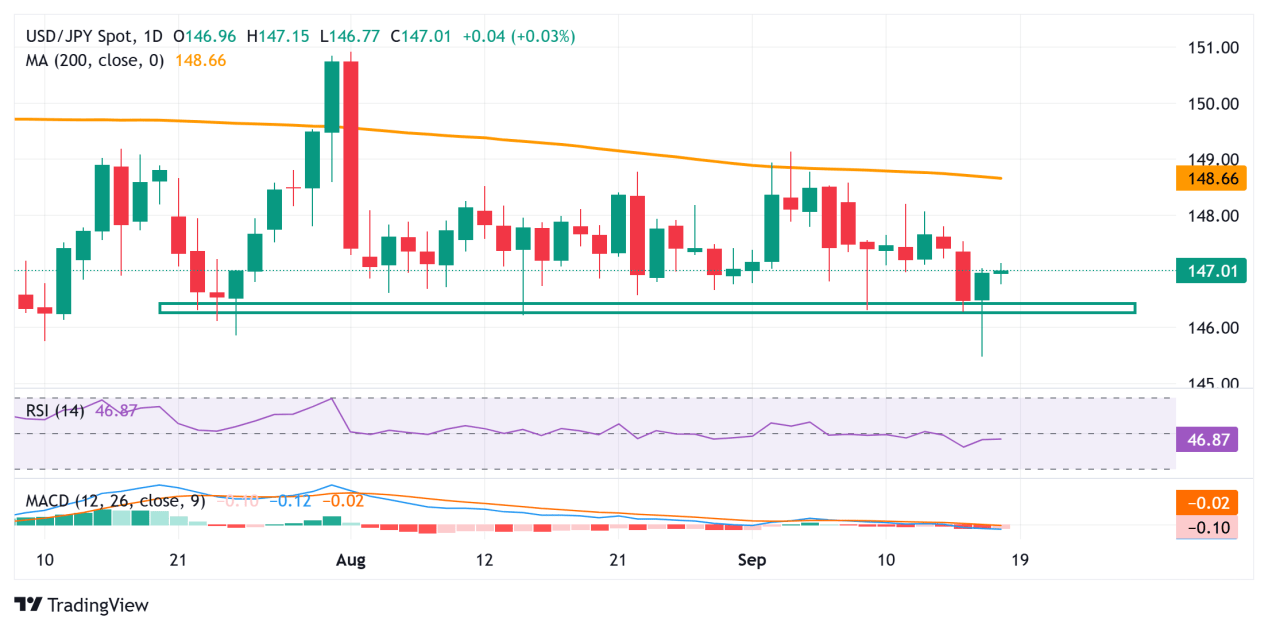
Core Viewpoint - The Japanese yen continues to decline against the US dollar following the FOMC meeting, with the divergence in policy outlooks between the Bank of Japan (BoJ) and the Federal Reserve (Fed) likely to limit further depreciation of the low-yielding yen [1][2]. Group 1: Market Reactions and Economic Data - The yen fell for the second consecutive day, reaching its lowest level since July 7, as the dollar strengthened broadly [2]. - Japan's core machinery orders for July decreased by 4.6% month-on-month, with private sector order growth slowing from 7.6% in June to 4.9% year-on-year, which was below market expectations and exerted pressure on the yen [3]. - The Fed lowered borrowing costs for the first time since December 2024, reducing the benchmark rate by 25 basis points to a range of 4.00%-4.25%, with expectations for further cuts by the end of the year [3]. Group 2: Policy Outlook and Market Sentiment - There is a growing consensus that the BoJ will maintain its policy normalization path, contrasting with the Fed's dovish stance, which should limit the yen's depreciation [2][3]. - The tight labor market and optimistic economic outlook in Japan open the door for potential interest rate hikes by the BoJ, while geopolitical risks from the Russia-Ukraine war and Middle East conflicts may deter aggressive bearish bets on the yen [4]. - The market is focused on the upcoming two-day BoJ meeting, with expectations that rates will remain unchanged, and investors are looking for clues regarding future policy direction [4]. Group 3: Technical Analysis - The USD/JPY needs to break through the 147.40-147.50 range to support further upward movement [6]. - After breaking below the 146.30-146.20 support level, the market reversed post-FOMC meeting, breaking above the 147.00 level, although daily oscillators have not confirmed a bullish outlook [7]. - Significant downward movements may find support around the 146.20 area, with a break below exposing the overnight low near 145.50-145.45, potentially accelerating declines towards the psychological level of 145.00 [7].

英国央行今夜料降息 漫长政策正常化启程
Jin Tou Wang· 2025-08-07 03:52
Core Viewpoint - The market anticipates a rate cut by the Bank of England, potentially lowering the key interest rate to 4%, which is seen as a relief for the struggling economy [1] Group 1: Economic Context - The Bank of England has faced multiple challenges over the past five years, including Brexit, the COVID-19 pandemic, and subsequent supply-demand imbalances [1] - A combination of large-scale monetary and fiscal stimulus has led to inflation rates soaring to the highest levels in over 40 years [1] - The energy cost surge due to the Russia-Ukraine conflict has further exacerbated the economic situation [1] Group 2: Monetary Policy - The Bank of England began raising interest rates in 2021 and only started to gradually reduce borrowing costs last year [1] - Despite these efforts, inflation levels have not stabilized back to the 2% target, and new global trade barriers are complicating the economic outlook [1] - The current easing cycle is likely to be the shallowest and longest in modern history due to policymakers' extreme caution and differing opinions [1] Group 3: Currency Analysis - The technical outlook for GBP/USD remains bearish, with daily moving averages indicating a downward trend [1] - Recent death crosses have formed between the 10-day and 100-day moving averages, as well as the 30-day and 55-day moving averages [1] - The 14-day momentum indicator is still in negative territory, suggesting continued weakness in the currency [1]
波士顿联储行长Collins倾向于“积极耐心”的货币政策方针
news flash· 2025-06-25 16:10
Core Viewpoint - The President of the Boston Federal Reserve Bank, Susan Collins, advocates for a "patient" monetary policy approach when assessing the impact of tariffs on the economy [1] Group 1 - Collins anticipates that a gradual normalization of policy will be appropriate later this year, although her views may change significantly as events unfold [1]
日本央行如期维持利率不变 明年放缓缩减购债步伐
智通财经网· 2025-06-17 04:37
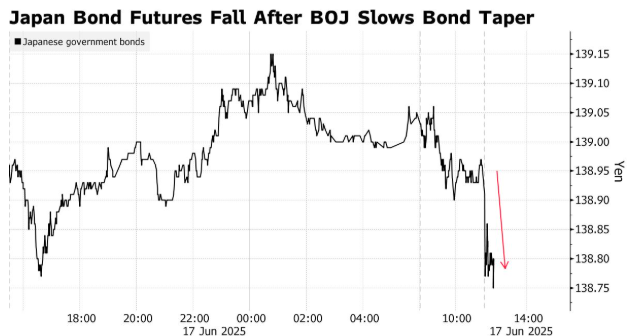
Group 1 - The Bank of Japan maintains its target interest rate at 0.5%, aligning with market expectations, marking the third consecutive meeting without changes [1] - Starting from the next fiscal year, the Bank of Japan will slow down the pace of bond purchase reductions, decreasing the monthly reduction from 400 billion yen to 200 billion yen [3] - The decision to reduce bond purchases was made with an 8 to 1 vote, with one member dissenting, advocating for maintaining the current reduction pace [3] Group 2 - The Bank of Japan's decision to slow down bond purchase reductions reflects concerns over rising long-term government bond yields and market stability [4] - A mid-term review of the reduction plan will take place in June 2026, with the Bank of Japan indicating readiness to respond quickly to rising long-term rates [4] - The central bank's normalization process is critical, especially given the impact of U.S. tariffs on Japan's export-dependent economy [7] Group 3 - Japan's core consumer inflation rate reached 3.5% in April, significantly exceeding the Bank of Japan's 2% target, driven by rising food prices and labor costs [8] - Long-term bond yields in Japan have reached their highest levels since issuance, prompting speculation about potential adjustments in issuance to calm investor fears [8] - The market is closely monitoring the Bank of Japan's communications for any hints regarding future interest rate hikes [8]
避险属性失色?日元“进退两难”
第一财经· 2025-06-17 04:32
Core Viewpoint - The article discusses the impact of geopolitical tensions in the Middle East on international oil prices and the subsequent effects on the USD/JPY exchange rate, highlighting the complexities in market reactions to these events [1][5]. Group 1: USD/JPY Exchange Rate Dynamics - The USD/JPY exchange rate is currently fluctuating between 143.90 and 144.74, maintaining a strong short-term technical structure above the 100-hour and 200-hour moving averages [2]. - The market anticipates that the Bank of Japan (BOJ) will maintain its short-term interest rate target at 0.5% until at least Q1 2026, limiting the potential for policy tightening [2]. - Analysts suggest that if the BOJ signals a prolonged period of monetary easing, the yen may weaken further [2][3]. Group 2: Geopolitical and Economic Influences - The recent escalation of tensions in the Middle East has led to rising oil prices, providing temporary support for the USD while having a limited positive effect on the yen [5]. - The correlation between the USD and oil prices remains strong, while the yen's safe-haven status is diminishing amid a recovery in market risk appetite [5]. - The upcoming Japanese Senate elections in July may introduce fiscal uncertainties, contributing to a structural outflow of capital from Japan [5]. Group 3: Technical Analysis and Market Predictions - A report from a financial group indicates that if the USD/JPY cannot break through the resistance level of 144.83 to 145.59, it may face technical adjustment pressures, with support levels at 143.80 and 143.20 [6]. - Should the USD/JPY break above 145.55, there is potential for the exchange rate to rise to the 146 to 148 range [6]. - Analysts predict that the USD/JPY could reach as high as 155 by the end of the year due to ongoing structural capital outflows and political uncertainties [5].

汇市观察 | 美元强势反弹,日元承压、英镑大幅回落
Xin Hua Cai Jing· 2025-06-10 11:43
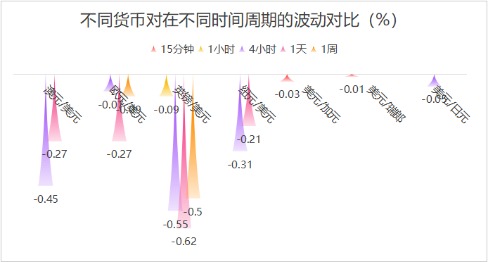
Core Viewpoint - The article discusses the fluctuations in currency markets, particularly focusing on the performance of the British pound against the US dollar, and highlights the impact of US inflation data and trade negotiations on global currency movements [1][2]. Currency Fluctuations - During the Asian trading session, the British pound showed significant negative volatility against the US dollar, with a decline of -0.62% over one day, the largest among major currencies [2][3]. - The Australian dollar and euro also experienced negative fluctuations, with the Australian dollar declining by -0.27% against the US dollar over one day [2]. British Pound Analysis - There is an increased demand for bearish options on the British pound, with the implied volatility for one-week and two-week put options at 7.6% and 7.7% respectively, following disappointing wage data [4]. - The UK Office for National Statistics reported a decrease in wage growth to 5.2%, the lowest since Q3 of the previous year, which was below economists' expectations of 5.3% [4][6]. Employment and Economic Policies in the UK - In May, the UK saw a reduction of 109,000 jobs, the largest monthly decline since May 2020, which exceeded expectations [6]. - The UK government has raised corporate wage taxes and minimum wage standards, effective from April, which may alleviate inflationary pressures by controlling rising prices [6]. Japanese Yen Performance - The Japanese yen experienced slight negative volatility of -0.05% over four hours, with the USD/JPY pair reaching a high of 145.28, the highest in over a week [7]. - The Bank of Japan's Governor indicated a delay in interest rate hikes due to insufficient confidence in achieving the 2% inflation target, which has weakened market expectations for policy normalization [7]. Australian and New Zealand Dollar Trends - Both the Australian and New Zealand dollars showed negative volatility patterns, reflecting cautious market sentiment towards risk assets amid ongoing trade negotiations and US inflation data [8].
欧洲央行管委维勒鲁瓦:欧洲央行已成功地使政策正常化。
news flash· 2025-06-10 07:26
Core Viewpoint - The European Central Bank (ECB) has successfully normalized its monetary policy [1] Group 1 - The ECB's normalization of policy indicates a shift towards more conventional monetary measures after a period of extraordinary interventions [1]
欧洲央行管委兼法国央行行长Villeroy:市场波动可能影响美元信心。欧洲央行已成功实现政策正常化。
news flash· 2025-06-10 07:22
欧洲央行已成功实现政策正常化。 欧洲央行管委兼法国央行行长Villeroy:市场波动可能影响美元信心。 ...
日本一季度GDP萎缩幅度小于预期 经济展现韧性但前景仍不确定
Xin Hua Cai Jing· 2025-06-09 05:04
Group 1 - Japan's real GDP contracted by 0.2% in Q1 2025, an improvement from the initial estimate of a 0.7% decline, indicating underlying economic resilience [1] - Personal consumption increased by 0.1% quarter-on-quarter, and business investment rose by 1.1%, contributing positively to GDP growth [1] - Inventory changes contributed 0.6 percentage points to GDP growth, while net exports negatively impacted growth by 0.8 percentage points [1] Group 2 - The Bank of Japan remains cautious amid high uncertainty, with Governor Ueda warning about the potential impacts of tariffs on the economy [1] - Current pressures from U.S. tariffs, including a potential 10% comprehensive tariff and a 25% tariff on automobiles and parts, are significantly affecting export profits [1] - Despite a downward adjustment in domestic demand contributions, signals indicate strong momentum in the Japanese economy, with private consumption showing robust growth [2]