
教育公平

Search documents
以银龄教师之智 筑县中振兴之基
Xin Lang Cai Jing· 2025-12-29 00:38
Core Viewpoint - The "Silver Age Teacher Action Plan" is a significant initiative aimed at enhancing educational equity and quality in rural areas by mobilizing retired teachers to support under-resourced schools [2][3]. Group 1: Silver Age Teacher Action Plan - The plan encourages retired teachers with strong political qualities, excellent professional skills, and rich teaching experience to provide support in rural and weak schools, thereby enhancing educational quality [2][3]. - In Guangdong Province, the plan is integrated into the "New Strong Teacher Project," aligning with the specific needs of schools in various regions [2][3]. - Retired teachers contribute not only by filling gaps but also by improving overall educational quality through their extensive experience [2][3]. Group 2: County High School Revitalization - The revitalization of county high schools is crucial for rural development, with the Ministry of Education planning to enhance the quality of education in these areas by 2025 [3]. - Guangdong has increased financial investment in county high schools, totaling 34 billion yuan over the past three years, resulting in the establishment of 13 new public county high schools and the addition of 65,000 public school places [3]. - The involvement of retired teachers is seen as a key factor in improving teaching quality and management in county high schools [3][4]. Group 3: Innovative Practices in Education - The establishment of "Famous Teacher Studios" allows retired teachers to lead and enhance teaching and research capabilities among their peers [4]. - A "Blue-Green Pairing" mechanism pairs retired teachers with younger teachers to provide guidance not only in teaching but also in professional development [4]. - Retired teachers also serve as management consultants, helping to improve governance structures and teaching management processes in county high schools [5]. Group 4: Challenges and Solutions - The plan faces challenges such as structural mismatches in supply and demand for retired teachers, necessitating a more dynamic assessment of school needs [6]. - There is a need for improved management and support systems for retired teachers to maximize their contributions [6]. - Long-term solutions involve creating a robust framework that includes regulations, cultural promotion, and the use of technology to enhance educational management [6]. Group 5: Broader Implications - The revitalization of county high schools is essential for the overall development of rural areas and contributes to national educational goals [7]. - The Silver Age Teacher Action Plan represents a collective effort to leverage the wisdom of retired educators for the benefit of rural education [7].
【好评中国】让资助的阳光点亮每一个求学梦想
Xin Lang Cai Jing· 2025-12-27 04:16
Core Viewpoint - The article emphasizes the importance of student financial aid in promoting educational equity and improving the well-being of citizens, highlighting the ongoing improvements in the financial aid system during the "14th Five-Year Plan" period and the need for continued efforts in the "15th Five-Year Plan" to ensure every child can achieve their educational dreams [1] Group 1: Expansion and Standards of Financial Aid - The financial aid system has seen significant enhancements in both coverage and standards, with the number of national scholarships for undergraduate and graduate students doubling to 120,000 and 90,000 respectively [2] - Starting from the spring semester of 2025, third-year students in eligible vocational schools will be included in the national student aid program for the first time [2] - The scholarship amount for undergraduate students has been raised to 10,000 yuan, while the standard for the national inspirational scholarship has increased to 6,000 yuan, and the average aid for undergraduate students has risen to 3,700 yuan [2] Group 2: Precision in Financial Aid - The focus is on both broad coverage and quality improvement in financial aid, ensuring that limited funds are directed to those who need it most through precise identification and assistance [3] - A national student aid management information system has been established to facilitate data sharing and comparison, allowing for accurate identification of students from impoverished households and other vulnerable groups [3] - The system collaborates with various government departments to provide robust data support for identifying aid recipients and ensuring a safety net for livelihoods [3] Group 3: Transforming Aid Philosophy - The approach to student financial aid is shifting from a "blood transfusion" model to a "blood production" model, focusing on both immediate needs and long-term development [4] - Recent policy changes include increased tuition compensation for students serving in the military and those employed in grassroots positions, which not only alleviates student burdens but also guides talent towards areas of national need [4] - This transformation aims to create a positive cycle of personal development, social responsibility, and national construction, contributing to educational equity and optimal allocation of talent resources [4]
拟2026年出台管理办法 广州统一校服引发多方讨论
Jiang Nan Shi Bao· 2025-12-25 11:37
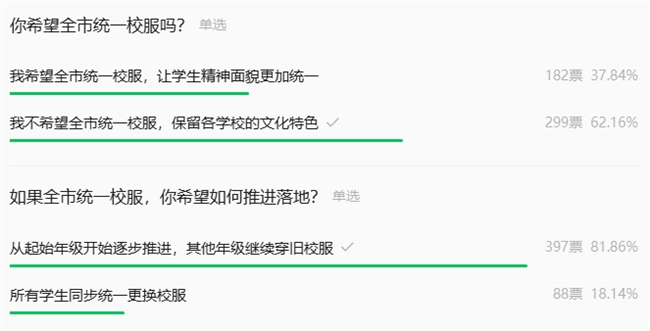
Core Viewpoint - Guangzhou is planning to implement a uniform school uniform policy for primary and secondary students, with the revised "Guangzhou School Uniform Management Measures" expected to be officially released in March 2026. This initiative has sparked significant debate regarding campus culture, educational equity, and public demand, as a recent survey indicates that 62.08% of respondents oppose the uniform policy [1][2]. Group 1: Policy Development - The initiative for a uniform school uniform in Guangzhou is supported by two recent actions from the local education bureau: the launch of the fourth school uniform design competition on December 12, 2023, and the inclusion of the revised management measures in the 2026 regulatory document release plan [1]. - The online survey conducted among parents and students shows a clear division in public opinion, with 37.92% in favor of a uniform policy for a more unified student appearance, while 62.08% prefer to retain the cultural characteristics of individual schools [2]. Group 2: Public Opinion and Concerns - Supporters of the uniform policy cite benefits such as easier social supervision and reduced risk of profit-driven relationships between manufacturers and schools. There is a preference for a gradual implementation approach, with 81.82% of respondents favoring a phased transition starting from the first grade [3]. - Opponents argue that school uniforms represent a vital aspect of campus culture and identity, with concerns that a uniform policy could erase historical ties to individual schools. Safety issues have also been raised, referencing incidents in Shanghai where uniformity led to difficulties in identifying students [3]. Group 3: Historical Context and Previous Feedback - The Guangzhou education bureau previously indicated that the current "one school, one style" model aligns with the collective decision-making process involving schools, parents, and students. A survey in 2022 showed that 94.54% of respondents were satisfied with existing uniform styles, suggesting that the current system is effective [7]. - Education experts recommend that Guangzhou should learn from other regions' balanced practices and avoid a one-size-fits-all approach, emphasizing the need for transparency in decision-making processes involving parents [9].

关于AI教育,最核心的8个问题 | 附3万字报告下载
腾讯研究院· 2025-12-25 09:08
Core Viewpoint - Generative AI is rapidly penetrating various industries, becoming a cognitive infrastructure that is likely to influence the educational landscape for decades to come, redefining talent, educational models, student learning methods, teacher roles, and the overall collaboration between schools, enterprises, and society [1] Group 1: Report Overview - The report titled "Human-Machine Co-Education, Acting for Good: A Guide to Educational Transformation in the AI Era" was jointly released by Tencent Research Institute and Peking University, focusing on the logic of reshaping the educational ecosystem in the intelligent era [3][5] - The report addresses eight core issues related to "AI + Education" and was developed through interviews with over 50 experts, resulting in nearly 100,000 words of content with over 50,000 cumulative reads [5] Group 2: Key Questions in AI Education - **Talent Question**: The AI era requires the cultivation of composite talents centered on human judgment, capable of collaborating with intelligent systems, emphasizing the "1+1>2" collaborative direction [7] - **Model Question**: Education models are shifting from "lecture + homework" to "dialogue + co-creation," promoting a new paradigm of human-machine collaboration while maintaining the essence of education [10] - **Student Question**: Education must guide students to use AI responsibly, transitioning from seeking answers to asking questions, verifying information, and reflecting critically [11][12] - **Teacher Question**: AI will not replace teachers but will transform their roles, emphasizing creative guidance over execution, leading to new roles such as director, coach, referee, and gatekeeper [13] - **Tool Question**: Effective "AI + Education" tools should enhance teaching, stimulate student inquiry, and ensure safety and privacy, focusing on clear objectives and collaborative task breakdowns [14][17] Group 3: Future of Schools and Enterprises - **School Question**: AI is expected to drive significant changes in schools, transitioning from fixed classes to dynamic systems that emphasize ability-based grouping and thematic exploration [18][20] - **Enterprise Question**: Companies must evolve from being mere users to co-educators, investing in talent development through real projects and creating a "co-education and co-training" system [21][22] Group 4: Social Implications - **Social Question**: AI can promote educational equity by enabling low-cost, scalable solutions that adapt to local educational needs, thus fostering a more inclusive educational ecosystem [23][25]


棋具传情 启智育人——中信期货“信兴农・童期声”公益项目为乡村教育注入新活力
Qi Huo Ri Bao Wang· 2025-12-24 11:33
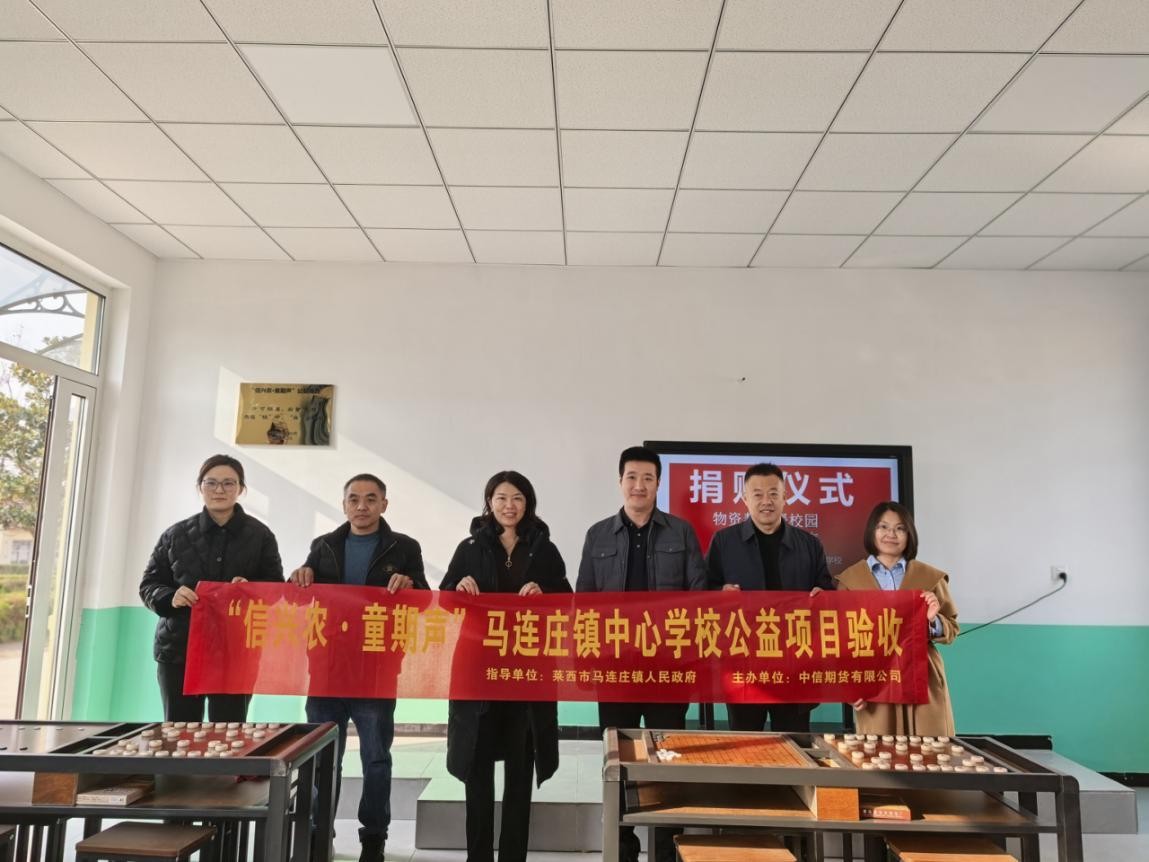
Core Viewpoint - The "Xingnong·Tongqisheng" public welfare project by CITIC Futures aims to enhance rural education by supporting chess clubs in schools, thereby improving students' comprehensive qualities and promoting educational equity [1][8]. Group 1: Project Overview - CITIC Futures implements a multi-faceted empowerment approach through the "Xingnong·Tongqisheng" public welfare project, focusing on rural education [1]. - The project involves donations of chess equipment and teaching materials to the Malianzhuang Central School in Laixi City, aiming to create a unique campus culture centered around chess [1][3]. Group 2: Impact on Students - The donation includes chess tables, chairs, and teaching aids, which will enrich students' extracurricular activities and enhance their logical thinking and overall quality [3][6]. - The school has established a dedicated activity room for chess, providing a fixed space for students to learn and practice chess [3]. Group 3: Educational Philosophy - The principal of Malianzhuang Central School emphasizes that education is crucial for breaking the cycle of poverty, and quality education is essential for achieving educational equity [6]. - Chess activities are seen as a means to improve students' focus, logical thinking, and overall capabilities, which will positively impact their learning and future lives [6]. Group 4: Community Engagement - The project not only provides material support but also reflects society's deep concern for rural education and the growth of young people [8]. - The initiative is viewed as a practical action to fulfill social responsibility, contributing quality resources to rural education and promoting the concept of educational equity [8].
发挥比较优势走好教育特色之路
Xin Lang Cai Jing· 2025-12-23 22:11
Core Viewpoint - The development of high-quality education is essential for building a modern socialist country and is a key support for Guizhou's economic and social transformation, emphasizing the need for a unique development path that leverages the province's comparative advantages [1][2]. Group 1: Strategic Guidance - The education system must explore distinctive development paths that align with local conditions, transforming resources and policies into unique educational advantages to support the province's special development [2]. - There is a pressing need for education to shift from extensive expansion to intensive enhancement, focusing resources on areas that can generate competitive advantages [2][3]. Group 2: Unique Comparative Advantages - Guizhou's education benefits from national strategic focus, providing institutional advantages for pilot projects and innovative policies [3]. - As a late-developing region, Guizhou can adopt cutting-edge educational concepts and innovations, particularly in digital transformation, to create a smart education ecosystem [3]. - The province's rich cultural resources can be transformed into distinctive curricula and practices, fostering a unique educational brand [3]. Group 3: Development System Integration - The education planning must prioritize the transformation of comparative advantages, focusing on both enhancing strengths and addressing weaknesses [4]. - Resources should be allocated to areas that can best showcase Guizhou's educational advantages, including teacher training and funding for innovative projects [4][5]. - The integration of education with local industries is crucial, requiring adjustments in vocational and higher education to meet regional needs [5]. Group 4: Governance and Innovation - Reforming evaluation mechanisms to include indicators for distinctive education and digital transformation will encourage schools to identify and cultivate their comparative advantages [5]. - Encouraging local innovation and providing schools with the freedom to experiment with unique educational models will create a diverse repository of comparative advantage cases [5].
中国文教网:互联网时代,文教正以你想不到的方式重塑未来
Sou Hu Cai Jing· 2025-12-23 14:17
Group 1 - The core idea of the article emphasizes the transformation of education in the internet era, moving from traditional methods to more engaging and accessible learning experiences [1][3] - Knowledge acquisition has evolved from relying solely on textbooks to utilizing the internet for interactive and diverse learning opportunities, allowing children to explore subjects like astronomy and history through live streams and virtual museums [1][3] - Learning environments have expanded beyond traditional classrooms, enabling students from remote areas to interact with peers from prestigious schools and allowing adults to learn skills through short video platforms [1][3] Group 2 - Educational equity has shifted from a competitive struggle for resources to a model of shared access, where quality educational resources are available to all, including students in rural areas and individuals with disabilities [3][5] - The article addresses concerns about the potential negative impacts of the internet on learning, asserting that technology itself is neutral; the focus should be on how it is utilized to enhance education [5] - The Chinese education network is undergoing a transformation by leveraging the internet for marketing and outreach, utilizing tools like mini-programs and social media to create a more integrated educational experience [5]

斩断“躺拿省国奖”背后的黑色利益链
Xin Lang Cai Jing· 2025-12-21 19:39
Core Viewpoint - The investigation reveals that some intermediary organizations and students are selling awards for national university competitions online, undermining the integrity of these events and creating a harmful profit-driven black market [1][2][3] Group 1: Impact on Academic Integrity - The practice of purchasing awards fosters a culture of academic dishonesty, leading students to abandon genuine research efforts in favor of financial shortcuts [1][2] - The authority and credibility of competitions are severely compromised, as evidenced by reports of high similarity in submissions and numerous disqualified participants [2][3] Group 2: Drivers of the Issue - The intertwining of competition awards with academic evaluations and scholarships creates immense pressure on students, driving them to seek out these illicit services [2][4] - Intermediaries have established a complete industry chain that capitalizes on this demand, further exacerbating the issue [2][4] Group 3: Consequences for Students - Students who engage in these practices risk losing their integrity and practical experience, which can lead to long-term negative impacts on their careers [3] - The normalization of purchasing awards undermines the value of hard work and dedication in education [3] Group 4: Solutions and Recommendations - A multi-faceted approach is necessary to combat these issues, including stricter regulations on online platforms and improved evaluation mechanisms for competitions [4] - Educational institutions should reform their assessment criteria to reduce the emphasis on awards and promote a more holistic evaluation of student capabilities [4] - Regulatory bodies must hold accountable those involved in the award trading, ensuring transparency and integrity in the educational system [4]
考生刘某,利用微型耳机和伪装成橡皮擦的显示屏作弊,被禁考三年!最新披露
Xin Lang Cai Jing· 2025-12-20 07:48
Core Viewpoint - The article highlights the importance of exam security and integrity in the context of the national master's entrance examination in China, emphasizing recent cases of cheating and the consequences faced by those involved [1][2]. Group 1: Cheating Cases - In 2022, a candidate named Liu used a high-tech cheating device costing 50,000 yuan, which was detected by monitoring equipment, leading to his disqualification and a three-year ban from exams [1]. - In 2023, an education institution head, Yao, organized a cross-province cheating ring that involved identity fraud and hiring impersonators, which was uncovered through facial recognition technology, resulting in criminal charges for Yao and others involved [1]. Group 2: Impact on Education System - The integrity of exam security is crucial not only for individual candidates but also for maintaining public trust in the education system, highlighting the need for strict measures to ensure fairness and stability in society [1].
考生刘某,利用微型耳机和伪装成橡皮擦的显示屏作弊,被禁考三年!
Xin Lang Cai Jing· 2025-12-20 03:36
Core Points - The article highlights two significant cases of cheating during the national master's entrance examination in China, emphasizing the ongoing challenges in maintaining exam integrity [1] - It underscores the importance of exam security in preserving public trust in the education system and ensuring fairness [1] Group 1: Cheating Cases - In 2022, a candidate named Liu used a high-tech cheating device costing 50,000 yuan, which was detected by monitoring equipment, leading to a three-year ban and the dismantling of the cheating ring [1] - In 2023, an education institution head named Yao organized a cross-province cheating operation involving impersonation and identity fraud, which was uncovered through facial recognition technology, resulting in criminal charges for Yao and his associates [1] Group 2: Implications for Education - The integrity of examination processes is crucial not only for individual candidates but also for the overall trust in the educational system [1] - Ensuring exam security and fairness is essential for maintaining educational equity and social stability [1]