
数字化技术

Search documents
全球SAF产业迎来技术革命
Zhong Guo Hua Gong Bao· 2025-12-03 03:33
Core Insights - The sustainable aviation fuel (SAF) industry is on the brink of explosive growth driven by the deep integration of artificial intelligence, new materials, and digital technologies [1] - SAF is transitioning from concept to reality, moving from demonstration to large-scale commercialization, providing robust technical support for the green transformation of the global aviation industry [1] Group 1: Technological Innovations - AI-driven molecular design and revolutionary power-to-liquid technologies are reshaping the production pathways and efficiency boundaries of SAF [1] - A generative AI model developed by Stanford University can autonomously design new molecular structures with specific combustion characteristics, generating over 50,000 candidate molecules and identifying 128 promising SAF components [2] - ExxonMobil and MIT's digital twin platform simulates the entire production process, optimizing reaction conditions and improving product yield by 18% [2] - Shell's automated robotic lab in Amsterdam can conduct experiments that would traditionally take months in just one week, integrating machine learning for real-time data analysis [2] Group 2: Efficiency and Cost Reduction - The latest report from the International Energy Agency indicates that AI-assisted SAF projects have reduced R&D cycles by 80% and development costs by 60% [3] - Innovations in catalyst and reactor technologies are driving SAF production towards higher efficiency and lower costs, with a new metal-organic framework catalyst achieving a carbon monoxide conversion rate of 92% [4] - A third-generation microchannel reactor developed by BASF and Munich University has improved heat transfer efficiency by tenfold and production efficiency by fivefold [4] - Cambridge University's low-temperature plasma catalytic system operates at 200°C, achieving conversion efficiencies that traditionally require 350°C, reducing energy consumption by 30% [4] Group 3: Smart Production Facilities - SAF production facilities are evolving towards high levels of intelligence, with TotalEnergies' smart factory in Le Havre utilizing over 20,000 sensors to predict equipment anomalies and reduce unplanned downtime by 85% [5] - Siemens' AI predictive maintenance system for Nordic Renewable Fuels can forecast mechanical failures seven days in advance, lowering maintenance costs by 32% and increasing equipment utilization to 99.2% [6] - BP's Rotterdam SAF plant employs advanced smart grid technology to enhance the direct use of renewable energy to 65% and improve overall energy efficiency by 15% [6] - Modular SAF units developed by Rhein Group can switch production processes within 72 hours based on raw material supply and market demand, with operational costs 25% to 30% lower than traditional plants [6]
刷新纪录!我国首套1500℃等级单轴重型燃机项目全面投产
Xin Lang Cai Jing· 2025-12-02 12:05
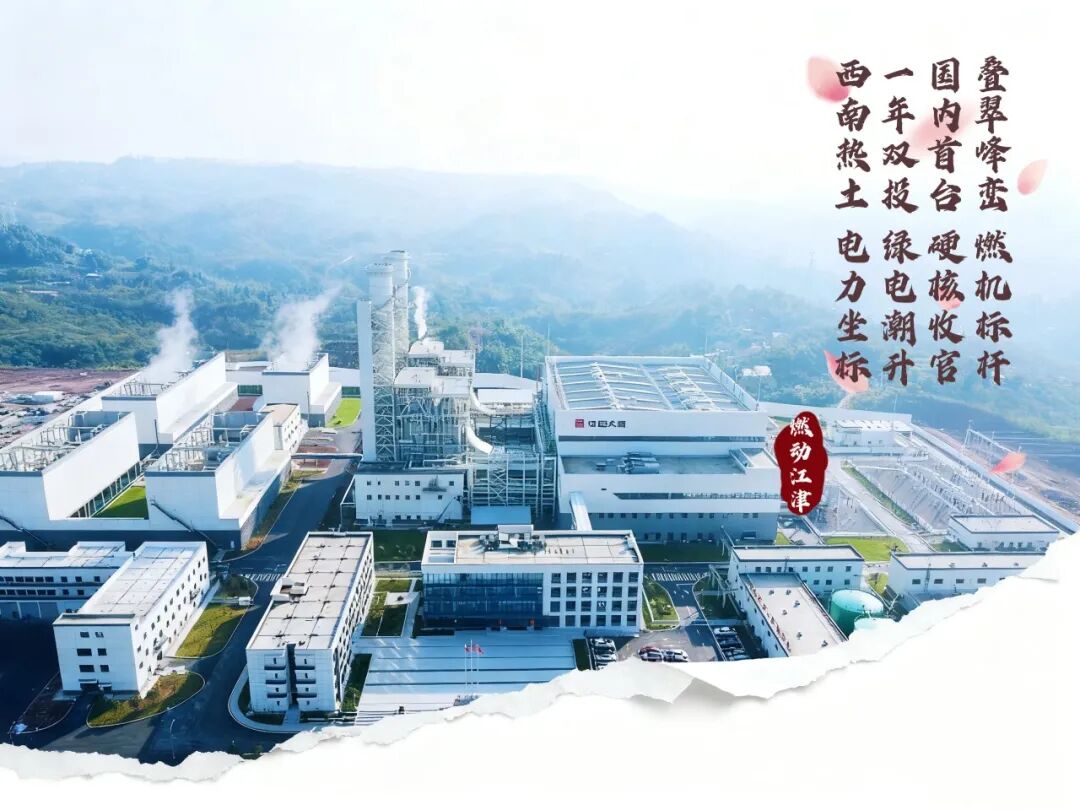
Core Viewpoint - The project, developed by China Energy Construction and Guangdong Thermal Power, has successfully achieved full-capacity power generation, filling the gap in the domestic "F" class improved single-shaft heavy-duty gas turbine market [2][12]. Project Overview - The project is located in the Jiangjin Comprehensive Bonded Zone of Chongqing and is a key project in Chongqing's 14th Five-Year Plan for electricity [4][14]. - It features the first domestic single-shaft M701F5 heavy-duty gas turbine, with a planned construction of two units of 546.8 megawatts each, totaling an installed capacity of 1,093.6 megawatts [4][14]. Technological Innovations - The project boasts a combined cycle efficiency of 61.74%, which is approximately 2 percentage points higher than similar units, reaching world-leading levels [6][16]. - Over 90% of the equipment is domestically produced, including the first domestic F5 gas turbine TCA (Turbine Cooling Air) system and FGH (Fuel Gas Heater) [6][16]. - The plant's auxiliary power consumption rate is as low as 1.43%, outperforming similar units [6][16]. - The integration of digital technologies has led to the establishment of a smart power plant management platform [6][16]. - Environmental measures ensure ultra-low emissions, with a summer cooling water consumption rate of only 0.267 cubic meters per second per gigawatt [6][16]. Construction Achievements - The project achieved all six core key milestones successfully on the first attempt, with 28 performance indicators meeting or exceeding expectations [8][18]. - The construction period for both units was approximately 19 months, one month shorter than the industry standard, setting a new record for safe and efficient construction [9][19]. - The installation period for the second unit was reduced by an additional 15% compared to the first unit, demonstrating continuous improvement in construction efficiency [9][19]. - The project overcame installation challenges for the first domestic M701F5 gas turbine, achieving micron-level precision in shaft installation [9][20]. - A zero-accident record was maintained during 12 high-risk operations throughout the construction cycle, with a welding first-pass rate of 99.8% and emissions far exceeding national standards [9][21]. Environmental Impact - Once fully operational, the project is expected to generate approximately 2.187 billion kilowatt-hours of electricity annually, saving around 200,000 tons of standard coal compared to equivalent coal-fired units [10][22]. - It is projected to reduce carbon dioxide emissions by over 520,000 tons, providing strong support for Chongqing's long-term electricity demand and enhancing grid peak-shaving capabilities [10][22].

向质而行 聚势共赢丨北部湾港集团引领上市公司绘就高质量发展新蓝图——2025年北部湾港集团上市公司高质量发展交流活动成功举办
Ge Long Hui· 2025-12-02 06:53
Core Insights - The event "Quality Development Exchange Activity of Listed Companies" was held by Beibu Gulf Port Group and the Guangxi Listed Companies Association to discuss high-quality development paths for state-owned enterprises [1][3] - Keynote speeches emphasized the importance of policy support, state-owned enterprise responsibilities, and industry services in promoting high-quality development of listed companies [3][13] Group 1: Event Overview - The event featured a tight schedule with speeches from key figures including Hu Huaping, Chairman of Beibu Gulf Port Group, and other officials discussing the significance of high-quality development [3] - Expert presentations covered topics such as the empowerment of artificial intelligence through domestic computing power, port industry securitization strategies, and global mineral resource trends [5] Group 2: Company Achievements - Beibu Gulf Port Group has been a key player in implementing national strategies, focusing on the "Belt and Road" initiative and developing the Western Land-Sea New Corridor [7] - Since its overall listing in 2013, the group has raised a total of 20.68 billion yuan, with over 70% allocated to infrastructure projects related to national strategies [7][8] Group 3: Financial Performance - Beibu Gulf Port Co., as a core platform, has successfully integrated capital operations with its business, achieving significant growth in cargo throughput and container shipping routes [8] - The company has seen its cargo handling capacity increase from 291 million tons in 2017 to 450 million tons, with container throughput growing at an annual rate of 21.7% [8] Group 4: Strategic Developments - Huaxi Nonferrous Metals has become a leading example of capital operation, successfully restructuring and raising 5.93 billion yuan to enhance its resource base and production capacity [10] - The company has significantly increased its mineral resource reserves, with notable growth in specific mining areas, and is leveraging technology to enhance operational efficiency [10] Group 5: Future Directions - Beibu Gulf Port Group aims to enhance its core functions and competitiveness, focusing on innovation and compliance to attract more investment into Guangxi [13] - The group plans to continue supporting national strategies and regional economic development, reinforcing its role as a significant player in the capital market [13]


让静态文物成为生动教材 激发好奇心和想象力
Bei Jing Wan Bao· 2025-12-01 06:44
Core Insights - The exhibition "Tai Bao Yong Yan - Special Exhibition of Liuli River Site in Fangshan" at the Capital Museum showcased the charm of cultural heritage, attracting many visitors and highlighting the integration of cultural relics into modern creative products [1] - The Beijing Municipal Bureau of Cultural Relics reported significant developments in the "Museum City" initiative during the 14th Five-Year Plan, including the addition of 49 new registered museums and the opening of 56 new types of museums, bringing the total to 266 [2] - The Liuli River site, discovered 80 years ago, is recognized as the earliest urban relic in Beijing and has yielded important archaeological findings, including the first double city wall of the Western Zhou period [2] Digital Innovation in Museums - The Capital Museum is leveraging digital technologies for the preservation and utilization of cultural relics, enabling virtual tours and immersive experiences that allow audiences to engage with history [1] - The museum aims to create more interactive and participatory exhibitions, transforming static artifacts into dynamic educational tools that stimulate public curiosity [1] Archaeological Significance - The Liuli River site has been included in the national list of top ten archaeological discoveries, with significant breakthroughs in understanding the social structure and family relationships of the Western Zhou period through advanced research methods [2] - The site is currently on the preliminary list for UNESCO World Heritage status, with ongoing efforts to develop the Liuli River National Archaeological Park [2]

最后报名机会 | 重构价值链:AI、数据工具与财富管理的未来式
Refinitiv路孚特· 2025-12-01 06:32
Core Insights - The wealth management industry is undergoing unprecedented transformation due to the rapid development of artificial intelligence (AI) and digital technologies, reshaping the competitive landscape through smart advisory, big data analytics, customer service, and risk management [1] Event Details - The London Stock Exchange Group (LSEG) will host a closed-door exchange meeting titled "Reconstructing the Value Chain: The Future of AI, Data Tools, and Wealth Management" on December 5 in Beijing, aimed at industry elites to discuss trends and opportunities in wealth management [1] - The event will feature key speakers including Chen Fang, Managing Director of LSEG North Asia and President of LSEG China, and Bai Lu, Professor at Beijing Normal University, among others [3][4] Agenda Highlights - The agenda includes a welcome speech, keynote presentations on the role of AI in financial digital transformation, and discussions on LSEG's wealth data solutions [3][4] - A panel discussion will feature industry leaders such as Wang Xiaocen from Tiger Brokers and Li Zhuo from Shaanxi International Trust, focusing on insights and experiences in wealth management [3][4] Speaker Profiles - Chen Fang has nearly 20 years of experience in the data and analytics industry, focusing on capital markets, data analysis, and digital transformation [7][8] - Bai Lu is a recognized expert in AI and has contributed to significant advancements in the field, with applications in major Chinese enterprises [9] - Jack Wong serves as a senior financial digital solutions consultant at LSEG, bringing extensive experience in financial technology [10] Wealth Management Solutions - LSEG offers innovative wealth management solutions that provide data, digital tools, and actionable insights to empower wealth advisors and investors [13][20] - The solutions include wealth management workflow tools and flexible data solutions that enhance the client experience and operational efficiency [15][16]

文博联动让“城之源”活起来
Bei Jing Ri Bao Ke Hu Duan· 2025-11-30 22:41
Core Viewpoint - The article highlights the significance of the "Tai Bao Yong Yan - Fangshan Liuli River Site Special Exhibition" at the Capital Museum, emphasizing the integration of technology in cultural heritage presentation and the ongoing efforts to enhance public engagement with historical artifacts [3][4]. Group 1: Exhibition and Public Engagement - The exhibition attracted many visitors on its last day, showcasing the allure of cultural heritage through interactive multimedia displays [3]. - Visitors expressed pride in their connection to Beijing's historical roots, indicating a successful outreach of the exhibition [3]. - The museum aims to utilize new technologies to make cultural resources more accessible and engaging for the public [4]. Group 2: Technological Integration - The museum is implementing digital technologies for the permanent preservation and sustainable use of cultural artifacts, including virtual exhibitions and 3D modeling [4]. - There is a focus on using immersive technologies, such as artificial intelligence, to recreate historical scenes and enhance visitor experiences [4]. Group 3: Cultural Development Initiatives - The Beijing Municipal Bureau of Cultural Heritage reported the addition of 49 new registered museums and the opening of 56 new types of museums during the 14th Five-Year Plan period, bringing the total to 266 registered museums [4]. - The city is actively promoting cultural innovation and development through various initiatives, including the "Beijing Museum Season" and the "Cultural Relics Tell You Why Chinese Festivals" series [5]. Group 4: Archaeological Significance - The Liuli River site, discovered 80 years ago, is recognized as the earliest urban relic in Beijing, with significant archaeological findings that contribute to understanding the history of the Western Zhou period [5]. - The site has been included in the national list of top ten archaeological discoveries, with ongoing efforts for its inclusion in the UNESCO World Heritage list [5][6].

活动嘉宾发布 | 重构价值链:AI、数据工具与财富管理的未来式
Refinitiv路孚特· 2025-11-27 10:04
Core Insights - The wealth management industry is undergoing unprecedented transformation due to the rapid development of artificial intelligence (AI) and digital technologies, reshaping the competitive landscape through smart advisory, big data analytics, customer service, and risk management [1] Event Details - The London Stock Exchange Group (LSEG) will host a closed-door exchange meeting titled "Reconstructing the Value Chain: The Future of AI, Data Tools, and Wealth Management" on December 5 in Beijing, aimed at industry elites to discuss trends and opportunities in wealth management [1] - The event will feature key speakers including Chen Fang, Managing Director of LSEG North Asia and President of LSEG China, and Bai Lu, Professor at Beijing Normal University [3][4] Agenda Highlights - The agenda includes a welcome speech, keynote presentations on the role of AI in financial digital transformation, and discussions on LSEG's wealth data solutions [3][4] - A panel discussion will feature industry leaders such as Wang Xiaocen from Tiger Brokers and Li Zhuo from Shaanxi International Trust [3][4] Speaker Profiles - Chen Fang has nearly 20 years of experience in the data and analytics industry, focusing on capital markets, data analysis, and digital transformation [7][8] - Bai Lu is a professor with significant contributions to AI applications in education and has received multiple awards for her research [9] - Jack Wong is a senior financial digital solutions consultant at LSEG, with expertise in digital transformation [10] - Wang Xiaocen has over ten years of experience in fintech and focuses on AI-driven data product innovation [10] - Li Zhuo has a strong background in asset management and emphasizes technology empowerment in investment strategies [11] Wealth Management Solutions - LSEG offers innovative wealth management solutions that provide data, digital tools, and actionable insights to enhance decision-making for wealth advisors and investors [13][20] - The solutions include wealth management workflow tools and flexible data solutions that prioritize customer experience [15][16]

2025能源转型大会在北京开幕 共谋绿色转型发展
Zhong Guo Xin Wen Wang· 2025-11-22 12:20
Core Insights - The 2025 Energy Transition Conference opened in Beijing, emphasizing its role as a leading platform for energy industry development, technology release, and international cooperation [1] - The conference theme focuses on accelerating collaborative innovation between enterprises and local governments for green transformation [2] Group 1: Conference Activities - The conference includes an opening ceremony, two key activities, a technology exchange event, and six thematic meetings, along with diverse activities such as project roadshows and closed-door discussions [2] - A technology exchange event showcases digital innovation in the energy sector, featuring 15 companies, including major state-owned enterprises like China National Petroleum and China Petroleum & Chemical [2] - Key activities include a forum on enterprise-local cooperation and a high-quality development conference, which aims to deepen exchanges among enterprises, universities, financial institutions, and local governments [2][4] Group 2: Focus Areas and Themes - The thematic meetings cover critical areas of new productivity development in the energy sector, highlighting storage, hydrogen energy, oil and gas pipelines, and new energy equipment [3] - The conference aims to attract high-quality projects by inviting renowned experts and global leaders in the energy sector to guide industry innovation [4] Group 3: White Paper Release - The "2025 Beijing Future Science City Energy Valley Industry Development White Paper" was released, detailing the development foundation, status of advanced energy industries, and the integration of artificial intelligence in the energy sector [5] - The white paper outlines strategies for high-quality development in the Energy Valley, emphasizing proactive planning, joint innovation, and improved service levels to enhance international influence [5]
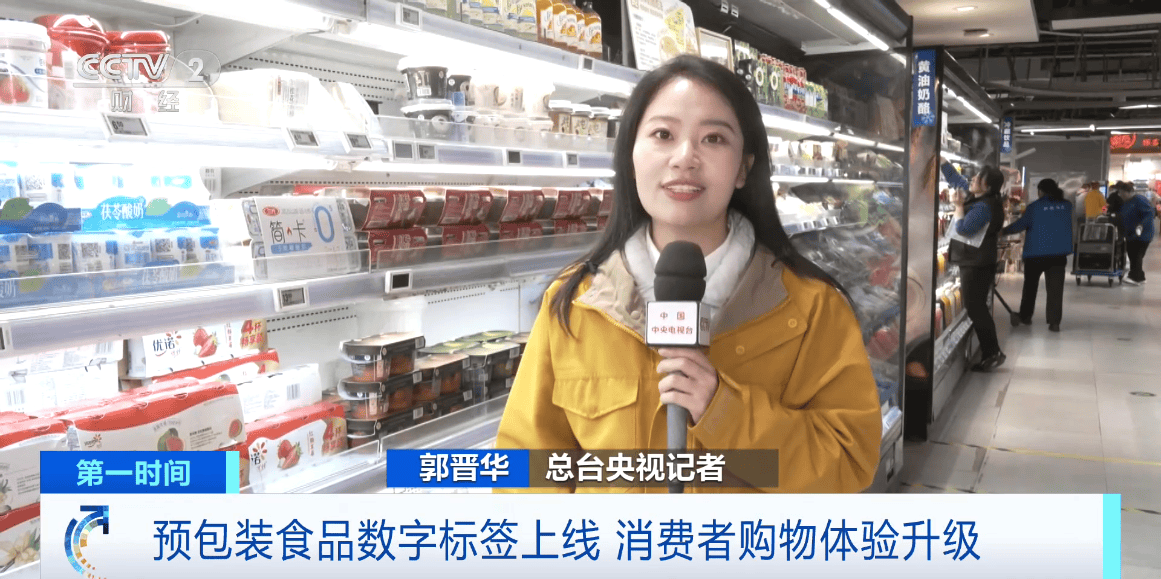
预包装食品数字标签上线!与普通标签有何不同?记者探访→
Sou Hu Cai Jing· 2025-11-21 11:43
Core Viewpoint - The implementation of digital labels for pre-packaged foods is being advanced by the National Health Commission and the State Administration for Market Regulation in China, enhancing consumer access to detailed product information through digital means [1]. Group 1: Digital Label Implementation - The announcement regarding the implementation of digital labels for pre-packaged foods was jointly released by the National Health Commission and the State Administration for Market Regulation in September [1]. - Digital labels are being applied to various categories of pre-packaged foods, including dairy products, grains, oils, and beverages [1]. Group 2: Consumer Experience - In a supermarket in Beijing, many products are already utilizing digital labels, allowing consumers to scan QR codes for detailed information such as ingredient lists and production dates [3]. - Digital labels provide additional features compared to physical labels, including access to third-party testing reports and supplier qualifications, addressing common consumer issues like visibility and readability [5]. Group 3: Online Platforms - Digital labels are not limited to physical stores; several online shopping platforms have also adopted this technology for various products [7]. - JD.com has taken the lead in promoting digital labels across eight categories, including grains, condiments, beverages, and snacks, resulting in increased product viewership since the launch [9].
集装箱吞吐量超27万标箱,有力支撑地区经济发展 钱凯港开港一年,高效运营(经济聚焦)
Ren Min Ri Bao· 2025-11-13 22:00
Core Insights - The opening of the Chancay Port in Peru has led to significant growth in cargo throughput and trade volume, with over 270,000 TEUs handled and a total trade value of $6.03 billion in exports and $9.84 billion in imports in the first nine months of the year [1][5]. Group 1: Cargo and Trade Growth - Chancay Port has achieved a cumulative container throughput of over 270,000 TEUs and handled approximately 1.36 million tons of bulk cargo since its opening [1]. - The port's export trade value reached $603 million and import trade value reached $984 million in the first nine months of the year, generating approximately 697 million Peruvian Soles in tax revenue [1]. - The "Chancay-Shanghai" direct shipping route has facilitated the efficient transport of goods, including fresh blueberries and vehicles, enhancing trade connections between Peru and China [2][4]. Group 2: Logistics and Efficiency Improvements - The transit time for blueberries and avocados from Peru to Shanghai has been reduced to 31 days, a decrease of 13 days, while the transport time for Chinese electric vehicles to Peru has been cut to 30 days, down by 7 days [4]. - Since the opening of the new shipping route, over 20 automotive and machinery companies have utilized the Chancay Port, with more than 12,000 vehicles shipped, supporting the global expansion of Chinese manufacturing [5]. - The "Chancay-Shanghai" route has seen a 56.9% year-on-year increase in trade value, with a total of 15,400 tons of goods valued at 3.97 billion yuan transported in the first three quarters [5]. Group 3: Network Expansion and Connectivity - The port has established new shipping routes, including a branch line to Arequipa, significantly reducing transportation distances for goods from Brazil [8]. - The opening of a new route connecting Ecuador and Shanghai via Chancay has resulted in a 37.67% increase in banana exports from Ecuador to China in the first half of the year [8]. - Chancay Port is evolving into a regional hub, enhancing its connectivity with multiple Latin American countries, including Mexico, Panama, Colombia, Ecuador, Chile, Brazil, and Bolivia [9]. Group 4: Technological Advancements and Sustainability - Chancay Port is equipped with advanced automated and smart port technologies, including remote-controlled cranes and automated straddle carriers, improving operational efficiency [10]. - The port has set records for cargo handling, including a 60,000-ton cement shipment and a 7,500-vehicle roll-on/roll-off ship, indicating its growing capacity and capability [10]. - The port's development is focused on sustainability and modernization, with plans to enhance its service offerings and product value [10]. Group 5: Future Prospects - The opening of the Chancay Port and the "Chancay-Shanghai" shipping route has significantly shortened the logistical distance between China and Latin America, optimizing supply chains [11]. - There are plans to deepen maritime cooperation between China and Peru, which will further support economic and trade growth in the region [11].