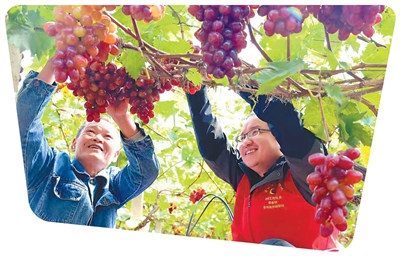
科技兴农

Search documents
践行“国之大者”!中国海油化学品牌标杆基地书写振兴篇章
Nan Fang Nong Cun Bao· 2025-12-29 10:00
Core Viewpoint - China National Offshore Oil Corporation (CNOOC) Chemical is actively participating in the "China Green Agriculture Efficiency Project" to enhance agricultural productivity and sustainability, aligning with national agricultural policies and contributing to rural revitalization [2][7][18]. Group 1: Project Overview - The "China Green Agriculture Efficiency Project" initiated in early 2025 aims to create benchmark bases for agricultural development [2]. - CNOOC Chemical has established multiple benchmark bases across various provinces, demonstrating significant agricultural productivity improvements [3][11][12]. Group 2: Agricultural Achievements - In Hainan, the rice benchmark base achieved an average yield of 313.2 kg per mu, representing a 13.68% increase compared to conventional fertilization methods [10][80]. - The peanut base in Henan saw a notable yield increase of 15.6% [11]. - The cotton base in Xinjiang achieved a 15% yield increase, while the ginger base in Shandong reached a yield of 18,000 jin per mu, marking a 16% increase [12]. Group 3: Policy Alignment and Strategic Goals - The project aligns with the central government's focus on enhancing food security and agricultural productivity as outlined in the "14th Five-Year Plan" [14][15]. - CNOOC Chemical's initiative emphasizes "green efficiency, brand empowerment, and win-win cooperation," moving away from traditional agricultural practices [19][20]. Group 4: Implementation Strategy - CNOOC Chemical employs a five-dimensional collaborative framework involving government guidance, corporate empowerment, media communication, research support, and farmer participation [21]. - The company conducts extensive field research to identify suitable agricultural areas, focusing on soil conditions and planting needs [23][27]. Group 5: Technological Integration - The project utilizes advanced soil monitoring data and customized nutrient solutions to create a closed-loop system for agricultural practices [32][45]. - CNOOC Chemical's technology team provides ongoing support and tailored guidance to farmers, ensuring effective implementation of agricultural techniques [52][54]. Group 6: Long-term Impact and Future Plans - CNOOC Chemical aims to transition from a "supplier" to a "plant nutrition solution provider," showcasing its commitment to agricultural innovation [59]. - The company plans to continue developing benchmark bases in more agricultural regions, sharing successful experiences and enhancing the agricultural industry [82][86].



穗悦京彩 聚势未来————广州都市现代农业(北京)招商引资引智宣传推介活动在京举办
Xin Lang Cai Jing· 2025-12-27 06:21
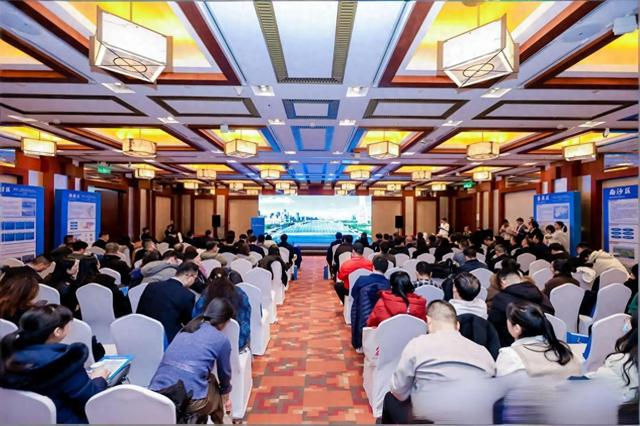
Core Insights - The event aimed to promote investment and intelligence in modern agriculture in Guangzhou, showcasing development opportunities and investment potential in the sector [1][3] Group 1: Event Overview - The "Guangzhou Urban Modern Agriculture (Beijing) Investment Promotion Activity" was held in Beijing, supported by various governmental and financial institutions [1] - The event attracted around 150 leaders from agriculture and finance sectors to discuss new opportunities in the Bay Area [3] Group 2: Strategic Goals - Guangzhou is leveraging its position as a core engine of the Guangdong-Hong Kong-Macao Greater Bay Area to attract high-end resources through a dual approach of "investment" and "intelligence" [3] - The event introduced a "government-led + market operation" model to create a platform for precise matching of policies, capital, and industry [3] Group 3: Industry Recognition - The president of the All-China Agricultural Industry Chamber of Commerce highlighted Guangzhou as a prime investment destination for agricultural enterprises [4] - Global agricultural giant Louis Dreyfus Company expressed intentions to increase investment in Guangzhou due to its advantageous location and policies [5] Group 4: Development Plans - The Guangzhou Agricultural and Rural Affairs Bureau presented the "Guangzhou Urban Modern Agriculture Strong City Medium and Long-term Development Plan," emphasizing key investment directions such as specialty agriculture and ecological smart agriculture [6] - The newly launched "Guangzhou Agricultural and Rural Investment Promotion and Intelligence Service Platform" aims to enhance the investment service system [6] Group 5: Financial Empowerment - The Guangzhou Financial Holdings Group shared innovative practices in creating a virtuous cycle of "technology-industry-finance" to support rural revitalization [8] - A signing ceremony took place to establish framework cooperation agreements between agricultural bureaus and Guangzhou Financial Holdings, laying a foundation for future capital investment collaboration [9] Group 6: Networking and Collaboration - The event featured specialized matching mechanisms to facilitate efficient connections between attendees and local agricultural representatives [11]
最美“新农人”风采丨赵艳菊:科技赋能田垄间,带富乡邻显担当
Xin Lang Cai Jing· 2025-12-27 03:18
Core Insights - Zhao Yanjun, a new farmer born in the 1980s, exemplifies modern agriculture through practical innovation and community engagement [1][2] - The farm, Qixiang Family Farm, was established in 2017 and has expanded its operations to include grain and legume planting, agricultural production management, and pest control [1] - The farm currently manages 300 acres of leased land and 450 acres of self-operated land, providing cultivation services for an additional 3,500 acres for local farmers [1] Technological Empowerment - Zhao Yanjun's core competitive advantage lies in technology, having developed a patented "livestock feed grass crushing device" in 2023 to enhance agricultural production efficiency [1] - She authored a research paper on "Pollution Prevention and Control Strategies for Livestock Manure Waste," addressing environmental challenges in agricultural development [1] Recognition and Achievements - In 2022, Zhao Yanjun was recognized as a "Major Grain Producer" during the Fifth China Farmers' Harvest Festival, and Qixiang Family Farm received the title of "Outstanding Planting Family Farm" [1]
北大荒集团建设农场以"双融双促"绘就乡村振兴高质量发展画卷
Xin Lang Cai Jing· 2025-12-25 01:00
Core Insights - The company is focusing on the "Three Major and One Aircraft Carrier" strategic goals by 2025, utilizing the "Beian Model" and the "Torch Model" for integrated agricultural development [1][2] - The farm achieved impressive yields with soybeans at 567.4 jin per mu and corn at 1737 jin per mu, indicating a dual improvement in quality and efficiency [1] - The integration of technology in agriculture is emphasized, with practices such as precision planting, green pest control using fixed-wing aircraft, and efficient harvesting with combine harvesters [1] Group 1: Technological Integration - The farm implements a deep integration of "good fields, good seeds, good opportunities, good methods, and good systems" to enhance agricultural productivity [1] - The use of smart planting machines and collaborative pest control methods demonstrates a shift from traditional farming to technology-driven practices [1] - A grid management model ensures that each plot of land has a dedicated "technical steward," promoting a transition from experience-based farming to technology-based income generation [1] Group 2: Community Engagement and Support - The farm's "Torch Model" promotes high-standard demonstration fields in collaboration with surrounding towns, helping 60% of local farmers adopt high-yield technologies [2] - Investment of 13.49 million yuan in 15 livelihood projects reflects the farm's commitment to community welfare and support for farmers [2] - The farm's party committee is actively involved in addressing technical challenges faced by farmers, with training sessions reaching over 200 participants [2] Group 3: Future Development Goals - The farm aims to continue deepening the "Five Good Integration" and expanding the connotation of the "Torch Model" to further enhance rural revitalization efforts [2] - The focus on party leadership and technological innovation is seen as a foundation for sustainable agricultural development [2] - The ongoing commitment to community engagement and support is expected to yield significant benefits for local farmers and the agricultural sector as a whole [2]


内蒙古:北疆大地绘新卷,草原乡村焕新颜
Xin Lang Cai Jing· 2025-12-24 16:47
Core Insights - Inner Mongolia is transforming its traditional agriculture and animal husbandry into a trillion-level industry, with a focus on technological advancements and industrial clusters, contributing significantly to national food security and economic growth [1][2][4]. Agricultural Production - In 2024, Inner Mongolia's grain production is expected to exceed 800 billion jin (approximately 400 million tons), with a grain planting area of 1.05 million acres, ranking sixth nationally [2]. - The region has implemented 12 disaster prevention measures, recovering an estimated 800 million jin of grain losses from severe flooding, showcasing its resilience [2]. - The area has successfully transformed saline-alkali land into productive farmland, with significant increases in the yields of various crops, including millet, oats, and sunflowers, leading to a shift from an agricultural region to an agricultural powerhouse [3]. Dairy Industry Development - Inner Mongolia's dairy industry is a model for industrial upgrading, with a total industry chain value exceeding 250 billion yuan (approximately 36 billion USD) [1][4]. - The region has 1,142 large-scale agricultural processing enterprises, generating an annual output value of 470 billion yuan (approximately 68 billion USD), and has developed several industry clusters worth over 100 billion yuan [4]. - Technological innovations in dairy farming, such as smart management systems and automated milking, have improved milk production and quality, surpassing EU standards [4][5]. Infrastructure and Rural Development - Significant improvements in rural infrastructure have been made, including the construction of 24,000 kilometers of rural roads and an increase in rural water supply coverage to 85.1% [6]. - The region has also focused on enhancing living conditions through environmental clean-up initiatives and the establishment of sanitation facilities, with a 97.2% rate of waste collection in villages [7]. - The integration of renewable energy projects, such as distributed photovoltaic power generation, has provided new income sources for rural communities [5][6]. Strategic Planning and Policy Support - Inner Mongolia's strategic planning includes the establishment of large-scale dairy farms and the promotion of collaborative development among the dairy, meat, and forage industries [5]. - A comprehensive policy support system has been implemented, including various initiatives aimed at enhancing the dairy sector and promoting agricultural modernization [5][6]. - The region's commitment to rural revitalization reflects a dual focus on food security and improving the quality of life for its residents [7][8].
带着乡亲们奔向更甜的日子
Xin Lang Cai Jing· 2025-12-23 23:14
Core Viewpoint - The article emphasizes the importance of enhancing agricultural production capacity and quality efficiency in Tieling City, aligning with the cooperative's long-term strategies for industry upgrade and development [1] Group 1: Agricultural Production Strategy - The cooperative has achieved a profit of over 1,000 yuan per mu, focusing on a "small but refined" approach to farming [1] - Plans for the next five years include leveraging technology and collaborating with agricultural experts to promote high-quality varieties and techniques [1] Group 2: Product Development and Market Expansion - Future initiatives involve developing high-value products such as deep-processed corn and premium grain gift boxes, utilizing newly built facilities [1] - The cooperative aims to expand its online presence through partnerships with influencers and e-commerce platforms, while also strengthening offline sales in supermarkets and institutional canteens [1] Group 3: Community Engagement and Replication - The cooperative plans to incorporate more local farmers, transforming its demonstration base into a replicable model for integrating small farmers into larger agricultural industries [1] - The "14th Five-Year Plan" is identified as a critical period for both the province's agricultural strength and the cooperative's quality improvement and efficiency enhancement [1]
一叶茶、一尾鱼、一把“金钥匙”……文明集市展现潮州饶平农业全景丨文明集市县域行④
Nan Fang Nong Cun Bao· 2025-12-23 11:32
Core Viewpoint - The article highlights the vibrant cultural market in the Beijing Road business district, showcasing the unique agricultural products and cultural heritage of Chaozhou Raoping, which is actively promoting local specialties and enhancing consumer engagement through a series of promotional activities [7][10][36]. Group 1: Agricultural Products - Raoping County, located in eastern Guangdong, is known for its diverse agricultural products, including single bush tea, lion head geese, and lychee, which are gaining national recognition [12][13]. - The county has a tea planting area of 155,600 acres, producing 23,200 tons of tea with a value exceeding 5.7 billion yuan, supporting the livelihoods of 200,000 people [15][16]. - The seafood industry in Raoping is significant, with a projected total aquatic product output of 204,700 tons and an estimated value of 6 billion yuan in 2024, establishing it as an important marine aquaculture base in Guangdong [24]. Group 2: Cultural and Creative Products - The market features various local delicacies and cultural crafts, such as green bean cakes and shell crafts, which reflect the rich culinary culture and heritage of the Chaoshan region [19][23]. - Creative products like lychee woven ornaments and mini tea sets are being produced by local artisans, providing them with additional income and promoting traditional craftsmanship [28][29]. Group 3: E-commerce Development - Raoping County has implemented a three-year action plan for high-quality rural e-commerce development, aiming to integrate agricultural resources and promote local specialties to larger markets [31][32]. - The county is encouraging partnerships between enterprises and farmers to enhance product development and market access, effectively opening up new opportunities for agricultural products [33][34].
科技赋能兴农路,实干担当谱新篇!广东农技推广工作会议成功举行
Nan Fang Nong Cun Bao· 2025-12-12 16:01
Core Viewpoint - The Guangdong Province's agricultural technology promotion system has made significant progress in enhancing agricultural productivity and ensuring food security, with a focus on integrating technology into rural development and planning for future advancements in the sector [7][12][40]. Group 1: Achievements and Progress - Over the past five years, Guangdong's total grain production has consistently exceeded 13 million tons, with a yield of 391.5 kg per mu [19]. - The coverage rate of high-quality seeds for major crops remains above 98%, with rice mechanization rates reaching 99.43% for tilling and 97.46% for harvesting [20]. - The province has successfully organized over 2,000 crop variety trials and approved 370 new varieties of rice and corn, ensuring a robust genetic resource base [25][26]. Group 2: Future Plans and Strategies - The agricultural technology promotion system aims to address existing gaps and enhance service mechanisms, focusing on food security, crop revitalization, and agricultural machinery [40][51]. - Plans include the establishment of a high-quality agricultural technology promotion plan for the 14th Five-Year Plan, emphasizing rapid response and long-term management mechanisms [55]. - The integration of digital transformation is a priority, with initiatives to upgrade smart agricultural service platforms and expand AI technology applications [59][60]. Group 3: Community Engagement and Innovation - The event highlighted successful case studies from various regions, showcasing innovative practices in agricultural technology that can be replicated [74]. - Local experts shared impactful stories of how practical technologies have improved livelihoods, emphasizing the role of grassroots talent in agricultural promotion [73]. - Interactive sessions and product showcases facilitated the exchange of quality agricultural products and technologies, enhancing collaboration between producers and consumers [78][80].
博士团队“把脉”鸽产业 22亿元产值背后的科技兴农路
Huan Qiu Wang Zi Xun· 2025-12-12 02:52
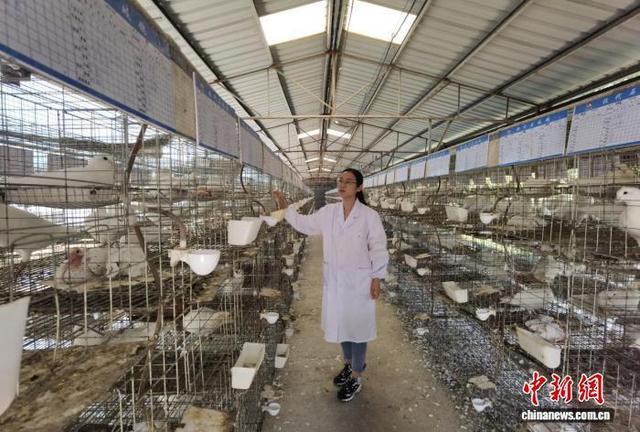
Core Insights - The article discusses the technological upgrades in the pigeon breeding industry in Yueyang, Hunan, led by a team of doctoral researchers from Yueyang Vocational and Technical College, addressing challenges such as genetic degradation and inefficient farming practices [1][6]. Group 1: Technological Integration - The introduction of QR-coded leg bands for breeding pigeons serves as an "electronic ID" to track lineage, growth data, and egg production [1]. - The doctoral team has developed a digital breeding software platform that utilizes molecular marker-assisted selection, resulting in a 30% improvement in breeding efficiency over several years [3]. Group 2: Farmer Engagement and Economic Impact - Initial resistance from local farmers to new technologies was overcome by demonstrating the benefits through practical applications, leading to increased efficiency and reduced disease among pigeons [5]. - The "233 model" was introduced, where a couple manages 3,000 breeding pairs, yielding an annual income exceeding 300,000 yuan, optimizing the scale of operations [5]. Group 3: Industry Chain Development - The integration of the entire industry chain from breeding to processing and tourism has been promoted, resulting in over 30 processed products and annual sales exceeding 100 million yuan [6]. - The establishment of five standardized breeding bases has led to an annual output of 47 million pigeons, with a product quality rate of 99% [8]. Group 4: Future Prospects - The Yueyang pigeon industry is projected to reach a comprehensive output value of 2.2 billion yuan by 2024, marking a 120% increase since 2020, benefiting over 20,000 households [8]. - The team aims to enhance the genetic resources of local pigeon breeds and secure a place in the national livestock genetic resource catalog, contributing to rural revitalization and agricultural modernization [8].
组织向下扎根 产业拔节生长
Ren Min Ri Bao· 2025-12-08 23:18
Core Viewpoint - The article highlights the successful transformation of rural economies in Guangxi's Guilin region through effective party organization, agricultural cooperation, and innovative practices, leading to increased income and improved living standards for local farmers [6][10][15]. Group 1: Agricultural Development - The introduction of a cooperative model in the grape industry has significantly improved production and sales, transitioning from a fragmented approach to a more organized and efficient system [9][11]. - The establishment of specialized cooperatives has led to the introduction of quality varieties and standardized management practices, resulting in better grape quality and higher market prices [9][12]. - The county has seen a substantial increase in grape planting area, reaching over 27,000 acres, with an annual production of 47,000 tons, generating approximately 480 million yuan in income for local farmers [13]. Group 2: Economic Empowerment - The integration of party organizations in agricultural development has facilitated the establishment of over 500 farmer leaders, contributing to community engagement and economic growth [13]. - The introduction of e-commerce initiatives has allowed farmers to sell their products directly to consumers, with online sales exceeding 320 million yuan in the first half of the year [15]. - The collaboration between local enterprises and farmers has created job opportunities and improved livelihoods, exemplified by the success of the Milanxiang Food Company in providing employment and training for local residents [14]. Group 3: Infrastructure and Support - The county has implemented a "whistle-blowing" mechanism for businesses, ensuring that local government departments respond promptly to challenges faced by enterprises, thus fostering a supportive business environment [14]. - Investment in infrastructure, such as the establishment of e-commerce service centers, has enhanced market access for local agricultural products [9][15]. - The promotion of integrated agricultural practices, such as rice-fish farming, has diversified income sources for farmers and improved overall agricultural productivity [6][14].