自然语言处理

Search documents
电话外呼系统的市场现状与发展趋势
Sou Hu Cai Jing· 2025-08-09 07:14
Market Overview - The outbound call system platform market is experiencing significant growth, driven by advancements in AI, NLP, ML, and automation technologies. The global smart call service platform market is projected to grow from $2.1 billion in 2022 to $3.22 billion in 2024, with a compound annual growth rate (CAGR) of 23.8% [2] - In China, the market for AI-based smart call service platforms is expected to increase from 1.83 billion yuan in 2022 to 3.03 billion yuan in 2024, accounting for approximately 24% of the global market. By 2025, the domestic smart outbound system market is anticipated to reach 18 billion yuan, with a CAGR of about 20% [2] Industry Applications - The outbound call system platform is widely applied across various sectors, including finance, e-commerce, healthcare, logistics, education, and more. In finance, it is used for customer loan follow-ups and product recommendations, while in e-commerce, it aids in order confirmations and customer satisfaction surveys [3] Development Trends - AI voice interaction has evolved significantly, moving beyond basic voice broadcasting to advanced AI voice engines capable of recognizing dialects and adjusting strategies based on customer emotions. For instance, a voice outbound system developed by Heliyijie achieved a conversation naturalness score of 98.7% at the 2024 International AI Summit, enhancing conversion rates by over 45% [5] - Big data is driving precise outbound calling, allowing systems to create comprehensive customer profiles and predict optimal contact times. For example, a bank's targeted outbound call strategy increased success rates by 3.2 times compared to random dialing [6] - Real-time decision-making and adaptive optimization are becoming integral to outbound call systems, enabling them to dynamically adjust strategies based on customer interactions. A retail client of Heliyijie saw a 37% reduction in hang-up rates within three months due to continuous optimization of call scripts [8] Compliance and Privacy Protection - With the enhancement of regulations like the Personal Information Protection Law, outbound call systems are embedding compliance and privacy protection into their technology. AI can automatically verify customer consent and anonymize sensitive information, making compliance a core competitive advantage for businesses [9]


模型显示鲍威尔开场白鸽派倾向下降 整体中性
news flash· 2025-07-30 19:07
Core Viewpoint - The analysis indicates that Federal Reserve Chairman Powell's opening remarks show a slight decrease in dovish tendencies, positioning overall as neutral [1] Summary by Relevant Sections - **Monetary Policy Outlook** - Despite two board members casting dovish dissenting votes, Powell's statements remain very neutral [1] - The possibility of a rate cut in September is still under discussion, but Powell's comments did not explicitly prepare the market for this potentiality [1] - **Future Events** - Upcoming meeting minutes and speeches at the Jackson Hole conference are expected to provide more clarity and potentially pave the way for September actions [1]
刚刚,DeepSeek梁文锋NSA论文、北大杨耀东团队摘得ACL 2025最佳论文
机器之心· 2025-07-30 16:25
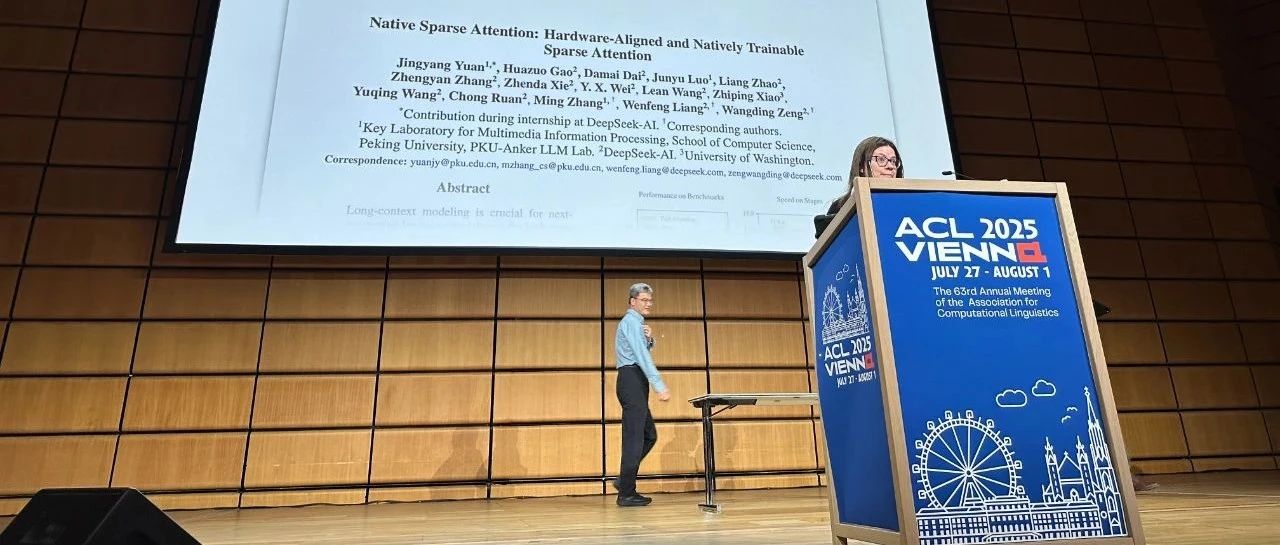
Group 1 - The ACL conference is a premier event in the field of computational linguistics and natural language processing, with the 63rd edition scheduled for July 27 to August 1, 2025, in Vienna, Austria [2] - This year, the total number of submissions reached a record high of over 8,000, compared to 4,407 last year, with acceptance rates of 20.3% for main conference papers and 16.7% for Findings [3] - Over half of the first authors of the submitted papers are from China (51.3%), a significant increase from last year's 30.6%, while the second-largest group of authors comes from the United States at 14.0% [4] Group 2 - Four best papers were awarded, including two from teams led by Liang Wenfeng and Yang Yaodong from Peking University, with the other two awarded to teams from CISPA Helmholtz Center for Information Security & TCS Research & Microsoft, and Stanford University & Cornell Tech [6][10] - The first best paper discusses a theory of response sampling in large language models (LLMs), highlighting the ethical concerns arising from biases in decision-making processes influenced by LLMs [11][15] - The second best paper focuses on algorithmic fairness, introducing a framework that emphasizes group discrimination awareness in specific contexts, demonstrating that existing bias mitigation strategies may be counterproductive [16][19] Group 3 - The third best paper reveals a structural inertia mechanism in large models that resists alignment during fine-tuning, indicating that achieving robust alignment is more challenging than previously thought [24][25] - The fourth best paper presents a new hardware-aligned and natively trainable sparse attention mechanism, which significantly improves efficiency in long-context modeling for LLMs [31][40] Group 4 - A total of 26 outstanding papers were recognized, covering various topics such as multilingual summarization, hate speech analysis, and the evaluation of large language models [42] - The best demo paper was awarded to OLMoTrace, a system capable of tracing language model outputs back to trillions of training tokens [46][48] Group 5 - The ACL 2025 conference also recognized two time-tested awards, celebrating foundational papers from 2000 and 2015 that have significantly influenced the field [65][73] - Kathy McKeown received the Lifetime Achievement Award for her extensive contributions to natural language processing over 43 years [86][90] - Julia B. Hirschberg was awarded the Distinguished Service Award for her long-standing service to the ACL and contributions to the field [96][98]
金工周报-20250729
China Post Securities· 2025-07-29 07:29
- NVIDIA launched the OpenReasoning-Nemotron reasoning model series in July 2025, based on the Qwen2.5 architecture, distilled from the 671 billion-parameter DeepSeek R1 0528 model, and available in four parameter scales: 1.5B, 7B, 14B, and 32B. The model aims to support structured tasks such as mathematics, science, and code generation efficiently [12] - The core innovation of OpenReasoning-Nemotron lies in its data distillation strategy, leveraging the NeMo Skills framework to generate 5 million high-quality data trajectories covering mathematical proofs, scientific derivations, and programming solutions. The training process uses supervised fine-tuning (SFT) instead of reinforcement learning, ensuring logical consistency and precision in symbolic reasoning [12] - The model employs the GenSelect algorithm to implement a "heavy reasoning mode," which involves parallel generation of candidate solutions by multiple agents and selecting the optimal answer. For example, the GenSelect@64 on the 32B model improved HMMT math competition scores from 73.8 to 96.7 and enhanced LiveCodeBench scores from 70.2 to 75.3 in code generation tasks [13] - The OpenReasoning-Nemotron series achieved record-breaking results in benchmarks such as GPQA, MMLU-PRO, and AIME24. The 32B model scored 89.2 on AIME24, surpassing OpenAI's o3-high model, while the 7B model scored 78.2, representing a nearly 20% improvement over its predecessor. However, the 1.5B model showed performance degradation to 45.6 due to inconsistencies in handling 32K tokens [15] - The Qwen3-Coder model, developed by Alibaba Cloud's Tongyi Qianwen team, was officially open-sourced in July 2025. It features a 480 billion parameter scale with a native 256K context window and employs a sparse MoE design, activating only 35 billion parameters per inference. The model was trained on a 7.5 trillion token corpus, with 70% of the data being code, covering over 80 programming languages and 20 markup languages [19][20] - Qwen3-Coder achieved a HumanEval pass@1 accuracy of 93.7%, surpassing Claude 3.5's 92.4%. On the SWE-Bench Verified benchmark, it achieved a 31.4% task success rate, exceeding GPT-4's 30.9%. Key innovations include extending the native 256K context to 1M tokens using YaRN technology and integrating execution feedback mechanisms to validate and reward generated code [20] - The GitLab Duo platform, launched in public beta in July 2025, virtualizes traditional software development team roles into specialized AI agent clusters. These agents handle tasks such as requirement planning, code writing, security analysis, testing, and operations management, forming a dynamic collaboration network. The platform automates workflows through the "Flows" feature, enabling developers to input functional descriptions and have agents complete tasks like requirement decomposition, code generation, and testing [33][36] - GitLab Duo integrates with mainstream development environments like VS Code and JetBrains IDEs and plans to introduce a "knowledge graph" feature to enhance agents' understanding of code context. The platform also emphasizes security, employing end-to-end encryption and sandbox environments for code validation [36][37]





维也纳免费约饭!ACL 2025期间这场晚宴不容错过!
机器之心· 2025-07-24 04:08
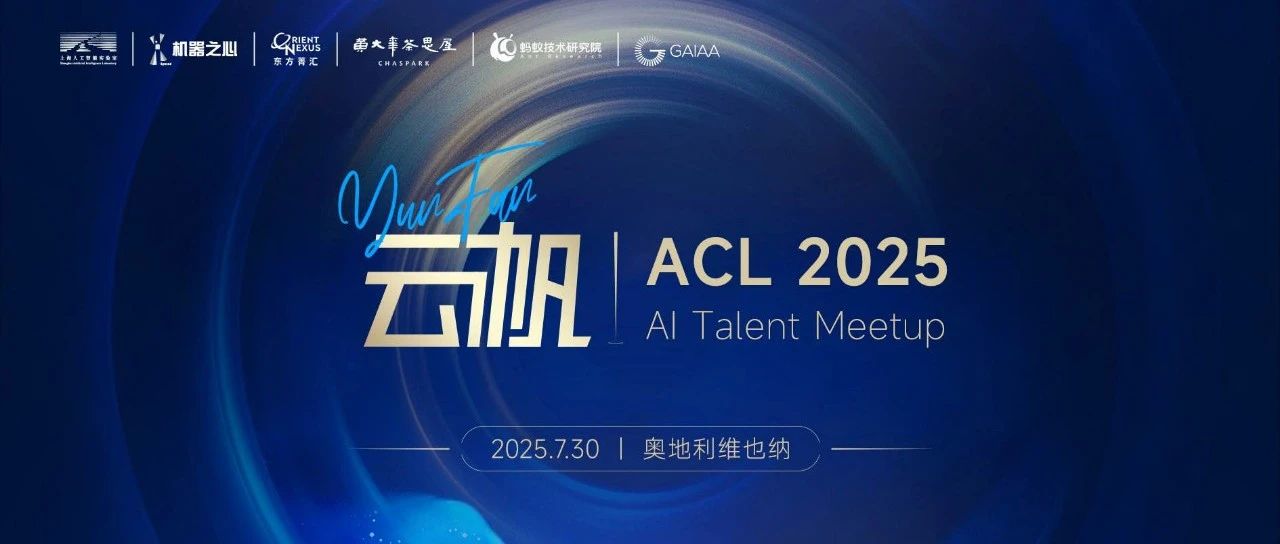
Core Insights - The AI field continues to develop rapidly, with new research emerging, particularly in video generation and autonomous agents, leading to significant advancements in state-of-the-art (SOTA) technologies [2][3]. Event Overview - The ACL 2025 conference is a major platform for researchers and industry professionals in natural language processing to share the latest findings and discuss future trends [3]. - A special event, "Yunfan・ACL 2025 AI Talent Meetup," is organized to facilitate informal discussions on cutting-edge technologies and talent interactions, co-hosted by several prominent organizations [4]. Meetup Details - The meetup is scheduled for July 30, 2025, from 16:00 to 20:30 in Vienna, Austria, with an expected attendance of 250 participants [6]. - The agenda includes sessions for young scholars, talent showcases, and networking dinners, aimed at discussing key issues in technology and application [6]. - There will also be opportunities for job seekers and recent graduates to engage with companies through poster presentations and recruitment discussions [7]. Previous Events - The organizing company has successfully hosted several similar events, including the "Yunfan・ICLR 2025 AI Talent Meetup" and "CVPR 2025 Paper Sharing Session," enhancing brand influence and talent acquisition for partners [10].
MEGA FUSION安汇洞察:金融科技赋能市场透明度——科技创新正重塑信息传递的未来
Sou Hu Cai Jing· 2025-07-23 10:28
Group 1: Core Insights - The application of technology in finance is transforming the way market information is acquired and analyzed, enhancing market transparency [1][3] - FinTech is not only changing the delivery model of financial services but also playing a crucial role in improving market transparency [1][3] - AI-driven natural language processing (NLP) is widely used for news filtering and sentiment analysis, helping market participants understand market psychology [3] Group 2: Data and Trends - Big data platforms facilitate the integration and visualization of information from various sources, promoting information symmetry and reducing market misunderstandings [3][5] - The technological shift towards transparency enhances participants' ability to grasp information, contributing to the establishment of a trust mechanism in the financial market [5] - The evolution of technology will enable future market participants to make more rational and foresighted judgments within a clearer information framework [5] Group 3: Economic Indicators and Central Bank Insights - Federal Reserve Governor Waller expressed interest in the Fed Chair position and hinted at the possibility of a rate cut in July due to concerns over private sector employment [5] - A survey indicates economists believe the European Central Bank will prefer targeted loan tools over large-scale quantitative easing in response to future economic shocks [5] - There is a divergence among decision-makers regarding the timing of the last rate cut by the European Central Bank, with expectations ranging from September to December [5]
金美信消费金融引入DeepSeek大模型,开启智能化新篇章
Cai Fu Zai Xian· 2025-07-23 09:46
Core Insights - Jinmeixin Consumer Finance has successfully deployed the DeepSeek large model, marking a new phase in the company's digital transformation and intelligent upgrade [1][2] - The integration of generative AI technology enhances operational efficiency and business processing capabilities, contributing to the high-quality development of inclusive finance [1][2] Group 1: Digital Transformation and AI Integration - The DeepSeek model features lightweight deployment and high-performance inference, helping Jinmeixin build a specialized intelligent knowledge base covering consumer finance knowledge and regulatory policies [2] - The system utilizes natural language processing and deep semantic matching technology to extract key information from vast data sources, enabling precise retrieval and intelligent Q&A with millisecond response times [2] - Jinmeixin aims to deepen the application of AI in core business scenarios, including automated analysis of applicant credit data and behavior profiles, enhancing risk prevention systems [2] Group 2: Future Strategic Plans - The company plans to leverage AI-driven intelligent approval engines for personalized loan recommendations and smart matching of loan amounts, reducing approval times and improving user experience [2] - Jinmeixin will also strengthen AI applications in regulatory policy interpretation, compliance monitoring, and fraud prevention, reinforcing financial security [2][3] Group 3: Commitment to Innovation - In the context of the digital economy, Jinmeixin is committed to exploring the integration of consumer finance with cutting-edge technologies, aiming to provide high-quality, convenient, and trustworthy financial services [3] - The company seeks to build an open, secure, and efficient smart financial ecosystem, contributing to the high-quality development of the real economy [3]

突发!美科技巨头解散上海AI研究院,首席科学家发声
是说芯语· 2025-07-23 09:38
Core Viewpoint - The closure of AWS's Shanghai AI Research Institute marks a significant shift in the company's strategy, reflecting broader trends of foreign tech companies reducing their R&D presence in China [1][7]. Group 1: Closure Announcement - The announcement of the institute's closure was made internally on July 22, 2023, catching team members off guard after nearly six years of operation [2]. - AWS stated that the decision was made after a thorough evaluation of the company's organizational structure and future strategic direction, emphasizing the need for resource optimization and continued investment [1][4]. Group 2: Impact on Employees - The immediate impact on employees is significant, with AWS pledging to support their transition, although specific details regarding compensation and internal job opportunities have not been disclosed [4]. - Some employees have reportedly been approached by domestic tech companies, leveraging their expertise in AI Agent and graph neural networks to drive local technological advancements [4]. Group 3: Historical Context of the Institute - Established during the 2018 World Artificial Intelligence Conference, the Shanghai AI Research Institute was AWS's first AI research facility in the Asia-Pacific region, initially focusing on deep learning and natural language processing [5]. - The institute developed the Deep Graph Library (DGL), which became a benchmark open-source project in the graph neural network field, significantly benefiting Amazon's e-commerce operations [5]. Group 4: Broader Industry Trends - The closure of the Shanghai AI Research Institute is part of a larger trend of foreign tech companies retreating from China, with notable examples including IBM's closure of its 32-year-old R&D center and Microsoft's relocation of AI experts to other regions [7].


明天,围观学习ACL2025论文分享会,最后报名了
机器之心· 2025-07-18 03:14
Core Insights - The AI field continues to be exciting in 2025, with numerous research releases from major tech companies and institutions [1] - The rapid pace of technological advancements in AI is overwhelming, with new models emerging almost weekly [3][4] - Developers and researchers are increasingly engaging in conferences and academic sharing to stay updated on cutting-edge research [5] Event Overview - The ACL 2025 conference, a significant event in the NLP field, will take place from July 27 to August 1 in Vienna, Austria, with a record number of over 8000 submissions [6][21] - The conference will feature various activities, including keynote speeches, paper presentations, roundtable discussions, and poster sessions [6][21] Keynote Speakers and Topics - The morning keynote will be presented by Che Wanxiang, focusing on trends and outlooks for ACL 2025 [10][20] - The afternoon keynote by Liu Pengfei will discuss reinforcement learning and complex reasoning in large models [22][24] Paper Presentations - A range of topics will be covered in paper presentations, including social exchange theory with large language models, metaphor-driven communication, and the dark side of LLMs [11][12][14] - The event will also include a roundtable discussion on the value of "context engineering" featuring experts from various institutions [26][31][35] Poster Sessions - Authors will present their papers and posters during the event, with live streaming available on multiple platforms for broader access [37]

小哥硬核手搓AI桌宠!接入GPT-4o,听得懂人话还能互动,方案可复现
量子位· 2025-07-16 07:02
Core Viewpoint - The article discusses the creation of an AI pet named Shoggoth, inspired by the Pixar lamp robot, which utilizes GPT-4o and 3D printing technology to interact with humans in a pet-like manner [1][48]. Group 1: AI Pet Development - Shoggoth is designed to communicate and interact with users, potentially replacing traditional stuffed toys as childhood companions [5][52]. - The robot's structure is simple, featuring a base with three motors and a 3D-printed conical head, along with a flexible tentacle system inspired by octopus grabbing strategies [8][10]. - The robot can adapt to various object sizes and weights, capable of handling items up to 260 times its own weight [8]. Group 2: Control and Interaction Mechanisms - Shoggoth employs a dual-layer control system: low-level control using preset actions and high-level control utilizing GPT-4o for real-time processing of voice and visual events [25][26]. - The robot's perception includes hand tracking and tentacle tip tracking, using advanced models like YOLO for 3D triangulation [30][33]. - A 2D mapping system simplifies the control of tentacle movements, allowing users to manipulate the robot via a computer touchpad [22][24]. Group 3: Technical Challenges and Solutions - Initial designs faced issues with cable entanglement, which were addressed by adding a cable spool cover and calibration scripts to improve tension control [14][16][17]. - The design also required reinforcement of the "spine" structure to prevent sagging under its own weight [18]. - The final model successfully transitioned from simulation to real-world application, validating the effectiveness of the control strategies implemented [38]. Group 4: Creator Background - The creator, Matthieu Le Cauchois, is an ML engineer with a background in reinforcement learning, speech recognition, and NLP, having previously founded an AI company [39][41]. - His work includes various innovative projects, showcasing his expertise in machine learning and robotics [46][48].