
资本市场监管

Search documents
利好!国常会最新部署;微博被禁言后,罗永浩最新发声|21早新闻
2 1 Shi Ji Jing Ji Bao Dao· 2026-01-16 23:58
5、税务部门提醒纳税人对2022年至2024年从境外取得的收入进行自查。如果发现自己此前未按规定申 报境外所得的,要依法及时补正申报。 6、财政部、税务总局:继续实施公租房税收优惠政策。对公租房建设期间用地及建成后占地免征城镇 土地使用税,经营管理单位免征建设、管理公租房涉及的印花税、房产税,公租房租金收入免征增值 税;购买、租赁、捐赠公租房涉及契税、个税等按规定减免。政策执行至2027年12月31日。 投资要闻 今日关注 1 、国务院总理李强1月16日主持召开国务院常务会议,听取提振消费专项行动进展情况汇报并研究加 快培育服务消费新增长点等促消费举措,部署做好清理拖欠企业账款行动和保障农民工工资支付有关工 作,审议通过《国务院关于修改和废止部分行政法规的决定(草案)》。 宏观经济 1、市场监管总局发布《直播电商经营者落实食品安全主体责任监督管理规定》,将直播电商平台经营 者、直播间运营者、直播营销人员、直播营销人员服务机构全部纳入监管范畴,新规将于今年3月20日 正式实施。 2、《新能源汽车废旧动力电池回收和综合利用管理暂行办法》发布,新规包括搭建全国新能源汽车动 力电池溯源信息平台,建立新能源汽车动力电池 ...

及时做好逆周期调节 坚决防止市场大起大落
Zhong Guo Zheng Quan Bao· 2026-01-16 20:47
Core Viewpoint - The China Securities Regulatory Commission (CSRC) emphasizes the need for comprehensive reforms in the capital market to enhance stability, improve regulatory effectiveness, and promote high-quality development in 2026 [1][2][3]. Group 1: Market Stability and Reform - The CSRC aims to strengthen market monitoring and implement counter-cyclical adjustments to maintain market stability and prevent excessive volatility [1][3]. - The implementation of reforms in the ChiNext board and the continued advancement of the Sci-Tech Innovation Board are highlighted to improve refinancing convenience and flexibility [1][2]. - The introduction of various long-term investment products and risk management tools is intended to attract more long-term capital into the market [3][4]. Group 2: Regulatory Enhancements - The CSRC plans to enhance the effectiveness and deterrence of regulatory enforcement, focusing on combating financial fraud, market manipulation, and insider trading [4][5]. - A comprehensive punishment and prevention system for financial fraud is being established, with 701 cases of securities and futures violations handled in the previous year, resulting in fines totaling 15.47 billion yuan [2][4]. - The regulatory framework for private equity funds will be improved, and technology will be leveraged to enhance regulatory capabilities [4][5]. Group 3: Corporate Governance and Development - The CSRC is committed to improving the operational standards of listed companies and accelerating the introduction of new regulations for corporate governance [5][6]. - Measures to enhance the value growth and governance of listed companies include improving dividend repurchase, equity incentives, and employee stock ownership plans [5][6]. - The integration of the Beijing Stock Exchange and the New Third Board is aimed at promoting high-quality development in these markets [4][5]. Group 4: Capital Market Openness - The CSRC is focused on advancing the two-way opening of the capital market to a deeper and higher level, including optimizing the Qualified Foreign Institutional Investor (QFII) scheme [5][6]. - The expansion of the open range for specific futures products and the improvement of regulations for overseas listings are also priorities [5][6]. - Enhancing the regulatory and risk prevention capabilities in an open environment is essential for participating in international financial governance [5][6].
证监会确定2026年资本市场五方面工作任务 巩固市场稳中向好势头 坚决防止市场大起大落
Shang Hai Zheng Quan Bao· 2026-01-16 18:43
巩固市场稳中向好势头 坚决防止市场大起大落 张大伟 制图 证监会确定2026年资本市场五方面工作任务 会议重点部署了五方面工作任务: ——坚持稳字当头,巩固市场稳中向好势头。全方位加强市场监测预警,及时做好逆周期调节,强化交 易监管和信息披露监管,进一步维护交易公平性,严肃查处过度炒作乃至操纵市场等违法违规行为,坚 决防止市场大起大落。继续深化公募基金改革,持续拓宽中长期资金来源渠道和方式,推出各类适配长 期投资的产品和风险管理工具,积极引导长期投资、理性投资、价值投资,全力营造"长钱长投"的市场 生态。 ——坚持改革攻坚,不断提高服务高质量发展质效。提升多层次股权市场包容性适应性,启动实施深化 创业板改革,持续推动科创板改革落实落地,提高再融资便利性和灵活性,促进北交所、新三板一体化 高质量发展。推动债券市场提质量、调结构、扩总量,抓好商业不动产REITs试点平稳落地。稳步推进 期货市场提质发展,加强期现联动监管。 ——坚持依法从严,着力提升监管执法有效性和震慑力。进一步严肃市场纪律,坚决打击财务造假、操 纵价格、内幕交易等恶性违法行为,畅通行政刑事衔接机制,推动更多特别代表人诉讼、先行赔付等典 型案例落地 ...

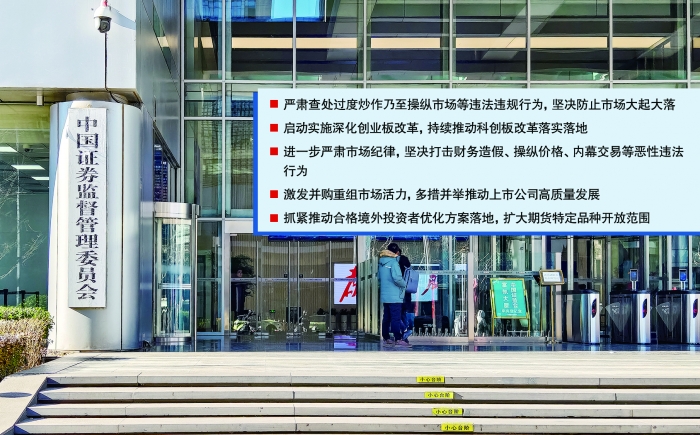
中国证监会研究部署2026年五方面工作
Zheng Quan Ri Bao· 2026-01-16 16:57
Core Viewpoint - The China Securities Regulatory Commission (CSRC) has outlined five key areas of focus for 2026, emphasizing stability, reform, strict law enforcement, enhancing corporate governance, and promoting deeper capital market openness [1] Group 1: Market Stability and Development - The CSRC aims to maintain a stable market environment, reinforcing the positive momentum observed in 2025, with significant breakthroughs in attracting medium- and long-term capital [2] - The total amount of cash dividends and buybacks by listed companies reached 2.68 trillion yuan in 2025, indicating a strong focus on high-quality development [2] - The IPO and refinancing activities totaled 1.26 trillion yuan, while the bond market saw the issuance of various bonds amounting to 16.3 trillion yuan [2] Group 2: Regulatory Enhancements - The CSRC has intensified its regulatory framework, addressing financial fraud and illegal activities, with 701 cases of securities and futures violations handled, resulting in fines totaling 15.47 billion yuan [2] - A comprehensive system for preventing and punishing financial fraud has been established, enhancing the effectiveness and deterrence of regulatory enforcement [2][6] Group 3: Reform Initiatives - The CSRC is committed to deepening investment and financing reforms, including the implementation of the "1+6" policy for the Sci-Tech Innovation Board and the introduction of a third set of standards for the Growth Enterprise Market [5] - The focus is on improving the adaptability and competitiveness of the multi-tiered equity market, promoting the integration of the Beijing Stock Exchange and the New Third Board [5] Group 4: Corporate Governance and Value Growth - The CSRC emphasizes the importance of enhancing the governance and operational standards of listed companies, with new regulations on corporate governance and shareholder rights being introduced [6] - Measures to stimulate the merger and acquisition market and improve the regulatory framework for restructuring are being prioritized to foster high-quality corporate development [6] Group 5: International Cooperation and Market Openness - The CSRC is working to enhance the openness of the capital market, including optimizing the Qualified Foreign Institutional Investor (QFII) scheme and expanding the range of futures products available for foreign investment [6] - Efforts are being made to improve the regulatory framework for overseas listings, ensuring transparency and standardization in the management of foreign investments [6]
证监会:严查过度炒作乃至操纵市场,坚决防止市场大起大落|快讯
Hua Xia Shi Bao· 2026-01-16 09:19
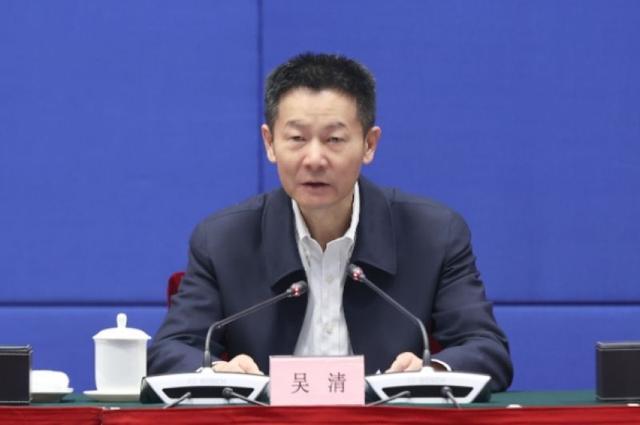
文/帅可聪 会议强调,当前资本市场总体稳中向好,但仍然面临内外风险交织、新旧矛盾叠加的复杂严峻挑战。 吴清出席会议并讲话。 会议提到,要坚持稳字当头,巩固市场稳中向好势头。全方位加强市场监测预警,及时做好逆周期调 节,强化交易监管和信息披露监管,进一步维护交易公平性,严肃查处过度炒作乃至操纵市场等违法违 规行为,坚决防止市场大起大落。 中国证监会1月16日下午公告显示,1月15日,中国证监会召开2026年系统工作会议。中国证监会党委书 记、主席吴清出席会议并讲话。 编辑:麻晓超 ...
严肃查处过度炒作、防止市场大起大落!证监会划新年工作重点
Nan Fang Du Shi Bao· 2026-01-16 08:32
三是坚持依法从严,着力提升监管执法有效性和震慑力。进一步严肃市场纪律,坚决打击财务造假、操 纵价格、内幕交易等恶性违法行为,畅通行政刑事衔接机制,推动更多特别代表人诉讼、先行赔付等典 型案例落地。督促行业机构专注主业、完善治理、错位发展。完善私募基金监管体制机制。强化科技赋 能监管,提高线索发现能力和监管穿透力。 会议指出,要持续深化资本市场投融资综合改革,提高制度包容性、适应性和竞争力、吸引力,努力实 现质的有效提升和量的合理增长,切实增强市场内在稳定性,更好助力稳就业、稳企业、稳市场、稳预 期,为"十五五"良好开局积极贡献力量。 一是坚持稳字当头,巩固市场稳中向好势头。全方位加强市场监测预警,及时做好逆周期调节,强化交 易监管和信息披露监管,进一步维护交易公平性,严肃查处过度炒作乃至操纵市场等违法违规行为,坚 决防止市场大起大落。继续深化公募基金改革,持续拓宽中长期资金来源渠道和方式,推出各类适配长 期投资的产品和风险管理工具,积极引导长期投资、理性投资、价值投资,全力营造"长钱长投"的市场 生态。 二是坚持改革攻坚,不断提高服务高质量发展质效。提升多层次股权市场包容性适应性,启动实施深化 创业板改革,持 ...
从“单一监管”向“社会共治”转型
Qi Huo Ri Bao Wang· 2026-01-16 01:57
Core Viewpoint - The introduction of the "whistleblower" system upgrade by the China Securities Regulatory Commission (CSRC) and the Ministry of Finance aims to enhance the detection and reporting of illegal activities in the capital market, addressing the increasing complexity and concealment of such violations [1][2]. Group 1: Regulatory Framework - The new regulations significantly improve the reward mechanism for whistleblowers, increasing both the reward ratios and caps, while also refining the distribution and initiation procedures [2]. - A robust protection system for whistleblowers has been established, ensuring stricter identity protection and harsher penalties for retaliation against whistleblowers [2]. - The definition of a whistleblower has been clarified, along with the three core criteria for valid leads, delineating the rights and responsibilities of all parties involved [2]. Group 2: Impact on Market Participants - The implementation of the regulations will create a strong compliance deterrent for listed companies, increasing the likelihood of exposing hidden illegal activities such as financial fraud and unfair related-party transactions [3]. - Securities and futures institutions, as key intermediaries in the capital market, will face dual constraints, enhancing the incentive for employees to report violations and compelling institutions to strengthen their risk control measures [3]. Group 3: Investor Protection - The regulations serve as a vital tool for protecting investors' rights, significantly improving the detection efficiency of major illegal activities, thereby reducing risks associated with financial fraud and regulatory violations [4]. - The whistleblower system will provide critical evidence for investors' civil claims, facilitating quicker and less costly pathways for investors to seek redress [4]. - The reward mechanism is designed to motivate ordinary investors to participate in supervision, fostering a collaborative environment for investor protection, particularly benefiting small and medium-sized investors [4]. Group 4: Challenges and Considerations - Despite the comprehensive design of the regulations, challenges remain, such as the potential for hidden risks faced by whistleblowers and the need for industry self-discipline and professional protection mechanisms [5]. - Ordinary investors may lack the necessary skills to provide sufficient evidence for their claims, necessitating training and awareness programs to enhance their supervisory capabilities [5]. - The compliance cost pressures on listed companies and institutions need to be managed carefully to avoid undue operational burdens, particularly for small and medium enterprises [5].
监管执法威慑不断提升 贵州资本市场生态不断净化
Zheng Quan Shi Bao· 2026-01-13 18:13
Core Viewpoint - Guizhou Securities Regulatory Bureau is committed to implementing the new "National Nine Articles" and enhancing regulatory measures to ensure the stable operation of the capital market, with a focus on combating financial fraud and improving market integrity [1][2]. Group 1: Regulatory Actions - In 2025, Guizhou Securities Regulatory Bureau conducted inspections on 111 companies and took 31 administrative regulatory measures along with 63 daily regulatory measures [1]. - Two financial fraud cases were seriously investigated, with proposed penalties amounting to 194 million yuan for two listed companies and 20 responsible individuals, including potential 5 to 10-year bans from the securities market for four individuals [1]. Group 2: Focus on Financial Fraud - Financial fraud is identified as a significant threat to market integrity and is met with a "zero tolerance" policy by the Guizhou Securities Regulatory Bureau, which aims to enhance the comprehensive punishment of such activities [1]. - The bureau emphasizes the importance of maintaining the principles of fairness, openness, and honesty in the market, which are essential for investor trust [1]. Group 3: Strengthening Oversight - The bureau plans to strengthen oversight of intermediary institutions such as sponsors, audit firms, law firms, and trustees, ensuring they fulfill their responsibilities diligently and improve their professional quality [1]. - A three-tier defense system is being established, focusing on corporate compliance, external audit supervision, and administrative regulation to enhance the governance structure of industry institutions [2]. Group 4: Future Directions - The Guizhou Securities Regulatory Bureau will continue to implement decisions from the central government and regulatory bodies, focusing on risk prevention, strict regulation, and promoting high-quality development in the capital market [2]. - The bureau aims to enhance regulatory effectiveness and protect investors' legitimate rights and interests while ensuring the stability of the capital market [2].
去年超30家公司退市:监管全链条追责,大幅提高违法成本
2 1 Shi Ji Jing Ji Bao Dao· 2026-01-05 10:48
Core Viewpoint - The year 2025 marked a significant increase in regulatory scrutiny of listed companies in China's A-share market, with over 80 companies and more than 200 individuals investigated, highlighting a trend towards stricter enforcement of regulations since the introduction of the new "National Nine Articles" [2] Group 1: Regulatory Environment - The regulatory environment in 2025 has become increasingly stringent, reflecting a consistent approach by the China Securities Regulatory Commission (CSRC) to enforce strict regulations [2] - The A-share market saw the delisting of 32 companies, with many being removed due to long-term operational issues or fraudulent activities [2] Group 2: Financial Fraud Characteristics - Financial fraud has become more concealed, long-term, and widespread, with companies employing various methods to inflate revenues significantly [3][5] - "Empty trade" has emerged as a mainstream tool for revenue inflation, with companies like *ST Dongfang inflating revenue by 16.13 billion yuan from 2020 to 2023, with 50.44% of 2022's revenue being fictitious [3] - Some companies have been found to engage in "asset stripping," where controlling shareholders treat listed companies as cash machines, severely harming minority shareholders [3] Group 3: Enforcement and Accountability - The regulatory framework has shifted from reactive measures to proactive governance, with a focus on source governance and a comprehensive accountability system being established [5] - Record penalties have been imposed, with *ST Gaohong receiving a fine of 125 million yuan, marking a new high for disclosure violations [5] - The scope of accountability has expanded to include controlling shareholders, directors, supervisors, and intermediary institutions, indicating a move towards comprehensive liability [6] Group 4: Legal and Judicial Developments - The efficiency of law enforcement has significantly improved, with a notable reduction in the time from evidence discovery to investigation initiation [7] - Courts have begun to adopt a parallel application mechanism for representative lawsuits, enhancing support for investor claims [8]
2026开年2家公司实施ST ,去年超80只A股被立案调查
Di Yi Cai Jing· 2026-01-04 05:31
【#2026开年2家公司实施ST# ,#去年超80只A股被立案调查# 】 刚刚进入2026年,就有上市公司要被实施ST。 根据安排,得润电子将自1月6日开市起实施其他风险警示,股票简称变更为ST得润。另据披露,同 日,金通灵(300091.SZ)将"披星戴帽",变更为*ST金灵。 在此之前,2025年年尾,多家A股公司密集披露被立案消息,多因涉嫌信披违法违规,如铂力特 (688333.SH)、启迪设计(300500.SZ)等。刚刚过去的2025年是上市公司监管大年,第一财经记者根 据Wind数据梳理,去年全年共有超80家A股公司、200余名相关责任人被立案调查,其中约四成是ST公 司。 随着立案调查结束,多家公司被查明长期财务造假,并因此吃下大额罚单,部分公司因此走向了退市。 中国政法大学商学院副教授胡历芳告诉第一财经记者,2025年,资本市场监管更趋严格,体现了自去 年"新国九条"以来,证监会所秉承的、一以贯之的严监管思路。 据得润电子(002055.SZ)最新公告,该公司被查明财务造假,两年半时间里虚构回款累计超5亿元,导 致其多份财报存在虚假记载。最终,公司及相关责任人被罚没逾2000万。 ...

