
AI(人工智能)

Search documents
Economy will 'rev up' in the first half of next year, says JPMorgan's David Kelly
Youtube· 2025-12-16 17:11
Joining us with his take is JP Morgan Asset Management Chief Global Strategist David Kelly. Let's start with jobs. Uh weakest we've seen, I guess, in four years.What do you mean. What does that look like coming into the new year then. >> Well, it is pretty weak.Of course, there are lots of gaps in the data and there questions about the quality of the data, but the bottom line is highest unemployment rate in over four years and the lowest year-over-year wage growth in four years. And you know, one of the thi ...


美国要慌了?EDA在中国暴跌,中国芯片企业大规模国产替代
Sou Hu Cai Jing· 2025-12-13 14:48
Core Viewpoint - The article discusses the significant shift in the Chinese EDA (Electronic Design Automation) industry, highlighting how domestic companies have gained market share and technological capabilities in response to U.S. restrictions on chip design tools, leading to a potential reshaping of the global semiconductor landscape [1][3][11]. Group 1: Market Dynamics - In 2025, the Chinese EDA market is expected to reach 18.5 billion yuan, indicating a substantial market share shift from U.S. companies, which previously dominated with 95% of the market [3][11]. - Chinese EDA companies have captured 20% of the market, demonstrating a strong competitive response to U.S. sanctions [3][11]. - The number of Chinese EDA firms has surged to over 160 by 2025, indicating a robust growth in the sector [7]. Group 2: Strategic Acquisitions - In August 2025, Chinese EDA leader Guangli Micro announced the acquisition of Belgian silicon photonics design automation company Luceda Photonics for 340 million yuan, enhancing its technological capabilities [7][9]. - This acquisition allows Guangli Micro to fill gaps in optical chip design and expand its influence in the European market [7][9]. Group 3: Technological Advancements - Chinese EDA firms have developed comprehensive tools for both digital and analog circuit design, enabling companies to design chips without relying on U.S. software [14][19]. - The introduction of "cloud EDA" services by companies like S2C in collaboration with Tencent Cloud has lowered the entry barrier for small and medium-sized chip companies, allowing them to access design tools without significant upfront costs [16][17]. - AI algorithms have been integrated into EDA tools by domestic companies, significantly improving efficiency in chip design processes, with some tasks being completed up to ten times faster than traditional methods [21][22]. Group 4: Future Implications - The shift in EDA capabilities is seen as a potential "leapfrog" opportunity for China, moving beyond mere replacement of U.S. tools to establishing a new ecosystem that could redefine the semiconductor industry [19][24]. - The article suggests that if China solidifies its position in the EDA sector, it could undermine the U.S. control over the global semiconductor supply chain, leading to a significant reallocation of industry power [24][26].



“五国联盟”齐上阵,要给中方立规矩?日本等来帮手,要一致对华
Xin Lang Cai Jing· 2025-12-11 11:17
(来源:杨门灼见) 《日经亚洲》报道称"中国正试图主导全球电信市场",美日英加澳这些所谓的"民主阵营国家",希望共同推进Open RAN,也就是"开放无线接入网",来 对抗中国在该领域的影响力。 说白了,就是在电信领域竞争不过中国了,于是这5个国家打算组成一个"小圈子",通过整合多家厂商的设备,建设低成本的电信设施,然后再来跟中国 竞争。 不得不说,西方国家的规矩是专门给别人立的,轮到自己这里了,也不顾什么"自由贸易"和"公平竞争"了。 日本终于等来了帮手?一场闭门会议将在东京召开,"五国联盟"齐上阵,想要给中方"立规矩"。 "电信五眼联盟"——日本、美国、英国、加拿大和澳大利亚 中日风波还未平息,一些国家就开始跟日本勾勾搭搭,而且这次目标还是冲着中国来的。 接下来几天,"电信五眼联盟"巨头——美国、英国、日本、澳大利亚和加拿大,将在东京举行一场闭门会议。 这还是自五国成立"全球电信联盟"以来,首次将在日本举行面对面会议。 放在当前的地区局势中来看,很显然有着特殊含义: 首先就是表明,美英加澳跟日本站在一起,至少在电信领域,五国有着共同利益,可以暂时结成"同盟关系"。 其次就是强调,美西方有制定游戏规则的权力 ...

《阿凡达3》中国首映,卡梅隆称AI永远替代不了人类创作
Xin Jing Bao· 2025-12-10 08:32
新京报讯(记者周慧晓婉)电影《阿凡达:火与烬》(阿凡达3)即将在12月19日上映。12月8日,在影 片举行的中国首映礼上,《阿凡达》系列的缔造者、导演詹姆斯·卡梅隆携《阿凡达》系列女主角佐伊· 索尔达娜首次莅临中国海南。12月9日,詹姆斯·卡梅隆在《阿凡达3》导演大师班上表示,AI可以用来 做一些事,但永远替代不了人类的创作,"AI能做出一个跟《阿凡达》差不多的电影,但在《阿凡达》 上映前,它是做不出来的。" 《阿凡达3》几位中文配音演员与导演及主演在首映礼合影。 对于不少影迷来说,卡梅隆的名字就是技术和视觉的保证。《阿凡达3》是否使用了AI也成为观众关心 的问题。对此,卡梅隆在影片上映前通过媒体公开表示:"我对'生成式人工智能'并不持否定态度,但 我们不会在《阿凡达》电影中使用到这种技术。我们尊重演员,不会用人工智能来取代他们。"大师班 现场,卡梅隆再次谈到对AI的看法,他赞同技术的革新,但AI永远替代不了人类的创作,"AI能做出一 个跟《阿凡达》差不多的电影,但在《阿凡达》上映前,它是做不出来的"。 卡梅隆还提到了影院的重要性,他认为,流媒体的便捷改变了人们的消费习惯,但影院提供了家庭观影 无法替代的沉浸 ...
零售商新老势力混战“自有品牌”,谁能更胜一筹?
Mei Ri Jing Ji Xin Wen· 2025-12-09 14:43
Core Insights - Walmart is developing its private label "Wojixian" as a response to the declining image of its high-end membership store Sam's Club, indicating a strategic shift in its retail approach [1][2] - The competition in the retail market is intensifying, with traditional retailers like Walmart and RT-Mart facing pressure from e-commerce and emerging players [1][4] Group 1: Walmart's Strategy - Walmart's "Wojixian" brand focuses on affordability and health, with products prominently displayed at low price points [2][3] - The company is adopting a strategy similar to RT-Mart, which is also enhancing its private label offerings, emphasizing low prices and health attributes [2][3] - The shift towards private labels is seen as a necessary response to market competition and performance pressures, as evidenced by declining revenues and profits reported by RT-Mart's parent company [3][4] Group 2: Market Competition - New retail players like Hema and Dingdong Maicai have established their private labels as core competitive advantages, launching various products since 2017 [4][5] - The self-owned brand strategy is crucial for retailers to attract customers and improve profit margins by defining product standards and reducing intermediary costs [4][5] - The competition for quality suppliers is intensifying as traditional retailers ramp up their private label initiatives, with companies like Dingdong Maicai investing in direct sourcing and partnerships [5][6] Group 3: Supply Chain and Brand Development - The success of private labels relies heavily on effective supply chain management and the ability to create strong brand value [5][6] - Walmart is currently focusing on supplier selection and has a rigorous evaluation process for potential suppliers, which limits the number of partnerships [6] - The retail landscape is evolving, with established players like Walmart actively learning from newer competitors to enhance their product offerings and market positioning [6]

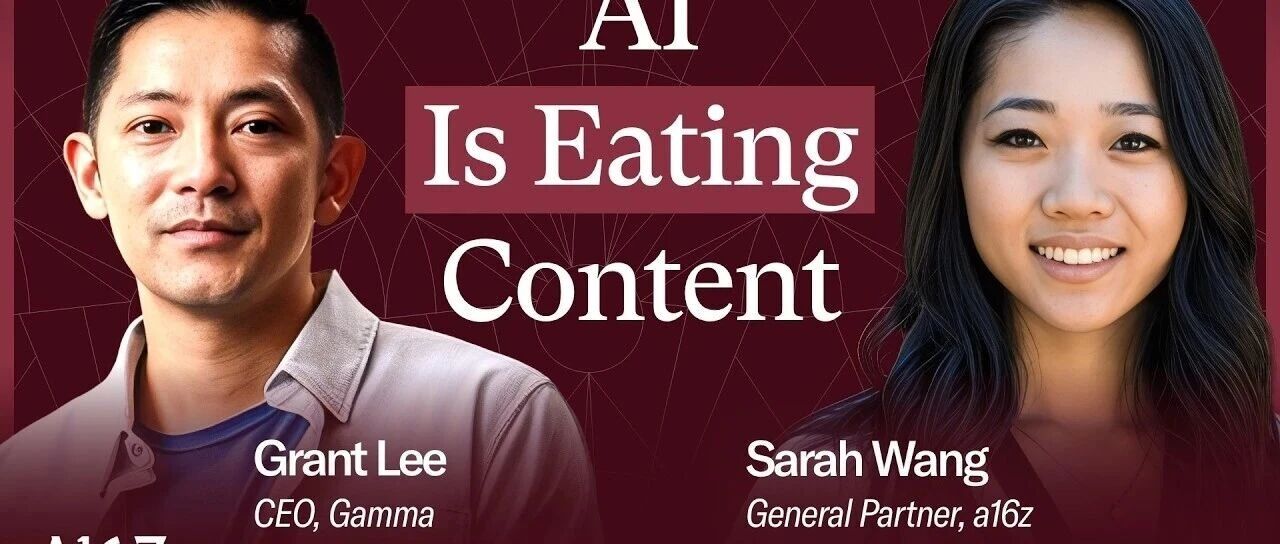
深度|Gamma创始人Grant Lee:零广告费何做到1亿用户与1亿美元ARR?
Z Potentials· 2025-12-03 04:05
Core Insights - The article discusses the journey of Gamma, an AI presentation platform, co-founded by Grant Lee, which has achieved over $100 million in ARR and nearly 100 million users, emphasizing its innovative approach to visual storytelling and growth strategies in the SaaS sector [2][4]. Founding and Growth Strategy - Gamma was founded during the pandemic in 2020, with initial funding efforts conducted remotely via Zoom, highlighting the challenges faced by the company in securing investment [5]. - The company focused on understanding user needs and simplifying the content creation process, which led to the development of a single-click mouse feature to enhance user experience [6][8]. - Grant Lee emphasized the importance of intertwining product development with growth strategies from the outset, which was crucial for the company's success [7]. Product Evolution and AI Integration - The core philosophy of Gamma is to enable anyone to create content effortlessly, with AI serving as a significant enhancement to this goal [8][10]. - The company aims to balance the exposure of AI elements in its products, ensuring that users feel comfortable and empowered while using the technology [9]. - Gamma differentiates itself from traditional presentation tools by focusing on unique building blocks that allow users without design skills to create content quickly [11]. Competitive Landscape and Market Position - Gamma competes against major players like Microsoft and Google, but it focuses on providing a unique value proposition that emphasizes user engagement and storytelling [13][14]. - The company recognizes the importance of creating a specialized tool for visual storytelling, which includes integrating various media types and collaborative features [14][16]. User Engagement and Community Building - The company has successfully built a strong user base primarily through organic channels, emphasizing the importance of word-of-mouth and community engagement in achieving product-market fit [26][27]. - Grant Lee advises that establishing a product with strong word-of-mouth is essential before investing in marketing efforts [26]. Monetization and Pricing Strategy - Gamma's initial monetization strategy was developed after achieving significant user growth, with a focus on creating a pricing model that aligns with user expectations and market standards [30][31]. - The company successfully reached $1 million in ARR shortly after launching its pricing model, indicating a viable economic model [31]. Company Culture and Hiring Practices - Gamma emphasizes a slow and deliberate hiring process to maintain a lean and efficient team, which has been crucial for its rapid growth and adaptability [39][40]. - The founding team consisted of individuals with a strong pre-existing trust and collaboration history, which facilitated quick decision-making and product development [40][41].
交易放量,A股“唯一+第一”!
Zhong Guo Zheng Quan Bao - Zhong Zheng Wang· 2025-11-30 14:23
Core Viewpoint - Google supply chain concept stocks have seen active trading this week, with several stocks reaching historical highs, driven by advancements in Google's AI technology and increased institutional investment in Alphabet [1][5]. Group 1: Stock Performance - This week, the trading volume of Zhongji Xuchuang reached 115.72 billion yuan, making it the only stock in the A-share market to exceed 100 billion yuan in trading volume [1]. - A total of 42 stocks reached historical highs this week, with 1,013 stocks achieving this milestone since the beginning of the year until November 28 [1]. - The sectors with the most stocks reaching historical highs include electronics (8 stocks), machinery (6 stocks), and power equipment (4 stocks) [1]. Group 2: Market Sentiment - Market sentiment has shown signs of decline, as the number of stocks reaching historical highs has gradually decreased throughout November [1]. - The stocks with the highest trading volumes among the 42 include Zhongji Xuchuang, Saiwei Electronics, Guangku Technology, Yidian Tianxia, and Changying Precision, with trading volumes of 115.72 billion yuan, 39.72 billion yuan, 29.33 billion yuan, 28.40 billion yuan, and 26.85 billion yuan respectively [1]. Group 3: Institutional Investment - Institutional investors attribute the rise in Google concept stocks to multiple factors, including breakthroughs in Google's AI technology, expansion of cloud services, and increased holdings of Alphabet by well-known institutions [5]. - Notably, Berkshire Hathaway purchased Alphabet shares for the first time in Q3, with a holding value of approximately 4.34 billion USD, making it the tenth largest holding in Berkshire's portfolio [5]. Group 4: Stock Price Movements - Among the 42 stocks, 9 have stock prices exceeding 100 yuan, with Zhongji Xuchuang leading at 514.5 yuan per share, followed by Haooubo at 199.9 yuan, and Tengjing Technology at 176 yuan [7]. - The stocks with the highest price increases this week include Pingao Co., Jinfu Technology, Yunzhu Technology, Aerospace Huan Yu, and Haike Xinyuan, with increases of 66.93%, 61.07%, 60.35%, 53.33%, and 48.64% respectively [6].



券商资管大变局:从“抢牌照”到“撤申请”
Mei Ri Jing Ji Xin Wen· 2025-11-27 13:31
Core Insights - The securities industry reported strong growth in the first three quarters of 2025, with 42 listed brokerages achieving a revenue increase of over 42% year-on-year and a net profit growth of over 62% [1][2] - However, the asset management (AM) sector lagged significantly, with a mere growth rate of 2.43%, indicating deeper industry concerns and challenges [1][2] Revenue Performance - Total revenue for the 42 listed brokerages reached 419.56 billion yuan, marking a year-on-year increase of 42.55% [2] - The self-operated business accounted for 44.54% of total revenue, while brokerage services contributed 26.64%, together making up over 70% of the revenue [2] - The AM business's growth was starkly contrasted by other sectors, with brokerage services leading at a 74.64% growth rate, followed by interest and self-operated businesses at 54.52% and 43.83%, respectively [2] Institutional Performance - The top three firms in AM revenue were CITIC Securities, GF Securities, and Guotai Junan, with revenues of 8.703 billion yuan, 5.661 billion yuan, and 4.273 billion yuan, respectively [3] - Only 14 out of the 42 listed brokerages reported positive growth in their AM business, indicating a significant divide within the industry [3] Challenges in Asset Management - The AM sector faces dual pressures from scale and profitability, with existing large collective products undergoing a standardization transformation, impacting management scale and revenue [4] - Intense competition from public funds and bank wealth management subsidiaries further constrains the AM sector, which is still developing its active management capabilities [4] - The decline in interest rates and frequent credit risks have limited the supply of high-yield assets, challenging previous investment strategies reliant on high returns [4] Strategic Shifts - A notable trend has emerged where brokerages are withdrawing their applications for public fund licenses, contrasting sharply with the previous rush to apply [5][6] - This withdrawal is seen as a rational choice based on a deep assessment of resources, market conditions, and profit models, signaling a shift from a "license-driven" to a "capability-driven" model [6] - The consensus is forming that public fund licenses are not a panacea, with private fund operations emphasizing professional services and customized solutions becoming more appealing for certain brokerages [6] Recovery in Private Asset Management - Despite the withdrawal from public fund applications, the private asset management sector is experiencing a resurgence, with the scale of private fund products reaching 5.73 trillion yuan, an increase of approximately 270 billion yuan from the end of 2024 [7] - The growth in private fund product registrations indicates the necessity for differentiated strategies, focusing on multi-asset allocation and innovative strategies [7] Future Growth Drivers - Future growth in the AM sector is expected to be driven by two main factors: the completion of public fund transformations leading to secondary growth, and the stabilization and differentiation of private asset management offerings [8] - The focus will likely shift towards low-volatility, high-liquidity products, as well as alternative investments and cross-border allocations [8] Competitive Dynamics - Successful firms like Changcheng Securities and Guojin Securities have achieved over 30% growth by upgrading their "fixed income plus" strategies and integrating financial technology into their operations [9] - The emphasis is on a diversified product matrix and precise timing in investment strategies to capture macro opportunities [9][10] - The integration of AI technology into research and decision-making processes is becoming a core competitive advantage for asset management firms [10]
2025 has shown the 'power of diversification', says JPMorgan's Phil Camporeale
Youtube· 2025-11-25 22:33
Market Overview - The market is experiencing a positive trend as investors respond to a dovish shift in Federal Reserve policy, particularly benefiting large-cap technology stocks [1] - The stabilization of the market is anticipated to continue into December [1] Economic Indicators - The return to normal market conditions is characterized by global diversification beyond a limited number of U.S. stocks and the potential effectiveness of fixed income in portfolios [2] - The 10-year Treasury note is viewed as a crucial indicator, with current rates reflecting a normal economic environment [3][6] - Rate volatility has reached its lowest levels since the Fed began its rate hiking campaign in March 2022, indicating favorable conditions for U.S. consumers [5] Earnings Growth and Market Sentiment - There is an expectation of double-digit earnings growth in 2026, suggesting a positive outlook for corporate profitability [4] - The market has not priced for perfection, but there is optimism surrounding continued AI spending and its impact on companies' cash flow and earnings [8][9] Sector Allocation - The investment strategy has shifted towards a more neutral stance on technology and communication services sectors, which together represent a significant portion of the S&P 500 [10][11] - Funds are being redirected into sectors such as industrials, utilities, and financials, which are perceived as offering diversification while still being influenced by AI trends [12][13] Investment Strategy - There is a need for careful diversification to balance exposure to high-growth companies while also considering sectors that may provide a different angle on AI impacts [14][15]

BABA(BABA) - 2026 Q2 - Earnings Call Transcript
2025-11-25 13:30
Financial Data and Key Metrics Changes - Total revenue increased by 15% year over year, reaching RMB 247.8 billion, excluding Sun Art and InTime [11] - GAAP net income decreased by 53% to RMB 20.6 billion, primarily due to a decrease in income from operations [11] - Operating cash flow decreased by RMB 21.3 billion year over year to RMB 10.1 billion, attributed to increased strategic investments [12] - Free cash flow was an outflow of RMB 21.8 billion, reflecting significant investments in quick commerce and AI+ cloud infrastructure [12] Business Line Data and Key Metrics Changes - Revenue from Alibaba China e-commerce group increased by 16% to RMB 132.6 billion, with customer management revenue growing by 10% [12] - Quick commerce business revenue surged by 60%, with improvements in unit economics and user retention [13] - Revenue from AIDC grew by 10%, with AliExpress enhancing its product offerings through the AliExpress Direct model [13][14] - Cloud business revenue grew by 34%, driven by public cloud revenue and AI-related product adoption [15] Market Data and Key Metrics Changes - Alibaba Cloud gained market share in the hybrid cloud market, growing over 20% year over year [5] - In the AI cloud market, Alibaba holds a market share larger than the combined total of the second to fourth largest providers [6] - Daily active users for AMAP reached a historical high of 360 million, with significant user engagement from the AMAP Street Stars feature [10] Company Strategy and Development Direction - The company is focusing on two core strategic pillars: AI+ cloud and consumption, aiming to deepen synergies across its businesses [10] - The launch of the QN app signifies Alibaba's commitment to both enterprise and consumer AI, integrating various services into a single platform [6] - The company aims to generate CNY 1 trillion in GMV for the quick commerce platform within three years [27] Management's Comments on Operating Environment and Future Outlook - Management expressed strong conviction in future AI demand growth, citing robust customer demand and the need for increased server deployment [20][21] - The company anticipates fluctuations in CMR and EBITDA due to ongoing investments and market competition [31] - Management highlighted the importance of enhancing user experience and average order value to drive future growth [35] Other Important Information - Adjusted EBITDA margin for the cloud business remained stable at 9%, with continued investments in customer growth and technology innovation [15] - The all other segment revenue decreased by 25% due to the disposal of Sun Art and Intime businesses, with a loss of RMB 3.4 billion in adjusted EBITDA [16] Q&A Session Summary Question: What is the growth outlook for the cloud business? - Management noted strong customer demand for AI, with expectations for continued acceleration in growth driven by enterprise operations [20][21] Question: Can management share key progress for quick commerce and its synergy with core e-commerce? - Significant progress was made in optimizing unit economics, with a 50% reduction in per order loss and increased average order value [24][25] Question: What are the plans for CapEx over the next three years? - The previously mentioned RMB 380 billion CapEx figure may be on the low side due to strong customer demand, with potential for increased investment [43][44] Question: How will cost savings from efficiency improvements be allocated among stakeholders? - Management indicated that cost savings will be used to enhance user experience and increase average order value, while maintaining competitive subsidies [35] Question: What other subsectors in the consumption market are seen as good investment opportunities? - Apart from quick commerce, management highlighted investments in Freshippo, offline O2O models, and local services as key areas for growth [61]
