创新药研发

Search documents
华兰生物(002007):跟踪报告:血制品龙头大力布局创新,高分红比例凸显长期投资价值
EBSCN· 2025-12-12 06:28
Investment Rating - The report maintains a "Buy" rating for the company, considering its innovative layout and high dividend yield [3][4]. Core Insights - The blood products business is expected to maintain steady growth, with a significant increase in demand for quadrivalent influenza vaccines. By mid-2025, the company will have 34 plasma collection stations, with four stations expected to exceed 100 tons of plasma collection in 2024 [1]. - The company is actively innovating in the blood products sector, upgrading existing processes and developing new products. This includes the completion of on-site verification for a new 10% intravenous immunoglobulin and plans for a subcutaneous immunoglobulin submission [2]. - The company has implemented a cash dividend of 7 yuan per 10 shares for 2025, resulting in a dividend yield of 4.63% based on the closing price on December 11, 2025. The company aims to enhance the stability and predictability of its cash dividends [3]. Summary by Sections Blood Products Business - The blood products segment is projected to grow steadily, supported by an increase in plasma collection and improved utilization rates. The demand for quadrivalent influenza vaccines has surged, leading to faster inventory turnover [1]. Innovation and R&D - The company is increasing its R&D investments in vaccines, innovative drugs, and biosimilars. Key developments include the advancement of a recombinant herpes zoster vaccine and mRNA vaccines for influenza and respiratory syncytial virus [2]. Financial Performance and Forecast - The company has adjusted its net profit forecasts for 2025 and 2026 to 1.252 billion yuan and 1.472 billion yuan, respectively, reflecting a decrease of 20% and 23% from previous estimates. The projected earnings per share (EPS) for 2025 is 0.69 yuan, with corresponding price-to-earnings (P/E) ratios of 22, 19, and 16 for 2025, 2026, and 2027 [3][8].

华海药业(600521):仿创结合,创新即将步入收获期
Shenwan Hongyuan Securities· 2025-12-12 06:07
Investment Rating - The report initiates coverage with a "Buy" rating for the company [1][10]. Core Insights - The company is positioned to benefit from its integrated raw material and formulation strategy, which is expected to drive growth in the coming years [6][9]. - The company is transitioning towards innovation, focusing on self-developed biological drugs in the fields of oncology and autoimmune diseases, with a robust pipeline of projects [9][65]. - The financial forecast indicates a recovery in revenue and profit margins, with significant growth expected from innovative drug approvals [10][26]. Summary by Sections 1. Integrated Raw Material and Formulation Layout - The company has established itself as a leading pharmaceutical manufacturer in China, with a strong focus on both raw materials and formulations [20][23]. - The company has faced pricing pressures in raw materials and formulations but is expected to see a recovery in performance starting in 2024 [24][25]. 2. Dual-Driven Growth from Raw Materials and Formulations - The raw material business remains stable, with a diverse product lineup and a strong global sales network [41][43]. - The formulation segment has seen rapid growth, particularly after benefiting from national procurement policies, with a compound annual growth rate (CAGR) of 24.4% from 2012 to 2024 [59][61]. 3. Focus on Biological New Drugs - The company is actively developing innovative drugs, with over 20 projects in the pipeline, including 12 that have entered clinical trials [65][66]. - Key projects include HB0034, which is nearing commercialization, and HB0017, which has shown promising results in clinical trials for psoriasis and ankylosing spondylitis [69][71]. 4. Financial Forecast and Valuation Analysis - Revenue projections for 2025-2027 are estimated at 86.32 billion, 94.13 billion, and 102.82 billion respectively, with corresponding profit growth rates expected to recover significantly by 2026 [10][26]. - The target market capitalization is set at 344 billion, indicating a potential upside of 30.04% based on industry average price-to-earnings ratios [10][26].

审评资源充分向“全球新”产品倾斜!创新药高质量发展或加速,港股通创新药ETF(520880)连续4日吸金
Xin Lang Cai Jing· 2025-12-12 02:38
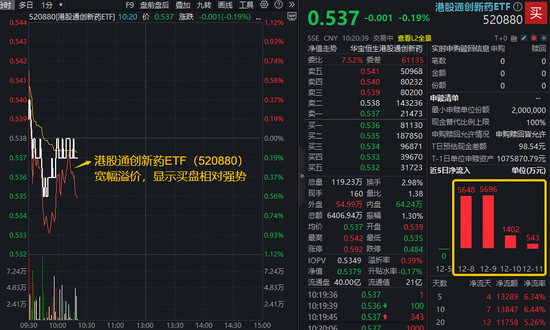
港股创新药连续调整吸引资金关注,12月12日,核心标的港股通创新药ETF(520880)场内价格下探近 5个月低点,场内宽幅溢价,彰显买盘势力!此前4日已有资金连续进场,累计增仓逾1.3亿元。 | 册 多日 1分 * | | | | F9 盘前盘后 盈加 九转 图技 工具 @ 0 | | | | | | | 港股通创新药ETF O | | | | --- | --- | --- | --- | --- | --- | --- | --- | --- | --- | --- | --- | --- | --- | | 0.544 | | | 520880[種設通创新的ETF] 10:20 价 0.537 涨跌 -0.001(-0.19%) | | | 1.12% | | | 0.537 -0.001 -0.19% | | 520880 | | | | 0.543 | | | | | | 0.93% | | | SSE CNY 10:20:39 交易中 查看L2全国 | | | T+0 De / 0 + | | | | | | | | | | 净值市势 | | 华宜恒生港股通创新商 | | 实时中购藏网体息申购 ...

上海医药1类创新药信妥安正式获批上市
Xin Hua Cai Jing· 2025-12-12 01:40
Core Insights - Shanghai Pharmaceuticals has received approval for its innovative drug, Suojirolin tablets, aimed at treating primary hypertension, marking a significant achievement in its commitment to innovation in the pharmaceutical sector [2] Group 1: Drug Development and Approval - The innovative drug Suojirolin has been in clinical research since 2016 and is expected to be commercially available by 2025, addressing unmet clinical needs for over 300 million patients with primary hypertension in China [2] - The Phase II clinical trial results for Suojirolin have been published in the authoritative cardiovascular journal "Hypertension Research," with ongoing efforts to publish Phase III study results, highlighting the global academic interest in Chinese innovative drugs [2] Group 2: Research and Development Investment - Shanghai Pharmaceuticals plans to invest a total of 2.818 billion yuan in research and development in 2024, emphasizing its strategic focus on innovation [2] - As of the end of Q3 2025, the company has submitted 57 new drug applications for clinical trials, with 45 of these being innovative drug pipelines, establishing a comprehensive and tiered R&D structure [2] Group 3: Collaborative Innovation Ecosystem - The company has established the "Shanghai Frontier" life sciences innovation incubation engine in collaboration with universities and top research institutions, attracting numerous renowned research and service organizations since its launch in September of last year [3][4] - Shanghai Pharmaceuticals aims to continue investing in innovative R&D, focusing on urgent clinical needs in areas such as oncology, immunology, cardiovascular health, mental health, digestive metabolism, and anti-infection, while enhancing the collaborative innovation ecosystem [4]
新诺威递表港交所:当“故事”难以为继,资本“输血”能否续命? 原创 上市报 上市报 2025年12月11日 19:07 北京
Zhong Jin Zai Xian· 2025-12-11 14:28
Core Viewpoint - The journey of Sinovation has shifted from a grand vision of building an "innovative pharmaceutical empire" to facing harsh realities, particularly after the termination of a significant acquisition deal, leading to a deteriorating financial situation and challenges in the Hong Kong IPO market [1][2]. Group 1: Company Transformation and Challenges - Sinovation, initially a functional raw material producer, aimed to transform into an innovative pharmaceutical company by acquiring assets in cutting-edge fields like ADC and mRNA vaccines [1]. - The planned acquisition of Shiyao Baike for 7.6 billion yuan was halted due to a drastic price drop of its core product, "Jin You Li," from approximately 1,600 yuan to about 666 yuan, alongside stagnant sales and increased market competition [1]. - The anticipated GLP-1 weight loss drug pipeline lacks competitive advantages, failing to fill the revenue gap [1]. Group 2: Financial Deterioration - The cessation of external funding from the halted acquisition has led to a rapid decline in Sinovation's financial health, characterized by a struggling caffeine business and escalating R&D costs, which surged by 81% year-on-year in the first half of 2025 [2]. - The IPO in Hong Kong is perceived more as a necessity to address a significant funding gap rather than a strategic global expansion [2]. Group 3: Market Environment and IPO Challenges - Sinovation's IPO faces a challenging market environment, with a rising post-listing failure rate of 42.10% since November, compared to 30.23% in the first half of 2025 and 35.71% for the entire year of 2024, indicating a shift towards selective investment by investors [3]. - The valuation conflict in the "A+H" model poses a significant challenge, as Hong Kong investors prioritize cash flow and dividend returns, while Sinovation is currently unprofitable with negative cash flow [3]. Group 4: Liquidity Concerns and Funding Utilization - New IPO regulations in Hong Kong allow issuers to set public offering ratios between 10% and 60%, leading to potential liquidity issues as over 90% of shares may be concentrated among a few cornerstone and institutional investors [4]. - The ambiguity surrounding the use of funds raised from the IPO raises concerns about whether they will be effectively utilized for breakthrough projects or diluted across broad R&D investments [5][6]. Group 5: Future Prospects and Commercialization Challenges - The future value of Sinovation hinges on its ability to commercialize its innovative drug pipeline, with existing products lacking competitive advantages and future prospects in ADC and mRNA vaccine platforms facing intense competition [6]. - Successfully entering the Hong Kong market is only the first step; the real challenge lies in demonstrating to a more rational international market that the company is not only in need of funds but also worthy of investment [6].
上海医药1类创新药信妥安获批上市
Zhong Zheng Wang· 2025-12-11 10:37
Core Viewpoint - Shanghai Pharmaceuticals has received approval for its innovative drug, Sitojilun, aimed at treating primary hypertension, marking a significant achievement in its commitment to independent innovation in the pharmaceutical industry [1][2]. Group 1: Product Approval and Market Strategy - The innovative drug Sitojilun (SPH3127), a new generation oral non-peptide small molecule renin inhibitor, has been approved for market launch, addressing unmet clinical needs in hypertension treatment [1]. - Shanghai Pharmaceuticals has established a comprehensive distribution network covering over 80,000 medical institutions across 25 provinces, municipalities, and autonomous regions in China, ensuring effective market access for Sitojilun [1]. Group 2: Research and Development Investment - In 2024, Shanghai Pharmaceuticals plans to invest 2.818 billion yuan in R&D, positioning itself among the industry leaders in investment intensity [2]. - As of the end of Q3 2025, the company has submitted 57 new drug applications for clinical trials, with 45 of these being innovative drugs, demonstrating a robust pipeline and commitment to long-term innovation [2]. Group 3: Collaborative Innovation Ecosystem - The company has established the Shanghai Frontier Life Science Innovation Center to foster collaboration with top universities and research institutions, creating an open innovation ecosystem [3]. - Since its launch in September of last year, the center has attracted numerous renowned research institutions and pharmaceutical companies, enhancing the innovation landscape [3]. - Shanghai Pharmaceuticals aims to continue investing in R&D focused on urgent clinical needs in areas such as oncology, immunology, cardiovascular health, and infectious diseases, with the goal of transforming innovative results into marketable products [3].
健康元(600380.SH):玛帕西沙韦胶囊(壹立康)获得药品注册证书
Ge Long Hui A P P· 2025-12-11 08:55
Core Viewpoint - The company has received approval from the National Medical Products Administration for its innovative antiviral drug, Mapasavir Capsules, which is indicated for the treatment of uncomplicated influenza in healthy adolescents and adults aged 12 and above [1][2]. Group 1: Drug Approval and Indications - Mapasavir Capsules (brand name: Yilikang®) is classified as a Class 1 chemical drug and has been granted the registration number H20250070 [1]. - The drug is specifically indicated for the treatment of uncomplicated influenza caused by both influenza A and B viruses, excluding patients at high risk for flu-related complications [1]. Group 2: Clinical Study Results - The approval is based on a Phase III, multi-center, randomized, double-blind study that demonstrated the efficacy and safety of a single oral dose of Mapasavir compared to a placebo in healthy adolescents and adults with uncomplicated influenza [1]. - The study achieved both primary and secondary endpoints, confirming clear clinical benefits [1]. Group 3: Clinical Advantages - Mapasavir Capsules require only a single dose for the entire treatment course, significantly improving patient compliance [2]. - The drug shows good efficacy against both influenza A and B viruses, with a median time to symptom relief reduced by 27 hours compared to the placebo group, which is statistically significant (P < 0.001) [2]. - In adolescents, the median time to symptom relief was shortened by 61 hours compared to the placebo group (P < 0.001) [2]. Group 4: Resistance and Safety Profile - The risk of resistance to Mapasavir is lower, with a total incidence of amino acid substitutions related to decreased sensitivity being 0% for H1N1, 1.2% for H3N2, and 0% for influenza B in the clinical studies [2]. - The safety profile of Mapasavir is favorable, with a low incidence of adverse reactions in the Phase III study, showing comparable or lower rates of overall adverse reactions and those classified by system organ compared to the placebo group [2].

破发连亏股首药控股前三季亏1.55亿 2022年上市募15亿
Zhong Guo Jing Ji Wang· 2025-12-11 07:47
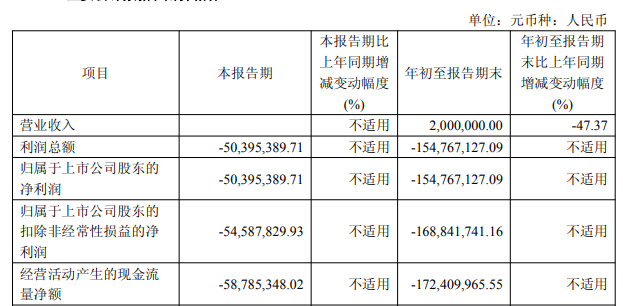
2025年前三季度,公司实现营业收入200万元,同比下滑47.37%;归属于上市公司股东的净利 润-1.55亿元;归属于上市公司股东的扣除非经常性损益的净利润-1.69亿元;经营活动产生的现金流量 净额为-1.72亿元。 | | | 本报告期比 上年同期增 | | 年初至报告期 末比上年同期 | | --- | --- | --- | --- | --- | | 项目 | 本报告期 | | 年初至报告期末 | | | | | 减变动幅度 | | 增减变动幅度 | | | | (%) | | (%) | | 营业收入 | | 不适用 | 2,000,000.00 | -47.37 | | 利润总额 | -50.395.389.71 | 不适用 | -154.767.127.09 | 不适用 | | 归属于上市公司股东的 | -50,395,389.71 | 不适用 | -154.767.127.09 | 不适用 | | 净利润 | | | | | | 归属于上市公司股东的 扣除非经常性损益的净 | -54,587,829.93 | 不适用 | -168.841.741.16 | 不适用 | | 利润 | | | ...

重药控股参股创新药公司获辉瑞大单 最高约150亿元!
Zheng Quan Shi Bao· 2025-12-11 04:40
Core Viewpoint - Chongqing Yaoyou Pharmaceutical Co., Ltd. has signed a licensing agreement with Pfizer and Shanghai Fosun Pharmaceutical, granting Pfizer exclusive rights to develop, use, produce, and commercialize the oral small molecule GLP-1 receptor agonist YP05002 globally across all therapeutic areas for humans and animals [1][2]. Group 1: Financial Aspects - Yaoyou Pharmaceutical could receive up to $2.085 billion (approximately 15 billion RMB) from this agreement [2]. - Pfizer will pay an upfront non-refundable fee of up to $500 million, which includes an initial payment of $150 million and up to $350 million in milestone payments based on clinical trial and commercialization progress [2]. - Additionally, Pfizer will pay up to $1.585 billion in sales milestone payments based on the annual net sales of the licensed product, along with royalties calculated as a percentage of annual net sales [2]. Group 2: Product and Market Potential - YP05002 is an innovative GLP-1 receptor agonist developed by Yaoyou Pharmaceutical, aimed at treating type 2 diabetes, obesity, and related diseases by enhancing insulin secretion and reducing appetite [2][3]. - The potential indications for YP05002 include long-term weight management, type 2 diabetes, and non-alcoholic fatty liver disease [3]. - As of December 9, 2025, YP05002 is in Phase I clinical trials in Australia [3]. Group 3: Strategic Implications - The licensing agreement reflects recognition of Yaoyou Pharmaceutical's innovative research and development capabilities [3]. - This collaboration is expected to accelerate the clinical development and commercialization of the licensed product globally, potentially benefiting more patients worldwide [3].

“湾区药研・智汇光明”粤港澳大湾区生物医药专题沙龙即将启幕
Zheng Quan Shi Bao· 2025-12-11 03:14
Core Insights - The global biopharmaceutical industry is undergoing significant transformation, with breakthroughs in innovative drug development, synthetic biology, and gene therapy presenting unprecedented opportunities for human health [1] - Guangming District in Shenzhen is positioned as a key area for building a comprehensive national science center, focusing on innovative drug development and technology transfer, aiming to establish a new highland for the biopharmaceutical industry in the Greater Bay Area [1] Event Overview - The "Bay Area Pharmaceutical Research & Wisdom Gathering" seminar will be held on December 12, 2025, in Guangming, Shenzhen, focusing on innovative drug development, technology transfer pathways, and new opportunities for industry expansion [1] - The seminar will feature industry leaders such as Lizhu Biology and CITIC Construction Investment, providing insights into the transformation paths of innovative drug companies and the value reshaping trends in the industry chain for 2026 [1] Project Roadshow and Investment Opportunities - The seminar will include a project roadshow segment featuring three cutting-edge biopharmaceutical companies: Pamplona Biotech (Shenzhen), Hailike (Beijing), and Shenzhen Ruixing Biotechnology, showcasing their technological breakthroughs and commercial potential in targeted protein degradation and differentiated drug development [2] - A "Capital Face-to-Face" session will facilitate one-on-one discussions between financing companies and investors, with participation from renowned investment institutions such as Sequoia China, Gaotie Capital, and Cornerstone Capital, aimed at providing precise capital support and strategic guidance to biopharmaceutical companies [2] Collaborative Platform - The "Bay Area Pharmaceutical Research & Wisdom Gathering" serves as a high-end collaboration platform linking technology, capital, and industry, inviting experts, business leaders, and investment representatives to foster consensus and resource connections for high-quality development in the biopharmaceutical sector of the Greater Bay Area [2]