
合成生物学

Search documents
两部门发文:开展食品加工领域生物制造创新技术应用方向征集工作
Huan Qiu Wang· 2025-08-19 06:51
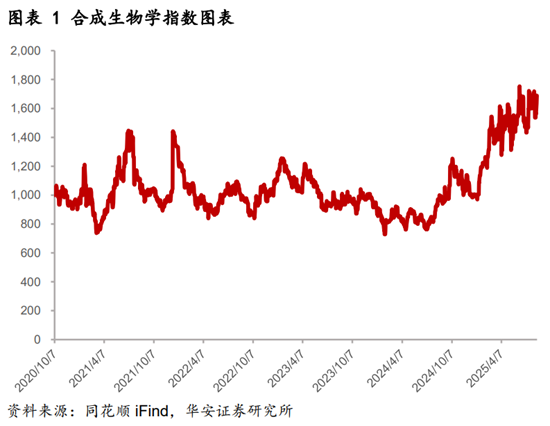
Group 1 - The Ministry of Industry and Information Technology and the National Health Commission of China have launched a notice to collect innovative applications of biological manufacturing technologies in the food processing sector, focusing on areas such as food raw materials, food additives, and food and beverage manufacturing [1] - The application directions should align with the goal of building a diversified food supply system and have significant promotional value for industry development, referencing safety evaluation requirements for genetically modified microorganisms [1] - Specific conditions for the applications include: products must be developed domestically and have entered small-scale trial production or mass production; products must have sufficient research results proving their safety or have been approved in other countries for food processing; and products must meet the criteria for "three new foods" in China but have not yet been approved [1] Group 2 - Huazhong Securities has released a research report indicating that frontier research in life sciences remains active, with a global biotechnology revolution accelerating its integration into economic and social development, providing new solutions for major challenges such as health, climate change, resource security, and food security [2] - The report suggests that the biological economy is emerging as a trillion-dollar sector, highlighting the potential for significant investment opportunities in this field [2]

嘉必优2025中报:核心产品奠定业绩基石,营收净利实现双增
Jing Ji Guan Cha Wang· 2025-08-19 02:36
Core Viewpoint - The company, Jiabiou, reported strong financial performance in the first half of 2025, with significant growth in revenue and net profit, driven by core product sales and market expansion [2][3][4]. Financial Performance - Jiabiou achieved a revenue of 307 million yuan, representing a year-on-year increase of 17.6% [2] - The net profit attributable to shareholders reached 108 million yuan, marking a year-on-year growth of 59.01% [2] - The non-deductible net profit was approximately 99.92 million yuan, with an impressive growth of 88.51% year-on-year [2] - The overall gross margin improved from 42.09% in the same period of 2024 to 49.68% in 2025 [4] Core Product Growth - The growth in revenue was primarily driven by the sales of core products ARA and DHA, with increasing demand due to new national standards for infant formula and rising maternal consumption [3] - Jiabiou has established long-term partnerships with major companies such as Nestlé and Danone, expanding its market presence to over 30 countries [3] Profitability Enhancement - The significant increase in net profit outpaced revenue growth, indicating improved profitability due to enhanced production efficiency and optimized product and customer structures [4] - The company reduced sales expenses by 24.32% year-on-year, contributing to increased profit margins [4] Emerging Business Opportunities - Jiabiou's entry into the cosmetics market with its product, N-acetylgalactosamine, opens new market opportunities, driven by consumer demand for natural and effective cosmetic ingredients [5] - The company is leveraging its synthetic biology platform to develop high-value products, enhancing its competitive edge in the industry [6] Industry Outlook - The market for nutritional supplements and functional foods is expected to grow, benefiting Jiabiou as a leading supplier in the microbial synthesis nutrient sector [6][7] - The company is well-positioned to capitalize on trends in human nutrition, animal nutrition, and cosmetics, with a focus on high-quality products and innovative technologies [7][8]


佳惟达生物完成数千万元A轮融资,助力重组胶原蛋白原料产品商业化放量
IPO早知道· 2025-08-19 01:50
Core Viewpoint - Jiaweida (Hangzhou) Biotechnology Co., Ltd. has completed several million yuan in Series A financing, aiming to accelerate the commercialization of its recombinant collagen products [1][2]. Group 1: Company Overview - Jiaweida Biotechnology was established in 2022 and focuses on an efficacy and demand-driven synthetic biology manufacturing platform for medical beauty and cosmetic applications [1]. - The company has built a synthetic biology platform that meets pharmaceutical quality standards and has established cooperation intentions with the cosmetics industry [1]. Group 2: Product Development - The company has made significant progress in its innovative pipeline, including special recombinant small molecule collagen, functional peptides, recombinant antimicrobial peptides, and recombinant human full-length triple-helix collagen raw materials [2]. - The recombinant small molecule collagen product has completed pilot testing, with expression levels at the industry's upper tier [1]. - The recombinant human full-length collagen product has completed molecular design and cell line construction, with independent third-party testing confirming typical circular dichroism characteristics [1].
凯赛生物半年净利增逾两成 创新驱动五年半研发投入9.51亿
Chang Jiang Shang Bao· 2025-08-18 23:41
Core Viewpoint - Kasei Biotech (688065.SH), recognized as the "first synthetic biology stock" on the STAR Market, has shown continuous growth in its operating performance, with significant increases in both revenue and net profit in the first half of 2025 [1][2] Financial Performance - In the first half of 2025, Kasei Biotech achieved total revenue of 1.671 billion yuan, representing a year-on-year growth of 15.68%, and a net profit of 309 million yuan, up 24.74% year-on-year [1][2] - The company's revenue has grown from 1.497 billion yuan in 2020 to 2.958 billion yuan in 2024, marking a 97.6% increase over the period [2] - In 2024, the core product, long-chain dicarboxylic acid series, generated revenue of 2.670 billion yuan, with a growth rate of 39.94% [3] Research and Development - Kasei Biotech has invested a total of 951 million yuan in R&D from 2020 to the first half of 2025, with a consistent increase in annual investment [4] - The company has obtained a total of 516 patents by the end of the first half of 2025, with 77.5% being invention patents, which strengthens its technological barriers [5][6] Asset Growth and Capital Operations - As of the end of the first half of 2025, Kasei Biotech's total assets reached 23.82 billion yuan, a 30.02% increase compared to the same period last year [1][6] - The company successfully raised 5.915 billion yuan through a private placement to fund the second phase of its 900,000-ton bio-based polyamide project and upgrade its R&D center [6]

嘉必优: 嘉必优生物技术(武汉)股份有限公司2025年半年度报告
Zheng Quan Zhi Xing· 2025-08-18 16:33
Core Viewpoint - The report highlights the financial performance and operational developments of Cabio Biotech (Wuhan) Co., Ltd. for the first half of 2025, showcasing significant growth in revenue and profit, alongside advancements in product offerings and market expansion strategies [1][3]. Company Overview and Financial Indicators - Cabio Biotech is a leading player in the synthetic biology sector, focusing on high-quality nutrient products and innovative solutions for the global nutrition and health market [4]. - The company reported a revenue of approximately 306.73 million yuan, representing a 17.60% increase compared to the same period last year [3]. - The total profit reached approximately 123.16 million yuan, marking a 57.82% increase year-on-year [3]. - The net profit attributable to shareholders was approximately 107.95 million yuan, up 59.01% from the previous year [3]. - The company's total assets increased by 12.31% to approximately 1.84 billion yuan, while net assets rose by 7.64% to approximately 1.63 billion yuan [3]. Main Business and Industry Situation - The company utilizes synthetic biology as a foundational technology to produce essential fatty acids and other bioactive compounds, which are widely used in infant formula, health foods, and personal care products [4][6]. - Key products include ARA (Arachidonic Acid), DHA (Docosahexaenoic Acid), and various oligosaccharides, which are essential for infant development and health [4][6]. - The company has established three production bases that meet international standards and has a comprehensive supply chain covering over 30 countries [4][6]. Market Trends and Opportunities - The Chinese government has implemented policies to encourage childbirth, which is expected to boost the maternal and infant consumption market, positively impacting the demand for ARA and DHA products [7]. - The global Omega-3 market is projected to grow significantly, with a focus on high-purity DHA products, driven by increasing health awareness and aging populations [8][10]. - The company is positioned to benefit from the growing trend of replacing fish oil with algae-derived DHA in various applications, including functional foods and clinical nutrition [10][11]. Technological Advancements and Competitive Edge - Cabio Biotech has developed a robust technological platform that integrates various capabilities in synthetic biology, enhancing its product development and production efficiency [14][16]. - The company has achieved several certifications, including FDA GRAS and EU Novel Food, ensuring the quality and safety of its products [15][16]. - Continuous investment in automation and smart manufacturing systems has improved production efficiency and product quality, solidifying the company's competitive position in the market [16][17].
开源证券给予利民股份买入评级,Q2业绩超预期,看好公司创新驱动打造新增长曲线
Mei Ri Jing Ji Xin Wen· 2025-08-18 11:19
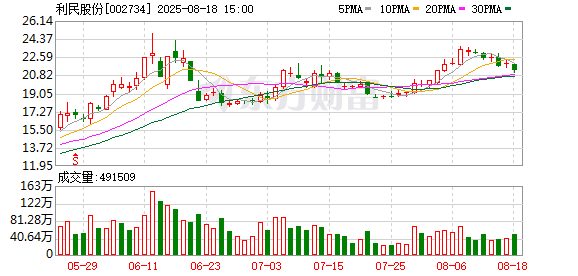
Group 1 - The core viewpoint of the article is that Limin Co., Ltd. (002734.SZ) has been given a "buy" rating by Kaiyuan Securities due to its strong performance and growth potential [2] - The company's Q2 performance saw a significant increase compared to Q1, continuing to exceed expectations [2] - Prices for products such as Daisen Manganese Zinc and Bacillus Thuringiensis increased in Q2 2024, contributing to further growth in the company's performance [2] - The company is actively innovating in new fields such as synthetic biology, which may create new growth opportunities in the future [2]

利民股份(002734):公司信息更新报告:Q2业绩超预期,看好公司创新驱动打造新增长曲线
KAIYUAN SECURITIES· 2025-08-18 11:13
Investment Rating - The investment rating for the company is "Buy" (maintained) [1][6][16] Core Views - The company's Q2 performance exceeded expectations, with a significant increase in net profit and revenue driven by rising product prices and improved gross margins [6][8] - The company is actively innovating in synthetic biology and other new fields, which may create new growth curves in the future [8] Financial Performance Summary - In H1 2025, the company achieved revenue of 2.452 billion yuan, a year-on-year increase of 6.69%, and a net profit attributable to the parent company of 269 million yuan, a year-on-year increase of 747.13% [6] - Q2 2025 saw a single-quarter revenue of 1.241 billion yuan, a year-on-year decrease of 5.10%, but a net profit of 161 million yuan, a year-on-year increase of 299.54% and a quarter-on-quarter increase of 48.66% [6] - The company has adjusted its profit forecasts for 2025-2027, expecting net profits of 503 million yuan, 575 million yuan, and 666 million yuan respectively, with corresponding EPS of 1.14 yuan, 1.30 yuan, and 1.51 yuan [6][9] Product Price Trends - The average price of Dazomet and Bacillus amyloliquefaciens increased in Q2 2025, contributing to the company's performance [7] - The average price of Dazomet was 24,253 yuan/ton, up 2.62% quarter-on-quarter, while Bacillus amyloliquefaciens averaged 28,676 yuan/ton, up 4.28% quarter-on-quarter [7] Innovation and Future Growth - The company views technological innovation as a core engine for high-quality development, with multiple platforms for research and development [8] - The company is focusing on advanced technologies such as RNAi biopesticides and small peptide biopesticides, which may lead to new product offerings and revenue streams [8]
中金:维持金斯瑞生物科技“跑赢行业”评级 上调目标价至21.50港元
Zhi Tong Cai Jing· 2025-08-18 03:24
Core Viewpoint - CICC maintains its earnings forecast for King’s Ray Biotechnology (01548) for 2025 and 2026, reiterating an outperform rating, while raising the target price by 22.2% to HKD 21.50, indicating a 21.3% upside from the current stock price [1] Group 1: Financial Performance - For 1H25, the company reported revenue of USD 519 million, a year-on-year increase of 81.9%, with adjusted net profit of USD 178 million, corresponding to a net profit margin of 34.3% [2] - The gross profit was USD 321 million, with a gross margin of 61.8%, reflecting improved profitability driven by capacity utilization, economies of scale, and high-end product upgrades [2] - The net loss attributable to shareholders was USD 25 million, significantly narrowed year-on-year, primarily due to a USD 194 million loss from the investment in Legend Biotech [2] Group 2: Business Segments - The life sciences segment achieved revenue of USD 250 million in 1H25, up 11.3% year-on-year, driven by protein business growth of 52% and demand from gene editing and AI-related R&D [3] - The CDMO segment saw revenue of USD 250 million, a remarkable increase of 511.1%, with a one-time payment of USD 214 million from the licensing agreement with Lixin contributing to this growth [4] - The industrial synthetic biology segment reported revenue of USD 39 million, an 8.4% increase year-on-year, with losses attributed to increased R&D investments [5]

王为善团队合作在阿维菌素类药物生物制造研究取得进展
合成生物学与绿色生物制造· 2025-08-17 09:29
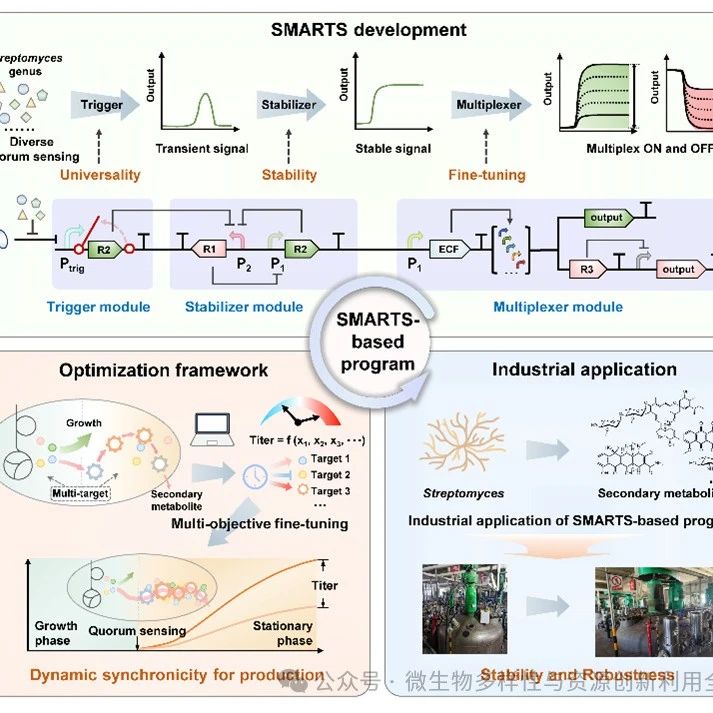
Core Insights - Avermectins are among the most widely used drugs globally, with a market size of $1.371 billion in 2024. The demand for new types of avermectins, such as Ivermectin and Doramectin, is rapidly increasing, with market sizes projected at $3.33 billion and $134 million respectively in 2024 [2][3]. - China's biomanufacturing level for avermectins, particularly for new generics like Ivermectin and Doramectin, has been lagging behind international original research enterprises [2]. - The Microbial Research Institute has successfully enhanced the biomanufacturing yield of avermectins to 9.3 g/L, establishing a significant technological advantage in this field [2]. Group 1 - The Baiweimectin component, developed by a collaborative team, exhibits superior nematicidal activity and has achieved a fermentation yield of 8.4 g/L [3][5]. - A universal reprogramming engineering strategy was developed, which includes a dynamic control system for Streptomyces species, facilitating the efficient production of Baiweimectin [3]. - The technology developed will provide core support for the efficient biomanufacturing of Streptomyces-derived drugs [3]. Group 2 - The economic loss caused by nematode diseases in China reaches up to 80 billion yuan annually, highlighting the importance of Baiweimectin as a biopesticide with independent intellectual property rights [5]. - Baiweimectin is currently undergoing simultaneous pesticide registration applications both domestically and internationally [5]. Group 3 - The fourth Synthetic Biology and Green Biomanufacturing Conference (SynBioCon 2025) will focus on AI in biomanufacturing, green chemicals, new materials, future food, and agriculture [7]. - The conference will feature various activities, including a youth forum and a closed-door seminar on the innovation development blue book for AI-enabled biomanufacturing [7].
金达威: 向不特定对象发行可转换公司债券募集说明书摘要
Zheng Quan Zhi Xing· 2025-08-17 08:15
Core Viewpoint - Xiamen Jindawei Group Co., Ltd. is issuing convertible bonds to raise funds for production projects, including coenzyme Q10, allulose, and inositol, while highlighting various risks associated with production, market demand, and financial performance [1][2][4]. Group 1: Financial Performance - The company's net profit for 2024 was CNY 34,198.69 million, representing a year-on-year increase of 23.59%, attributed to a mild recovery in the vitamin industry and stable prices for vitamin A [14]. - In Q1 2025, the net profit reached CNY 12,174.36 million, a significant increase of 71.97% compared to the previous year, driven by a rise in both sales volume and price of vitamin A [14][15]. Group 2: Fundraising and Investment Projects - The funds raised will be allocated to projects including the expansion of coenzyme Q10 production, with expected annual capacities of 620 tons for coenzyme Q10, 30,000 tons for allulose, and 5,000 tons for inositol [3][4]. - The financial internal rate of return for the coenzyme Q10 project is estimated at 25.69%, with a payback period of 6.19 years, while the allulose and inositol projects have a payback period of 7.49 years [5]. Group 3: Risks - The company faces risks related to safety production, including potential accidents during the use of flammable and explosive materials, which could lead to economic losses and regulatory penalties [2][3]. - There is a risk of declining gross margins, with reported rates of 40.50%, 37.36%, and 38.54% over the reporting periods, influenced by raw material prices and market competition [2][3]. - The company’s ability to meet market demand for new products post-investment is uncertain, with potential oversupply risks if market conditions do not align with production capacity [3][4]. Group 4: Credit Rating and Shareholder Returns - The convertible bonds have been rated AA by Dongfang Jincheng International Credit Evaluation Co., Ltd., with a stable outlook, indicating a solid credit standing [8]. - The company has a profit distribution policy emphasizing stable and reasonable returns to investors, with recent cash dividends totaling CNY 48,794.78 million over the last three years, exceeding the average distributable profits [13].
