生成式人工智能

Search documents
汇丰:ChatGPT Atlas浏览器对谷歌构不成威胁,维持Alphabet(GOOGL.US)“买入”评级
智通财经网· 2025-10-23 06:55
Core Viewpoint - HSBC Bank indicates that OpenAI's ChatGPT Atlas browser is a competitor to Google's Chrome, but its features are not unique, as Chrome has highlighted similar functionalities in a September blog post [1][2]. Group 1: ChatGPT Atlas Features - ChatGPT Atlas browser has three notable features: always-available chat functionality, browser memory that deepens user understanding over time, and the ability to perform tasks within the browser, such as making restaurant reservations and editing documents [1]. - During a live demonstration, the browser showcased its ability to act as an agent by ordering missing ingredients for recipes, similar to capabilities mentioned for Google's Gemini in a September 2025 blog post [2]. Group 2: Market Competition - Analysts note that while ChatGPT currently has around 800 million users, Chrome has nearly 3 billion users, indicating a significant user base advantage for Google [2]. - Analysts expect Google to leverage its demonstrated capabilities to retain users within the Chrome browser and capture market share in query services [2]. Group 3: Alphabet's Position - Despite the introduction of ChatGPT Atlas, analysts maintain that this does not alter the investment thesis for Alphabet, suggesting confidence in the company's ability to respond to market challenges [3]. - Alphabet's earnings report is scheduled for October 29, and analysts anticipate discussions regarding its competitive browser landscape during this report [2].

CMC资本联合港投公司共创「AI创意基金」,出手2025年AI应用赛道最大单笔融资
IPO早知道· 2025-10-23 06:24
Core Viewpoint - CMC Capital is expanding its investment landscape into artificial intelligence (AI) through the establishment of the "CMC AI Creative Fund" in collaboration with Hong Kong Investment Company (HKIC), marking a shift in AI investment focus from foundational models to application layers [2][4][12]. Group 1: Investment Strategy - The "CMC AI Creative Fund" aims to leverage Hong Kong's international data environment and mature cultural creative industry to establish the city as an Asian hub for generative AI (GenAI) innovation [4][6]. - CMC Capital has a decade-long history of investment across various sectors, including TMT, consumer, and new energy, and is now focusing on cutting-edge technology investments such as AI, autonomous driving, and digital transformation [5][11]. Group 2: Collaboration and Synergy - The partnership between CMC Capital and HKIC integrates their complementary strengths in industry resources, technical talent, and capital operations, representing a deep fusion of market-oriented investment and government strategic platforms [5][12]. - HKIC, established by the Hong Kong government, focuses on long-term financial returns while supporting new growth drivers, having invested in over 130 projects in hard technology, life sciences, and green technology [5][6]. Group 3: LiblibAI and Market Position - LiblibAI, founded at the end of 2023, has become China's largest multimodal model and creative community, integrating various AI capabilities and nurturing over 20 million AI creators [8][9]. - The platform's unique "tool integration + community ecosystem" strategy distinguishes it in a landscape where AI foundational models are becoming increasingly similar [8][9]. Group 4: Future Outlook - CMC Capital aims to capture the transformative potential of generative AI in content creation and media entertainment, focusing on building a complete ecosystem that supports high-potential teams for scalable commercial success [11][12]. - The collaboration is expected to create a successful case study in AI applications within the cultural creative industry, attracting global enterprises and young talent to Hong Kong [12].


三个关键字解读中国经济“三季报”
Yang Guang Wang· 2025-10-23 05:14
Core Insights - China's GDP growth for the first three quarters of the year is 5.2%, with total GDP surpassing 101 trillion yuan, indicating a stable economic performance despite external pressures and internal challenges [1] - The contribution of final consumption expenditure to economic growth is 53.5%, an increase of 9 percentage points compared to the previous year, highlighting its role as a key driver of economic growth [1] - Foreign trade remains stable, with total goods import and export value increasing by 4.0% year-on-year, showcasing resilience and sustainability in China's trade [1] Group 1: Economic Stability - The economic stability in China is underscored by the strong contribution of consumption to growth, which is crucial in the face of external shocks [3] - The "replace old with new" policy has been expanded this year, leading to increased adoption of smart products among consumers [3] - Service consumption is rapidly growing, with efforts made to enhance the quality of services to meet rising consumer demands for personalized and experiential offerings [3] Group 2: Innovation and Development Quality - China's innovation capabilities are a core strength, with significant advancements in various sectors, including humanoid robots and high-speed trains [2] - The user base for generative artificial intelligence reached 515 million by June this year, indicating explosive growth in this area [2] - The focus on cultivating new productive forces across different fields is contributing to the formation of super competitiveness in the economy [2] Group 3: Future Outlook - Achieving the annual economic targets is supported by a solid foundation, but it requires concerted efforts to navigate challenges [3] - The government aims to effectively leverage policy measures to balance short-term growth with long-term development, ensuring a smooth transition between old and new economic drivers [3] - Continuous reforms in key areas are necessary to enhance the internal momentum of economic development [3]
我国生成式人工智能用户规模超5亿!聚焦港股龙头的游戏传媒ETF(517770)备受关注
Xin Lang Cai Jing· 2025-10-23 02:20
Group 1 - The core viewpoint of the articles highlights the significant growth in the user base of generative artificial intelligence (AI) in China, reaching 515 million users by June 2025, an increase of 266 million from December 2024, with a penetration rate of 36.5% [1][2] - The report indicates that the majority of users are young and highly educated, with 74.6% of users under 40 years old and 37.5% holding a college degree or higher [1] - Open-source securities suggest that the rapid increase in the penetration rate of domestic large models and generative AI lays a solid foundation for the commercialization of AI applications, with significant growth potential in middle-aged, elderly, and lower-tier market user groups [2] Group 2 - The China-Hong Kong-Macau Game and Cultural Media Index (931580) has shown mixed performance, with a decline of 0.98% as of October 23, 2025, while individual stocks like Jiecheng Co. and China Publishing saw increases of 2.11% and 1.61%, respectively [1] - The index tracks 50 listed companies involved in gaming, film, broadcasting, marketing, publishing, education, and cultural performances, reflecting the overall performance of the gaming and cultural media theme in the mainland and Hong Kong markets [2] - As of September 30, 2025, the top ten weighted stocks in the index accounted for 56.63% of the total, including major players like Kuaishou-W, Tencent Holdings, and Bilibili-W [2]
晶采观察丨三个关键字解读中国经济“三季报”
Yang Guang Wang· 2025-10-23 01:39
Economic Overview - China's GDP growth for the first three quarters of the year is 5.2%, with a total GDP exceeding 101 trillion yuan, indicating a stable economic performance despite external pressures and internal challenges [1] - Final consumption expenditure contributed 53.5% to economic growth, an increase of 9 percentage points compared to the previous year, highlighting its role as the main engine of growth [1] - Foreign trade showed resilience, with total goods import and export volume increasing by 4.0% year-on-year, reflecting strong sustainability [1] Innovation and Development Quality - China's innovation capabilities are a core strength, with significant advancements in various sectors, including humanoid robots and high-speed trains [2] - The user base for generative artificial intelligence reached 515 million by June this year, indicating explosive growth in this area [2] Consumer Trends - Consumption upgrade is a notable characteristic of the economy, with policies like the trade-in program promoting the adoption of smart products [3] - Service consumption is rapidly growing, driven by increasing demand for quality and personalized experiences, although there is still potential for expanding high-quality service supply [3] Future Outlook - The foundation for achieving annual economic targets is solid, but it requires concerted efforts to enhance policy effectiveness and balance short-term growth with long-term development [3]
人工智能:开启企业 IT 效率与创新的新篇章
科尔尼管理咨询· 2025-10-22 09:53
Core Insights - Information Technology (IT) has historically driven efficiency in enterprises, but Artificial Intelligence (AI) is emerging as the next strategic breakthrough, enhancing IT functions and enabling innovation [1] - Over 60% of IT leaders prioritize operational efficiency, indicating a shift from merely maintaining operations to driving transformation [1] - The majority of IT budgets have been allocated to "Keep the Lights On" (KTLO) expenditures, but a shift is occurring towards viewing IT as a lever for efficiency and productivity [1] IT Spending Trends - In China, KTLO expenditures in IT budgets are projected to decrease from approximately 60% in 2024 to around 50% in 2025, while spending on efficiency-enhancing technologies is expected to rise from about 20% to 30% [2] - Alibaba Cloud's "IT Cost Optimization Platform" aims to reduce IT operational costs by 28% and improve system response efficiency by 35% [2] Intelligent Systems - Agentic Systems can convert "intent" into "action" with minimal human intervention, significantly enhancing operational efficiency in high-volume workflows [3] - By 2025, 45% of enterprises in China's finance and energy sectors are expected to deploy Agentic Systems for IT security operations, reducing average incident response time from 4.2 hours to 12 minutes [3] Generative AI - Generative AI enhances IT teams' capabilities by assisting in code writing, debugging, and security checks, leading to a 55% increase in coding efficiency and a 40% reduction in debugging time [4] - ByteDance's "IT Code Intelligent Assistant" has helped over 2,000 enterprises reduce infrastructure configuration time from an average of 8 hours to 1.5 hours while ensuring 100% compliance [4] Benefits of AI Tools - Strategically applying AI tools can yield dual benefits: cost savings through automation of repetitive tasks and productivity gains by shortening process cycles [5] Modernization of IT Core Functions - Despite years of investment, most enterprises still allocate 60% to 70% of their IT budgets to KTLO operations, which are often rigid and costly [7] - AI is unlocking significant efficiency improvements in core areas such as infrastructure, security, and application management [7] Infrastructure Automation - AI is automating tasks like problem detection and resource allocation, which have historically burdened infrastructure teams [9] Enhanced Cybersecurity - AI strengthens cybersecurity by identifying abnormal behaviors and automating frontline responses, allowing for faster and more accurate threat management [11] Application Maintenance - AI simplifies testing processes and supports rapid fault resolution, reducing the operational burden of maintaining legacy and modern systems [13] Engineering Efficiency - AI is being integrated into the software development lifecycle to accelerate delivery and maintain system reliability without expanding team sizes [15] Planning and Development - AI tools optimize early planning processes by analyzing customer feedback and system performance data, helping teams prioritize effectively [16] - AI coding assistants are changing developers' workflows, allowing them to focus on complex problem-solving rather than repetitive tasks [17] Testing and Deployment - AI automates the creation and maintenance of test cases, improving coverage and software quality while reducing manual effort [18] - AI-enhanced deployment tools analyze system metrics to recommend strategies, facilitating faster and more reliable releases [19] Overall Impact of AI - AI applications in IT operations are quantifiably reducing incident counts by 20% to 30%, improving root cause analysis speed and compliance with service level agreements (SLAs) [22] - The transformation involves a shift from reactive to proactive approaches, from isolated departments to collaborative processes, and from manual interventions to intelligent orchestration [22]

一张照片,一个3D「你」:计算所等提出HumanLift,实现高保真数字人重建
机器之心· 2025-10-21 23:20
Core Insights - The article discusses the development of a new technology called HumanLift, which enables the reconstruction of high-quality, realistic 3D digital humans from a single reference image, addressing challenges in 3D consistency and detail accuracy [2][4][25]. Part 1: Background - Traditional methods for single-image digital human reconstruction are categorized into explicit and implicit approaches, each with limitations in handling complex clothing and achieving realistic textures [8]. - Recent advancements in generative models and neural implicit rendering have improved the connection between 2D images and 3D space, yet challenges remain in high-fidelity 3D human modeling due to data scarcity and complexity in human poses and clothing [8][9]. Part 2: Algorithm Principles - HumanLift aims to create a 3D digital representation that captures realistic appearance and fine details from a single image, utilizing a two-stage process [11]. - The first stage generates realistic multi-view images from a single photo using a 3D-aware multi-view human generation method, incorporating a backbone network based on a video generation model [13][14]. - The second stage reconstructs the 3D representation using the generated multi-view images, optimizing parameters based on Gaussian mesh representation [15][17]. Part 3: Effectiveness Demonstration - HumanLift demonstrates its capability by generating multi-view RGB and normal images from real-world photographs, achieving photo-realistic results and maintaining spatial consistency [20]. - Ablation studies confirm the importance of facial enhancement and SMPL-X pose optimization in improving detail quality and rendering accuracy [21][22][23]. Part 4: Conclusion - The development of HumanLift represents a significant advancement in single-image full-body digital human reconstruction, overcoming traditional limitations and providing a user-friendly solution for high-quality 3D modeling [25].

换脸换声、版权侵权 生成式AI使用如何筑牢“防火墙”?
Yang Shi Wang· 2025-10-21 22:42
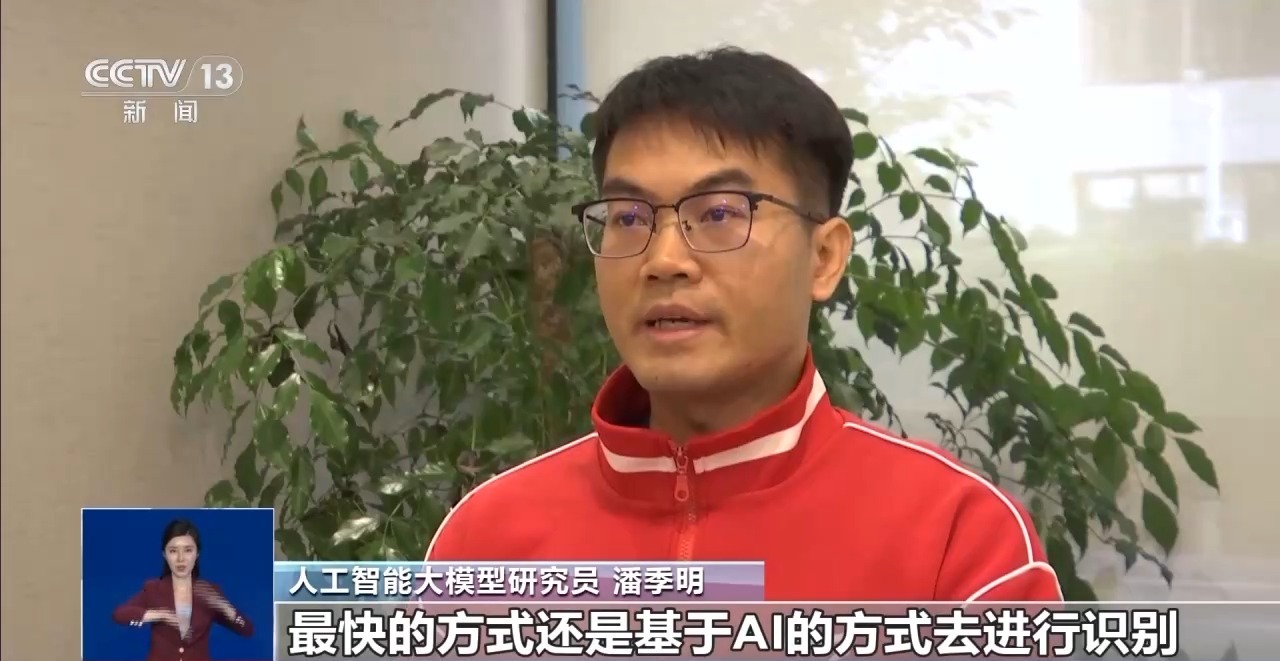
Core Insights - The report from the China Internet Network Information Center indicates that the user base for generative artificial intelligence products in China has reached 515 million people, highlighting the rapid proliferation of this technology [1] - The report also emphasizes the emerging issues related to generative AI, such as deepfake technology leading to false advertising, copyright infringement, and academic misconduct [1] Group 1: Deepfake Technology and Its Implications - The multi-modal capabilities of generative AI allow users to easily swap faces and voices in videos, leading to an increase in fraudulent activities, including the creation of fake advertisements [1] - Recent cases include the impersonation of Olympic champions and doctors to mislead the public, showcasing the potential for misuse of this technology [1] - Experts suggest that the best way to identify deepfake content is through AI-based detection methods that analyze unnatural features in videos and audio [2][4] Group 2: Governance and Regulation - Experts advocate for the implementation of a comprehensive content labeling system to manage the proliferation of deepfake technology [5] - Starting from September 2025, a new regulation will require all AI-generated content to include explicit labels, encouraging the use of digital watermarks to ensure traceability [5] - The distinction between legal and illegal applications of AI face-swapping technology is crucial, with legitimate uses including film production and education, while illegal uses involve unauthorized impersonation and misinformation [7] Group 3: Copyright Issues in AI Training - The training of AI models often involves data sourced from the internet, which may include copyrighted material, leading to significant copyright disputes [8][9] - Experts emphasize the need for AI developers to establish compliance mechanisms for copyright, including obtaining permissions and maintaining records of data sources [11] - Regulatory bodies are encouraged to expand data supply channels to address the conflict between insufficient training data and copyright concerns [12] Group 4: Academic Integrity Challenges - The use of generative AI by students and researchers for writing papers and completing assignments poses a challenge to academic integrity [13] - Experts suggest that instead of outright bans, a more effective approach is to guide students in the proper use of AI tools to enhance learning and research efficiency [13] - Educators are encouraged to design assessments that evaluate students' thought processes rather than relying solely on text submissions, thereby reducing the temptation to misuse AI [13]
数字员工赋能千行百业:SynergyAI共创计划开启人机协作新纪元
Sou Hu Cai Jing· 2025-10-21 17:40
Core Insights - The digital employee sector is evolving from a tool exclusive to tech giants to a core driver of digital transformation across various industries, with significant growth expected in 2024 [1] - As of 2024, there are 1.144 million companies related to digital humans in China, with over 174,000 new registrations in the first five months of the year [1] - The digital human application landscape is categorized into three main types: media digital humans (50%), service digital humans (30%), and industry digital humans (20%) [1] Market Status - The overall market size for virtual digital humans in China is projected to reach 270 billion yuan by 2030, indicating a significant shift from being seen as "tech toys" to essential industry tools [3] Core Application Industries and Scenarios - **E-commerce Sector**: Digital employees in retail e-commerce handle customer inquiries, recommend products, generate marketing content, analyze sales data, and optimize inventory management and logistics [4] - **Taxation Sector**: The digital employee "Tax Mengmeng" achieves a 95% automation rate in tax risk control and a 98% accuracy rate in risk interception, covering all tax and invoice scenarios [5] - **Manufacturing and Supply Chain**: Digital employees help optimize supply chain management, reducing material costs by 15%-20% and shortening supplier selection time from 3 days to 1 hour [6] - **Education Sector**: Applications include AI campus assistants, AI admissions consultants, and AI grading tools, providing tailored learning content and support based on student progress [7] - **Content Creation and Media Sector**: Digital employees assist in document creation, proofreading, and reader feedback analysis, enhancing the efficiency of content generation [8] SynergyAI Digital Employee Co-Creation Plan - The SynergyAI digital employee co-creation plan invites three types of partners: ecosystem developers, industry solution providers, and regional agents to build a new intelligent economy ecosystem [10] - Ecosystem developers can create AI workflows with low-code tools, while industry solution providers can replicate industry experiences for quick project delivery [10] Future Outlook - The future of digital employees is expected to be more personalized and customized, with decreasing production costs and barriers, allowing users to create tailored digital employees [13]

RLI(RLI) - 2025 Q3 - Earnings Call Transcript
2025-10-21 16:00
Financial Data and Key Metrics Changes - The company reported third quarter operating earnings of $0.83 per share, supported by solid underwriting performance and a 12% increase in investment income [9] - The total combined ratio improved to 85.1%, down from 89.6% last year, largely due to a benign hurricane season [10] - Book value per share increased by 26% year to date, reflecting strong financial performance [6][15] Business Line Data and Key Metrics Changes - The property segment experienced an 11% decline in gross premiums, influenced by rate and exposure declines in U.S. Property, but posted a strong 60 combined ratio [11][16] - The casualty segment saw gross premiums advance by 8% with a combined ratio of 98, benefiting from favorable prior year's reserve development [13] - The surety segment posted an 85 combined ratio with a modest decline in premiums, influenced by economic headwinds in the construction space [22] Market Data and Key Metrics Changes - The company noted increased competition and rate pressure in the property market, particularly for catastrophe-exposed business [10][19] - Renewal rates for wind decreased by 11% in the quarter, but remained significantly higher than pre-hard market levels [19][52] - The transportation division's premium was down 1% for the quarter, despite achieving 15% rate increases [26] Company Strategy and Development Direction - The company emphasized the importance of maintaining underwriting discipline and adaptability in a complex market environment [7][8] - Investments in technology and talent are ongoing to enhance underwriting capabilities and improve operational efficiency [31][66] - The company aims to maintain a well-priced book with sustainable terms and conditions over volume or market share [21] Management's Comments on Operating Environment and Future Outlook - Management expressed confidence in navigating market volatility and political uncertainty, viewing disruption as an opportunity for growth [7] - The company remains committed to investing in relationships with producers and enhancing service offerings to maintain competitive advantage [66] - Future growth is expected to be supported by strategic investments and a focus on long-term profitability [32][71] Other Important Information - The company reported a 20% plus return on equity year to date, reflecting strong investment performance [6] - The expense ratio rose due to higher acquisition costs and investments in technology and personnel [15][41] Q&A Session Summary Question: Impact of higher attachment points in the first umbrella book - Management noted that higher attachment points in California and Florida are expected to improve margins and reduce frequency of claims [35][36] Question: Drivers behind the recent rate increase in personal umbrella - The increase was influenced by substantial rate changes in states like Florida, which were effective this quarter [37] Question: Current state of the property market - The property market is experiencing increased competition and softening conditions, but the company remains focused on maintaining adequate rates and terms [44][46] Question: Competitive environment in the surety business - The company maintains its competitive advantage through strong relationships with producers and a focus on service quality [66][70]