新型电力系统

Search documents
创造行业纪录!特变电工32项新产品通过国家级鉴定
中国能源报· 2025-11-30 03:05
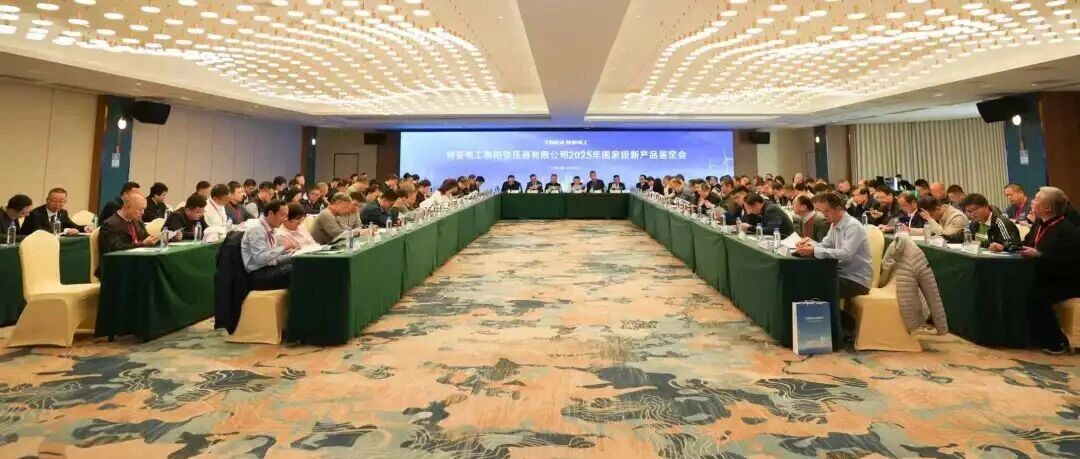
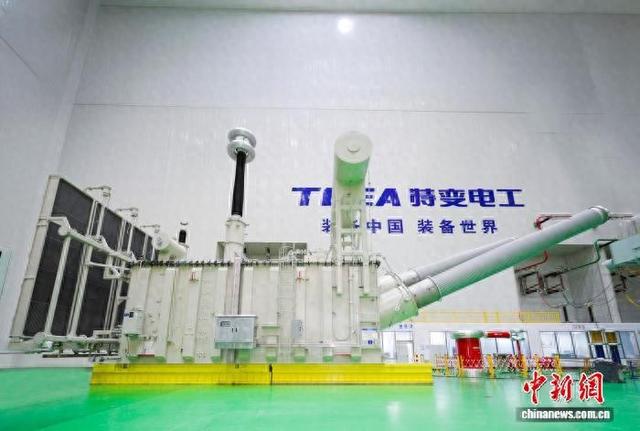
Core Viewpoint - The article highlights the successful certification of 32 new products by TBEA, with 27 achieving international leading standards and 5 reaching international advanced levels, showcasing the company's innovation capabilities in the power transmission and transformation industry [1][3][9]. Group 1: Product Certification and Innovation - TBEA's new products include high-altitude parallel reactors and high-end converter transformers, which are crucial for addressing challenges in the power system, especially with the increasing reliance on renewable energy sources [3][5]. - The certification event was attended by over 100 industry experts, marking a record in both the number of products certified and the number of internationally leading products [1][3]. - The products cover the entire power transmission and transformation industry chain, providing strong support for building a new power system in China [3][9]. Group 2: Key Products and Their Applications - Notable products include the BKD-200000/1100 high-altitude parallel reactor and the ZZDFPZ-387100/500-800 high-end converter transformer, which are designed for significant projects like the Ningxia to Hunan ±800 kV DC transmission project [5][7]. - TBEA has introduced several first-of-their-kind products in the offshore wind power sector, such as the BKS-CN-250000/500 large-capacity reactive power compensator and the SS-330000/220 low-frequency transformer [7][8]. - The company is also focusing on environmentally friendly products, such as the ODWFS-334000/500 natural ester insulated transformer, which reduces carbon emissions significantly compared to traditional products [8]. Group 3: Strategic Alignment and Future Directions - TBEA aligns its innovations with national strategies for energy transition, emphasizing energy efficiency, cleanliness, and intelligence in power equipment development [10]. - The company aims to enhance its technological investment and innovation efforts to transform into a technology-driven manufacturing enterprise, contributing to the global energy landscape [10][13]. - TBEA's products not only support domestic energy infrastructure but are also exported to over 90 countries, reflecting a shift from "Made in China" to "Created in China" [10].


电价迎来重大调整,价差可达4倍?会不会用不起电,交不起电费?
Sou Hu Cai Jing· 2025-11-29 22:13
Core Insights - The recent electricity price adjustments in China are not merely price hikes or cuts but represent a significant overhaul of the entire electricity pricing system, impacting both industrial and residential users [1][10] Group 1: Price Discrepancies - As of January 2025, the peak-valley price difference has exceeded 1 yuan per kilowatt-hour in nine provinces, with Shanghai leading at a peak price difference of 1.81 yuan [3][6] - In Tianjin, the peak-valley price ratio has reached 4:1, with specific time slots designated as low-cost periods, significantly affecting operational costs for businesses [3][4] Group 2: Impact on Industrial Users - Industrial users who adapt their electricity usage to low-cost periods can see substantial savings, with one factory reducing its electricity bill by 30% by shifting energy-intensive processes to off-peak hours [4][7] - Companies are increasingly investing in energy storage systems to capitalize on price differences, turning electricity management into a profit-generating activity [7][8] Group 3: Market Dynamics and Policy Changes - The shift towards market-based pricing is evident, with regions like Shandong implementing a five-tier pricing system that reflects real-time supply and demand [5][6] - The government aims to create a more flexible pricing structure that can respond to fluctuations in energy supply, particularly from renewable sources [8][11] Group 4: Recommendations for Users - Users are advised to understand local pricing policies and adjust their electricity usage accordingly to maximize savings [9][10] - The potential for residential users to benefit from time-of-use pricing, especially those with electric vehicle charging stations, is significant [6][9] Group 5: Future Trends - The trend towards dynamic pricing and real-time adjustments is expected to become more common, requiring both businesses and residential users to adapt their consumption habits [11][12] - The overarching goal of these changes is to optimize energy consumption, support renewable energy integration, and contribute to national carbon neutrality goals [10][12]

特变电工32项新产品通过国家级鉴定
Xin Lang Cai Jing· 2025-11-29 11:19
Core Viewpoint - The renewable energy sector is becoming the mainstay of installed capacity and electricity supply, facing multiple challenges such as reliable supply, grid integration, safety, stability, and electricity costs. The recent certification of 32 new products by TBEA provides critical solutions to these challenges [1] Group 1: Product Certification - TBEA's 32 new products have passed national-level certification, as hosted by the China Machinery Industry Federation [1] - Among the certified products, 27 are at an international leading level, and 5 are at an international advanced level, with several core technologies filling industry gaps [1] Group 2: Industry Support - The new products cover the entire industry chain, including transformers, high-voltage switches, medium and low-voltage complete sets, and secondary protection [1] - These achievements provide solid support for China's goal of accelerating the construction of a new power system [1]
我国电力系统稳定运行再添“关键钥匙”
Zhong Guo Xin Wen Wang· 2025-11-29 11:19
Core Insights - The article highlights the increasing importance of new energy sources in the power supply system, which faces multiple challenges such as reliable supply, grid integration, safety, stability, and electricity costs [1] - TBEA's 32 new products have passed national-level certification, with 27 achieving international leading standards and 5 reaching international advanced levels, addressing key industry challenges [1][3] Group 1: Product Development - TBEA's new products cover the entire industrial chain, including transformers, high-voltage switches, medium and low-voltage assemblies, and secondary protection, providing strong support for building a new power system in China [1] - The company has expanded its focus from single transformer products to a broader range of areas, including switches, secondary protection, and power electronics, enhancing its industrial capabilities [3] Group 2: Industry Impact - The advancements in TBEA's technology and product offerings are expected to create significant economic benefits for society and contribute to the development of the industry [3] - TBEA aims to accelerate its transformation into a technology-driven manufacturing enterprise, emphasizing innovation and the development of high-end power equipment that showcases Chinese intelligence and quality on the global stage [3]
广州发展集团股份有限公司关于参与竞拍中电建(富民)抽水蓄能开发有限公司50%股权的进展公告
Shang Hai Zheng Quan Bao· 2025-11-28 19:54
Group 1 - The company has approved its wholly-owned subsidiary, Guangzhou Development Power Group Co., Ltd., to acquire 50% equity in China Electric Power Construction (Fumin) Pumped Storage Development Co., Ltd. through a public bidding process [1][2] - The transaction price for the 50% equity stake is set at 53.2284 million yuan [2] - This acquisition aligns with the company's strategy to support national goals and enhance its control over quality pumped storage projects, contributing to its industrial transformation and collaborative development [3] Group 2 - The company has also approved the acquisition of a 35% equity stake in China Electric Power Construction (Lufeng) Pumped Storage Development Co., Ltd. [7] - The transaction price for the 35% equity stake is set at 53.2535 million yuan [7] - This move is part of the company's efforts to optimize its industrial structure and expand into new areas of energy business, increasing the proportion of renewable and low-carbon energy [8]

构建电力可靠性管理新格局 推动电力可靠性工作高质量发展
Zhong Guo Dian Li Bao· 2025-11-28 06:01
Core Insights - The article highlights the significant achievements in power reliability management in China over the past 40 years, emphasizing its role in ensuring the safe and stable operation of the power system and supporting economic and social development [2][3]. Group 1: Historical Achievements - The establishment of the Power Reliability Management Center in 1985 marked the beginning of specialized management in China's power reliability, leading to a comprehensive management system that includes government leadership and industry service [1][2]. - Over 3,000 power companies are now included in reliability statistics, with more than 6,000 professionals dedicated to reliability management and information statistics [2]. Group 2: Improvements in Reliability Metrics - The reliability level of China's power system has significantly improved, with unplanned outages for coal and hydro power units decreasing by over 93% compared to 40 years ago [3]. - Key equipment such as transformers and circuit breakers now have an equivalent availability factor exceeding 99% [3]. Group 3: Enhancements in User Experience - The average outage time for urban users has decreased by 94.55 hours since 1991, with major cities achieving average outage times of less than one hour [4]. - Rural users have seen an 83.67-hour reduction in average outage time since 2004, addressing issues like frequent outages and low voltage [4]. Group 4: Future Challenges and Requirements - The transition to a new energy system requires innovative reliability management methods to address the complexities introduced by renewable energy sources and electric vehicles [5][6]. - There is a need for improved reliability statistics that encompass low-voltage users and renewable energy sources, as current data only covers a fraction of installed capacity [7]. Group 5: Strategic Directions for Development - The focus is on enhancing the reliability management framework to support high-quality economic development and meet the increasing expectations of the public regarding power reliability [8][10]. - The establishment of a professional education system for reliability management is essential to improve the overall competency in the sector [11].
内蒙古召开2025年迎峰度冬电力保供暨厂网联席会 首次蒙西、蒙东电网电力企业共同参加
Xin Hua Wang· 2025-11-28 01:04
Core Viewpoint - The meeting highlighted the challenges faced in ensuring electricity supply during the winter peak in Inner Mongolia, emphasizing the need for collaborative efforts among power companies to address supply-demand tensions and enhance grid management [1] Group 1: Current Challenges - The electricity supply-demand situation remains tight, with insufficient grid system adjustment capabilities [1] - The construction and operation of the electricity market are facing new challenges [1] - The safety production situation in the electricity sector is severe, necessitating significant efforts to resolve these issues [1] Group 2: Action Items for Power Companies - Power companies are urged to recognize the importance of ensuring electricity supply during the winter peak and to maintain a political and overall perspective [1] - Companies should accurately predict electricity supply gaps, identify operational risks, and strengthen safety management [1] - Key actions include comprehensive scheduling management, maintaining electricity market order, timely handling of residential energy issues, and focusing on electricity safety production to support high-quality economic development in the region [1]
机构:储能行业呈现供需两旺态势
Zheng Quan Shi Bao Wang· 2025-11-28 00:56
Core Insights - The energy storage industry in China is rapidly developing, with significant advancements in large-scale compressed air storage, high-safety chemical storage, and solid-state battery storage technologies [1] - As of now, the installed capacity of new energy storage in China exceeds 100 million kilowatts, which is over 30 times that at the end of the 13th Five-Year Plan, accounting for more than 40% of the global total installed capacity [1] - The construction cycle of energy storage facilities is short, flexible in layout, and quick in response, effectively taking on the power system regulation functions [1] Group 1: Industry Development - The energy storage sector is in a critical development phase supported by policies and gradually improving business models, with an expected sustained growth in installed capacity driven by improved returns [1] - The changing demand expectations are likely to alter performance forecasts, leading to a potential revaluation of companies within the industry [1] Group 2: Market Dynamics - The current energy storage industry is experiencing a robust supply and demand situation, with domestic and international demand resonating [2] - There is a shortage of new energy storage components, leading to top battery manufacturers operating at full capacity and a continued upward trend in battery prices [2] - The overall supply chain possesses price transmission capabilities, indicating a favorable outlook for the industry's prosperity [2] Group 3: Technological and Market Catalysts - The AI wave is accelerating the development of energy storage, with demand breaking through from localized markets to a global scale [2] - Data centers are imposing higher requirements for power supply continuity, dynamic adaptability, and power quality, making energy storage an ideal solution for these scenarios [2] - There are structural opportunities arising from the anticipated supply-side reforms and new technological changes within the energy storage sector [2]
能源早新闻丨宁德时代西班牙磷酸铁锂工厂开建
中国能源报· 2025-11-27 22:33
News Focus - The National Development and Reform Commission (NDRC) has revised the pricing and cost supervision methods for power transmission and distribution, focusing on promoting renewable energy consumption and ensuring the efficient operation of the power system [2] - The energy supply and demand for the heating season this year is generally balanced, with sufficient resource supply expected [2] Domestic News - The total number of electric vehicle charging infrastructure in China has reached 18.645 million, a year-on-year increase of 54% as of the end of October [3] - The first batch of leading intelligent factories in China has been announced, with two energy companies, Sinopec and CNOOC, making the list [3] - The Qinghai Hainan Clean Energy Transmission Base project has commenced construction, expected to deliver 36 billion kWh of green electricity annually to the Guangdong-Hong Kong-Macao Greater Bay Area, with a total investment of nearly 73 billion yuan [3] - Platinum and palladium futures have been listed on the Guangzhou Futures Exchange, with platinum futures priced at 4.05 yuan per gram and palladium futures at 36.5 yuan per gram [4] - The electricity, heat, gas, and water production and supply industry achieved a total profit of 732.93 billion yuan from January to October, an increase of 9.5% [4] - Shandong's first "Xinjiang coal into Shandong" coal train has successfully arrived at Rizhao Port, enhancing coal supply stability for the winter [4] - Shanxi has established 281 green mines, ranking among the top in the country for the total number of green mines [5] International News - The Colombian president stated that the U.S. aims to seize Venezuela's oil resources, indicating geopolitical tensions surrounding oil [6] Corporate News - CATL and Stellantis have laid the foundation for a lithium iron phosphate battery factory in Spain, with a total investment of 4.1 billion euros, set to be powered entirely by renewable energy and expected to start production by the end of 2026 [7]
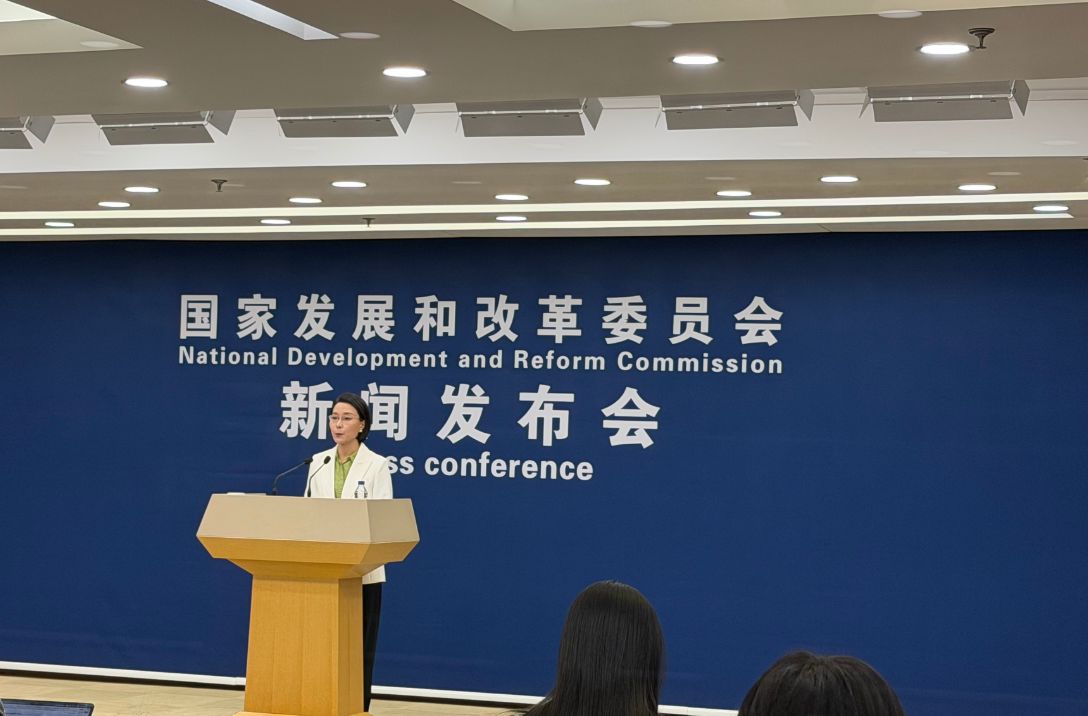
国家发改委答每经问:在重点领域推动绿色氢氨醇规模化发展 适度超前推动产运储等环节基础设施建设
Mei Ri Jing Ji Xin Wen· 2025-11-27 14:53
Core Insights - The National Development and Reform Commission (NDRC) emphasizes the importance of emerging industries such as energy storage and hydrogen energy in building a new power system [2][3] Group 1: Energy Storage Development - The installed capacity of new energy storage in China has exceeded 100 million kilowatts, which is more than 30 times that at the end of the 13th Five-Year Plan, accounting for over 40% of the global total installed capacity [4] - During peak demand periods this summer, the new energy storage system provided over 30 million kilowatts, which is 1.3 times the full-load output of the Three Gorges Hydropower Station [4] - The NDRC is promoting the rapid development of various energy storage technologies, including large-scale compressed air storage and solid-state battery storage [4] Group 2: Hydrogen Energy Initiatives - China has established a green hydrogen production capacity of over 150,000 tons and is expanding the integration of green hydrogen, green ammonia, and green methanol [5] - The NDRC is working on a coordinated mechanism for hydrogen energy industry development, focusing on policy, standards, and innovation to overcome key technical challenges [5] - Future efforts will include promoting the large-scale development of green hydrogen and ammonia, and enhancing infrastructure for production, transportation, and storage [5] Group 3: Energy Supply and Demand for Heating Season - The energy supply and demand situation for the heating season is expected to be balanced, with sufficient resource supply [6][8] - The heating season is anticipated to have a longer duration and higher peak energy demand due to the late timing of the 2026 Spring Festival [8] - As of October 31, the national power generation capacity reached 3.75 billion kilowatts, an increase of 560 million kilowatts compared to the same period last year [8]