智能体

Search documents
360发布纳米AI多智能体蜂群,引领智能体进入协同进化新阶段
Sou Hu Cai Jing· 2025-08-08 18:02
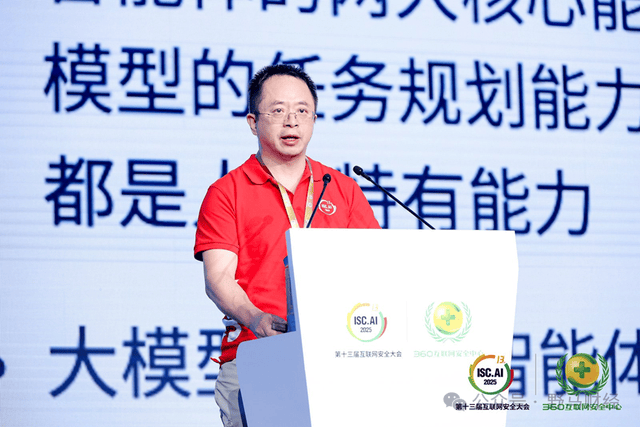
Core Insights - The core viewpoint presented by Zhou Hongyi at the ISC.AI 2025 conference is that 2025 marks the beginning of the era of intelligent agents, which will evolve from their current primitive stage to a swarm or cluster form, becoming the main players in the AI field [1] - 360 Group has already launched the "Nano AI Multi-Agent Swarm" technology, which represents a significant shift from individualistic AI operations to collaborative group efforts, fundamentally changing traditional AI work models [1][5] Development Stages of Intelligent Agents - The development of intelligent agents is categorized into five levels (L1 to L5), with L1 agents functioning as basic "chat assistants" that lack proactive problem-solving capabilities [2] - L2 agents operate on a "tool logic" level, completing tasks through preset modules but still requiring human intervention for final outputs [2] - At L3, agents gain true reasoning abilities, capable of goal planning and logical breakdowns, but face efficiency drops when tasks exceed their knowledge boundaries [4] Introduction of the "Nano AI Multi-Agent Swarm" - The "Nano AI Multi-Agent Swarm" technology prioritizes collaborative capabilities over individual strengths, allowing for flexible grouping and nested collaboration among multiple agents to tackle complex workflows [4][5] - This technology introduces a "swarm collaboration framework," where each agent acts as an independent participant in a unified goal-directed task, enhancing overall productivity [5] Practical Applications and Industry Impact - The multi-agent swarm technology has already been implemented across various product lines of 360, including video generation, translation, industry analysis, and knowledge summarization, serving both consumer and business needs [7] - Zhou Hongyi emphasized that collaboration among different specialized agents is essential for overcoming the limitations of individual agents, positioning multi-agent systems as the future direction of development [7] - The launch of the "Nano AI Multi-Agent Swarm" at the ISC conference signifies 360's commitment to defining AI as an "organizational productivity tool" through collaborative intelligent systems [7]


专家呼吁 推动人工智能与数字安全融合发展
Ke Ji Ri Bao· 2025-08-08 00:49
Group 1 - The integration of artificial intelligence (AI) technology, particularly large models, is accelerating global digitalization while also increasing network threats, necessitating the fusion of AI and digital security for effective digital economy development [1] - Large models exhibit strong general capabilities but face challenges in specialized applications due to insufficient professional knowledge and limited adaptability, requiring collaboration between AI providers and industry leaders to create high-quality professional datasets [1][2] - There is a call for innovative models like "industry large model as a service" to lower application barriers, enabling small and medium enterprises to access customized AI capabilities affordably [1] Group 2 - A fundamental transformation of digital security systems is needed, shifting from passive to proactive immune models driven by AI, utilizing large models for threat hunting, anomaly detection, and automated responses [2] - The theme of the conference emphasizes the strategic value of integrating AI with cybersecurity, highlighting the necessity for collaborative efforts across sectors to address global challenges [2] - The evolution from large models to intelligent agents is essential for enhancing productivity, as intelligent agents can understand goals, plan tasks, and utilize tools effectively [3] Group 3 - The emergence of "intelligent agent hackers" poses a new challenge in cybersecurity, where a single hacker can control multiple agents to launch automated attacks, increasing the risk of cyber warfare [3] - 360 Group is developing security intelligent agents based on large security models to enhance cybersecurity capabilities, aiming to replicate the skills of human security experts [3][4] - The company emphasizes the dual focus on "security + AI" to protect the digital era while defining the future through AI advancements [4]
科股早知道:AI驱动下的该行业发展供需对接会将召开,机构称其是国产算力发展之基
Tai Mei Ti A P P· 2025-08-08 00:30
Group 1 - The rapid development of artificial intelligence technology is reshaping industry boundaries, with AI Agents emerging as a key focus area [2][3] - The global AI Agent market has surpassed $5 billion, with an annual growth rate of 40%, indicating strong market potential [3] - By 2025, AI Agent capabilities are expected to transition from content generation to process agency, driven by advancements in large models and policy support [3] Group 2 - Fourier has officially launched the full-sized humanoid robot Care-bot GR-3, which emphasizes interactive companionship and tactile features [4] - The humanoid robot market in China is projected to reach approximately 8.239 billion yuan by 2025, accounting for about 50% of the global market [4] - The development of AI large models and hardware breakthroughs are anticipated to accelerate the commercialization of humanoid robots [4] Group 3 - The photovoltaic industry is expected to implement relevant reform measures with the support of new policies, as indicated by the National Development and Reform Commission [5][6] - The focus on breaking "involutionary" competition suggests a favorable environment for sustainable investment opportunities in the photovoltaic sector [6] Group 4 - An upcoming supply-demand matching meeting for advanced packaging and testing driven by AI is set to take place in Shenzhen, aimed at enhancing collaboration in the semiconductor industry [7] - The advanced packaging market in China is projected to reach 134 billion yuan by 2029, with a compound annual growth rate of 9% [7]

特朗普提名斯蒂芬·米兰担任美联储理事;今秋起幼儿园大班儿童免保教费|南财早新闻
2 1 Shi Ji Jing Ji Bao Dao· 2025-08-07 23:53
Company Developments - Ideal Automotive's legal team responded to multiple reports from car owners regarding "black water army," stating that such negative information may involve organized illegal activities. The company is collecting evidence and will pursue legal action through all available legal channels [7] - China Mobile reported a revenue of 543.8 billion yuan for the first half of the year, with communication service revenue at 467 billion yuan, a year-on-year increase of 0.7%. The profit attributable to shareholders was 84.2 billion yuan, up 5.0% year-on-year, and an interim dividend of 2.75 HKD per share was declared, reflecting a 5.8% increase [7] - Semiconductor Manufacturing International Corporation (SMIC) reported sales revenue of 2.209 billion USD in the second quarter, a decrease of 1.7% quarter-on-quarter, with a gross margin of 20.4%, down 2.1 percentage points. The company expects a revenue growth of 5% to 7% in the third quarter, with a gross margin between 18% and 20% [7] - Upwind New Materials achieved a revenue of 784 million yuan in the first half of the year, a year-on-year increase of 12.50%, while net profit decreased by 32.91% to 29.9 million yuan [8] - Furi Electronics (4 consecutive trading limits) reported that its subsidiary provides JDM/OEM services for service robot products, with revenue contribution being less than 1% [9] - Chuangzhong Technology (4 trading limits in 6 days) clarified that its business does not involve the production of liquid-cooled servers, only participating in testing platforms for liquid cooling [10] Industry Insights - The A-share market experienced a pullback after a surge, with the rare earth permanent magnet concept driving a recovery in cyclical stocks. The semiconductor industry chain, intelligent agents, and brain-computer interface concepts showed strength, while CRO, weight-loss drugs, and innovative drug concepts lagged. The Shanghai Composite Index closed up 0.16% at 3639.67 points, while the Shenzhen Component Index fell 0.18% and the ChiNext Index dropped 0.68%, with total market turnover expanding to 1.85 trillion yuan [6] - The RWA registration platform officially launched in Hong Kong on August 7, initiated by the Hong Kong Web 3.0 Standardization Association, aiming to facilitate the entire process of dataization, assetization, and financialization of RWA assets [6] - MSCI announced the addition of 42 stocks to the global index ACWI, while removing 56 stocks. The three new constituents of the MSCI Emerging Markets Index are CITIC Bank, Sentosa Bank, and Laopu Gold [6] - The third actively delisted stock of the year is expected to emerge, as *ST Tianmao's controlling shareholder is planning a significant matter related to the company, leading to a suspension of its stock. This year, Yulong Co., Ltd. and AVIC Industry have already applied for voluntary delisting [6]

从“助手”到“数字员工”,第十三届互联网安全大会探讨人工智能新趋势
Huan Qiu Wang Zi Xun· 2025-08-07 23:04
Core Viewpoint - The rapid development of artificial intelligence (AI) technology poses both risks and opportunities for cybersecurity, with the emergence of "super hackers" being a significant concern. The solution lies in effectively utilizing intelligent agents to enhance security measures and response capabilities [1][2][3]. Group 1: AI and Cybersecurity Challenges - Intelligent agents are AI entities capable of perceiving their environment, making autonomous decisions, and executing actions, which can significantly impact cybersecurity [2]. - The rise of AI has led to an increase in complex and covert cyberattack methods, highlighting the need for improved cybersecurity measures and response capabilities [2][3]. - The current global digital technology landscape is uneven, with some regions lacking robust digital infrastructure, making them more vulnerable to cyberattacks [2]. Group 2: Evolution of Intelligent Agents - Intelligent agents are evolving through various levels, with L1 being basic chat assistants and L5 potentially being self-evolving superintelligent agents [6][7][8]. - The transition from traditional AI models to intelligent agents is crucial for addressing the limitations of current AI applications, particularly in operational tasks [4][6]. - Intelligent agents can enhance operational efficiency by acting as digital counterparts to human experts, thereby addressing talent shortages in cybersecurity [4][5]. Group 3: Future Directions and Collaboration - There is a pressing need for international collaboration on AI ethics, data sharing, and cybersecurity standards to effectively combat new security threats [3][4]. - The future of human-AI interaction is expected to shift towards collaboration with intelligent agents, which will take on routine tasks, allowing humans to focus on higher-level management and oversight [6][7]. - The management of intelligent agents will require new strategies to handle their coordination and ensure effective task execution [10][11].
360发布智能体工厂 殷宇辉:重构企业知识管理与智能协作两大核心场景
Sou Hu Cai Jing· 2025-08-07 21:51
Core Insights - 360 Group launched the "Intelligent Agent Factory" at the ISC.AI 2025 Internet Security Conference, enabling enterprises to customize L3 intelligent agents without programming knowledge and to create L4 multi-agent swarm teams [1][4] - The CEO of 360 Group emphasized the need to overcome technical bottlenecks and application challenges in deploying intelligent agents in government and enterprise scenarios, introducing the SEAF as the world's first L4 enterprise intelligent agent factory [1][3] Group 1 - The four principles for building quality intelligent agents include selecting very small application scenarios, knowledge-friendly scenarios, convergent field scenarios, and high market potential application scenarios to ensure effective AI deployment [3] - An example provided is the implementation of an intelligent agent for a rail transit group to digitize and automate meeting materials, which previously required ten personnel for economic analysis [3] - The company aims to address core pain points in small scenarios with significant depth, achieving tenfold returns [3] Group 2 - Intelligent agents are categorized into five levels (L1-L5) based on autonomous driving standards, with L5 capable of creating other intelligent agents [4] - L4 intelligent agents are multi-agent swarms with token consumption ranging from 10 million to 100 million tokens per task, suitable for high-value creative applications like long video generation [4] - The company is focused on developing L3 and L4 intelligent agents, with the capability to create agents from L1 to L4, allowing customization for individuals and enterprises [4]
对话周鸿祎:大模型能力已经超过了每一个人,不可能和人“对齐”
Bei Ke Cai Jing· 2025-08-07 13:00
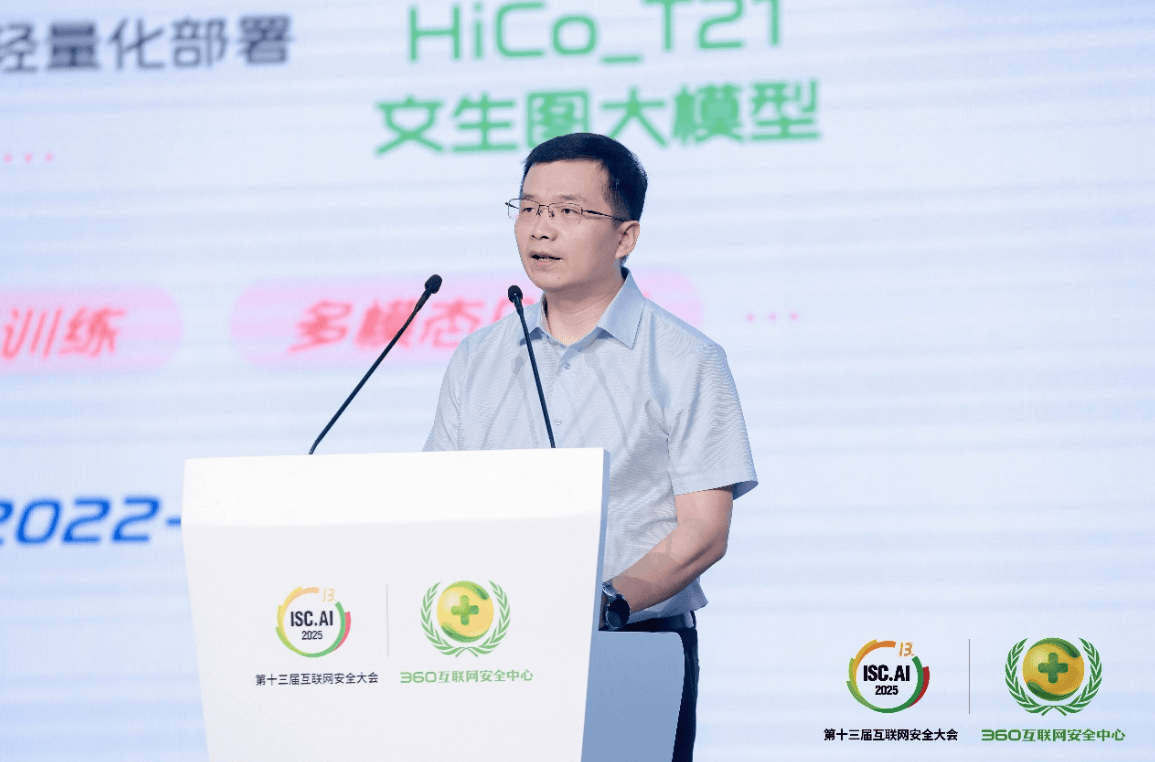
Core Insights - The 13th Internet Security Conference in Beijing featured a humanoid robot named "Red Coat" as the host, with Zhou Hongyi, founder of 360 Group, delivering a keynote titled "ALL IN AGENT" [1] - Zhou expressed concerns about AI safety, emphasizing the need for a "power switch" for large models to ensure human control over AI capabilities [2][3] AI Safety and Control - The rapid advancement of AI models has led to increased risks, with Zhou advocating for the analysis and monitoring of large models using other large models [2] - Zhou criticized the notion of aligning AI with human values, stating that current large models have capabilities that surpass individual human understanding [2] Evolution of Intelligent Agents - Zhou outlined a clear progression of intelligent agents from L1 (chat tools) to L4 (multi-agent collaborative systems), highlighting the limitations of each level [4] - The L4 level, referred to as "multi-agent swarm collaboration space," allows for flexible grouping and task execution, achieving a success rate of up to 95.4% for complex tasks [5] Competitive Landscape - Zhou acknowledged the intense competition in the AI industry, suggesting that the only sustainable advantage is execution capability and the ability to adapt quickly [6] - The rapid evolution of intelligent agents means that any product's lead time is short, with new concepts quickly being adopted by competitors [6]
「AI新世代」周鸿祎大讲智能体故事,360“第二春”在路上
Hua Xia Shi Bao· 2025-08-07 12:24
Core Viewpoint - 360 is attempting to break through the development bottleneck of the AI era with its intelligent agent strategy, upgrading its generative AI search product, Nano AI, to a "multi-agent swarm" and launching the "Agent Factory" to facilitate collaborative AI capabilities [2][3]. Group 1: Strategic Developments - The transition from "single-agent operation" to "group collaboration" is a significant evolutionary step for AI, marking a key transition into the "results delivery era" [3]. - 360 has introduced the "Agent Factory," allowing enterprises to customize their own L3 intelligent agents without programming knowledge, aiming to enable every company to create its own intelligent agents [3]. - The evolution of intelligent agents is categorized into four levels: L1 (chat assistants), L2 (low-code workflow agents), L3 (reasoning agents), and L4 (multi-agent swarms) [3]. Group 2: Market Position and Performance - Nano AI is positioned as the world's first true L4 intelligent agent system, reflecting a competitive landscape where various companies are rapidly developing intelligent agents [4]. - Despite the competitive environment, Nano AI has achieved significant recognition, ranking first among intelligent agents in terms of traffic in June [6]. - 360's financial performance has been under pressure, with a projected net loss of approximately 320 million to 240 million yuan for the first half of 2025, although losses have narrowed compared to the previous year [5][6]. Group 3: Future Outlook and Challenges - The success of 360's AI business is crucial for improving its financial situation, with a focus on integrating AI with security services [6][7]. - Industry experts emphasize that 360 must leverage its dual advantages in security and traffic to create a paradigm shift in the AI landscape, rather than merely following trends [7].
第十三届互联网安全大会举行 周鸿祎“红衣课堂”聚焦 AI让智能体成为“数字员工”
Zhong Guo Jing Ji Wang· 2025-08-07 11:54
Core Insights - The 13th Internet Security Conference (ISC.AI 2025) was held in Beijing, focusing on the impact of AI on global socio-economic changes and the importance of AI applications for enhancing productivity [1][3] - Zhou Hongyi emphasized the concept of "All In Agent" across various industries, aiming to empower sectors through AI and contribute to the construction of a digital China [3][8] AI Development and Applications - Zhou Hongyi dedicated most of his presentation to AI, highlighting the transition from basic interaction to autonomous collaboration in intelligent agents [4][8] - The newly launched L4-level multi-agent swarm by 360's Nano AI represents a significant leap in intelligent agent capabilities, enabling collaborative work across different domains [5][8] 360 Intelligent Agent Factory - The "360 Intelligent Agent Factory" aims to democratize access to L4-level multi-agent systems, allowing even small and medium enterprises to benefit from intelligent agents [7][8] - Key features of the factory include a no-code development environment, a powerful engine capable of executing over 1000 continuous tasks, a rich ecosystem of existing agents and tools, and a comprehensive security framework [7][8] Future of Work and Collaboration - The model of "business-driven, AI-enabled" is expected to revolutionize human-machine collaboration, with employees managing numerous digital agents, transforming operational efficiency [8] - The "Red Dress Classroom" serves as a flagship educational initiative to equip individuals and organizations with the necessary skills to leverage intelligent agents effectively [8]

360与ISC.AI学苑发布智能体实训资源助力企业零门槛数智化转型
Huan Qiu Wang Zi Xun· 2025-08-07 09:43
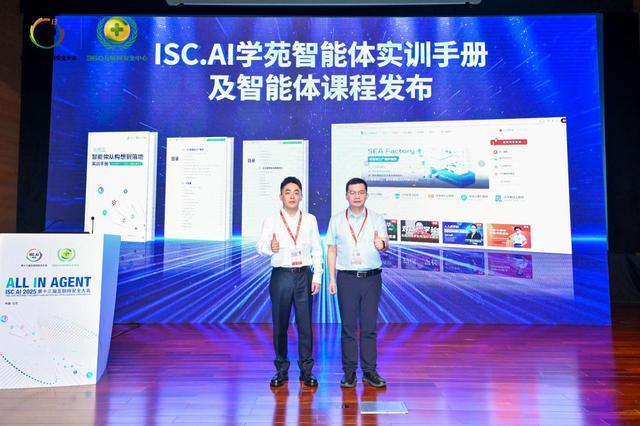
Core Insights - 360 Group, led by founder Zhou Hongyi, collaborates with ISC.AI Academy to launch the "ISC.AI Academy Intelligent Agent Training Manual and Intelligent Agent Course," aimed at facilitating zero-threshold digital transformation for enterprises [1][3]. Group 1 - The release is based on the 360 SEAFactory training platform and ISC.AI Academy's AI practical training field, providing a comprehensive system of intelligent agent courses and scenario-based case libraries [3]. - The 360 SEAFactory training platform is a "no-code" intelligent agent customization platform that allows users to quickly build exclusive intelligent agents using natural language commands, significantly lowering technical barriers [3][5]. - ISC.AI Academy's AI practical training field is the first domestic industry-education integrated AI practical platform, integrating enterprise technology standards and business processes [3][5]. Group 2 - The systematic intelligent agent courses and scenario-based case libraries focus on practical applications, forming a complete loop from theoretical explanation to deployment operations [5]. - The collaboration combines 360 Group's technological accumulation in the intelligent agent field with ISC.AI Academy's systematic educational capabilities, providing full-cycle support for intelligent agent development, deployment, and operation [5]. - The new paradigm of "capability co-construction and achievement sharing" may accelerate the establishment of a self-evolving intelligent agent industry community across various sectors [5].