
智能制造

Search documents
顺威股份拟定增募资不超2.42亿 去年第二大股东减持
Zhong Guo Jing Ji Wang· 2026-01-19 06:44
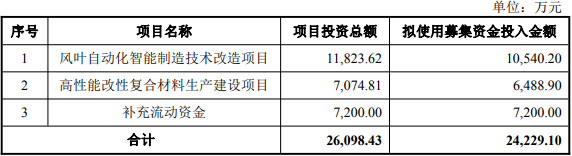
Core Viewpoint - Shunwei Co., Ltd. plans to issue A-shares through a simplified procedure to specific investors, with a total fundraising amount not exceeding RMB 242.29 million [1][2]. Group 1: Issuance Details - The issuance will be conducted for no more than 35 specific investors, including qualified institutional investors such as securities investment fund management companies, securities companies, trust companies, financial companies, insurance institutions, and qualified foreign institutional investors (QFII) [2]. - The issuance price will not be lower than 80% of the average trading price of the company's shares over the 20 trading days prior to the pricing benchmark date [2]. - The total amount raised will be allocated to three projects: the wind blade automation intelligent manufacturing technology transformation project, the high-performance modified composite materials production project, and to supplement working capital [2][4]. Group 2: Project Investment Breakdown - The total investment for the wind blade automation intelligent manufacturing technology transformation project is RMB 118.24 million, with RMB 105.40 million from the raised funds [4]. - The high-performance modified composite materials production project has a total investment of RMB 70.75 million, with RMB 64.89 million allocated from the raised funds [4]. - The working capital will receive the full amount of RMB 72 million from the raised funds [4]. Group 3: Shareholder Information - As of the announcement date, Guangzhou Kaitou Intelligent Manufacturing Industry Investment Group Co., Ltd. holds 29.60% of the company's shares, making it the controlling shareholder, while the Guangzhou Economic and Technological Development Zone Management Committee indirectly holds the same percentage, serving as the actual controller [5]. - The issuance will not change the control of the company, as the controlling shareholder and actual controller will remain the same post-issuance [5]. - The second-largest shareholder, West China Benefit Fund - Construction Bank - West China Benefit Growth No. 1 Asset Management Plan, completed a share reduction plan, reducing its holdings by 702,300 shares, which is 0.10% of the total share capital [6].


全球首座!海辰储能点亮储能电池"灯塔工厂",领跑锂电长时储能赛道
中国能源报· 2026-01-19 06:04
Core Viewpoint - The article highlights that the Chongqing base of Hichain Energy has been recognized as the world's first "lighthouse factory" for energy storage batteries, marking a significant achievement in smart manufacturing and digital transformation within the global energy storage industry [2][4]. Group 1: Lighthouse Factory Recognition - The "lighthouse factory" initiative, launched by the World Economic Forum and McKinsey in 2018, aims to identify leading examples of smart manufacturing in the context of the Fourth Industrial Revolution [4]. - As of now, there are 224 lighthouse factories globally, with the Chongqing base being the first in the energy storage battery sector, filling a significant gap and showcasing China's advancements in smart manufacturing and digital upgrades [4][6]. Group 2: Smart Manufacturing and Digital Transformation - Hichain Energy's Chongqing base addresses three major challenges in the lithium battery storage industry: high compound annual growth rate of market demand, downward pressure on product prices, and increasing quality consistency requirements [6]. - The factory implements near-zero defect manufacturing, systematic cost reduction, and full-process intelligent operations to enhance digital and intelligent upgrades, significantly improving product quality, capacity, and overall equipment efficiency [6][8]. Group 3: Innovative Production Lines - The Chongqing base has established the world's first dedicated production line for long-duration energy storage batteries, with the ∞Cell 1175Ah battery set to achieve mass production by June 2025 [11]. - The associated ∞Power 6.25MWh long-duration energy storage system is scheduled for global delivery in October 2025, and it has been recognized at the national level as part of China's "14th Five-Year" achievements [11]. Group 4: Future Development and Industry Leadership - Hichain Energy aims to leverage its lighthouse factory status to enhance smart research and manufacturing capabilities, while also promoting digital upgrades across the supply chain [11]. - The company plans to contribute to the global energy sector's green and sustainable development by sharing replicable smart manufacturing experiences and capabilities, facilitating large-scale, high-quality, and efficient production and application of long-duration energy storage batteries and systems [11].

理奇智能IPO:锂电智能化装备龙头,携手“宁王”业绩高增,在手订单超50亿
梧桐树下V· 2026-01-19 03:38
据深交所官网披露, 无锡理奇智能装备股份有限公司 (以下简称"理奇智能")IPO将于1月20日迎来创业板上市委审议。公开资料 显示,理奇智能深耕物料自动化处理领域,以定制化智能系统解决方案为核心,深度布局锂电池、精细化工等高景气赛道,精准契 合国家"双碳"战略与制造业智能化升级浪潮。其此次IPO进程,不仅关乎企业自身的跨越式发展,更折射出国产高端装备加速替代 与全球化拓展的行业大趋势。 过硬的产品实力为理奇智能赢得了市场认可。2024年,公司物料智能处理系统销量达594套,单机设备销量710台,其中锂电领域贡 献了绝对主力,相关收入占比高达91.81%。其客户阵容强大,囊括宁德时代、比亚迪、LG新能源、欣旺达、亿纬锂能、大众集团 等全球锂电池及整车龙头。在竞争白热化的中国锂电制浆上料系统市场, 公司市占率从2023年的27%迅猛跃升至2024年的43%,连 续两年蝉联行业第一, 稳居细分领域"隐形冠军"宝座。 在非锂电领域,理奇智能同样表现亮眼,成功跻身精细化工与复合材料行业头部企业的核心供应商名单,客户包括杜邦、汉高、海 虹老人等国际精细化工巨头。 凭借对应用行业特点、物料特性及客户需求的深刻理解,理奇智能 ...
这家中国企业的全球化布局:近70家全产线基地、覆盖150多个国家和地区
Zhong Guo Jing Ji Wang· 2026-01-19 03:16
Core Viewpoint - Dongfang Yuhong has officially launched the production lines 1 and 2 at its Tiandingfeng factory in Saudi Arabia, marking a significant step in its global capacity layout and showcasing the core competitiveness of Chinese manufacturing [2] Group 1: Production and Capacity - The Tiandingfeng factory is a key project in Dongfang Yuhong's overseas development strategy, which integrates trade, investment, and mergers and acquisitions, with construction starting in February 2025 and an annual production capacity of 25,000 tons [2] - The factory is designed with four production lines, including two for fiberglass-reinforced polyester substrate fabric and two for polyester substrate fabric, aimed at meeting local demand and enhancing global service capabilities [2] Group 2: Market Position and Innovations - Tiandingfeng has been recognized as a champion enterprise in the manufacturing sector, with its independently developed "one-step" polyester anti-adhesion needle-punching technology surpassing traditional substrate fabrics [4] - The company aims to achieve an annual shipment of over 1 billion square meters of non-woven fabric by 2025, creating a strong synergy with its annual shipment of 800 million square meters of waterproof membranes and 12 million tons of mortar powder [4] Group 3: Manufacturing Excellence - Dongfang Yuhong integrates smart manufacturing and lean management, establishing over 200 advanced production lines and utilizing international technology solutions to ensure high capacity, precision, and stability in production [6] - The company implements lean principles and digital tools, achieving a 100% on-time delivery rate while continuously reducing production costs [6] Group 4: Global Expansion - As a leading enterprise in the building materials system service sector, Dongfang Yuhong has established nearly 70 production and R&D logistics bases globally, operating in 18 countries and covering over 150 countries and regions [8] - The launch of the Saudi factory's production lines further enhances the company's global capacity in the non-woven fabric sector, with a commitment to efficient delivery within a 300-kilometer radius [8]


苏州工业园区累计拥有5家灯塔工厂
Su Zhou Ri Bao· 2026-01-19 02:21
Core Insights - The World Economic Forum announced a new batch of 23 "lighthouse factories," with two from Suzhou Industrial Park, highlighting Suzhou's leadership in advanced manufacturing with a total of 9 lighthouse factories, the highest in any city in China [1] Group 1: Lighthouse Factories - Suzhou Kunling Film Industry Co., Ltd. was recognized as a "Production Efficiency Lighthouse," marking it as the first production-type lighthouse factory in China's flexible packaging industry, with an annual capacity of approximately 100,000 tons [2] - AUO (Suzhou) Co., Ltd. was awarded the "Talent Lighthouse," becoming the first in the global display industry to receive this honor, focusing on display technology research and manufacturing [2] Group 2: Technological Advancements - Suzhou Kunling has implemented over 30 AI applications across R&D, production, quality, and operations, significantly enhancing product design responsiveness, process optimization efficiency, capacity utilization, and overall operational management [2] - AUO has launched over 500 digital projects, including AI-driven interview systems and intelligent scheduling, to improve talent matching and management efficiency [2] Group 3: Support and Development - The Suzhou Industrial Park emphasizes the cultivation of lighthouse factories through a structured evaluation and support system, including financial backing and professional guidance to foster a collaborative manufacturing ecosystem [3] - Future initiatives will focus on leveraging the experiences of lighthouse factories to promote the integration of AI in manufacturing, supporting Suzhou's advancement in new industrialization [3]
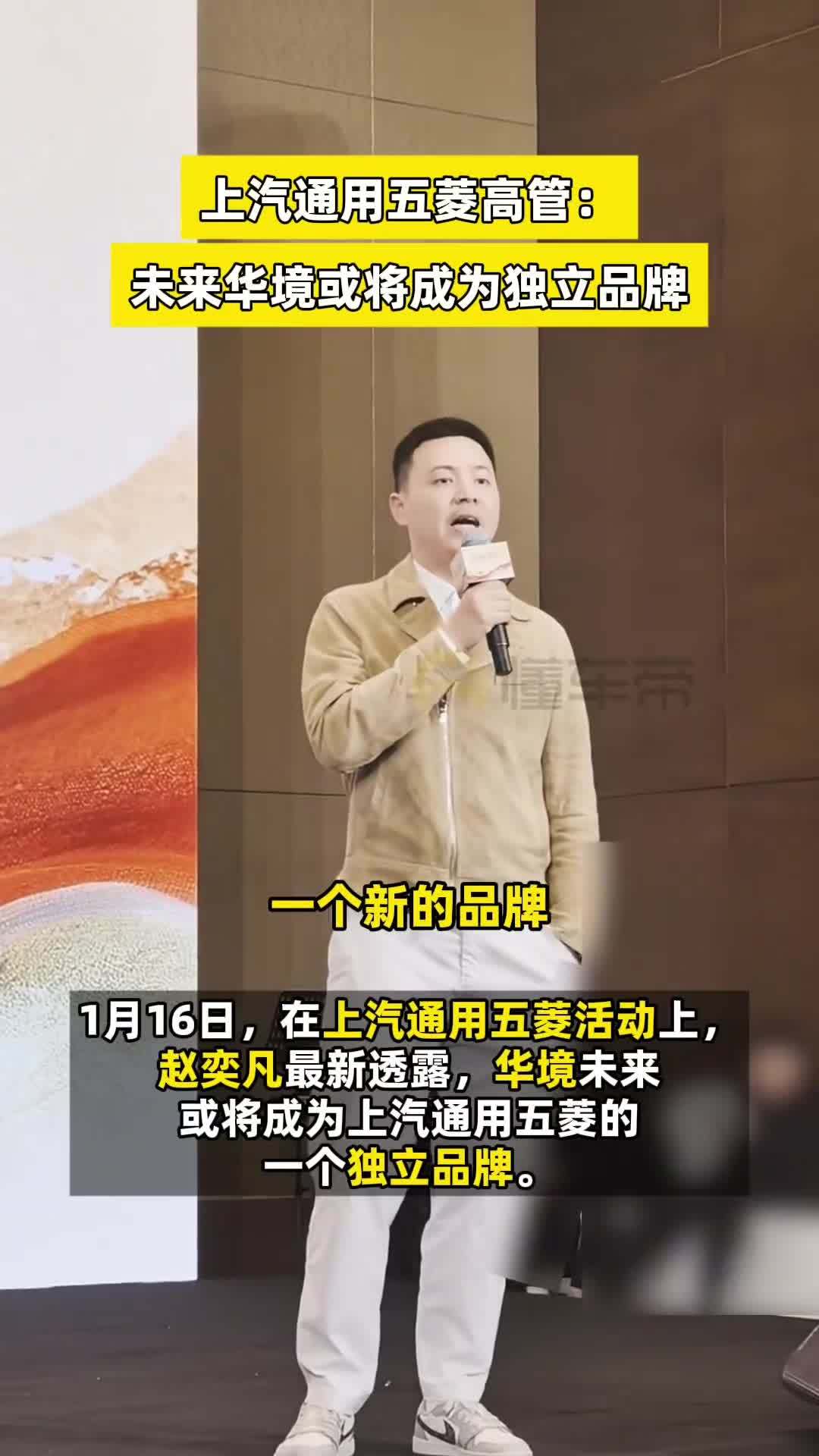
上汽通用五菱赵奕凡透露华境现在是宝骏的一个系列,但必将成为新品牌
Xin Lang Cai Jing· 2026-01-19 01:21
Core Viewpoint - SAIC-GM-Wuling is launching a new brand "Hua Jing" with its flagship model "Hua Jing S," which is set to be released in the first half of 2026 in collaboration with Huawei [5][14]. Group 1 - The "Hua Jing S" is currently part of the Baojun series but will evolve into a new brand under SAIC-GM-Wuling [9]. - The vehicle will be a large six-seat SUV equipped with Huawei's advanced technology, specifically the "Hua Wei Qian Kun" system [5][14]. - The "Hua Jing S" is produced in a national leading intelligent factory, marking it as the first product of the collaboration between SAIC-GM-Wuling and Huawei's "Three Intelligence" initiative, which includes intelligent manufacturing, assisted driving, and intelligent cockpit [12][14]. Group 2 - The "Hua Jing S" will feature standard Huawei Qian Kun technology, including Qian Kun Intelligent Driving ADS 4 Pro and Hongmeng cockpit [6][14]. - The manufacturing process utilizes a national leading intelligent factory's smart island manufacturing system [6][14]. - The vehicle incorporates the "Tian-Ling-Shen" technology system, which consists of Tian Yu architecture, Lingxi power, and Shen Lian battery [6].
抢占工业互联网新赛道,UG编程精英培训在光明政群开启
Sou Hu Cai Jing· 2026-01-19 00:13
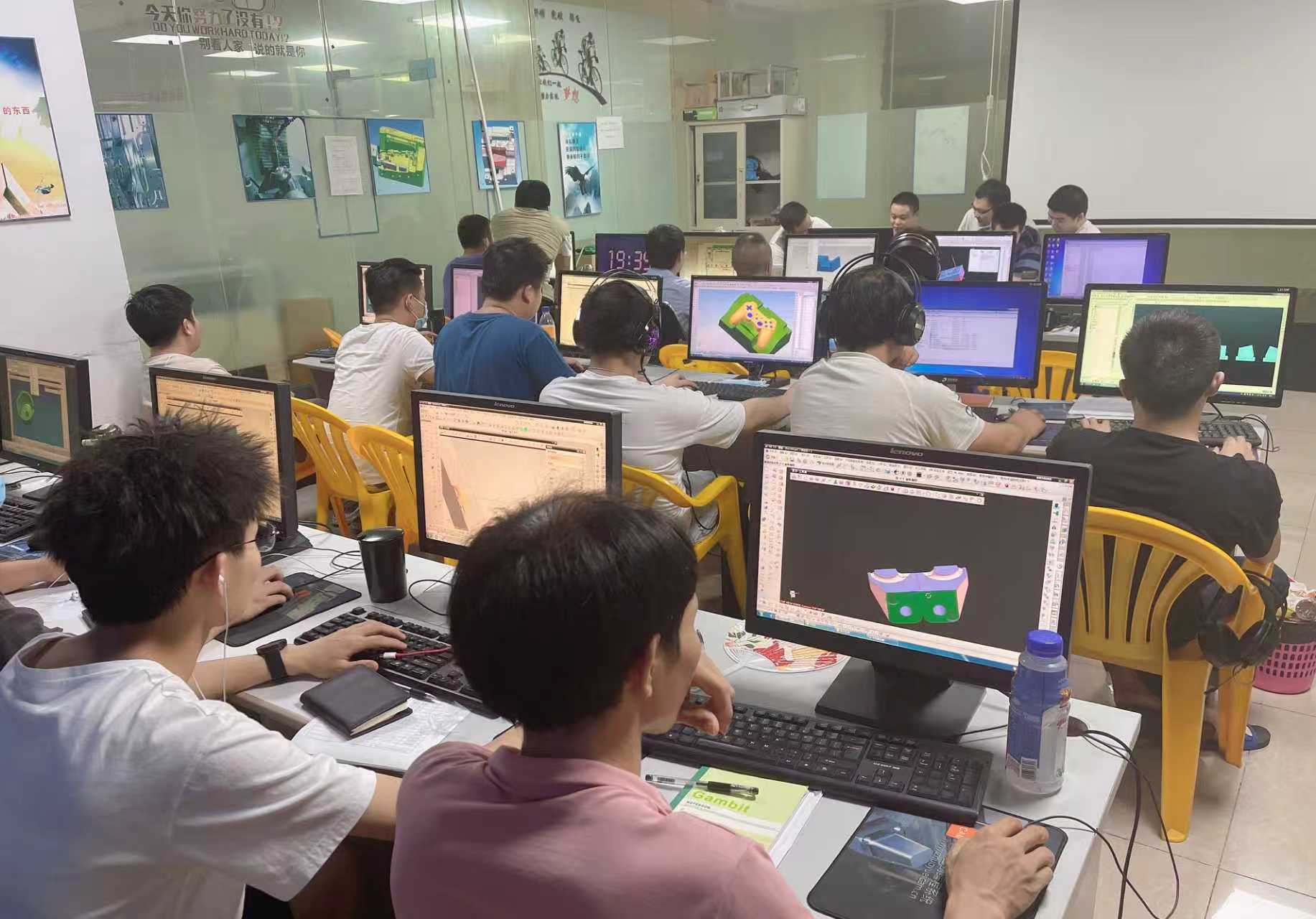
五轴机床运转的嗡鸣声中,代码正悄然改写中国制造的精度与效率。在深圳市光明区政群培训中心内,一群年轻人正通过鼠标和键盘,掌握着制 造业转型升级的核心密码。 02 政群优势,政府认证的权威培训平台,深圳市光明区政群培训中心不是普通的社会培训机构。作为广东省高技能人才培训基地和深圳市高技能人才培训 基地,它承载着为地区产业升级输送技能型人才的重要使命。政群培训中心依托政府背景,与比亚迪、大族激光、富士康等50余家深圳头部制造企业建立了 稳固的人才输送管道。这种深度产教融合模式,确保学员所学技能与企业需求高度匹配。在师资配置上,中心聘请了具有12年一线工厂经验的工程师担任主 讲教师,采用"理论+实战"双轨教学模式。小班授课制确保每位学员都能获得充分指导,1对1辅导则针对不同学员的进度提供个性化支持。 政府的政策支持也体现在培训补贴上。符合条件的学员可享受高达50% 的培训费用补贴,失业人员、退役军人等特定群体还可申请额外补助,极大降低了 学习门槛。 03 课程核心,从零基础到UG编程精英的完整路径,光明区政群培训中心的UG编程课程设计紧贴工业实际需求,全面覆盖从CAD设计到CAM编程的全流程 技能。基础阶段,学员系统 ...
[奋力实现开局之年“开门红”]贵阳极光湾锚定年产50万台发动机目标
Xin Lang Cai Jing· 2026-01-18 22:33
Group 1 - The company, located in Guizhou's Baiyun Economic and Technological Development Zone, aims to produce 500,000 engines annually by 2026, with a target of 45,000 engines for January [1] - The company has implemented technological innovations and model explorations, including smart production lines and digital twin systems, which have increased production efficiency by 30% and reduced defect rates by 15% [1] - The core product, the BHE15 series 1.5TD turbocharged engine, is compatible with multiple energy sources and is not only supplied to domestic manufacturers but also exported to international markets such as Sweden and Belgium [1] Group 2 - The company has established a 450MWp distributed photovoltaic system, achieving near-zero carbon emissions in production through a combination of rooftop solar, green electricity procurement, and smart energy scheduling [2] - Utilizing the "Ji Carbon Cloud" carbon management platform, the company has created a carbon tracking system covering the entire industry chain, allowing for precise carbon footprint accounting for each engine produced [2] - The company is in the process of applying for an excellent-level smart factory certification, aiming to complete this by 2026 [3]
“灯塔”引航,盐城加速迈向智造强市
Xin Hua Ri Bao· 2026-01-18 21:25
□ 本报记者梅剑飞卞小燕苑彩霞 1月15日,世界经济论坛公布最新一批全球"灯塔工厂"名单,盐城市江苏悦达纺织集团有限公司、佛吉 亚(盐城)汽车部件系统有限公司两家企业入选。此次入选不仅彰显了盐城制造业在全球产业链中的卓越 竞争力,更标志着其智能制造产业创新迈向新高度。 加快培育新质生产力、推动制造业转型升级,盐城以"专精特新"为支点,撬动产业格局深度重构。2025 年,盐城市净增高新技术企业558家,位列全省第二,总数达3400家;新增国家级专精特新"小巨人"企 业50家,全省第六,累计达146家;新增省级专精特新中小企业736家,累计达1762家,新增数、累计数 均列全省第五,较2024年进一位。创新驱动,正加速点燃盐城智造新活力。 "灯塔"照见盐城制造新高度 走进江苏悦达纺织集团有限公司10万锭绿色智能工厂,430多台数字化设备有序运转,41台AGV小车沿 着智能轨道无声穿梭,30多万只带芯筒管在流水线上快速流转,万锭用工从55人减至15人,生产效率却 提升了近30%。"我们将新一代信息技术与生产经营深度融合,推动生产管理模式的创新,提升新质生 产力水平。"悦达纺织集团党委书记、董事长凌良仲说。 而在佛吉 ...
股市必读:均普智能(688306)1月16日主力资金净流入276.21万元
Sou Hu Cai Jing· 2026-01-18 19:58
Core Viewpoint - Ningbo Junpu Intelligent Manufacturing Co., Ltd. is planning to issue shares to specific investors to raise up to 1.0339342 billion yuan for projects related to intelligent robotics, medical health intelligent equipment, and information technology construction [2][5]. Group 1: Trading Information - As of January 16, 2026, Junpu Intelligent's stock closed at 11.49 yuan, up 2.77%, with a turnover rate of 1.61%, trading volume of 197,900 shares, and a transaction amount of 225 million yuan [1]. - On January 16, 2026, the net inflow of main funds was 2.7621 million yuan, indicating a positive short-term attitude from main investors [6]. Group 2: Company Announcements - Yongxing Securities Co., Ltd. issued a sponsorship letter for Junpu Intelligent's stock issuance, confirming that the fundraising will be used for intelligent robotics R&D, medical health applications, information technology construction, and working capital [2][3]. - The total amount to be raised from the stock issuance is capped at 1.0339342 billion yuan, with the issuance price set at no less than 80% of the average trading price over the previous 20 trading days [2][4]. - The application for the stock issuance has been accepted by the Shanghai Stock Exchange, but it still requires approval from the exchange and registration from the China Securities Regulatory Commission [4][6].
