华为乾崑

Search documents
当GDP增速放缓,广东为何把“两业协同”设为新春第一议题?
Bei Ke Cai Jing· 2026-02-25 00:31
Core Viewpoint - Guangdong's "New Spring First Meeting" emphasizes the theme of "coordinated development of manufacturing and service industries," marking a shift from previous years' focus on solely manufacturing and innovation [1][4]. Group 1: Economic Context - Guangdong's GDP growth rate is projected at 3.9% for 2025, significantly below expectations, with a total GDP of 14.58 trillion yuan [3]. - The province has maintained its position as a leader in both manufacturing and service sectors, with service industry value exceeding 8.4 trillion yuan, accounting for over 10% of the national total [1][2]. Group 2: Challenges and Opportunities - The "white paper" released by the Guangdong Provincial Development and Reform Commission highlights challenges in manufacturing, including the "big but not strong" issue and insufficient high-end service supply [2]. - The need for technological innovation and financial support for manufacturing is emphasized, indicating a shift towards a model where service industries support manufacturing growth [5]. Group 3: Strategic Initiatives - The government aims to promote a "manufacturing + service" model, transitioning from traditional manufacturing to a more integrated approach that includes service offerings [8]. - Guangdong's leadership is focused on creating a conducive environment for new industries, addressing regulatory challenges to foster innovation and growth [9][10]. Group 4: Future Goals - The long-term vision includes doubling the economic output to approximately 25.8 trillion yuan by 2032, with a focus on attracting high-quality talent to support innovation [11]. - The emphasis on "two industries" working together is seen as a strategic move to enhance economic resilience and adaptability in the face of current pressures [12].
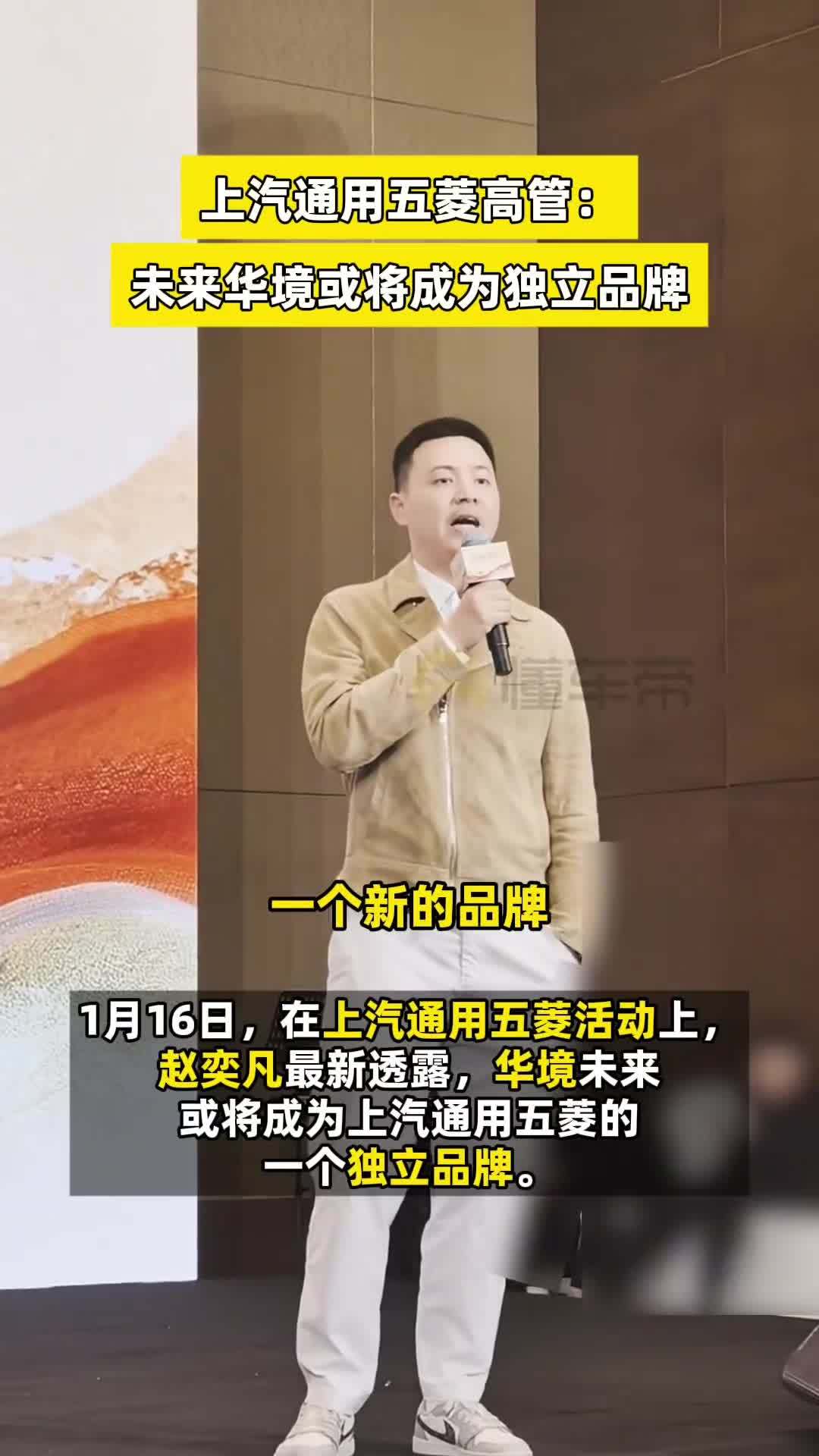
上汽通用五菱赵奕凡透露华境现在是宝骏的一个系列,但必将成为新品牌
Xin Lang Cai Jing· 2026-01-19 01:21
Core Viewpoint - SAIC-GM-Wuling is launching a new brand "Hua Jing" with its flagship model "Hua Jing S," which is set to be released in the first half of 2026 in collaboration with Huawei [5][14]. Group 1 - The "Hua Jing S" is currently part of the Baojun series but will evolve into a new brand under SAIC-GM-Wuling [9]. - The vehicle will be a large six-seat SUV equipped with Huawei's advanced technology, specifically the "Hua Wei Qian Kun" system [5][14]. - The "Hua Jing S" is produced in a national leading intelligent factory, marking it as the first product of the collaboration between SAIC-GM-Wuling and Huawei's "Three Intelligence" initiative, which includes intelligent manufacturing, assisted driving, and intelligent cockpit [12][14]. Group 2 - The "Hua Jing S" will feature standard Huawei Qian Kun technology, including Qian Kun Intelligent Driving ADS 4 Pro and Hongmeng cockpit [6][14]. - The manufacturing process utilizes a national leading intelligent factory's smart island manufacturing system [6][14]. - The vehicle incorporates the "Tian-Ling-Shen" technology system, which consists of Tian Yu architecture, Lingxi power, and Shen Lian battery [6].

从“蔚小理”到“零鸿米”
Ren Min Ri Bao· 2026-01-16 10:17
Group 1 - The new energy vehicle (NEV) market is experiencing a shift in competitive dynamics, with new players like Leap Motor and Hongmeng Zhixing rising in sales rankings, while traditional brands like NIO, Xpeng, and Li Auto are adjusting their strategies [2] - The entry of internet companies into the automotive sector has led to innovative business models and product definitions, with NIO focusing on user experience through battery swapping, Xpeng emphasizing smart driving, and Li Auto expanding the concept of automotive living spaces [2] - The NEV industry is transitioning from electrification to intelligence, entering a phase where technological differentiation, cost efficiency, and global capabilities are critical for survival [2] Group 2 - The rise of "Zero, Hongmeng, and Xiaomi" reflects a new trend in the automotive industry's integration, supported by leading ICT companies like Huawei and Dahua, which provide technological advantages in smart cockpit and driving solutions [3] - Huawei's focus on ICT technology and its collaboration with automotive companies to enhance vehicle quality is becoming a consensus in the industry, with many manufacturers adopting Huawei's integrated product development and marketing systems [5] - The collaboration between GAC Group and Huawei in developing the Qijing automotive design center showcases the importance of user feedback in product design, highlighting the integration of advanced development processes [4]
从“蔚小理”到“零鸿米”(小经说汽车)
Ren Min Ri Bao· 2026-01-15 22:04
Group 1 - The new rankings of car manufacturers in 2025 show significant changes, with Leap Motor leading in sales, followed by Hongmeng Zhixing, and Xiaomi entering fourth place, while XPeng, Li Auto, and NIO rank third, fifth, and sixth respectively [1] - The shift in rankings reflects changes in the comprehensive competitiveness of car manufacturers and indicates a transformation in the automotive market competition landscape [2] - The rise of "Zero, Hongmeng, and Xiaomi" signifies a new trend in the integration and development of the automotive industry, supported by leading ICT companies like Huawei and Dahua, which provide technological advantages and efficient supply chain capabilities [3] Group 2 - The automotive industry is transitioning from the "first half" of electrification to the "second half" of intelligence, with competition now focusing on technological differentiation, cost efficiency, and global capabilities [2] - Huawei's role in the automotive sector is emphasized, as it provides smart solutions and collaborates with various car manufacturers to enhance their product development and marketing processes [4] - The integration of ICT technologies into the automotive industry is expected to foster continuous innovation and potentially create world-class Chinese intelligent mobility brands [4]
西部证券晨会纪要-20251126
Western Securities· 2025-11-26 02:08
Group 1: Chemical & New Materials Industry Strategy - The chemical industry is expected to reach a turning point due to valuation and profit bottoming out, driven by anti-involution policies and resource supply contraction, with demand gradually recovering [4][5] - As of November 20, 2025, the chemical sector has seen a 37% increase, with the basic chemical sector's net profit for Q1-Q3 2025 reaching 116 billion yuan, a year-on-year increase of 7.45% [4] - The demand side is supported by the Federal Reserve restarting the interest rate cut cycle and stabilizing global political situations, while domestic exports and the automotive sector bolster demand [4][5] Group 2: Resource Supply and Demand Dynamics - Potash prices are expected to rise in 2026, with the industry maintaining a tight supply-demand balance from 2026 to 2028 [5] - The phosphoric chemical sector is facing capacity constraints, with projected demand for phosphoric acid from 2025 to 2027 being 42.33 million tons, 43.26 million tons, and 43.88 million tons respectively [5] - The refrigerant sector is experiencing supply restrictions due to quota limitations, leading to a steady increase in market conditions for second and third-generation refrigerants [5] Group 3: Investment Recommendations - Recommended companies in the potash sector include Dongfang Iron Tower, Yaqi International, and Salt Lake Co [6] - In the phosphoric chemical sector, recommended companies include Chuanheng Co, Yuntu Holdings, and Xingfa Group [6] - The organic silicon industry is expected to see a supply-demand balance improve in 2026, with companies like Dongyue Silicon Material and Xingfa Group being highlighted [6] Group 4: AI and Semiconductor Demand - The demand for high-performance new materials is driven by the explosion in AI and semiconductor needs, with electronic resins and fillers seeing rapid growth [6] - The semiconductor materials sector is focusing on domestic supply chain security, emphasizing the importance of local production [6] - The cooling liquid market is expected to grow due to increasing server power demands, with immersion cooling becoming a significant future direction [6] Group 5: Company Performance - Kuaishou-W - Kuaishou-W reported Q3 2025 revenue of 35.554 billion yuan, a year-on-year increase of 14%, with net profit reaching 4.488 billion yuan, up 37% year-on-year [15][16] - The average daily active users (DAU) for Kuaishou in Q3 2025 was 416 million, reflecting a 2.1% year-on-year growth [15] - The company is actively commercializing its AI business, with AI revenue exceeding 300 million yuan in Q3 2025, contributing to a 4%-5% increase in online marketing revenue [16][17]
雷军缺席,两大新主角联袂登场,“处处都有华为的身影”
3 6 Ke· 2025-11-23 23:18
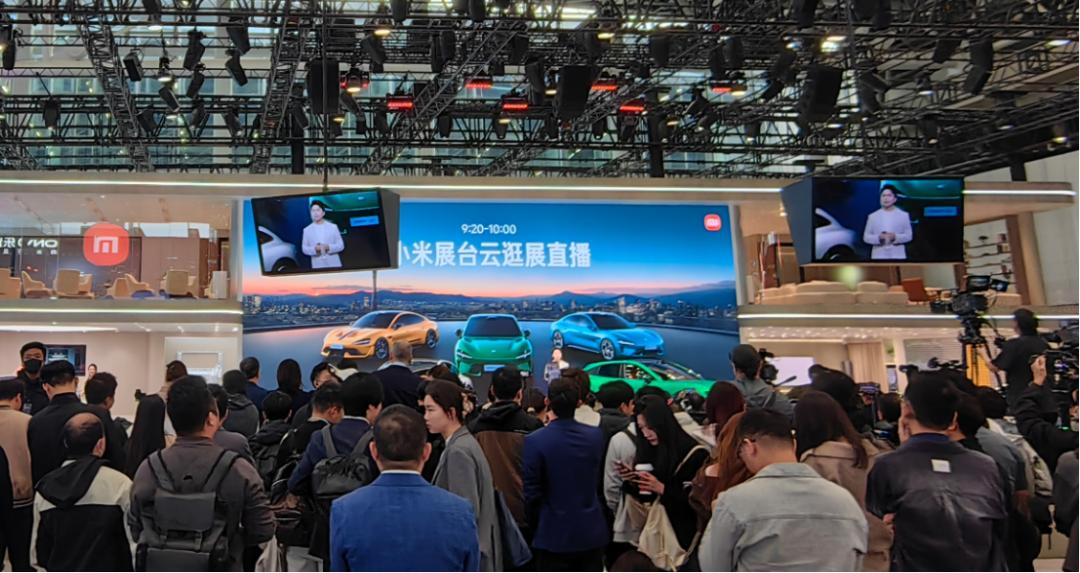
Core Insights - The absence of key figures like Lei Jun at the 2025 Guangzhou Auto Show marks a shift in focus towards new players like Huawei's Qian Kun, highlighting a "new entrants and old exits" theme in the automotive industry [3][4] - The proportion of new energy vehicles (NEVs) at the show increased significantly to 57.97% from 43.72% in the previous year, indicating a growing trend towards electrification in the automotive market [3][11] Group 1: Industry Trends - The 2025 Guangzhou Auto Show showcased 1,085 vehicles, with 629 being new energy vehicles, reflecting a strong consumer interest in NEVs [11] - The event highlighted three major trends: the rise of large-scale and personalized models, the increasing focus on individualization as a growth strategy, and the ongoing debate between range-extended and pure electric technologies [13][14] Group 2: Company Collaborations - Huawei's Qian Kun brand is gaining traction as it collaborates with multiple automakers, including Avita and GAC Group, to enhance their smart vehicle offerings [8][9] - Avita and Huawei announced a strategic partnership to upgrade their collaboration model, expanding their cooperation into various areas such as user insights and product development [8] Group 3: Technological Innovations - AI technology is becoming a central theme at the auto show, with companies like Seres showcasing advancements in smart electric vehicle platforms [17] - Xiaopeng Motors introduced several AI-driven applications, including a new generation of autonomous driving technology, indicating a shift towards integrating AI in automotive solutions [19][20]
雷军缺席广州车展!两大新主角联袂登场,“处处都有华为的身影”
Zhong Guo Ji Jin Bao· 2025-11-23 05:41
Core Insights - The absence of key figures like Lei Jun at the 2025 Guangzhou Auto Show highlights a shift in focus towards new players like Huawei's Qian Kun, which is gaining prominence in the automotive sector [3][4][9] - The proportion of new energy vehicles (NEVs) at the show increased significantly, reaching 57.97% compared to 43.72% in the previous year, indicating a growing trend towards electrification in the automotive market [3][13] Group 1: Industry Trends - The 2025 Guangzhou Auto Show showcased a notable increase in the number of NEVs, with 629 out of 1,085 vehicles displayed being electric [13][16] - A trend towards larger, personalized vehicle models is emerging, with several companies launching flagship MPVs and SUVs, driven by policy incentives and profit motives [16] - The competition between pure electric and range-extended technologies remains a hot topic, with various companies showcasing both types of vehicles at the event [17][18] Group 2: Company Collaborations - Huawei's Qian Kun is establishing itself as a key player, collaborating with multiple automakers like GAC Group and Dongfeng to launch new brands [9][10] - The partnership between Avita and Huawei has expanded significantly, focusing on user insights, product development, and integrated marketing strategies [9][10] - GAC Group's new brand, Qijing, aims to position itself in the high-end smart NEV market, with plans to launch an SUV and a coupe by 2026 [10][11] Group 3: Technological Innovations - AI technology is becoming a central theme, with companies like Seres showcasing advancements in smart electric vehicle platforms [19][22] - Xiaopeng Motors is emphasizing its commitment to AI-driven innovations, with plans to launch several AI applications by 2026 [21][22] - The competition in autonomous driving technology is intensifying, with various companies announcing new features and capabilities at the show [21][22]
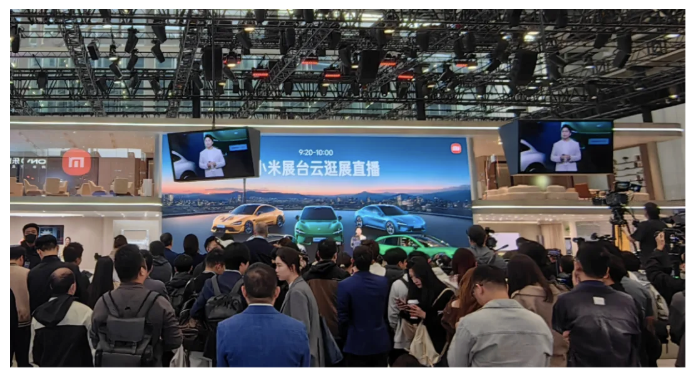
雷军缺席!两大新主角联袂登场,“处处都有华为的身影”
中国基金报· 2025-11-23 03:14
Core Viewpoint - The 2025 Guangzhou International Auto Show highlights a shift in the automotive landscape, with significant participation from new players like Huawei's QianKun and a notable absence of established figures like Lei Jun from Xiaomi [4][6][10]. Group 1: Event Overview - The absence of key figures such as Lei Jun and Yu Chengdong has made the 2025 Guangzhou Auto Show feel less vibrant, but Huawei's QianKun has emerged prominently as a supplier and exhibitor [6][10]. - The proportion of new energy vehicles (NEVs) at the show reached 57.97%, up from 43.72% in the previous edition, indicating a growing trend towards electrification [4][14]. Group 2: Huawei's Role - Huawei QianKun has transitioned from a background role to a front-stage presence, showcasing partnerships with various automakers and emphasizing its smart automotive solutions [6][8]. - The collaboration between Huawei and automakers like Avita has deepened, with a focus on upgrading their partnership to include comprehensive areas such as user insights and product development [10]. Group 3: Trends in the Automotive Industry - The show revealed three major trends: the rise of large-scale and personalized vehicle models, the ongoing debate between pure electric and range-extended technologies, and the increasing importance of AI in automotive innovation [14][22]. - A total of 1,085 vehicles were displayed, with 629 being NEVs, reflecting a strong consumer interest in electric vehicles [14][17]. Group 4: Technological Innovations - AI technology is becoming a core driver of change in the automotive industry, with companies like Xpeng showcasing advancements in AI applications and autonomous driving capabilities [22][26]. - Several automakers are focusing on enhancing their AI capabilities, with plans to integrate advanced features into their vehicles, such as intelligent navigation and emergency response systems [27][28].

雷军缺席!两大新主角联袂登场 “处处都有华为的身影”
Zhong Guo Ji Jin Bao· 2025-11-23 03:04
Core Insights - The absence of key figures like Lei Jun at the 2025 Guangzhou Auto Show marks a shift in the automotive landscape, with Huawei's new brand, Huawei QianKun, emerging as a significant player [2][4] - The proportion of new energy vehicles (NEVs) at the show increased to 57.97% from 43.72% in the previous edition, highlighting the growing importance of NEVs in the market [2][8] Group 1: Industry Trends - The 2025 Guangzhou Auto Show showcased 1,085 vehicles, with 629 being NEVs, indicating a strong consumer interest in electric vehicles [8] - The event highlighted three major trends: the rise of personalized and large-volume models, the pursuit of individuality by automakers, and the ongoing debate between range-extended and pure electric technologies [9][10] Group 2: Huawei's Role - Huawei QianKun transitioned from a background supplier to a prominent exhibitor, showcasing partnerships with various automakers and emphasizing its smart automotive solutions [4][5] - The collaboration between Huawei and automakers like Avita is deepening, with a focus on upgrading their partnership to include comprehensive areas such as user insights and product development [4][5] Group 3: New Energy Vehicles - The introduction of new brands like "Qijing" by GAC Group in collaboration with Huawei aims to target the high-end smart NEV market, with plans to launch models priced around 350,000 yuan [5][6] - The competition between range-extended and pure electric vehicles remains a hot topic, with companies like NIO advocating for pure electric technology while others explore hybrid solutions [10] Group 4: AI Integration - AI technology is becoming a central theme, with companies like Seres and XPeng showcasing advancements in AI-driven automotive solutions [11][12] - XPeng's focus on AI applications, including autonomous driving and humanoid robots, reflects a broader trend of integrating AI into the automotive industry [12][14]

雷军缺席!两大新主角联袂登场,“处处都有华为的身影”
Zhong Guo Ji Jin Bao· 2025-11-23 02:55
Core Insights - The absence of key figures like Lei Jun at the 2025 Guangzhou Auto Show marks a shift in focus towards new players like Huawei's QianKun, highlighting a "new entrants, old exits" trend in the automotive industry [4][6] - The proportion of new energy vehicles (NEVs) at the show increased significantly to 57.97% from 43.72% in the previous edition, indicating a growing market presence for NEVs [4][11] Group 1: Industry Trends - The 2025 Guangzhou Auto Show showcased 1,085 vehicles, with 629 being NEVs, reflecting a strong consumer interest in electric vehicles [11] - A notable trend is the increasing emphasis on large, personalized vehicle models, with several companies launching flagship MPVs and SUVs during the event [13][14] - The competition between pure electric and range-extended technologies remains a hot topic, with various companies showcasing their respective advancements in these areas [15][16] Group 2: Company Collaborations - Huawei's QianKun brand is gaining traction as a key player, collaborating with multiple automakers like Avita and Dongfeng to enhance their vehicle offerings [8][9] - Avita and Huawei announced a strategic partnership to upgrade their collaboration model, expanding their joint efforts across various domains including product development and marketing [8] - The partnership between GAC Group and Huawei's QianKun aims to launch a high-end smart NEV brand named "Qijing," targeting the 350,000 yuan market segment [9] Group 3: Technological Innovations - AI technology is becoming a central theme at the auto show, with companies like Seres showcasing their advancements in smart electric vehicle platforms [16][19] - Xiaopeng Motors introduced several AI-driven applications, including a new generation of autonomous driving technology, set to enter mass production by 2026 [19][20] - The event highlighted the importance of self-developed capabilities in AI and autonomous driving among new automotive players, indicating a shift towards integrated technological solutions [20]