Robotaxi

Search documents
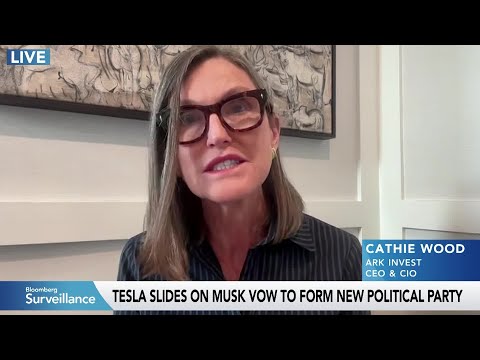
Musk Is Less Distracted Since Leaving DOGE, Wood Says
Bloomberg Television· 2025-07-08 13:20
Let's just talk about what then. I've said to us yesterday that he believes Elon Musk is crossing a line and that the board needs to step in. Do you share that view.Well, I have to tell you, we've been dealing with controversy around Elon Musk in one form or another since we first bought the stock when the company was founded in 2014. And we own Tesla and it's one of the top holdings in three of our ETFs. So R, K, k, W, and Q.So we are watching this like a hawk, no question about it. But with the experience ...


Musk Needs to Focus on Tesla, Not Trump, Says Azoria CEO
Bloomberg Technology· 2025-07-07 15:45
I think we just start with the basics, James, if we can. Why did you write that open letter to test this board. And why do you think they need to understand the formation of the America Party in the context of whether or not is a benefit to the company and Tesla's future goals.Well, good morning, Ed. The truth is that when you have a full time CEO in Elon Musk, who has been an extraordinary CEO, his time and energy needs to go to Tesla and synergistic companies like X, AI or Space X, a political party, rega ...
二季度全球销量下滑,中国成特斯拉唯一增长引擎
2 1 Shi Ji Jing Ji Bao Dao· 2025-07-07 12:35
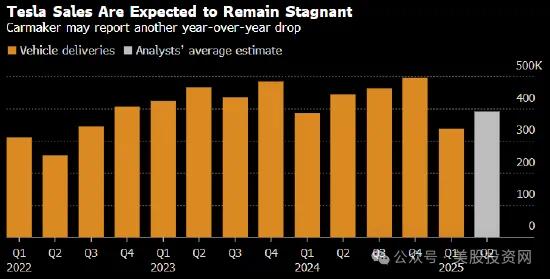
Core Insights - Tesla's global sales faced a significant decline in Q2 2025, with a total delivery of 384,100 vehicles, marking a year-on-year drop of 13.5% [1] - In contrast, the Chinese market emerged as a growth pillar, with Tesla's Shanghai factory delivering 191,720 vehicles, accounting for 47% of global production [1] - The disparity in sales performance between regions is evident, as Tesla's new car registrations in the EU plummeted by 40.5% in May, while deliveries in China grew by 10.98% [1][4] Group 1: Market Performance - Tesla's Q2 2025 global production exceeded 410,000 electric vehicles, but the company experienced a two-quarter consecutive decline in sales [1] - The company’s reliance on the Model 3 and Model Y is evident, as these two models constituted 97.3% of total deliveries, while higher-end models contributed only 10,400 units, a 50% year-on-year decline [4] - The Cybertruck has faced quality issues, with eight recalls since its production began in 2023, leading to diminished market trust [4] Group 2: Competitive Landscape - Chinese automakers are rapidly gaining market share in Europe, with BYD's pure electric sales surpassing Tesla for the first time in April, showing a year-on-year growth of 359% [5] - Other Chinese brands like Geely and SAIC also reported significant increases in new car registrations in Europe, indicating a growing competitive threat to Tesla [5] - Tesla's market share in China has decreased from a peak of 15% in 2020 to 7.6% in 2025, despite a strong performance in Q2 [7][8] Group 3: Strategic Challenges - Tesla is facing a "triple crisis," including product lineup stagnation, regulatory hurdles for its Full Self-Driving (FSD) technology, and a decline in consumer trust due to Elon Musk's controversial public statements [4][5] - The company’s pricing strategy has come under scrutiny, as it raised prices on some Model 3 variants while competitors are offering more features at lower prices [8] - The marketing landscape is shifting, with new entrants like Xiaomi's automotive venture creating significant competition for Tesla's market share [8][9]
Could This Be the Best Reason to Buy Tesla Stock Hand Over Fist? (Hint: It's Not Robotaxis.
The Motley Fool· 2025-07-07 08:47
Core Viewpoint - Tesla's stock presents a buying opportunity as it remains approximately 34% below its previous high, appealing to long-term growth investors [1] Group 1: Robotaxi Market Potential - Ark Invest estimates the robotaxi market could reach around $4 trillion by 2030, with Tesla positioned as a leading beneficiary due to its cost-effective technology and scalability [3] - Other analysts project more conservative figures, with Fortune Business Insights estimating the market at nearly $119 billion by 2030 and Research and Markets forecasting a compound annual growth rate of 45.2%, reaching $124.9 billion by 2034 [4] Group 2: Humanoid Robotics Market Opportunity - Morgan Stanley projects the humanoid robotics market could exceed $5 trillion by 2050, with significant adoption expected in the 2030s [5] - Citigroup's analysts estimate the humanoid robotics market could be closer to $7 trillion by 2050, highlighting the potential for Tesla's Optimus robot to play a major role in home services [6] - Ark Invest is even more optimistic, suggesting the global humanoid robotics market could reach around $24 trillion, with Tesla expected to capture a significant share [6] Group 3: Tesla's Optimus Ambitions - CEO Elon Musk indicated that Optimus could generate over $10 trillion in revenue, although he acknowledged that this estimate may seem extreme [8] - Musk predicts production of 1 million Optimus units per year by 2030, with production costs potentially under $20,000, making it accessible for many families [9] - Tesla plans to utilize Optimus extensively within its operations, expecting thousands of units to be working in factories by the end of the year [10] Group 4: Challenges and Competition - Tesla faces challenges with its Optimus program, including unexpected leadership changes and production delays due to design modifications [11] - The competitive landscape is significant, with Morgan Stanley noting that China is leading in humanoid robot development [11] - The long-term market estimates for humanoid robotics extend 25 years into the future, necessitating a long-term investment perspective [12]
特斯拉销量不及预期,但市值却大涨3400亿,马斯克还能兼顾建党吗?
3 6 Ke· 2025-07-07 07:44
Core Viewpoint - Tesla's Q2 delivery data shows a significant decline in sales, with a total of 384,122 vehicles delivered, representing a 13.5% year-over-year decrease, marking the second consecutive quarter of decline [3][4][16] Group 1: Sales Performance - Tesla's Q2 delivery volume of 384,122 vehicles is lower than the previous year, with Model 3/Y combined deliveries at 373,728 units [3][4] - The first quarter of 2025 saw a delivery volume of approximately 336,700 vehicles, with a 32% quarter-over-quarter and 13% year-over-year decline, the lowest since Q4 2022 [3][4] - Despite the poor sales data, Tesla's stock price surged by 4.97%, adding $48.1 billion to its market capitalization, attributed to slightly exceeding analyst expectations [4][16] Group 2: Market Sentiment and Analyst Expectations - Analysts had predicted a more severe decline, with expectations set at 365,000 vehicles, making the actual delivery a "low expectation + small exceedance" scenario [4][9] - Cathie Wood, a prominent Tesla bull, increased her stake by purchasing 56,368 shares valued at approximately $17.91 million [4][9] - The disparity in analyst price targets for Tesla ranges from $115 to $500 per share, indicating a wide range of opinions on the company's future valuation [8][9] Group 3: Strategic Focus on AI and Future Prospects - Elon Musk emphasizes that Tesla is an AI company rather than a traditional automaker, aiming to shift focus from manufacturing to software capabilities like autonomous driving and robotics [5][8] - The future of Tesla is heavily tied to the success of its Full Self-Driving (FSD) technology and the anticipated Robotaxi service, which Musk believes could generate significant revenue [10][11] - The Robotaxi project is projected to potentially generate $203 billion in annual revenue by 2030, with a significant portion being profit [10][11] Group 4: Challenges and Adjustments - Tesla's energy storage business has also seen a decline, with Q2 installations at 9.6 GWh, down from a peak of 11 GWh in Q4 2022 [18][20] - The company is facing political and economic challenges in the U.S., including tariff pressures and uncertainty regarding policy support for electric vehicles [18][21] - Tesla's reliance on the Chinese market is increasing, with a notable drop in market share from 15.8% in Q1 2021 to 5.6% in Q1 2025 [16][17] Group 5: Organizational Changes and Market Strategy - Tesla is undergoing significant organizational changes, including layoffs and restructuring to adapt to market demands, particularly focusing on lower-tier markets [17][18] - The introduction of Model 3 and Model Y in the rural market indicates a strategy to penetrate deeper into the Chinese market before launching new models [17][18] - The company is also adjusting its approach to the Optimus robot project, pausing component procurement, which may affect its sales targets [20][21]
马斯克的政治豪赌,输了
汽车商业评论· 2025-07-05 13:14
Core Viewpoint - Tesla is facing significant challenges in mid-2025, including declining sales, brand reputation issues, and financial setbacks, exacerbated by CEO Elon Musk's public disputes with political figures and the implications of the "Big Beautiful Bill" [2][4][6]. Group 1: Legislative Impact - The "Big Beautiful Bill" signed by President Trump threatens Tesla's key revenue source, the regulatory credit system, which could lead to a loss of $2 billion in profits [5][15]. - The bill eliminates federal tax credits for electric vehicle purchases, which could further impact Tesla's sales, especially among middle and low-income consumers [10][15]. - Analysts estimate that the policy change could reduce Tesla's profits by over 50%, with annual revenue losses potentially reaching $2 billion, primarily affecting its U.S. operations [15][16]. Group 2: Sales and Market Performance - Tesla's sales have declined for two consecutive quarters, with a 13.4% drop in vehicle sales from April to June 2025, totaling 384,122 units sold [6][18]. - In China, Tesla's sales have also decreased by 22,000 units compared to the previous year, despite attempts to stimulate demand through pricing strategies [21]. - Elon Musk has taken direct control of sales in North America and Europe, indicating a hands-on approach to stabilize the company's performance amid declining sales [18][19]. Group 3: Brand Reputation and Consumer Sentiment - Tesla's brand perception has deteriorated across political affiliations, with a significant drop in positive recognition among Democrats and Independents, and a lack of recovery signs [24][26]. - 33% of surveyed consumers indicated they are less likely to purchase a Tesla due to Musk's political actions, reflecting a negative impact on consumer sentiment [26]. - The company's Robotaxi initiative faces skepticism, with 55% of consumers unwilling to allow their personal vehicles to be used as autonomous taxis, raising concerns about the future viability of this business model [28][34].

特斯拉(TSLA.US)交付“喜忧参半” 高盛上调目标价但预警短期挑战 FSD/Robotaxi成关键变量
智通财经网· 2025-07-04 09:05
Group 1: Tesla's Performance and Outlook - Goldman Sachs raised Tesla's 12-month target price from $285 to $315 based on better-than-expected delivery data for Q2 2025, while maintaining a "neutral" rating due to challenging short-term fundamentals in the automotive business [1] - Tesla's global vehicle deliveries reached 384,000 units in Q2 2025, a 14% increase quarter-over-quarter but a 13% decrease year-over-year, falling short of market consensus of 394,000 units [2] - The production volume for the quarter was approximately 410,000 units, reflecting a 13% quarter-over-quarter increase, while year-over-year figures remained stable [2] Group 2: Challenges and Future Projections - Goldman Sachs noted that the outlook for Tesla's vehicle deliveries is contentious, influenced by the timing of new model releases and their differentiation from existing models; the anticipated low-cost model has not yet been launched [3] - The firm adjusted its 2025 delivery forecast for Tesla from 1.575 million to 1.594 million units, representing an 11% year-over-year decline, while estimates for 2026 and 2027 remain unchanged at 1.865 million and 2.15 million units, respectively [3] - The expected non-GAAP gross margin for Q2 2025 is now projected at 12.7%, up from a previous estimate of 12.5%, primarily due to increased sales volume [3] Group 3: Robotaxi and FSD Developments - Despite positive early user feedback, there are reports of underperformance leading to scrutiny from the NHTSA; short-term growth in the Robotaxi business is expected to be slow, but long-term opportunities in the autonomous driving market remain significant [4] - Tesla's energy storage deployment is projected to reach 9.6 GWh in 2025, up from 9.4 GWh in 2024, with Q1 2025 expected to be 10.4 GWh; however, profit margins may be pressured by tariffs on lithium iron phosphate batteries sourced from China [4] Group 4: Optimus Robot Production Expectations - Tesla plans to manufacture thousands of Optimus robots by the end of the year, with a cumulative production target of 10,000 units by 2025; however, recent reports indicate a pause in production following the departure of the Optimus business head [5] Group 5: Rivian's Performance - Rivian delivered 10,661 vehicles in Q2 2025, a 23% increase quarter-over-quarter but a 23% decrease year-over-year, aligning closely with market consensus [7] - Production for the quarter was 5,979 vehicles, reflecting a 59% quarter-over-quarter decline and a 38% year-over-year decline, attributed to preparations for the upcoming 2026 model [7] - Goldman Sachs slightly adjusted Rivian's 2025 delivery forecast from 43,000 to 42,500 units, while maintaining estimates for 2026 and 2027 at 55,000 and 92,000 units, respectively [7]
Tesla Q2 Deliveries Weak But Shares Rise: What's Next for Investors?
ZACKS· 2025-07-03 13:56
Core Insights - Tesla's second-quarter 2025 production and delivery numbers showed a decline in both metrics, with production at 410,244 vehicles and deliveries at 384,122 units, a 13.4% decrease year over year, falling short of Wall Street's expectations [1][10] - The company is facing a demand problem, as evidenced by the decline in deliveries despite increased production and inventory levels [2][3] - Tesla's energy storage business is performing well, with deployments rising to 9.6 GWh, and the company expects at least 50% growth in this segment for 2025 [4][10] Production and Deliveries - Tesla produced 410,244 vehicles in Q2 2025, which is lower compared to the previous year [1] - Deliveries totaled 384,122 units, including 373,728 Model 3/Y and 10,394 other models, marking a 13.4% year-over-year decline [1][10] - Deliveries missed Wall Street's consensus estimate of 390,000 units [1] Demand Challenges - The decline in Tesla's deliveries is not reflective of an industry-wide trend, as competitors like General Motors and BYD have seen significant sales increases [3] - Tesla's brand image is suffering due to an aging model lineup and CEO Elon Musk's polarizing public persona [3] Energy Storage and Charging - Tesla's energy storage segment is thriving, with a 113% year-over-year increase in deployments last year, driven by expansion efforts [4] - The company deployed 9.6 GWh of energy storage in Q2 2025, slightly up from 9.4 GWh in the same quarter last year [4][10] - Tesla's Supercharger network, with over 70,000 stations globally, is a critical component of its ecosystem [5] Future Growth Prospects - Tesla is focusing on self-driving technology and has launched robotaxi services in Austin, aiming for this to be a significant revenue stream [6][10] - However, Tesla faces stiff competition in the autonomous vehicle space and must navigate regulatory hurdles and safety concerns [7] Valuation and Market Performance - Year-to-date, Tesla's shares have declined by 22%, underperforming compared to General Motors and BYD [8][10] - Tesla's price/sales ratio stands at a forward multiple of 9.64, significantly higher than its competitors, indicating a stretched valuation [12][15] - The Zacks Consensus Estimate predicts a year-over-year decline in Tesla's sales and earnings for 2025, with EPS estimates trending downward [16][19]
Tesla's stock driven by robotaxi excitement, says Canaccord Genuity's George Gianarikas
CNBC Television· 2025-07-03 12:55
Canaccord Genuity's George Gianarikas and CNBC's Phil LeBeau discuss Tesla's latest deliveries data, the robotaxi story and much more. ...

Billionaire Investor Bill Ackman Is Betting Against Tesla -- At Least for Now
The Motley Fool· 2025-07-03 10:28
Group 1: Bill Ackman's Investment Strategy - Billionaire investor Bill Ackman, known for activist short-selling, has shifted to long positions, with his fund, Pershing Square Capital Management, now holding about a dozen stocks [1] - Pershing Square has never owned Tesla but recently launched a new position that has become its largest holding, representing a bet against Tesla for the time being [1] Group 2: Robotaxi Industry Developments - The robotaxi revolution is gaining momentum, with full-self-driving (FSD) capabilities starting to appear in major cities, indicating the industry is at a tipping point [2] - Tesla has initiated its first batch of autonomous robotaxis in Austin, Texas, marking a soft launch, although the vehicles are currently geo-fenced and monitored by humans [4] Group 3: Competitive Landscape between Tesla and Uber - Pershing Square's significant investment in Uber, which constituted 19% of its portfolio at the end of Q1, positions it against Tesla, as both companies are focusing on robotaxis for future growth [5][6] - Analysts believe Tesla's robotaxi initiative poses a long-term threat to Uber's business model, with the potential for a fleet that operates without human labor [6] - Uber is also pursuing partnerships to build a robust network for autonomous vehicles, collaborating with companies like Waymo and Pony.ai [7][8] Group 4: Future Prospects and Valuations - Uber estimates the autonomous opportunity could exceed $1 trillion in the U.S., positioning itself as a key player due to its scale and operational capabilities [8] - Tesla and Uber are currently competitors in the robotaxi space, although there is speculation about potential partnerships in the future [9][10] - Tesla's stock is trading at approximately 170 times forward earnings, reflecting high expectations for its robotaxi business, while Uber trades at 25 times forward earnings, indicating lower expectations for its autonomous initiatives [11]