产教融合

Search documents
苏州职教构建技能人才创新发展生态
Xin Hua Ri Bao· 2025-11-13 20:57
Core Viewpoint - The news highlights the innovative development of vocational education in Suzhou, emphasizing its integration with industry, technology, and local culture to foster high-quality talent for regional economic growth [1]. Group 1: Integration with Industry - Vocational undergraduate education is crucial for optimizing higher education structure and enhancing adaptability [2]. - Suzhou Vocational University has become a representative of industry integration, operating national-level educational platforms and establishing 36 industry colleges and 387 off-campus training bases [2]. - The university aims to cultivate high-end skilled talents for the intelligent manufacturing industry in the Yangtze River Delta region [2][3]. Group 2: Advancement with Technology - Suzhou's vocational schools are incorporating new technologies into their curricula, such as drone technology, to enhance student engagement and practical skills [4]. - The establishment of a "drone application industry education integration community" aims to systematically cultivate new technology talents [4][5]. - The focus is on providing students with hands-on experience in real-world applications, significantly improving efficiency in agricultural practices [5]. Group 3: Cultural Integration - Vocational education in Suzhou emphasizes not only technical skills but also cultural soft power, aiming to cultivate well-rounded "Su-style" craftsmen [6]. - The integration of local cultural elements into vocational training helps students connect with traditional crafts and regional heritage [7]. - Schools are developing unique cultural IPs that resonate with local artistry, enhancing the educational experience and fostering a deeper understanding of regional culture [7].
中国跨境电商人才培养白皮书(2025)
Sou Hu Cai Jing· 2025-11-13 16:42
Core Insights - The "China Cross-Border E-Commerce Talent Development White Paper (2025)" highlights a significant talent gap in the cross-border e-commerce sector, with a projected shortfall of 4 million professionals by 2025, while the current training capacity is less than 1 million [1] - The demand for talent is characterized by a need for multi-skilled professionals proficient in mainstream e-commerce platform operations, multilingual communication, data analysis, and AI tool application [1] - The report emphasizes the necessity for a collaborative talent cultivation system involving schools, enterprises, and government to meet the high-quality development needs of the industry [1] Talent Demand Analysis - The talent demand in cross-border e-commerce is expected to reach 4 million by 2025, with a notable increase in the need for professionals skilled in small languages and digital capabilities [1] - Key job roles are concentrated in operations, product procurement, and market promotion, with a growing emphasis on digital skills [1] Talent Supply Analysis - The current supply of talent primarily consists of undergraduates and vocational college graduates, with an increasing number of institutions offering cross-border e-commerce programs, particularly in eastern coastal provinces [1] - Social training and vocational certifications, such as the "1+X" certificate, are becoming important supplementary channels for talent supply [1] Employment Analysis - Job opportunities are mainly located in eastern coastal regions and specialized industrial belts, with small and micro enterprises accounting for over 70% of employment [1] - Salary structures show a concentration in the middle range with significant premiums for high-skilled talent, and new employment forms like flexible jobs and digital freelancing are emerging [1] Future Development Trends - The report identifies several key trends for future talent development, including the necessity for digital skills, the popularization of the "cross-border e-commerce + small languages" model, and the integration of education and industry [1] - Recommendations include restructuring the education system, deepening industry-education integration, upgrading competency certifications, and enhancing policy support [1] Achievements in Talent Development - A multi-layered talent cultivation system has been established, with significant contributions from various stakeholders including government, enterprises, and educational institutions [1] - The development of a knowledge map and a new form of curriculum for cross-border e-commerce has been initiated, with a focus on aligning educational content with industry standards [1] Policy and Institutional Support - The report outlines a robust policy framework supporting the development of cross-border e-commerce, including national standards and collaborative mechanisms among various stakeholders [1] - The establishment of national-level training bases and the implementation of international standards for talent cultivation are highlighted as key achievements [1]


坚定加速转型升级,精心谋划好“十五五”发展蓝图!陈吉宁在嘉定区开展专题调研并主持召开座谈会
Di Yi Cai Jing· 2025-11-13 13:47
陈吉宁指出,要立足大局、担当责任,深入打好制造业高质量发展攻坚战。顺应汽车行业高端化、智能 化、绿色化趋势,加快产业生态转型,在数字化人才培养集聚上再发力、在专业化队伍能力提升上再加 力,更好服务支持汽车企业转型。塑造汽车零部件产业新优势,抓住智能驾驶赛道,加大汽车芯片布 局,打造新的核心竞争力。加大力度培育特色主导产业,加强系统化部署,建强市场化服务平台,加快 形成新的经济增长点。要做好生产性服务业发展的大文章,立足主导产业,着眼制造业全生命周期,围 绕研发服务、工业软件、生产性互联网平台、数字广告、运维服务等进一步发力。要切实优化产业生态 和创新生态,围绕龙头企业把产业链供应链上下游企业充分带动起来,在推动创新共同体建设、促进科 技创新与产业创新深度融合上拿出硬招实招。大力深化产教融合,推动高校优化学科专业结构,为区域 产业发展提供有力的人才支撑。 陈吉宁指出,要体现高站位、大格局,推动新城建设进一步提升品质。强化与长三角毗邻地区的联动发 展、与中心城区的协同发展、以城带乡的融合发展,打造现代化人民城市建设的嘉定样板。强化规划引 领,深化产城融合、职住平衡,提升宜居宜业、宜乐宜游品质。优化公共服务供给,更 ...
“十四五”期间济南开工新建改扩建中小学幼儿园316所 新增学位23万余个
Feng Huang Wang Cai Jing· 2025-11-13 00:23
Core Points - The Jinan government is focused on high-quality education development during the 14th Five-Year Plan, with plans to construct and expand 316 primary and secondary schools and kindergartens, adding over 230,000 new student places [1][3] - The city aims to enhance educational quality and equity, promoting a high-quality education system that supports both early childhood and basic education [1][3] Group 1: Educational Infrastructure Development - Jinan will start the construction and expansion of 316 schools and kindergartens during the 14th Five-Year Plan, resulting in over 230,000 new student places [1][3] - The coverage rates for inclusive kindergartens and public kindergartens have increased by 6 percentage points and 8 percentage points, respectively [3] - The city has established 181 urban-rural education communities and education groups to ensure comprehensive coverage of compulsory education schools [3] Group 2: Holistic Child Development - Jinan is implementing a five-dimensional education approach to foster well-rounded development in children, focusing on physical, mental, and artistic growth [2] - The city has created 100 "one school, one feature" party-building brands and 100 ideological and political education practice bases [2] - The student health monitoring shows a continuous decline in myopia rates over three years, while physical health levels have improved for five consecutive years [2] Group 3: Integration with Economic Development - Education is positioned as a core driver of urban development, with initiatives to integrate education, technology, and talent [4] - Jinan has been selected as a national pilot city for industry-education integration, supporting over 300 projects with a total investment of 300 million yuan [4] - The city has established international educational partnerships, promoting over 20 international course standards in Belt and Road countries [4] Group 4: Teacher Development and Support - The city is reforming the principal responsibility system and implementing a teacher incentive mechanism to enhance educational leadership [5] - Jinan has initiated four major projects to support the development of teachers, including the cultivation of rural backbone teachers [5] - The city has introduced a dual-choice system for teacher recruitment and evaluation, aiming to invigorate the teaching workforce [5] Group 5: Educational Reform Initiatives - Jinan is advancing educational reforms from a passive to an active approach, focusing on internal motivation and continuous improvement [6][7] - The city is a pioneer in various educational reform initiatives, including local standards for kindergarten education and family education guidelines [7] - Jinan is developing a series of regional educational brands to enhance community engagement and educational quality [7]
【人民日报】黑龙江林业职业技术学院在产教融合中培养人才
Ren Min Ri Bao· 2025-11-13 00:21
Core Viewpoint - Heilongjiang Forestry Vocational Technical College is innovatively constructing an industry-education integration system that aligns curriculum with industry needs, resulting in the successful cultivation of skilled talents who can meet real-world challenges [1][2]. Curriculum Development - The college emphasizes that vocational education must align with industry demands, leading to a curriculum that is continuously updated based on real-world needs [2]. - The curriculum reform was catalyzed by feedback from industry partners, highlighting the gap between graduates' skills and production requirements [2]. - Over 200 courses have been co-developed with companies, ensuring that students graduate with industry-recognized qualifications and do not require additional training upon employment [3]. Teacher Development - A dual training mechanism has been established, allowing teachers to gain practical experience in industry while also inviting industry experts to teach [5][6]. - More than 100 teachers have participated in practical training in enterprises, accumulating over 3,000 days of hands-on experience [5]. Practical Training Facilities - The college has created training facilities that replicate real production environments, ensuring that students are well-prepared for the workforce [7]. - The establishment of the Heilongjiang-Chenfeng Furniture Intelligent Manufacturing Collaborative Innovation Center has enhanced practical training, with students completing projects that meet industry standards [7]. - The center has successfully handled over 50 enterprise orders in the past five months, demonstrating the effectiveness of the training model [7]. Employment Outcomes - Among the 2,982 graduates this year, over 2,500 have successfully secured employment, showcasing the effectiveness of the college's industry-aligned education model [8]. - Graduates are quickly taking on significant responsibilities in their roles, with some achieving high salaries shortly after entering the workforce [8].
课桌连着生产线 课堂对接大市场(民生一线·职业教育观察)
Ren Min Ri Bao· 2025-11-12 22:19
核心阅读 在深化现代职业教育体系建设改革的背景下,黑龙江林业职业技术学院紧扣现代产业需求,创新构 建"课程对接产业、教师深入企业、实训复刻车间"的产教融合体系。学校在探索中实现人才培养与产业 需求同频共振,培养出能打硬仗的技能人才。 在今年举行的第三届全国技能大赛中,黑龙江林业职业技术学院学子代表黑龙江省收获1金2铜,帮助省 队创下参赛历史上的最佳战绩。 "能在全国规格最高、规模最大的综合性职业技能赛事中成功突围,全靠课堂上练的真功夫和企业师傅 手把手的指导!"载誉归来的2023级学生刘德祥说。 这份亮眼成绩单的背后,是黑龙江林业职业技术学院深耕产教融合的扎实积淀。"技能大赛是检验产教 融合成效的试金石,我们把课堂建在产业链上,让知识点对接生产需求,培育出能打硬仗的技能人 才。"黑龙江林业职业技术学院副院长张志刚说。 课程设置 课上练的就是岗上用的 "职业教育绝不能关起门来搞教学,必须踩着产业的鼓点走,围着企业的需求转。"在学校的实训基地 里,家居工程系负责人刘保滨指着墙上的课程体系图,道出了课程改革的主要逻辑。图上每一门课程的 名字旁都贴着醒目的企业标签——有的标注着"与福州晨丰科技有限公司联合开发",有的 ...
专业对接产业 课程对接岗位 高质量服务区域经济发展
Jing Ji Ri Bao· 2025-11-12 22:19
Core Viewpoint - Jining Vocational and Technical College is leveraging the national reform of modern vocational education to enhance regional industrial transformation and green, high-quality development through a focus on industry-education integration and strategic initiatives [1][4]. Group 1: Mechanism Breakthroughs - The college aims to break down barriers between education and industry by innovating institutional mechanisms, fostering collaboration among government, schools, and enterprises, and establishing a sustainable development model for regional growth [1][3]. - It has established three provincial-level regional industry-education joint bodies and three provincial-level industry-education integration communities, collaborating with leading enterprises to create 13 industrial colleges and 17 school-enterprise cooperative programs [1][2]. Group 2: Professional Structure Optimization - The college is actively adapting to future industrial needs by introducing new programs in energy storage materials, satellite communication, and drone technology, enhancing the alignment of its professional offerings with regional industrial demands [2][4]. - It focuses on optimizing its professional structure to address the structural contradictions between education and industry, ensuring that its programs resonate with the economic transformation of the region [1][2]. Group 3: Educational Pathways - The college promotes a collaborative education model, transitioning from loose cooperation to strategic synergy with enterprises, and has been recognized as one of the top 100 vocational colleges for industry-education integration in the country [3][4]. - It has implemented a system where over 80% of students are engaged in order-based training, apprenticeship, and on-site engineer training, fostering a new ecosystem of co-creation between schools and enterprises [3][4]. Group 4: Innovation and Collaboration - The college views collaborative innovation as a core driver for industrial upgrading, establishing a three-tier innovation system that connects education, talent, and industry [4][5]. - It has built 23 provincial-level innovation platforms in partnership with industry and research institutions, and has introduced over 220 high-level talents in the past three years to enhance its educational offerings [4][5]. Group 5: Community and Social Impact - The college is committed to rural revitalization and has trained over 60,000 individuals in industry-related skills over the past two years, contributing to the high-quality development of local cultural and tourism industries [5]. - It has received multiple accolades for its contributions to vocational education and rural development, reinforcing its role as a leader in industry-education integration [5].
产教融合须完善多元合作格局(建言)
Ren Min Ri Bao· 2025-11-12 22:15
职业教育是培养技术技能人才的重要阵地,推动职业教育产教融合是推动高质量发展的现实需求,也是 提升技术技能型人才素质的内在需要。这些年来,职业教育产教融合持续推进,成效相当突出。但我在 调研中发现,目前职业教育产教融合仍一定程度上存在"政策多、机制弱、动力不足"的现实问题。 首先,围绕产教融合的文件持续出台,各类试点、制度创新不断推出,但由于政策主体多元、制定层级 繁多,统筹力度尚显不足;其次,企业作为产教融合的关键一环,在参与人才培养中的投入缺乏稳定的 回报机制,现实中往往热衷于"用人",而非"育人";此外,目前许多产教融合仍处于"项目制运作+政府 推动"模式中,以政府推动的专项项目实施为驱动,一些产教联合体、共同体在项目周期结束后便陷入 停滞,缺乏可持续的运行架构和稳定的资金来源。 为此建议,应立足我国发展实际,着力建设完善政府引导、企业参与、学校支撑的产教融合多元合作格 局,构筑支撑现代化产业体系的人才培养平台。 推动政策体系集成化,形成多层协同的统筹机制。在中央层面强化对产教融合政策的统筹设计,构建多 部门参与的产教融合协同推进机制,实现政策制定、资源配置、项目安排等方面的纵向贯通与横向联 动。 健全企 ...
山东高校人才培养机制“新”字突出
Zhong Guo Qing Nian Bao· 2025-11-12 20:27
Group 1 - The core focus of talent cultivation in Shandong is to align educational programs with the evolving demands of the economy and society, emphasizing new mechanisms, collaborative efforts, and innovative educational frameworks [1][2][6] - Over the past five years, Shandong has actively restructured its academic programs, reducing the number of enrollment majors from 85 to 59, with 70% being application-oriented and 60% in engineering, agriculture, and science [2][5] - The province has introduced new engineering and medical disciplines, with over 80% of newly added doctoral and master's programs addressing urgent industry needs, thereby enhancing the quality of talent development [2][5] Group 2 - Shandong University has implemented a collaborative model for engineering master's and doctoral programs, partnering with 21 companies to recruit and train students, which has led to the establishment of a national-level engineering education institute [4][5] - The "work-study alternation" model is being expanded, with plans for 2,800 new enrollment opportunities in 2025, reflecting a significant increase in the number of engineering master's and doctoral programs [5][6] - The integration of enterprise production lines into educational settings at institutions like Qingdao Vocational and Technical College exemplifies a new approach to vocational education, fostering a collaborative ecosystem between education and industry [6][7] Group 3 - Shandong has developed a comprehensive talent growth framework that includes various pathways for vocational students, with a focus on practical skills and industry relevance [8] - The province has seen significant achievements in national and international vocational skills competitions, indicating the effectiveness of its educational strategies [8] - Collaborative programs between vocational colleges and enterprises have resulted in a well-structured talent development system that connects different levels of education, enhancing student opportunities [8]

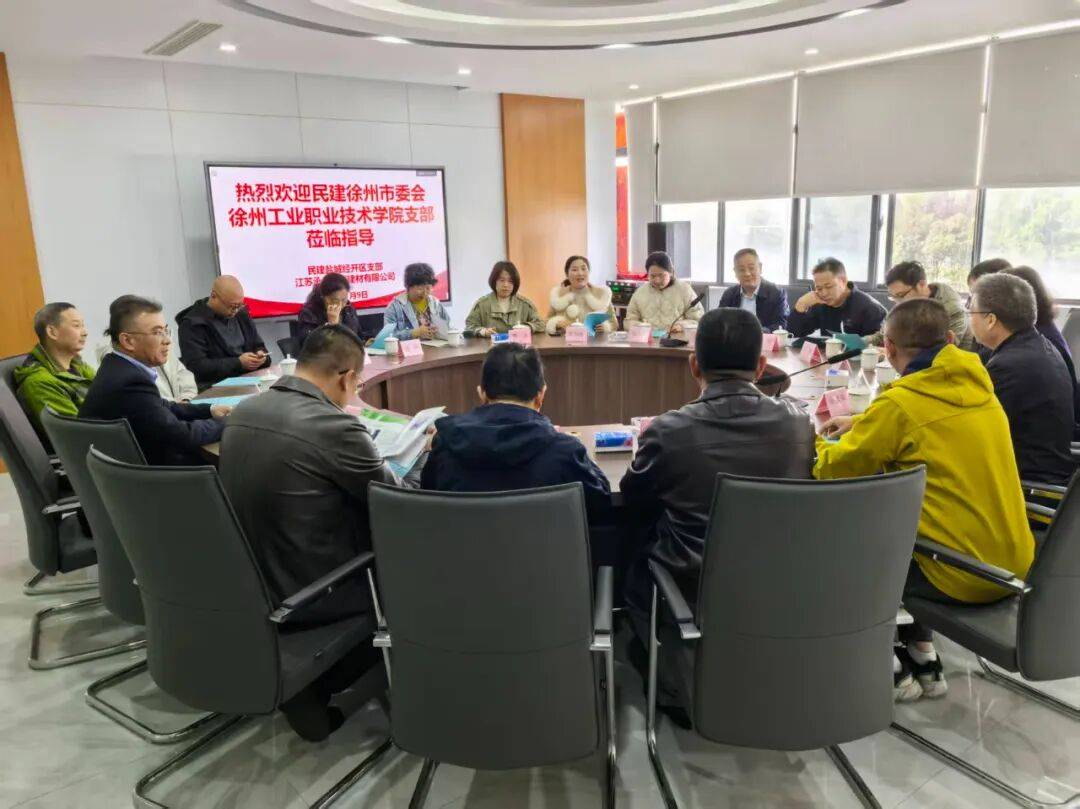
校企携手谋发展、共话合作启新程——民建徐州工业职业技术学院支部赴盐城开展“校企合作”活动
Sou Hu Cai Jing· 2025-11-12 15:07
Group 1 - The event focused on the collaboration between Xuzhou Industrial Vocational and Technical College and Jiangsu Chengtian Construction Co., aiming to enhance industry-academia cooperation [1][3] - Jiangsu Chengtian's general manager, Xiao Xuexiang, highlighted the company's challenges in digital and intelligent transformation, emphasizing the need for educational adjustments to meet industry demands for skilled talent [3] - The college's representative, Zhang Jingzhai, discussed the institution's achievements in teaching and research, committing to align educational programs with industry needs to cultivate high-quality technical talent [3][5] Group 2 - Chen Yi, the deputy director of the Minjian Xuzhou Industrial Vocational College branch, acknowledged the importance of the college's role in facilitating cooperation and resource sharing between academia and industry [3] - Vice Chairman Kang Jianrong emphasized the significance of learning from Jiangsu Chengtian's advanced experiences in traditional industry upgrades and environmental business expansion [5] - The collaboration aims to strengthen ties between enterprises and educational institutions in Xuzhou and Yancheng, fostering multi-faceted cooperation and development [5]