强化学习

Search documents
对话千寻智能高阳:科学家创业不太“靠谱”,但创业就像一场游戏
3 6 Ke· 2025-08-08 01:49
Core Viewpoint - The article discusses the emergence of embodied intelligence in robotics, emphasizing the importance of creating integrated hardware and software solutions, akin to Apple's approach, rather than a fragmented one like Android's [5][6]. Group 1: Company Overview - Qianxun Intelligent, co-founded by Gao Yang and Han Fengtao, has raised over 1 billion RMB in funding within 19 months, with investors including Huawei Hubble, JD.com, and CATL [4]. - Gao Yang, a former assistant professor at Tsinghua University, transitioned from academia to entrepreneurship, highlighting the challenges and learning experiences in this shift [5][12]. Group 2: Market Insights - The robotics market is currently competitive, with established companies focusing on hardware while neglecting the software aspect, which Gao Yang believes is crucial for long-term success [9]. - The potential for embodied intelligence is seen as inevitable, driven by advancements in AI technologies like ChatGPT, which have shifted perceptions about the capabilities of AI [8]. Group 3: Technical Perspectives - The integration of hardware and software is deemed essential in the early stages of robotics development, as seen in historical examples like IBM's approach to personal computers [6][7]. - Gao Yang emphasizes the importance of algorithms and data in evaluating the performance of robotic systems, noting that models must be capable of handling complex tasks rather than just simple ones [28][29]. Group 4: Future Outlook - The anticipated development of robots capable of performing complex tasks, referred to as Robot GPT-3.5, is expected to significantly enhance their functionality in everyday scenarios [32]. - The article suggests that the current focus on large-scale data collection in robotics may not be as valuable due to the rapid evolution of robot forms, indicating a need for more effective pre-training methods [41][42].



字节&MAP重塑大模型推理算法优化重点,强化学习重在高效探索助力LLM提升上限
量子位· 2025-08-07 10:13
Core Viewpoint - The article discusses the limitations of traditional reinforcement learning (RL) frameworks in large language models (LLMs), particularly the issue of premature convergence leading to a lack of exploration and diversity in generated outputs [1][2]. Group 1: Introduction to FR3E - The FR3E framework, inspired by the concept of "First Return, Then Explore," aims to address the exploration challenges in RL by balancing exploitation and exploration [2][4]. - This new structured exploration framework is developed by a collaborative team from ByteDance, MAP, and the University of Manchester [2][5]. Group 2: Algorithm Framework - The FR3E algorithm consists of two phases: First Return and Entropy-Eliciting Explore [10][14]. - In the First Return phase, the model performs multiple rollouts for each prompt, exploring potential solutions and collecting trajectories and reward signals [12]. - The Entropy-Eliciting Explore phase utilizes a dynamic advantage modulation mechanism to fine-tune learning signals based on the marginal improvement in value from one state to another [16][18]. Group 3: Data Construction - The team employs a mixed difficulty strategy for data construction, using low-difficulty data for stable training and high-difficulty data to challenge the model's reasoning capabilities [23]. Group 4: Experimental Results - The effectiveness of FR3E was evaluated across several authoritative mathematical reasoning benchmarks, including GSM8K, Math500, and others, using various model sizes [24]. - FR3E outperformed the strong baseline GRPO++ across multiple benchmarks, demonstrating superior generalization and reasoning capabilities [25][28]. - Notably, FR3E exhibited prolonged exploration behavior, with slower entropy decay and longer response lengths, successfully overcoming the "stagnation" issue seen in traditional methods [26][27]. Group 5: Conclusion - FR3E presents an innovative and efficient structured exploration paradigm that directly addresses the core bottleneck of insufficient exploration in LLMs [28]. - The method's principles of "structured feedback + adaptive adjustment" show promising scalability and potential for future RL training in large models [29].

强化学习+MCP=王炸?开源框架教AI在MCP中玩转工具解决任务,实测效果超越GPT!
量子位· 2025-08-07 10:13
Core Viewpoint - The article discusses the introduction of OpenPipe's new open-source reinforcement learning framework, MCP·RL, which allows agents to autonomously discover tools, generate tasks, and learn optimal strategies through closed-loop feedback without extensive manual configuration [2][14][23]. Group 1: MCP·RL Overview - MCP·RL enables agents to automatically connect to an MCP Server, discover available tools, and generate training tasks based on tool information [18]. - The framework achieves state-of-the-art (SOTA) performance in two-thirds of benchmark tests, demonstrating its effectiveness [4][21]. - Unlike traditional methods that require extensive setup, MCP·RL simplifies the process by allowing the model to learn from experience without the need for data annotation or custom MCP interfaces [23][24]. Group 2: Learning Process - The training process of MCP·RL consists of four steps: discovering tools, generating tasks, learning how to use tools, and testing the effectiveness of the strategies [18][19]. - The framework emphasizes a "learning by doing" approach, where agents learn through practical experience rather than predefined configurations [7][14]. - The transition from using MCP to having AI utilize MCP signifies a significant shift in how agents interact with tools [20]. Group 3: Practical Applications - MCP·RL is designed to be applicable to any server and is ready to use out of the box, making it versatile for various applications [23]. - The Agent Reinforcement Trainer (ART) component of MCP·RL allows for real-world training and evaluation of agent strategies, enhancing reliability [24][25]. - Previous tests with ART on the Qwen 2.5-14B model showed superior performance in email retrieval tasks, achieving SOTA results [26].

DeepSeek的GRPO会导致模型崩溃?看下Qwen3新范式GSPO
机器之心· 2025-08-07 09:42
Core Viewpoint - The article discusses the evolution of reinforcement learning techniques in the post-training phase of large language models (LLMs), highlighting the introduction of Group Sequence Policy Optimization (GSPO) as a solution to the instability issues associated with Group Relative Policy Optimization (GRPO) [2][10][31]. Group 1: Training Phases and Techniques - The training of large language models typically consists of two phases: pre-training and post-training, where the latter focuses on improving the model's understanding and execution of human instructions [1]. - The post-training phase employs reinforcement learning, with initial methods like Reinforcement Learning from Human Feedback (RLHF) being time-consuming and costly due to reliance on human annotators [2][3]. Group 2: Innovations and Comparisons - DeepSeek introduced an automated approach to RLHF, significantly reducing costs and improving efficiency by allowing the model to learn through reward signals rather than manual evaluations [2]. - The DeepSeek team proposed the Group Relative Policy Optimization (GRPO) algorithm, which they believe is more effective than the Proximal Policy Optimization (PPO) used by OpenAI in ChatGPT [3][5]. Group 3: Issues with GRPO - The Qwen team identified serious stability issues with GRPO, particularly due to its reliance on token-level importance sampling, which can lead to high variance and training instability [10][11][12]. - The instability arises from the incorrect application of importance sampling weights at the token level, which can accumulate high variance in long sequences, exacerbating the training challenges [15][16][17]. Group 4: Introduction of GSPO - To address the issues with GRPO, the Qwen team proposed the Group Sequence Policy Optimization (GSPO), which utilizes sequence-level importance sampling to enhance training stability [10][22][31]. - GSPO's design mitigates the accumulation of variance seen in token-level sampling, leading to improved training efficiency and stability [23][24]. Group 5: Experimental Evidence and Advantages - Experimental results demonstrated that GSPO outperformed GRPO in various tasks, showcasing better scalability and efficiency in training [20][30]. - The Qwen team highlighted that GSPO simplifies the training of Mixture-of-Experts (MoE) models by eliminating the need for auxiliary strategies like Routing Replay, which were necessary for GRPO to achieve stable convergence [25][27][30].

具身智能之心技术交流群成立了!
具身智能之心· 2025-08-07 02:38
Group 1 - The establishment of the Embodied Intelligence Heart Technology Exchange Group focuses on various advanced technologies including VLA, VLN, remote operation, Diffusion Policy, reinforcement learning, VLA+RL, sim2real, multimodal large models, simulation, motion control, target navigation, mapping and localization, and navigation [1] - Interested individuals can add the assistant's WeChat AIDriver005 to join the community [2] - To expedite the joining process, it is recommended to include a note with the institution/school, name, and research direction [3]
成功率提高57%,VLA+RL最新!CO-RFT:实现VLA模型的高效微调(北航&清华等)
具身智能之心· 2025-08-07 00:03
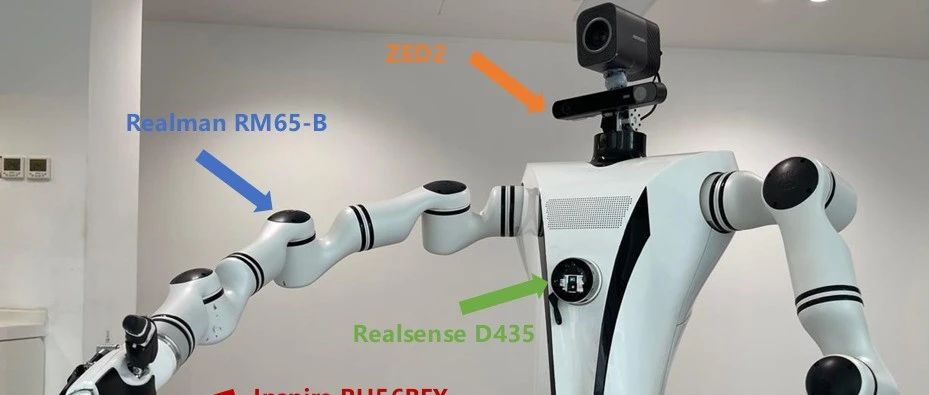
Core Insights - The article discusses the development of a new reinforcement learning framework called Chunked RL, specifically designed for fine-tuning Vision-Language-Action (VLA) models, which show great potential in real-world robotic control [4][8]. - The proposed CO-RFT algorithm demonstrates significant improvements over traditional supervised fine-tuning methods, achieving a 57% increase in success rate and a 22.3% reduction in cycle time in real-world environments [4][29]. Section Summaries Introduction - VLA models integrate perception and language understanding for embodied control, showing promise in developing general strategies for real-world robotic control [6]. - The challenges faced in fine-tuning VLA models primarily stem from the dependency on the quality and quantity of task-specific data, which limits generalization to out-of-distribution (OOD) scenarios [6][7]. Methodology - The article introduces Chunked RL, a novel reinforcement learning framework that incorporates action chunking to enhance sample efficiency and stability, particularly suited for VLA models [8][12]. - The CO-RFT algorithm consists of two phases: imitation learning for initializing the backbone network and policy, followed by offline RL with action chunking to optimize the pre-trained policy [16][18]. Experimental Analysis - The experiments were conducted on a robotic platform with six dexterous manipulation tasks, evaluating the performance of the CO-RFT algorithm against traditional methods [20][23]. - Results indicate that CO-RFT significantly outperforms supervised fine-tuning (SFT), achieving a 57% increase in success rate and a 22.3% decrease in average cycle time across various tasks [29][30]. Position Generalization - CO-RFT exhibits strong position generalization capabilities, achieving a 44.3% success rate in previously unseen locations, outperforming SFT by 38% in OOD scenarios [4][29]. Importance of Data Diversity - Data diversity plays a crucial role in the performance of CO-RFT, with models trained on diverse datasets showing significantly better generalization capabilities compared to those trained on fixed datasets [32][33].
具身智能之心招募科研辅导老师了!学术圈的大佬看过来~
具身智能之心· 2025-08-06 08:30
具身智能之心招募科研辅导老师了!如果您是具身智能方向,手里握有多篇顶会、顶刊,欢迎和我们一起带动 学术界的发展。 方向一览 行业资源共享,享有论文署名与现金激励!详细请咨询小助理微信oooops-life了解更多。 要求说明 博士及以上学历(包含在读),2篇A会或一区以上期刊/会议,有辅导经验的优先。 待遇说明 包括但不限于:VLA、VLN、遥操作、Diffusion Policy、强化学习、VLA+RL、sim2real、多模态大模型、仿 真、运动控制、目标导航等方向。 ...

大模型下一个飞跃?OpenAI的“新突破”:通用验证器
硬AI· 2025-08-05 16:02
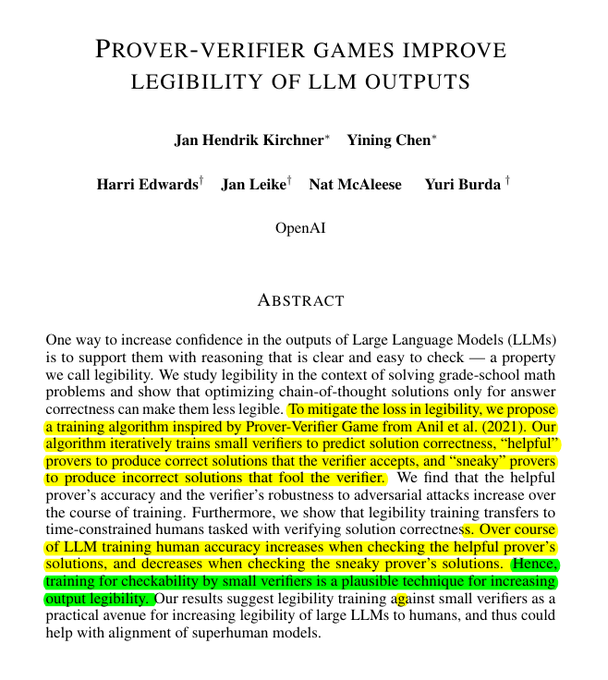
Core Viewpoint - The introduction of the "Universal Validator" technology in GPT-5 is seen as a potential "secret weapon" for OpenAI to gain a competitive edge in the AI market [2][3]. Group 1: Technology Overview - The "Universal Validator" employs a "prover-verifier game" mechanism, where one AI model acts as a verifier to assess the answers generated by another prover model, enhancing output quality through internal competition [3][4]. - This technology aims to address the challenges of verifying answers in subjective fields like creative writing and complex mathematical proofs, which have been difficult for reinforcement learning methods [3][6]. - The framework includes roles such as a reliable prover, a deceptive prover, and a small verifier, which work together to improve the model's ability to distinguish between correct and incorrect solutions [6][7]. Group 2: Historical Context - The technology is considered a legacy of OpenAI's former "Super Alignment" team, which was focused on controlling future superintelligent AI, although the team was disbanded after key members left [10]. - Despite the team's dissolution, the technology has been integrated into OpenAI's core product development, addressing alignment and reliability issues in current models [10]. Group 3: Market Implications - The advancements brought by the "Universal Validator" are directly linked to the anticipated performance of GPT-5, with expectations heightened by statements from OpenAI's CEO regarding the model's superior capabilities [11]. - Competitors like xAI and Google are also investing heavily in reinforcement learning, making the "Universal Validator" a crucial asset for OpenAI to maintain its lead in the intensifying AI race [11]. Group 4: Challenges and Opportunities - The "Universal Validator" is noted for its versatility, improving model performance in both easily verifiable tasks and more subjective areas, indicating a shift in AI capabilities [14]. - However, the development of GPT-5 faces significant challenges, including a scarcity of high-quality training data and diminishing returns from large-scale pre-training, which could impact the model's expected breakthroughs [14].

OpenAI的“新突破”:通用验证器
Hu Xiu· 2025-08-05 07:04
Core Insights - OpenAI's "Universal Validator" technology is expected to enhance the market competitiveness of the upcoming GPT-5 model, addressing key challenges in AI commercialization, particularly in terms of reliability and credibility [2][12]. Group 1: Technology Overview - The "Universal Validator" operates through a "prover-verifier game," where one AI model acts as a verifier to assess the outputs of another model, systematically improving output quality through internal feedback [2][4]. - This technology is designed to overcome limitations in reinforcement learning (RL) in subjective areas like creative writing and complex mathematical proofs [2][13]. - The mechanism is likened to Generative Adversarial Networks (GANs), where a discriminator helps distinguish between real and AI-generated data, pushing the generator to improve [5]. Group 2: Development and Team Dynamics - The technology is considered a legacy of OpenAI's former "Super Alignment" team, which was focused on controlling future superintelligence but was disbanded after key members left [9][10]. - Despite the dissolution of the team, the technological advancements have been integrated into OpenAI's core product development, addressing alignment and reliability issues [11]. Group 3: Market Expectations and Competitive Landscape - There is heightened anticipation for GPT-5, with indications that a self-critique system trialed in GPT-4 has been officially incorporated into GPT-5, raising expectations for its performance [12]. - OpenAI's CEO, Sam Altman, has publicly endorsed GPT-5, claiming it surpasses previous models in intelligence, intensifying market interest [12]. - Competitors like xAI and Google are also investing heavily in reinforcement learning as a key technology path, making the competitive landscape increasingly intense [12]. Group 4: Challenges Ahead - The "Universal Validator" is noted for its versatility, aiding OpenAI models in both easily verifiable tasks and more subjective domains, indicating a shift in AI capabilities [13]. - However, the development of GPT-5 faces significant challenges, including a scarcity of high-quality training data and diminishing returns from large-scale pre-training [13]. - Performance degradation from internal testing to public deployment remains a concern, as evidenced by the drop in performance of the "o3" model in real-world applications [13].
清华叉院教授手把手教你写强化学习
机器之心· 2025-08-05 04:09
Core Insights - The article discusses AReaL-lite, a reinforcement learning training framework designed for algorithm developers, allowing users to modify a single file to implement various RL training algorithms and custom agent workflows, while achieving optimal model performance through Fully Async RL [1][10]. Group 1: Event Details - The sharing session will feature Professor Wu Yi from Tsinghua University's Interdisciplinary Information Institute and core members of the AReaL team, using a multi-turn math reasoning example to teach RL [2][10]. - The live session is scheduled for August 7, 19:30-20:30 Beijing time, and participants are encouraged to prepare a GPU server, preferably with 4 cards [8][10]. Group 2: AReaL-lite Features - AReaL-lite's key characteristics include: - Fully async RL for rapid training [10]. - Ecosystem-friendly, compatible with various open-source ecosystems [10]. - Algorithm-first approach, ensuring minimal file modifications for complex algorithms [10]. Group 3: Team Introduction - The team includes: - Wu Yi, Assistant Professor at Tsinghua University and Chief Scientist of the AReaL team [10]. - Fu Wei, a PhD student at Tsinghua University and core member of the AReaL project [10]. - Mei Zhiyu, a researcher at Ant Group's reinforcement learning lab and a PhD from Tsinghua University [10].