养老服务消费补贴

Search documents
“民政通”一键申请,威海向中度以上失能老年人发放消费补贴
Qi Lu Wan Bao· 2025-08-27 07:29
Group 1 - The core viewpoint of the news is the implementation of a subsidy program for elderly individuals with moderate to severe disabilities in Weihai, aimed at enhancing their access to elderly care services [1][2] - The subsidy program targets individuals aged 60 and above who have been assessed as having moderate, severe, or complete disabilities, regardless of their residency status in Weihai [1] - The application process is voluntary and facilitated through digital means, allowing eligible elderly individuals or their designated representatives to apply via the "Minzheng Tong" app or mini-programs on WeChat, Alipay, or Baidu [1][2] Group 2 - A third-party organization will conduct the ability assessment based on national standards, and individuals who have been assessed within the last 12 months do not need to undergo re-evaluation [2] - The electronic consumption vouchers can be used to cover the assessment fees for those needing re-evaluation, and the vouchers will be issued within five working days after the initial application is approved [2] - The electronic vouchers are valid for one month and can be directly deducted from the payment for elderly care services, with any unused amount not being carried over to the next month [2]
沈阳中度以上失能老年人可领养老服务消费补贴
Liao Ning Ri Bao· 2025-08-20 04:46
Core Points - Shenyang City has launched a "Senior Care Service Consumption Season" with the theme of "Caring for the Elderly, Quality Life" [1] - The city has introduced a subsidy policy for elderly individuals with moderate to severe disabilities, providing financial support for various senior care services [1] Group 1: Subsidy Policy - The subsidy is aimed at elderly residents aged 60 and above who are assessed as having moderate, severe, or complete disabilities [1] - The subsidy covers home, community, and institutional care services, including meal assistance, bathing, medical aid, cleaning, mobility support, emergency services, rehabilitation care, day care, and both long-term and short-term institutional care [1] - The subsidy is provided in the form of electronic vouchers through the "Minzheng Tong" app, with a deduction rate of 40% on eligible service expenses [1] Group 2: Financial Details - For long-term, short-term, and day care services, the maximum subsidy is 800 yuan per person per month, while home service has a maximum subsidy of 500 yuan per person per month [1] - The assessment fee for elderly individuals determined to have moderate or severe disabilities can be fully deducted, with a cap of 100 yuan [1] Group 3: Application Process - The application process includes online submission, capability assessment, and the use of consumption vouchers [2] - Elderly individuals can select service providers through the "Minzheng Tong" app and schedule services, with the requirement that service providers must see the elderly person in person to ensure accurate policy implementation [2]
山东中度以上失能老年人消费补贴申领咨询电话公布
Da Zhong Ri Bao· 2025-08-18 01:01
Group 1 - The core viewpoint of the article is the implementation of a subsidy program for elderly individuals with moderate to severe disabilities in Shandong Province, aimed at supporting their consumption of elderly care services [1] - The program is part of a pilot initiative organized by the Ministry of Civil Affairs and the Ministry of Finance, with Shandong being one of three provincial pilot areas [1] - The subsidy will provide financial support for elderly individuals to purchase home, community, and institutional care services, with a reimbursement mechanism in place [1] Group 2 - The subsidy will be issued in the form of electronic vouchers, which serve as deduction coupons rather than cash, covering 40% of the individual's out-of-pocket expenses for eligible elderly care services [1] - The first voucher was issued in July in Qingdao, and the program is set to run for a duration of 12 months [1] - A consultation hotline has been established at the provincial, municipal, and county levels to assist elderly individuals in applying for the subsidy [1]


山东政商要情(8.4—8.10)
Jing Ji Guan Cha Wang· 2025-08-10 13:11
Group 1: Private Enterprises in Shandong - Shandong Provincial Government held a symposium with 37 private entrepreneurs to address issues such as private investment, debt collection, and market expansion [2][3] - The provincial government emphasized the need for targeted actions to support private enterprises, including enhancing project construction and investment guidance [3] - In the first half of the year, private investment in Shandong increased by 0.9% year-on-year, outperforming the overall investment growth rate by 1.1 percentage points, accounting for 61.6% of total investment [3] Group 2: Renewable Energy Pricing Reform - Shandong Province issued a market-oriented reform plan for renewable energy pricing, aiming to have all wind and solar power projects enter the electricity market [4][5] - A price difference settlement mechanism was established to ensure sustainable development of renewable energy, with the average market transaction price being settled by grid companies [5] - By April 2025, Shandong's renewable energy installed capacity reached 125 million kilowatts, exceeding 51% of the total installed capacity [5] Group 3: Elderly Care Subsidy Program - Shandong is implementing a subsidy program for elderly care services, available to residents aged 60 and above with moderate to severe disabilities, regardless of their household registration [6] - The program includes 17 types of subsidies for various elderly care services, aiming to enhance the quality of care for approximately 600,000 elderly individuals in need [6] Group 4: Qingdao Health Industry Development - Qingdao's government introduced a three-year action plan to develop the "China Health Bay," targeting a health industry scale of 100 billion yuan by 2027 [7] - The plan focuses on integrating real estate, healthcare, and tourism to create a comprehensive health ecosystem [7] Group 5: Jining Inland Waterway Shipping Center - A symposium was held in Jining to discuss the establishment of a northern inland waterway shipping center, aiming for a cargo throughput of 150 million tons by 2027 [8][9] - The strategic direction for this development is outlined in the Shandong Province Port and Waterway Layout Plan (2025-2035) [8]

国金证券:预计将动用财政政策的储备空间,以弥补发放育儿补贴和养老服务消费补贴带来的收支缺口
Sou Hu Cai Jing· 2025-08-07 01:25
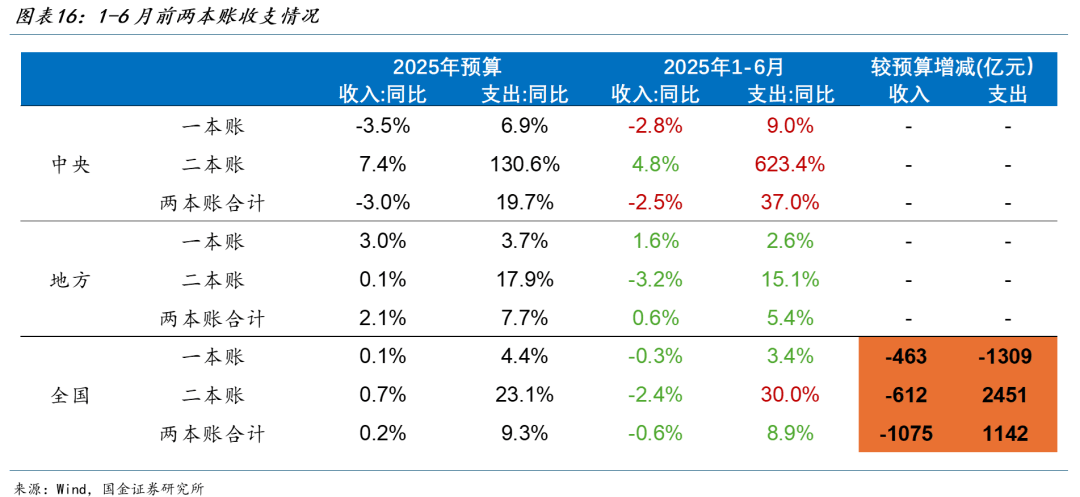
Core Viewpoint - The fiscal revenue and expenditure in the second half of the year are under pressure, but the probability of additional deficits is low. The government is expected to utilize fiscal policy reserves to cover the revenue gap caused by childcare and elderly service subsidies [1][5][11]. Fiscal Revenue and Expenditure Analysis - In the first half of the year, the national fiscal revenue and expenditure deviated slightly from the initial budget, with revenue falling short by 463 billion yuan and expenditure by 1309 billion yuan for the general public budget [2][6]. - The central government's general public budget revenue decreased by 3.5% year-on-year, while expenditure increased by 6.9%. Local governments showed a revenue increase of 3.0% and expenditure increase of 3.7% [3][6]. - For the second half of the year, the expected year-on-year growth rates for the general public budget are -4.5% for revenue and 1.5% for expenditure, leading to a projected revenue shortfall of 516.6 billion yuan and an expenditure shortfall of 547.2 billion yuan compared to the budget [5][11]. Budget Execution and Adjustments - Historically, the completion rate for the general public budget has been over 98%, and significant deviations typically necessitate budget adjustments or additional deficits. However, the flexibility of the special fund budget allows for a completion rate of 80%-90% without strict requirements [2][5]. - The government plans to cover the expected 1200 billion yuan revenue gap from subsidies without increasing the budget by utilizing reserves, including the budget stabilization fund and profits from central financial enterprises [11][12]. Central Financial Enterprises' Role - The profits from central financial enterprises are crucial for offsetting revenue shortfalls. In 2024, these enterprises contributed significantly to the budget, with non-tax revenue showing substantial increases in late 2024 [7][12]. - The central budget stabilization fund had a balance of 2739.22 billion yuan at the end of 2024, with plans to allocate 1000 billion yuan in 2025, leaving a remaining balance of 1739.22 billion yuan [12].

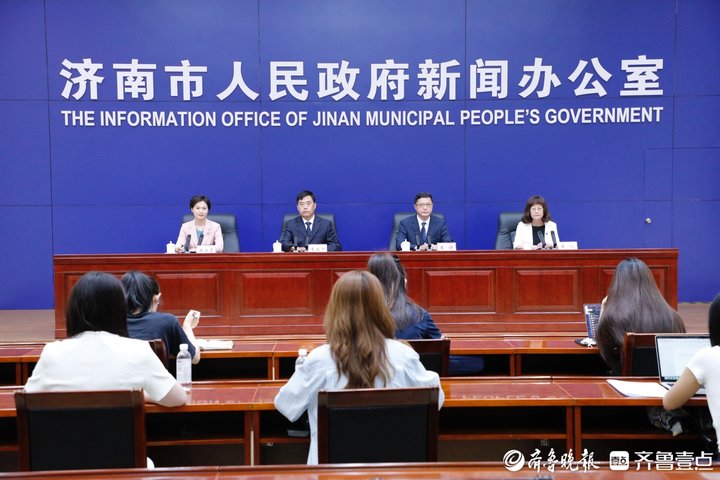
济南:经评估符合条件的失能老年人将按月获得电子消费券
Qi Lu Wan Bao Wang· 2025-08-05 05:28
Core Viewpoint - The implementation of a national-level subsidy program for elderly care services in China, specifically targeting moderately to severely disabled elderly individuals, is a significant step in enhancing consumer welfare and promoting economic growth [3]. Group 1: Policy Overview - The subsidy program is the first of its kind in China, providing financial support for elderly care services through consumption vouchers [3]. - The program is aimed at elderly individuals assessed as moderately, severely, or completely disabled, allowing them to access various home, community, or institutional care services [3][4]. Group 2: Implementation Details - Eligible elderly individuals can register on the "Minzheng Tong" app to apply for an assessment, and those who qualify will receive monthly electronic consumption vouchers [4]. - The first month's vouchers will be issued within five working days, with subsequent vouchers distributed on the first day of each month, valid for one month [4]. Group 3: Usage of Vouchers - The vouchers can cover 30%-60% of the personal elderly care service expenses, applicable to a range of services including meal assistance, bathing, cleaning, and professional care [4][5]. - The program includes strict regulations for participating institutions, ensuring they meet legal and service capability requirements for caring for disabled elderly individuals [5]. Group 4: Future Steps - The Jinan Civil Affairs Bureau plans to develop a local implementation plan, enhance policy awareness, and ensure effective monitoring to prevent fraud and ensure the program's integrity [5].
国家层面支持失能老年人照护服务来了 | 这项补贴谁能领?怎么领?一文读懂↓
Yang Shi Wang· 2025-07-26 04:32
Core Viewpoint - The Chinese government is implementing a subsidy program for elderly individuals with moderate to severe disabilities, marking the first national-level initiative to support care services for disabled seniors through consumption subsidies [1][12]. Group 1: Policy Overview - The subsidy targets elderly individuals aged 60 and above, with a focus on those who are moderately to severely disabled, as their need for professional care services is more concentrated [1][3]. - The program will provide financial support for various types of elderly care services, including home care, community services, and institutional care [9][11]. Group 2: Implementation Details - The subsidy will be distributed through an electronic consumption voucher system via the "Minzheng Tong" app, allowing eligible seniors to deduct a percentage of their care service costs [9][11]. - Eligible seniors can apply for four types of vouchers, with monthly limits set at 500 yuan for home services and 800 yuan for institutional care [11][12]. Group 3: Assessment and Regulation - A national standard for assessing the capabilities of elderly individuals will be utilized, focusing on self-care ability, basic mobility, sensory perception, and mental state [5][7]. - Local authorities will conduct assessments through a unified online platform, ensuring data integrity and protecting personal information [7][9]. Group 4: Pilot Program and Expansion - The program will initially launch in select pilot regions, including Zhejiang, Shandong, Chongqing, and several cities, starting from July 2025, with plans for broader implementation by the end of 2025 [14][16]. - The Ministry of Civil Affairs is expediting preparations for the program, including the development of online application systems and assessment protocols [18][21].

中央财政首发养老消费补贴,价格法时隔27年重修丨一周热点回顾
Di Yi Cai Jing· 2025-07-26 02:37
Group 1: Hainan Free Trade Port - Hainan Free Trade Port is set to officially start operations on December 18, 2025, establishing a customs supervision area with a policy of "one line open, one line controlled, and free flow within the island" [2][3] - The "zero tariff" system for imported goods has been established, allowing eligible enterprises registered in Hainan to import goods without tax under certain conditions [3] - The implementation of the zero tariff policy is expected to lower production costs for market entities and enhance the level of trade liberalization and facilitation in Hainan [3] Group 2: Pension Service Subsidies - The central government has initiated a nationwide pension service consumption subsidy for elderly individuals with moderate to severe disabilities, covering various types of care services [4][5] - Eligible elderly individuals can receive monthly subsidies of 800 yuan for institutional care and 500 yuan for home care services, with a discount of 30% to 60% on service costs [4][5] Group 3: Fiscal Revenue and Expenditure - In the first half of the year, national public budget revenue decreased by 0.3%, while public budget expenditure increased by 3.4%, indicating a more proactive fiscal policy [6][7] - Tax revenue fell by 1.2%, but the decline is narrowing, reflecting a stabilizing economy, with 27 provinces reporting revenue growth [7] Group 4: Price Law Revision - The first revision of the Price Law in 27 years aims to enhance government pricing regulations and address unfair pricing behaviors, including low-price dumping and price collusion [8][9] - The revised law will strengthen market regulation and support fair competition, particularly in the context of new economic models and the current international environment [9] Group 5: Commodity Market Trends - Recent trends in the commodity futures market show significant price increases, with major contracts for glass, soda ash, coking coal, and silicon reaching their daily price limits [10][11] - The price surge is driven by supply-side factors and expectations of increased demand due to fiscal policy initiatives and infrastructure projects [11] Group 6: US Trade Agreements - The US has reached trade agreements with Japan, the Philippines, and Indonesia, with Japan committing to invest $550 billion and open its markets to US goods [12] - The agreements may set a precedent for future trade negotiations, particularly with the EU, which is also in discussions with the US regarding tariff frameworks [12] Group 7: Federal Reserve and Monetary Policy - Tensions between President Trump and Federal Reserve Chairman Powell have escalated, with Trump criticizing Powell's monetary policy decisions [13] - The ongoing conflict raises concerns about the independence of the Federal Reserve and potential implications for inflation and long-term interest rates [13]
家有老人的请注意,国家要发补贴啦!谁能领?怎么领?一文读懂→
Jin Rong Shi Bao· 2025-07-24 13:20
Core Viewpoint - The implementation of a subsidy program for elderly individuals with moderate to severe disabilities marks a significant step in supporting care services at the national level in China, aiming to alleviate financial burdens and enhance service consumption in the elderly care sector [1] Group 1: Eligibility and Services - The subsidy targets elderly individuals assessed as having moderate, severe, or complete disabilities, covering home, community, and institutional care services [2] - Home and community services include assistance with meals, bathing, rehabilitation care, and day care, while institutional services encompass both long-term (over 30 days) and short-term (under 30 days) care [2] Group 2: Application Process - The application process is voluntary, allowing elderly individuals or their representatives to register via the "Minzheng Tong" platform, with eligibility determined by a national standard assessment [3] Group 3: Subsidy Standards - The electronic vouchers can offset 30%-60% of the eligible elderly care service expenses, with specific details outlined in the vouchers, and adjustments to the subsidy rates may occur based on circumstances [4] - Elderly individuals already receiving long-term care insurance can benefit from both the insurance and the new subsidy, allowing for additional deductions on their out-of-pocket expenses [4] Group 4: Application Steps - The application process consists of five steps: personal application, capability assessment, electronic voucher issuance, voucher redemption during service consumption, and fund settlement by local civil affairs departments [5][6] - Individuals assessed within the last 12 months do not need to undergo reassessment [5] Group 5: Implementation Timeline - The program commenced in July 2023 in pilot regions including Zhejiang, Shandong, Chongqing, and several cities, with plans for broader implementation by the end of 2025 [7]
中央财政首次发放养老消费补贴,这些人群将受益→
第一财经· 2025-07-23 13:32
Core Viewpoint - The article discusses the implementation of a nationwide subsidy program for elderly individuals with moderate to severe disabilities, allowing them to receive monthly consumption vouchers for elderly care services, marking a significant policy shift in China's approach to elderly care [1][3]. Summary by Sections Policy Announcement - The Ministry of Civil Affairs and the Ministry of Finance have jointly issued a notification to provide consumption vouchers for elderly care services to eligible elderly individuals starting from July, with plans for nationwide implementation by the end of the year [1][3]. Eligibility and Services Covered - The subsidy targets elderly individuals assessed as having moderate, severe, or complete disabilities, covering home, community, and institutional care services, including meal assistance, bathing, rehabilitation care, and short-term stays in care facilities [3][4]. Financial Details - The consumption voucher amounts are set at 800 yuan for institutional care and 500 yuan for home care services, allowing for a 30%-60% discount on service fees, with an initial discount rate of 40% [4][7]. Economic Implications - This initiative is seen as a means to stimulate consumption, particularly in the service sector, addressing the growing demographic of elderly individuals and the associated care costs, thereby benefiting both the elderly and the economy [4][6]. Market Potential - The policy is expected to enhance the development of the elderly care market, encouraging professionalization within care institutions and increasing the accessibility of high-quality services for elderly individuals [7][12]. Pilot Program and Implementation - A pilot program will be conducted in selected provinces and cities, with plans to expand based on the pilot's outcomes, ensuring that the program meets its intended goals [9][10]. Challenges and Considerations - There are concerns regarding the timely allocation of local financial support, the fairness of disability assessments, and the authenticity of voucher usage, which could impact the program's effectiveness [10][11].