
创新驱动发展战略

Search documents
“十五五”开局这么干
Xin Lang Cai Jing· 2026-01-20 19:55
(来源:工人日报) 此外,着力解决群众"急难愁盼",民生福祉实现新提升。进一步加强普惠性、基础性、兜底性民生建 设,努力促进高质量充分就业,全年城镇调查失业率平均为5.2%,有序实施育儿补贴制度,逐步推行 免费学前教育,推动优化节假日安排,让千家万户有实打实的获得感,以惠民生为牵引,打开发展新空 间。 结构向"优"、动能向"新"、态势向"好" 2026年是"十五五"开局之年,中国经济核心潜力主要体现在哪些方面?又该如何充分挖掘? 国家发展改革委国民经济综合司司长周陈介绍,展望2026年,我国经济结构将持续向"优"、发展动能持 续向"新"、整体发展态势持续向"好",新质生产力稳步发展,消费与投资、科技与产业、城乡与区域都 将释放出巨大的发展潜能。他表示,具体可以从点、线、面3个角度来看。 2026年是"十五五"开局之年。如何充分挖掘中国经济潜能?2026年宏观政策将如何施策?今天,国务院 新闻办举行新闻发布会,介绍落实中央经济工作会议精神,推动"十五五"实现良好开局有关情况。国家 发展改革委有关负责人对当前经济热点问题进行了解读。 "十四五"实现圆满收官 1月19日,国家统计局发布数据显示,2025年中国国内生 ...
推动大学生高质量创业就业,临港新片区新年首场青年创新创业活动启动
Xin Lang Cai Jing· 2026-01-20 10:39
上海市就业促进中心创业指导处培训科科长王婉芳在致辞中表示,本届活动将"蓝海·逐梦"大学生创业 训练营的实践资源与"马兰花"SYB创业培训体系的标准化课程相结合,致力于为大学生搭建一个融系统 教学、实战模拟和资源对接为一体的创业支持平台。临港新片区团工委书记杨浩昊在现场进行了青年创 业政策专题推介,详细解读了临港在人才安居、初创扶持、产业对接等方面为青年学子准备的"政策礼 包"。(智通财经记者 贺梨萍) 临港新片区新年首场青年创新创业盛事全面启动。1月20日,2026年第十五届"蓝海·逐梦"大学生创业训 练营暨第十届"创新生涯 驱动人生"临港高校大学生马兰花SYB创新创业训练营正式拉开帷幕。该训练 营此前已成功举办十四届,累计培育了数以千计的创业青年,是临港科创中心积极响应国家创新驱动发 展战略、推动大学生高质量创业就业的关键举措之一。 ...

四大重磅信号!国家发改委:正研究制定城乡居民增收计划
2 1 Shi Ji Jing Ji Bao Dao· 2026-01-20 06:48
Core Viewpoint - The Chinese economy is projected to achieve a GDP of 140.19 trillion yuan in 2025, with a growth rate of 5.0%, successfully meeting the annual target of around 5% [1] Group 1: Economic Growth and Policy Implementation - The National Development and Reform Commission emphasizes maintaining strategic focus and implementing counter-cyclical measures to stabilize employment and promote high-quality economic development [1][2] - The economy is expected to reach a new milestone of 140 trillion yuan, with a growth rate that remains among the highest globally [1] - The focus will be on expanding domestic demand and optimizing supply to achieve a dynamic balance between supply and demand [6][10] Group 2: Innovation and Industry Development - The implementation of an innovation-driven development strategy is crucial, with significant advancements in key technologies such as artificial intelligence and biotechnology [2][3] - The manufacturing sector continues to lead globally, with high-tech manufacturing value added exceeding 17% of industrial output [3] - The integration of innovation, industry, and talent is accelerating, with a projected digital economy value added of 49 trillion yuan by 2025, accounting for approximately 35% of GDP [3] Group 3: Regional Innovation and Market Dynamics - China has 24 global top 100 innovation clusters, with the "Shenzhen-Hong Kong-Guangzhou" cluster ranking first globally [4] - The establishment of international technology innovation centers in key regions aims to enhance China's position as a global technology innovation hub [4] - The focus on building a unified national market is intended to stimulate market vitality and improve competition quality [7][10] Group 4: Consumer Prices and Economic Stability - In 2025, the Consumer Price Index (CPI) is expected to remain stable, while the Producer Price Index (PPI) is projected to decline by 2.6% [8] - Recent trends indicate a recovery in prices, with CPI rising by 0.8% year-on-year in December, marking a 34-month high [9] - The government aims to promote reasonable price recovery through structural adjustments and policy measures [9][10] Group 5: Future Strategies for Demand and Investment - A five-year plan for expanding domestic demand will be developed, focusing on enhancing consumer capacity and optimizing supply [5][11] - The strategy will combine investments in physical and human capital to boost economic growth and job creation [11][12] - Policy support and reform innovation will be essential to ensure sustainable economic development and effective demand stimulation [12]
国家发改委谈城镇化建设:又有一千多万人过上现代化城市生活
Nan Fang Du Shi Bao· 2026-01-20 04:00
Group 1 - The implementation of the Private Economy Promotion Law has led to over 120 meetings with private entrepreneurs to address development challenges [1][2] - The total economic output of China reached 140 trillion yuan, with a growth rate of 5%, maintaining a leading position among major global economies [1] - The innovation-driven development strategy has been emphasized, with significant advancements in artificial intelligence, biomedicine, and robotics, positioning China at the forefront of global research and application [1] Group 2 - The Hainan Free Trade Port achieved a 6.1% increase in goods exports, with 88.9% of exports directed to non-U.S. markets [2] - The total import value reached 18.48 trillion yuan, maintaining approximately 10% of the global import share, making China a key export destination for 79 countries and regions [2] - The urbanization rate reached 67.89% by the end of the year, an increase of 0.89 percentage points, allowing over 10 million people to enjoy modern urban living [2]
【国际锐评】看懂这个“5.0%”的含金量与新机遇
Sou Hu Cai Jing· 2026-01-19 14:31
作为全球第二大经济体,中国经济顶压前行、稳住大盘,对世界是个重大利好。德国工业阀门和泵制造 商——凯士比北亚区域执行总裁贺钧对《国际锐评》表示,借助中国超大规模市场优势、完善的产业配 套与供应链以及开放的政策机遇,公司去年销售收入同比增长4.1%。他说,"中国的工业基本盘稳固, 为外资企业提供了能够抵御风险、持续发展的市场土壤和增长空间"。 与此同时,中国经济"进"的步伐与"新"的动能更加突出。一方面,货物进出口总额比上年增长3.8%;中 国居民人均可支配收入实际增长5.0%;海南自由贸易港启动全岛封关运作,高水平对外开放迈出重要 一步。另一方面,新质生产力不断发展壮大,一批重大科研成果竞相涌现。其中,规模以上高技术制造 业增加值占比上升至17.1%,规模以上数字产品制造业增加值比上年增长9.3%。2025年,中国研发经费 投入强度首次超过经合组织(OECD)国家平均水平,创新指数排名首次进入全球前十。 这些新意盎然的数据推动中国经济向新向优,也为复苏乏力的全球经济注入了新动能。法国达索系统大 中华区总裁张鹰告诉《国际锐评》,"中国市场不仅是稳定之锚,更是面向未来的创新之源,我们对中 国市场的投入比以往任何时 ...
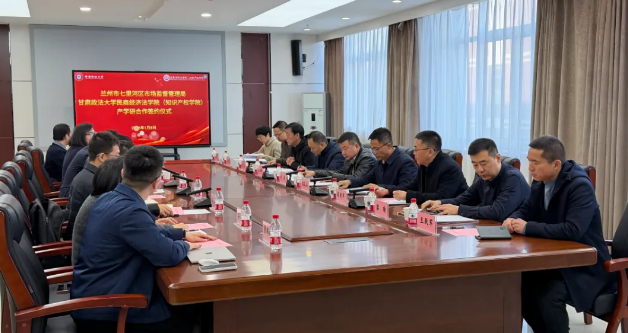
兰州市七里河区市场监督管理局携手甘肃政法大学举行产学研合作签约仪式
Xin Lang Cai Jing· 2026-01-19 07:54
七里河区与甘肃政法大学携手,旨在以实际行动贯彻落实全国会议精神,积极探索知识产权创造、运 用、保护、管理和服务全链条的政校协同新路径。根据协议,双方将本着"优势互补、政校互惠、资源 共享、协同发展"的原则,在人员交流、人才培养、科研合作、社会服务四大领域开展全方位、多层次 务实合作。 此次签约仪式的成功举行,标志着兰州市七里河区与甘肃政法大学在知识产权领域的政校合作进入了实 质性推进阶段。双方将以此次合作为契机,不断深化拓展合作领域与内涵,共同为加强知识产权保护与 运用、推动新时代法学教育与实践创新、服务地方经济社会高质量发展谱写崭新篇章。(贾彦军) 责任编辑:李靓 为深入贯彻落实国家创新驱动发展战略和知识产权强国建设部署,推动法治实践与高等教育深度融合, 近日,七里河区市场监管局与甘肃政法大学民商经济法学院(知识产权学院)产学研合作签约仪式在甘 肃政法大学弘毅楼会议室隆重举行。 ...

展望“十五五” 八桂启新篇 | 服务青年促担当
Guang Xi Ri Bao· 2026-01-15 02:20
Group 1 - The core message highlights the establishment of additional youth talent stations in Liuzhou, aimed at providing free accommodation and support services for young job seekers and entrepreneurs [1] - The youth stations are part of a public service project addressing transitional housing needs for job-seeking youth, with over 150 stations and 4,500 rooms available across the region [1] - The initiative reflects the city's commitment to supporting the youth demographic through various employment and entrepreneurial policies [1] Group 2 - The "Thousand Schools, Ten Thousand Jobs" recruitment activities and other social practice initiatives have provided over 70,000 job positions and 28,000 internship opportunities [2] - A program to assist students from low-income families has successfully helped 3,818 graduates secure employment [2] - Talent cultivation projects related to rural revitalization have trained over 20,000 individuals [2] Group 3 - The youth development services include psychological counseling and legal advice, reaching 22,000 youth, and addressing high-risk situations [3] - Over 28,000 self-protection education activities have been conducted, impacting nearly 4.1 million youth [3] - The "Partner Program" offers targeted support to vulnerable groups, providing care services to 9,850 individuals [3] Group 4 - The organization has conducted 2,382 targeted lectures, reaching 356,000 youth, and has implemented innovative training methods through competitions [4] - Activities promoting national unity and cultural exchange among youth have reached approximately 86,000 participants [4] - The organization aims to enhance its role as a bridge between the party and youth, contributing to the modernization efforts in Guangxi [4]
郑州科技创新能力领先优势明显
Zheng Zhou Ri Bao· 2026-01-15 01:06
1月14日上午,由河南省社会科学院主办的《河南创新发展报告(2026)》出版宣介暨推动科技创 新和产业创新深度融合座谈会在郑州举行。 《报告》以"推动科技创新和产业创新深度融合"为主题,包括1篇总报告,1篇评价报告,以及融合 篇、改革篇、实践篇等3个板块16篇专题报告,深入系统地分析了2025年河南创新发展的总体态势,并 对2026年开拓创新发展新局面进行展望。 《报告》对河南省区域科技创新能力进行分析,并给出评价结果。《报告》指出河南区域科技创新 能力较强的是郑州,综合得分为98.552分,是全省科技创新能力平均得分(67.740分)的145.49%,领 先优势明显。同时,郑州的省级以上科技孵化器数和省级以上众创空间数据显著高于其他地市,郑州的 高新技术企业数、省级新型研发机构数、省级工程技术研究中心数和万人有效发明专利拥有量都远超其 他城市,各项二级指标表现优异。 总报告认为,2025年河南积极推动科技创新和产业创新深度融合,以技术创新催生新产业、新模 式、新动能,加快培育和发展新质生产力,全省创新发展呈现蓬勃之势。2026年,进入"十五五"规划实 施阶段,面对新一轮科技革命和产业变革的浪潮,河南加快建设 ...
加紧培育壮大新动能——访科技部党组书记、部长阴和俊(权威访谈·开局“十五五”)
Ren Min Ri Bao· 2026-01-14 23:04
Group 1 - The core viewpoint emphasizes the importance of technological innovation as a driving force for economic development and the need to cultivate new industries and future industries to gain a competitive edge internationally [1][2] - The Central Economic Work Conference has identified "innovation-driven development and the cultivation of new driving forces" as one of the eight key tasks for economic work in 2026, highlighting the strategic importance of technology [2][3] - The Ministry of Science and Technology plans to implement a comprehensive approach to enhance the national innovation system, focusing on strategic planning, policy measures, and regional innovation to support high-quality development [2][3] Group 2 - The Ministry will accelerate the formulation of the "14th Five-Year" National Science and Technology Innovation Plan to ensure a systematic approach to key tasks and major initiatives over the next five years [3] - There will be a focus on deep integration of technological innovation and industrial innovation, with an emphasis on addressing urgent economic and social needs through major national science and technology projects [3][4] - The establishment of international technology innovation centers in Beijing, Shanghai, and the Guangdong-Hong Kong-Macao Greater Bay Area aims to enhance original innovation capabilities and attract top talent [6][7] Group 3 - The Ministry will implement a coordinated mechanism to promote the integrated development of education, technology, and talent, ensuring that technological innovation drives educational and talent development [4][5] - Measures will be taken to strengthen the role of enterprises in technological innovation, including enhancing their decision-making and R&D investment capabilities [8][9] - The Ministry aims to improve the conversion of technological achievements into practical applications, particularly for small and medium-sized technology enterprises [9]
2025年新疆财政科技投入超87亿元
Sou Hu Cai Jing· 2026-01-14 04:07
Group 1 - In 2025, Xinjiang's fiscal science and technology investment is projected to reach 8.759 billion yuan, representing a year-on-year increase of 36.9% [1] - The local fiscal investment in science and technology from the autonomous region is expected to be 5.233 billion yuan, with a significant year-on-year growth of 57.5% [1] - The completion of the CCUS/CCS carbon storage planning scheme for coal-to-gas projects in Xinjiang by a research team in just two weeks highlights the efficiency and capability of the local innovation platforms [1] Group 2 - A total of 1.403 billion yuan has been allocated by the Xinjiang Finance Department to support "bottleneck" technology breakthroughs and promote high-quality development of characteristic industrial clusters in 2025 [2] - The implementation of a "package system" for fiscal research project funding aims to enhance the decision-making power of scientists regarding technical routes and resource allocation [2] - The Xinjiang Finance Department plans to strengthen technology investment through policy coordination, fund integration, and performance orientation to optimize the structure of technology investment [2]