利益输送

Search documents
信濠光电无实控人认定是否存疑?四大董事席位人员疑均与立讯精密产生交织
Xin Lang Zheng Quan· 2025-06-27 11:35
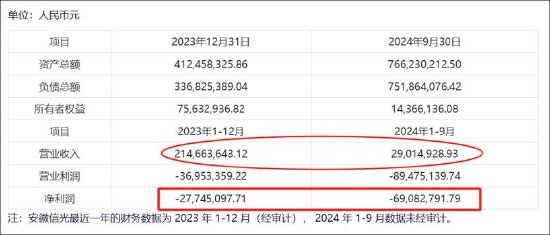
Core Viewpoint - The article raises questions about the ownership and control of Xinhau Optoelectronics, particularly regarding its connections with Luxshare Precision, and whether the frequent acquisition of loss-making assets by Luxshare is reasonable and potentially harmful to minority shareholders [1][8]. Company Transactions - Luxshare Precision announced the acquisition of 100% equity in Anhui Xinguang from Xinhau Optoelectronics, which has shown significant performance decline, with revenues of 214 million yuan in 2023 and only 29 million yuan in the first three quarters of 2024, alongside net losses of approximately 28 million yuan and 69 million yuan respectively [2][4]. - This is not the first instance of Luxshare acquiring loss-making assets from Xinhau; previously, it acquired a zero-revenue subsidiary for over 50 million yuan [5][6]. Financial Performance - Anhui Xinguang's financial data indicates a drastic revenue drop and increasing losses, with total assets of approximately 412 million yuan and total liabilities of about 336 million yuan as of September 30, 2024 [3][4]. - The overall financial health of Xinhau Optoelectronics is concerning, with a significant portion of its business in the oversupplied photovoltaic sector, leading to price competition and reduced profitability [4][8]. Corporate Governance - Xinhau Optoelectronics is characterized as having no actual controlling shareholder, yet its board members have notable ties to Luxshare Precision, raising concerns about potential conflicts of interest [1][10][12]. - The first major shareholder, Wang Yayuan, holds 22.77% of Xinhau and is related to one of Luxshare's actual controllers, further complicating the ownership structure [10][17]. Industry Context - The photovoltaic industry is facing overcapacity and slowing demand, with projections indicating that the main production chain could incur losses exceeding 60 billion yuan in 2024 [4][8]. - The market dynamics suggest that Xinhau Optoelectronics may be struggling to maintain competitiveness within this challenging environment, which could impact its future viability [4][8].


深圳私募乱象监管通报:办公场所有算命风水 基金沦为利益输送工具
Xin Lang Ji Jin· 2025-06-23 10:19
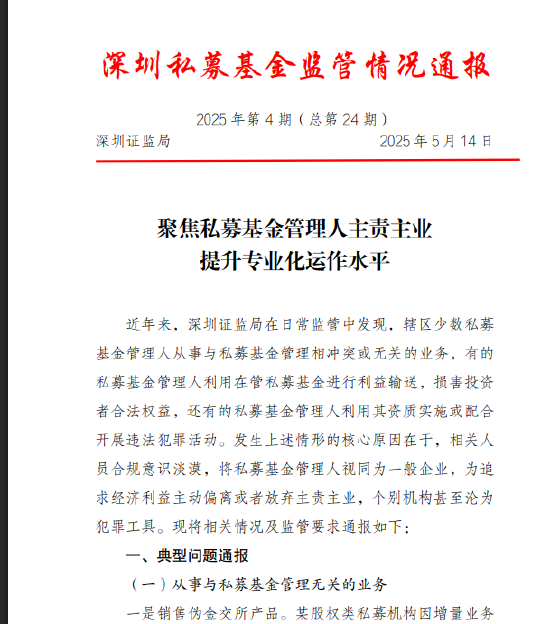
Core Viewpoint - The recent report from the Shenzhen Securities Regulatory Bureau reveals alarming violations in the private equity industry, highlighting issues such as the mingling of unrelated activities like fortune-telling with fund management, the sale of fraudulent gold exchange products, and illicit bond profit transfers [1][2]. Group 1: Industry Violations - Some private equity institutions have deviated from their core responsibilities, engaging in unrelated activities such as fortune-telling and knowledge payment services [3][4]. - Certain private equity firms have become conduits for illegal financial activities, promoting fraudulent investment schemes and charging significant consulting fees [4][11]. - The report indicates a troubling trend where private equity firms prioritize course sales over legitimate fund management, with a significant portion of income derived from unrelated activities [4][11]. Group 2: Illegal Operations and Profit Transfers - The report uncovers hidden profit transfer chains and illegal operational methods within the private equity sector, particularly in the bond market [6][7]. - Instances of profit transfer through related transactions have been identified, where private equity funds are manipulated to benefit insiders at the expense of investors [6][14]. - There are serious concerns regarding the use of private equity fund accounts for illegal activities, including unauthorized stock trading and illegal fundraising [7][15]. Group 3: Regulatory Response - In response to these rampant violations, the Shenzhen Securities Regulatory Bureau has established clear regulatory guidelines, emphasizing the need for private equity firms to focus on their core business and enhance compliance [8][18]. - The regulatory body has mandated that private equity institutions must not engage in activities that conflict with fund management and must prioritize investor interests [8][18]. - Future regulatory efforts will involve increased scrutiny of compliance operations within private equity firms, with strict accountability for violations [8][18].
卖课、算命、利益输送……深圳证监局通报私募乱象
证券时报· 2025-06-23 07:48
Core Viewpoint - The Shenzhen Securities Regulatory Bureau has identified significant misconduct among private fund managers in the region, including engaging in unrelated business activities and violating compliance standards, which undermines investor interests and market order [1][3][6]. Group 1: Misconduct in Private Fund Management - Some private fund managers have deviated from their core responsibilities by engaging in unrelated business activities such as selling pseudo-gold exchange products, providing consulting services, and conducting fortune-telling [1][3]. - Specific examples include a private equity firm promoting a real estate company's receivables plan and charging over 1.5 million yuan in consulting fees, as well as another firm offering financing services and receiving fees based on financing amounts [3][4]. - There are instances of private fund managers facilitating the acquisition of fund management qualifications for non-employees and conducting unrelated activities like fortune-telling within their offices [4][5]. Group 2: Profit Transfer and Investor Rights - Certain private fund managers have been found to use managed fund products for profit transfer, harming investor rights, particularly in the bond market [6][7]. - Examples include agreements between fund managers and securities firms to invest in designated bonds for a fee, and charging large advisory fees to funds without proper disclosure [6][7]. - There are also cases of fund managers engaging in "high buy low sell" transactions with their own funds, which constitutes profit transfer [7]. Group 3: Criminal Activities and Regulatory Concerns - Some private fund managers have exploited their qualifications to engage in illegal activities, highlighting the urgent need for regulatory oversight [9][10]. - Notable illegal activities include unauthorized fundraising, lending management qualifications to facilitate illegal fundraising, and using fund accounts for illegal margin trading [9][10]. - The Shenzhen Securities Regulatory Bureau has outlined five major illegal activities, including illegal fundraising and market manipulation [10][12]. Group 4: Regulatory Measures and Future Directions - The Shenzhen Securities Regulatory Bureau has proposed four regulatory requirements to guide private fund managers back to their core business and promote healthy industry development [11][12]. - These requirements emphasize focusing on core business, enhancing compliance and internal controls, preventing illegal activities, and ensuring sustainable operational capabilities [12][13]. - The Bureau plans to strengthen regulatory inspections and hold accountable those engaging in illegal activities, urging private fund managers to improve their operational standards [13].

宝馨科技跨界收购陷罗生门?交易方单方面叫停,双方均称对方未付款
Hua Xia Shi Bao· 2025-06-21 12:34
Core Viewpoint - Baoxin Technology's planned acquisition is facing challenges as the deal has been unilaterally terminated by the counterparty, Jiangsu Yingsu, due to unresolved issues and lack of payment [3][4][10]. Group 1: Acquisition Details - Baoxin Technology's subsidiary, Zhejiang Yingsu, intended to acquire 40% of Yingsu Integrated Circuit Equipment Co., Ltd. for 320 million yuan, but the deal was halted by Jiangsu Yingsu [3][5]. - The acquisition funds were supposed to come from the registered capital of Zhejiang Yingsu, which was established with a total capital of 320 million yuan, contributed by Baoxin Technology and its partners [5][6]. - The acquisition process required multiple payments, starting with an initial payment of 30 million yuan within 10 working days of the agreement's effectiveness [8][9]. Group 2: Financial Context - Baoxin Technology has been experiencing financial difficulties, with revenues declining from 684 million yuan in 2022 to 336 million yuan in 2024, and net profits showing significant losses [11]. - The company reported a net profit of -193 million yuan in 2023 and -767 million yuan in 2024, indicating a severe downturn in profitability [11]. Group 3: Stakeholder Dynamics - The actual controller of both Zhejiang Yingsu and Jiangsu Yingsu, Fu Zhiwei, has not prepared the necessary funds for the acquisition, leading to complications in the transaction [6][7]. - The delay in payment and the subsequent termination of the deal raise concerns about the operational and financial stability of Zhejiang Yingsu, as the registered capital was intended for business operations and investments [7][10].


华之杰上市背后:多家供应商疑似关联方,多项数据不合常理
Qi Lu Wan Bao· 2025-06-10 03:11
Core Viewpoint - Suzhou Huazhi Jie Electric Co., Ltd. has successfully transitioned to the main board after failing to list on the Sci-Tech Innovation Board due to insufficient "sci-tech attributes" and has raised concerns regarding the authenticity of its financial data and potential related-party transactions [1][3]. Financial Performance - Revenue for Huazhi Jie from 2022 to 2024 is projected to be 1.019 billion, 937 million, and 1.23 billion respectively, with net profits of 101 million, 121 million, and 154 million [2]. - The sales figures for smart switches and brushless motors in 2023 and 2024 are expected to be 538 million and 735 million, while the top five customers' procurement amounts exceed these sales figures, raising questions about the company's financial reporting [3]. Production and Labor Discrepancies - In the first half of 2022, Huazhi Jie produced 4.9153 million smart controllers with 367,000 actual working hours, but in the second half, production dropped to 4.5264 million while working hours increased to 481,000, indicating a 31.06% rise in labor hours despite a 7.91% drop in production [3][4]. - The number of production staff increased from 786 in 2021 to 1,146 in 2024, yet the production capacity for core products did not increase and slightly decreased [5]. Supplier Relationships - Several suppliers of Huazhi Jie are suspected of having hidden relationships with the company, as evidenced by shared addresses and significant procurement amounts that do not align with their reported capacities [6][7]. - The largest external supplier, which has been a key partner since its establishment, has a registered address identical to that of Huazhi Jie’s subsidiary, raising concerns about potential conflicts of interest and undisclosed transactions [6][7]. - Previous inquiries regarding potential benefits or arrangements between Huazhi Jie and suppliers linked to its former director's family have been noted, with specific instances of non-payment for rent and other fees [8][9].
记者观察 | 部门协同 严查快处 靶向纠治"吃老板"问题
Zhong Yang Ji Wei Guo Jia Jian Wei Wang Zhan· 2025-06-01 00:25
Group 1 - The article highlights the issue of officials accepting invitations from private business owners, which is a common form of corruption and can lead to further unethical behavior [1][2] - It emphasizes that such practices often occur in hidden venues, such as private clubs, and are disguised as social gatherings among friends [1] - The article identifies that the officials involved are typically in positions of concentrated power and resources, making them more susceptible to these corrupt practices [1] Group 2 - Various local disciplinary inspection and supervision agencies are actively analyzing the characteristics and patterns of the issue of officials accepting invitations from business owners [2] - There is a focus on deepening inter-departmental collaboration to enhance supervision and address the underlying corruption issues associated with these practices [2] - Specific measures include joint inspections and the establishment of mechanisms for transferring problem leads between departments to uncover hidden forms of corruption [2][3] Group 3 - The article discusses the establishment of systems to enforce accountability and prevent recurrence of such issues, with recommendations for improving operational constraints on power [3] - It mentions the creation of green channels for handling reports of violations, prioritizing the investigation of such cases [3] - The emphasis is on swift action against typical cases and the establishment of regulatory documents to guide behavior in public service [3]
请大客户吃饭涉嫌“利益输送”?特朗普虚拟币晚宴惹争议!
news flash· 2025-05-22 10:43
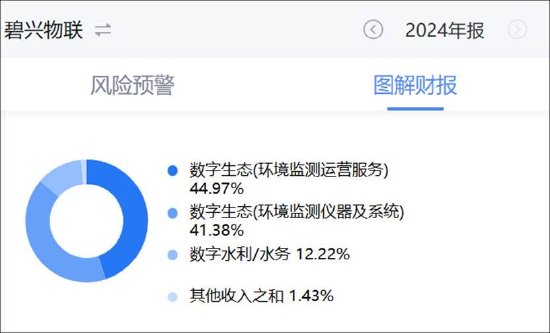
Group 1 - The event is hosted at the Trump National Golf Club in Washington, D.C., located in Virginia [3] - Participants must hold the Trump Coin, with an average holding of $1.79 million per invitee, totaling $394 million among attendees [3] - More than half of the invitees are from overseas, indicating a global interest in the event [3] Group 2 - The event includes additional perks such as a "meet and greet" and sightseeing vouchers before the dinner [3] - Eric Trump, the son of Donald Trump, is mentioned in relation to the event, highlighting the family's involvement [3] - The White House spokesperson, Anna Kelly, asserts that there is no conflict of interest regarding the president's authority [3]
碧兴物联科创板上市迷局:给资金做业绩?业绩持续变脸 异常保证金有无猫腻
Xin Lang Zheng Quan· 2025-05-12 03:23
Core Viewpoint - Bixing Wulian's performance has drastically changed post-IPO, raising questions about the authenticity of its financial data and potential irregularities surrounding its listing [1][2][4] Group 1: Performance and Financial Data - Bixing Wulian reported a revenue of 329 million yuan in 2024, a decrease of 5.91% year-on-year, and a net loss of 38.54 million yuan, a decline of 264.92% [2] - The company experienced a significant performance drop after its IPO, with a net loss of 10.22 million yuan in Q1 2024, a decrease of 443.46% year-on-year [2] - The company has faced continuous regulatory inquiries since its listing, indicating concerns about the authenticity of its financial data [2][4] Group 2: IPO and Valuation Concerns - Bixing Wulian's IPO was marked by a significant valuation increase, with a registered capital increase from 53 million yuan to 58.89 million yuan, raising its valuation to approximately 900 million yuan [9][10] - The company’s financial performance prior to its IPO showed substantial growth, with revenue growth rates of 13.52% and 40.3% in 2020 and 2021, respectively [4] - There are discrepancies between Bixing Wulian's reported data and that of its industry peers, raising questions about the accuracy of its financial disclosures [7] Group 3: Customer Relationships and Transactions - Shanghai Koze became Bixing Wulian's largest customer in 2022, contributing 57.69 million yuan in sales, which accounted for 12.21% of total revenue [18] - There are concerns regarding the high performance bond ratios in contracts with Shanghai Koze, which exceed standard industry practices [24][25] - Bixing Wulian's relationship with former employees who now work for Shanghai Koze raises potential conflicts of interest and questions about the legitimacy of business dealings [20][21] Group 4: Regulatory and Compliance Issues - The company has faced criticism from regulators for its slow project progress and failure to disclose significant contracts in a timely manner [30] - Bixing Wulian's core investment projects have seen minimal progress, with completion rates of 0% and 6.57% for key initiatives as of the end of 2024 [30] - The company has been subject to public criticism and regulatory scrutiny due to its financial practices and governance issues [30]

Goheal:股权激励是绑定?还是利益输送?上市公司资本运作的模糊边界
Sou Hu Cai Jing· 2025-05-07 09:09
Core Viewpoint - The article discusses the dual nature of equity incentive plans in the capital market, highlighting the shift from long-term value creation to short-term profit extraction, raising concerns about potential hidden mechanisms for wealth transfer [1][10]. Group 1: Equity Incentive Mechanisms - Equity incentives, originally intended to bind core teams and promote long-term growth, are increasingly viewed as tools for short-term profit extraction, blurring the lines between genuine motivation and self-serving actions [1][5]. - The design of incentive plans often features low exercise prices, which may appear as rewards but can also indicate collusion among executives, especially when the exercise price is significantly below market value [5][8]. - Certain companies have been observed to introduce incentive plans just before annual audits, suggesting a strategic intent to avoid scrutiny of financial data [5][6]. Group 2: Strategic Manipulation and Wealth Transfer - There are instances where executives receive options just before a merger, allowing them to cash out quickly post-transaction, resulting in inflated acquisition costs for buyers [6][9]. - The article describes a case where a company paid a 40% premium due to the strategic timing of option grants, illustrating how these mechanisms can facilitate significant wealth transfer [6][9]. - The use of complex structures to obscure the true beneficiaries of equity incentives is noted, indicating a sophisticated approach to circumvent regulatory oversight [9][10]. Group 3: Regulatory Oversight and Compliance - The article emphasizes the need for a dynamic monitoring mechanism to assess equity incentive plans, focusing on three key indicators: exercise cost relative to market volatility, alignment of unlocking conditions with company strategy, and transparency of the selling process [8][9]. - Some companies are adopting innovative unlocking criteria that include non-financial metrics, thereby enhancing the integrity of incentive plans and reducing the likelihood of short-term arbitrage [8][9]. - The ongoing evolution of regulatory frameworks is highlighted, with a call for improved disclosure standards and enhanced identification of related parties to prevent potential abuses [9][10]. Group 4: Conclusion and Future Considerations - The article concludes that the true purpose of equity incentive systems should be to support long-term team success rather than enabling a select few to exit prematurely with substantial gains [13]. - It raises a critical question for investors regarding the authenticity of incentive announcements, urging them to discern between genuine long-term commitments and short-term cash-out strategies [13].
新莱福股价长期破发拟收购谋变,标的公司协同效应待考|并购一线
Tai Mei Ti A P P· 2025-04-28 12:27
Core Viewpoint - New Lai Fu (301323.SZ) announced a plan to acquire 100% equity of Guangzhou Jin Nan Magnetic Materials Co., Ltd. and raise supporting funds, aiming to boost its stock price and performance amid slowing growth since its IPO [2][9]. Group 1: Acquisition Details - The acquisition target, Jin Nan Company, is familiar to investors as it shares the same actual controller, Wang Xiaoming, with New Lai Fu [2][5]. - Jin Nan Company, established in 2009, specializes in the production and sales of motor magnetic strips, absorbing materials, and soft magnetic alloy cores [4]. - New Lai Fu's stock price has been volatile, with a significant drop since its peak post-IPO, leading to a need for strategic changes through this acquisition [9][11]. Group 2: Financial Performance - New Lai Fu's revenue from 2021 to 2024 was 782 million, 715 million, 771 million, and 886 million yuan, with year-on-year growth rates of 30.75%, -8.66%, 7.88%, and 14.94% respectively [9]. - The company's net profit during the same period was 133 million, 128 million, 138 million, and 145 million yuan, showing fluctuations and a slowing growth trend [10]. - Jin Nan Company's projected revenues for 2023 and 2024 are 421 million and 502 million yuan, with net profits of 57.1 million and 83.4 million yuan respectively [8]. Group 3: Market Reaction - On the first day of resuming trading, New Lai Fu's stock rose by 10.34%, closing at 39.17 yuan [3]. - The stock price has been under pressure, remaining close to the issue price, indicating market skepticism about the effectiveness of the acquisition [11][13].