
多能互补

Search documents
川润:贵州酿酒项目投运,示范“多能互补”理念
Sou Hu Cai Jing· 2025-11-16 03:15
Core Insights - The project at Guizhou Grand Canyon Distillery, upgraded by Chuanrun using high-temperature heat pump technology, has commenced operations on November 13 [1] - This project represents Chuanrun's first benchmark demonstration case in the liquor industry, highlighting the practical application of its "multi-energy complementarity" concept in traditional high-energy-consuming sectors [1] - The initiative provides a replicable smart energy solution for the green transformation of the liquor industry and similar high-energy-consuming industrial fields [1]

国家能源局关于促进新能源集成融合发展的指导意见
国家能源局· 2025-11-12 08:58
Core Viewpoint - The article emphasizes the need for integrated and collaborative development of renewable energy in China, aiming to enhance energy security and support the country's green transformation by 2030 [4][5]. Overall Requirements - The development of renewable energy should align with Xi Jinping's thought and the new development philosophy, focusing on system integration, technological innovation, and multi-dimensional utilization [4]. Accelerating Multi-Dimensional Integrated Development of Renewable Energy - Enhance the complementary development of various renewable energy sources, optimizing energy structures and storage configurations [5]. - Strengthen the intensive and composite utilization of renewable energy development space, promoting co-construction of wind and solar projects [6]. - Promote distributed renewable energy integration across various sectors, including transportation and rural energy systems [7]. - Advance integrated operation of renewable energy, improving forecasting accuracy and operational efficiency [8]. Promoting Synergistic Development with Multiple Industries - Accelerate the green manufacturing of renewable energy equipment and establish competitive manufacturing bases [9]. - Optimize the collaboration between renewable energy and traditional industries, enhancing energy efficiency and reducing costs [10]. - Foster the integration of renewable energy with emerging industries, such as computing power and advanced manufacturing [10]. Promoting Diversified Non-Electric Utilization of Renewable Energy - Enhance the collaborative development of wind, solar, hydrogen, and storage technologies [11]. - Establish comprehensive industrial bases for green hydrogen and ammonia, focusing on resource-rich areas [12]. - Encourage the application of renewable energy in heating and cooling systems across various industries [13]. Strengthening Organizational Support - Organize and prioritize the construction of integrated renewable energy projects in regions with high penetration rates [13]. - Optimize project investment and management processes to facilitate the development of integrated projects [14]. - Improve power dispatch mechanisms to ensure the stability and efficiency of renewable energy integration [14].


我国装机规模最大火电厂投产
Ren Min Ri Bao· 2025-11-03 21:50
Core Insights - The Beilun Power Plant in Ningbo, Zhejiang Province has successfully commenced operations of its 1 million kilowatt coal-fired unit after 168 hours of full-load trial operation, making it the largest coal-fired power plant in China with a total installed capacity of 7.34 million kilowatts [1] Group 1: Operational Highlights - The newly operational Unit 9 is part of the first phase of the energy-saving and emission-reduction renovation project, which began construction in 2023 [1] - The expected annual electricity generation from the Beilun Power Plant exceeds 40 billion kilowatt-hours [1] - During the trial operation, the average emission concentrations of particulate matter, sulfur dioxide, and nitrogen oxides from Unit 9 reached leading levels among similar units in the country [1] Group 2: Environmental and Energy Transition Efforts - The Beilun Power Plant has become the largest heat source in a 50 square kilometer area, indicating its significant role in local energy supply [1] - The plant is accelerating the development of multi-energy complementarity by investing in wind power, solar energy, and energy storage projects to generate more green electricity [1] - The Chinese government continues to promote the clean and efficient use of coal during the 14th Five-Year Plan period, with plans to enhance the flexible adjustment capabilities of coal-fired power during the 15th Five-Year Plan [1]
世界唯一!我国新建成的这座核能系统技术优势明显
Yang Shi Xin Wen Ke Hu Duan· 2025-11-01 13:56
Core Viewpoint - The successful construction of China's thorium-based molten salt experimental reactor marks a significant advancement in nuclear energy technology, potentially reducing reliance on uranium and enhancing energy security through the utilization of abundant thorium resources [1][4][6]. Group 1: Project Overview - The thorium-based molten salt experimental reactor is the only operational molten salt reactor globally that has achieved thorium-uranium conversion [4][6]. - This reactor utilizes thorium as fuel and liquid fluoride salt as a coolant, offering inherent safety, no water cooling, atmospheric pressure operation, and high-temperature output [4][10]. Group 2: Technological Innovations - The project has successfully developed core technologies related to materials, instruments, equipment, and system integration, significantly reducing radioactive leakage risks and enhancing reactor safety [8][22]. - The reactor's design incorporates innovative safety features, including an integrated reactor core and coolant systems, which prevent radioactive material leakage [20][22]. Group 3: Environmental and Energy Implications - The thorium-based molten salt reactor is a clean and efficient energy system that can complement other renewable energy sources, contributing to a low-carbon chemical system [10][12]. - The reactor operates at a temperature of 700 degrees Celsius, enabling high-efficiency hydrogen production, which is considered a key energy source for the 21st century [28][30]. Group 4: Future Prospects - The successful demonstration of thorium resource utilization lays a solid foundation for future demonstration and commercial reactor construction [6][14]. - The reactor's ability to operate without large amounts of water allows for its deployment in arid regions, facilitating large-scale applications and addressing carbon neutrality goals [30][32].
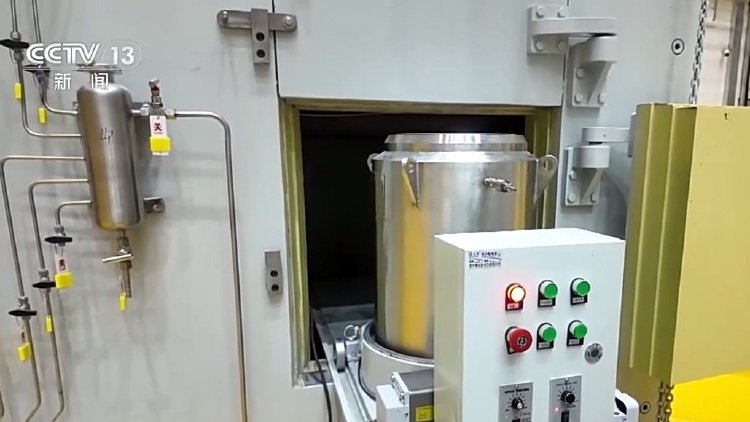
里程碑式突破!我国自研,首次实现
中国能源报· 2025-11-01 02:57
Core Viewpoint - The successful construction and operation of China's thorium-based molten salt experimental reactor marks a significant advancement in utilizing thorium resources, laying a scientific foundation for future large-scale applications of thorium fuel [1][3]. Group 1: Reactor Development - The thorium-based molten salt experimental reactor is China's independently developed fourth-generation advanced fission nuclear energy system and is currently the only molten salt reactor in the world that has achieved thorium fuel operation [3]. - The reactor uses thorium as nuclear fuel and liquid fluoride salt as a coolant, offering advantages such as safety, no water cooling, operation at atmospheric pressure, and high-temperature output [3]. - Since the project's initiation in 2011, the research team has overcome key technologies related to materials, instruments, equipment development, and system integration [3]. - The reactor features an innovative integrated design that combines the core, fuel salt pump, heat exchanger, and other key components within the main reactor vessel, significantly reducing the risk of radioactive leakage and enhancing safety [3]. - The overall domestic production rate of the reactor exceeds 90%, with 100% of key core equipment being domestically produced, ensuring a controllable supply chain [3]. Group 2: Strategic Importance - The thorium-based molten salt reactor represents a clean and efficient energy system that can integrate with high-temperature molten salt energy storage, high-temperature hydrogen production, solar energy, wind energy, and coal gasification, forming a low-carbon complementary energy system and low-carbon chemical framework [5]. - China's abundant thorium resources and the establishment of thorium-based molten salt reactors can promote national energy independence, providing significant support for the country's energy security and sustainable development [5].
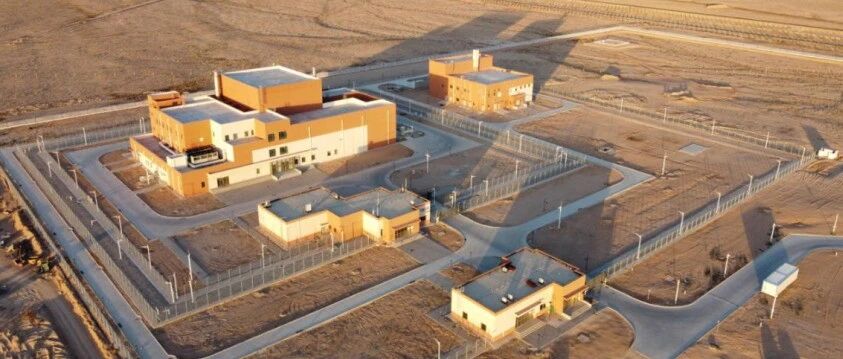
核心设备完全国产化 我国钍基熔盐实验堆建成并首次实现堆内钍铀转化
Yang Shi Xin Wen· 2025-10-31 23:04
Core Insights - The Chinese Academy of Sciences announced the successful construction and operation of a thorium-based molten salt experimental reactor in Wuwei City, Gansu Province, marking a significant step in the feasibility of utilizing thorium resources for nuclear energy [1][2] - This experimental reactor is China's independently developed fourth-generation advanced fission nuclear energy system and is currently the only molten salt reactor in the world that has achieved thorium fuel loading [1] - The reactor utilizes thorium as nuclear fuel and liquid fluoride salt as a coolant, offering advantages such as safety, no water cooling, operation at atmospheric pressure, and high-temperature output [1] Technological Advancements - Since the project's initiation in 2011, the research team has made breakthroughs in core technologies related to materials, instruments, equipment development, and system integration [1] - The reactor features an innovative integrated design that combines the core, fuel salt pump, heat exchanger, and other key components within the main reactor vessel, significantly reducing the risk of radioactive leakage and enhancing safety [1] - The overall domestic production rate of the thorium-based molten salt experimental reactor exceeds 90%, with 100% of key core equipment being domestically produced, ensuring a controllable supply chain [1] Strategic Importance - The thorium-based molten salt reactor represents a clean and efficient energy system that can complement high-temperature molten salt energy storage, hydrogen production, solar energy, wind energy, and coal gasification, contributing to a low-carbon chemical system [2] - Given China's abundant thorium resources, the establishment of thorium-based molten salt reactors can promote national energy independence and provide crucial support for energy security and sustainable development in the country [2]
四川水电装机将破1亿千瓦 打造世界级清洁能源基地
Zhong Guo Xin Wen Wang· 2025-10-28 13:33
Core Viewpoint - Sichuan Province is set to achieve a historic milestone with its hydropower installed capacity exceeding 100 million kilowatts this year, alongside a significant increase in new energy installations, establishing itself as a world-class clean energy base [1][3]. Group 1: Hydropower Development - Sichuan is focusing on the development of hydropower in the "Three Rivers" basin, having completed and put into operation ten large hydropower stations, including Baiketan, Wudongde, and Suwalong [3]. - The installed capacity of new energy has reached 32 million kilowatts, which is five times the level at the beginning of the "14th Five-Year Plan" [3]. Group 2: Natural Gas Production - Sichuan is accelerating the establishment of a national natural gas (shale gas) production base with a capacity of 100 billion cubic meters, having increased its annual natural gas production from 43.2 billion cubic meters to 56.2 billion cubic meters, maintaining its position as the top producer in the country [3]. Group 3: Energy Infrastructure - The province has built a robust energy infrastructure network, including the "Eight Direct and Eleven Interconnected" inter-provincial transmission channels, enhancing its connectivity with various regional power grids [5]. - The completion of the first ultra-high voltage AC project in Southwest China has increased Sichuan's small "West-to-East Power Transmission" capacity to over 37 million kilowatts [5].
华自科技(300490) - 2025年10月28日华自科技投资者关系活动记录表
2025-10-28 13:16
Group 1: Financial Performance - The company achieved a revenue of 1.54 billion yuan in the first three quarters, showing a slight increase compared to the same period last year, with a significant growth of 127% in Q3 alone [2] - Despite current cumulative losses, the company maintains its goal of turning profitable by the end of 2025, driven by several key factors [2] - Key financial indicators are improving, with inventory reaching 2.087 billion yuan, an increase of 740 million yuan from the beginning of the year, and operating cash flow increasing by 96% [3] Group 2: Order Status - As of the end of the first half of 2025, the company reported a record high backlog of orders amounting to 5.44 billion yuan (excluding tax), with significant new orders signed in the lithium battery and renewable energy sectors [3] - The composition of the backlog includes approximately 40% from lithium battery intelligent equipment, 50% from renewable energy (source-network-load-storage), and 10% from hydropower and environmental protection [3] Group 3: Future Business Strategy - The company plans to focus on its core business and strengthen its direction in renewable energy, particularly in the lithium battery intelligent equipment sector, with an emphasis on solid-state battery technology [3] - Future strategies include expanding overseas business, particularly in countries along the "Belt and Road" initiative, aiming for overseas business to account for over 50% of total operations to optimize overall profit margins [3]

10亿元注册!新能源“头号玩家”浮出水面
第一财经· 2025-10-27 09:08
Core Viewpoint - The establishment of Yajiang New Energy marks a significant step for China Yajiang Group in diversifying its clean energy portfolio and building a comprehensive energy system [3][4]. Company Overview - Yajiang New Energy, fully owned by China Yajiang Group, has a registered capital of 1 billion yuan and is located in Lhasa, Tibet [3]. - The company's business scope includes solar and wind power services, energy storage technology, hydrogen facilities, and various power generation and transmission services [3]. Industry Context - The establishment of Yajiang New Energy is seen as a response to the trend of large energy groups diversifying into clean energy [4]. - The integration of hydropower with wind and solar energy is expected to optimize the energy structure in the region [4][5]. Regional Energy Landscape - Tibet is recognized as a "treasure trove" of clean energy, with over 99% of its electricity generated from clean sources [5]. - Since the initiation of "Tibetan electricity export" in 2015, Tibet has exported over 15 billion kilowatt-hours of clean energy by September this year [5]. - Future projections indicate that by 2050, Tibet will have over 10 high-voltage direct current transmission channels for clean energy, with an annual export capacity exceeding 500 billion kilowatt-hours, which is 33 times the cumulative export of the past decade [5].
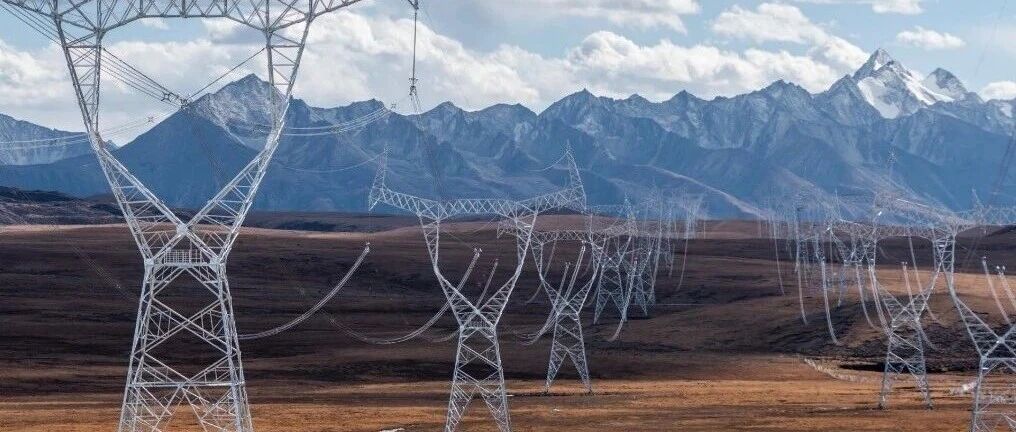
注资资本10亿元!新能源“头号玩家”雅江新能源浮出水面,全面布局水风光储氢
Di Yi Cai Jing· 2025-10-27 07:42
Core Insights - The establishment of China Yajiang Group New Energy Co., Ltd. marks a significant step towards the diversification of clean energy within the Yajiang Group, indicating a strategic shift towards a comprehensive energy system [1][2] - The new company will focus on various clean energy technologies, including solar, wind, and hydropower, as well as energy storage and hydrogen facilities, enhancing local energy transformation and consumption [1][2] Company Overview - Yajiang New Energy is fully owned by China Yajiang Group, with a registered capital of 1 billion yuan, located in Lhasa, Tibet [1] - The company’s business scope includes solar power technology services, wind power technology services, energy storage technology services, and various power generation and transmission services [1] Industry Trends - The trend of large energy groups transitioning to diversified clean energy is becoming more prominent, with hydropower providing a stable base load and seasonal adjustment capabilities [2] - Tibet is recognized as a "treasure trove" of clean energy, with over 99% of its electricity generated from clean sources, forming a new comprehensive energy system [2] - The region has significantly increased its clean energy exports, with over 15 billion kilowatt-hours sent out since 2015, and plans to expand this capacity dramatically by 2050 [2]