总体国家安全观

Search documents
“豫讲豫出彩”学习贯彻党的二十届 四中全会精神巡回宣讲活动走进郑州
Zheng Zhou Ri Bao· 2026-01-16 00:40
Core Viewpoint - The "Yu Jiang Yu Chu Cai" campaign aims to promote the spirit of the 20th Central Committee of the Communist Party of China through innovative and engaging presentations, making abstract theories relatable to the public [1][2]. Group 1: Event Overview - The event, organized by the Henan Provincial Propaganda Department, features diverse artistic expressions such as cross-talk, songs, and stand-up comedy to convey the Party's innovative theories [1]. - The campaign focuses on key areas including livelihood governance, green development, women's growth, food security, cultural tourism, and national security [1][2]. Group 2: Presentation Highlights - Presentations included topics like "Small Grid Supporting Big Happiness," which illustrated grassroots governance practices [2]. - "Green Water and Green Mountains Together" used a mix of cross-talk and songs to convey the core concepts of green development and ecological civilization [2]. - "From 'Husband as the Center' to 'Glory for the Country'" shared stories of women's growth in the context of societal changes [2]. - "National Security" presented personal growth stories to highlight the extraordinary journeys of ordinary guardians of national security [2]. Group 3: Audience Reception - The atmosphere at the event was lively, with positive feedback from the audience, who found the presentations both theoretically deep and practically relevant [3]. - Attendees expressed that the campaign provided a more intuitive and profound understanding of the spirit of the 20th Central Committee, contributing to the momentum for modernization in Central China [3].
在发展中固安全 在安全中谋发展(学习贯彻党的二十届四中全会精神)
Ren Min Ri Bao· 2026-01-14 23:03
Group 1 - The concept of coordinating development and security is a fundamental principle emphasized by Xi Jinping, highlighting the need for a balance between economic growth and national security [1][2][3] - The integration of development and security is seen as a significant innovation in economic and national security theories, moving beyond traditional dichotomies [4][5] - The relationship between development and security is characterized as a dialectical unity, where development is the foundation of security, and security is a prerequisite for development [3][6] Group 2 - The practical implementation of the coordinated development and security concept has led to significant advancements in China's economic strength and technological self-reliance, enhancing national security [8][9] - China's GDP reached 134.9 trillion yuan in 2024, with a growth rate of 5.0%, contributing approximately 30% to global economic growth [9] - The manufacturing sector remains robust, with a global share of nearly 30%, and significant advancements in research and development, particularly in critical technology areas [9][10] Group 3 - The construction of a new security framework is essential for supporting high-quality development, with a focus on systemic restructuring of national security mechanisms [12][18] - The emphasis on food and energy security has been strengthened, with grain production stabilizing at over 1.3 trillion jin annually and energy self-sufficiency maintained above 80% [10][11] - The resilience and competitiveness of supply chains have been enhanced to effectively counter external pressures, particularly in key industries like integrated circuits and advanced materials [11][16] Group 4 - The strategic focus on technological self-reliance is critical for national security, with an emphasis on overcoming "choke point" issues in key technology sectors [17][19] - The establishment of a comprehensive national security system is aimed at ensuring political stability and economic health, addressing risks in various sectors including finance and real estate [19][20] - The ongoing development of a modern industrial system is crucial for maintaining national security, with a focus on enhancing domestic capabilities and reducing reliance on imports [16][17]
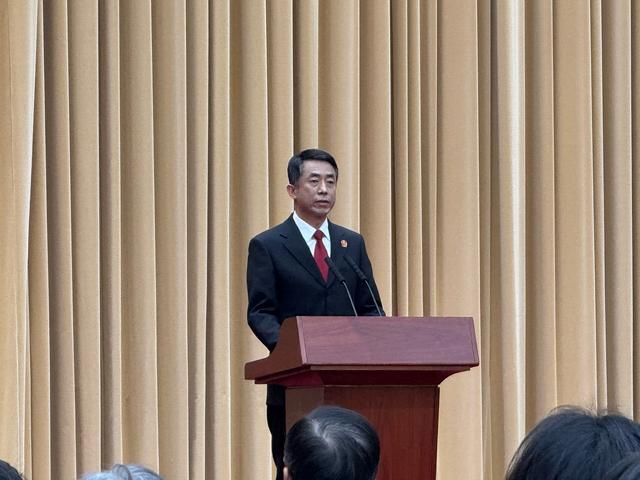
北京市政法系统举行丁宇翔先进事迹报告会
Xin Lang Cai Jing· 2026-01-12 09:47
会议号召,全市政法干警要以丁宇翔为榜样,坚持不懈用习近平新时代中国特色社会主义思想凝心铸 魂,深入贯彻习近平法治思想、总体国家安全观,坚定拥护"两个确立"、坚决做到"两个维护",把对党 忠诚体现在坚决贯彻党中央决策部署上,体现在履职尽责的具体工作中;始终做到敢于担当,善于运用 法治思维和法治方式深化改革、推动发展、化解矛盾、维护稳定,在服务首都高质量发展中展现新担当 新作为;始终做到敢于创新,以敢为天下先的志气、勇气、锐气,不断推进新时代首都政法工作创新发 展;始终做到敢于碰硬,做到关键时刻拉得出、冲得上、打得赢,坚决维护首都政治安全和社会稳定; 始终做到甘于奉献,着力解决好群众的急难愁盼问题,不断增强人民群众的获得感、幸福感、安全感。 报告会催人奋进,现场不时响起热烈掌声。在场干警纷纷表示,将以丁宇翔为榜样,深入学习贯彻党的 二十届四中全会精神、中央全面依法治国工作会议精神,切实把学习成果转化为履职尽责、攻坚克难的 实际行动,敢于担当、敢于创新、敢于碰硬、甘于奉献,进一步履行好政法工作职责使命,努力建设更 高水平的平安北京、法治中国首善之区,为奋力实现"十五五"良好开局,谱写中国式现代化北京新篇章 贡献力量 ...

科学把握网络治理面临的形势任务
Xin Lang Cai Jing· 2026-01-11 18:13
Group 1 - The core viewpoint emphasizes the importance of network governance in the context of national governance and the challenges posed by the information revolution [1][2][3] - The internet's dual-edged sword effect presents both opportunities for economic development and risks that need to be managed [2][4] - The transformation of governance models due to information technology is highlighted, indicating a shift towards more precise and efficient public services [3][4] Group 2 - The need for enhanced network security measures is underscored, given the increasing threats in cyberspace and the complexity of new security challenges [4][5] - The principle of serving the people through the internet is emphasized, with a focus on addressing issues like online rumors and fraud that affect public interests [5][6] - The call for international cooperation in internet governance reflects the need for a balanced and fair global internet governance system [6][7]
陈刚:严厉打击各类涉边违法犯罪活动,坚决守住守好祖国“南大门”
Guang Xi Ri Bao· 2026-01-11 01:50
Core Viewpoint - The article emphasizes the importance of strengthening border security and defense in Guangxi, highlighting the need for a comprehensive approach to combat smuggling and illegal immigration while enhancing local development and safety measures [1][3]. Group 1: Border Security and Defense - The regional government is committed to implementing the overall national security concept and ensuring the security of the southern border of China [1]. - A multi-faceted defense mechanism involving government, military, police, and community cooperation is essential for effectively addressing border-related crimes [1][3]. - There is a strong focus on establishing a robust management and command system to enhance accountability and operational efficiency in border security efforts [3]. Group 2: Education and Community Engagement - The government is prioritizing the improvement of educational quality in border areas, leveraging regional cooperation to enhance educational services [2]. - Community involvement and awareness are crucial for fostering a safe environment, with initiatives aimed at increasing public understanding of legal compliance and border security [3]. Group 3: Law Enforcement and Crime Prevention - A systematic approach to tackling smuggling and illegal immigration is being adopted, including the establishment of a reporting mechanism for citizens to report suspicious activities [3]. - The government plans to utilize advanced technologies, such as artificial intelligence, to optimize resource allocation and enhance the effectiveness of border security measures [3].
2026年全国铁路监督管理工作会议在北京召开
Xin Lang Cai Jing· 2026-01-08 06:36
中新网北京1月8日电 (记者 刘文文)2026年全国铁路监督管理工作会议8日在北京召开。交通运输部党组 书记、部长刘伟出席会议并讲话。国家铁路局党组书记、局长宋修德作工作报告。 会议指出,2025年,铁路监管部门坚持统筹发展和安全,服务保障国家重大战略实施,提升行业现代化 治理能力,与行业单位共同努力,推动铁路高质量发展取得新进展。铁路固定资产投资完成9015亿元, 投产新线3109公里,其中高铁2862公里。全国铁路完成旅客发送量45.88亿人,同比增长6.4%,单日发 送量创历史新高。完成货运发送量52.73亿吨,同比增长2.0%。完成铁水联运量1738万标箱,同比增长 15.1%。中欧(亚)班列开行3.4万列、发送317万标箱,同比分别增长9.8%、7.6%。西部陆海新通道班列 发送142万标箱,同比增长47.5%。 会议强调,2026年铁路行业要重点做好七个方面的工作: 一是深入贯彻总体国家安全观,守牢铁路安全底线。扎实推进铁路安全生产治本攻坚行动,强化运输安 全、工程质量安全、设备质量安全监管和地方铁路监管,持续提升监管效能。 三是增强铁路运输服务保障能力,促进国民经济循环畅通。推动降低物流成本,保 ...
坚持党的全面领导是必须遵循的首要原则
Xin Lang Cai Jing· 2026-01-04 19:01
Group 1 - The core viewpoint of the article emphasizes the importance of the Communist Party's comprehensive leadership as a fundamental guarantee for the stable and long-term development of China's economy and society during the "14th Five-Year Plan" period [1] - The article outlines the necessity of adhering to the "six persistences" principle during the "15th Five-Year Plan" period, with a focus on the Party's leadership as the primary principle [1] - It highlights the role of the Party in integrating social resources and coordinating interests to achieve the goals set in the "15th Five-Year Plan" [1] Group 2 - The article stresses the need for political loyalty to ensure that the development during the "15th Five-Year Plan" proceeds in the correct direction, emphasizing the importance of aligning with the central leadership [2] - It calls for strengthening theoretical education to provide scientific guidance for the "15th Five-Year Plan" development, particularly through the application of Xi Jinping's thought [3] - The article discusses the importance of improving institutional guarantees to enhance the Party's leadership capabilities and governance effectiveness [4] Group 3 - The article emphasizes the need to build a strong cadre team capable of fulfilling the responsibilities of national rejuvenation, focusing on political standards and practical experience [4] - It highlights the importance of focusing on central tasks to turn the "15th Five-Year Plan" development blueprint into reality, including promoting a modern economic system and addressing public service needs [5]
推动总体国家安全观教育与高校思政教育深度融合
Xin Lang Cai Jing· 2026-01-01 20:49
Core Viewpoint - The integration of the overall national security education with ideological and political education in higher education is essential for cultivating a new generation capable of undertaking the responsibilities of national rejuvenation and addressing various risks and challenges in the current era [1][5]. Group 1: Curriculum Development - A dual-track curriculum system should be established to integrate "security courses" and "course safety," including mandatory courses like "Introduction to Overall National Security Concept" and elective courses focusing on key areas such as political, network, cultural, technological, and biological security [2]. - The curriculum should emphasize the advantages of the socialist system with Chinese characteristics and the importance of ideological security, while also incorporating elements of technology ethics, data security, and cultural confidence across various disciplines [2]. Group 2: Practical Education - A three-dimensional collaborative practice education system should be constructed, combining on-campus activities with off-campus experiences and online resources to enhance students' understanding and application of national security concepts [3]. - Activities such as national security knowledge competitions and immersive experiences with military units should be organized to bridge theoretical knowledge with practical application [3]. Group 3: Support Mechanisms - A robust support system is necessary for the sustainable integration of national security education, which includes building a diverse and practical teaching team, enhancing institutional frameworks, and establishing a quality monitoring and evaluation system [4]. - The establishment of national security education bases and the implementation of a special training plan for educators are crucial for improving the overall quality of education in this field [4]. Group 4: Youth Development - The national security literacy of the younger generation is vital for the long-term stability of the country and the future of the nation, necessitating a comprehensive optimization of educational approaches to foster high-quality talents with strong national security awareness [5].
伟大复兴势不可挡
Xin Lang Cai Jing· 2026-01-01 17:42
转自:成都日报锦观 伟大复兴势不可挡 ——以习近平同志为核心的党中央2025年治国理政纪实 □新华社记者 历史的交汇点上,总是气象万千。 2025年,进一步全面深化改革的重要一年,脱贫攻坚任务完成后5年过渡期的最后一年,"十四五"收官 之年、"十五五"谋划之年。 面对错综复杂的国际形势和艰巨繁重的国内改革发展稳定任务,以习近平同志为核心的党中央团结带领 全党全国各族人民,迎难而上、砥砺前行,在强国建设、民族复兴征程中写下"很不平凡"的一笔。 应对外部环境急剧变化和内部重重挑战困难,我国经济顶压前行、向新向优发展,"十四五"主要目标即 将顺利完成;立足新的时代方位,乘势而上擘画接续推进中国式现代化建设的宏伟蓝图;面对百年变局 加速演进,四大全球倡议经纬纵横,为世界注入稳定性确定性;隆重纪念中国人民抗日战争暨世界反法 西斯战争胜利80周年,极大振奋民族精神、激发爱国热情、凝聚奋斗力量…… "中华民族伟大复兴势不可挡!人类和平与发展的崇高事业必将胜利!"习近平总书记的豪迈宣告,揭示 历史大势、时代潮流、人心所向。 顶压前行 向新向优 ——"以高质量发展的确定性应对各种不确定性" 2025年岁末,北京京西宾馆,习近平 ...
以习近平同志为核心的党中央2025年治国理政纪实
Xin Hua She· 2026-01-01 03:46
原标题:伟大复兴势不可挡——以习近平同志为核心的党中央2025年治国理政纪实 历史的交汇点上,总是气象万千。 2025年,进一步全面深化改革的重要一年,脱贫攻坚任务完成后5年过渡期的最后一年,"十四五"收官之年、"十五五"谋划之年。 面对错综复杂的国际形势和艰巨繁重的国内改革发展稳定任务,以习近平同志为核心的党中央团结带领全党全国各族人民,迎难而上、砥 砺前行,在强国建设、民族复兴征程中写下"很不平凡"的一笔。 全面总结过去一年经济工作:"我国经济顶压前行、向新向优发展,展现强大韧性和活力。" 高度评价过去5年发展成就:"我们有效应对各种冲击挑战,推动党和国家事业取得新的重大成就,第二个百年奋斗目标新征程实现良好开 局。" 成如容易却艰辛。 "很不平凡"——短短4个字,勾勒出2025年的涉滩之险、爬坡之艰、攻坚之难。 "十四五"规划收官之年,国际风云激荡变幻,国内经济运行中周期性结构性矛盾较为突出,改革发展稳定任务之重、矛盾风险挑战之多, 无不考验着党中央治国理政的智慧。 应对外部环境急剧变化和内部重重挑战困难,我国经济顶压前行、向新向优发展,"十四五"主要目标即将顺利完成;立足新的时代方位, 乘势而上擘画接 ...