
折叠屏手机

Search documents
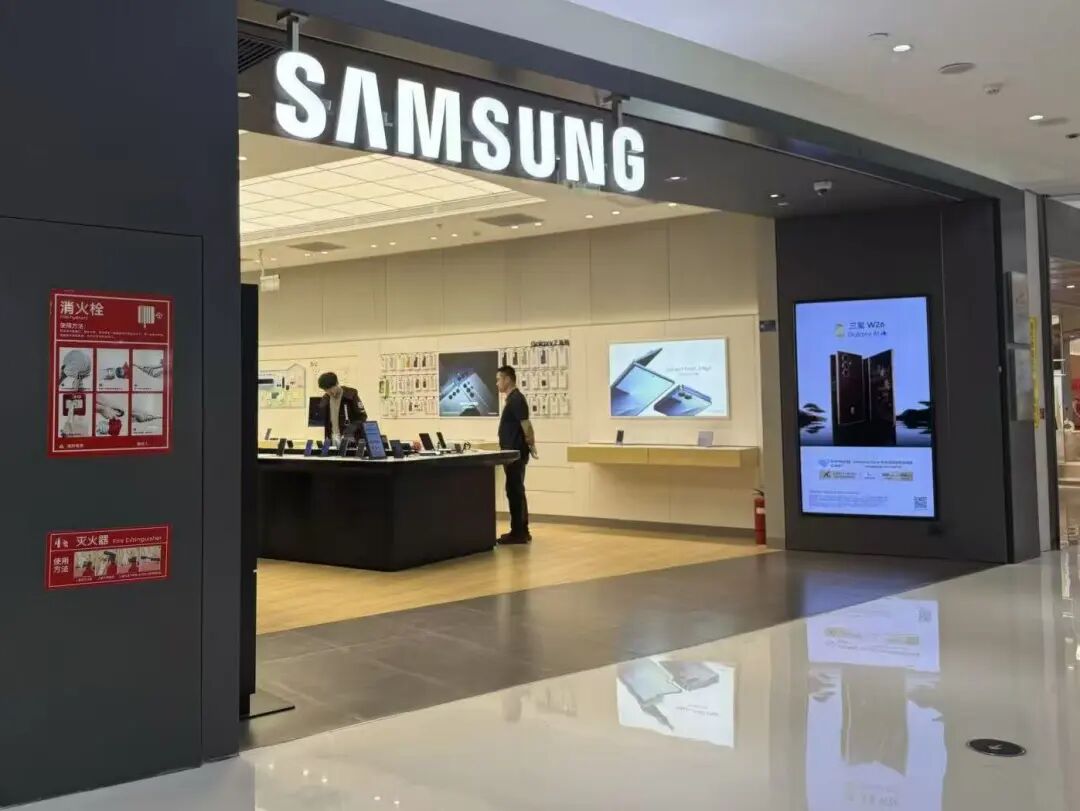
实探三星三折叠首销:首批秒罄,全球限量2万台,一机难求,与华为贴身肉搏
3 6 Ke· 2025-12-10 04:10
Core Viewpoint - The competition in the foldable smartphone market intensifies as Samsung launches its first tri-fold smartphone, the Galaxy Z TriFold, which features a dual-side inward folding design, contrasting with Huawei's Z-shaped foldable phone design [1][4]. Group 1: Product Launch and Market Response - Samsung's Galaxy Z TriFold is available for pre-order, with prices set at 19,999 yuan for the 16GB+512GB version and 21,999 yuan for the 16GB+1TB version, matching Huawei's pricing for its tri-fold model [1]. - The initial stock of the Galaxy Z TriFold sold out quickly, indicating strong market interest despite the high price point [1][2]. - The limited availability of the Galaxy Z TriFold is attributed to Samsung's cautious inventory strategy, with only 20,000 units produced globally, and a very limited number allocated to the Chinese market [2][4]. Group 2: Competitive Landscape - Samsung and Huawei have been in a competitive race in the foldable smartphone sector since 2019, with both companies continuously innovating in design and technology [4]. - Huawei's recent advancements, including the launch of the Mate XT, have allowed it to capture a larger market share, with Huawei achieving a 48% market share in the first half of 2025, significantly surpassing Samsung's 20% [6][7]. - The market share dynamics between Samsung and Huawei have shifted dramatically from 2022 to 2024, with Samsung's share decreasing from 78% to 45%, while Huawei's share increased from 14% to 24% [7]. Group 3: Strategic Implications - The limited initial stock of the Galaxy Z TriFold may serve as a strategic move for Samsung to test the market response and reinforce its brand positioning in the high-end segment [9]. - The foldable smartphone market is seen as a platform for demonstrating technological leadership rather than achieving immediate mass-market sales, with companies focusing on brand differentiation and long-term profitability [9]. - Samsung's challenge lies in regaining its former dominance in the foldable market against Huawei, which has established a strong brand presence and market position [9].

努比亚CEO谈豆包手机助手:发展势不可逆/华为成立基础大模型部/英伟达H200芯片获批对华出口,中外方回应
Sou Hu Cai Jing· 2025-12-10 03:13
Group 1: AI and Mobile Technology - Nubia CEO Ni Fei emphasized that the development of AI smartphones is an irreversible trend, with a focus on open collaboration to enhance user experience [12][13][14] - The first foldable iPhone is projected to have a production target of approximately 10 million units, exceeding initial industry expectations by about 30% [3] - The foldable iPhone is expected to drive a significant increase in global foldable smartphone shipments, with IDC forecasting a 30% growth in the market by 2026 due to Apple's entry [4] Group 2: Xiaomi's Organizational Changes - Xiaomi has initiated a series of personnel adjustments in its China operations, with Wang Xiaoyan taking charge of performance [5][7] - The company is experiencing a slowdown in orders across its mobile, automotive, and home appliance sectors, prompting a shift in retail strategy towards optimizing existing stores rather than expanding [8][10] - Xiaomi anticipates a one-time loss of approximately 27.26 million yuan to assist partners in reducing their annual losses by over 72.46 million yuan [9] Group 3: AI Developments and Strategic Moves - Huawei has established a new department focused on foundational large models, marking a significant upgrade in its AI strategy [24][26] - Alibaba has formed a new C-end business group, aiming to develop its "Qianwen" app into a super app that serves as a gateway to AI [35] Group 4: Market Reactions and Future Projections - Nvidia's H200 chip has been approved for export to China, with the U.S. government set to take a 25% cut from sales, highlighting the competitive landscape in AI technology [20][21][22] - The anticipated price of the foldable iPhone is expected to start at $2400, capturing over 22% of the foldable smartphone market share in its first year [3]



华为Mate X7-华为Mate 80 Pro Max双机对比 折还是不折?
Xin Lang Cai Jing· 2025-12-09 13:41
Core Viewpoint - The article discusses the comparison between foldable smartphones and traditional flat-screen devices, specifically focusing on the Huawei Mate X7 and Huawei Mate 80 Pro Max, while encouraging viewers to assess their own needs regarding foldable technology [2][3]. Group 1 - The video provides a clear diagnostic framework for viewers to evaluate the advantages and disadvantages of foldable versus non-foldable smartphones [2][3]. - It emphasizes the shift from a product comparison to a personal need assessment regarding the necessity of foldable devices [2][3]. - At the end of the video, viewers receive a highly personalized "purchase feasibility report" based on the analysis presented [2][3].
中国首秀!19999元的三星三折叠来了,真机上手体验,屏幕交互有点惊艳
Xin Lang Cai Jing· 2025-12-09 05:57
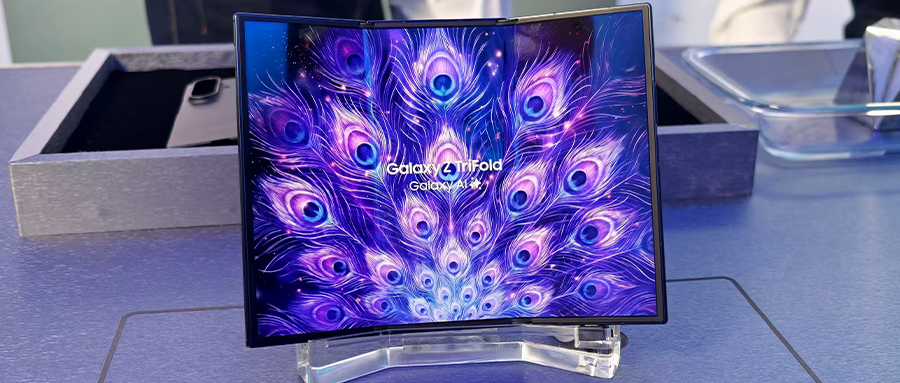
Core Viewpoint - Samsung has officially showcased its first tri-fold smartphone, the Galaxy Z TriFold, which features advanced technology and design, entering the foldable phone market a year after Huawei's similar product launch [2][35]. Group 1: Product Features - The Galaxy Z TriFold utilizes a unique "G" type folding mechanism, which is designed to protect the internal main screen and ensure consistent stress distribution during folding [11][44]. - It is the world's first tri-fold smartphone that supports IP48 level dust and water resistance, making it a standout in the market [18][51]. - The device features a 10-inch display with impressive brightness, color performance, and detail, enhancing the visual experience significantly [16][49]. - The phone is equipped with a customized Snapdragon 8 Elite mobile platform, a 200-megapixel camera, and the largest battery ever in a Samsung foldable phone, along with a 120Hz refresh rate and 1600 nits peak brightness [23][56]. Group 2: User Experience - The Galaxy Z TriFold offers enhanced multi-tasking capabilities, allowing users to run multiple applications simultaneously on its large screen, which is particularly beneficial for productivity [25][59]. - The device supports Samsung DeX, enabling it to function as a secondary display for computers, thus improving mobile office capabilities [32][65]. - Users can customize their workspace by adjusting application window sizes and positions, similar to a PC environment, facilitating a more efficient workflow [28][61]. Group 3: Market Context - The global foldable smartphone market has seen a slowdown in growth, with the overall market size not meeting industry expectations, indicating a shift in consumer interest towards other innovative products like AI glasses and XR devices [33][66]. - Samsung's entry into the tri-fold market comes after a significant delay compared to domestic competitors, raising questions about its impact on the foldable smartphone landscape, especially with the anticipated release of Apple's foldable device next year [33][66].
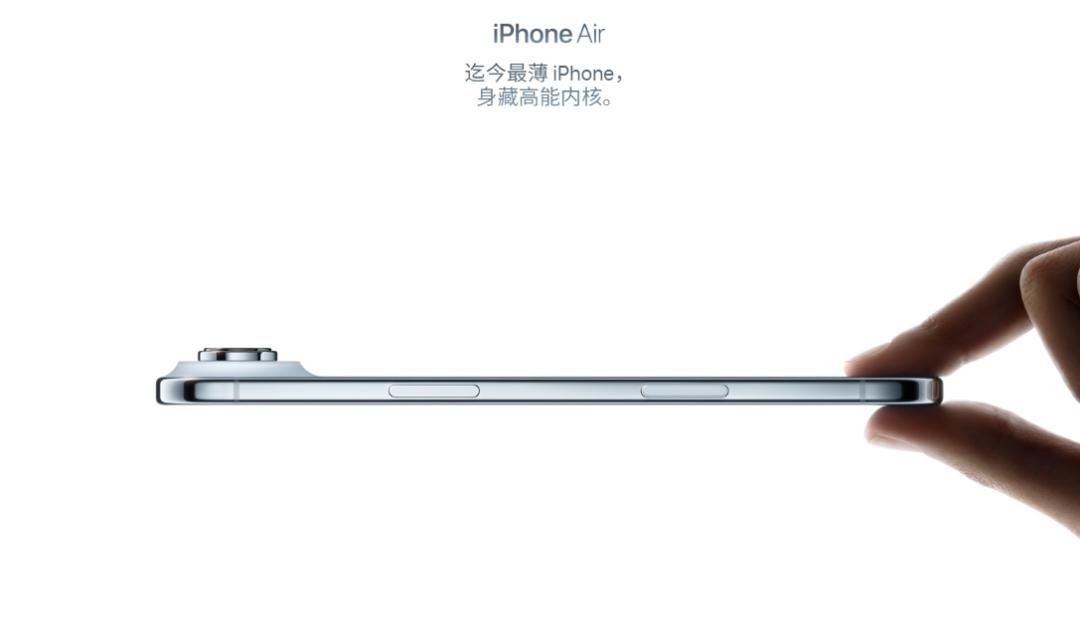
iPhone Air,要凉?
3 6 Ke· 2025-12-08 23:27
Core Viewpoint - The iPhone Air, despite being marketed as the "thinnest iPhone" at 5.6mm thick and weighing 165g, has underperformed in the market since its launch on October 22, 2025, leading to the dismantling of several production lines by Apple suppliers [1][3]. Market Performance - The iPhone Air has not met sales expectations, with reports indicating that Apple suppliers have removed multiple production lines dedicated to this model [3][8]. - In contrast, the iPhone 17 series has performed exceptionally well, dominating sales rankings during the recent "Double 11" shopping festival, while the iPhone Air was notably absent from the top lists [3][6]. Consumer Preferences - The iPhone Air caters to a niche market that values lightweight design, but this demographic is not representative of the broader consumer base, which prioritizes features such as performance and battery life over thinness [3][6]. - The device's specifications, including a 3149mAh battery and single-camera setup, have been perceived as compromises, leading consumers to view the iPhone Air as a "downgraded" option compared to other flagship models [4][6]. Pricing and Competition - Priced at 7999 yuan, the iPhone Air is more expensive than many Android flagship models, yet offers less storage capacity than the iPhone 17, which is available at the same price point [7][8]. - The high-end smartphone segment has seen significant growth, with models priced above 6000 yuan accounting for 50% of sales, indicating that consumers are willing to pay for premium features rather than just a lightweight design [7][8]. Industry Response - The lack of consumer interest in lightweight models has prompted both Apple and Android manufacturers to reconsider their strategies, with reports of Android brands like Xiaomi, OPPO, and vivo canceling their lightweight projects [8][9]. - Analysts suggest that while there is a demand for thinner devices, it is not a primary concern compared to performance and battery life, leading to a reevaluation of the lightweight smartphone market [8][9]. Future Outlook - The iPhone Air may not be positioned for annual updates, indicating that Apple might not prioritize this model for mass production, but rather use it as a testbed for future innovations, such as foldable devices [9][10]. - The overall trend in the smartphone industry suggests that while lightweight designs are appealing, the focus will likely shift back to performance and advanced features, including AI capabilities, in future product developments [17][18].
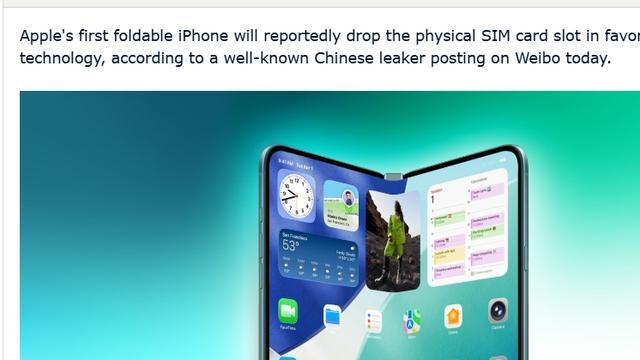
定价超1.4万的iPhone Fold:核心参数曝光,或仅支持eSIM
Huan Qiu Wang Zi Xun· 2025-12-07 04:01
Core Viewpoint - Apple's first foldable smartphone, the iPhone Fold, is expected to eliminate the physical SIM card slot in favor of eSIM technology, aligning with previous predictions from industry analysts [1][3]. Group 1: Product Features and Specifications - The iPhone Fold is anticipated to debut between late 2026 and early 2027, featuring a book-style foldable design with a 5.5-inch external display and a 7.8-inch internal display, similar in size to the iPad mini [3]. - The device is expected to include a 24-megapixel under-display camera and a crease-free internal screen, showcasing new technological advancements [3]. - The pricing for the iPhone Fold in the U.S. is projected to be between $2,000 and $2,500 (approximately ¥14,500 to ¥18,000), potentially making it the most expensive iPhone to date [3]. Group 2: Market Considerations - There are concerns regarding the iPhone Fold's acceptance in the Chinese market, where consumers have a strong preference for physical SIM cards and dual SIM capabilities, which are essential for mobile resale and short-term usage scenarios [3]. - Apple's previous experience with the iPhone Air, which adopted a pure eSIM approach due to space constraints, resulted in lower-than-expected global sales, indicating potential challenges for the iPhone Fold's eSIM-only design [3].
折叠屏战争进入“三折时代”,三星却已输掉中国市场
Feng Huang Wang Cai Jing· 2025-12-05 13:50
Core Viewpoint - Samsung's new Galaxy Z TriFold smartphone faces significant market scrutiny and criticism, particularly from tech influencer Luo Yonghao, as it attempts to compete in the high-end market against Huawei's offerings. The shift in market share dynamics highlights Samsung's declining presence in China, which has become the largest market for foldable smartphones globally [1][3]. Group 1: Product Overview - The Galaxy Z TriFold features a dual-hinge design that allows it to unfold into a tablet-sized device, with a launch price of approximately 3.59 million KRW (around 17,302 RMB or 2,450 USD) set for December 12 in South Korea [1]. - The device boasts a thickness of only 3.9 mm when unfolded and includes a 5600 mAh battery, marking the largest battery capacity for Samsung's foldable phones to date [2]. Group 2: Market Position and Strategy - Samsung's market strategy contrasts with Huawei's localized approach, focusing on global product line standardization and scale innovation, which has led to concerns about product-market fit in China [3]. - As of Q3 2025, Samsung is absent from the top five smartphone manufacturers in China, a stark contrast to its 20% market share in 2013 [4][6]. Group 3: Historical Context and Challenges - Samsung's decline in China began around 2016, exacerbated by the Note 7 battery incident and the rise of local brands like Huawei and Xiaomi, leading to a market share drop to below 1% by 2022 [5]. - Despite regaining the top position globally with a 20.8% market share in 2023, Samsung's struggles in the Chinese market are attributed to intense competition and a lack of localized strategies [6][9]. Group 4: Future Outlook - The success of the Galaxy Z TriFold in China remains uncertain, as Samsung's internal challenges and market dynamics pose significant hurdles [10].

折叠屏战争进入“三折时代”,三星却已输掉中国市场
凤凰网财经· 2025-12-05 12:35
Core Viewpoint - Samsung's new Galaxy Z TriFold smartphone faces significant market scrutiny and competition, particularly from Huawei, as it attempts to re-establish its presence in the high-end foldable smartphone market in China [2][9]. Group 1: Product Overview - The Galaxy Z TriFold features a dual-hinge design that allows it to unfold into a tablet-sized device, with a price set at approximately 17,302 RMB (around 2,450 USD) [3][4]. - The device boasts a thickness of only 3.9 mm when unfolded and includes a 5,600 mAh battery, marking the largest battery capacity for Samsung's foldable phones [7]. Group 2: Market Position and Competition - In 2013, Samsung held a 20% market share in China's smartphone market, but by 2023, it has virtually disappeared from the top five rankings, with local brands like Huawei and Xiaomi dominating [2][12][13]. - Despite Samsung's global smartphone market share reaching 20.8% in 2023, its presence in the Chinese market remains weak, with a share of less than 1% by 2022 [14][17]. Group 3: Strategic Challenges - Analysts express concerns about a "product-market mismatch" for the TriFold, as Samsung lacks a significant presence in the Chinese foldable market, which is crucial for the product's success [9]. - Samsung's decision to use an older Snapdragon chip in the TriFold has been interpreted as a cost-control measure, raising questions about the product's competitiveness [9]. Group 4: Internal Dynamics and Future Outlook - Samsung's leadership has acknowledged the company's critical situation, with internal restructuring and a call for management to adopt a "survive to thrive" mentality [16][20]. - The company is facing challenges in adapting to the AI era and is experiencing a decline in traditional smartphone business profits, which may further squeeze future profit margins [19].

四大证券报精华摘要:12月4日
Zhong Guo Jin Rong Xin Xi Wang· 2025-12-04 00:06
Group 1: Fund Issuance and Market Trends - In December, over 60 new funds have been launched or are about to be launched, with 28 funds starting on December 1 alone [1] - More than 1400 new funds have been issued this year, surpassing last year's total of 1143 and reaching a three-year high [1] - The public fund industry is innovating with new products such as credit bond ETFs and floating rate funds, expanding investment options including overseas markets like Brazil [1] Group 2: Share Buybacks and Institutional Investment - A wave of share buybacks continues among listed companies, with notable activity from leading firms like Industrial Fulian and Xiaomi [4] - Recent disclosures reveal significant changes in the top ten shareholders of several companies, indicating institutional investment trends [1][4] - Institutions have shown a preference for sectors like technology, military, and pharmaceuticals, with notable increases in holdings for companies in these areas [1] Group 3: Economic Outlook and Stock Market Predictions - Several foreign institutions express optimism about the A-share market, predicting an 8% growth in overall earnings for 2026 [8] - UBS and JPMorgan have raised their ratings on Chinese stocks, with JPMorgan forecasting a target for the CSI 300 index at 5200 points by the end of 2026, representing a 17% upside [8] Group 4: Commodity Price Movements - The price of titanium dioxide has increased by 700 yuan/ton for domestic customers and $100/ton for international customers due to rising raw material costs [3] - Tin futures have reached a new high, with prices rising 2.15% to 312,300 yuan/ton, driven by supply constraints and positive macroeconomic expectations [7] Group 5: Innovations in Technology and Consumer Products - Samsung has launched the Galaxy Z TriFold, marking a significant innovation in the foldable smartphone market, aimed at enhancing mobile productivity [9] - The AI toy market is experiencing a surge in interest, with products like Huawei's "Smart Hanhai" selling out rapidly, indicating a growing trend in AI-driven consumer products [5][6]
折叠屏手机赛道硝烟再起 产业链创新提速
Zheng Quan Ri Bao· 2025-12-03 16:15
Core Viewpoint - Samsung has officially launched the Galaxy Z TriFold, marking a significant innovation in mobile phone design and targeting the high-end market in the mobile AI era [1] Group 1: Product Innovation - The Galaxy Z TriFold represents a decade of Samsung's investment in foldable screen technology, optimizing performance and user experience compared to traditional foldable phones [1][2] - Unlike existing tri-fold phones that use a "Z" folding design, Samsung's model features an inward folding design with a 10-inch screen, equivalent to three 6.5-inch phones side by side, enhancing screen protection and usability [2][3] - Samsung has integrated advanced structural innovations and durability improvements, including the latest ultra-thin armor hinge and a lightweight ceramic fiberglass back panel [3] Group 2: Market Dynamics - The entry of Samsung into the tri-fold phone market intensifies competition, particularly in the high-end segment, which is currently experiencing growth [4] - According to Counterpoint Research, the global foldable phone market is projected to grow by 14% by Q3 2025, reaching approximately 2.5% of total global smartphone shipments [4] - Huawei currently dominates the Chinese foldable phone market with nearly 70% market share, indicating a competitive landscape characterized by strong players [4] Group 3: Industry Implications - The competition in the foldable phone market is fundamentally about supply chain collaboration and innovation capabilities, with hinges being the most critical component affecting product design and cost structure [4] - Industry consensus suggests that 2026 will be a pivotal year for the foldable phone market, potentially marking a significant shift in market share dynamics as Apple is expected to launch its first foldable iPhone [5] - The anticipated growth in the foldable phone market is likely to attract more brands, driving advancements across the entire supply chain, from flexible displays to precision hinges and new materials [5]