
数字化升级

Search documents
海天300亿,悬了?
3 6 Ke· 2025-10-30 02:16
Core Viewpoint - The third-quarter financial results of Haitian Flavor Industry show a slowdown in growth compared to the first half of the year, raising concerns about the company's ability to meet high growth expectations for the year [1][3][4]. Financial Performance - In Q3, the company achieved revenue of 6.398 billion yuan, a year-on-year increase of 2.48%, and a net profit of 1.408 billion yuan, up 3.40% year-on-year [1]. - For the first three quarters, total revenue reached 21.628 billion yuan, a 6.02% increase, while net profit was 5.322 billion yuan, up 10.54% [3]. - The growth rate of net profit outpaced revenue growth by nearly five percentage points, indicating improved operational efficiency and cost control [3]. Product Category Analysis - Soy sauce remains the core product, generating 11.156 billion yuan in revenue, a 7.91% increase, accounting for about 50% of total revenue [3]. - The oyster sauce segment achieved revenue of 3.629 billion yuan, up 5.89%, while the seasoning sauce category saw a revenue increase of 9.57% to 2.229 billion yuan [3]. - Other categories, including cooking wine and vinegar, generated 3.591 billion yuan, with a significant year-on-year growth of 13.44% [4]. Strategic Adjustments - The slowdown in growth is attributed to strategic adjustments in channel structure and management rather than a decline in market demand [4][5]. - The company has been focusing on channel penetration and digital upgrades, which have led to temporary adjustments in inventory strategies among traditional distributors [4]. Future Growth Targets - The company aims to reach a revenue target of 30 billion yuan, with a revised employee stock ownership plan indicating confidence in future performance [7][8]. - Despite challenges, the company has the potential to achieve this target through effective resource mobilization and leveraging high-value product categories [8]. Market Challenges - The overall recovery of the restaurant industry poses a significant challenge, as it directly impacts the demand for seasoning products [10][11]. - The restaurant sector's sluggish recovery could lead to reduced purchasing from restaurants, affecting the company's B2B sales [11][12]. - The long-term growth of the company is closely tied to the recovery of the restaurant market and its ability to adapt to changing market conditions [12].



电力板块探底回升,央企现代能源ETF(561790)一度涨近2%,上海电力、中国西电、国网英大涨停
Sou Hu Cai Jing· 2025-10-29 03:40
Group 1 - The China Securities National New Central Enterprise Modern Energy Index has seen a strong increase of 1.80%, with constituent stocks such as Shanghai Electric rising by 10.00% and China Western Power by 9.99% [3] - The Central Enterprise Modern Energy ETF (561790) has risen by 1.69%, with a latest price of 1.26 yuan, and has accumulated a weekly increase of 2.31% as of October 28, 2025 [3] - The trading volume for the Central Enterprise Modern Energy ETF reached 460.61 million yuan, with a turnover rate of 9.7% [3] Group 2 - The Fujian Provincial Development and Reform Commission and the National Energy Administration have issued a plan to promote the market-oriented reform of renewable energy grid connection prices, aiming for all renewable energy generation to enter the electricity market by January 1, 2026 [4] - Tianfeng Securities notes that global grid capital expenditure is currently in a resonance cycle of "renewable energy grid connection + digital upgrade," indicating significant excess returns for the power equipment sector during upturns [4] - According to Zhongyin Securities, the new energy storage installation demand is expected to reach 12 GWh by 2026, representing a year-on-year growth of 60% [4] Group 3 - The Central Enterprise Modern Energy ETF closely tracks the China Securities National New Central Enterprise Modern Energy Index, which includes 50 listed companies involved in green energy, fossil energy, and energy transmission and distribution [5] - As of September 30, 2025, the top ten weighted stocks in the index accounted for 47.72% of the total, including companies like Yangtze Power and China Nuclear Power [5] - The latest scale of the Central Enterprise Modern Energy ETF reached 46.98 million yuan, marking a new high for the past month [4]


上峰水泥2025年Q3业绩:投资贡献1.7亿净利占比31%,昂瑞微等IPO提速+绿色转型构筑增长引擎
Quan Jing Wang· 2025-10-27 11:05
Core Insights - The company, Shangfeng Cement, demonstrated resilience in its core operations while achieving significant growth in its investment segment, with a net profit contribution of approximately 170 million yuan from investments, accounting for 31% of total net profit [1][2] Financial Performance - In Q3 2025, Shangfeng Cement reported revenue of 1.326 billion yuan, a slight decrease of 6.82% year-on-year, while the net profit attributable to shareholders after deducting non-recurring items was 213 million yuan, reflecting a year-on-year increase of 37.9% [1] - For the first three quarters of 2025, the company achieved a net profit of 528 million yuan, a substantial increase of 30.56% year-on-year, with a non-recurring net profit growth of 35.34% [4] Investment Contributions - The investment segment has become a key driver of profit growth, with significant IPO progress in technology-focused companies such as Angrui Microelectronics, which is expected to provide substantial equity appreciation benefits to Shangfeng Cement [2][3] - The company’s investment activities have shown strong professionalism and foresight, as evidenced by the net cash flow from investment activities and the ongoing IPO processes of multiple quality targets within its investment portfolio [2][3] Operational Efficiency - Despite challenges in the cement industry, Shangfeng Cement maintained stable production levels, producing 11.0862 million tons of clinker and 11.1708 million tons of cement, with an average selling price of clinker increasing by 1.14% year-on-year [4] - The company reported a comprehensive gross margin of 29.86% and a net profit margin of 15.31%, indicating strong cost control and profit conversion capabilities [4] Strategic Initiatives - Shangfeng Cement is actively pursuing green transformation and digital upgrades, expanding its business into the construction materials supply chain and enhancing its green energy initiatives [4][5] - The company’s sand and gravel aggregate business showed remarkable performance, with sales reaching 8.9465 million tons, an increase of 262.38% year-on-year, while its renewable energy projects contributed significantly to carbon reduction efforts [5]

晓鸣股份20251024
2025-10-27 00:31
Summary of Xiaoming Co. Conference Call Company Overview - **Company**: Xiaoming Co. - **Industry**: Poultry and Egg Production Key Points and Arguments Financial Performance - Xiaoming Co. reported a loss of 1.65 million yuan in Q3 2025, primarily due to falling egg prices, weak seasonal demand, and increased R&D expenses related to digital upgrades like Max and ERP systems [2][4][3] - For the first three quarters of 2025, the company achieved a net profit of 183 million yuan, a significant turnaround from previous losses, driven by tight supply conditions due to overseas avian influenza affecting breeding imports [3][4] Market Conditions - The egg market is experiencing oversupply, with the number of laying hens exceeding average levels by 5% to 8%, leading to unfavorable pricing conditions [5][6] - The demand for eggs has not met expectations, particularly during the Mid-Autumn Festival and National Day holidays, resulting in a lackluster consumption pattern [6][9] Strategic Adjustments - Xiaoming Co. has adjusted its strategy to maintain a monthly sales volume of over 20 million chicks to sustain market share, anticipating a market recovery in the second half of 2026 [2][7] - The company is committed to green development and digital transformation to enhance operational efficiency and competitiveness [7] Future Market Outlook - Short-term expectations indicate a slight increase in egg demand in Q4 2025, particularly in December due to pre-holiday stocking, but overall consumption remains weak [9][10] - Long-term projections suggest that the interruption of breeding imports will create a supply gap, supporting market prices in the coming years [8][10] Cost and Pricing Dynamics - The cost of chick production in September 2025 was approximately 3.4 yuan, influenced by increased management and R&D costs [19] - Current orders for commercial chicks are concentrated in early December, with prices for different types of chicks ranging from 3.0 to 3.8 yuan [16] Production and Capacity - Xiaoming Co. has introduced over 41,000 grandparent stock this year, with a total of about 50,000 sets of grandparent stock currently held [12] - The company plans to establish a fully automated hatchery to improve efficiency and reduce labor costs [14] Youth Chicken Business - The youth chicken sales target for 2025 is 5 million, with current monthly sales around 400,000, although a decline is expected in September and October [17][18] - The company aims for significant growth in the youth chicken segment, targeting 1 million sales in 2026 and 2 million in 2027 [18] Competitive Landscape - Xiaoming Co. aims to maintain a market share of 30% in China, with plans for future overseas expansion once domestic cash flow stabilizes [22] Challenges and Risks - The poultry industry faces challenges from rising feed costs and competition from alternative protein sources, which may pressure egg prices [10][11] - The ongoing impact of avian influenza on breeding imports poses a risk to future production capacity [14][15] Additional Important Insights - The company is focusing on enhancing the value of by-products and exploring new product lines, such as frozen chicken and specialty products, to mitigate losses during downturns [20] - The current scale of poultry farming affects production costs, with medium-sized farms being the most cost-effective [11]
梦洁股份前三季度净利同比增长28.69% 前瞻备货四季度销售旺季
Zheng Quan Ri Bao Zhi Sheng· 2025-10-26 11:38
Core Insights - The company reported a revenue of 1.099 billion yuan and a net profit of 26.5176 million yuan for the first three quarters of 2025, marking a year-on-year growth of 28.69% in net profit, despite the overall pressure in the home textile industry [1][2] - The company has successfully implemented a high-end strategy, launching several premium products that have received positive market feedback, indicating strong profitability resilience [2][3] Financial Performance - Revenue for the first three quarters reached 1.099 billion yuan, with a net profit of 26.5176 million yuan, reflecting a 28.69% increase year-on-year [1] - Inventory decreased by 12.92% compared to the same period last year, and net cash flow from operating activities increased by 276.33%, showcasing improved operational efficiency [2] Product Strategy - The company focuses on high-end bedding products, integrating cultural elements and traditional craftsmanship into new product lines, such as the "Chinese Intangible Cultural Heritage" series and premium down comforters [2][3] - New product launches have been well-received, with some items quickly selling out, indicating strong consumer demand [2] Brand Development - The establishment of the "Mengjie Plateau (Polar) Bedding Research Institute" and the introduction of a high-altitude bedding certification standard reinforce the company's commitment to high-quality products [3] - The company has been recognized as a trusted brand in the manufacturing sector, enhancing its brand credibility [3] Marketing and Sales Strategy - The company is actively engaging in refined operations of smart retail, integrating online and offline data for effective customer relationship management [4] - Collaborations with platforms like Douyin and the launch of flagship stores aim to enhance brand visibility and drive sales [4] Future Outlook - The company has initiated its marketing strategy for the autumn and winter sales season, showing proactive inventory and capacity planning [5] - With supportive policies and a recovering market environment, the company's strategic initiatives across products, branding, and channels are expected to drive future growth [6]

抓机遇抢订单!第138届广交会第二期首次参展企业点赞广交会
Sou Hu Cai Jing· 2025-10-21 08:49
Group 1 - The 138th Canton Fair has concluded its first phase, with the second phase scheduled from October 23 to 27, featuring approximately 3,600 new exhibitors aiming to expand their market presence and secure orders [1] - A company from Zhuhai showcased ultrasonic and millimeter-wave sensors for smart driving applications, attracting significant interest from international buyers, exceeding their expectations [1] - Another company from Taiyuan, which produces submersible pumps and cable accessories, received over one million USD in orders during the first phase, significantly surpassing their initial expectations [1] Group 2 - The Canton Fair has implemented a digital service upgrade, introducing a smart navigation system that allows buyers to select exhibition booths and products via an app, enhancing the overall exhibition experience [2]
华测检测20251020
2025-10-20 14:49
Summary of the Conference Call for 华测检测 Industry Overview - The detection industry in China is expected to see a compound annual growth rate (CAGR) of 6% from 2022 to 2024, a slowdown compared to the previous years, but still holds growth potential due to industrial and consumption upgrades [2][3] - The number of industry institutions has decreased for the first time in 20 years, indicating a shift towards self-management capabilities, which may benefit leading companies in terms of market share [2][3] Company Performance - 华测检测, as the first listed detection company in China, has seen its revenue grow nearly tenfold from 2012 to 2024, with a projected revenue of 60.8 billion yuan in 2024 [2][6] - For 2023-2024, revenue growth is expected to slow to 8%-9%, with a 6% revenue increase and a 7% profit increase reported in the first half of the year [2][6] - The third-quarter forecast indicates a year-on-year net profit growth of 10%-13%, marking the first return to double-digit growth in nine quarters [7][19] Segment Performance - The life sciences segment has shown low growth due to a high base from the previous year, while the industrial testing segment has benefited from minimal impact from the real estate sector and new business growth [2][8] - Consumer product testing, particularly in the automotive and semiconductor sectors, is expected to grow significantly, with a 13% revenue increase projected for the first half of 2025 [9][10] Strategic Initiatives - 华测检测 is focusing on lean management and digital upgrades to enhance operational capabilities, with expectations for accelerated profit growth in the fourth quarter and beyond [4][12] - The company is actively pursuing international acquisitions to expand its market presence in Southeast Asia, Africa, and Europe, with several projects already underway [13][14] Management and Efficiency - The company has implemented a professional management team and a comprehensive talent development system, enhancing employee motivation through stock ownership plans and performance targets [15][18] - Efficiency improvements have been significant, with a more than 50% increase in per capita output over recent years, although there is still room for improvement compared to international peers [16][15] Investment Outlook - 华测检测 is viewed as having long-term investment value, with its current valuation being below reasonable levels, offering potential for stable returns for investors [21]

21特写|同比增速超70%,中国扫地机器人“淘金”越南
2 1 Shi Ji Jing Ji Bao Dao· 2025-10-16 09:50
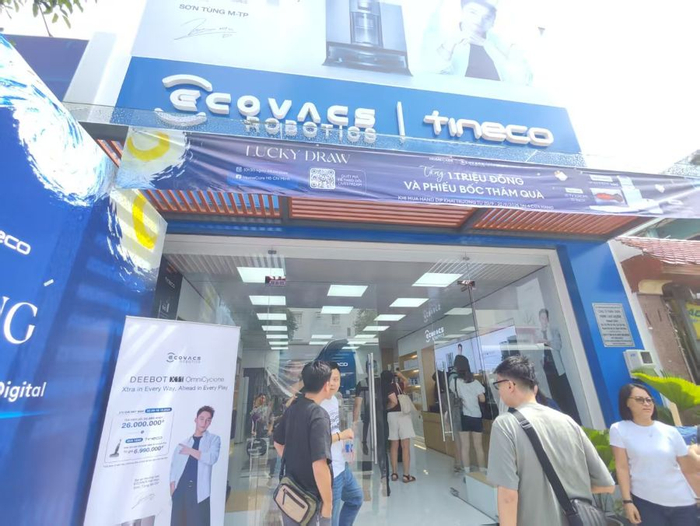
Core Insights - The article highlights the rapid growth of the vacuum robot market in Vietnam, driven by increasing consumer demand and a favorable market environment [3][4][5] - Chinese brands, including Ecovacs, Roborock, and Xiaomi, are expanding their presence in Vietnam, capitalizing on the market's potential and the competitive landscape in other regions [3][5][6] Market Growth - The sales revenue of vacuum robots in Vietnam is projected to grow over 70% year-on-year from January to July 2025 [3] - The average disposable income in Vietnam is expected to reach approximately $2,700 in 2024, with a year-on-year growth of 6.1% [4] - The penetration rate of vacuum robots in Vietnam is currently below 10%, indicating significant room for market expansion [7] Consumer Behavior - Vietnamese consumers have a strong preference for technology products, with a high acceptance rate for new gadgets [5][6] - The cultural practice of maintaining cleanliness in homes drives the demand for cleaning appliances like vacuum robots [4][5] - The average consumer expenditure in Vietnam is around $2,300, with a high consumption rate of 87% of disposable income [4] Competitive Landscape - Chinese brands dominate the Vietnamese vacuum robot market, with the top four brands holding over 90% market share, an increase of nearly 20 percentage points from the previous year [5] - The competition in Vietnam is characterized by a focus on service capabilities and retail coverage, with a strong emphasis on offline sales channels [6][10] Localization Strategies - Companies are adapting their strategies to the local market by establishing physical retail stores and enhancing service capabilities [6][10] - Ecovacs has around 1,000 sales points in Vietnam, with 85% of sales coming from offline stores [10] - Local production and a tailored approach to marketing and sales are crucial for success in the Vietnamese market [11][12] Digital Transformation - The integration of digital capabilities into production and sales processes is seen as essential for enhancing competitiveness in the Vietnamese market [13] - Companies like Xiaomi and Ecovacs are exploring digital upgrades to improve service delivery and consumer engagement [13]



同比增速超70%,中国扫地机器人“淘金”越南
2 1 Shi Ji Jing Ji Bao Dao· 2025-10-16 09:42
Core Insights - The article highlights the rapid growth of the vacuum robot market in Vietnam, driven by increasing consumer demand and a favorable market environment [1][2]. Market Demand - Vietnam's geographical and cultural factors create a strong demand for cleaning appliances like vacuum robots, with a significant need for effective cleaning solutions due to the humid climate [2]. - The average disposable income in Vietnam is projected to be around $2,700 in 2024, with a year-on-year growth of 6.1%, indicating a rising consumer spending capacity [2][3]. - Vietnamese consumers have a high inclination towards technology products, with a notable acceptance of new gadgets among the younger population [3]. Market Share and Competition - Chinese brands dominate the Vietnamese vacuum robot market, with the top four brands—Ecovacs, Roborock, Dreame, and Xiaomi—holding over 90% market share, an increase of nearly 20 percentage points from the previous year [4]. - The competition in Vietnam is characterized by a focus on service capabilities and retail coverage, with a preference for physical stores over online sales [5][6]. Localized Strategies - Chinese brands are increasingly investing in local market strategies, emphasizing the importance of service and retail presence in residential areas to cater to consumer preferences [5][6]. - The penetration rate of vacuum robots in Vietnam is currently below 10%, indicating significant growth potential, especially in less urbanized areas [6]. Production and Distribution - Companies like Roborock have initiated local manufacturing in Vietnam to enhance supply stability and reduce costs, while also establishing comprehensive logistics and after-sales networks [7][9]. - Ecovacs has around 1,000 sales points in Vietnam, with 85% of sales coming from offline channels, highlighting the importance of physical retail in consumer purchasing behavior [7]. Digitalization and Management - The digital transformation of production and sales processes is crucial for enhancing competitiveness in the Vietnamese market, with companies like Xiaomi and Ecovacs exploring digital solutions for better consumer insights and service management [11][12]. - Localized teams and tailored marketing strategies are essential for understanding and responding to the unique preferences of Vietnamese consumers [9][10].
“入境游”国庆假期持续升温 数字化升级吸引“世界流量”
Zhong Guo Jing Ying Bao· 2025-10-03 04:29
Core Insights - The tourism market in China is experiencing a resurgence during the National Day holiday, with a predicted daily average of over 2 million inbound and outbound travelers [1] - The demand for cross-border travel is strong, driven by visa-free policies and the recovery of flight schedules, with a notable increase in foreign tourists visiting China [1][2] - Ctrip is actively enhancing its digital infrastructure to support small and medium-sized enterprises in the hospitality sector to better cater to international tourists [2][5] Group 1: Market Trends - The combination of the National Day and Mid-Autumn Festival has led to a significant increase in travel, with foreign travelers flying to 70 cities in China, particularly Shanghai, Beijing, and Guangzhou [1] - Popular source countries for inbound tourism include South Korea, Japan, Thailand, Malaysia, Singapore, the UK, Indonesia, the US, Russia, and Australia, with a 75% year-on-year increase in Russian tourist bookings [1][2] Group 2: Challenges and Opportunities - Small and medium-sized hotels face challenges such as language barriers, cultural differences, and a lack of familiarity with digital tools, which hinder their ability to serve international guests effectively [2][3] - Ctrip's initiatives include providing multi-language service capabilities and AI tools to help hotels improve their operational efficiency and customer service [2][5] Group 3: Ctrip's Initiatives - Ctrip has launched a one-stop inbound service center at Beijing Capital Airport, offering bilingual guidance and various support services to incoming tourists [3][4] - The "Smart Travel Future" hotel empowerment plan aims to assist 200,000 partner hotels over three years, focusing on breaking down language, traffic, and technology barriers [5][6] Group 4: Technological Advancements - Ctrip's AI systems enable real-time translation in 26 languages, significantly improving communication and operational efficiency for hotels [6][7] - The integration of AI tools has allowed hotels to automate 80% of daily inquiries, enhancing response speed and accuracy [7][8]
