
新型城镇化

Search documents
首开股份:管理创效,降本控费,预计2025年亏损显著收窄
Xin Lang Cai Jing· 2026-01-23 11:22
Core Viewpoint - The company, Shoukai Co., Ltd. (stock code: 600376), has announced a projected net profit loss of between 5.5 billion to 6.9 billion yuan for the year 2025, indicating a significant reduction in losses compared to 8.141 billion yuan in 2024, reflecting improved operational management amidst a challenging real estate market [1] Group 1: Financial Performance - The projected net profit loss for 2025 is estimated to be between -55 billion to -69 billion yuan [1] - This represents a notable decrease in loss compared to the previous year's loss of -81.41 billion yuan [1] - The company has successfully maintained cash flow safety and reduced interest-bearing debt and financing costs [1] Group 2: Operational Management - The company has implemented effective cost and expense management strategies [1] - It has made progress in its transformation efforts, with stable operations in property management and long-term rental apartments [1] - The company has achieved new advancements in its construction agency business [1] Group 3: Industry Context - The "14th Five-Year Plan" emphasizes human-centered new urbanization and high-quality real estate development, proposing specific measures such as urban renewal and new real estate development models [1] - The industry is experiencing deep clearing, and the policy tone is shifting towards a more positive outlook [1] - The company is expected to benefit from anticipated policy changes and a reduction in industry risks in 2026 [1]

新城市涨2.58%,成交额1832.74万元,主力资金净流出40.48万元
Xin Lang Cai Jing· 2026-01-22 01:57
Core Viewpoint - The stock price of New City has shown a positive trend in recent trading sessions, with a notable increase in both short-term and long-term performance metrics, despite a decline in revenue and a negative net profit for the recent period [2]. Group 1: Stock Performance - As of January 22, New City's stock price increased by 2.58%, reaching 14.30 CNY per share, with a trading volume of 18.32 million CNY and a turnover rate of 0.64% [1]. - Year-to-date, the stock price has risen by 3.03%, with a 5.07% increase over the last five trading days, a 15.04% increase over the last 20 days, and a 6.48% increase over the last 60 days [2]. Group 2: Company Overview - New City, officially known as Shenzhen New City Planning and Architectural Design Co., Ltd., was established on March 22, 1993, and went public on May 10, 2019. The company is located in Longgang District, Shenzhen, Guangdong Province [2]. - The company's main business activities include urban planning, engineering design, and engineering consulting services, with professional technical services accounting for 91.85% of its revenue and rental property services contributing 8.15% [2]. Group 3: Financial Performance - For the period from January to September 2025, New City reported an operating revenue of 106 million CNY, representing a year-on-year decrease of 36.52%. The net profit attributable to shareholders was -19.72 million CNY, which is an increase of 85.06% compared to the previous year [2]. - As of September 30, the number of shareholders increased to 17,900, up by 18.19%, while the average number of circulating shares per person decreased by 15.39% to 11,402 shares [2]. Group 4: Dividend Information - Since its A-share listing, New City has distributed a total of 149 million CNY in dividends, with 44.46 million CNY distributed over the past three years [3].
最新!住建部部长倪虹这篇专访细节满满→
Xin Hua She· 2026-01-21 15:18
Core Viewpoint - The "14th Five-Year Plan" emphasizes the importance of human-centered urbanization and high-quality real estate development, with specific measures such as urban renewal and new real estate development models [1] Group 1: Urban Renewal and High-Quality Development - The Ministry of Housing and Urban-Rural Development aims to implement urban renewal actions and promote high-quality real estate development during the "14th Five-Year Plan" period, focusing on creating modern, livable, and resilient cities [2][4] - Urban renewal efforts have already shown significant results, with 26,000 old urban communities undergoing renovation and 14,000 elevators installed, benefiting over 4.7 million residents [4] - The focus will be on identifying and addressing issues through urban inspections, prioritizing projects that enhance community living conditions, urban infrastructure, and safety [5] Group 2: Real Estate Development - The real estate sector is seen as having substantial potential for high-quality development, with ongoing urbanization and a strong demand for quality housing [6] - The Ministry plans to implement policies tailored to individual cities, focusing on controlling supply, reducing inventory, and optimizing housing supply to stabilize the real estate market [6][7] - Key initiatives include promoting the construction of quality housing and establishing a new model for real estate development that ensures a smooth transition from old to new systems [7][8] Group 3: Upgrading the Construction Industry - The Ministry aims to enhance the construction industry by focusing on high-quality building products and fostering new productive forces in the sector [9] - Emphasis will be placed on technological innovation, smart construction, and improving market mechanisms to stimulate vitality and ensure quality in the construction market [9][10] - Safety will be a priority throughout the construction process, with a focus on establishing a comprehensive safety management system for buildings [10]
济宁确定2026年12条重点工作线
Da Zhong Ri Bao· 2026-01-21 06:36
Group 1 - The core focus of Jining's government work report is to achieve high-quality development through twelve pragmatic actions, emphasizing industrial economy, expanding domestic demand, and enhancing cultural tourism [1][2][3] - Jining aims to strengthen its industrial backbone by promoting the manufacturing sector, optimizing industrial structure, and enhancing productivity through initiatives like the "chain leader system" [1][2] - The city plans to establish itself as a northern inland shipping center, targeting a port cargo throughput of 140 million tons and developing green and intelligent shipping [2] Group 2 - Innovation is prioritized, with a target of 12 billion yuan in R&D investment and initiatives to attract young talent and accelerate technology transfer [2] - The new urbanization strategy focuses on enhancing the central urban area's capabilities and promoting county-level economic advancement [3] - The report outlines a commitment to rural revitalization, ensuring food security, and improving agricultural industries while promoting green and low-carbon transformation [3] Group 3 - The government emphasizes the importance of social welfare, aiming for high-quality employment, satisfactory education, and improved social security [3] - Risk prevention measures will be implemented to ensure safety in production, finance, and social governance, supporting stable and harmonious societal conditions [3]
棕榈股份涨2.33%,成交额6624.36万元,主力资金净流入156.01万元
Xin Lang Zheng Quan· 2026-01-21 05:09
Group 1 - The core viewpoint of the news is that Palm Holdings has shown a positive stock performance with a year-to-date increase of 10.46% and a market capitalization of 4.758 billion yuan [1] - As of January 21, the stock price reached 2.64 yuan per share, with a trading volume of 66.24 million yuan and a turnover rate of 1.43% [1] - The net inflow of main funds was 1.5601 million yuan, with significant buying and selling activities recorded [1] Group 2 - Palm Holdings, established on September 21, 1993, is primarily engaged in urbanization construction investment, infrastructure planning and design, and ecological environment management [2] - The company's revenue composition includes 95.50% from engineering construction, 2.35% from design services, and 1.66% from urban operations [2] - As of December 20, the number of shareholders decreased by 2.48% to 74,700, while the average circulating shares per person increased by 1.95% to 24,128 shares [2] Group 3 - Since its A-share listing, Palm Holdings has distributed a total of 276 million yuan in dividends, with no dividends paid in the last three years [3]

权威数读|这五个“新”,概括了2025年经济工作“成绩单”
Xin Hua She· 2026-01-20 13:22
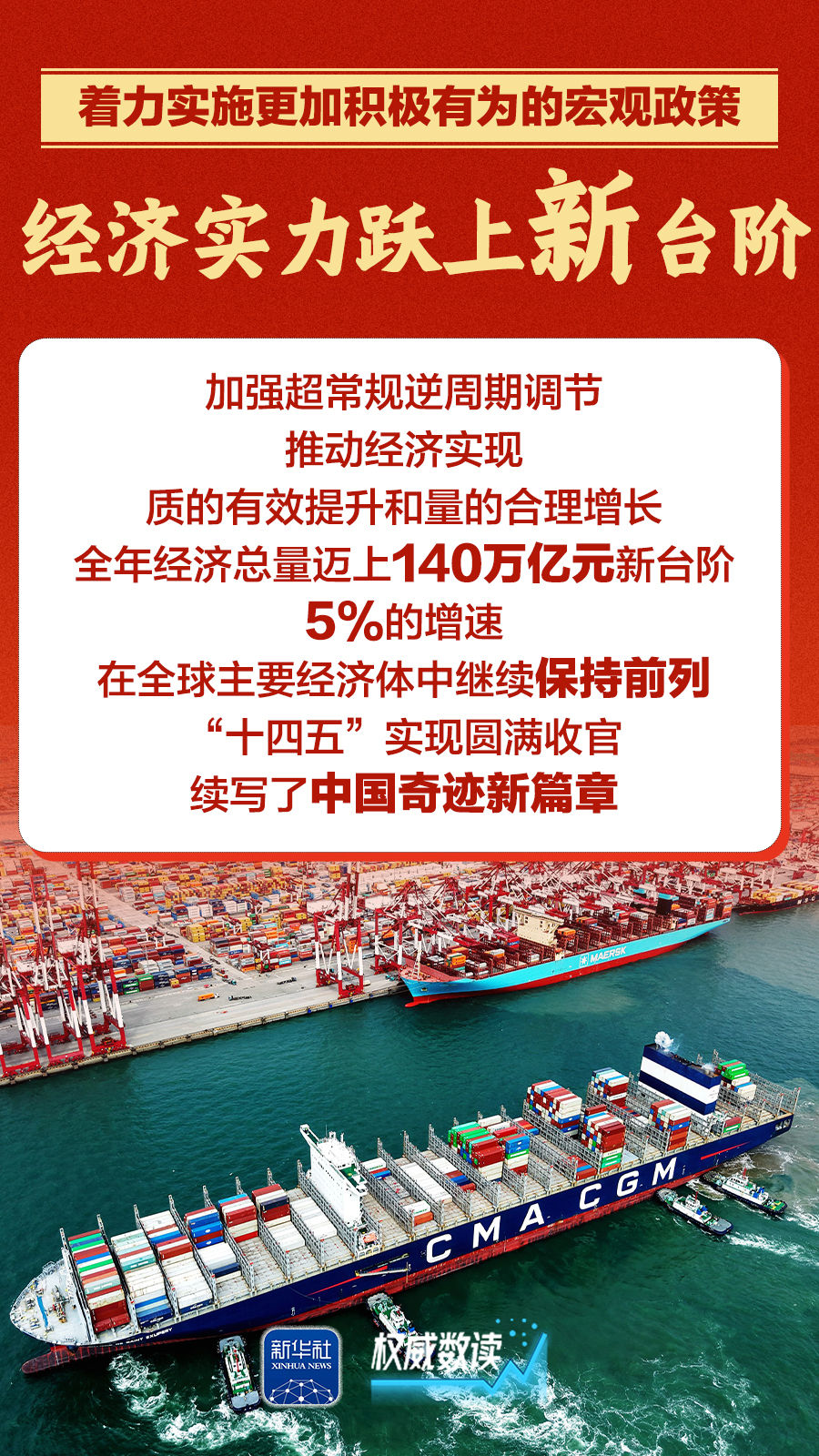
Economic Strength and Development - The core viewpoint of the article emphasizes the significant advancements in economic strength, production capabilities, reform and opening-up, regional development, and improvements in public welfare as outlined by the National Development and Reform Commission [1] Economic Work for 2025 - The economic work for 2025 is summarized with five "new" aspects: new economic strength, breakthroughs in new production capabilities, new steps in reform and opening-up, new developments in regional and urban-rural areas, and new enhancements in public welfare [1] Technological Advancements - There is a strong focus on accelerating high-level technological self-reliance, with key areas such as artificial intelligence, biomedicine, and robotics leading in research and application globally [6] - The manufacturing value added has ranked first globally for 16 consecutive years, indicating robust industrial growth [6] Reform and Opening-Up - Efforts are being made to eliminate economic circulation bottlenecks, with significant reforms in key areas and the promotion of a unified national market [8] - The introduction of the Private Economy Promotion Law and regular communication with private entrepreneurs are part of the ongoing reform initiatives [8] Trade and Export Growth - In 2025, there is an expected 6.1% growth in goods exports, with total imports reaching 18.48 trillion yuan, establishing China as a major export destination for 79 countries and regions [9] Regional Development - The article highlights the importance of coordinated regional strategies and urbanization, with the urbanization rate reaching 67.89% by year-end, an increase of 0.89 percentage points from the previous year [13] - Over 10 million people have transitioned to modern urban living, showcasing the success of urbanization efforts [13] Public Welfare Improvements - There is a commitment to enhancing public welfare through inclusive and foundational social services, promoting high-quality employment, and implementing childcare subsidies and free preschool education [16] - The optimization of holiday arrangements is also part of the strategy to improve the quality of life for citizens [16]

金观平:“人户分离”也可同享城市公共服务
Jing Ji Ri Bao· 2026-01-19 09:01
Group 1 - The core viewpoint emphasizes the need for equal access to basic public services for non-registered residents in urban areas, highlighting the government's commitment to address their urgent needs [1] - Basic public services include education, employment, healthcare, elderly care, and housing, which are essential for urban living [1] - The urbanization rate in China increased from 53.1% in 2012 to 67% in 2024, yet the proportion of registered urban residents remains around 50%, indicating a significant gap in service access for 250 million migrant workers [1] Group 2 - Migrant populations are viewed as assets for economic and social development, with a 1% increase in urbanization potentially generating over 200 billion yuan in annual consumer demand [2] - Many cities have begun to remove household registration restrictions, but this must be accompanied by improvements in basic public services, particularly in education and healthcare for relocated families [2] - The concept of "services following people" requires a realignment of financial resources and planning for public facilities, which varies significantly across different cities [2] Group 3 - There are practical challenges in providing basic public services based on residency, including policy discrepancies, resource imbalances, and insufficient inter-departmental coordination [3] - Addressing these challenges necessitates a refined fiscal transfer payment distribution mechanism and ensuring that public services are portable and accessible to all populations, including flexible workers [3] - The focus of reforms should align with public concerns, ensuring that financial resources are effectively utilized to support new urban residents [3]
国家统计局人口和就业统计司司长:2025年全国人口总量为140489万人 人口高质量发展持续推进
Guo Jia Tong Ji Ju· 2026-01-19 07:58
Group 1 - The core viewpoint is that by 2025, China's population will remain large, with a rich labor resource and improved population quality, which will provide a solid demographic support for high-quality economic and social development [1] Group 2 - By the end of 2025, the total population of China is projected to be 1,404.89 million, with a birth rate of 7.92 million and a death rate of 11.31 million, resulting in a year-on-year population decrease of 3.39 million [2] - China's population still exceeds the total population of all developed countries combined, providing a vast market for high-quality development and significant production and consumption potential [2] Group 3 - By the end of 2025, the population aged 16-59 will be 851.36 million, indicating a rich labor resource, while the population aged 60 and above will be 323.38 million, with 22.36 million aged 65 and above, showing an increase of 13.07 million and 3.42 million respectively from the previous year [3] - The labor force aged 15-64 will be 968.48 million, accounting for 68.9% of the total population, positioning China among the top globally in terms of labor resources [3] Group 4 - The average years of education for the population aged 16-59 will reach 11.3 years by 2025, an increase of 0.1 years from the previous year, while the per capita life expectancy is projected to be 79 years, continuing to rise steadily [4] - The total number of R&D personnel will reach 10.797 million, indicating a shift from a quantity-based demographic dividend to a quality-based talent dividend, which will support high-quality economic and social development during the 14th Five-Year Plan period [4] Group 5 - By the end of 2025, the urban resident population will be 953.80 million, an increase of 10.30 million from 2024, with an urbanization rate of 67.89%, up by 0.89 percentage points from the previous year [5] - The steady progress of new urbanization and coordinated urban-rural development will help expand domestic demand and improve living standards [5] - Various regions and departments are focusing on improving fertility support policies, establishing childcare subsidy systems, and expanding quality education resources, which will promote balanced population development and comprehensive human development [5]
友发集团涨2.01%,成交额7438.28万元,主力资金净流入537.55万元
Xin Lang Cai Jing· 2026-01-19 06:41
Group 1 - The core viewpoint of the news is that Youfa Group's stock has shown a positive trend with a 5.10% increase year-to-date and a 2.01% rise on January 19, 2023, reaching a price of 6.60 CNY per share [1] - As of January 9, 2023, Youfa Group had 33,000 shareholders, a decrease of 2.94% from the previous period, with an average of 44,579 circulating shares per shareholder, an increase of 3.03% [2] - The company reported a revenue of 37.99 billion CNY for the period from January to September 2025, a year-on-year decrease of 5.19%, while the net profit attributable to shareholders increased by 399.25% to 502 million CNY [2] Group 2 - Youfa Group has distributed a total of 2.33 billion CNY in dividends since its A-share listing, with 1.27 billion CNY distributed over the past three years [3] - The company's main business revenue composition includes galvanized steel pipes (47.51%), welded steel pipes (38.07%), and other segments [1] - Youfa Group is classified under the steel industry, specifically in the sub-sector of steel pipes, and is associated with concepts such as hydropower, Xiong'an New Area, new urbanization, underground pipelines, and low-cost initiatives [1]

建工修复涨2.06%,成交额2524.68万元,主力资金净流入110.71万元
Xin Lang Zheng Quan· 2026-01-19 06:25
Core Viewpoint - The company, Beijing Construction Environment Restoration Co., Ltd., has experienced fluctuations in stock performance and financial metrics, indicating potential investment opportunities and challenges in the environmental restoration sector. Group 1: Stock Performance - On January 19, the stock price of the company increased by 2.06%, reaching 13.35 CNY per share, with a trading volume of 25.25 million CNY and a turnover rate of 2.10%, resulting in a total market capitalization of 2.09 billion CNY [1] - Year-to-date, the stock price has risen by 7.57%, with a 2.85% increase over the last five trading days, an 8.54% increase over the last 20 days, and a 3.61% decrease over the last 60 days [1] Group 2: Financial Performance - For the period from January to September 2025, the company reported a revenue of 471 million CNY, reflecting a year-on-year decrease of 29.62%, while the net profit attributable to shareholders was -71.81 million CNY, a significant decline of 942.39% compared to the previous year [2] - Cumulative cash dividends since the company's A-share listing amount to 88.97 million CNY, with 44.32 million CNY distributed over the past three years [3] Group 3: Shareholder Information - As of September 30, 2025, the number of shareholders decreased by 10.18% to 11,800, while the average number of tradable shares per person increased by 11.33% to 7,729 shares [2] - Notable institutional shareholders include Nuoan Multi-Strategy Mixed A, which is the third-largest shareholder with 1.18 million shares, and Dachen Jingheng Mixed A, which remains the fourth-largest shareholder with 1.04 million shares [3]