
百县千镇万村高质量发展工程

Search documents
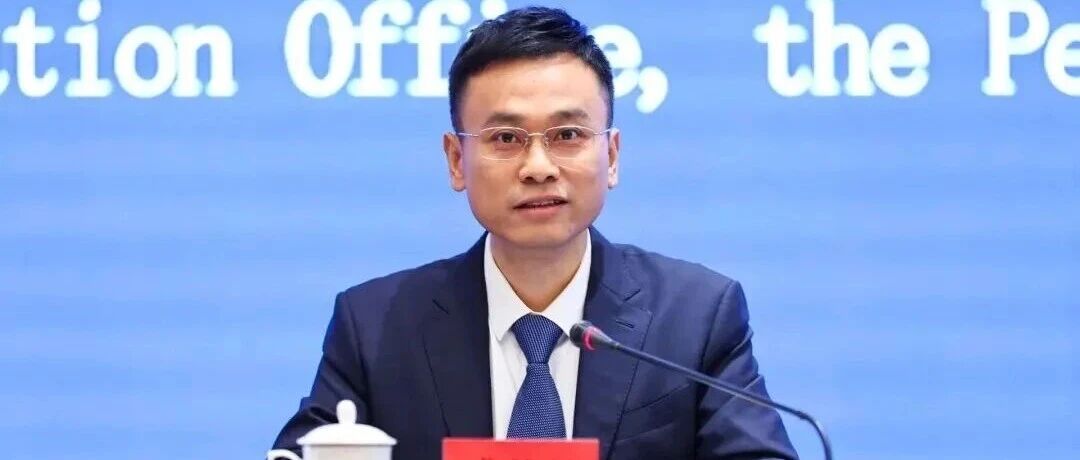
龚桢梽,任省发改委主任
中国能源报· 2026-01-23 12:51
Group 1 - The core viewpoint of the article is the appointment of Gong Zhenzhi as the Director of the Guangdong Provincial Development and Reform Commission, highlighting his previous experience and roles within the National Development and Reform Commission [1][3]. Group 2 - Gong Zhenzhi has a long tenure at the National Development and Reform Commission, where he served as the Deputy Director of the Industrial Development Department before being appointed as the Deputy Director of the Guangdong Provincial Development and Reform Commission in April 2025 [3]. - On December 23, 2025, a conference was held in Guangzhou to promote the "Hundred Counties, Thousand Towns, and Ten Thousand Villages High-Quality Development Project," where Gong Zhenzhi presented on new assistance collaboration and major project construction to support county-level economic development [3].

用机构改革“先手棋”激活广东县域活力
Nan Fang Du Shi Bao· 2026-01-21 17:00
Core Viewpoint - Guangdong is implementing a county and town management system reform, promoting a "big department system" to enhance administrative efficiency and address governance challenges in rural areas [1][2]. Group 1: Reform Implementation - Over the past four months, multiple regions in Guangdong have initiated reforms, with 12 pilot counties (cities) involved, of which at least 9 have announced adjustments to their institutional functions, affecting 57 government departments [1]. - The reform aims to streamline 26 departments through responsibilities integration, additional signage, and joint offices, addressing long-standing issues of overlapping functions and low administrative efficiency [1][2]. Group 2: Big Department System - The "big department system" consolidates similar functions and related business areas under one department to improve administrative efficiency and reduce costs [2]. - This approach moves from fragmented departmental operations to a more coordinated management style, significantly shortening decision-making processes and enhancing resource allocation [2]. Group 3: Resource Optimization - The reform focuses on optimizing resource allocation rather than merely reducing personnel, addressing the issue of excessive departmental fragmentation that hampers effective governance [3]. - By restructuring and streamlining departments, the reform aims to enhance service delivery and allow government officials to focus on critical areas such as economic development and public welfare [3]. Group 4: Institutionalization of Reforms - For the reform outcomes to be sustainable, it is essential to institutionalize the new functional framework and prevent any backlash against the streamlined structure [4]. - The establishment of a dynamic evaluation mechanism in conjunction with digital governance is necessary to monitor the effectiveness of the new departmental operations and address coordination challenges [4].
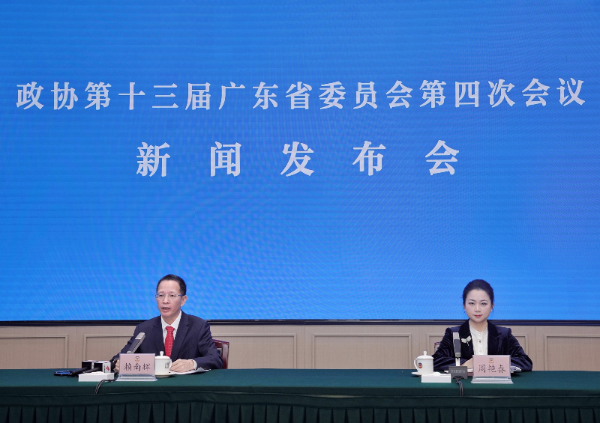
省政协十三届四次会议1月25日至28日召开 部分新增补委员将首次参会
Nan Fang Ri Bao Wang Luo Ban· 2026-01-20 09:59
Group 1 - The 13th Guangdong Provincial Committee of the Chinese People's Political Consultative Conference (CPPCC) will hold its fourth session from January 25 to January 28, 2024, in Guangzhou, lasting three and a half days [2] - The meeting will include the election of some members of the Standing Committee of the 13th Guangdong Provincial Committee [2][3] - The agenda consists of nine items, including the study of Xi Jinping's thoughts, reviewing the work report of the Standing Committee, and discussing the 15th Five-Year Plan outline [3] Group 2 - The meeting will feature four plenary sessions, three group discussions, and two joint discussions among committee members, with provincial leaders participating in discussions [4] - The CPPCC will focus on the "1310" deployment by the provincial party committee, emphasizing the integration of innovation and industry in the Guangdong-Hong Kong-Macao Greater Bay Area [4] - A total of 1,091 proposals will be processed, with 16 key consultations and 78 research and inspection activities conducted [4]
广东省2025年快递业务量稳居全国首位 完成460亿件 占比全国23%
Zhong Guo Fa Zhan Wang· 2026-01-20 01:44
Core Insights - The Guangdong postal industry achieved a delivery volume of 46.8 billion items and revenue of 341.3 billion yuan in 2025, accounting for 22% and 19% of the national totals respectively [1] - The express delivery volume and revenue reached 46 billion items and 300.2 billion yuan, representing 23% and 20% of the national figures [1] - Since the start of the 14th Five-Year Plan, the industry revenue has increased from 240 billion yuan to 340 billion yuan, with an average annual growth rate of 7.2% [1] Delivery Volume and Revenue - The express delivery volume has surged from 20 billion items to 40 billion items [1] - Eight cities have been designated as national postal express hub cities, with the establishment of 27 express logistics parks and 94 inter-provincial mail and express processing centers [1] - The number of operating outlets has increased by 1.5 times compared to five years ago, with over 19,000 rural delivery logistics service stations established [1] International and E-commerce Growth - There are 150 international licensed express companies, with overseas warehouse space exceeding 2.4 million square meters [1] - The international and Hong Kong/Macau/Taiwan express delivery volume has grown at an annual rate of 12.7% [1] - The collaboration with e-commerce has reached new heights, supporting over 1 trillion yuan in online retail sales of physical goods annually [1] Future Projections - For 2026, the postal industry in Guangdong is expected to maintain a steady upward trend, with a projected delivery volume of 49.6 billion items, a year-on-year increase of approximately 6% [2] - The express delivery volume is anticipated to reach 49 billion items, reflecting a growth of around 7% [2]
肇庆全力推动“百千万工程”持续走深走实 培育县域工业 农业延链向新
Nan Fang Ri Bao Wang Luo Ban· 2026-01-19 09:41
Core Viewpoint - The city of Zhaoqing is advancing the "Hundred Counties, Thousand Towns, and Ten Thousand Villages High-Quality Development Project" to promote coordinated urban-rural regional development, focusing on strengthening county economies and enhancing industrial growth [1][2] Group 1: County Economic Development - Zhaoqing's county economy has been growing steadily over the past three years, with cities like Qujiang, Gaoyao, and Duanzhou entering the national top 100 counties [1] - Four mountainous counties have developed leading industries with output exceeding 5 billion yuan, showcasing distinctive industrial growth [1] - The city aims to cultivate pillar industries in counties, targeting the establishment of 1-2 industries with output exceeding 10 billion yuan, leveraging local resources and competitive advantages [1] Group 2: Agricultural Development - Zhaoqing's modern agriculture is evolving towards a full industry chain, with local specialties like Gonggan oranges, Xinghua chickens, and Litopenaeus vannamei shrimp seeing expanded scale and improved branding [2] - The city has trained over 12,500 new farmers, with the total output value of agriculture, forestry, animal husbandry, and fishery ranking third in the province [2] - Zhaoqing plans to implement the "Hundred and Thousand" project in modern agriculture, aiming for total agricultural output to exceed 100 billion yuan, while addressing shortcomings in agricultural processing [2] Group 3: Forestry and Industrial Upgrades - The city will initiate a five-year development action for the forestry economy, focusing on maximizing the potential of forest resources [2] - Zhaoqing is transitioning from "physical aggregation of enterprises" to "industrial ecosystem cultivation" in park development, aligning with industrial chain needs and enterprise growth [1]
以运营思维破解乡村发展难题 | 市委书记抓乡村振兴(2026.01.12-01.18)
Nan Fang Nong Cun Bao· 2026-01-19 08:31
Core Insights - The article discusses various initiatives and strategies implemented by different cities in Guangdong province to promote rural revitalization and development, focusing on enhancing agricultural productivity, improving living conditions, and fostering economic growth through local特色产业 (characteristic industries) [3][4][5][6][9][10]. Group 1: Agricultural Development - Guangzhou aims to strengthen特色产业 (characteristic industries) such as种业 (seed industry),花卉 (floriculture), and荔枝 (lychee) while promoting智慧农业 (smart agriculture) and绿色农业 (green agriculture) [12][13]. - Zhuhai emphasizes enhancing党建 (party building) to achieve effective rural revitalization [20][22]. - Shaoguan focuses on revitalizing闲置资源 (idle resources) and promoting农文旅融合 (integration of agriculture, culture, and tourism) [28][40]. Group 2: Rural Infrastructure and Environment - Various cities, including Meizhou and Jiangmen, are working on improving人居环境 (living environment) and promoting美丽乡村 (beautiful countryside) initiatives [48][60]. - Yangjiang is pushing for深度融合 (deep integration) of agriculture and tourism to enhance rural development [100][102]. - Zhaoqing is accelerating全产业链发展 (whole industry chain development) in agriculture to improve efficiency and productivity [116][118]. Group 3: Economic Growth and Employment - Cities like Jiangmen are planning to create特色项目 (special projects) to boost local economies and enhance乡镇功能 (township functions) [59][61]. - Clear strategies are being implemented to promote农产品加工 (agricultural product processing) and enhance market competitiveness [142][150]. - The focus on "以贸兴农、以工带农" (promoting agriculture through trade and industry) aims to activate rural economic vitality and improve farmers' income [152][153]. Group 4: Governance and Leadership - The emphasis on党对“三农”工作的全面领导 (comprehensive leadership of the party in agricultural work) is crucial for the success of rural revitalization efforts [120][183]. - Continuous efforts are being made to strengthen村“两委”班子 (village committee leadership) to ensure effective governance and implementation of rural policies [15][184]. - The "百千万工程" (Hundred-Thousand Project) is a key initiative aimed at achieving significant changes in rural areas over five years [149][155].

公益+微利!湛江市住建局携手央企激活一池春水
Xin Lang Cai Jing· 2026-01-18 05:01
Core Viewpoint - The article highlights the transformative impact of the "Public Welfare + Micro-profit" model in Zhanjiang, which integrates resources from central enterprises with local development needs to enhance the quality of rural areas and promote sustainable growth [3][4][16]. Group 1: Implementation of the Model - Zhanjiang's Housing and Urban-Rural Development Bureau has initiated the "Public Welfare + Micro-profit" model, which combines government guidance, market operations, and social responsibility to drive high-quality development in rural areas [4][16]. - By the end of 2025, major construction enterprises like China State Construction, China Communications Construction, and China Railway are expected to engage in 652 projects across 10 counties, with a total investment of approximately 14.64 billion [4][12]. Group 2: Project Management and Funding Mechanism - A "Two Libraries and One Pool" model has been established to ensure efficient operation of the "Public Welfare + Micro-profit" mechanism, consisting of a micro-profit project library, a public welfare project library, and a public welfare funding pool [5][7]. - As of December 2025, 212 micro-profit projects with a total investment of 46.2 billion have been planned, while 457 public welfare projects with a total investment of about 2.026 billion have been established [7][8]. Group 3: Policy Support and Efficiency - The Zhanjiang Housing and Urban-Rural Development Bureau has developed a comprehensive "policy toolkit" to ensure smooth operation of the mechanism, including standardized project management guidelines and streamlined approval processes [8][10]. - The introduction of a phased construction permit reform aims to reduce project startup time by 2 to 3 months, enhancing project implementation speed [8][10]. Group 4: Community Impact and Development - By 2025, 296 assistance projects with a total investment of 5.317 billion are expected to commence, significantly boosting local development and creating exemplary projects that can be replicated [12][16]. - The transformation of rural areas has led to increased tourism and local economic growth, with initiatives like the promotion of local lychee brands resulting in a 44% increase in production and a revenue exceeding 310 million [15][16].
韶关召开一季度政银企融资对接会 授信签约金额超47亿元
Nan Fang Ri Bao Wang Luo Ban· 2026-01-16 07:53
1月15日上午,韶关市2026年一季度政银企融资对接会在市区举行,会议由市政府办公室、韶关金融监 管分局主办,市银行业公会承办,相关行业主管部门、11家银行机构与44家企业代表参加会议。 本次政银企对接会聚焦"做大工业、做强主城、做优县域"三大重点,围绕金融支持"百县千镇万村高质 量发展工程",着力搭建政银企沟通平台,赋能韶关经济高质量发展。 据了解,韶关金融监管分局联合韶关市政府办公室谋划建成了"金融管理部门牵头+行业主管部门协同 +银行对接服务+企业融资发展"常态化政银企融资对接机制,并成立金融专班,于每季度在韶关市区和 7个县(市)同步召开政银企对接会,通过常态化对接、问题协调解决、产品服务创新等务实举措,"一 企一策"解决企业融资难题。 现场分三批次完成12轮授信签约,涵盖大数据、科技创新、制造业、农业等重点领域,现场签约授信金 额达30.68亿元。与此同时,全市7个县(市)同步举办对接活动,全市现场授信签约金额达47.46亿元。 ...
稳居全国第一!广东省存款余额近39万亿元、贷款余额近30万亿元
Nan Fang Nong Cun Bao· 2026-01-16 03:31
Core Insights - Guangdong Province maintains its position as the top financial region in China, with a total deposit balance of approximately 39 trillion yuan and a loan balance nearing 30 trillion yuan by the end of 2025 [1][2][4]. Financial Data Summary - By the end of 2025, the total balance of deposits in Guangdong reached 38.7 trillion yuan, an increase of 2.1 trillion yuan from the beginning of the year, making it the only province to surpass 30 trillion yuan in deposits [4][5]. - The balance of loans reached 29.9 trillion yuan, with an increase of 1.5 trillion yuan from the start of the year, and a cumulative increase of 10.3 trillion yuan during the "14th Five-Year Plan" period, indicating a significant rise in credit support for the real economy [5][6]. Strategic Financial Support - In the past year, Guangdong's financial resources have increasingly focused on major strategies, key areas, and weak links, with a commitment to enhancing financial services for economic structural adjustments and high-quality development [10][15]. - The "Hundred Counties, Thousand Towns, and Ten Thousand Villages High-Quality Development Project" has directed more loan funds to underdeveloped areas in eastern, western, and northern Guangdong, with loans in these regions growing by 6.5% year-on-year, outpacing the provincial average [16][17]. Sector-Specific Loan Growth - By the end of November 2025, loans in the "Five Major Articles" of Guangdong's financial strategy reached 12.7 trillion yuan, a year-on-year increase of 10.8%, accounting for 79.9% of the total loan growth in the province [21][22]. - Specific sectors such as technology loans, green loans, inclusive loans, elderly care industry loans, and digital economy loans saw year-on-year growth rates of 10.7%, 24.2%, 7.6%, 95.0%, and 10.5%, respectively, all exceeding the overall loan growth rate [22][23]. Future Financial Plans - The People's Bank of China Guangdong Branch plans to support the economic development of Guangdong in 2026, the first year of the "15th Five-Year Plan," by implementing a moderately loose monetary policy and utilizing structural monetary policy tools to promote domestic demand and optimize supply [24][25]. - The focus will continue to be on directing financial resources towards technological innovation, advanced manufacturing, green development, and rural revitalization, providing robust financial support for major strategies such as the "Hundred Million Project" and ecological construction [26][29].
肇庆“十四五”期间打造2个千亿级产业集群 新能源汽车产业加快崛起
Nan Fang Ri Bao Wang Luo Ban· 2026-01-15 10:08
Group 1: Economic Development and Industry Growth - During the "14th Five-Year Plan" period, Zhaoqing has developed two trillion-level industries in new energy vehicles and metal processing, along with four five-hundred billion-level industry clusters in new energy storage, electronic information, green building materials, and new materials, leading to a strategic reshaping of its industrial landscape [1] - Zhaoqing has ranked among the top 100 advanced manufacturing cities in China for two consecutive years and has been recognized as an excellent investment destination in the province for three years [1] - The new energy vehicle industry is rapidly growing, with XPeng Motors producing over 500,000 vehicles in Zhaoqing, equating to one vehicle rolling off the production line every six minutes, supported by over 100 large-scale auto parts companies integrated into the national supply chain [1] Group 2: Traditional Industry Transformation - Zhaoqing's metal processing enterprises have shifted towards high-end equipment manufacturing, achieving an annual output value exceeding 120 billion [2] - The building materials industry is advancing in cluster development and green transformation, with an annual output value surpassing 50 billion [2] - The food and beverage industry in Zhaoqing has reached an annual output value of over 20 billion, with notable companies such as Jian Tian Bai Sui Shan and China Resources Beverage establishing operations in the region [2] Group 3: Infrastructure Investment - Zhaoqing has invested approximately 65 billion in transportation during the "14th Five-Year Plan," a 31% increase compared to the previous five-year period, with major projects like the Guang-Zhan high-speed rail and the new Guangzhou airport underway [2] - The port's annual handling capacity has doubled to 176 million tons, facilitating a one-hour access to Guangzhou, Shenzhen, Hong Kong, and Macau [2] Group 4: Agricultural Development - Zhaoqing's agricultural sector has reached a scale of 80 billion, ranking third in the province, with six agricultural clusters each exceeding 10 billion [3] - The region boasts 68 nationally recognized special agricultural products and has achieved the highest number of geographical indication products and certification trademarks in the province, totaling 50 [3] Group 5: Environmental and Social Initiatives - Zhaoqing has implemented a "three-long linkage" mechanism to protect its environment, maintaining air quality in the top 20 nationwide and stabilizing water quality in major rivers [3] - Over the past five years, Zhaoqing has created more than 210,000 urban jobs and facilitated the transfer of over 150,000 rural laborers, with a per capita disposable income growth exceeding 5% [3] - The city has invested over 6 billion in building and renovating 134 public schools and kindergartens, adding 113,000 public school places, and has allocated 19.1 billion for 51 healthcare projects, increasing hospital beds by over 3,000 [3]