
绿色供应链

Search documents
促进贸易优化升级 助力实现“双碳”目标——多部门详解关于拓展绿色贸易的实施意见
Xin Hua Wang· 2025-10-31 14:37
Core Viewpoint - The implementation of green trade policies aims to promote trade optimization and support the achievement of "dual carbon" goals, enhancing global climate governance [1] Group 1: Green Trade Development - Green low-carbon products are emerging as a new driving force for foreign trade, with global market size for electric vehicles, solar, and wind energy expected to reach $2.1 trillion by 2030, five times the current scale [1] - The implementation opinions represent the first specialized policy document in the field of green trade, focusing on addressing weaknesses in China's green trade development, such as corporate low-carbon capabilities and logistics carbon reduction potential [1] Group 2: International Cooperation and Standards - Over 50 economies have positively responded to China's initiative on the "International Economic and Trade Cooperation Framework for Digital Economy and Green Development" [2] - The recent China-ASEAN Free Trade Area 3.0 upgrade includes a dedicated chapter on green economy and prioritizes green trade as a cooperation area [2] - Efforts are underway to improve green product standards, certification, and labeling systems, aiming for mutual recognition of standards with major trading partners [2] Group 3: Green Product and Industry Development - The implementation opinions emphasize promoting green design and production among foreign trade enterprises, with a focus on sectors like electronics and automotive [3] - By 2030, the output value of green factories is expected to account for 40% of total production, with initiatives to cultivate zero-carbon factories [3] - Actions are being taken to enhance green supply chains, encouraging large enterprises to support green procurement and increase the proportion of green factories among suppliers [3] Group 4: Financial Support for Green Services - The People's Bank of China plans to promote the application of green finance and transition finance standards, supporting innovative financing methods for green service trade [4] - Financial institutions are encouraged to increase support for production service sectors related to research and design, logistics, carbon emission certification, and recycling [4]
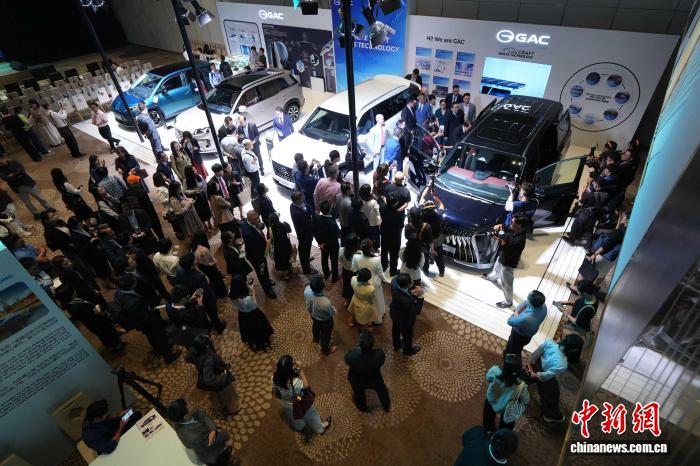
广东与越南开展新能源汽车及绿色供应链产业合作
Zhong Guo Xin Wen Wang· 2025-10-31 06:45
Core Points - The "China (Guangdong) and Vietnam New Energy Vehicles and Green Supply Chain Industry Cooperation Promotion Conference" was held in Ho Chi Minh City, Vietnam, on October 30, organized by the Guangdong Provincial Council for the Promotion of International Trade and the Guangdong International Chamber of Commerce [1][3] - Guangdong's Vice Governor Zhang Guozhi emphasized the importance of collaboration in the new energy vehicle sector between Guangdong and Vietnam as a practical implementation of the comprehensive strategic partnership between China and Vietnam, aiming for deep integration of industrial chains and expansion of bilateral trade [3] - Hu Zhenqiang, Vice Chairman of the Ho Chi Minh City People's Committee, praised Guangdong's achievements in building a complete electric vehicle ecosystem and expressed hopes for deeper cooperation in production investment, technology sharing, infrastructure construction, and human resource training [3] Industry Insights - The promotion conference featured a display area divided into four sections: automotive enterprises, three electric systems and components, smart networking and infrastructure, and supply chain services, showcasing a range of products and services from upstream and downstream industries [3] - Companies such as Xpeng Motors presented their self-developed Turing AI chip, which can be applied in AI vehicles, AI robots, and flying cars [4] - BYD has established 33 sales outlets in Vietnam and introduced 10 new energy vehicle models, covering both pure electric and hybrid options [4]



安得智联两大仓配园区荣获LEED铂金认证,打造绿色仓配新标杆!
Sou Hu Wang· 2025-10-29 10:20
Core Points - AnDe ZhiLian has been awarded the highest LEED Platinum certification for its two logistics parks in Zhengzhou, recognizing its excellence in green building and sustainable development [1][3] - The LEED certification is a globally recognized standard for evaluating environmental performance and sustainability in buildings, with Platinum being the highest level, requiring over 40% energy efficiency and more than 45% water savings [3] - AnDe ZhiLian aims to continue exploring green carbon reduction paths and collaborate with partners to promote a greener, smarter, and more efficient industry [3][5] Company Initiatives - AnDe ZhiLian has integrated green supply chain management into its strategic planning, focusing on energy efficiency and sustainable practices [5][9] - The company has replaced traditional lighting with high-efficiency LED lights and upgraded to smart sensors, significantly reducing energy consumption in its logistics parks [5][6] - Over 90% of the rooftops in the logistics parks are covered with photovoltaic systems, utilizing solar energy for operations [5] Transportation and Logistics - AnDe ZhiLian has invested in new energy vehicles to cover delivery needs within a 100-kilometer radius of Zhengzhou, effectively reducing carbon emissions during transportation [5] - The company has implemented strict controls on vehicles that do not meet the national emission standards, further lowering CO2 emissions [5] Strategic Partnerships - On the day of the certification, AnDe ZhiLian signed a strategic cooperation agreement with Bureau Veritas, focusing on smart logistics and green logistics [4][5] - The partnership aims to leverage both companies' strengths to create greater commercial and social value in the logistics sector [5] Future Goals - AnDe ZhiLian has set a target to have eight first-level (three-star) green warehouses by September 2025, indicating substantial progress in green warehousing [9] - The company is committed to integrating green concepts into all supply chain processes, demonstrating the potential for achieving both economic and environmental benefits [9]
金风科技(002202) - 2025年三季度业绩路演活动
2025-10-28 09:46
Group 1: Wind Power Industry Development - In the first three quarters of 2025, China's newly installed wind power capacity reached 61.1 GW, a year-on-year increase of 56.2% [2] - As of September 30, 2025, the cumulative installed wind power capacity in China was 581.6 GW, accounting for 15.6% of the total installed power capacity [2] - Thermal power accounted for 40.4% of the total installed power capacity [2] Group 2: Company Financial Performance - For the first three quarters of 2025, the company achieved operating revenue of RMB 48,146,709,129.40 and a net profit of RMB 2,584,374,593.56 [3] - Basic earnings per share were RMB 0.5969, with a weighted average return on equity of 6.67% [3] Group 3: Wind Turbine Sales Performance - The company sold 18,449.70 MW of wind turbine capacity from January to September 2025, representing a year-on-year growth of 90.01% [3] - Sales breakdown: - Units below 4 MW: 22.50 MW (0.12%) - Units between 4 MW and 6 MW: 2,550.05 MW (13.82%) - Units above 6 MW: 15,877.15 MW (86.06%) [3] Group 4: International Market Expansion - The company has expanded its international business to 47 countries across six continents, with a cumulative installed capacity of 11,214.62 MW as of Q3 2025 [4] - Installed capacity in Asia (excluding China) exceeded 3 GW, while South America and Oceania each surpassed 2 GW, and North America and Africa each exceeded 1 GW [4] - As of September 30, 2025, the company had external orders totaling 7,161.72 MW [4] Group 5: Self-owned Wind Farms - The total equity installed capacity of the company's self-owned wind farms reached 8,688 MW as of September 30, 2025 [4] - The domestic wind farm equity under construction was 4,062 MW [4] - The average utilization hours of self-owned wind farms from January to September 2025 were 1,730 hours [4] Group 6: Green Supply Chain Initiatives - Since 2016, the company has implemented a "green supply chain" project to promote low-carbon practices across the industry [4] - In 2024, the green audit coverage rate for major component suppliers reached 100% [4] - The proportion of green electricity used in the production of the company's products by major suppliers reached 78% in 2024 [4]

DHL艾若馨:供应链应从“成本优先”转向“敏捷优先”,绿色转型已具备技术基础
Xin Lang Zheng Quan· 2025-10-18 08:25
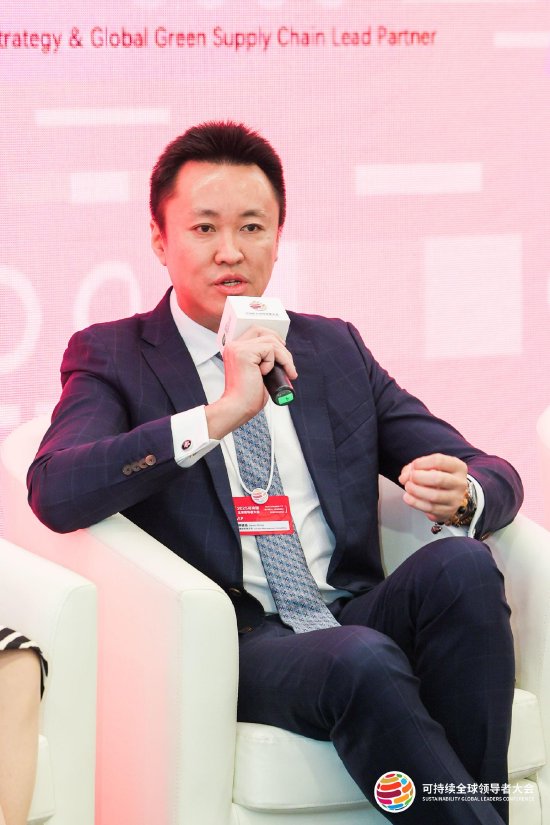
Group 1: Event Overview - The 2025 Sustainable Global Leaders Conference will be held from October 16 to 18 in Shanghai, focusing on "Collaborating to Address Challenges: Global Action, Innovation, and Sustainable Growth" [1] - The conference is co-hosted by the World Green Design Organization (WGDO) and Sina Group, with support from the Shanghai Huangpu District Government [1] - Approximately 500 prominent guests, including 100 international attendees, will participate, featuring leaders from various sectors, including Nobel laureates and executives from Fortune 500 companies [1] Group 2: Supply Chain Transformation - The global supply chain is undergoing significant restructuring, with companies shifting focus from traditional Western markets to emerging regions like Africa and Southeast Asia [4][8] - Companies are advised to prioritize agility and responsiveness over mere cost control in supply chain management [4][9] - The emphasis is on building agile networks that can quickly adapt to regional or environmental changes, which is deemed more strategically significant than just cost savings [4][9] Group 3: Green Supply Chain Initiatives - There are no technological barriers to building green supply chains; the challenge lies in effective system integration and cross-border collaboration [5][6] - DHL aims to achieve net-zero carbon emissions by 2050, with initiatives including the electrification of its fleet, having already deployed 44,000 electric vehicles for logistics [6][10] - The company promotes the use of sustainable aviation fuels and collaborates with partners to explore clean energy solutions [6][10] Group 4: Industry Insights - The focus on sustainability is becoming a core mission for companies, with increasing regulatory scrutiny and the need for accountability in carbon transparency [11] - Companies are encouraged to adopt automated and intelligent solutions that align with sustainability goals, enhancing their operational efficiency [11] - The shift towards a more diversified procurement strategy is essential for mitigating risks associated with tariffs and geopolitical tensions [9]

经济学人智库中国首席经济学家苏月:全球化进入新阶段,供应链区域化重塑与深化国际连接
Xin Lang Zheng Quan· 2025-10-18 07:58
Group 1: Sustainable Global Leadership Conference - The 2025 Sustainable Global Leadership Conference will be held from October 16 to 18 in Shanghai, focusing on "Collaborating to Address Challenges: Global Action, Innovation, and Sustainable Growth" [1] - The conference is co-hosted by the World Green Design Organization (WGDO) and Sina Group, with support from the Shanghai Huangpu District Government [1] - Approximately 500 prominent guests are expected, including around 100 international guests, featuring political figures, Nobel laureates, and leaders from Fortune 500 companies [1] Group 2: Global Supply Chain Dynamics - The chief economist of The Economist Intelligence Unit, Su Yue, discussed the evolution of globalization, noting a shift towards regional supply chains and the restructuring of global supply chains post-COVID-19 [3] - Despite existing trade conflicts, there is a notable "high degree of policy consistency" among countries, particularly in the rise of protectionism [3][4] - Trade barriers are increasingly shifting from traditional tariffs to non-tariff barriers, particularly those related to product standards [3] Group 3: Green Supply Chain Trends - The green supply chain landscape is showing signs of divergence, with potential policy rollbacks in the U.S. favoring traditional energy sectors [5] - Geopolitical conflicts, such as the Russia-Ukraine conflict, have paradoxically boosted China's green product exports, aiding Europe's energy transition [5] - Companies are encouraged to adopt a more nuanced perspective on global green supply chain development, recognizing both the existing divides and emerging cooperation opportunities [5]

德勤钟晓扬:ESG融入公司中长期战略,绿色供应链构筑经济新未来
Xin Lang Zheng Quan· 2025-10-18 03:09
Core Insights - The 2025 Sustainable Global Leaders Conference will be held from October 16 to 18 in Shanghai, focusing on "Collaborating to Address Challenges: Global Action, Innovation, and Sustainable Growth" [1] - The conference is organized by the World Green Design Organization (WGDO) and Sina Group, with support from the Shanghai Huangpu District Government, and aims to explore new paths for sustainable development [1] - Approximately 500 prominent guests, including 100 international attendees, will participate, featuring leaders from various sectors, including Nobel laureates and executives from Fortune 500 companies [1] Group 1 - The conference will cover nearly 50 topics, including energy and "dual carbon," green finance, sustainable consumption, and technology and public welfare [1] - ESG has evolved from a peripheral topic to a core pillar of long-term corporate development, deeply integrated into companies' 5-6 year planning [4] - Building a green supply chain is identified as a key area for making substantial contributions to the global economy [4] Group 2 - The evolution of sustainable development concepts has been ongoing for over 20 years, particularly as multinational companies shifted production to emerging markets [4] - Companies are increasingly recognizing the strategic value of ESG in their growth and transformation [5] - Investors are shifting their focus towards companies that publish ESG reports, making ESG an integral part of corporate strategy [4]
兴业银行首创“碳金融+绿色供应链”金融服务
Jiang Nan Shi Bao· 2025-10-14 14:13
Core Insights - The collaboration between Industrial Bank Nanjing Branch and Trina Solar Co., Ltd. marks a significant step in integrating carbon finance with supply chain management, providing green financing support to upstream supply chain enterprises [1][2] - The innovative "carbon performance-linked financing" mechanism offers differentiated green financing rates based on the carbon footprint of products, incentivizing deeper low-carbon transitions for enterprises [1][3] Group 1: Partnership and Innovation - The partnership introduces a new model of green finance that integrates carbon elements throughout the supply chain finance process, utilizing a self-developed "dual carbon management platform" for precise carbon footprint accounting [1][2] - The collaboration aims to transform carbon reduction achievements into financial benefits, allowing companies to leverage their carbon performance for better financing terms [2] Group 2: Benefits and Mechanism - Supply chain enterprises that optimize production processes to reduce carbon emissions benefit from lower interest rates and expedited approval processes, showcasing the effectiveness of the new financing model [3] - The "carbon-based lending and lending-promoted reduction" mechanism directs financial resources to supply chain segments with outstanding carbon performance, facilitating a systematic approach to carbon reduction across the industry [3]


工业园区绿色转型路径更明晰
中国能源报· 2025-10-13 03:35
Core Viewpoint - The release of the "Guidelines for High-Quality Development of Industrial Parks" aims to promote renewable energy consumption, build green supply chains, and enhance the production of green products, ultimately driving regional economic development and guiding industrial upgrades [1][3]. Group 1: Policy and Framework - Over 70% of industrial output and 60% of energy consumption in China are concentrated in industrial parks, making them key areas for achieving carbon neutrality and new industrialization [3]. - The "Guidelines" provide a systematic approach for industrial parks to transition from rapid quantitative growth to effective qualitative improvement, focusing on five major directions: specialization, intensification, digitalization, greening, and standardization [3][4]. Group 2: Low-Carbon Transition - The guidelines represent a shift from pilot explorations to a comprehensive perspective on low-carbon transformation, emphasizing the need for optimizing industrial structure, enhancing supply chains, and ensuring safety in production [5]. - Industrial parks are expected to play a significant role in the construction of "zero-carbon parks," particularly in sectors like wind power, photovoltaics, and battery manufacturing [5][6]. Group 3: Infrastructure Development - The guidelines stress the importance of developing renewable energy infrastructure, such as rooftop photovoltaics, decentralized wind power, and energy storage systems, to support green industrial parks [7][8]. - A tailored approach to green infrastructure development is recommended, taking into account local resources, industrial characteristics, and spatial constraints [7][8]. Group 4: Data Sharing and Digitalization - The guidelines advocate for the enhancement of new information infrastructure, including the deployment of 5G and industrial internet technologies, to facilitate digital transformation in industrial parks [10]. - Addressing the challenges of energy data sharing is crucial, with suggestions for innovative data-sharing techniques that protect corporate data while promoting transparency in carbon emissions [10][11].
电力装备绿色低碳管理实现新突破——中电联正式发布首批电力装备产品碳足迹认证成果
Zhong Guo Jing Ji Wang· 2025-10-10 09:34
Core Viewpoint - The release of the first batch of 51 carbon footprint certification certificates for power equipment marks a significant advancement in green low-carbon management within China's power equipment industry, laying a solid foundation for the visualization, management, and optimization of carbon footprints across the entire industrial chain [1][2]. Group 1: Carbon Footprint Certification - Carbon footprint certification quantifies and verifies greenhouse gas emissions throughout a product's lifecycle, which is crucial for implementing carbon footprint management in power equipment manufacturing and usage [1][2]. - The certification serves as a core tool for green supply chain management, enhancing carbon transparency and encouraging suppliers to engage in carbon management [1][2]. Group 2: Policy and Standards - Since 2022, China has been actively establishing a unified carbon footprint management system, with policies like the "2030 Carbon Peak Action Plan" emphasizing the need for lifecycle carbon footprint standards and labeling [2]. - The National Certification and Accreditation Administration has released guidelines to ensure data quality and comparability in carbon footprint certification, enhancing the credibility of certification results [2]. Group 3: Future Developments - The certification will gradually expand to cover more products, including smart meters and energy storage devices, ensuring comprehensive carbon management across all stages of power generation, transmission, distribution, and usage [3]. - There are plans to upgrade the existing database and platform capabilities, integrating real-time operational data and exploring technologies like blockchain for data sharing and traceability [3]. - The initiative aims to deepen international cooperation and recognition, facilitating a global certification process for Chinese enterprises [3]. - Future applications of carbon footprint data will extend to green procurement and financial instruments, creating a positive cycle between carbon data, finance, and emissions reduction [3][4]. Group 4: Industry Collaboration - The industry will focus on enhancing capabilities and collaboration among power companies, equipment manufacturers, certification bodies, and research institutions to improve carbon accounting and reduction capabilities [4]. - The certification center will continue to promote carbon footprint certification for power equipment, aiming to elevate the green level of the power supply chain and contribute to national carbon neutrality goals [4].