全国统一大市场

Search documents
新华述评·聚焦中央经济工作会议|必须坚持政策支持和改革创新并举——学习领会“五个必须”做好明年经济工作
Xin Hua Wang· 2025-12-16 15:28
Group 1 - The core message emphasizes the need for simultaneous policy support and reform innovation to strengthen the foundation of economic development and stimulate high-quality growth [1][2][5] - The International Monetary Fund (IMF) acknowledges China's economic resilience despite significant challenges, attributing this to proactive macro policies and ongoing structural reforms [2][3] - The Chinese government has implemented a series of macroeconomic measures, including interest rate cuts and adjustments to housing policies, to stabilize the economy and achieve development goals [3][6] Group 2 - The central economic work meeting outlines a policy direction focused on stability and quality improvement, emphasizing the integration of existing and new policies to enhance macroeconomic governance [6][7] - Major infrastructure projects are progressing, supported by effective fiscal and financial policies, which have been crucial for stabilizing the economy [7][8] - The meeting highlights the importance of enhancing consumer spending and supporting key sectors through targeted financial measures, aiming to create a virtuous cycle of economic development and improved livelihoods [8][10] Group 3 - The meeting calls for deepening reforms to address systemic barriers and enhance the synergy between policy support and reform innovation, which is essential for achieving sustainable economic growth [10][11] - There is a strong focus on innovation and green development, with specific tasks outlined to promote technological advancements and energy efficiency [11][12] - The overall strategy aims to leverage policy support and reform to navigate current challenges and lay a foundation for long-term economic stability and growth [12]
聚焦中央经济工作会议 | 中央财办有关负责同志详解2025年中央经济工作会议精神
Xin Hua She· 2025-12-16 13:56
Core Viewpoint - The 2025 Central Economic Work Conference outlines China's economic performance and strategic priorities, emphasizing resilience and innovation in the face of challenges, while setting a roadmap for future growth and stability. Economic Performance and Outlook - The overall economic operation is stable with expected growth around 5% for the year, positioning China among the leading global economies, with a GDP target of approximately 140 trillion yuan [2] - Employment remains stable, with significant growth in foreign trade and diversified exports [2] - The construction of a modern industrial system is progressing, with advancements in technology and innovation, particularly in AI, biomedicine, and robotics [2] - Reforms and opening-up measures are advancing, with a focus on building a unified national market and addressing "involution" in competition [2] - Positive progress in risk mitigation in key areas, including local government debt management and the completion of housing projects [2] - Social welfare policies, such as childcare subsidies and free preschool education, are being implemented to enhance public welfare [2] Challenges and Strategic Responses - The conference acknowledges ongoing economic challenges, including external environmental changes and domestic supply-demand imbalances [3] - Despite these challenges, China's long-term economic fundamentals remain strong, supported by its socialist system, large market, complete industrial system, and rich talent resources [3] - The government plans to implement more proactive macroeconomic policies, including fiscal and monetary measures, to support economic recovery [4][5] Fiscal Policy - The fiscal policy will maintain necessary deficits and debt levels while addressing local fiscal challenges and ensuring sustainable finances [5][6] - Emphasis on optimizing fiscal expenditure structure to support major national strategies and enhance social welfare [6][7] Monetary Policy - The monetary policy will focus on stabilizing economic growth and ensuring reasonable price recovery, maintaining liquidity, and supporting key sectors like technology and small enterprises [8][9] - A flexible approach to monetary tools will be adopted to align financing growth with economic and price expectations [8][9] Domestic Demand and Investment - Expanding domestic demand is a top priority, with a focus on boosting consumption and investment, particularly in services and infrastructure [9][10] - The government aims to enhance consumer purchasing power and support new consumption models while increasing investment in social welfare and urban renewal projects [10] Regional Development and Coordination - The conference emphasizes the importance of regional coordination in development, with specific strategies for enhancing the roles of major economic provinces [19][20] - Plans include tailored support for local economies and promoting urban-rural integration [19][20] Green Transition and Employment - The government is committed to a green transition, with initiatives aimed at carbon peak and neutrality, alongside promoting green industries [21][22] - Employment policies will focus on stabilizing job markets, particularly for key demographics like graduates and migrant workers, while enhancing vocational training [23][24] Real Estate Market Stability - The real estate market is under scrutiny, with measures to stabilize housing prices and promote high-quality development [26][27] - Strategies include addressing supply-demand dynamics and supporting real estate companies in transitioning to new business models [27][28]
信息量大!中央财办,最新发声!
券商中国· 2025-12-16 13:53
Core Viewpoint - The 2025 Central Economic Work Conference emphasizes the resilience and vitality of China's economy, projecting a stable growth rate of around 5% for the year, with a total economic output expected to reach approximately 140 trillion yuan [2][3]. Economic Performance and Challenges - The overall economic operation is stable, with major indicators meeting expectations, and external trade showing rapid growth [2]. - Despite achievements, challenges remain, including external environmental changes and domestic supply-demand imbalances [3]. Macroeconomic Policies - The government will continue to implement proactive fiscal and monetary policies, focusing on stability and quality improvement [4][5]. - Fiscal policies will maintain necessary deficits and debt levels while enhancing local government financial capabilities [5][6]. - Monetary policy will prioritize economic stability and reasonable price recovery, utilizing various tools to support growth [8]. Domestic Demand and Investment - Expanding domestic demand is a top priority, with consumption contributing 71% to economic growth in the first three quarters [9]. - Investment in infrastructure and social services is crucial, with a focus on high-quality projects and stimulating private investment [10]. Regional Development and Coordination - The construction of international technology innovation centers in Beijing, Shanghai, and the Guangdong-Hong Kong-Macao Greater Bay Area is a strategic move to enhance global competitiveness [12][13]. - Regional coordination will be promoted through tailored development strategies and infrastructure connectivity [19][20]. Green Transition and Employment - The government aims to achieve carbon peak and neutrality, with a focus on developing a new energy system and green industries [21][22]. - Employment policies will prioritize stability, targeting key groups such as college graduates and migrant workers [24][25]. Real Estate Market Stability - The real estate market will be stabilized through supply-demand measures and support for housing enterprises to transition towards providing diverse living services [26][28].


中央财办发声,信号很大
21世纪经济报道· 2025-12-16 13:49
Core Viewpoint - The article discusses the outcomes and expectations of China's economic performance as it approaches the end of the 14th Five-Year Plan and the beginning of the 15th, highlighting the resilience and vitality of the economy despite challenges [1][2]. Economic Performance and Outlook - The overall economic operation is stable, with a projected growth rate of around 5% for the year, leading to an economic total of approximately 140 trillion yuan [1]. - The construction of a modern industrial system is progressing, with advancements in technology and innovation, particularly in artificial intelligence, biomedicine, and robotics [1]. - Reforms and opening-up measures are advancing, with a focus on building a unified national market and addressing "involution" competition [2]. - There are positive developments in risk mitigation in key areas, including the orderly replacement of local government hidden debts and the completion of housing delivery tasks [2]. Challenges and Policy Directions - The article identifies ongoing challenges such as external environmental changes, weak domestic demand, and risks in key sectors [2]. - The economic foundation remains strong, with long-term supportive conditions for growth, including the advantages of the socialist system and a large market [3]. - The government plans to implement more proactive macroeconomic policies, maintaining necessary fiscal deficits and debt levels while enhancing the precision and effectiveness of fiscal spending [3][4]. Domestic Demand and Investment - Expanding domestic demand is a top priority, with domestic demand contributing 71% to economic growth in the first three quarters [5]. - The government aims to stimulate consumption by addressing structural changes and enhancing the supply of quality goods and services [5][6]. - Investment is expected to stabilize, with a focus on infrastructure and social welfare projects, while also encouraging private investment in high-tech and service sectors [6]. Technological Innovation and Market Development - The construction of international technology innovation centers in Beijing, Shanghai, and the Guangdong-Hong Kong-Macau Greater Bay Area is emphasized as a strategic move to enhance global competitiveness [7][8]. - The article discusses the need for a unified national market to improve resource allocation and market efficiency, addressing barriers to competition and market entry [9][10]. Trade and Foreign Investment - The government plans to expand high-level opening-up measures, including increasing service sector access and signing more trade agreements [11][12][13]. - Efforts will be made to optimize the business environment for foreign investment, including easing market access and enhancing support for foreign enterprises [13]. Regional Development and Coordination - The article outlines strategies for promoting regional coordinated development, focusing on the collaborative growth of different regions and supporting major economic provinces [14][15][16]. - Emphasis is placed on urban-rural integration and the development of new productive forces tailored to local conditions [15]. Green Transition and Employment - The government is committed to a green transition, with plans to achieve carbon peak and neutrality goals while enhancing the resilience of the energy system [16][17][18]. - Employment policies will focus on stabilizing job growth, particularly for key groups such as graduates and migrant workers, while promoting flexible employment and skills training [19][20]. Real Estate Market Stability - The article discusses the need for a stable real estate market, highlighting the potential for high-quality development despite current challenges [21][22]. - Measures will be taken to support the transformation of real estate companies and to encourage a new development model in the sector [22][23].

中央财办有关负责同志详解中央经济工作会议精神
中国基金报· 2025-12-16 13:22
来源:新华社 在"十四五"即将收官、"十五五"新程待启的关键时点,2025年12月10日至11日召开的中央 经济工作会议备受瞩目。 当前经济形势怎么看?"十五五"新开局重点任务如何推进?聚焦舆论关注的热点问题,中央 财办有关负责同志会后第一时间接受中央主要媒体采访,深入解读中央经济工作会议精神。 问:2025年我国交出怎样的经济"成绩单"?明年经济形势如何? 答: 中央经济工作会议对今年经济工作进行全面总结,指出2025年是很不平凡的一年,我国 经济顶压前行、向新向优发展,展现强大韧性和活力。 一是运行总体平稳、稳中有进。 主要经济指标符合预期,预计全年经济增长5%左右、继续位 居世界主要经济体前列,经济总量有望达到140万亿元左右。就业总体稳定,外贸较快增长、 出口多元化成效明显。 二是现代化产业体系建设持续推进。 新质生产力稳步发展,科技创新成果丰硕,人工智能、 生物医药、机器人等研发应用走在全球前列。 三是改革开放迈出新步伐。 全国统一大市场建设向纵深推进,综合整治"内卷式"竞争成效显 现,资本市场较为活跃,自主开放有序推进。 四是重点领域风险化解取得积极进展。 地方政府隐性债务有序置换,"保交房"任务 ...

中央财办:扩内需是明年排首位的重点任务
证券时报· 2025-12-16 13:13
问:2025年我国交出怎样的经济"成绩单"?明年经济形势如何? 答:中央经济工作会议对今年经济工作进行全面总结,指出2025年是很不平凡的一年,我国经济顶压前行、向 新向优发展,展现强大韧性和活力。 一是运行总体平稳、稳中有进。主要经济指标符合预期,预计全年经济增长5%左右、继续位居世界主要经济 体前列,经济总量有望达到140万亿元左右。就业总体稳定,外贸较快增长、出口多元化成效明显。 二是现代化产业体系建设持续推进。新质生产力稳步发展,科技创新成果丰硕,人工智能、生物医药、机器人 等研发应用走在全球前列。 三是改革开放迈出新步伐。全国统一大市场建设向纵深推进,综合整治"内卷式"竞争成效显现,资本市场较为 活跃,自主开放有序推进。 新华社北京12月16日电 题:中央财办有关负责同志详解2025年中央经济工作会议精神 在"十四五"即将收官、"十五五"新程待启的关键时点,2025年12月10日至11日召开的中央经济工作会议备受瞩 目。 当前经济形势怎么看?"十五五"新开局重点任务如何推进?聚焦舆论关注的热点问题,中央财办有关负责同志 会后第一时间接受中央主要媒体采访,深入解读中央经济工作会议精神。 四是重点领域风 ...

聚焦中央经济工作会议|中央财办有关负责同志详解2025年中央经济工作会议精神
Xin Hua She· 2025-12-16 12:53
聚焦中央经济工作会议|中央财办有关负责同志详解2025年中央经济工作会议精神 新华社北京12月16日电 题:中央财办有关负责同志详解2025年中央经济工作会议精神 新华社记者 在"十四五"即将收官、"十五五"新程待启的关键时点,2025年12月10日至11日召开的中央经济工作会议 备受瞩目。 当前经济形势怎么看?"十五五"新开局重点任务如何推进?聚焦舆论关注的热点问题,中央财办有关负 责同志会后第一时间接受中央主要媒体采访,深入解读中央经济工作会议精神。 问:2025年我国交出怎样的经济"成绩单"?明年经济形势如何? 答:中央经济工作会议对今年经济工作进行全面总结,指出2025年是很不平凡的一年,我国经济顶压前 行、向新向优发展,展现强大韧性和活力。 一是运行总体平稳、稳中有进。主要经济指标符合预期,预计全年经济增长5%左右、继续位居世界主 要经济体前列,经济总量有望达到140万亿元左右。就业总体稳定,外贸较快增长、出口多元化成效明 显。 二是现代化产业体系建设持续推进。新质生产力稳步发展,科技创新成果丰硕,人工智能、生物医药、 机器人等研发应用走在全球前列。 三是改革开放迈出新步伐。全国统一大市场建设向纵深 ...
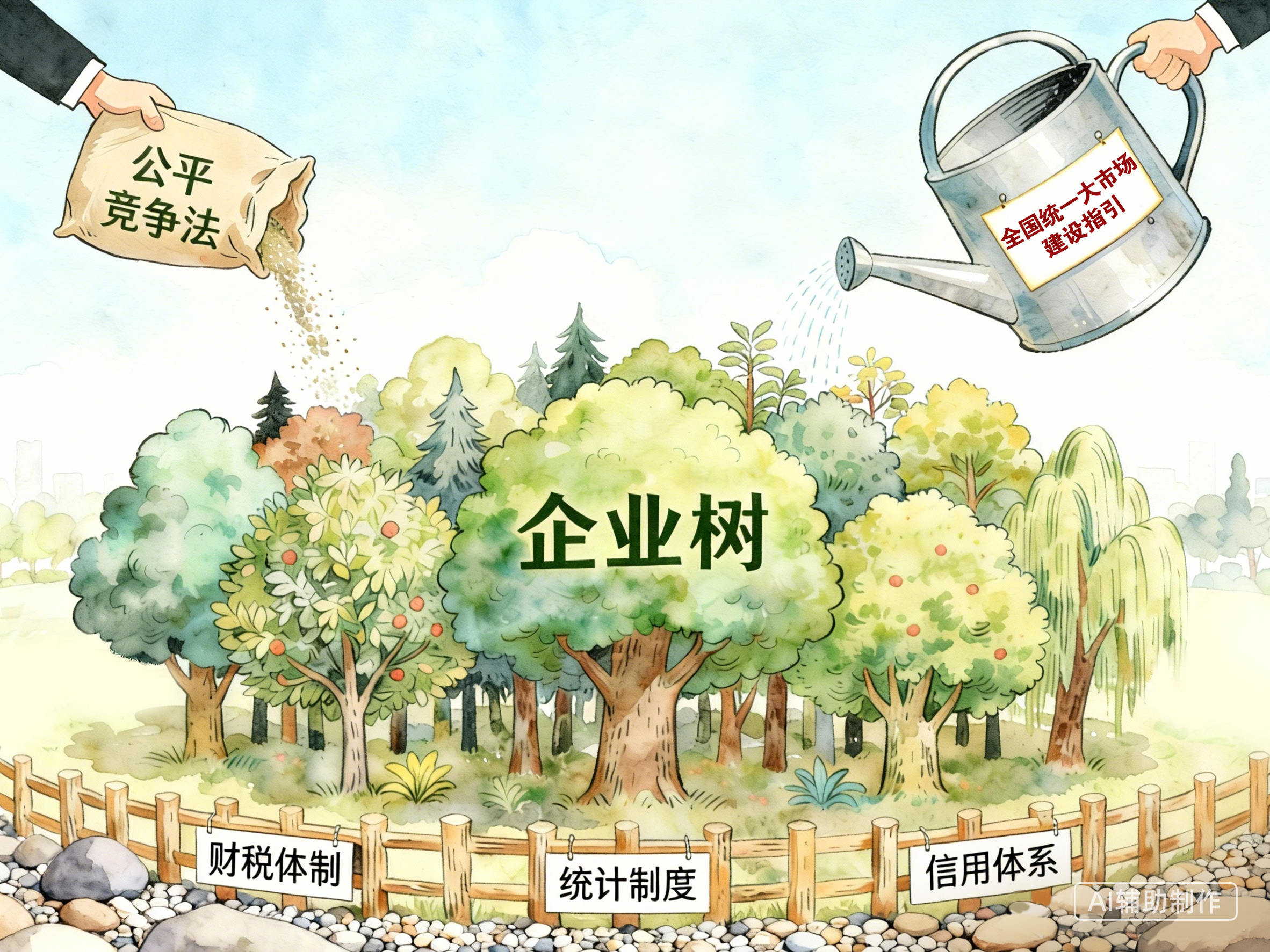
漫评全国统一大市场 | 规则清 树自茂
Zhong Guo Jing Ji Wang· 2025-12-16 09:41
Core Viewpoint - The establishment of a unified national market is fundamentally an "institutional construction battle" aimed at creating a solid "unified foundation" for market rules, which is essential for unleashing market vitality and achieving effective development with clear rules [2] Group 1: Current State of the Unified Market - The basic framework of the unified market has been established, with continuous reduction of the negative list for market access and deepening of fair competition reviews [2] - However, hidden barriers remain, including local "policy depressions," inconsistent standards, and varying regulatory measures, which fragment the national market [2] Group 2: Challenges and Issues - These issues lead to inefficient resource allocation and low-level repeated construction in industries, becoming obstacles to high-quality economic development [2] - The root cause of these problems lies in the poor connection and execution of institutional rules, which cannot be resolved solely through market self-regulation [2] Group 3: Proposed Solutions - To address these bottlenecks, it is necessary to anchor the basic requirements of "five unifications and one openness" through institutional construction [2] - Accelerating the formulation of unified market construction regulations and eliminating practices that hinder fair competition will enhance the coordination of market foundational systems [2] - Unifying regulatory enforcement standards and market rules for factors will eliminate hidden barriers and reduce institutional transaction costs for enterprises [2] Group 4: Importance of Institutional Rigor - Clear rules lead to orderly markets, and orderly markets stimulate economic growth [2] - Rigid institutions are essential to break down rule barriers, activating the potential of a super-large market and allowing various business entities to compete fairly and thrive, thus injecting lasting momentum into high-quality economic development [2]

理响中国·漫评全国统一大市场 | 规则清 树自茂
Zhong Guo Jing Ji Wang· 2025-12-16 08:17
l 日十十八 / / / 破解堵点需锚定"五统一、一开放"的基本要求,以制度建设破题。要加快制定统一大市场建设条例,清理废除妨碍公平竞争的规定做法,让市场基础制度更 协同。统一监管执法尺度与要素市场规则,消除 "一地一策" 的隐性壁垒,降低企业制度性交易成本。深化财税、统计体制改革,优化政绩考核导向,从根 源上遏制地方保护冲动。 规则明则秩序顺,秩序顺则市场兴。以刚性制度打通规则壁垒,才可以激活超大规模市场潜力,让各类经营主体公平竞争、蓬勃生长,为经济高质量发展注 入持久动力。(图文 杨淼 许子杰) [ 责编:杨煜 ] 建设全国统一大市场,本质上是一场制度建设"攻坚战",筑牢制度规则的"统一底座",才能让市场活力充分涌流,实现"规则清而树自茂"的发展成效。 当前,统一大市场"四梁八柱"已基本建立,市场准入负面清单持续压减,公平竞争审查不断深化。但隐性壁垒仍未根除,地方"政策洼地"、标准不统一、监 管尺度不一等问题,将全国市场切割成碎片化区域。这不仅导致资源配置效率低下,更催生了产业低水平重复建设等乱象,成为制约经济高质量发展的"绊 脚石"。这些问题的根源,在于制度规则的衔接不畅与执行偏差,仅靠市场自发调节难以 ...
中央经济工作会议热点简读
Xin Hua Wang· 2025-12-16 07:51
日前举行的中央经济工作会议,对明年的经济工作做出部署和擘画。我们根据会议内容,梳理出一些关注热点,一起了 解。 中央经济工作会议热点简读 深入实施提振消费专项行动 到京守依据分星星曲听斗机 WILL LOCK IN T JULY THE LA 凯华社 更好统筹国内经济工作 和国际经贸斗争 更好统筹发展和安全 面对复杂的外部环境,保持战略 定力,坚定必胜信心,以苦练内功 来应对外部挑战,坚定不移把自己 的事情办好。 STANDATION THE THE STORE FOR AND FOR STORE 中央经济工作会议热点简读 把促进经济稳定增长 物价合理回升 作为货币政策的重要考量 要灵活搭配、高效运用降准降 息等多种货币政策工具,保持流动 性充裕,促进社会综合融资成本低 位运行,使社会融资规模、货币供 应量增长同经济增长、物价总水平 预期目标相匹配。 中央经济工作会议热点简读 六月七十八 / 日本 TAVEY 通过供需双侧协同发力打通国内 大循环的关键堵点,既从需求端促进 居民增收、提升居民消费能力,又从 供给端扩大优质商品和服务供给,提 升供给体系对需求的适配性。 部华社 RAN 中央经济工作会议热点简读 ...