元宇宙

Search documents
有效投资与消费升级双管齐下,助力扩内需
2 1 Shi Ji Jing Ji Bao Dao· 2025-10-31 22:37
Group 1 - The National Development and Reform Commission (NDRC) is implementing a series of important policy signals to stabilize economic growth in the short term while planning for high-quality development in the long term [1] - The NDRC is utilizing special bonds and policy financial tools to promote effective investment and stabilize economic growth, with a focus on key projects in specific provinces [1][2] - A total of 500 billion yuan in new policy financial tools has been fully allocated, supporting over 2,300 projects with a total investment scale of approximately 7 trillion yuan, targeting sectors like digital economy and urban infrastructure [2] Group 2 - The NDRC is actively promoting the development of new consumption formats and has launched a series of support measures for new business models and scenarios [2] - The Ministry of Commerce and other departments have introduced an "Urban Commercial Quality Improvement Action Plan" to create a structured urban commercial ecosystem, emphasizing a three-tier commercial system [3] - The importance of developing the service industry has been highlighted, with plans to introduce measures to promote innovation and efficiency in life service sectors, which are crucial for expanding domestic demand [4]
红色旅游如何走得更远
Jing Ji Ri Bao· 2025-10-31 22:09
Core Insights - Recent red-themed films have significantly boosted red tourism sites, enhancing their appeal and visitor numbers [1] - The integration of red culture with tourism is becoming a vital industry for local development and the transmission of revolutionary heritage [1] - The Chinese government is investing over 10 billion yuan in 2024 to support the protection and development of red resources [1] Group 1: Policy and Development - The Ministry of Culture and Tourism and the Ministry of Education have launched a plan to incorporate red tourism into ideological education and social practice [2] - The plan has resulted in widespread participation, with over 30,000 students involved in a national red tourism creative planning competition [2] - The release of industry standards for red tourism development zones clarifies construction requirements and grading norms at the national level [2] Group 2: Industry Collaboration and Product Development - There is a need for regional collaboration and the creation of distinctive red brands by deeply exploring local red culture [2] - The development of composite product systems such as "Red + Research," "Red + Cultural Creation," and "Red + Health" is encouraged to integrate red resources with various sectors [2] Group 3: Technological Integration and Experience Enhancement - The introduction of digital technologies like VR/AR and the metaverse aims to recreate classic revolutionary scenes and enhance visitor experiences [3] - New media channels such as short videos and live streaming are being utilized to engage younger audiences through interactive projects [3] Group 4: Talent Development and Support - Collaboration between universities and red tourism sites is being promoted to establish research bases and training centers [3] - Specialized plans for improving guides and curators are being implemented to cultivate a professional workforce knowledgeable in history and effective in communication [3]
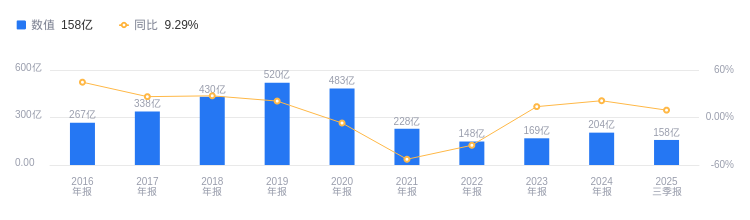
欧菲光的前世今生:2025年三季度营收158.16亿行业居首,净利润却排23位
Xin Lang Zheng Quan· 2025-10-31 16:33
Core Viewpoint - O-Film is a leading company in the optical and optoelectronic industry in China, with a strong focus on optical imaging modules and lenses, and has a comprehensive product range applied in consumer electronics and smart automotive sectors [1] Group 1: Business Performance - In Q3 2025, O-Film achieved a revenue of 15.816 billion yuan, ranking first among 26 companies in the industry, significantly exceeding the industry average of 1.718 billion yuan and the median of 694 million yuan [2] - However, the net profit for the same period was -21.1766 million yuan, placing O-Film 23rd out of 26 in the industry, which is well below the industry average net profit of 92.0119 million yuan and the median of 36.0344 million yuan [2] Group 2: Financial Ratios - As of Q3 2025, O-Film's debt-to-asset ratio was 77.86%, a decrease from 79.01% in the previous year but still significantly higher than the industry average of 36.11% [3] - The gross profit margin for Q3 2025 was 9.76%, down from 11.49% in the previous year and lower than the industry average of 26.98% [3] Group 3: Executive Compensation - The chairman, Cai Rongjun, received a salary of 5.3574 million yuan in 2024, an increase of 4.5672 million yuan compared to 2023 [4] - The general manager, Huang Lihui, earned 1.1062 million yuan in 2024, which is an increase of 308,900 yuan from the previous year [4] Group 4: Shareholder Information - As of September 30, 2025, the number of A-share shareholders decreased by 1.81% to 525,900 [5] - The average number of circulating A-shares held per shareholder increased by 1.93% to 6,304.16 [5] - Hong Kong Central Clearing Limited is the third-largest circulating shareholder, holding 54.4038 million shares, an increase of 13.2388 million shares from the previous period [5]


格灵深瞳的前世今生:营收远低于行业均值,净利润亏损居后
Xin Lang Cai Jing· 2025-10-31 12:42
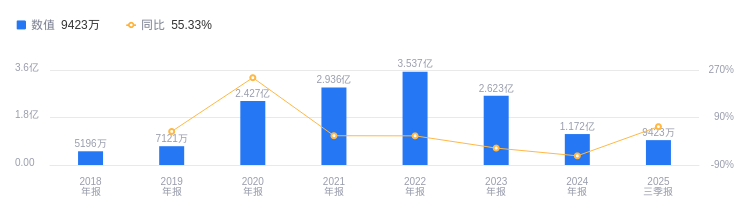
Core Insights - Geling Deep Vision, established in August 2013, is a unicorn in the computer vision sector and was listed on the Shanghai Stock Exchange in March 2022, with its headquarters in Beijing [1] Group 1: Business Performance - For Q3 2025, Geling Deep Vision reported revenue of 94.229 million yuan, ranking 125th out of 131 in the industry, significantly lower than the top competitor, Digital China, which had revenue of 102.365 billion yuan [2] - The net profit for the same period was -131 million yuan, placing the company 118th in the industry, far behind the leading competitor, Unisplendour, which reported a net profit of 1.723 billion yuan [2] Group 2: Financial Ratios - As of Q3 2025, Geling Deep Vision's debt-to-asset ratio was 6.96%, an increase from 5.76% year-on-year, but still well below the industry average of 38.93%, indicating strong solvency [3] - The gross profit margin for the same period was 45.00%, down from 65.20% year-on-year, yet still above the industry average of 29.96% [3] Group 3: Executive Compensation - The chairman, Zhao Yong, received a salary of 1.7516 million yuan in 2024, an increase of 425,000 yuan from the previous year [4] - The general manager, Wu Yizhou, who joined the company in 2024, received a salary of 624,200 yuan [4] Group 4: Shareholder Information - As of September 30, 2025, the number of A-share shareholders decreased by 2.49% to 15,200, while the average number of shares held per shareholder increased by 40.76% to 17,100 [5] - Among the top ten circulating shareholders, the Huabao Zhongzheng Financial Technology Theme ETF held 3.5176 million shares, an increase of 1.7323 million shares from the previous period [5]

国光电器的前世今生:2025年Q3营收62.81亿行业第六,净利润1955.2万行业第七
Xin Lang Cai Jing· 2025-10-31 08:56
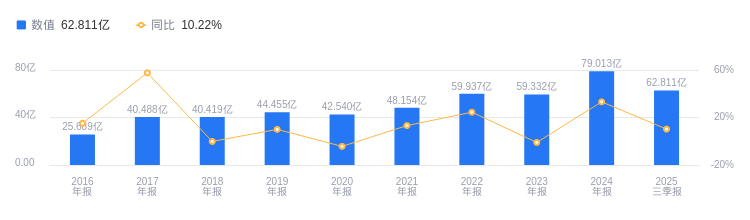
Core Viewpoint - Guoguang Electric is a significant player in the domestic audio and electroacoustic industry, focusing on the design, manufacturing, and sales of audio systems and speaker units, with a strong presence in various concept sectors such as AI and the metaverse [1] Financial Performance - In Q3 2025, Guoguang Electric reported revenue of 6.281 billion yuan, ranking 6th among 10 companies in the industry, while the industry leader, Transsion Holdings, achieved revenue of 49.543 billion yuan [2] - The net profit for the same period was 19.552 million yuan, placing the company 7th in the industry, with the top performer, Transsion Holdings, reporting a net profit of 2.216 billion yuan [2] Financial Ratios - As of Q3 2025, Guoguang Electric's debt-to-asset ratio was 59.23%, an increase from 57.81% year-on-year, and significantly higher than the industry average of 37.74% [3] - The gross profit margin for Q3 2025 was 13.05%, down from 13.79% year-on-year and below the industry average of 29.94% [3] Executive Compensation - The chairman, Lu Hongda, received a salary of 3 million yuan in 2024, an increase of 2 million yuan from 2023 [4] - The president, He Weicheng, saw his salary rise from 1.1561 million yuan in 2023 to 2.5121 million yuan in 2024 [4] Shareholder Information - As of September 30, 2025, the number of A-share shareholders decreased by 9.87% to 78,800, while the average number of circulating A-shares held per shareholder increased by 10.95% to 7,127.33 [5] - Hong Kong Central Clearing Limited is the fifth-largest shareholder, holding 8.6752 million shares, an increase of 3.0468 million shares from the previous period [5] Growth Prospects - The company is expected to benefit from innovations in AI terminals and has plans for solid-state battery development, with projected net profits of 253 million yuan, 361 million yuan, and 466 million yuan for 2025, 2026, and 2027 respectively [5] - The company is focusing on smart hardware products, including AI speakers and AI glasses, with production plans already in place for AI glasses [5] - Guoguang Electric is also expanding into the automotive audio system market, with product launches expected in the coming years [6] - The company anticipates revenue growth to 10.24 billion yuan, 13.07 billion yuan, and 16.52 billion yuan for 2025, 2026, and 2027 respectively, with net profits projected at 240 million yuan, 330 million yuan, and 450 million yuan [6]

Meta市值一夜蒸发1.5万亿
新华网财经· 2025-10-31 03:38
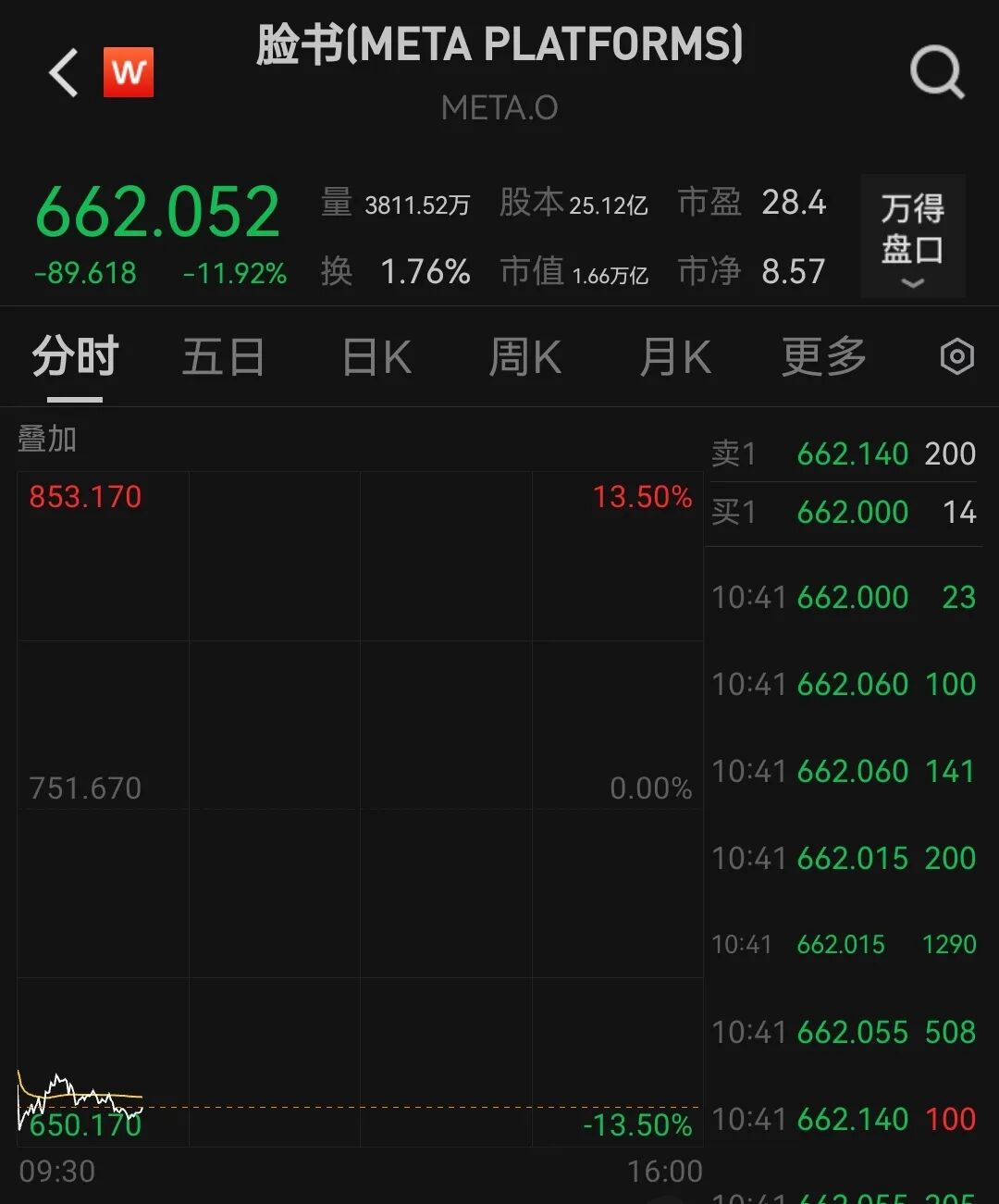
Core Viewpoint - Meta's stock experienced a significant sell-off due to the company's third adjustment of capital expenditure expectations for the year, raising concerns among analysts about uncontrolled spending on artificial intelligence [1][3]. Group 1: Stock Performance and Market Reaction - Meta's stock closed down 11.33%, marking the largest single-day drop in three years, with a market value loss of $214.7 billion (approximately 1.53 trillion RMB) [1]. - This loss ranks as the tenth largest single-day market value loss in U.S. corporate history and is the second largest in Meta's history, following a $232 billion loss on February 3, 2022 [1]. Group 2: Capital Expenditure Adjustments - Meta raised its capital expenditure forecast for 2025 to a range of $70 billion to $72 billion, up from a previous range of $66 billion to $72 billion [3]. - The CEO, Mark Zuckerberg, indicated that this spending is aimed at keeping pace with AI demand, suggesting that excess infrastructure could be utilized in the future [3]. Group 3: Revenue and Investment Concerns - Despite achieving over $60 billion in annualized revenue from AI advertising tools, investor concerns about potential over-expenditure remain [4]. - Analysts have drawn parallels between Meta's current spending plans and previous high-cost investments in the metaverse, which were not well-received by Wall Street [5][11]. Group 4: Analyst Reactions and Target Price Adjustments - Following the earnings report, multiple investment banks downgraded their target prices for Meta's stock, with Bank of America lowering its target from $900 to $810 while maintaining a "buy" rating [8][10]. - KeyBanc Capital Markets also reduced its target price from $905 to $875, keeping an "overweight" rating [9]. - Oppenheimer downgraded Meta's rating from "outperform" to "market perform," citing increasing uncertainty regarding the company's aggressive AI investments [10][11]. Group 5: Competitive Landscape and Future Outlook - Analysts expressed skepticism about the financial returns from Meta's AI investments, particularly in comparison to competitors like OpenAI, Google, and Tesla [12]. - Benchmark analysts noted that Meta's stock may only fluctuate within a range until a reasonable return on its capital expenditures is established [11].

Meta市值一夜蒸发1.5万亿
财联社· 2025-10-31 03:07
Core Viewpoint - Meta's stock experienced a significant sell-off due to the company's third upward revision of capital expenditure expectations for the year, raising concerns among analysts about uncontrolled spending on artificial intelligence [1][4]. Financial Performance - Meta's capital expenditure for 2025 is now projected to be between $70 billion and $72 billion, up from a previous range of $66 billion to $72 billion [4]. - The company reported a substantial single-day market value loss of $214.7 billion (approximately 1.53 trillion RMB), marking the largest drop in three years [1]. Investor Sentiment - Despite reporting over $60 billion in annualized revenue from AI advertising tools, investor concerns about potential over-expenditure remain high [5][6]. - Analysts have drawn parallels between Meta's current spending plans and previous unprofitable investments in the metaverse, which led to a significant stock price drop in late 2022 [7][12]. Analyst Reactions - Multiple investment banks have downgraded Meta's target stock prices, with Bank of America lowering its target from $900 to $810 while maintaining a "buy" rating [9][11]. - Oppenheimer has compared Meta's aggressive AI spending to its earlier high-cost, low-return projects, indicating a lack of clarity in revenue prospects [12]. Competitive Landscape - Analysts express skepticism about the financial returns from Meta's AI investments, particularly in comparison to competitors like OpenAI, Google, and Tesla, which have similar capital scales [13].


股价崩了!美国科技巨头业绩爆雷,市值蒸发2000亿美元
Mei Ri Jing Ji Xin Wen· 2025-10-30 15:13
Core Points - Meta's stock price dropped by 13.5%, marking the largest decline since April 2024, with a market capitalization loss of approximately $226 billion [1][2] - The company's Q3 revenue reached $51.24 billion, a 26% year-over-year increase, but net profit plummeted by 83% to $2.71 billion, significantly below market expectations [2][3] Financial Performance - The significant drop in net profit was primarily due to a one-time non-cash income tax expense of $15.93 billion resulting from the "One Big Beautiful Bill Act," raising the effective tax rate from 12% to 87% [3][4] - Total costs and expenses for Q3 were $30.7 billion, a 32% increase year-over-year, outpacing the revenue growth, leading to a decrease in operating profit margin from 43% to 40% [3][4] Tax Impact and Long-term Strategy - Excluding the tax impact, Q3 net profit would have been $18.64 billion, with diluted earnings per share of $7.25, reflecting a 20% year-over-year growth and exceeding market expectations [4] - CEO Mark Zuckerberg emphasized that the short-term tax impact will not alter the company's long-term strategy, and the tax reform will significantly reduce federal cash tax payments in the coming years [4] Advertising and User Growth - Meta's advertising revenue for Q3 was $50.08 billion, also a 26% year-over-year increase, exceeding Wall Street's expectations [4] - The daily active users across Meta's family of apps reached 3.54 billion, an 8% increase, surpassing market forecasts [4] Risks and Challenges - Potential regulatory changes in the EU could negatively impact European revenue, and ongoing lawsuits related to youth issues in the U.S. may lead to significant losses [4] - The Reality Labs division continues to experience high losses, with Q3 revenue of $470 million, a 74% increase year-over-year, but still resulting in an operating loss of $4.432 billion [5] Spending and Investment - Meta raised its total spending forecast for 2025 by $2 billion to a range of $116 billion to $118 billion, reflecting a year-over-year increase of 22% to 24% [5] - Capital expenditure expectations were also adjusted upward, with Q3 capital spending reaching $19.37 billion [5] Workforce Adjustments - The company plans to lay off approximately 600 employees in the AI department to streamline operations after previous rapid expansions [6][8] - The layoffs will not affect the newly established TBD lab, which has recruited top AI researchers from competitors [8]
太原文保院牵手北科大 数智赋能让文物“活起来”
Zhong Guo Xin Wen Wang· 2025-10-30 08:52
Core Insights - The collaboration between Taiyuan Cultural Heritage Protection Research Institute and Beijing University of Science and Technology focuses on the digital empowerment of cultural heritage, specifically through the project "Research on Digital Empowerment Model and Path of Taiyuan Cultural Creative Industry" [1][2] - The project utilizes advanced technologies such as digital twins, point cloud modeling, and Gaussian splashing to create a high-precision, interactive virtual exhibition hall for the Northern Qi murals, enabling ultra-high-definition restoration of artifacts and dynamic storytelling of historical scenes [1][2] Summary by Sections - **Project Overview** - The project was initiated in July and has been evaluated at the Taiyuan Northern Qi Mural Museum, serving as a pilot and experimental site for cultural heritage digital transformation [1] - It aims to integrate cultural heritage protection with digital innovation, aligning with national strategies for cultural digitization [1] - **Evaluation and Impact** - A panel of experts from various fields, including cultural relics and project management, reviewed the project and acknowledged its comprehensive research framework, clear technical pathways, and high degree of result transformation [2] - The project is seen as a significant step in promoting the digital transformation and intelligent upgrade of Taiyuan's cultural creative industry, with both theoretical and practical implications [2] - **Future Directions** - The Taiyuan Cultural Heritage Protection Research Institute and Beijing University of Science and Technology plan to continue their collaboration, focusing on deepening the integration of history and technology to support high-quality development in the cultural heritage sector [2]
备案启幕,秦潮新生|《秦潮觉醒》XR破界——龙标备案加持,让大秦文明在虚拟世界“活”起来
Xin Lang Cai Jing· 2025-10-30 08:29
虚拟现实电影正从政策破冰逐步驶向主流市场的中心。2025年9月11日,国家电影局发布《关于2025年8 月上全国电影剧本(梗概)备案、立项公示的通知》,《秦潮觉醒》作为虚拟现实影片,正式获得国家 电影局"龙标备案号"(影虚备字〔2025〕第052号),标志着项目进入合规化筹备与产业化推进的关键 阶段。 这组备案信息,不仅意味着又一部虚拟现实电影被纳入国家电影管理体系,更象征着东方文化的数字化 表达在政策框架下迎来规范化发展的重要契机。 "龙标"备案号启新 值得注意的是,申请"龙标备案号"并非单纯的流程性动作,而是《秦潮觉醒》链接政策、锚定行业方向 的核心一步。 事实上,《秦潮觉醒》虚拟现实影片作品基于其同名原创国潮IP及XR文旅元宇宙体验项目,以XR混合 现实技术为核心,结合多感官反馈系统与AI交互引擎,构建出一个"可进入、可触达、可共鸣"的东方数 字文明世界。观众通过VR头显即可跨越视觉边界,解锁场景内的振动、热感、风感等5D体验,伴随虚 拟角色引导深入故事,完成一次跨越千年的文化旅程。该项目曾荣获上海市文旅局颁发的"2024年度上 海文旅元宇宙创新示范项目"称号,并成功入选"2024年度长三角文旅产业重大 ...