普惠金融

Search documents
邹城普惠金融打通服务“最后一公里”
Xin Lang Cai Jing· 2025-12-22 17:14
Core Viewpoint - The financial regulatory bureau of Zoucheng aims to enhance the high-quality development of the county economy by implementing a "Financial Services into Ten Thousand Enterprises" initiative, focusing on precise financing needs, innovative insurance models, and optimized financial services to create an inclusive financial service system that effectively reaches market entities [1] Group 1: Financing Solutions - The introduction of a "bank + town" joint visit model to address financing difficulties in key sectors, with 1-2 banks matched to each town based on local industry characteristics, resulting in 56,000 enterprises visited and over 5,000 effective financing needs identified [2] - A total of 4,899 enterprises were recommended for financing, with 116.4 billion yuan allocated to 4,655 entities [2] - The role of "financial deputy town heads" has been established, with 16 financial professionals assigned to towns to assist small and micro enterprises in understanding policies and addressing financing needs [2] Group 2: Insurance Innovations - Innovative insurance services have been developed, including coverage for "Zoucheng Mushroom" brand against geographical trademark infringement losses, expanding risk protection [3] - Insurance services have been extended to cover the entire process from pre-incident to post-incident, with 16 water pumps provided to assist farmers in flood management [3] - Collaborative services between banks and insurance institutions have been promoted, offering comprehensive support including financial guidance and safety training, with eight training sessions conducted [3] Group 3: Enhancing Financial Services - The introduction of a "financial consultation" mechanism to provide targeted support for struggling enterprises through joint diagnostics and strategies from banks and financing guarantee institutions [4] - Promotion of customized credit products based on big data from tax, business, and transaction flows, including innovative offerings like "Credit E-loan" and "Tax E-loan" [4] - Efforts to reduce financing costs have led to a 0.9 percentage point decrease in the interest rates of newly issued loans for small and micro enterprises [4]
中国银行济宁分行普惠小微贷破90亿元
Qi Lu Wan Bao· 2025-12-22 16:23
Core Insights - The Bank of China Jining Branch focuses on financing needs in key areas for small and micro enterprises, significantly increasing financial support [1] - As of November 28, the branch's inclusive small and micro loans exceeded 9 billion, effectively providing targeted financial support to numerous enterprises [1] Group 1: Product Innovation - The bank has enriched its product offerings this year, launching several innovative loan products such as "Housing Credit Increase Loan" and "Veteran Entrepreneurship Guarantee Loan," which are the first of their kind in the province [1] - These initiatives effectively broaden financing channels for enterprises and alleviate financing bottlenecks for specific customer groups [1] Group 2: Focus on Technological Innovation - The bank has increased investment in technology finance to support the development of new productive forces, providing robust financial backing for small and micro tech enterprises [1] - It has successfully launched the "Bank of China Tech Innovation Credit Loan" and "Quick Loan for Tech Enterprises," marking the first issuance of these products in the province [1] Group 3: Service Expansion - The bank is deepening its focus on unique scenarios, continuously enriching its customer base by exploring business innovations [1] - It has introduced a service plan called "Jinxiang Garlic Loan" to support agricultural development, effectively expanding financial service coverage for small and micro market entities [1] Group 4: Future Commitment - The bank plans to implement more robust and heartfelt service measures to empower the development of small and micro market entities, contributing to the high-quality development of the local real economy [2]

济南担保开启“数智金融”新篇章
Qi Lu Wan Bao· 2025-12-22 13:36
Core Viewpoint - The integration of new technologies to address financing challenges for enterprises is crucial for enhancing the business environment and supporting economic development, exemplified by the "Jidang" series of products from Jinan Financial Group [1] Group 1: Financing Solutions - Jinan Guarantee has launched the "Jidang-Entrepreneur Loan" as a successful practice in digital financial services aimed at promoting inclusive finance [2] - The loan product has reduced the comprehensive financing cost for entrepreneurs to 1.75%, with a maximum loan term of 3 years and up to 3 loan applications allowed [2] Group 2: Digital Transformation - The "Jidang-Entrepreneur Loan" has undergone comprehensive digital transformation, breaking down information barriers between government departments, financial institutions, and guarantee agencies [2] - The average processing time for loan applications has been reduced from 15 working days to under 5 days, with a 60% reduction in business steps and a 70% immediate completion rate [3] Group 3: Policy Promotion - The service model has shifted from a passive "enterprises seek policies" approach to an active "policies seek enterprises" model, enhancing the efficiency of policy resource utilization [4] - A "white list" mechanism has been established to automatically identify potential beneficiaries of policy support, successfully connecting with nearly 40,000 entrepreneurial entities [4] Group 4: Performance Metrics - From January to November this year, Jinan has issued 3,521 new entrepreneurial guarantee loans totaling 1.368 billion yuan, maintaining the second-highest issuance volume in the province for two consecutive years [5] - The digital upgrade of the entrepreneurial guarantee loan business has provided guarantees exceeding 5.3 billion yuan, directly supporting 16,520 entrepreneurs and stabilizing over 34,000 jobs [5]
广州探路破解普惠金融“不可能三角”,共建湾区金融生态
Nan Fang Du Shi Bao· 2025-12-22 13:26
Core Insights - China's inclusive finance has accelerated under policy guidance and technological empowerment, but faces challenges in risk prevention, coverage breadth, and institutional motivation, forming a "impossible triangle" that the industry must address [1] Policy and Market Dynamics - The development of inclusive finance in China has shown significant results, with policies and market mechanisms working in tandem to create a positive interaction [2] - Structural monetary policy tools like re-loans and discounts, along with fiscal incentives, have formed a targeted "combination punch" to support small and micro enterprises [2] - Efforts to enhance financing coordination for small businesses and improve credit service platforms have been made, aiming to guide financial resources to weaker sectors [2] Market Developments - The market has seen a collaborative effort across various financial sectors, with banks increasing the supply of first loans, credit loans, and renewals to meet financing needs [3] - Insurance institutions are providing multi-dimensional risk protection, while guarantee institutions are enhancing credit support for asset-light businesses [3] - By September 2025, the balance of inclusive micro-loans in China is projected to grow from 15.1 trillion yuan at the end of 2020 to 36.1 trillion yuan, a 139% increase over five years, with an average annual growth rate exceeding 20% [3] Challenges and Future Directions - Deep-rooted issues remain, particularly in financing accessibility for agricultural entities and tech startups, necessitating further efforts in risk prevention and sustainable business practices [4] - Key areas for future focus include building a robust credit system, upgrading risk prevention chains, and refining incentive mechanisms to balance risk control and sustainable development [4] Guangzhou's Inclusive Finance Practices - Guangzhou has positioned inclusive finance as a key driver for supporting the real economy and enhancing public welfare, with a focus on small businesses and agricultural entities [5] - By October 2025, the balance of inclusive micro-loans in Guangzhou reached 940.32 billion yuan, accounting for 10.8% of total loans, with agricultural loans at 422.16 billion yuan, reflecting a 15.34% year-on-year growth [6] Unique Features of Guangzhou's Approach - Guangzhou has developed a risk-sharing system to enhance financial support for small and micro enterprises, including a dual-mode risk-sharing mechanism [7] - The city emphasizes digital technology to improve service efficiency, with financial institutions investing in digital platforms and smart risk control systems [8] - Financial products are tailored to specific industry scenarios and customer needs, ensuring precise allocation of financial resources [9] - A multi-layered inclusive insurance system has been established to provide comprehensive coverage for vulnerable groups, enhancing social safety nets [10] Role of the Guangzhou Inclusive Finance Development Promotion Association - The association plays a crucial role in connecting financial institutions and enterprises, enhancing the effectiveness of inclusive finance services [11] - It has compiled a comprehensive policy guide and product directory to support practitioners and facilitate access to financial services [12] - The association fosters collaboration within the inclusive finance sector through conferences and training, promoting best practices and directing resources to key areas [13] Future Outlook for Inclusive Finance - The core essence of high-quality development in inclusive finance has shifted from mere coverage to a focus on precision, efficiency, and risk management [13] - Future trends include a shift from policy-driven to market-led initiatives, a transition from single credit services to comprehensive financial solutions, and a balanced approach to risk governance and sustainable development [14]
深耕普惠金融,工商银行苏州分行多维赋能经济高质量发展
Zhong Guo Jin Rong Xin Xi Wang· 2025-12-22 13:02
Core Viewpoint - Suzhou is focusing on transforming its manufacturing sector towards high-end, intelligent, and green development, supported by financial services from the Industrial and Commercial Bank of China (ICBC) Suzhou Branch, which aims to enhance credit support for private enterprises and the manufacturing industry to foster economic growth [1] Group 1: Financial Support for Private Enterprises - ICBC Suzhou Branch is committed to providing substantial credit support to private enterprises, with a target loan balance exceeding 180 billion yuan by the end of November 2025, reflecting a net increase of over 20 billion yuan since the beginning of the year [1] - The bank has implemented a "Four Loan Linkage" service model to meet the needs of small and micro enterprises, resulting in a significant increase in credit loan balances, which reached over 35 billion yuan, a growth of over 10 billion yuan or 40% since the start of the year [2] Group 2: Support for Innovation and Technology - The bank has successfully facilitated a 6 million yuan transfer loan for a high-tech enterprise specializing in intelligent guidance systems, helping alleviate their short-term liquidity pressures and supporting their growth in the smart manufacturing sector [3] Group 3: Financing Mechanisms for Small and Micro Enterprises - ICBC Suzhou Branch has established a financing coordination mechanism for small and micro enterprises, visiting over 73,000 businesses and providing nearly 150 billion yuan in loans, with a total of over 930 billion yuan in inclusive loans by the end of November 2025, marking an increase of nearly 15 billion yuan [4] Group 4: Support for Cultural and Tourism Industries - The bank has focused on the cultural and tourism sectors, providing customized financing solutions that resulted in 13.3 billion yuan in credit and 10 billion yuan in loans from March to November 2025, enhancing financial support for local tourism projects [5] Group 5: Financial Support for Rural Revitalization - ICBC Suzhou Branch has engaged in supporting rural revitalization by providing over 2 billion yuan in loans to new agricultural entities and collaborating with nearly 200 agricultural enterprises, with a total credit amount of 4.5 billion yuan [6][7]

个人信用修复窗口限时打开,央行新政为非恶意失信群体重塑信用
Di Yi Cai Jing· 2025-12-22 11:28
Core Viewpoint - The People's Bank of China has introduced a one-time credit repair policy aimed at providing a corrective opportunity for individuals who have previously defaulted but have settled their debts, effective from January 1, 2026 [1][2]. Group 1: Policy Details - The policy applies to overdue amounts not exceeding 10,000 RMB for debts incurred between January 1, 2020, and December 31, 2025 [1][3]. - There are no distinctions made regarding the type of loan or lending institution, making the policy accessible to various forms of credit, including personal loans, mortgages, and credit cards [1][3]. - Individuals must fully repay their overdue debts by March 31, 2026, to qualify for the credit repair [3][4]. Group 2: Expected Impact - The policy is expected to improve credit conditions for individuals, stimulate microeconomic activity, and enhance the quality of financial services provided by institutions [2][7]. - It aims to reinforce the awareness of creditworthiness in future economic activities, thereby supporting the foundational role of the credit system in promoting trust and accountability [2][8]. Group 3: Implementation Mechanism - Eligible overdue information will not be displayed in credit reports, with overdue statuses changing from "overdue" to "normal" and overdue amounts adjusted to zero [4][9]. - The policy includes measures such as automatic eligibility without the need for personal applications, a three-month grace period for debt repayment, and additional free credit report queries [4][10]. Group 4: Clarifications and Safeguards - The policy is not a form of "credit washing" and does not exempt individuals from their debt obligations; full repayment is a prerequisite for benefiting from the policy [9][11]. - The People's Bank of China emphasizes the importance of maintaining strict boundaries to prevent abuse of the system and to uphold the integrity of the credit framework [9][12].
高质量发展 | 中国东方旗下东方金诚获评《经济观察报》2025年度金融服务领航企业
Xin Lang Cai Jing· 2025-12-22 11:19
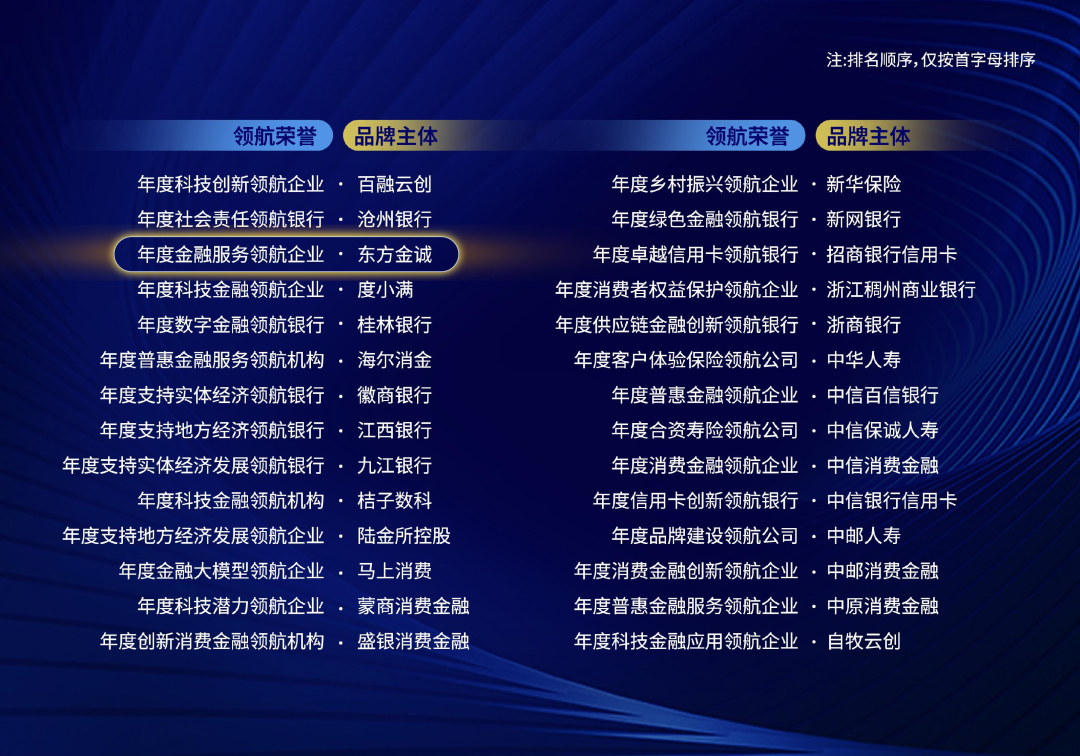
12月19日,《经济观察报》"2025年度领航企业案例"荣誉榜单正式揭晓。东方金诚凭借在服务国家金融战略、赋能实体经济高质量发展方面的突出贡献, 荣膺"年度金融服务领航企业"称号。该评选聚焦科技金融、绿色金融、普惠金融、养老金融、数字金融"五篇大文章",表彰在服务金融"五篇大文章"中做 出突出贡献的的标杆金融机构。 此次获评"年度金融服务领航企业",是市场与媒体对东方金诚长期践行国有评级机构使命、以专业力量服务国家战略的充分肯定。长期以来,公司始终立 足"国之大者",将专业评级服务深度融入国家发展大局,以信用评级为核心引擎,积极搭建资本市场与实体产业之间的桥梁,推动金融资源精准投向科技 创新、绿色转型等关键领域,形成了具有示范意义的评级实践体系。 | 领航荣誉 | 品牌主体 | 品牌主体 领航荣誉 | | --- | --- | --- | | 年度科技创新领航企业 · 百融云创 | | 年度乡村振兴领航企业 · 新华保险 | | 年度社会责任领航银行 · 沧州银行 | | 年度绿色金融领航银行 · 新网银行 | | 年度金融服务领航企业 · 东方金诚 | | 年度卓越信用卡领航银行 ·招商银行信用卡 | | ...

金乡金融监管支局组建“蒜都金服”团队,书写普惠金融发展新篇章
Qi Lu Wan Bao· 2025-12-22 10:48
Core Viewpoint - The development of inclusive finance faces multiple systemic challenges such as information asymmetry, homogenization of financial services, insufficient product adaptation, and high risk management difficulties, necessitating a shift from point solutions to system integration [1] Group 1: Organizational Structure and Team Building - The Jinxiang Financial Regulatory Bureau aims to enhance the organizational structure and gather collective efforts for high-quality development of inclusive finance by establishing the "Garlic Capital Financial Service" team, which includes over 90 members from various departments and financial institutions [2] - The team focuses on improving efficiency through talent selection and training, conducting policy dissemination sessions that have reached over 2,000 individuals [2] Group 2: Ideological Strengthening and Collaboration - The implementation of the inclusive finance action plan integrates financial work into the agenda of various party committees, fostering collaboration among government, finance, and enterprises [3] - Activities such as lectures and discussions have addressed 181 challenges related to enterprise financing, enhancing the understanding of financial policies [3] Group 3: Central-Local Coordination and Service Precision - The bureau emphasizes central-local coordination to address information asymmetry between banks and enterprises, creating simplified policy documents and conducting targeted financial service meetings [4] - Monthly industry-specific meetings have resulted in loan intentions of 1.913 billion and approved loans of 1.377 billion [4] Group 4: Promotion and Outreach Strategies - A dual-channel promotional strategy combining online and offline methods has been established to enhance policy outreach, benefiting over 50,000 individuals through various financial knowledge activities [5] - Financial institutions have been guided to utilize their platforms for regular updates on inclusive finance products and policies [5] Group 5: Service Innovation and Financial Product Development - The bureau is focused on improving product adaptation and service differentiation by leveraging technology and innovative supply mechanisms, resulting in a 17.51% increase in inclusive loans for small and micro enterprises [7] - Financial institutions have adopted IoT technology to enhance risk management and product offerings, providing liquidity support of 2.16 billion to 603 enterprises [7] Group 6: Risk Management and Insurance Support - The bureau has introduced comprehensive insurance products covering the entire garlic industry, providing risk coverage for over 23,000 entities and achieving a payout of 180 million [10] - A risk warning system has been established to monitor and manage potential risks in the inclusive finance sector, ensuring a stable financial service environment [11]
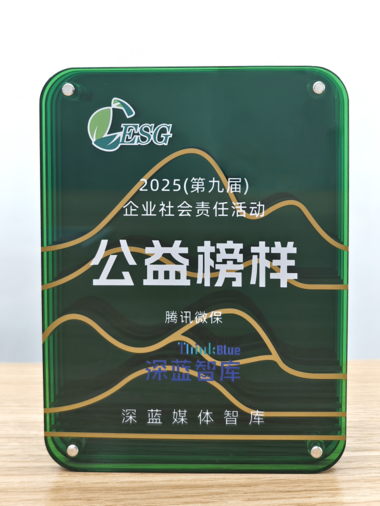
以普惠金融守护民生,腾讯微保获评年度“公益榜样”荣誉
Cai Fu Zai Xian· 2025-12-22 10:01
Core Insights - Tencent Weibo was awarded the "Public Welfare Model" for its active practices in the public welfare sector, particularly through the "Love Insurance" initiative, which aims to enhance the accessibility of inclusive insurance services [1][4] Group 1: Love Insurance Initiative - The "Love Insurance" project is a collaborative effort involving Tencent's Party Committee, Tencent Public Welfare Charity Foundation, Tencent Weibo, WeChat Pay, and local government departments, creating an innovative support model that addresses the insurance gap for disadvantaged groups [3] - Participants can obtain insurance coverage ranging from 1.5 million to 3 million yuan by paying a nominal fee of just 0.01 or 1 yuan, significantly lowering the barrier to access high-value medical insurance [3] - The project began its pilot phase in Guangzhou in 2022, with subsequent phases implemented in areas like Heyuan, Guilin, and Baise, with Heyuan serving as a benchmark case [3] Group 2: Financial Contributions and Impact - By November 2025, the "Love Insurance" initiative had benefited over 450,000 individuals, with Tencent's public welfare donations exceeding 24 million yuan and total claims paid out surpassing 25 million yuan [4] - The project effectively utilizes insurance as a financial lever and social stabilizer, providing a replicable and sustainable solution to prevent poverty due to medical expenses [4] Group 3: Broader Financial Inclusion Efforts - Since 2020, Tencent Weibo has leveraged its financial technology to participate in over 100 cities' inclusive medical supplementary insurance projects, serving more than 50 million insured individuals with convenient insurance services [5] - The company aims to continue expanding the coverage of inclusive insurance and iterating on projects like "Love Insurance," focusing on integrating technology and public welfare to enhance financial security for a broader population [5]

焕然“E”新!近六万亿市场,大变样!
券商中国· 2025-12-22 09:54
Core Viewpoint - The article discusses the rapid evolution of the ETF market in China, highlighting a shift from scale expansion to quality enhancement in index investment, marking 2025 as a pivotal year for high-quality development in the capital market [2]. Group 1: Market Transformation - The release of the "Action Plan for Promoting High-Quality Development of Index Investment in Capital Markets" has initiated a significant transformation in the index investment sector, focusing on optimizing resource allocation and enhancing the quality of listed companies [2][3]. - By 2025, index investment is expected to demonstrate strategic value in five core areas: optimizing resource allocation, improving the quality of listed companies, serving wealth management, guiding long-term capital into the market, and maintaining market stability [2]. Group 2: Institutional Support and Innovation - The implementation of the "Action Plan" provides dual support through institutional guarantees and innovation engines, enhancing the efficiency of ETF registration and issuance processes [3]. - The China Securities Regulatory Commission has streamlined the ETF registration process, allowing fund managers to apply directly for registration, significantly reducing the time required for ETF product approval [3]. Group 3: Product Development and Cost Reduction - A variety of new ETFs have been launched this year, including those focused on hard technology and high-end manufacturing, with efforts to lower investment costs by waiving certain fees associated with ETF operations [4][5]. - The introduction of innovative tools such as ESG indices and Smart Beta strategy indices caters to diverse investor needs, enhancing the vibrancy of the industry [4]. Group 4: Growth of ETF Adoption - The total market size of listed ETFs reached 5.83 trillion yuan, an increase of 2.09 trillion yuan or 56% from the beginning of the year, indicating a growing channel for attracting household wealth [5]. - The proportion of individual investors holding ETFs has been steadily increasing, with ETFs becoming a core component of their investment strategies [5]. Group 5: Enhanced Clarity and Naming Standards - Fund companies have begun to rename their ETFs for clearer identification, aligning with new naming regulations that emphasize the core characteristics of the products [6]. - The revised naming conventions aim to improve product recognition and enhance investment decision-making efficiency [6]. Group 6: Diversification and Thematic Focus - The variety of ETF products has expanded, with a notable increase in narrow-based and thematic ETFs, reflecting a trend towards more specialized investment options [7]. - The focus on specific sectors, such as consumer goods and technology, allows for more precise investment strategies that align with market demands [8]. Group 7: Role of ETFs in Asset Allocation - ETFs are increasingly replacing actively managed equity funds in FOF portfolios, indicating a shift towards quality-focused asset management [9]. - The growth of ETFs is seen as a critical support for the transition of the wealth management industry from product sales to asset allocation [9]. Group 8: Contribution to Market Stability - The development of ETFs has attracted long-term capital, including pension funds and social security funds, which play a vital role in maintaining market stability [9]. - The involvement of state-owned entities in ETF investments has been significant, contributing to the stabilization of the capital market [9]. Group 9: Focus on New Quality Production - ETFs have evolved into essential infrastructure for high-quality development in the capital market, directing capital towards emerging industries such as AI and biotechnology [10]. - The inclusion of high-quality companies in indices is expected to enhance the long-term investment value for investors [11].