
虚拟电厂

Search documents
“超级电力调频工厂”投运
Ke Ji Ri Bao· 2025-08-28 01:42
Core Viewpoint - A new round of high-temperature weather has prompted the establishment and operation of an integrated "charging and swapping shore storage" virtual power plant in Hubei, showcasing advancements in energy management and grid stability [1] Group 1: System Overview - The system is a collaborative development by State Grid Hubei Electric Power Research Institute and State Grid Electric Vehicle Service Hubei Co., Ltd [1] - It integrates 126 charging stations, 11 battery swapping stations, 1 large port charging station, and 4 energy storage stations into a unified command and dispatch system [1] Group 2: Technical Capabilities - The virtual power plant features a powerful second-level response capability, allowing it to participate in grid frequency regulation 24 hours a day without interruption [1] - The instantaneous maximum frequency regulation capacity of the system reaches 20,000 kilowatts, providing flexible support for the safe and stable operation of the power grid [1]
今夏不缺电
2 1 Shi Ji Jing Ji Bao Dao· 2025-08-27 23:15
Core Viewpoint - This summer, China's electricity load has reached a new high, with the total electricity consumption exceeding 1 trillion kilowatt-hours for the first time in July, reaching 10,226 billion kilowatt-hours. Despite the immense pressure on the power grid, there were no power cuts or load shedding this summer. The improvement in power supply, significant increase in installed generation capacity, widespread use of virtual power plants, and stable coal market operations have all strengthened the foundation for electricity supply this summer. However, the energy and electricity security work in China remains a significant challenge, with a focus on transitioning from "using electricity" to "using electricity efficiently" being the next goal for relevant departments and the energy industry [1]. Group 1 - The total electricity consumption in July reached 10,226 billion kilowatt-hours, marking a historic high for a single month [1] - There were no instances of power cuts or load shedding during this summer despite high demand [1] - Factors contributing to the stable electricity supply include improvements in power supply, increased installed generation capacity, the use of virtual power plants, and a stable coal market [1] Group 2 - The energy and electricity security work in China is still a significant challenge [1] - The next goal for relevant departments and the energy industry is to shift focus from merely using electricity to using it more efficiently [1]
连云港市能源集团实现两项“全市首个”突破
Xin Hua Ri Bao· 2025-08-27 20:59
Core Viewpoint - Lianyungang Energy Group has successfully completed the city's first carbon trading transaction in the national voluntary greenhouse gas emission reduction trading system (CCER), marking a significant step in its integrated "wind, solar, hydrogen, storage, and carbon trading" industry layout [1] Group 1: Carbon Trading and Green Energy Initiatives - The carbon trading transaction reflects the company's commitment to the philosophy of "lucid waters and lush mountains are invaluable assets" and the voluntary emission reduction policy [1] - The carbon trading business will synergize with wind energy, solar energy, hydrogen energy, and energy storage sectors, contributing to the establishment of a complete green energy industry chain in Lianyungang [1] Group 2: Virtual Power Plant Development - The company has successfully passed the qualification review for virtual power plant operations by the Jiangsu Electric Load Management Center and Jiangsu Electric Trading Center, becoming the first registered virtual power plant in Lianyungang [1] - The company aims to leverage this qualification to explore innovative business models, tapping into the province's energy potential by aggregating distributed energy sources, user-side energy storage, charging and swapping facilities, and adjustable loads from commercial and industrial sectors [1] - By participating in the provincial electricity trading market as a virtual power plant, the company seeks to enhance its energy services, market operations, and intelligent management capabilities [1]

新能源车化身城市“充电宝” 助力应对高温用电
Yang Shi Wang· 2025-08-27 16:05
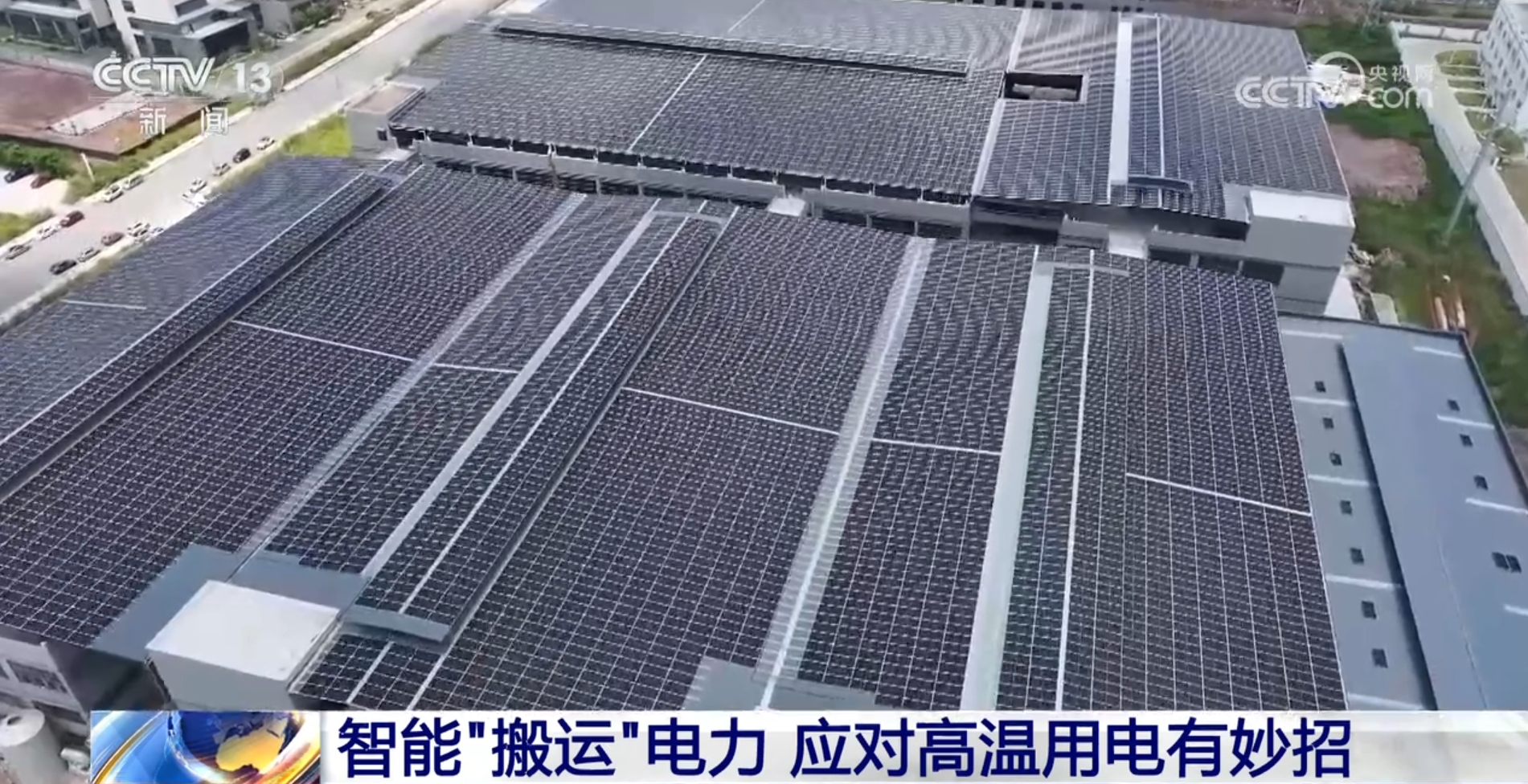
Group 1 - The article discusses the implementation of "virtual power plants" in Chongqing and Hubei to effectively integrate distributed energy resources, energy storage, and electric vehicles to manage rising electricity demand [1][3] - In Chongqing's Bishan District, a smart "zero-carbon" power plant has been established, combining photovoltaic energy and energy storage systems, which can provide a peak capacity of 69,000 kilowatts, accounting for one-sixth of the industrial load in the Bishan power grid [3] - In Wuhan, a vehicle-grid interaction project has been developed, allowing electric vehicle owners to charge during off-peak hours and sell electricity back to the grid during peak times, effectively turning electric vehicles into "energy banks" [5][7] Group 2 - The project in Wuhan enables electric vehicle owners to potentially cover their daily charging costs through participation in discharge activities, achieving a "zero-cost" green travel solution [5] - Currently, 11 charging and swapping stations in Wuhan have been equipped with reverse power transmission devices, enhancing the city's power supply resilience [7]

国能日新(301162):功率预测业务开始加速,全年高增长可期
Orient Securities· 2025-08-27 13:52
Investment Rating - The report maintains a "Buy" rating for the company, with a target price of 62.64 CNY based on a projected P/E ratio of 54 for 2025 [4][8]. Core Insights - The company's revenue for the first half of 2025 reached 321 million CNY, representing a year-on-year increase of 43.2%, with a net profit attributable to the parent company of 45.97 million CNY, up 53.5% [1]. - The rapid growth in the company's power forecasting business is expected to continue, driven by a surge in new energy installations, with a 55.1% increase in revenue from this segment in the first half of 2025 [7]. - The overall gross margin for the first half of 2025 was 61.4%, down 5.8 percentage points from the previous year, but is anticipated to rebound in the second half as service revenues from new clients begin to contribute [7]. Financial Summary - The company’s projected financials indicate a revenue increase from 456 million CNY in 2023 to 1.333 billion CNY by 2027, with a compound annual growth rate (CAGR) of 22.9% [3]. - Net profit is expected to grow from 84 million CNY in 2023 to 318 million CNY in 2027, reflecting a CAGR of 29.7% [3]. - The earnings per share (EPS) is projected to rise from 0.64 CNY in 2023 to 2.40 CNY in 2027 [3]. Business Performance - The company experienced a significant increase in its power forecasting business, with a revenue of 205 million CNY in the first half of 2025, marking a 55.1% increase year-on-year [7]. - The company’s operating profit is expected to grow from 83 million CNY in 2023 to 343 million CNY in 2027, with a notable increase of 69.9% in 2025 [3]. - The gross margin for the power forecasting business specifically decreased to 61.6% in the first half of 2025, but is expected to recover as service revenues increase [7].

“看不见的电厂”顶住夏季用电高峰
2 1 Shi Ji Jing Ji Bao Dao· 2025-08-27 10:34
Core Viewpoint - The article discusses the emergence and significance of virtual power plants (VPPs) in China, highlighting their ability to manage distributed energy resources and address peak electricity demand without the need for traditional power generation infrastructure [1][3][4]. Group 1: Virtual Power Plant Overview - A virtual power plant is a smart energy management system that aggregates distributed energy resources such as solar, storage, and controllable loads to create a unified electricity regulation pool [1]. - As of now, China's operational virtual power plants have a total regulation capacity exceeding 35 million kilowatts, equivalent to the installed capacity of 1.5 Three Gorges power stations, with a target to surpass 50 million kilowatts in the next five years [2]. Group 2: Economic and Environmental Benefits - The rise of virtual power plants addresses the increasing demand for electricity in China, which has surged significantly, with energy consumption growth during the 14th Five-Year Plan period reaching 1.5 times that of the previous five years [3]. - Traditional power plants are slow to respond and costly, while virtual power plants can quickly adjust resources to ensure stable electricity supply during peak demand, thus serving as a "savior" for electricity shortages [3][4]. - Building a large coal or gas power plant requires an investment of tens to hundreds of billions, while virtual power plants can meet peak electricity needs with an investment of only 50 to 60 billion yuan, significantly reducing costs and meeting environmental standards [4]. Group 3: Policy Support and Investment Potential - The demand for flexible and adjustable resources in the new power system has been bolstered by supportive policies, including guidelines from the National Energy Administration encouraging the aggregation of distributed resources [5][6]. - By 2025, the investment market for virtual power plants in China is expected to exceed 30 billion yuan, with annual investments ranging from 10.5 billion to 20 billion yuan [7]. Group 4: Current Developments and Challenges - Despite the late start of virtual power plants in China compared to countries like the U.S. and Germany, various provinces are launching demonstration projects to establish commercial models [8]. - Shanghai has seen significant advancements, with its virtual power plant management center connecting 49 operators and achieving a substantial increase in adjustable capacity [8]. - The establishment of the Virtual Power Plant Professional Committee aims to promote collaboration across the industry and enhance standardization and scalability [9].
“看不见的电厂”顶住夏季用电高峰丨年中能源观察
2 1 Shi Ji Jing Ji Bao Dao· 2025-08-27 10:17
Core Insights - The article discusses the emergence and significance of virtual power plants (VPPs) in addressing peak electricity demand and high electricity prices in China, highlighting their role as a digital management system that aggregates distributed energy resources [1][2][3] Group 1: Virtual Power Plant Overview - A virtual power plant is defined as a system that integrates controllable electricity devices, storage units, and distributed renewable energy sources into a unified dispatching system, functioning as a "city power regulation pool" [1][2] - The total regulation capacity of operational virtual power plants in China has exceeded 35 million kilowatts, equivalent to the installed capacity of 1.5 Three Gorges power stations, with a target to surpass 50 million kilowatts in the next five years [2] Group 2: Economic and Environmental Benefits - The rise of virtual power plants addresses the increasing demand for flexibility and cost-effectiveness in China's energy structure, compensating for the rigidity and high costs of traditional power systems [3][4] - Building a large coal or gas power plant requires an investment of tens of billions to over a hundred billion yuan, while virtual power plants can provide similar peak power services at a significantly lower investment of 50 to 60 billion yuan [4] Group 3: Policy Support and Market Potential - The demand for flexible and adjustable resources in the new power system is being fueled by supportive policies from the National Energy Administration, which encourages the aggregation of distributed resources [6] - By 2025, the investment market for virtual power plants in China is projected to exceed 30 billion yuan, with annual investments ranging from 10.5 billion to 20 billion yuan [6] Group 4: Regional Developments and Challenges - Shanghai has seen significant advancements in virtual power plant capabilities, with a reported increase of 81.17% in declared adjustable capacity compared to the end of 2024 [7] - Despite rapid development in some provinces, the overall virtual power plant construction in China is still in its early stages, with a lack of unified understanding of definitions and functions [8]
用算法为新型电力系统赋能——国网湖北电力虚拟电厂建设观察
Zhong Guo Dian Li Bao· 2025-08-27 07:07
Core Insights - The development of virtual power plants in Hubei has accelerated due to supportive policies and mechanisms, with the establishment of the first provincial-level virtual power plant platform in Central China [1][2] Group 1: Virtual Power Plant Overview - Virtual power plants aggregate various distributed energy resources, including distributed generation, energy storage systems, commercial buildings, 5G base stations, and electric vehicles, creating a "cloud power plant" [2] - As of July, Hubei's virtual power plant has connected 38 entities, with 27 registered publicly, and has integrated 2,248 adjustable users and 12,270 terminal-level resources, totaling a reported capacity of 22 million kilowatts [2] Group 2: Operational Mechanisms - Hubei Electric Power provides operational support systems for virtual power plant operators, facilitating user modeling, electricity information verification, transaction organization, and operational monitoring to ensure efficient participation in the electricity spot market [3] - The company plans to streamline the entire business process for virtual power plants to engage in spot market transactions, promoting collaboration among power plants, grid companies, and commercial users [3] Group 3: Balancing Supply and Demand - By the end of July, Hubei's wind and solar power installed capacity reached 53.55 million kilowatts, accounting for 40.29% of the province's total power generation capacity, with renewable energy becoming the largest power source [4] - The virtual power plant helps manage the randomness and volatility of renewable energy by balancing supply and demand through peak shaving and valley filling, effectively absorbing excess renewable energy during low demand periods [4] - During a peak demand period in Jiangxi, Hubei's virtual power plant responded to grid demand by adjusting production schedules in industries like metallurgy and cement, facilitating the transfer of adjustment capacity across provinces [4] Group 4: Economic Impact - During a recent response period, the maximum valley-filling power from Hubei's virtual power plant reached 233,900 kilowatts, generating auxiliary service revenue of 5,243.76 yuan for participating enterprises [5] - The virtual power plant operates as an advanced intelligent scheduling control system, managing interruptible loads like air conditioning in large electricity-consuming facilities to maintain power balance without compromising grid stability or normal production [5]
2GWh!中电装储能中标两大储能项目
中关村储能产业技术联盟· 2025-08-27 06:23
Core Viewpoint - The article highlights the significant achievements of China Electric Power Equipment and Technology Co., Ltd. (CEPETC) in the energy storage sector, showcasing its recent project wins and overall growth in system shipments [2][3]. Group 1: Project Wins - CEPETC has recently won two energy storage projects, marking a strong presence in the market [2]. - On August 25, the company secured a bid for a 100MW/400MWh independent energy storage project at the Xinjiang Huadian Urumqi Photovoltaic Base [4]. - On August 26, it won a bid for a 400MW/1600MWh independent energy storage project in Chifeng City, Inner Mongolia [4]. Group 2: Market Position and Performance - According to data from the China Energy Storage Industry Technology Alliance (CNESA), in the first half of 2025, CEPETC's domestic and global energy storage system shipments ranked among the top five in the industry [3]. - The company has successfully entered high-profile centralized procurement projects with major state-owned enterprises, with a total framework scale exceeding 36GWh [3]. Group 3: Cumulative Achievements - To date, CEPETC has shipped over 40GWh of energy storage systems, contributing to the establishment of over 500 energy storage projects globally [5]. - The company has played a role in building the world's largest virtual synchronous technology demonstration project and the first 100MWh intelligent string-type grid-connected energy storage project [5].
安科瑞(300286):费用管控成效显著,盈利能力改善明显
EBSCN· 2025-08-27 03:19
Investment Rating - The report maintains a "Buy" rating for the company, indicating a positive outlook for future performance [4]. Core Insights - The company has shown significant improvement in profitability due to effective cost control, with a notable increase in net profit by 24.83% year-on-year for the first half of 2025 [1][3]. - Revenue for the first half of 2025 reached 539 million yuan, reflecting a year-on-year growth of 1.54% [1]. - The company is focusing on expanding in both domestic and overseas markets, particularly in sectors like new energy and virtual power plants [3]. Summary by Sections Financial Performance - In Q2 2025, the company achieved revenue of 295 million yuan, a year-on-year increase of 2.34% and a quarter-on-quarter increase of 21.46% [1]. - The net profit for Q2 2025 was 73 million yuan, marking a year-on-year growth of 32.58% and a quarter-on-quarter growth of 40.66% [1]. Revenue Breakdown - Revenue from power monitoring and substation comprehensive monitoring products grew by 0.01% to 226 million yuan, with a gross margin increase of 1.03 percentage points to 48.34% [2]. - Revenue from energy efficiency management products decreased by 0.12% to 175 million yuan, but the gross margin increased by 0.73 percentage points to 48.39% [2]. - Revenue from electric sensors increased by 6.47% to 63 million yuan, with a gross margin increase of 0.06 percentage points to 45.34% [2]. - Revenue from fire and electrical safety products decreased by 0.85% to 41 million yuan, while the gross margin increased by 0.69 percentage points to 47.98% [2]. - Revenue from enterprise microgrid and other products grew by 20.14% to 32 million yuan, with a gross margin increase of 0.83 percentage points to 45.93% [2]. Cost Management - The company has effectively controlled costs, with a decrease in sales expense ratio by 0.94 percentage points to 11.89%, management expense ratio by 0.14 percentage points to 5.68%, and R&D expense ratio by 1.58 percentage points to 9.67% [3]. - The overall gross margin improved by 0.75 percentage points to 47.82%, and the net profit margin increased by 4.36 percentage points to 23.30% [3]. Future Outlook - The company is expected to continue its growth trajectory, with projected net profits of 238 million yuan, 284 million yuan, and 335 million yuan for 2025, 2026, and 2027 respectively [4][5]. - The estimated earnings per share (EPS) for the same years are projected to be 0.95 yuan, 1.13 yuan, and 1.34 yuan [4][5].
