
通用人工智能

Search documents
2024科技投入234.5亿元,蚂蚁AI聚焦金融、医疗
Sou Hu Cai Jing· 2025-07-01 03:31
Core Insights - Ant Group's employee count increased from 29,740 at the end of 2023 to 36,559 in 2024, representing a growth of over 20% [4] - The term "AI" was mentioned 15 times in the joint address by Chairman Jing Xiandong and CEO Han Xinyi, compared to only 4 times in 2023 [3] - Ant Group's R&D investment reached 23.45 billion yuan in 2024, a 10.67% increase from 21.19 billion yuan in 2023, focusing on AI and data technology [4] AI Integration - Ant Group is integrating AI capabilities into healthcare, finance, and daily life, launching three AI assistants that have served over 130 million users, with 43% from lower-tier cities [5] - The AI health application "AQ" was launched, providing over a hundred AI functions and connecting to more than 5,000 hospitals and nearly one million doctors [6] - The company aims to enhance healthcare services using AI, responding to the growing public demand for quality medical services [8] Financial Services Enhancement - Ant Group upgraded its AI financial assistant "Ma Xiaocai" to offer more personalized financial services [9] - The company plans to collaborate with financial industry partners to launch over 100 AI solutions covering various financial scenarios [9] - NetEase Bank aims to become an AI bank over the next decade, serving over 68 million small business operators [9][10] New Payment Solutions - Ant Group's "Tap to Pay" service has over 100 million users and is expanding into various service scenarios beyond payments [11][12] - The company is investing heavily in promoting "Tap to Pay" to regain market share lost in the QR code payment sector [14] - Alipay+ has partnered with 36 mobile payment partners, covering over 70 travel destinations and reaching over 1 billion merchants [14]


被Meta连挖8人后,OpenAI坐不住了
华尔街见闻· 2025-06-30 10:43
Core Viewpoint - OpenAI is facing a significant talent retention crisis as eight key researchers have left for Meta, prompting the company to reassess its compensation and retention strategies [1][11]. Group 1: Talent Loss and Recruitment - OpenAI has lost eight top researchers to Meta in just one week, including four core Chinese researchers who were leaders in critical projects like o3 and GPT-4 [1][3]. - Meta is aggressively recruiting talent from OpenAI and Google, with CEO Mark Zuckerberg personally reaching out to potential candidates [1]. - Reports suggest that Meta offered signing bonuses as high as $100 million to some researchers, although this figure has been internally disputed by Meta executives [2]. Group 2: OpenAI's Response - OpenAI's Chief Research Officer, Mark Chen, expressed shock and dissatisfaction over the talent loss, comparing it to a home invasion [1][11]. - To retain talent, OpenAI plans to recalibrate its compensation and implement creative recognition and reward strategies for top performers [11][12]. - OpenAI is also reflecting on its internal management and strategic direction due to the personnel loss, including a decision to provide a week of collective leave for employees to alleviate stress [12].

只用2700万参数,这个推理模型超越了DeepSeek和Claude
机器之心· 2025-06-30 10:23
Core Insights - The article discusses the need for transformation in the architecture of large language models (LLMs), particularly focusing on the limitations of current chain-of-thought (CoT) techniques, which face challenges such as task complexity, high data requirements, and latency issues [2][4]. Group 1: Hierarchical Reasoning Model (HRM) - The Hierarchical Reasoning Model (HRM) is introduced as a novel cyclic architecture inspired by the human brain's layered and multi-timescale processing mechanisms, achieving high computational depth while maintaining training stability and efficiency [3][6]. - HRM operates through two interdependent cyclic modules: a high-level module for slow, abstract planning and a low-level module for fast, detailed computations, achieving remarkable performance on complex reasoning tasks with only 27 million parameters and 1,000 training samples [4][5]. - HRM does not require pre-training or CoT data, yet it performs nearly perfectly on challenging tasks such as complex Sudoku puzzles and optimal pathfinding in large mazes, outperforming larger models with longer context windows [5][6]. Group 2: Design and Mechanisms - The core design of HRM is based on hierarchical processing and time-scale separation, where high-level brain regions integrate information over longer time scales while low-level regions handle immediate sensory information [12][13]. - HRM incorporates feedback loops similar to the brain's dense recurrent neural network connections, enhancing representation accuracy and contextual adaptability while avoiding issues related to backpropagation through time (BPTT) [14][19]. - The model introduces approximate gradients and deep supervision, allowing for efficient memory usage and improved training dynamics, which contrasts with traditional methods that require extensive memory and time [20][23]. Group 3: Performance and Adaptability - HRM demonstrates hierarchical convergence, with the high-level module stabilizing while the low-level module converges repeatedly, leading to rapid convergence and minimal residuals compared to deep neural networks [17][36]. - The model features adaptive computation time (ACT), enabling it to dynamically adjust computational resources based on task complexity, thus optimizing performance without significant resource expenditure [25][27]. - HRM can seamlessly extend inference computation by adjusting parameters without the need for retraining or architectural changes, showcasing its flexibility in handling complex reasoning tasks [28][36]. Group 4: Experimental Results - Experimental results indicate that HRM excels in complex reasoning tasks, raising questions about the underlying reasoning algorithms it employs, which is crucial for enhancing model interpretability [31][39]. - Visualizations of HRM's reasoning processes reveal its strategies in maze and Sudoku tasks, demonstrating a combination of exploration and optimization techniques that resemble depth-first search methods [31][38]. - The hierarchical structure of HRM emerges as a natural characteristic during the learning of complex reasoning tasks, rather than being an inherent property of the model architecture [34].

AI专家给奥特曼泼凉水:纯LLM从未真正理解世界,以此构建AGI没希望
3 6 Ke· 2025-06-30 09:29
划重点: 6月29日消息,OpenAI首席执行官山姆・奥特曼(Sam Altman)满怀憧憬,认为通用人工智能的曙光已近在咫尺,其观点如同一剂强心 针,让众多追随者热血沸腾,对未来的智能时代充满无尽遐想。然而,美国认知科学家、人工智能专家加里・马库斯(Gary Marcus)却 如同一盆冷水,无情地泼向这看似热烈的憧憬之中。 马库斯日前发表长文《生成式AI的致命缺陷:缺乏稳健的世界模型》(Generative AI's crippling and widespread failure to induce robust models of the world),在学术与科技界引发强烈共鸣。这篇文章从一个荒诞的AI生成视频切入——视频中,一名国际象棋选手竟将对方 的棋子横向移动数格——引出他对当前生成式人工智能最深层的批判:这些模型虽然能"模仿思考",但从未真正建立起对世界的稳定、 可靠理解。 这并不是第一次有人指出大语言模型在推理方面存在严重缺陷。苹果公司本月发布的研究论文《思维的幻觉》(Illusion of Thinking) 中,就系统记录了大语言模型在逻辑推理和数学计算中频繁出错的实例。然而,正如马库斯 ...

安徽智能算力两年多来提升约37倍
Zhong Guo Xin Wen Wang· 2025-06-30 06:15
安徽省科技厅副厅长陈龙胜说,安徽争取获批国家新一代人工智能创新发展试验区、新一代人工智能公 共算力开放创新平台等一批国字号创新平台,承担国家数据要素综合试验区建设等重要任务,合肥获批 全国首批、长三角唯一数据标注基地建设试点城市。 安徽省智能算力由2023年初800P(1P即每秒完成1千万亿次浮点运算)左右跃升至目前3万P,提升约37 倍。 近年来,安徽聚焦打通科技创新策源地与新兴产业聚集地之间的链接,全力推进人工智能新兴产业集群 发展和通用智能未来产业培育壮大。目前已集聚人工智能规上企业894家、产业链关联企业1.2万家。 赛迪顾问最新发布的《中国人工智能区域竞争力研究》显示,2024年安徽人工智能产业发展评价紧随北 京、广东、上海、浙江之后,居全国第5位。 在场景应用牵引产业生态方面,安徽围绕工业、教育、医疗等领域开放"人工智能+"场景机会300余项。 2024年,安徽招引人工智能落地项目超过1000个,拟投资金额超过4000亿元,同比分别增长46.8%和 34.6%。(完) (文章来源:中国新闻网) 同时,安徽在全国率先出台通用人工智能发展三年行动计划和专项政策,系统谋划大算力、大模型、大 应用。 陈龙 ...
连挖四名顶尖华人,Meta疯狂对OpenAI”挖墙角“
Hua Er Jie Jian Wen· 2025-06-30 00:39
硅谷AI人才战升级,Meta展开强烈的"挖角行动",OpenAI惊呼:被偷家了! 据媒体报道,OpenAI正在经历一场前所未有的人才流失危机,过去一周,八名顶尖研究人员相继离职 加盟Meta,其中包括四名华人核心研究员,他们均为OpenAI核心项目的负责人,包括o3、GPT-4系列 等关键模型的主导者。 据OpenAI CEO Sam Altman此前在播客中透露,Meta为部分研究人员提供了高达1亿美元的签约奖金。 不过Meta高管对此数字在内部进行了反驳。 OpenAI面临着一场保留住人才的挑战。OpenAI首席研究官Mark Chen在周六发给员工的内部备忘录中表 示,公司正在"重新校准薪酬",并承诺将采取"创造性方式来认可和奖励顶尖人才"。 据Wired报道,Chen在备忘录中,表达了极为震惊和不满的情绪,他写道:"我现在有一种发自内心的 感觉,就像有人闯入我们家偷走了什么东西。" OpenAI工作压力太大,Meta趁势"挖墙脚" 据媒体报道,Meta正在大幅提升研究招募力度,特别关注来自OpenAI和Google的人才。扎克伯格一直 采取特别积极的招募策略,甚至亲自联系潜在招募对象。 据报道,Ope ...
“AI考生”何以成为力学“学霸”
Ke Ji Ri Bao· 2025-06-29 22:25
◎科技日报记者 于紫月 在近日落下帷幕的第十五届全国周培源大学生力学竞赛中,一位特殊的"考生"吸引了人们目光。由清华 大学航天航空学院团队自主研发的人工智能力学求解系统"GT-Mech",与来自全国500余所高校的3万余 名考生同台竞技,最终成绩达到本届赛事成绩前五名的特等奖水平,展现出不俗解题能力。 据了解,这是全球范围内大型语言模型驱动的AI系统首次以"参赛选手"身份,在同场、同时、同卷的标 准下,参与国家级顶级力学赛事。这一突破,不仅展示了AI解决力学问题的潜力,也为未来教育模式 变革提供了思路。 "我们主要从三方面入手攻克技术难关。"团队核心成员周懿介绍,首先是构建结构化知识体系。团队 为"GT-Mech"构建了专有化的力学知识图谱,将经典教材、题库等海量知识编织成一张结构化语义网 络,使AI能像人类专家一样迅速调用相关知识,形成专业可靠的解题框架。 其次是融合逻辑推理和符号计算。团队引入"逻辑推理—符号计算"双核引擎,"GT-Mech"首先用自然语 言规划解题思路,再调用内嵌的符号计算引擎完成公式推导和计算。这种模式有效结合了AI的逻辑规 划能力与符号计算的准确性,显著降低了求解过程中出现低级错误的 ...
硅谷大厂“杀疯了”!华人AI大牛被疯狂挖角,黄仁勋买完公司再收清华“天才少年”
Tai Mei Ti A P P· 2025-06-29 12:52
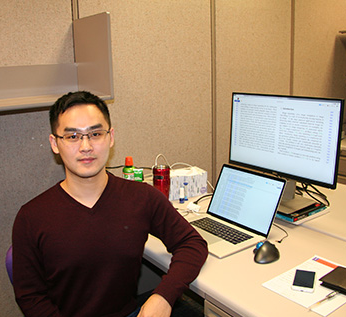
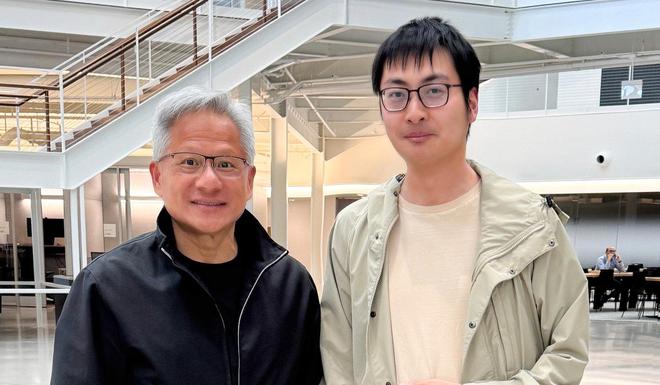
Core Insights - Major tech companies like Nvidia and Meta are aggressively recruiting top Chinese AI talent to maintain their leadership in the AI sector [2][6][18] - Nvidia's CEO Jensen Huang personally recruited two prominent Chinese AI researchers, Banghua Zhu and Jiantao Jiao, who co-founded the AI company Nexusflow [2][8] - Meta has successfully hired four leading Chinese AI scholars from OpenAI, indicating a fierce competition for AI talent among tech giants [2][15][18] Group 1: Talent Acquisition - Nvidia appointed Banghua Zhu as its Chief Research Scientist and Jiantao Jiao as part of its Star Nemotron team, highlighting the company's strategy to integrate top talent [2][11] - Meta's recruitment of Shuchao Bi, Jiahui Yu, Hongyu Ren, and Shengjia Zhao from OpenAI reflects a broader trend of tech companies targeting high-caliber AI researchers [15][18] - The competition for AI talent is intensifying, with companies offering substantial financial incentives, including reports of signing bonuses reaching $100 million [17][18] Group 2: Industry Dynamics - The global AI landscape is becoming increasingly competitive, with OpenAI's leading position being challenged by emerging models from companies like DeepSeek and Google [6][24] - Major tech firms have invested over $100 billion in AI, indicating a significant strategic commitment to this sector [6][24] - The recruitment of top talent is seen as a critical factor in the ongoing "asymmetric war" in the AI industry, where larger companies have more resources [6][24] Group 3: Company Strategies - Nvidia's acquisition strategy includes not only hiring talent but also acquiring companies like Nexusflow to consolidate technological expertise [12][22] - Meta's investment in Scale AI and the recruitment of its founder to lead a new research lab demonstrates a proactive approach to enhancing its AI capabilities [19][22] - Nvidia's recent acquisitions and investments in AI-related startups have significantly increased, with over 50 financing activities and a total investment exceeding $1 billion in 2024 [20][22] Group 4: Future Outlook - Analysts predict Nvidia will dominate the AI data center chip market, holding an estimated 80%-85% share, with projected earnings per share increasing to $7.23 by 2027 [23][24] - The potential market capitalization of Nvidia could reach $5 trillion, driven by advancements in AI technology and infrastructure [24] - The U.S. government's focus on AI as a strategic technology is expected to accelerate domestic AI ecosystem development, with plans for significant investments and regulatory adjustments [25][26]

深度|Sam Altman发文AI奇点时代加速到来:“智能便宜得像水电一样”这件事近在咫尺
Z Potentials· 2025-06-28 03:36
Core Insights - The article discusses the imminent arrival of a technological singularity driven by advancements in AI, particularly through systems like GPT-4 and o3, which are expected to significantly enhance productivity and quality of life [3][10] - It emphasizes the transformative potential of AI in various sectors, predicting that by 2030, individuals will be able to accomplish far more than they could in 2020, marking a significant leap in capabilities [5][6] Group 1: AI Advancements and Impact - AI has already surpassed human capabilities in many areas, leading to increased efficiency and productivity [3][10] - The emergence of cognitive agents and advanced systems is anticipated in the coming years, fundamentally changing programming and creative processes [4][10] - By 2030, the amount of work one individual can accomplish is expected to exceed that of 2020, indicating a transformative shift in workforce capabilities [5][6] Group 2: Societal Changes and Adaptation - The 2030s are predicted to be a period of unprecedented change, with both familiar and novel experiences coexisting [6][7] - As digital intelligence becomes ubiquitous, society will adapt to new expectations and capabilities, leading to a redefinition of work and creativity [7][10] - The article suggests that while some jobs may disappear, new opportunities will arise, leading to overall societal wealth and innovation [11][13] Group 3: Self-Acceleration and Economic Value - The efficiency of scientists has reportedly increased two to three times, enabling faster AI research and development [9][10] - The economic value generated by AI is expected to drive continuous investment in computational infrastructure, creating a self-reinforcing cycle of innovation [9][10] - Automation in data center production will lead to a significant reduction in the cost of intelligence, making it as affordable as electricity [11][14] Group 4: Governance and Ethical Considerations - Addressing alignment issues in AI systems is crucial to ensure they understand and execute human intentions effectively [13] - The article highlights the importance of making superintelligence widely accessible and not overly concentrated among individuals or corporations [13] - A global dialogue on societal consensus regarding AI governance is deemed essential for maximizing benefits while minimizing risks [13][14]

筹资290亿美元,Meta要联手PE巨头建AI数据中心
Hua Er Jie Jian Wen· 2025-06-28 03:30
Group 1 - Meta is seeking to raise up to $29 billion from private equity firms to build AI data centers in the U.S., marking a significant push into the AI sector [1] - The company plans to raise $3 billion in equity and $26 billion in debt, with discussions ongoing on structuring this massive debt financing [1] - Meta's CEO Mark Zuckerberg is significantly increasing investments in AI, having previously lagged behind competitors, and has announced a $15 billion investment in data labeling startup ScaleAI [2] Group 2 - Meta's capital expenditure forecast for the year has been raised by up to 10% to $64 billion to $72 billion, citing additional AI data center investments and increased infrastructure hardware costs [2] - The trend of tech giants partnering with private equity firms to share investment risks is growing, with other companies like OpenAI also seeking substantial funding for data center projects [3] - Private investment firms are increasingly being relied upon by blue-chip companies to avoid excessive pressure on their balance sheets from large capital projects [3]