
大模型

Search documents
未知机构:昆仑万维发布Skywork桌面版重申看好a股稀缺大模型标的东吴传媒互联网张-20260204
未知机构· 2026-02-04 01:55
Summary of Company and Industry Insights Company: Kunlun Wanwei Key Developments 1. **Launch of Skywork Desktop**: On February 4, Kunlun Wanwei officially launched "Skywork Desktop," a desktop application that executes tasks locally without the need to upload files to the cloud. This positions the company as a rare large model player in the A-share market [1] 2. **Functionality of Skywork Desktop**: The application can directly read vast amounts of files on a computer, summarize and organize them, and generate new products based on content. It focuses on "content understanding" rather than "file format," allowing it to understand and classify various types of files, including images, videos, spreadsheets, and documents, while supporting parallel multitasking [2] Product Performance 3. **Mureka V8 Music Model**: On January 28, Kunlun Tiangong launched the Mureka V8 music model, which received subjective ratings exceeding those of Suno V5 in blind tests. Following the launch, the Mureka app saw a significant rise in rankings on the iOS App Store [2] 4. **DAU and MAU Goals**: The CEO, Zhou Yahui, stated that the AI music platform based on Mureka will adopt a completely free strategy, aiming for 100 million Daily Active Users (DAU) and 300 to 500 million Monthly Active Users (MAU) within 3 to 5 years [2] Business Performance and Outlook 5. **Dramawave App Growth**: The short drama app, Dramawave, has consistently climbed in rankings over the past month, indicating strong performance in the short video segment [2] 6. **Investment Outlook**: The company maintains a "buy" rating, citing a positive outlook on its forward-looking layout in the AI field. However, short-term R&D and marketing expenses may hinder the release of operational performance. Anticipation is high for subsequent product updates and revenue growth [2] 7. **OPERA Performance**: OPERA's performance continues to exceed expectations, validating its product strength and suggesting potential benefits from AI enhancements in browsers [2] 8. **Risks**: Key risks include the possibility of new product developments not meeting expectations and delays in AI chip advancements [2]
开创电气:燕谷机器人公司跟清华大学合作正常进展中
Ge Long Hui· 2026-02-04 01:24
格隆汇2月4日丨开创电气(301448.SZ)近日接受特定对象调研时表示,燕谷机器人公司跟清华大学合作 正常进展中,第一笔研发经费 1500 万元按照合作协议已支付清华大学。2026 年1 月初已召开联合研究 中心管委会第一次会议,通过了联合机构章程和管委会相关机制,同时决定批准了14 个项目立项,涵 盖具身智能感知、决策、控制、硬件设计及大模型基础研究等多个关键领域。 ...

蚂蚁数科 CEO 赵闻飙发全员信,宣布将成立“大模型技术创新部”
Xin Lang Cai Jing· 2026-02-04 01:13
2 月 3 日晚间消息,新浪科技获悉,日前,蚂蚁数科 CEO 赵闻飙发布主题为《携手共进,迈向大模型 新时代 —— 关于大模型组织架构升级的通知》的全员信,宣布蚂蚁数科将成立"大模型技术创新部", 构建面向 To B 场景的基础大模型及行业模型。据了解,该团队将与蚂蚁集团相关团队协同,攻坚蚂蚁 集团百灵大模型面向 To B 场景的商业化,推动全球企业更好地进入 AI 时代。 赵闻飙在内部信中表示,"过去一年,蚂蚁数科构建的智 能体,已深度嵌入客户的业务流程,在真实生产环境中 稳定运行,已在多家金融机构内形成标杆。这不仅验证 了市场需求的真实性,更确立了我们在企业级 AI 服务 赛道的位置。这些在 AI 产业实践中的突破和创新,让 我们有底气、也有能力将大模型研发进一步拓展至更复 杂的产业数字化领域。" 蚂蚁数科 CEO 赵闻飙拥有上海交大,美国罗格斯大学双 博士学位。于 2016 年加入蚂蚁,一手构建了支付宝与蚂 蚁集团的智能风控体系,在 AI 安全风控领域拥有丰富 经验和技术成果。 赵闻飙在内部信中表示,"过去一年,蚂蚁数科构建的智能体,已深度嵌入客户的业务流程,在真实生 产环境中稳定运行,已在多家金融机构 ...
计算机行业事件点评:Clawdbot系列研究之核心受益方向:大模型篇
Guolian Minsheng Securities· 2026-02-04 01:04
Investment Rating - The report maintains a "Recommendation" rating for the industry, indicating an expected stock price increase of over 15% relative to the benchmark index within the next 12 months [5]. Core Insights - The report emphasizes that in the Agent era, the ability to transform strong capabilities into high-frequency productivity at lower costs is crucial, highlighting MiniMax's advantages in this regard [4][7]. - Clawdbot has rapidly gained traction, with over 130,000 stars on GitHub and more than 2 million visits to its official website, marking it as one of the fastest-growing open-source technology projects [7]. - The M2.1 model from MiniMax is noted for its efficiency and cost-effectiveness, addressing the high token costs faced by developers in automated programming [7][14]. - The report discusses the importance of multi-modal capabilities in understanding visual information, which enhances the functionality of Agents in various workflows [4][7]. Summary by Sections Industry Overview - The report highlights the transition of large models from mere chat tools to autonomous employees, suggesting that companies with core algorithms and industry interfaces will benefit significantly from the trend towards intelligent automation [14]. Model Performance - MiniMax's M2.1 model is designed to reduce token costs to approximately 8% of Claude Sonnet's pricing, with an innovative billing mechanism that allows for high-frequency usage [7][14]. - The model's long-text capabilities enable it to handle complex workflows, accommodating more extended documents and reducing logical breaks due to truncation [7]. Market Dynamics - The report notes a significant increase in API call frequency and token throughput, driven by the emergence of AI-only communities like Moltbook, which has rapidly amassed a million agent accounts [7]. - The M2.1 model's reasoning and programming capabilities make it a suitable choice for production systems, emphasizing its high cost-performance ratio [7].
数据泄露不是电影情节,国安部发布公民数据安全防护全攻略
Xin Lang Cai Jing· 2026-02-03 23:55
Core Insights - The rapid advancement of technologies such as artificial intelligence, big data, and the Internet of Things is significantly transforming lifestyles, production methods, and national governance systems. However, this innovation also brings a critical risk: data breaches, which can lead to the loss of personal privacy, core assets, and business secrets, as well as expose national security to unknown risks [1] Group 1: Data Security Risks - Recent incidents highlight the urgent need for data security measures, including a March 2023 case where a backend cache vulnerability led to the exposure of sensitive user information from an AI software service [2] - In February 2025, a database leak from an IoT company resulted in the exposure of millions of records, including Wi-Fi passwords and email addresses, due to inadequate protection [2] - As of February 2025, over 2,000 phishing websites impersonating DeepSeek have emerged, misleading users to steal personal information or subscription fees [2] Group 2: Personal Data Security Checklist - Recommendations for securing network devices include changing default passwords and regularly updating firmware for smart home devices [3] - Personal information protection measures suggest avoiding inputting sensitive data into AI software and using password protection for important files [3] - Guidelines for safe online behavior emphasize verifying website security during online shopping and being cautious of suspicious messages [3] Group 3: Security Practices - Basic security practices include changing default passwords to strong ones and enabling two-step verification for accounts [4][5] - Users are advised to verify suspicious requests for money or verification codes by contacting official customer service [4] - Caution is recommended when using software, emphasizing the importance of downloading applications from official channels and using privacy modes during sensitive interactions [5]
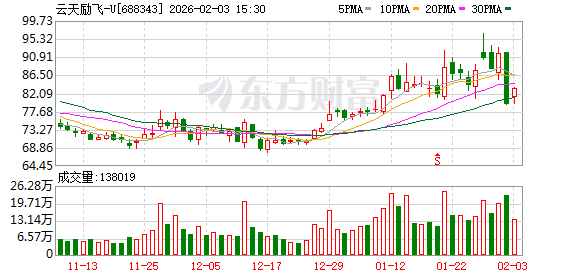
云天励飞披露大算力芯片战略,要把推理成本降低百倍以上
Nan Fang Du Shi Bao· 2026-02-03 15:08
Core Insights - The company announced its strategic focus on large-scale AI inference chips, aiming to reduce the cost of inference for million tokens by over 100 times within the next three years [2][6] - The global computing power industry is shifting towards inference capabilities, with major players like Google and NVIDIA emphasizing system optimization for efficiency and cost reduction [4][5] Group 1: Company Strategy - The company has established the GPNPU technology route, defined as GPGPU + NPU + 3D stacked storage, to address the challenges of portability, deployability, and sustainable cost reduction [5] - The CEO highlighted five key elements of the company's competitive advantage: technology, production capacity, ecosystem, market, and capital, which collectively support the company's strategic goals [5] - The company is one of the few in China with sufficient domestic production capacity, ensuring high certainty for large-scale chip production and delivery [5] Group 2: Industry Trends - The competition in the inference era is shifting from merely enhancing model parameters to improving application efficiency, focusing on lower inference costs and delivery efficiency [4] - The roadmap aims to align with international mainstream platforms, optimizing key inference stages like long context pre-filling and low-latency decoding to achieve cheaper, more stable, and easier deployment [6] - The essence of competition in the inference era is the cost per inference unit, which must be made affordable and stable for AI to transition from a visible capability to an accessible productivity tool [6]


大厂AI权力交接:90后,集体上位
虎嗅APP· 2026-02-03 13:52
Core Viewpoint - The article discusses the generational shift in leadership within major tech companies in China, particularly in the AI sector, highlighting the rise of younger leaders who are more attuned to the rapid advancements in AI technology and the decline of older executives whose experience is becoming less relevant in this fast-evolving landscape [4][30]. Group 1: Leadership Changes in Major Tech Companies - In major tech firms like Tencent and Alibaba, younger leaders, primarily from the 90s generation, are taking charge of AI initiatives, marking a significant shift in the industry [5][6]. - Tencent has recently appointed young talents such as Yao Shunyu and Pang Tianyu, who are seen as pivotal figures in the company's AI strategy, indicating a departure from traditional leadership models [5][6]. - Alibaba's Lin Junyang, a key figure behind the Qwen model, exemplifies the trend of younger leaders driving innovation and community engagement in AI [20][21]. Group 2: The Value of Experience vs. New Approaches - The article argues that traditional experience in tech is becoming less valuable in the face of new AI paradigms, where intuition and rapid adaptation are more critical than established practices [7][12]. - The "Transformer native generation" of young leaders is characterized by their early exposure to groundbreaking AI research, allowing them to navigate the complexities of modern AI development without the constraints of outdated methodologies [8][11]. - The rapid pace of AI advancements necessitates a shift in decision-making structures within companies, as seen in Tencent's restructuring to allow younger leaders to report directly to top executives [16][18]. Group 3: The Role of Community and Open Source - The younger generation, including leaders like Lin Junyang, understands the importance of community and open-source collaboration in the AI landscape, which contrasts with the more insular approaches of previous generations [20][21]. - The success of models like Qwen is attributed to their strong community engagement, reflecting a shift in competitive strategies within the AI sector [20][21]. Group 4: ByteDance's Unique Approach - ByteDance's strategy differs from Tencent and Alibaba by integrating experienced leaders like Wu Yonghui, who brings a wealth of knowledge from Google, focusing on system-level integration rather than just innovation [22][24]. - This approach highlights ByteDance's need for cohesive integration of AI capabilities across its various platforms, contrasting with the more experimental focus of its competitors [24][25]. Group 5: The Inevitable Power Transition - The transition to younger leadership is framed as a natural evolution driven by the rapid pace of knowledge acquisition in AI, where traditional experience is overshadowed by the need for innovative thinking [27][30]. - The article emphasizes that in the AI era, the ability to adapt and understand new technologies is more crucial than accumulated experience, marking a significant shift in workplace dynamics [31][30].



蚂蚁数科CEO发全员信,宣布将成立“大模型技术创新部”
Xin Lang Cai Jing· 2026-02-03 13:37
新浪科技讯 2月3日晚间消息,新浪科技获悉,日前,蚂蚁数科CEO赵闻飙发布主题为《携手共进,迈 向大模型新时代——关于大模型组织架构升级的通知》的全员信,宣布蚂蚁数科将成立"大模型技术创 新部",构建面向To B场景的基础大模型及行业模型。据了解,该团队将与蚂蚁集团相关团队协同,攻 坚蚂蚁集团百灵大模型面向To B场景的商业化,推动全球企业更好地进入AI时代。 赵闻飙在内部信中表示,"过去一年,蚂蚁数科构建的智能体,已深度嵌入客户的业务流程,在真实生 产环境中稳定运行,已在多家金融机构内形成标杆。这不仅验证了市场需求的真实性,更确立了我们在 企业级AI服务赛道的位置。这些在AI产业实践中的突破和创新,让我们有底气、也有能力将大模型研 发进一步拓展至更复杂的产业数字化领域。" 蚂蚁数科CEO赵闻飙拥有上海交大,美国罗格斯大学双博士学位。于2016年加入蚂蚁,一手构建了支付 宝与蚂蚁集团的智能风控体系,在AI安全风控领域拥有丰富经验和技术成果。 据官方披露,2025年以来,蚂蚁数科以"技术落地"为核心目标,推动AI从实验室走进真实业务场景,聚 焦金融、能源、交通、制造等关键领域,其服务已覆盖100%的国有股份制银 ...
大模型引领融资热潮,阶跃星辰获超50亿元新投资
2 1 Shi Ji Jing Ji Bao Dao· 2026-02-03 13:25
Group 1: Financing Trends - The technology and manufacturing sectors have seen significant financing activity, particularly in artificial intelligence, quantum computing, cybersecurity, and biomedicine [1] - A total of 24 financing events occurred in the domestic primary market from January 26 to February 1, with a total scale of approximately 77.56 billion RMB [2] - The majority of financing cases were concentrated in Shanghai, Beijing, and Guangdong, with 9, 4, and 4 cases respectively [6] Group 2: Sector-Specific Financing - The biomedicine sector completed 4 financing rounds totaling approximately 5.05 billion RMB, while the artificial intelligence sector completed 3 rounds totaling about 3.05 billion RMB [4] - Shanghai Jiyue Star Intelligent Technology Co., Ltd. completed over 5 billion RMB in B+ round financing, setting a record for single financing in the large model sector [14] - Turing Quantum completed several hundred million RMB in B round financing to accelerate its photonic chip and quantum computing industrialization [19] Group 3: Notable Companies and Investments - New Scene Zhiyuan Biotechnology completed over 2 billion RMB in B round financing, focusing on TCR-T cell therapy for solid tumors [10] - Shandong Aikeda Biotechnology completed several million RMB in B round financing, with funds aimed at core technology development and market expansion [11] - Beijing Changting Technology secured 5 billion RMB in a new round of financing from national AI funds, focusing on AI-enabled security [21]

AI足够大,大小厂都有机会
Bei Jing Shang Bao· 2026-02-03 13:25
Core Viewpoint - The competition in the AI sector is intensifying as major companies and emerging startups invest heavily in marketing and development, particularly in the lead-up to the 2026 Spring Festival, with significant financial commitments from various players [1]. Group 1: Major Companies' Strategies - Major companies like Tencent, Alibaba, and ByteDance are heavily investing in AI, with Alibaba launching an ecosystem strategy, ByteDance leveraging short video scenarios, and Tencent focusing on social entry points [1]. - The competition has shifted from merely developing AI models to a broader battle for applications and market share, indicating a strategic evolution in the industry [4]. Group 2: Emerging Startups and Market Dynamics - Startups such as Zhiyu, MiniMax, Kimi, and Jiyue Xingchen are gaining attention, with significant funding rounds and advancements in their AI capabilities, showcasing a vibrant startup ecosystem [1][2]. - The "Six Little Tigers" have pivoted towards industry-specific AI applications in sectors like healthcare and law, indicating a diversification of focus among smaller players [2]. Group 3: Financial Considerations and Market Opportunities - The current market environment presents opportunities for both large and small companies, with a focus on establishing stable business models and customer engagement strategies [5][6]. - Companies are expected to incur high costs initially, but sustainable returns will depend on creating effective commercial scenarios and customer payment habits [5]. Group 4: Future Outlook and Competition - The AI landscape is characterized by rapid technological advancements and product updates, with no clear winner yet, suggesting that all players, regardless of size, have a chance to succeed [6]. - The competitive landscape is evolving into a comprehensive battle involving applications, market presence, and talent acquisition, with all companies needing to adapt to remain relevant [4].