
固态电池技术

Search documents
20cm速递|创业板新能源ETF国泰(159387)盘中涨超2%,行业数据凸显需求韧性
Mei Ri Jing Ji Xin Wen· 2025-08-15 03:29
Group 1 - The core viewpoint of the articles highlights the significant growth in China's battery production, particularly lithium iron phosphate batteries, which accounted for 77.8% of total production in July, with a year-on-year increase of 50.5% [1] - The total production of power and other batteries reached 133.8 GWh in July, representing a year-on-year growth of 44.3% [1] - The export of batteries saw a year-on-year increase of 35.4%, with power battery exports making up 63.7% of the total, reflecting strong overseas demand [1] Group 2 - The leading companies in the battery sector, including CATL, BYD, and Zhongchuang Innovation, ranked in the top three for battery installation volume, with Zhongchuang Innovation's market share increasing by 0.84 percentage points [1] - The sales volume of batteries increased by 47.8% year-on-year, indicating robust demand, while a slowdown in capital expenditure has led to improved supply-demand dynamics, contributing to a recovery in prices for certain segments [1] - Solid-state battery technology is making significant progress and is expected to be an important development direction for the future [1] Group 3 - The Guotai New Energy ETF (159387) tracks the Innovation Energy Index (399266), which includes stocks related to solar energy, wind energy, and battery technology, reflecting the overall performance of companies in the renewable energy sector [1] - The Innovation Energy Index focuses on the development of new energy technologies and market performance, characterized by high growth potential and technological innovation [1]

全固态电池:锂电池的下一代解决方案 | 投研报告
Zhong Guo Neng Yuan Wang· 2025-08-15 02:47
Core Insights - Solid-state batteries have significant advantages over traditional lithium-ion batteries, including higher energy density potential and improved safety features [1][2] - The key to enhancing the energy density of solid-state batteries lies in the anode, which can accommodate high-silicon or lithium metal anodes, with energy density expected to exceed 500Wh/kg [1][2] - Solid-state batteries utilize solid electrolytes, which significantly outperform liquid batteries in preventing lithium dendrite growth, being non-flammable, and having higher thermal stability [1][2] Solid Electrolyte Types - Solid electrolytes are categorized into four main types: polymers, oxides, sulfides, and halides, each with distinct advantages and disadvantages [2] - Polymers have good processability but low ionic conductivity; oxides are stable but have poor processing performance; halides are stable but costly and moisture-sensitive; sulfides have the highest ionic conductivity but face challenges with electrochemical and air stability [2] Challenges in Solid-State Batteries - The core issues facing solid-state batteries include the wettability of solid-solid interfaces, narrow electrochemical stability windows, and poor physical contact leading to increased impedance [2][3] - These challenges can result in lithium dendrite growth and reduced cycle life, which are critical for the commercial viability of solid-state batteries [2][3] Technological Developments - Key advancements in solid-state battery production include dry electrode processes suitable for sulfide electrolytes and the use of isostatic pressing equipment to enhance interface contact [3] - The positive electrode will initially continue using high-nickel ternary materials, transitioning to lower-cost manganese-based materials in the long term, while the negative electrode will shift towards silicon-based materials and eventually lithium metal [3] Market and Policy Outlook - The Chinese Ministry of Industry and Information Technology plans to invest approximately 6 billion yuan in 2024 to support leading battery manufacturers and automakers in solid-state battery research and development [3] - The industrialization timeline indicates that the consumer sector will see large-scale adoption between 2025-2026, the eVTOL sector from 2026-2028, and the power sector will begin mass production post-2027, with gradual scaling expected after 2030 [3]
鹏辉能源:公司在固态电池技术方面持续迭代优化
Zheng Quan Ri Bao Wang· 2025-08-14 11:13
证券日报网讯鹏辉能源(300438)8月14日在互动平台回答投资者提问时表示,从去年8月底召开固态电 池发布会以来,公司在固态电池技术方面持续迭代优化,固态电池能量密度已由280Wh/Kg提升至 320Wh/Kg,新一代固态电池中固态电解质层自动适应活性材料体积的变化,不需要加压模组,固态电 池性能更稳定。当前在按计划推进固态电池中试线建设,预计2025年9月底建成。 ...

固态电池专题(一):全固态电池:锂电池的下一代解决方案
Minsheng Securities· 2025-08-14 09:51
Investment Rating - The report suggests a positive outlook on solid-state batteries as the next-generation solution for lithium batteries, indicating significant investment opportunities in this sector [5]. Core Insights - Solid-state batteries offer substantial advantages over traditional lithium-ion batteries, including higher energy density and improved safety due to the use of solid electrolytes [5][6]. - The report identifies sulfide solid electrolytes as the future mainstream route for solid-state batteries, highlighting their high ionic conductivity despite challenges in chemical and air stability [24][41]. - Key challenges for solid-state batteries include interfacial wetting issues, which can lead to lithium dendrite growth and reduced cycle life [50][57]. - The industry is supported by favorable policies, with significant investments expected in solid-state battery research and development, particularly in the consumer and automotive sectors [82]. Summary by Sections 1. Advantages of Solid-State Batteries - Solid-state batteries can achieve energy densities exceeding 500 Wh/kg by utilizing high-silicon or lithium metal anodes, significantly surpassing traditional lithium-ion batteries [5][17]. - The solid electrolyte's mechanical strength helps suppress lithium dendrite growth, enhancing safety by preventing short circuits [23][41]. 2. Types of Solid Electrolytes - Solid electrolytes are categorized into four main types: polymer, oxide, sulfide, and halide, with sulfides showing the highest ionic conductivity [26][41]. - Sulfide electrolytes are currently the focus of major companies like Toyota and CATL, indicating a strong industry trend towards this technology [42][47]. 3. Core Issues: Interfacial Wetting - The report discusses the critical issue of solid-solid interfacial wetting, which affects lithium ion transport and can lead to dendrite formation and reduced battery life [50][57]. - Both chemical/electrochemical and physical interface problems contribute to these challenges, necessitating advancements in material compatibility and processing techniques [51][55]. 4. Changes in Key Components - The report emphasizes the importance of dry electrode processes and the use of isostatic pressing to enhance the performance and manufacturability of solid-state batteries [63][71]. - Current collectors made from nickel-iron alloys are highlighted as a promising alternative to traditional copper collectors, addressing corrosion issues associated with sulfide electrolytes [78][81]. 5. Industry Development and Policy Support - The report outlines a clear industrialization timeline for solid-state batteries, with significant government support expected to accelerate development in the consumer and automotive markets [82].





道氏技术(300409.SZ):尚未涉足PEEK材料领域
Ge Long Hui A P P· 2025-08-13 07:58
Group 1 - The company is focusing on the application of carbon materials in the key components of humanoid robots, emphasizing lightweight, high conductivity, and low-cost advantages [1] - The technological path is aligned with solid-state battery technology, indicating a long-term competitive edge [1] - The company has not yet ventured into the field of PEEK materials [1]

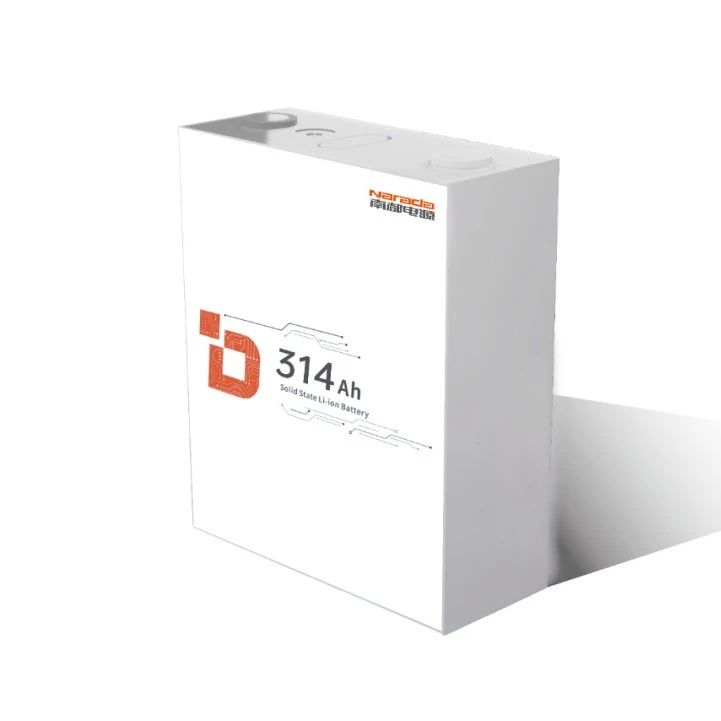
南都电源斩获2.8GWh半固态电池储能订单,项目将全部采用自主研发的314Ah电池
鑫椤储能· 2025-08-13 06:42
Core Viewpoint - Nandu Power has signed an independent energy storage project order with a total capacity of 2.8GWh, marking the largest semi-solid battery energy storage project globally, which signifies a key leap in the commercialization of solid-state battery technology [1][8]. Group 1: Project Details - The order consists of three independent energy storage projects with a total capacity of 2.8GWh, including a 1.2GWh project in Shenzhen and two 800MWh projects in Shanwei [1]. - Upon completion, the projects are expected to consume over 1 billion kilowatt-hours of renewable energy annually, significantly enhancing the regional grid's capacity to accept renewable energy and alleviating power supply and demand conflicts in the Guangdong-Hong Kong-Macao Greater Bay Area [1]. Group 2: Technological Innovations - The core technology supporting this super energy storage project is Nandu Power's self-developed 314Ah semi-solid battery, which utilizes "oxide solid-liquid mixed technology" and "high melting point polymer separator" to achieve significant improvements in safety and performance [3][6]. - The 314Ah semi-solid battery effectively suppresses lithium dendrite growth and reduces thermal runaway risks while maintaining ionic conductivity, providing dual guarantees for battery longevity and safety [6] [10]. Group 3: Industry Impact - This project represents the first commercial application of solid-state battery technology in a gigawatt-hour level energy storage project globally, reflecting high industry recognition of Nandu's solid-state technology and engineering capabilities [8][10]. - The large-scale commercialization of solid-state batteries is expected to drive the maturity and cost reduction of the solid-state battery industry chain, injecting strong momentum into technological upgrades within the industry [10]. Group 4: Future Developments - Nandu Power has been conducting forward-looking research since 2017 and is one of the earliest companies in China to focus on solid-state battery development, adhering to a "develop one generation, reserve one generation" strategy [10]. - By the end of 2024, Nandu Power plans to complete a key research project in Zhejiang Province, successfully developing a 30Ah all-solid-state battery that addresses the "solid-solid interface" challenge, enhancing the cycle life and rate performance of all-solid-state batteries [12]. - In April 2025, Nandu Power will launch a 783Ah ultra-large capacity solid-state battery, achieving breakthroughs in energy density and safety performance through innovative technologies [14].


欣旺达赴港上市,锂电池巨头加速全球布局
Sou Hu Cai Jing· 2025-08-12 23:04
Core Viewpoint - Shenzhen Xinwanda Electronics Co., Ltd. has officially submitted its H-share listing application to the Hong Kong Stock Exchange, marking a significant step in its "A+H" dual capital platform strategy [2][4]. Group 1: Listing and Strategic Intent - If successful, Xinwanda will become the third domestic power battery company to achieve "A+H" dual listing after CATL and EVE Energy [3]. - The listing aims to enhance the company's global strategy, create an international capital operation platform, and improve its international brand image and competitiveness [4]. Group 2: Business Overview - Founded in 1997, Xinwanda has evolved into a leading global lithium battery manufacturer, covering three core areas: consumer batteries, power batteries, and energy storage systems [5]. - Xinwanda is the largest lithium-ion battery manufacturer globally in the consumer battery sector, with a market share of 34.3% in mobile phone batteries and 21.6% in laptop and tablet batteries [7]. Group 3: Financial Performance - Xinwanda's revenue has shown steady growth, with figures of RMB 52.162 billion, RMB 47.862 billion, and RMB 56.021 billion for 2022, 2023, and 2024 respectively, and a Q1 2025 revenue of RMB 12.289 billion, reflecting an 11.97% year-on-year increase [12]. - The company has experienced fluctuations in net profit, reporting RMB 763 million, RMB 331 million, and RMB 534 million for the years 2022 to 2024 [12]. Group 4: Growth in Energy Storage - The energy storage business has seen rapid growth, with sales reaching 9.6 GWh in 2024, a year-on-year increase of 108.7% [7]. - In Q1 2025, energy storage revenue was RMB 354 million, accounting for 2.9% of total revenue, with a gross profit margin of 25.5% [14]. Group 5: Global Production Capacity - Xinwanda plans to use funds raised from the Hong Kong listing to expand its international production facilities, including a new base in Vietnam with an investment of up to RMB 2 billion [9]. - The Vietnam facility is expected to begin trial production in 2026, with 30% of its designed capacity operational by the end of that year [10]. Group 6: Technological Advancements - Xinwanda is actively involved in technological innovation, recently unveiling a new ultra-fast charging battery capable of charging 150 kilometers in just one minute [17]. - The company plans to scale up production of solid-state batteries by 2026, which is seen as a key direction for next-generation battery technology [18]. Group 7: Market Position and Challenges - Xinwanda holds a strong market position in consumer electronics batteries and is rapidly growing in the power battery and energy storage sectors [19]. - The company faces challenges such as maintaining market position, customer relationships, and the risk of technological obsolescence [20].

德尔股份在沪已经建成 固态电池样品试制线
Zheng Quan Shi Bao· 2025-08-12 17:24
Core Viewpoint - Del Corporation is advancing its solid-state battery technology, with a pilot production line established in Shanghai and plans for mass production based on market demand and customer development progress [1][2]. Group 1: Company Developments - Del Corporation has built a pilot production line for solid-state batteries in Shanghai and is accelerating the construction of a trial production line [1]. - The company has transitioned from manufacturing automotive steering pumps to developing solid-state batteries, establishing a global presence with R&D and production bases in Europe, North America, and Asia [1]. - In 2018, Del Corporation established a subsidiary in Japan to focus on solid-state battery development, which received a national invention patent in 2024 [1]. Group 2: Solid-State Battery Technology - The solid-state battery can utilize ternary materials or lithium iron phosphate for the positive electrode and graphite or silicon-carbon for the negative electrode, with lithium metal batteries also under development [2]. - The production process of Del's solid-state batteries differs from liquid batteries, as it employs a coating process for the electrolyte, eliminating the need for liquid injection [2]. - The solid-state battery samples have passed third-party safety tests, demonstrating high safety and excellent high-temperature performance without the need for cooling devices [2]. Group 3: Market Applications and Partnerships - Potential downstream customers for Del's solid-state batteries include new energy vehicle manufacturers, with applications also being explored in humanoid robots, electric two-wheelers, and energy storage [2]. - On June 3, Del Corporation signed an investment cooperation agreement to invest approximately 300 million yuan in a new lithium battery pilot and industrialization project, marking a significant step in its solid-state battery strategy [3].

皇庭国际核心资产皇庭广场折价拍卖 负债率97%再押注固态电池
Xin Lang Cai Jing· 2025-08-12 13:24
Core Insights - The announcement of a capital increase agreement with Zun Guang Solid State Battery indicates a strategic shift for the company towards high-tech sectors, particularly in solid-state battery technology [1] - However, the company faces significant financial distress, with its core asset, the Royal Court Plaza, set for judicial auction due to a debt crisis [2][3] - The financial performance of the company has deteriorated sharply, with a 29.35% year-on-year decline in total revenue and a net loss of 82.03 million yuan in Q1 2025 [2] Financial Situation - As of March 2025, the company reported total liabilities of 7.777 billion yuan, resulting in an alarming debt-to-asset ratio of 97.12% [2] - Financial expenses have consumed a significant portion of operational cash flow, with Q1 financial costs reaching 144 million yuan, exceeding the operating cash flow by 191.07% [2][4] - The company has been in a continuous loss cycle for five years, with a low dividend-to-financing ratio of 0.023, indicating a heavy reliance on financing over shareholder returns [3] Asset and Auction Details - The Royal Court Plaza is set to be auctioned with a starting price of 3.053 billion yuan, which is nearly 30% lower than its assessed value of 4.361 billion yuan [3] - The asset has previously failed to sell at higher prices due to its limited land use period and additional costs, leading to two prior unsuccessful auction attempts [3] - The company acknowledges the risk of financial delisting if the auction of its core asset is successful, highlighting the precarious nature of its financial situation [3]

道氏技术: 关于募集资金投资项目重新论证并暂缓实施的公告
Zheng Quan Zhi Xing· 2025-08-12 13:14
Core Viewpoint - The company has decided to re-evaluate and temporarily suspend the implementation of its "Annual Production of 100,000 Tons of Ternary Precursor Project" and "Daoshi New Energy Recycling Research Institute Project" due to changes in market conditions and strategic focus [1][5][6]. Fundraising Basic Situation - The company issued 26,000,000 convertible bonds on April 7, 2023, raising a total of RMB 2.6 billion, with a net amount of RMB 2.6 billion after deducting issuance costs [1][2]. Fundraising Investment Project Situation - As of June 30, 2025, the total committed investment for the ternary precursor project is RMB 2,579.22 million, with an investment of RMB 1,104 million, indicating no progress [2][4]. Reasons for Re-evaluation and Suspension - The ternary precursor project was initially planned to use RMB 1,706.25 million, with only 18.67% of the investment made by June 30, 2025. The project will be implemented in phases due to market changes, with 30,000 tons expected to be completed by May 2024 and the remaining capacity in 2025 [2][5]. - The recycling research institute project plans to use RMB 99.20 million, but no funds have been invested as of June 30, 2025. The expected completion date has been postponed to December 31, 2025 [2][6]. Impact on Company Operations - The decision to suspend the projects is based on a careful assessment of the actual implementation situation and market conditions, and it will not have a significant adverse impact on the company's current operations [7]. - The suspension is expected to optimize resource allocation and better meet the company's strategic funding needs for long-term healthy development [7]. Review Procedures and Opinions - The board of directors and the supervisory board approved the re-evaluation and suspension of the projects on August 12, 2025, confirming that the decision aligns with regulatory requirements and does not harm shareholder interests [8].